The practical question is not "can a robot cure loneliness?" It cannot. The better question is: which robot body is useful for which kind of support? A seal-shaped therapeutic robot, a proactive tabletop assistant, a warm pet-like companion, and a rolling social humanoid solve very different problems.

For this guide, ui44 looked at the companion and care-oriented robots in our database, then separated them by evidence, availability, price, privacy posture, and likely home fit. Our database now tracks 261 robots from 156 manufacturers, but only a small slice deserve to be in a dementia, loneliness, or family-companionship conversation.
The short answer: PARO has the strongest dementia-care evidence, ElliQ is the most purpose-built loneliness and routine companion for older adults at home, LOVOT and aibo are emotional pet-like companions, Loona and Miko are better treated as family/kid robots, and Mirokaï is interesting for care facilities rather than normal homes. Familiar is worth watching as a future pet-like quadruped, but it is not the same as a buyable, proven home-care tool yet.
The buyer shortcut: match the robot to the care job
A companion robot should be judged by the job you need it to do. "Robot pet" is too broad.
Use case
Dementia comfort in a supervised care setting
- Best-fit robot type
- Therapeutic robopet
- Good candidates
- PARO
- Why it fits
- Designed for tactile calming interaction; FDA Class II medical-device status in the U.S.
- Main caution
- Institutional pricing and supervision matter
Use case
Loneliness and daily routines for an older adult at home
- Best-fit robot type
- Proactive tabletop companion
- Good candidates
- ElliQ 3
- Why it fits
- Initiates conversation, wellness prompts, reminders, calls, activities
- Main caution
- Subscription, U.S.-only support, not a pet
Use case
Pet-like emotional companionship
- Best-fit robot type
- Purpose-built companion pet
- Why it fits
- Touch, motion, warmth, personality, owner recognition
- Main caution
- Expensive; evidence varies by product
Use case
Family play and child interaction
- Best-fit robot type
- AI toy/learning companion
- Why it fits
- Games, voice interaction, face recognition, kid-safe content
- Main caution
- Not dementia tools; privacy and screen-time rules matter
Use case
Senior-living or clinic group engagement
- Best-fit robot type
- Social service robot
- Good candidates
- Mirokaï
- Why it fits
- Expressive conversation, group activities, caregiver augmentation
- Main caution
- Sold by partnership/inquiry, not consumer retail
Use case
Remote family presence and patrol
- Best-fit robot type
- Mobile camera companion
- Good candidates
- EBO X
- Why it fits
- Video calls, patrol, pet/family monitoring
- Main caution
- More camera-on-wheels than therapeutic companion
| Use case | Best-fit robot type | Good candidates | Why it fits | Main caution |
|---|---|---|---|---|
| Dementia comfort in a supervised care setting | Therapeutic robopet | PARO | Designed for tactile calming interaction; FDA Class II medical-device status in the U.S. | Institutional pricing and supervision matter |
| Loneliness and daily routines for an older adult at home | Proactive tabletop companion | ElliQ 3 | Initiates conversation, wellness prompts, reminders, calls, activities | Subscription, U.S.-only support, not a pet |
| Pet-like emotional companionship | Purpose-built companion pet | LOVOT, aibo, Moflin | Touch, motion, warmth, personality, owner recognition | Expensive; evidence varies by product |
| Family play and child interaction | AI toy/learning companion | Loona, Miko 3 | Games, voice interaction, face recognition, kid-safe content | Not dementia tools; privacy and screen-time rules matter |
| Senior-living or clinic group engagement | Social service robot | Mirokaï | Expressive conversation, group activities, caregiver augmentation | Sold by partnership/inquiry, not consumer retail |
| Remote family presence and patrol | Mobile camera companion | EBO X | Video calls, patrol, pet/family monitoring | More camera-on-wheels than therapeutic companion |
That split matters because the evidence is strongest in structured settings, not in vague marketing claims. A robot that helps one resident calm down during an activity session may be a good care tool. That does not mean the same robot will solve an older parent's isolation in a quiet apartment.
What the evidence actually supports
The best-supported category is still robopets in care settings, especially PARO. A 2019 systematic review of robopets in care homes included 19 studies, including 7 randomized trials. Residents and staff often described positive effects on loneliness, depression, and quality of life, but the meta-analysis did not find statistically significant proof for all of those outcomes. The clearest quantitative signal was smaller but useful: PARO reduced agitation compared with control activity or usual care.
A newer 2024 randomized controlled trial of group-based PARO sessions for older adults with mild dementia found improvements across psychological measures, including loneliness and depression scales, with some benefits still present one month after the intervention. That is encouraging, but it is still a supervised intervention, not a promise that a robot alone can manage dementia symptoms.
ElliQ has a different kind of evidence. The New York State Office for the Aging says its ElliQ initiative made about 900 units available and reported a 95% reduction in loneliness in a 2023 program report, with users interacting with ElliQ more than 30 times per day, six days a week. That is not the same as an independent medical trial, but it is real deployment evidence at a scale most companion robots do not have.
The honest conclusion is: companion robots can be helpful when they create routine, touch, conversation, shared attention, or caregiver leverage. They are much less convincing when sold as standalone emotional medicine.
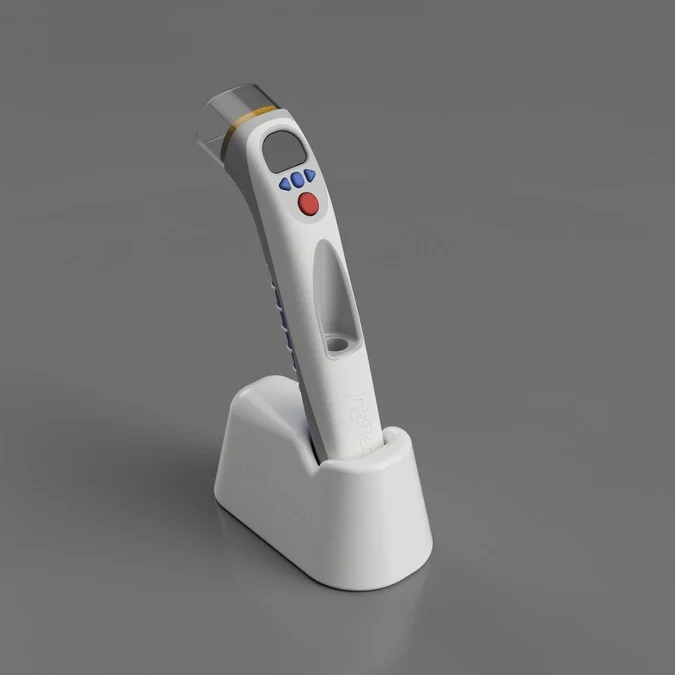
PARO: the most credible dementia-care robot, but not a normal gadget
PARO is the robot that belongs at the top of a dementia-care shortlist. It is a baby harp seal rather than a dog or cat, which is deliberate: fewer people have fixed expectations for how a seal "should" behave.
In ui44's database, PARO is listed as an active companion robot from AIST with institutional pricing rather than a public consumer MSRP. It uses tactile, light, audio, temperature, and posture sensors, plus microphones, to respond to touch, handling, and voice. The official PARO site describes it as the eighth generation of a design used in Japan and Europe since 2003, intended for hospitals and extended-care settings where live animals are difficult.
What makes PARO different from most robot pets is the care context. It is not trying to be a clever home gadget. It is trying to be a predictable, soft, repeatable object of attention. That is exactly why it can work in dementia settings: the interaction is simple, physical, and low-pressure.
The trade-off is cost and deployment. PARO is not priced like Loona or Moflin, and a family should not treat it as a casual impulse purchase. It makes most sense when a care team, adult day center, or family caregiver has a clear plan: when to introduce it, how to observe reactions, when to stop, and how to clean and maintain it.
ElliQ: strongest for older adults living alone
If the core problem is not tactile soothing but long empty stretches of the day, ElliQ 3 is the more relevant robot. ElliQ is stationary, so it will not feel like a pet. But it is one of the few companion robots built around older-adult routines rather than generic entertainment.
The ui44 database lists ElliQ 3 as an available companion robot from Intuition Robotics. It has a 12 MP camera, 1080p video at 30 fps with a 120-degree horizontal field of view, a four-microphone array, an 8-inch touchscreen, Bluetooth 5+, and 2.4/5 GHz Wi-Fi. Its feature list is practical: proactive conversation, medication reminders, health and pain tracking, wellness programs, video calling, photo and message sharing, games, music, and caregiver-dashboard support.
Pricing is subscription-shaped. ElliQ's current official membership terms in our database show a $249 initiation fee, then options such as $49/month, $468/year, or $696 for 24 months depending on plan. That can be easier to justify if it prevents isolation and supports routines. It is harder to justify if the user does not like proactive devices talking to them.
The key buying question is consent and temperament. Some people love a device that initiates conversation. Others find it intrusive. If possible, choose ElliQ only when the older adult wants it, understands what it does, and has a caregiver who can help tune reminders and contacts.
LOVOT, aibo, Moflin, and Loona: emotional companionship, not care plans
Pet-like robots are more emotionally legible than tabletop assistants. They can be cuddled, named, dressed, petted, or treated like a small household presence. That can be valuable. It can also tempt buyers into overclaiming what they do.
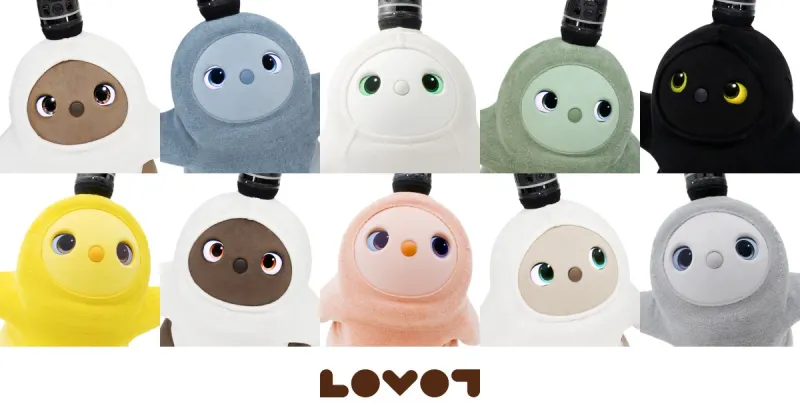
LOVOT is the most intentionally emotional of this group. The official LOVOT technology page describes more than 50 sensors, a horn with a 360-degree camera, a microphone array, thermal sensing for distinguishing humans from objects, full-body touch response, animated eye displays, autonomous room movement, and an active cycle of about 45 minutes before returning to its nest. In ui44's database, LOVOT 3.0 is listed at ¥577,500, with a required care plan starting from ¥9,900/month in Japan.
Sony aibo is more explicitly dog-like. It is listed at $2,899.99 in the ui44 database, with a subscription plan required. Its hardware includes cameras, ToF sensors, touch sensors, four microphones, LTE, Wi-Fi, self-charging, and 22 axes of movement. It is a strong fit for someone who wants ritual, tricks, recognition, and a pet-like bond without feeding or walking.
Casio Moflin is smaller and quieter. It is listed at $429, with a palm-sized body, roughly 260 g weight, touch sensors, microphone, motion sensing, up to 5 hours of battery life, and a charging bed. Casio frames it around emotional AI and stress comfort. That makes it interesting for anxiety-adjacent comfort, but it is not a dementia-care device in the PARO sense.
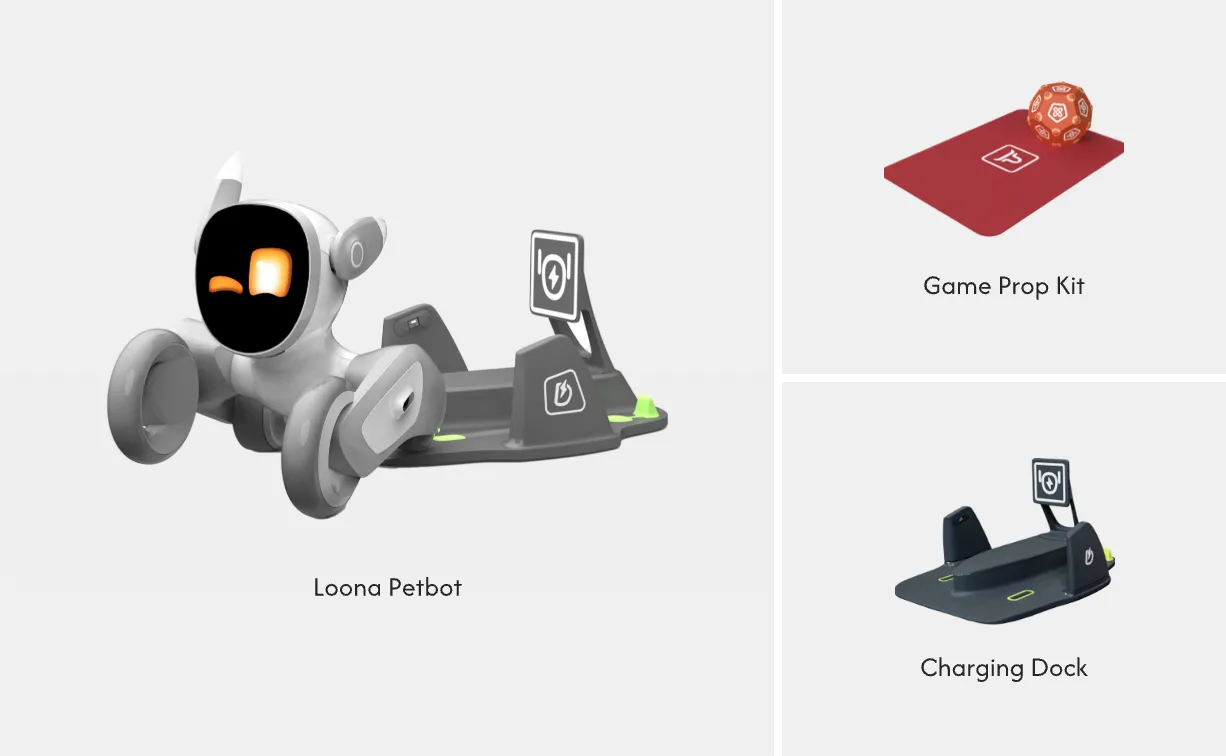
Loona sits closer to family entertainment. It costs $429 in the ui44 database, uses a 720p RGB camera, 3D ToF sensor, four-microphone array, LCD face, ChatGPT-4o integration, autonomous navigation, games, Blockly programming, and remote monitoring through the KEYi app. It may be delightful for kids and families. For dementia care, it is too app-like and toy-like to recommend as a primary support tool.
Mirokaï shows where care-facility robots are heading
The most interesting 2026 shift is that companion robots are no longer only plush pets or tabletop prompts. Mirokaï, from Enchanted Tools, is a rolling social humanoid designed for hospitals, hospitality, and care environments.
In the ui44 database, Mirokaï is a 1.23 m, 26 kg robot with omnidirectional globe locomotion, an expressive projected face, multi-LLM conversation, VSLAM navigation, torque-controlled arms, 26 degrees of freedom, about 4 hours of battery life, and a developer API. Enchanted Tools says its Explorer Suit uses multi-language speech, face tracking, vision-language models, autonomous navigation, and upgraded 3D, ToF, ultrasonic, microphone, and torque sensing.
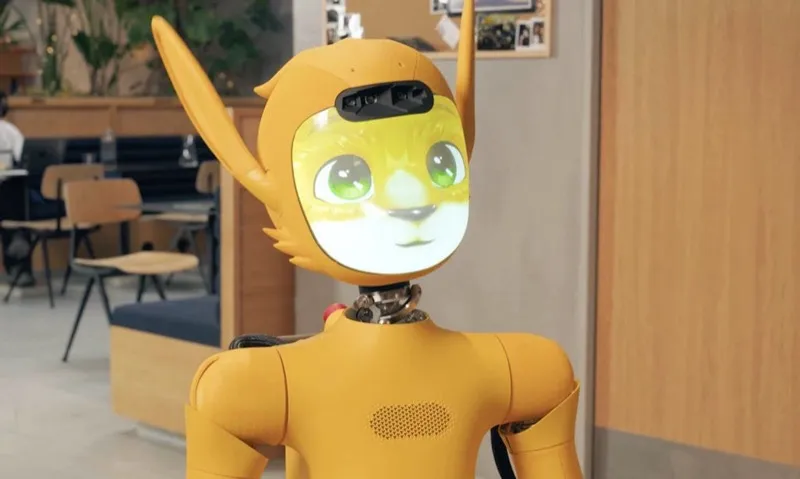
The care deployments are the important part. Enchanted Tools describes Miroki at Live Oak Adult Day Services in San Jose supporting seniors with mild to moderate dementia through music, trivia, and conversation. Its APREH project targets 11 Mirokaï across multiple care settings, including older adults, adults with disabilities, and children with disabilities. Its Montpellier Cancer Institute project puts Miroki in pediatric radiotherapy support, where children may need reassurance through repeated sessions.
That does not make Mirokaï a home robot you should buy for a parent. It is more like a preview of what senior-living communities may test: expressive robots that augment staff, create group activities, and make a shared room feel more socially alive. The right buyer is an institution, not an adult child shopping on a weekend.
What about development-stage robot companions?
Familiar, from Familiar Machines & Magic, is worth watching because it aims at a gap most current companion robots still miss: a warm, pet-inspired quadruped that learns household routines rather than acting like a smart speaker with a cute shell. The company says its first product is designed to respond to facial expressions, tone of voice, body language, and everyday home patterns.
In ui44's database, Familiar is a development-stage quadruped planned for 2027, with no final price announced. The privacy angle is encouraging: the company says data is stored on-device and users control cloud sharing. The buying caution is just as important. Until there is final pricing, shipping, support, and real-world outcome evidence, Familiar should be treated as a promising future robot companion, not a 2026 care purchase.
That future direction is still important. The most useful next-generation robot companions will be less like smart speakers and more like emotionally aware physical presences. But for a 2026 buying decision, a development-stage robot should not displace PARO, ElliQ, LOVOT, aibo, Moflin, or Loona if you need something available and supportable now.
How to choose without getting fooled by cute marketing
Use this checklist before buying any robot pet or companion robot for care.
- Start with the person, not the robot. Some people find robot companions comforting. Others find them childish, creepy, noisy, or intrusive. A trial period matters.
- Separate dementia comfort from loneliness support. PARO-style tactile calming and ElliQ-style routine prompting are different jobs.
- Check who maintains it. Charging, cleaning, subscriptions, Wi-Fi, app updates, and troubleshooting can become caregiver work.
- Ask where the data goes. Cameras, microphones, maps, video calls, memory features, and family dashboards are sensitive in any home, and especially in care settings.
- Look for human-in-the-loop value. The best results often come when a robot sparks conversation with staff, family, or peers. A robot that isolates the user with another screen is less interesting.
- Avoid medical certainty. Unless a device is actually cleared and deployed for therapeutic use, treat wellness language as marketing until evidence says otherwise.
- Budget for the full ownership cost. LOVOT has a care plan. aibo has a subscription. ElliQ is a membership. Even cheaper robots may depend on cloud features.
For most families, the safest buying path is to decide the scenario first:
Scenario
Parent in assisted living or adult day care has dementia-related agitation
- Best first look
- PARO through a facility/care program
- Why
- Strongest fit to evidence and supervised use
Scenario
Older adult lives alone and wants prompts, calls, and conversation
- Best first look
- ElliQ 3
- Why
- Purpose-built for routines and social connection
Scenario
Adult wants a pet-like emotional presence without live-pet care
- Best first look
- aibo, LOVOT, or Moflin
- Why
- Clear companionship value, but not medical support
Scenario
Family wants playful AI interaction for kids
- Best first look
- Loona or Miko 3
- Why
- Better as family robots than senior-care tools
Scenario
Senior community wants group engagement
- Best first look
- Mirokaï pilot or partnership
- Why
- Facility-scale social interaction, not consumer buying
| Scenario | Best first look | Why |
|---|---|---|
| Parent in assisted living or adult day care has dementia-related agitation | PARO through a facility/care program | Strongest fit to evidence and supervised use |
| Older adult lives alone and wants prompts, calls, and conversation | ElliQ 3 | Purpose-built for routines and social connection |
| Adult wants a pet-like emotional presence without live-pet care | aibo, LOVOT, or Moflin | Clear companionship value, but not medical support |
| Family wants playful AI interaction for kids | Loona or Miko 3 | Better as family robots than senior-care tools |
| Senior community wants group engagement | Mirokaï pilot or partnership | Facility-scale social interaction, not consumer buying |
Bottom line
The best robot pet for dementia is not the cutest one. It is the one that fits the care context.
For supervised dementia comfort, PARO remains the most credible choice. For an older adult living alone who wants daily engagement and wellness structure, ElliQ 3 is the strongest purpose-built home option. For emotional companionship without a care claim, LOVOT, aibo, and Moflin are the more honest pet-like products. For families and kids, Loona and Miko 3 are fun, but they should not be confused with dementia support. And for care organizations, Mirokaï is one of the more interesting signs of where social robots may go next.
A good companion robot should make human care easier, warmer, or more frequent. If the pitch sounds like it replaces people, that is the red flag.
Related in the database
Use this article as a privacy verification workflow
Turn the article into a privacy verification pass grounded in the robots, manufacturers, and components it actually references.
Robot Pets for Dementia and Loneliness in 2026 already points you toward 10 linked robots, 10 manufacturers, and 6 countries inside the ui44 database. That matters because strong buyer guidance is easier to apply when you can move immediately from a claim or warning into concrete product pages, manufacturer directories, component explainers, and country-level context instead of treating the article as an isolated opinion piece. The fastest next step is to turn the article into a shortlist workflow: open the linked robot pages, verify which specs are actually published for those models, then compare the surrounding manufacturer and component context before you decide whether the underlying claim changes your buying plan.
For this topic, the useful discipline is to separate the editorial lesson from the catalog evidence. The article gives you the framing, but the robot pages tell you what each product actually ships with today: sensor stack, connectivity methods, listed price, release timing, category, and support-relevant compatibility notes. The manufacturer pages then show whether you are looking at a one-off launch, a broader lineup pattern, or a company that spans multiple categories. That layered workflow reduces the risk of buying on a single marketing phrase or a single support FAQ.
Use the robot pages to confirm which products actually expose cameras, microphones, Wi-Fi, or voice systems, then use the manufacturer pages to decide how much of the privacy question seems product-specific versus brand-wide. On this route cluster, PARO, ElliQ 3, and LOVOT form the fastest reality check. If you want a quick working shortlist, open Compare PARO, ElliQ 3, and LOVOT next, then keep this article open as the reasoning layer while you compare structured data side by side.
Practical Takeaway
Every robot, manufacturer, category, component, and country reference below resolves to a real ui44 page, keeping the follow-up path grounded in database records rather than generic advice.
Suggested next steps in ui44
- Open PARO and note the listed sensors, connectivity methods, and voice stack before you interpret any policy claim.
- Cross-check the wider brand context on AIST so you can see whether the privacy question touches one model or a broader lineup.
- Use the linked component pages to confirm how common the relevant sensors and connectivity layers are across the database.
- Keep a short note of which policy layers you checked, which device features are actually present on the robot page, and which items still depend on region- or app-level confirmation.
- Finish with Compare PARO, ElliQ 3, and LOVOT so the policy reading sits next to structured product data.
Robot profiles worth opening next
Use the linked product pages as the evidence layer
The linked robot pages are where this article becomes operational. Instead of asking whether the headline is interesting, use the robot entries to inspect the actual mix of sensors, connectivity options, batteries, pricing, release timing, and stated capabilities attached to the products mentioned in the article. That is the easiest way to see whether the warning or opportunity described here affects one product family, a specific design pattern, or an entire buying lane.
PARO is tracked on ui44 as a active companions robot from AIST. The database currently records a listed price of Price TBA, a release date of 2003, Not officially disclosed battery life, Not officially disclosed charging time, and a published stack that includes Tactile sensors, Light sensor, and Audition (audio) sensor plus Not publicly detailed.
For privacy-focused reading, this page matters because it shows the concrete device surface behind the policy discussion. Use it to verify whether PARO combines sensors and connectivity in a way that could change the in-home data footprint, and compare the listed capabilities such as Therapeutic companionship, Responds to touch, voice direction, and handling, and Learns preferred user interactions with any cloud, app, or voice layers.
ElliQ 3
Intuition Robotics · Companions · Available
ElliQ 3 is tracked on ui44 as a available companions robot from Intuition Robotics. The database currently records a listed price of Price TBA, a release date of 2024-01, Mains powered battery life, N/A (plugged in) charging time, and a published stack that includes 4-mic array, 12 MP camera for images, and 1080p HD video at 30 fps with 120° horizontal FoV plus Wi-Fi 802.11b/g/n/ac (2.4 GHz and 5 GHz) and Bluetooth 5+.
For privacy-focused reading, this page matters because it shows the concrete device surface behind the policy discussion. Use it to verify whether ElliQ 3 combines sensors and connectivity in a way that could change the in-home data footprint, and compare the listed capabilities such as Proactive Conversation, Medication Reminders, and Health & Pain Tracking with any cloud, app, or voice layers, including ElliQ Voice AI.
LOVOT is tracked on ui44 as a available companions robot from GROOVE X. The database currently records a listed price of ¥577,500, a release date of 2019, 30-45 minutes active, then returns to nest battery life, 15-30 minutes (on charging nest) charging time, and a published stack that includes Horn Top Camera (half-sphere), Horn Front Camera, and Depth Camera plus Wi-Fi and Bluetooth.
For privacy-focused reading, this page matters because it shows the concrete device surface behind the policy discussion. Use it to verify whether LOVOT combines sensors and connectivity in a way that could change the in-home data footprint, and compare the listed capabilities such as Emotional Companionship, Person Recognition, and Touch Response (full body sensors) with any cloud, app, or voice layers.
Mirokaï
Enchanted Tools · Commercial · Active
Mirokaï is tracked on ui44 as a active commercial robot from Enchanted Tools. The database currently records a listed price of Price TBA, a release date of 2025, ~4 hours battery life, Not disclosed charging time, and a published stack that includes 2 RGBD Cameras, 2 Infrared Cameras, and 9 Time-of-Flight Cameras plus Wi-Fi and Bluetooth.
For privacy-focused reading, this page matters because it shows the concrete device surface behind the policy discussion. Use it to verify whether Mirokaï combines sensors and connectivity in a way that could change the in-home data footprint, and compare the listed capabilities such as 26 Degrees of Freedom, Omnidirectional Rolling Globe Locomotion, and Expressive Animated Face (projector-based) with any cloud, app, or voice layers, including Multi-language speech recognition & synthesis with emotional prosody.
Loona is tracked on ui44 as a available companions robot from KEYi Tech. The database currently records a listed price of $442, a release date of 2023, 2 hours continuous playtime; 1350 mAh, 11.1 V lithium-ion rechargeable battery battery life, Not officially disclosed charging time, and a published stack that includes 3D Time-of-Flight (ToF) Sensor, 720p RGB Camera, and Touch Sensor plus Wi-Fi (Dual-band 2.4G/5.8G, 802.11a/b/g/n) and USB Type-C (charging).
For privacy-focused reading, this page matters because it shows the concrete device surface behind the policy discussion. Use it to verify whether Loona combines sensors and connectivity in a way that could change the in-home data footprint, and compare the listed capabilities such as Face Recognition, Voice Commands, and Emotion Expression (LCD face) with any cloud, app, or voice layers.
Manufacturer context behind the article
Check whether this is one product story or a broader company pattern
Manufacturer pages add the privacy context that individual product pages cannot show on their own. They help you check whether cameras, microphones, cloud accounts, app controls, and policy assumptions appear across a broader lineup or stay tied to one specific product story.
AIST
ui44 currently tracks 3 robots from AIST across 2 categorys. The company is grouped under Japan, and the current catalog footprint on ui44 includes HRP-4C, HRP-5P, PARO.
That wider brand context matters because privacy questions rarely stop at one FAQ page. A manufacturer route helps you see whether the article is centered on one premium model or on a company that has several relevant products and therefore more than one place where the same policy or app assumptions might matter. The category mix here currently points toward Research, Companions as the most useful next route if you want to see whether this article reflects a wider pattern inside the brand.
Intuition Robotics
ui44 currently tracks 1 robot from Intuition Robotics across 1 category. The company is grouped under Israel, and the current catalog footprint on ui44 includes ElliQ 3.
That wider brand context matters because privacy questions rarely stop at one FAQ page. A manufacturer route helps you see whether the article is centered on one premium model or on a company that has several relevant products and therefore more than one place where the same policy or app assumptions might matter. The category mix here currently points toward Companions as the most useful next route if you want to see whether this article reflects a wider pattern inside the brand.
GROOVE X
ui44 currently tracks 1 robot from GROOVE X across 1 category. The company is grouped under Japan, and the current catalog footprint on ui44 includes LOVOT.
That wider brand context matters because privacy questions rarely stop at one FAQ page. A manufacturer route helps you see whether the article is centered on one premium model or on a company that has several relevant products and therefore more than one place where the same policy or app assumptions might matter. The category mix here currently points toward Companions as the most useful next route if you want to see whether this article reflects a wider pattern inside the brand.
Enchanted Tools
ui44 currently tracks 1 robot from Enchanted Tools across 1 category. The company is grouped under France, and the current catalog footprint on ui44 includes Mirokaï.
That wider brand context matters because privacy questions rarely stop at one FAQ page. A manufacturer route helps you see whether the article is centered on one premium model or on a company that has several relevant products and therefore more than one place where the same policy or app assumptions might matter. The category mix here currently points toward Commercial as the most useful next route if you want to see whether this article reflects a wider pattern inside the brand.
Broaden the scan without leaving the database
Categories, components, and countries add the wider context
Category framing
Category pages are useful when the article touches a buying pattern that shows up across brands. A category route helps you confirm whether the linked products sit in a narrow niche or whether the same question should be tested across a larger field of alternatives.
Companions
The Companions category page currently groups 53 tracked robots from 48 manufacturers. ui44 describes this lane as: Social robots, robot pets, and elderly-care companions designed for emotional connection and everyday support at home.
That makes the category route a practical follow-up when you want to check whether the products linked in this article are typical for the lane or whether they sit at one edge of the market. Useful starting examples currently include PARO, Abi, Next-Generation Companion Robot.
Commercial
The Commercial category page currently groups 44 tracked robots from 38 manufacturers. ui44 describes this lane as: Delivery robots, warehouse automation, and hospitality service bots — robots built for business and commercial operations.
That makes the category route a practical follow-up when you want to check whether the products linked in this article are typical for the lane or whether they sit at one edge of the market. Useful starting examples currently include G2 Air, aeo, Pepper.
Country and ecosystem context
Country pages give extra context when support practices, launch sequencing, regulatory posture, or manufacturer mix matter. They are not a substitute for model-level verification, but they do help you see which ecosystems cluster together and which manufacturers sit in the same regional field when you broaden the search beyond the article headline.
Japan
The Japan route currently groups 26 tracked robots from 17 manufacturers in ui44. That gives you a useful regional lens when the article points toward support practices, launch sequencing, or brand clusters that may share similar ecosystem assumptions.
On the current route, manufacturers like AIST, SoftBank Robotics, Toyota make the page a good way to broaden the scan without losing the regional context that often shapes availability, documentation style, and adjacent alternatives.
Israel
The Israel route currently groups 5 tracked robots from 5 manufacturers in ui44. That gives you a useful regional lens when the article points toward support practices, launch sequencing, or brand clusters that may share similar ecosystem assumptions.
On the current route, manufacturers like Flytrex, Intuition Robotics, Maytronics make the page a good way to broaden the scan without losing the regional context that often shapes availability, documentation style, and adjacent alternatives.
France
The France route currently groups 8 tracked robots from 7 manufacturers in ui44. That gives you a useful regional lens when the article points toward support practices, launch sequencing, or brand clusters that may share similar ecosystem assumptions.
On the current route, manufacturers like Pollen Robotics, Aldebaran / Maxtronics, Aldebaran Robotics make the page a good way to broaden the scan without losing the regional context that often shapes availability, documentation style, and adjacent alternatives.
Questions to answer before you move from reading to buying
A follow-up FAQ built from the entities already linked in this article
Frequently Asked Questions
Which page should I open first after reading “Robot Pets for Dementia and Loneliness in 2026”?
Start with PARO. That gives you a concrete product anchor for the article’s main claim. From there, branch into the manufacturer and component pages so you can tell whether the article is describing one specific model, a repeated brand pattern, or a wider technology issue that affects multiple shortlist options.
How do the manufacturer pages change the buying decision?
AIST help you zoom out from one article and one product. On ui44 they show lineup breadth, category spread, and the neighboring robots tied to the same company. That context is useful when you are deciding whether a risk belongs to a single model, whether it shows up across a brand’s portfolio, and whether you should keep looking at alternatives before committing.
When should I switch from reading to side-by-side comparison?
Move into Compare PARO, ElliQ 3, and LOVOT as soon as you understand the article’s main warning or promise. The article explains what to watch for, but the compare view is where you can check whether price, status, battery life, connectivity, sensors, and category fit still make the robot a good match for your own home and budget.
Where to go next in ui44
Keep the research chain inside the database
If you want to keep going, these follow-on pages give you the cleanest expansion path from article to research session. Open the comparison route first if you are deciding between products today. Open the manufacturer, category, and component routes if you still need to understand the broader pattern behind the claim.
Written by
ui44 Team
Published May 12, 2026
Share this article
Open a plain share link on X or Bluesky. No embeds, no widgets, no cookie baggage.