The most interesting recent signal is LinkerBot. In a company-issued PRNewswire release, the Beijing company says it has shipped its 10,000th dexterous hand, raised $150 million since April 2025, and is producing more than 1,000 high-DoF hands per month. Those are company claims, not audited industry statistics, but they point to a serious shift: high-degree-of-freedom hands may commoditize before full home humanoids become useful.
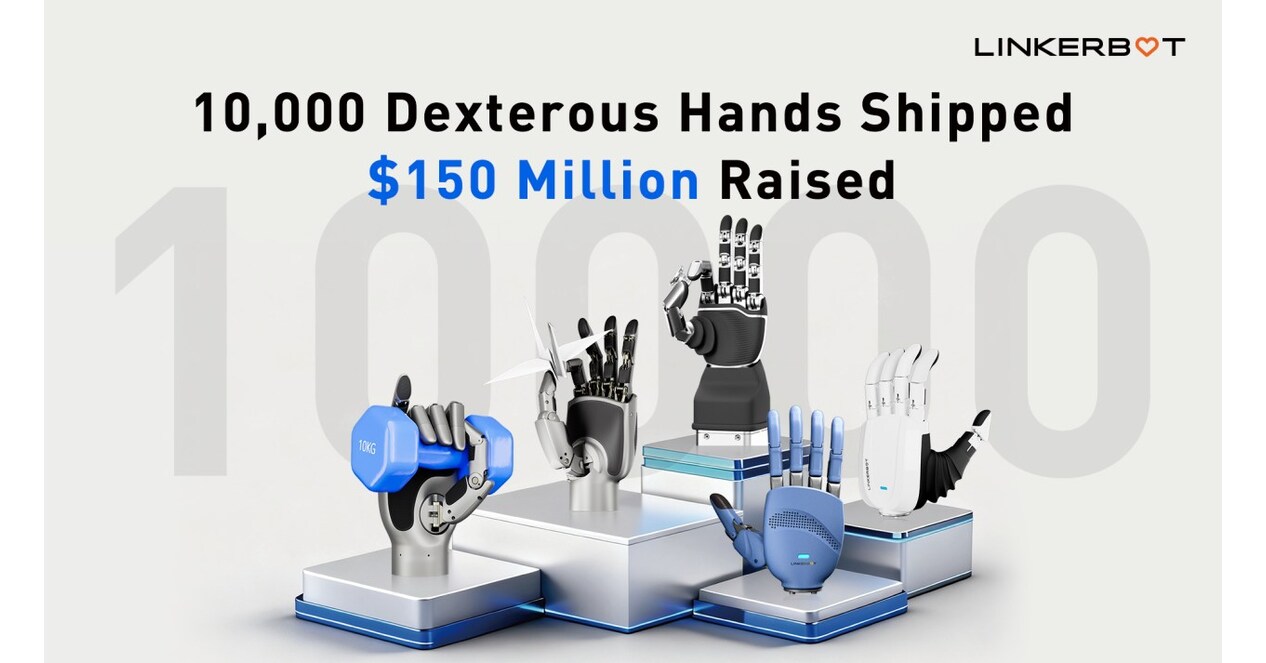
That is good news for robotics. It is not proof that a $20,000 home humanoid will fold laundry next year. Cheaper hands solve only one layer of the problem. The robot still needs arms strong enough to use those hands, tactile and force data, robust autonomy, safe behavior near people, and a service network that can replace broken fingers without turning the whole machine into expensive e-waste.
Why are robot hands becoming a supply-chain story?
For years, the practical end of home robotics avoided human-like hands. Robot vacuums used brushes. Delivery robots used cargo boxes. Companion robots used faces, wheels, speakers, and cameras. Even serious mobile manipulators often used a simple gripper because two or three controlled surfaces are easier to model, cheaper to repair, and less likely to snag on the world.
A humanoid changes that trade-off. If the sales pitch is "works in a human home," the robot must eventually operate human tools. Door handles, cabinet pulls, cloth, buttons, spray bottles, cutlery, mugs, and folded packaging were not designed for a vacuum dock. They were designed around hands.
That is the supply-chain opening LinkerBot is trying to occupy. Its official Chinese site describes LinkerBot as a provider of high-performance dexterous robotic hands, including L10, L20, and L30 product families, while the PRNewswire release says the lineup spans 6 to 42 degrees of freedom and includes hardware plus an "Open TeleDex" teleoperation system and "LinkerSkillNet" software ecosystem. A native-language Sina/Titanium Media interview with founder Zhou Yong frames the same thesis more bluntly: hands are the core interface for robots entering human environments, and scaling hands is also a way to scale skill data.
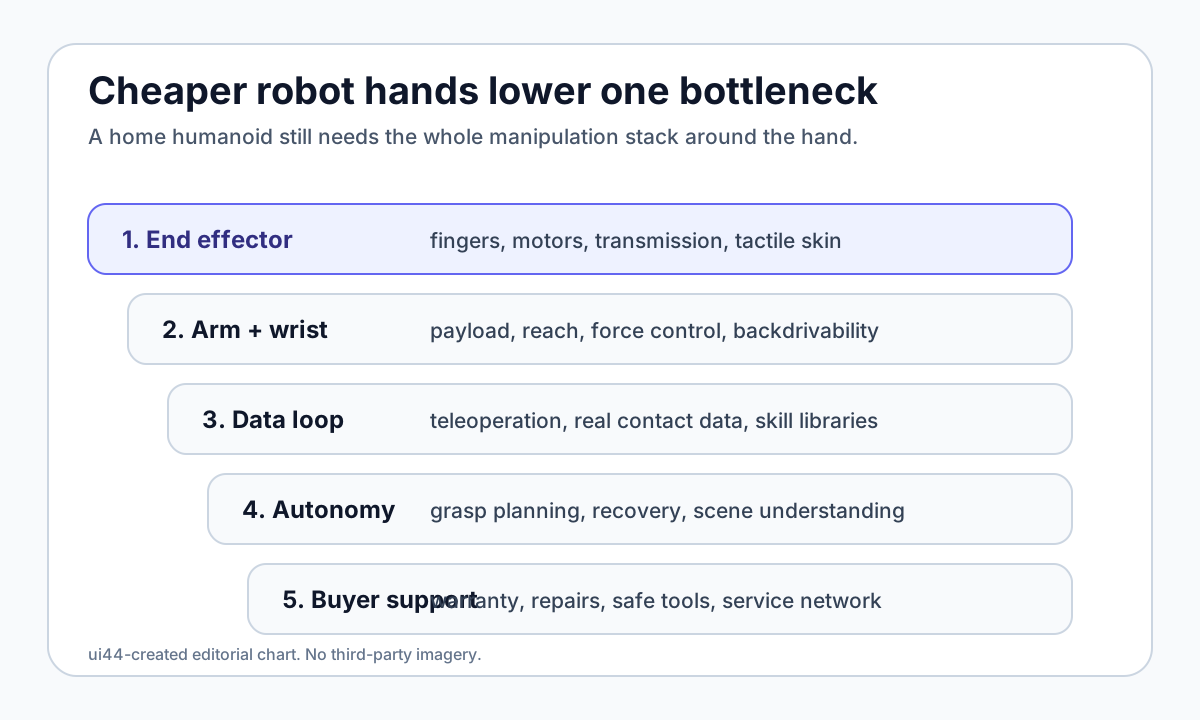
The key buyer-facing point is simple: if hands become modular components bought from specialists, humanoid companies do not all have to invent fingers from scratch. That can lower cost and speed iteration. It can also make robot hands more replaceable, which matters in homes where drops, jams, pets, kids, and ordinary wear will punish fragile hardware.
What LinkerBot appears to have proven
Treat LinkerBot's numbers as claimed milestones, not neutral market data. Even with that caveat, the pattern is notable.
LinkerBot claim or report
10,000 dexterous hands shipped
- Why it matters
- Suggests hand hardware is moving beyond one-off research builds
- Buyer caveat
- Shipped hands are not the same as useful home robots
LinkerBot claim or report
More than 1,000 high-DoF hands per month
- Why it matters
- Points to manufacturing repeatability and a supplier model
- Buyer caveat
- "High-DoF" is a broad category; specs vary by model
LinkerBot claim or report
Product range from 6 to 42 DoF
- Why it matters
- Lets different robots trade cost, strength, precision, and complexity
- Buyer caveat
- More DoF can mean more failure points if not engineered well
LinkerBot claim or report
Open TeleDex and LinkerSkillNet
- Why it matters
- Connects hands to teleoperation and reusable manipulation skills
- Buyer caveat
- Skill libraries still need task proof in real homes
LinkerBot claim or report
Sina interview claims of cost reduction through self-developed components, plastics, flexible factories, and scale
- Why it matters
- Explains how lower-cost hands could arrive
- Buyer caveat
- Reported prices and subsidy numbers should not be treated as global list prices
| LinkerBot claim or report | Why it matters | Buyer caveat |
|---|---|---|
| 10,000 dexterous hands shipped | Suggests hand hardware is moving beyond one-off research builds | Shipped hands are not the same as useful home robots |
| More than 1,000 high-DoF hands per month | Points to manufacturing repeatability and a supplier model | "High-DoF" is a broad category; specs vary by model |
| Product range from 6 to 42 DoF | Lets different robots trade cost, strength, precision, and complexity | More DoF can mean more failure points if not engineered well |
| Open TeleDex and LinkerSkillNet | Connects hands to teleoperation and reusable manipulation skills | Skill libraries still need task proof in real homes |
| Sina interview claims of cost reduction through self-developed components, plastics, flexible factories, and scale | Explains how lower-cost hands could arrive | Reported prices and subsidy numbers should not be treated as global list prices |
The mistake would be to read this as "cheap hands make home robots solved." The better reading is: hand hardware is becoming a purchasable subsystem. That is how mature hardware markets usually develop. Smartphone makers do not build every camera sensor. Automakers do not machine every component in-house. Home humanoid companies may eventually differentiate on autonomy, safety, service, software, and task proof while buying hands, actuators, batteries, cameras, or teleoperation systems from specialist suppliers.
What the ui44 database says about dexterity today
The ui44 database already shows a split between three groups: available mobile manipulators, developer humanoids, and high-dexterity platforms that remain commercial, research, or early-access products rather than ordinary home buys.
Robot
- ui44 status / price
- Available; $13,500 starting price
- Dexterity signal in the database
- 132 cm, 35 kg developer humanoid; optional Dex3-1 hands; standard arm load about 2 kg, about 3 kg on G1 EDU
- What it means for a buyer
- Cheap by humanoid standards, but still a developer platform with limited arm payload and roughly two-hour runtime
Robot
- ui44 status / price
- Active; public price not verified
- Dexterity signal in the database
- 23-DoF standard, 31-DoF gripper, and 41-DoF dexterous-hand configurations
- What it means for a buyer
- Useful signal that hand options are becoming modular even in competition/research humanoids
Robot
- ui44 status / price
- Active; contact sales
- Dexterity signal in the database
- Mobile manipulator with optional 7-DoF arms, interchangeable end effectors, and up to 50+ DoF with Hey5 hand
- What it means for a buyer
- Real manipulation stack, but research/enterprise economics rather than consumer appliance pricing
Robot
- ui44 status / price
- Active; no public list price
- Dexterity signal in the database
- 75-DoF hands and more than 1,000 tactile sensors
- What it means for a buyer
- Strong dexterity ambition, but commercial pilots are not the same as direct home availability
Robot
- ui44 status / price
- Active; no public price
- Dexterity signal in the database
- Force sensors, tactile arrays, about 5 hours of runtime, and 20 kg payload
- What it means for a buyer
- A serious industrial/home-direction platform, not a consumer checkout item
Robot
- ui44 status / price
- Development; early-access positioning
- Dexterity signal in the database
- 27-DoF cable-driven hands and a 0.1 N tactile-sensing claim
- What it means for a buyer
- Technically interesting, but public proof and final buyer terms remain limited
Robot
- ui44 status / price
- Development; no public price
- Dexterity signal in the database
- 15-DoF compliant hands, force response without tactile sensors, and more than 3 kg one-handed handling
- What it means for a buyer
- Shows a different path: compliance and force response rather than only more sensors
Robot
- ui44 status / price
- Active commercial robot; contact sales
- Dexterity signal in the database
- Two 7-DoF arms and PUDU DH11 hands with 6 active + 5 passive hand DoF
- What it means for a buyer
- Dexterous hands are already moving into service robots before homes
Robot
- ui44 status / price
- Available; $29,950
- Dexterity signal in the database
- Gripper-based mobile manipulator with 2.5 kg extended / 4 kg retracted arm payload and self-charging
- What it means for a buyer
- Less human-like, but more purchase-real today than most humanoid hand demos
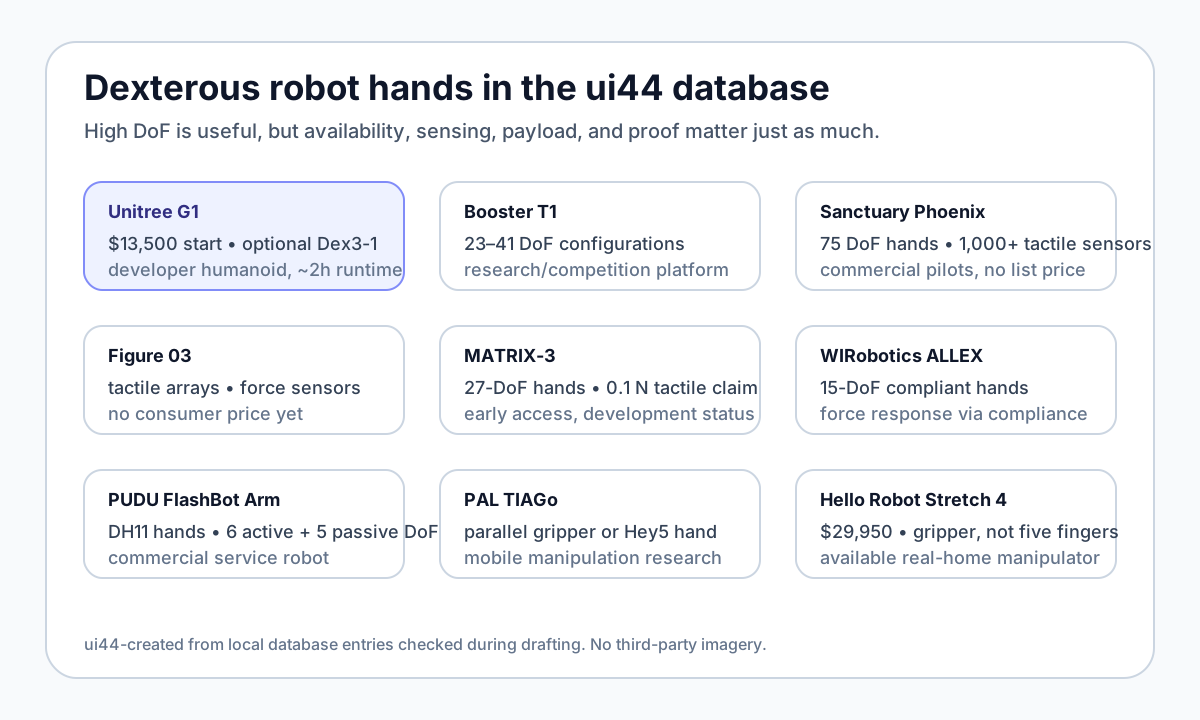
| Robot | ui44 status / price | Dexterity signal in the database | What it means for a buyer |
|---|---|---|---|
| Unitree G1 | Available; $13,500 starting price | 132 cm, 35 kg developer humanoid; optional Dex3-1 hands; standard arm load about 2 kg, about 3 kg on G1 EDU | Cheap by humanoid standards, but still a developer platform with limited arm payload and roughly two-hour runtime |
| Booster T1 | Active; public price not verified | 23-DoF standard, 31-DoF gripper, and 41-DoF dexterous-hand configurations | Useful signal that hand options are becoming modular even in competition/research humanoids |
| PAL TIAGo | Active; contact sales | Mobile manipulator with optional 7-DoF arms, interchangeable end effectors, and up to 50+ DoF with Hey5 hand | Real manipulation stack, but research/enterprise economics rather than consumer appliance pricing |
| Sanctuary Phoenix | Active; no public list price | 75-DoF hands and more than 1,000 tactile sensors | Strong dexterity ambition, but commercial pilots are not the same as direct home availability |
| Figure 03 | Active; no public price | Force sensors, tactile arrays, about 5 hours of runtime, and 20 kg payload | A serious industrial/home-direction platform, not a consumer checkout item |
| MATRIX-3 | Development; early-access positioning | 27-DoF cable-driven hands and a 0.1 N tactile-sensing claim | Technically interesting, but public proof and final buyer terms remain limited |
| WIRobotics ALLEX | Development; no public price | 15-DoF compliant hands, force response without tactile sensors, and more than 3 kg one-handed handling | Shows a different path: compliance and force response rather than only more sensors |
| PUDU FlashBot Arm | Active commercial robot; contact sales | Two 7-DoF arms and PUDU DH11 hands with 6 active + 5 passive hand DoF | Dexterous hands are already moving into service robots before homes |
| Hello Robot Stretch 4 | Available; $29,950 | Gripper-based mobile manipulator with 2.5 kg extended / 4 kg retracted arm payload and self-charging | Less human-like, but more purchase-real today than most humanoid hand demos |
This is why cheaper hands could matter first for developers, labs, factories, service pilots, and early adopter platforms. They reduce the cost of trying manipulation. They do not automatically make the robot safe, autonomous, quiet, repairable, or useful in a kitchen at 7:30 a.m.
The cost curve can move before home usefulness does
A lower-cost dexterous hand can still change the home-robot timeline in three ways.
First, it increases experimentation. If a five-finger hand costs tens of thousands of dollars, far fewer labs and startups will attach one to a mobile base and collect contact data. If usable hands fall into the low-thousands range for some configurations, more teams can try laundry, drawers, dish racks, food packaging, appliance buttons, and tool use.
Second, it separates the robot from the end effector. A future home robot may not ship with one universal hand forever. The hand could be a replaceable module with a stronger gripper for chores, a softer hand for eldercare, or a cheaper replacement assembly for repairs. That is especially important if fingers become consumable parts rather than museum-grade mechanisms.
Third, it pressures full-stack humanoid companies. If an outside supplier can make hands cheaply and reliably, then a humanoid maker has to justify why its in-house hand is better. The answer might be tighter integration, better tactile skin, higher force, safer compliance, or better autonomy data. But it needs to be an answer buyers can see in tests, not just in a launch video.
The important caveat is that a robot hand is not a whole manipulation system. A hand with many degrees of freedom can still fail if the wrist is weak, the arm cannot reach the shelf, the robot cannot detect slip, the planner cannot recover from a bad grasp, or the warranty makes every broken finger a painful support case.
What cheaper hands still do not solve
There are at least six unsolved buyer questions that cheaper hands do not remove.
1. Arm payload and reach. The hand may be capable, but the arm still needs to lift the object, keep it stable, and reach useful places. Unitree G1's database entry is a good reminder: a $13,500 starting price is exciting, but standard arm payload is still around 2 kg and the platform is aimed at development.
2. Tactile proof. "Dexterous" can mean finger count, joint count, or real contact awareness. A buyer should ask whether the robot can detect slip, force, object deformation, and bad grasps in live tasks.
3. Recovery behavior. The hard part is not picking up one mug once. It is noticing when the mug is slipping, choosing not to pour, setting it down safely, and trying again.
4. Durability. Hands touch everything. They will hit counters, pinch fabric, jam against drawers, drag on tables, and get dusty. A cheap hand that breaks often is not cheap in a home.
5. Safety near people. Home robots need compliant motion, pinch-point limits, force caps, emergency stops, and conservative behavior around children, pets, and fragile objects.
6. Service and parts. If a finger module fails, can the owner replace it? Is there a regional repair path? Is the hand calibrated after replacement? Is the warranty void if the robot grabs the wrong thing?
These questions matter more than whether a robot has five fingers in a photo. A gripper-based system like Hello Robot Stretch 4 may be less anthropomorphic, but it is available, open, self-charging, and built around real mobile manipulation. A five-finger humanoid can be more general in principle while being less useful in practice if the autonomy and support layer are immature.

What buyers should watch next
For the next wave of home humanoids, ignore the hand photo for a moment and ask for evidence in four areas.
Repeated task tests. A single clip of a hand folding cloth is not enough. Look for dozens or hundreds of trials with failure rates, reset counts, and intervention rates.
Task variety. Good hands should help across rigid, soft, slippery, fragile, and tool-use tasks. If every demo uses the same object on the same table, the skill may be narrow.
Repair terms. A home robot hand is a wear component. Buyers should expect finger modules, skins, tendon/linkage parts, and calibration service to be clear before trusting a robot with daily chores.
Supplier transparency. If a humanoid company uses an outside hand supplier, that is not automatically bad. It may be a strength. But the buyer should know whether the hand is proprietary, replaceable, field-serviceable, and supported in their region.
Bottom line: cheaper hands are necessary, not sufficient
LinkerBot's rise is a strong robotics signal because hands sit at the exact boundary between AI hype and physical usefulness. A cheaper, higher-volume robot hand supply chain could make experimentation faster and lower the bill of materials for future humanoids. It could also create more standardized parts, more teleoperation data, and more pressure on companies to prove real manipulation instead of just walking.
But for home buyers, the conclusion is still cautious. A good hand does not make a good home robot. The useful robot is the one that combines hand hardware with safe arms, tactile feedback, recovery behavior, software updates, clear service, and honest task evidence.
So yes, cheaper dexterous hands matter. They are one of the reasons home humanoids may eventually move from staged demos to practical chores. Just do not confuse the hand supply chain arriving with the home robot problem being solved.
Related in the database
Use this article as a warranty and coverage workflow
Turn the article into a warranty and coverage pass grounded in the robots and manufacturers it actually references.
LinkerBot Hands: Cheaper Humanoid Dexterity already points you toward 9 linked robots, 9 manufacturers, and 5 countries inside the ui44 database. That matters because strong buyer guidance is easier to apply when you can move immediately from a claim or warning into concrete product pages, manufacturer directories, component explainers, and country-level context instead of treating the article as an isolated opinion piece. The fastest next step is to turn the article into a shortlist workflow: open the linked robot pages, verify which specs are actually published for those models, then compare the surrounding manufacturer and component context before you decide whether the underlying claim changes your buying plan.
For this topic, the useful discipline is to separate the editorial lesson from the catalog evidence. The article gives you the framing, but the robot pages tell you what each product actually ships with today: sensor stack, connectivity methods, listed price, release timing, category, and support-relevant compatibility notes. The manufacturer pages then show whether you are looking at a one-off launch, a broader lineup pattern, or a company that spans multiple categories. That layered workflow reduces the risk of buying on a single marketing phrase or a single support FAQ.
The most practical move is to keep warranty language and product context together. Compare the linked robots first, then check whether the manufacturer pages suggest a mature service lane or a more limited lineup. On this article, G1, Booster T1, and TIAGo are the right place to start. If you want a quick working shortlist, open Compare G1, Booster T1, and TIAGo next, then keep this article open as the reasoning layer while you compare structured data side by side.
Practical Takeaway
Every robot, manufacturer, category, component, and country reference below resolves to a real ui44 page, keeping the follow-up path grounded in database records rather than generic advice.
Suggested next steps in ui44
- Compare the listed price, release timing, and category fit of the linked robots before you treat warranty length as a direct value proxy.
- Open Unitree to see whether the brand has several relevant models in the same lane or whether the article is centered on one flagship product.
- Record what the article proves, what still depends on seller or region rules, and which consumables or battery-related details you still need to verify externally.
- Use Compare G1, Booster T1, and TIAGo before checkout so the warranty conversation stays anchored to a real shortlist.
- Do not treat the article as the final source of truth on coverage terms. Treat it as the framing layer that tells you which documentation you still need to inspect before purchase.
Robot profiles worth opening next
Use the linked product pages as the evidence layer
The linked robot pages are where this article becomes operational. Instead of asking whether the headline is interesting, use the robot entries to inspect the actual mix of sensors, connectivity options, batteries, pricing, release timing, and stated capabilities attached to the products mentioned in the article. That is the easiest way to see whether the warning or opportunity described here affects one product family, a specific design pattern, or an entire buying lane.
G1 is tracked on ui44 as a available humanoid robot from Unitree. The database currently records a listed price of $13,500, a release date of 2024-05-13, ~2 hours battery life, Not disclosed charging time, and a published stack that includes Depth Camera, 3D LiDAR, and 4 Microphone Array plus Wi-Fi 6 and Bluetooth 5.2.
For warranty and coverage questions, the robot page gives you the operating context that fine print often leaves out. Review the published capability mix, including Bipedal Walking, Object Manipulation, and Dexterous Hands (optional Dex3-1), and the listed battery and charging profile before deciding whether a coverage term meaningfully reduces your ownership risk or merely sounds reassuring in isolation.
Booster T1
Booster Robotics · Humanoid · Active
Booster T1 is tracked on ui44 as a active humanoid robot from Booster Robotics. The database currently records a listed price of $29,800, a release date of 2024, 2 hours walking, 4 hours standing battery life, Not disclosed charging time, and a published stack that includes Intel RealSense D455 RGBD Depth Camera, 9-axis IMU, and Circular 6-Mic Array plus Wi-Fi 6 and Bluetooth 5.2.
For warranty and coverage questions, the robot page gives you the operating context that fine print often leaves out. Review the published capability mix, including 23-41 Degrees of Freedom (version-dependent), Bipedal Walking & Running, and Self-Recovery (prone to standing), and the listed battery and charging profile before deciding whether a coverage term meaningfully reduces your ownership risk or merely sounds reassuring in isolation.
TIAGo
PAL Robotics · Research · Active
TIAGo is tracked on ui44 as a active research robot from PAL Robotics. The database currently records a listed price of Price TBA, a release date of 2015, 4–5h (1 battery) / 8–10h (2 batteries) battery life, Not disclosed charging time, and a published stack that includes RGB-D Camera, Force/Torque Sensor (wrist), and Laser Range Finder plus Wi-Fi and Ethernet.
For warranty and coverage questions, the robot page gives you the operating context that fine print often leaves out. Review the published capability mix, including Autonomous Navigation, Object Manipulation, and Pick and Place, and the listed battery and charging profile before deciding whether a coverage term meaningfully reduces your ownership risk or merely sounds reassuring in isolation.
Phoenix
Sanctuary AI · Humanoid · Active
Phoenix is tracked on ui44 as a active humanoid robot from Sanctuary AI. The database currently records a listed price of Price TBA, a release date of 2023-05-16, Not disclosed battery life, Not disclosed charging time, and a published stack that includes Tactile Sensors (1000+), Vision System, and Proprioception plus Wi-Fi and 5G.
For warranty and coverage questions, the robot page gives you the operating context that fine print often leaves out. Review the published capability mix, including Human-like Dexterity, Retail Tasks, and Assembly Work, and the listed battery and charging profile before deciding whether a coverage term meaningfully reduces your ownership risk or merely sounds reassuring in isolation.
Figure 03 is tracked on ui44 as a active humanoid robot from Figure AI. The database currently records a listed price of Price TBA, a release date of 2025-10-09, ~5 hours battery life, Not disclosed charging time, and a published stack that includes Stereo Vision, Depth Cameras, and Force Sensors plus Wi-Fi and Bluetooth.
For warranty and coverage questions, the robot page gives you the operating context that fine print often leaves out. Review the published capability mix, including Complex Manipulation, Warehouse Work, and Manufacturing Tasks, and the listed battery and charging profile before deciding whether a coverage term meaningfully reduces your ownership risk or merely sounds reassuring in isolation.
Manufacturer context behind the article
Check whether this is one product story or a broader company pattern
Manufacturer pages add the support context that individual product pages cannot show on their own. They help you check whether the article is pointing at one coverage promise or at a company with a broader service footprint and multiple products to maintain.
Unitree
ui44 currently tracks 2 robots from Unitree across 1 category. The company is grouped under China, and the current catalog footprint on ui44 includes H1, G1.
That wider brand context matters because support confidence is easier to judge when you can see the company’s overall footprint, not just one warranty phrase attached to one product. A broader tracked lineup can change how you interpret the article’s coverage discussion. The category mix here currently points toward Humanoid as the most useful next route if you want to see whether this article reflects a wider pattern inside the brand.
Booster Robotics
ui44 currently tracks 3 robots from Booster Robotics across 1 category. The company is grouped under China, and the current catalog footprint on ui44 includes Booster K1, Booster T2, Booster T1.
That wider brand context matters because support confidence is easier to judge when you can see the company’s overall footprint, not just one warranty phrase attached to one product. A broader tracked lineup can change how you interpret the article’s coverage discussion. The category mix here currently points toward Humanoid as the most useful next route if you want to see whether this article reflects a wider pattern inside the brand.
PAL Robotics
ui44 currently tracks 5 robots from PAL Robotics across 1 category. The company is grouped under Spain, and the current catalog footprint on ui44 includes TALOS, TIAGo, REEM-C.
That wider brand context matters because support confidence is easier to judge when you can see the company’s overall footprint, not just one warranty phrase attached to one product. A broader tracked lineup can change how you interpret the article’s coverage discussion. The category mix here currently points toward Research as the most useful next route if you want to see whether this article reflects a wider pattern inside the brand.
Sanctuary AI
ui44 currently tracks 1 robot from Sanctuary AI across 1 category. The company is grouped under Canada, and the current catalog footprint on ui44 includes Phoenix.
That wider brand context matters because support confidence is easier to judge when you can see the company’s overall footprint, not just one warranty phrase attached to one product. A broader tracked lineup can change how you interpret the article’s coverage discussion. The category mix here currently points toward Humanoid as the most useful next route if you want to see whether this article reflects a wider pattern inside the brand.
Broaden the scan without leaving the database
Categories, components, and countries add the wider context
Category framing
Category pages are useful when the article touches a buying pattern that shows up across brands. A category route helps you confirm whether the linked products sit in a narrow niche or whether the same question should be tested across a larger field of alternatives.
Humanoid
The Humanoid category page currently groups 129 tracked robots from 92 manufacturers. ui44 describes this lane as: Full-size bipedal humanoid robots built to work alongside people — from factory floors to household tasks. Compare the cutting edge of humanoid robotics.
That makes the category route a practical follow-up when you want to check whether the products linked in this article are typical for the lane or whether they sit at one edge of the market. Useful starting examples currently include NEO, EVE, Mornine M1.
Research
The Research category page currently groups 49 tracked robots from 39 manufacturers. ui44 describes this lane as: Academic and research robotics platforms pushing the boundaries of what machines can learn and do in the lab and beyond.
That makes the category route a practical follow-up when you want to check whether the products linked in this article are typical for the lane or whether they sit at one edge of the market. Useful starting examples currently include HRP-4C, HRP-5P, NAO6.
Country and ecosystem context
Country pages give extra context when support practices, launch sequencing, regulatory posture, or manufacturer mix matter. They are not a substitute for model-level verification, but they do help you see which ecosystems cluster together and which manufacturers sit in the same regional field when you broaden the search beyond the article headline.
China
The China route currently groups 189 tracked robots from 87 manufacturers in ui44. That gives you a useful regional lens when the article points toward support practices, launch sequencing, or brand clusters that may share similar ecosystem assumptions.
On the current route, manufacturers like AGIBOT, Dreame, Unitree Robotics make the page a good way to broaden the scan without losing the regional context that often shapes availability, documentation style, and adjacent alternatives.
Spain
The Spain route currently groups 6 tracked robots from 2 manufacturers in ui44. That gives you a useful regional lens when the article points toward support practices, launch sequencing, or brand clusters that may share similar ecosystem assumptions.
On the current route, manufacturers like PAL Robotics, Star Robotics make the page a good way to broaden the scan without losing the regional context that often shapes availability, documentation style, and adjacent alternatives.
Canada
The Canada route currently groups 2 tracked robots from 2 manufacturers in ui44. That gives you a useful regional lens when the article points toward support practices, launch sequencing, or brand clusters that may share similar ecosystem assumptions.
On the current route, manufacturers like Clearpath Robotics, Sanctuary AI make the page a good way to broaden the scan without losing the regional context that often shapes availability, documentation style, and adjacent alternatives.
Questions to answer before you move from reading to buying
A follow-up FAQ built from the entities already linked in this article
Frequently Asked Questions
Which page should I open first after reading “LinkerBot Hands: Cheaper Humanoid Dexterity”?
Start with G1. That gives you a concrete product anchor for the article’s main claim. From there, branch into the manufacturer and component pages so you can tell whether the article is describing one specific model, a repeated brand pattern, or a wider technology issue that affects multiple shortlist options.
How do the manufacturer pages change the buying decision?
Unitree help you zoom out from one article and one product. On ui44 they show lineup breadth, category spread, and the neighboring robots tied to the same company. That context is useful when you are deciding whether a risk belongs to a single model, whether it shows up across a brand’s portfolio, and whether you should keep looking at alternatives before committing.
When should I switch from reading to side-by-side comparison?
Move into Compare G1, Booster T1, and TIAGo as soon as you understand the article’s main warning or promise. The article explains what to watch for, but the compare view is where you can check whether price, status, battery life, connectivity, sensors, and category fit still make the robot a good match for your own home and budget.
Where to go next in ui44
Keep the research chain inside the database
If you want to keep going, these follow-on pages give you the cleanest expansion path from article to research session. Open the comparison route first if you are deciding between products today. Open the manufacturer, category, and component routes if you still need to understand the broader pattern behind the claim.
Written by
ui44 Team
Published May 18, 2026
Share this article
Open a plain share link on X or Bluesky. No embeds, no widgets, no cookie baggage.