The honest answer is: HONOR Robot Phone is an embodied AI device, but not yet a true home robot. It matters because it shows where consumer electronics are heading: screens and cameras are beginning to move, look around, track people, and act less like passive slabs.
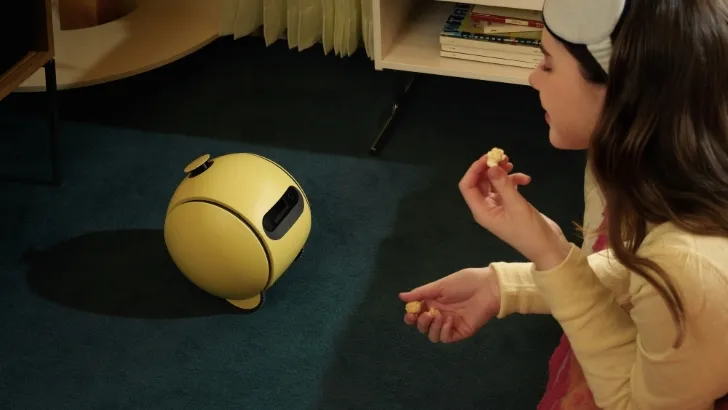
That puts HONOR in the same conversation as Samsung Ballie, Amazon Astro, Reachy Mini, Syncere Lume, and eventually full home humanoids like 1X NEO. But those devices do not all cross the same line. A robotic phone can be useful without being a robot that can help around the house.
What HONOR Actually Announced
HONOR's MWC 2026 announcement frames Robot Phone as part of its Augmented Human Intelligence strategy. The official claim is not that it will vacuum, carry, fold laundry, or patrol your home. The claim is that HONOR is putting motion and spatial awareness into a phone-like device.
The important disclosed pieces are:
- Robot-grade motion control through an ultra-compact 4-DoF gimbal system.
- Three-axis camera stabilization for smoother video and moving shots.
- AI Object Tracking so the camera can follow subjects in real time.
- Multimodal perception across sound, motion, and visual awareness.
- Expressive embodied behavior, including nods, head shakes, and dance-like motion.
- A 200MP camera system centered on video capture, tracking, and storytelling.
That is a credible robotics-adjacent feature set. A camera that physically aims itself, follows a person, and reacts with motion is not just another software filter. It has a body, sensors, actuators, and behavior.
But the body is still mostly a camera mechanism. It does not navigate a room. It does not pick up objects. It does not change the physical state of the home except by moving its own viewpoint. In ui44 terms, that makes it a robotic AI interface rather than a home robot.
The ui44 Home-Robot Test
The word "robot" is not binary. A robot vacuum, a telepresence robot, a social companion, and a humanoid helper all use the label differently. For buyers, the useful question is not "does it move?" The better question is: what work can its motion safely do in your home?
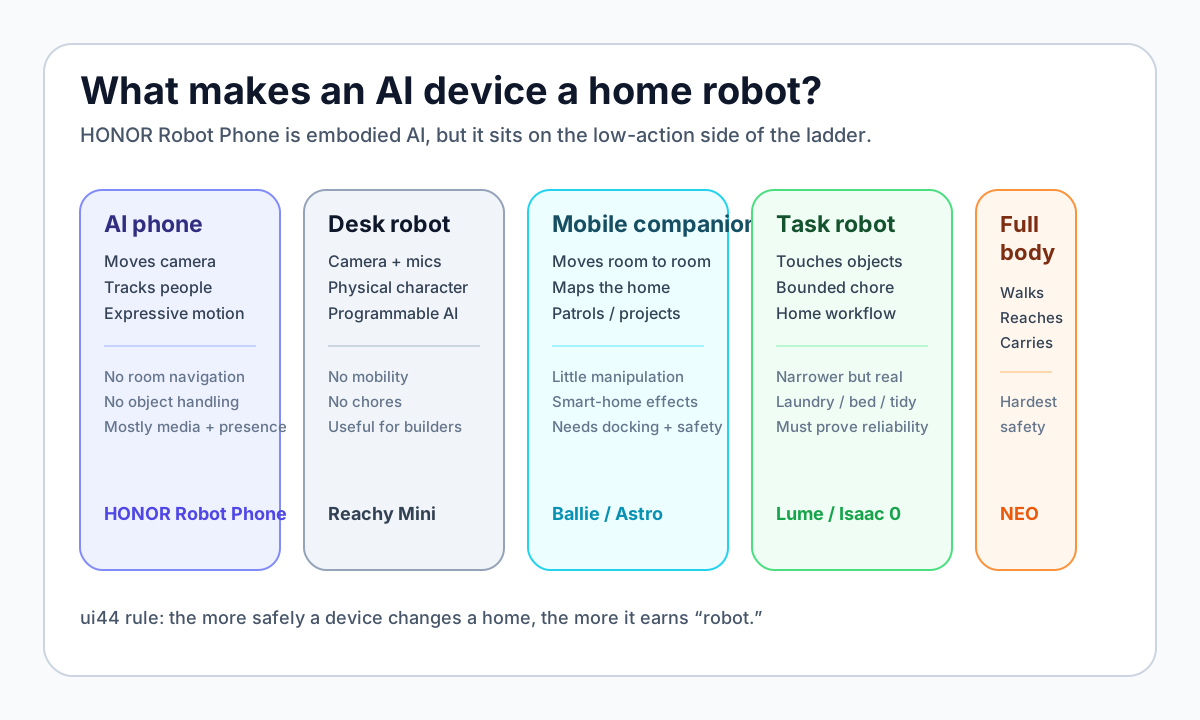
Here is the practical test we use:
Test
Senses the physical world
- Why it matters for a home robot
- Cameras, microphones, depth, tracking
- HONOR Robot Phone today
- Yes, based on disclosed features
Test
Moves with intent
- Why it matters for a home robot
- Actuators change pose or viewpoint
- HONOR Robot Phone today
- Yes, mainly the camera/gimbal
Test
Navigates the home
- Why it matters for a home robot
- Moves safely through rooms
- HONOR Robot Phone today
- No public evidence
Test
Manipulates objects
- Why it matters for a home robot
- Touches, lifts, folds, opens, or carries
- HONOR Robot Phone today
- No
Test
Changes the home state
- Why it matters for a home robot
- Cleans, delivers, monitors, assists, tidies
- HONOR Robot Phone today
- Mostly no
Test
Works without handholding
- Why it matters for a home robot
- Docks, recovers, updates, respects privacy
- HONOR Robot Phone today
- Unknown
| Test | Why it matters for a home robot | HONOR Robot Phone today |
|---|---|---|
| Senses the physical world | Cameras, microphones, depth, tracking | Yes, based on disclosed features |
| Moves with intent | Actuators change pose or viewpoint | Yes, mainly the camera/gimbal |
| Navigates the home | Moves safely through rooms | No public evidence |
| Manipulates objects | Touches, lifts, folds, opens, or carries | No |
| Changes the home state | Cleans, delivers, monitors, assists, tidies | Mostly no |
| Works without handholding | Docks, recovers, updates, respects privacy | Unknown |
By that standard, Robot Phone earns the "embodied AI" label more than the "home robot" label. It is closer to a moving AI camera companion than to an autonomous household helper.
That may sound dismissive, but it is not. The category below full robots is getting important. The first mainstream embodied AI products may not be humanoids at all. They may be small devices that track your face better during calls, frame family videos, project content, or make a smart-home assistant feel present in the room.
Why a Moving Phone Is Not Just a Gimmick
A static phone already has a camera, microphone, screen, AI assistant, and app ecosystem. So the burden on Robot Phone is clear: physical motion has to do something a normal phone cannot.
The strongest use case is autonomous framing. If the device can follow a speaker during a call, track a child during a video, rotate to capture an object, or react to a conversation with subtle motion, it becomes more like a small robot cinematographer. HONOR's own ecosystem page explicitly describes Robot Phone as a personal cinematographer that can automatically track and record video.
That is useful. It is also narrow. A device can be excellent at presence, framing, and interaction while still having no real household labor capability. That distinction matters because "embodied AI" is going to become marketing language for many devices that move slightly.
Reachy Mini is a helpful comparison. It is a real robot, but a small one: ui44 lists it as a pre-order desktop companion from Pollen Robotics and Hugging Face, starting at $299 for the Lite kit or $449 for the wireless model. It has a wide-angle camera, four microphones, expressive head/body motion, Python programmability, and Hugging Face model integration. It is much more clearly a robot than a phone, but it still does not navigate your home or do chores.

That is the middle ground Robot Phone is entering: devices that give AI a physical presence without giving it a useful household body.
The Difference Between Presence and Labor
Home robots become genuinely interesting when they cross from presence into labor.
Presence means the robot can make interaction feel more natural. It might look toward you, follow your voice, display emotion, move a camera, or join a call from a better angle. Ballie, Astro, Reachy Mini, and Robot Phone all live partly in this world.
Labor means the robot can change something in the room: pick up a sock, deliver medicine, open a cabinet, fold a shirt, reset a pillow, patrol while avoiding pets, or load a dishwasher. That is much harder.
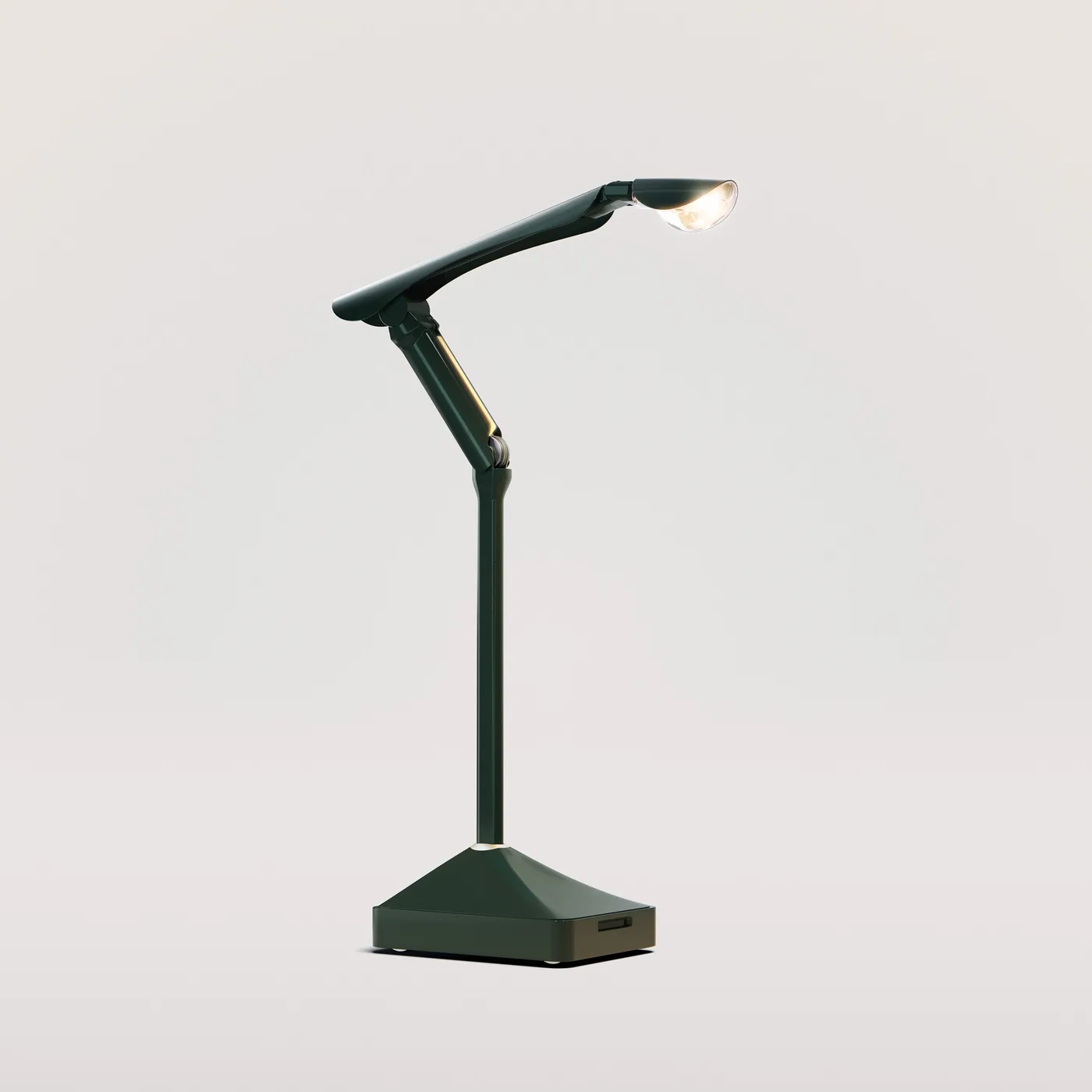
This is why Syncere Lume is a more serious home-robot comparison than it first appears. Lume looks like a sculptural floor lamp, but ui44 tracks it as a $1,499 pre-order home assistant because the pitch is physical household work: laundry folding, bed making, pillow resetting, and simple pick-and-place tidying. Many specs are still undisclosed, and the claims need proof, but Lume is at least aiming at the labor side of the line.
Weave Isaac 0 is another useful contrast. It is not humanoid and not mobile, but it attacks one bounded household task. ui44 lists Isaac 0 at $7,999 upfront or $450/month, folding common laundry items in roughly 30-90 minutes per load with remote teleoperation assist when needed. That is less flashy than a robot phone, but it is closer to a useful home robot because it performs a specific chore.
Robot Phone does not need to fold laundry to be worth watching. But if the question is "is it a home robot?", task effect matters more than personality.
How It Compares With Ballie and Astro
The closest mainstream category is the mobile home companion.
Samsung Ballie is a development-stage rolling AI companion with SmartThings control, a projector, cameras, environmental sensors, and Google Gemini plus Samsung language models. Samsung's materials describe a robot that can navigate the home, adjust lighting, greet people at the door, personalize schedules, set reminders, project content, and process audio, voice, visual, and environmental data. ui44 still marks Ballie as Development with no confirmed price or release timing, because years of demos have not yet turned into a stable shipping product.
Amazon Astro is more concrete. ui44 lists Astro at $1,599.99 invite-only pricing, with a wheeled body, 10.1-inch touchscreen, Alexa, Ring integration, Visual ID, a 1080p periscope camera with a 132-degree field of view, and autonomous home patrol. Astro is not a manipulator, but it can move through the home and perform security/telepresence tasks.
Robot Phone sits below both. It may track a person better than a static phone, and it may make video calls feel more expressive, but it does not appear to have Ballie's room-scale autonomy or Astro's patrol role.
That makes its best label something like robotic smartphone companion. It is not fake. It is just not the same category as a mobile home robot.
Where HONOR's Humanoid Strategy Fits
The more important signal may be HONOR's humanoid announcement, not the Robot Phone itself. HONOR says its first humanoid robot points toward shopping assistance, workplace inspections, and especially supportive companionship. The company argues that its smartphone and connected-device ecosystem could help future embodied AI devices recognize users, understand needs, and provide personalized physical assistance.
That is plausible as strategy. Smartphone companies understand cameras, microphones, batteries, displays, identity, notifications, app ecosystems, and consumer support. Those are not enough to build a home robot, but they are valuable ingredients.
The hard missing ingredients are robotics-specific:
- Safe mobility around pets, kids, rugs, stairs, thresholds, and clutter.
- Manipulation that can touch ordinary objects without breaking them.
- Recovery behavior when a grasp fails, a room changes, or Wi-Fi drops.
- Privacy guarantees for always-present cameras and microphones.
- Maintenance and support for motors, batteries, sensors, and wear parts.
- A real task model that explains why the robot exists beyond novelty.
1X NEO shows the scale of that jump. ui44 lists NEO as a $20,000 pre-order home humanoid, 167 cm tall, 30 kg, with roughly 4 hours of battery life, RGB and depth sensing, tactile skin, a microphone array, Wi-Fi/Bluetooth, and a soft, lightweight design intended for safe home interaction. Even then, 1X's own materials include Expert Mode because early home robots will still need human help for tasks they cannot yet do autonomously.

That gap is the whole story. A robot phone gives AI a moving face. A home humanoid needs a safe body, useful hands, and enough autonomy to justify being in your space.
Should Buyers Care About Robot Phone?
Yes, but not because it will replace a home robot.
Robot Phone matters as an early consumer experiment in embodied interfaces. If HONOR can make motion feel useful instead of cute, it may teach the market three things that will matter for future home robots:
- People may accept AI devices that look around, follow them, and express intent physically.
- A moving camera can make telepresence and content capture feel more natural.
- Phone ecosystems may become the control layer for more capable robots later.
The risk is that "embodied AI" becomes a fuzzy label for any gadget with a motor. That would make buying decisions worse. Consumers need to separate five levels:
- AI assistant: software in a phone, speaker, or display.
- Embodied AI interface: a device that moves or reacts physically.
- Desktop/social robot: a small physical character with sensors and motion.
- Mobile home robot: a device that maps, navigates, docks, and performs a room-scale job.
- Home helper robot: a robot that safely manipulates objects or completes chores.
Robot Phone is somewhere between levels 1 and 2. Reachy Mini is level 3. Astro and Ballie aim at level 4. Lume, Isaac 0, Stretch 3, and NEO are attempts at level 5, each with very different scope and maturity.
What Would Make a Robot Phone a Real Home Robot?
A future Robot Phone could move up the ladder, but it would need more than a better gimbal. The interesting possibilities are docking, room awareness, smart home control, and robot-to-robot orchestration.
For example, a phone-like device could become the personal identity and command center for a home robot fleet. It could know who is speaking, hand off tasks to a cleaning robot, frame a video call while a mobile robot moves nearby, or act as a privacy switch for cameras in the home. HONOR's AI Connect Platform goal of integrating more than 20,000 AI services by the end of 2026 suggests the company is thinking in ecosystem terms, not just one gadget.
But the product would still need physical agency. A real home robot can answer "what changed because this robot acted?" If the answer is "the video was framed better," that is useful. If the answer is "the dishwasher was loaded, the shirt was folded, the medicine was delivered, or the house was checked while I was away," that is home robotics.
Bottom Line
HONOR Robot Phone is not a gimmick, and it is not a home robot. It is a sign that consumer AI devices are gaining bodies.
That is worth tracking because many people will meet embodied AI through small, familiar devices before they ever trust a humanoid in the kitchen. A phone that moves its camera, follows a person, and reacts with body language could make AI feel more present. It could also train buyers to ask better questions about motion, privacy, autonomy, and usefulness.
For now, though, ui44 would not put HONOR Robot Phone in the same bucket as NEO, Astro, Lume, Isaac 0, or Stretch 3. It belongs in the emerging category between smartphone and robot: an embodied AI device with robotic behaviors.
That category may be more important than it sounds. The first mass-market home robot may not arrive as a humanoid but as a familiar consumer device that slowly earns more physical agency. HONOR Robot Phone is one step on that path — just not the endpoint.
If you want to compare the real robots around this boundary, start with Samsung Ballie, Amazon Astro, Reachy Mini, Syncere Lume, and 1X NEO, then use /compare to see which ones actually move, navigate, manipulate, and ship.
Related in the database
Use this article as a privacy verification workflow
Turn the article into a privacy verification pass grounded in the robots, manufacturers, and components it actually references.
HONOR Robot Phone: Is It a Home Robot? already points you toward 6 linked robots, 6 manufacturers, and 5 countries inside the ui44 database. That matters because strong buyer guidance is easier to apply when you can move immediately from a claim or warning into concrete product pages, manufacturer directories, component explainers, and country-level context instead of treating the article as an isolated opinion piece. The fastest next step is to turn the article into a shortlist workflow: open the linked robot pages, verify which specs are actually published for those models, then compare the surrounding manufacturer and component context before you decide whether the underlying claim changes your buying plan.
For this topic, the useful discipline is to separate the editorial lesson from the catalog evidence. The article gives you the framing, but the robot pages tell you what each product actually ships with today: sensor stack, connectivity methods, listed price, release timing, category, and support-relevant compatibility notes. The manufacturer pages then show whether you are looking at a one-off launch, a broader lineup pattern, or a company that spans multiple categories. That layered workflow reduces the risk of buying on a single marketing phrase or a single support FAQ.
Use the robot pages to confirm which products actually expose cameras, microphones, Wi-Fi, or voice systems, then use the manufacturer pages to decide how much of the privacy question seems product-specific versus brand-wide. On this route cluster, Ballie, Astro, and Reachy Mini form the fastest reality check. If you want a quick working shortlist, open Compare Ballie, Astro, and Reachy Mini next, then keep this article open as the reasoning layer while you compare structured data side by side.
Practical Takeaway
Every robot, manufacturer, category, component, and country reference below resolves to a real ui44 page, keeping the follow-up path grounded in database records rather than generic advice.
Suggested next steps in ui44
- Open Ballie and note the listed sensors, connectivity methods, and voice stack before you interpret any policy claim.
- Cross-check the wider brand context on Samsung so you can see whether the privacy question touches one model or a broader lineup.
- Use the linked component pages to confirm how common the relevant sensors and connectivity layers are across the database.
- Keep a short note of which policy layers you checked, which device features are actually present on the robot page, and which items still depend on region- or app-level confirmation.
- Finish with Compare Ballie, Astro, and Reachy Mini so the policy reading sits next to structured product data.
Robot profiles worth opening next
Use the linked product pages as the evidence layer
The linked robot pages are where this article becomes operational. Instead of asking whether the headline is interesting, use the robot entries to inspect the actual mix of sensors, connectivity options, batteries, pricing, release timing, and stated capabilities attached to the products mentioned in the article. That is the easiest way to see whether the warning or opportunity described here affects one product family, a specific design pattern, or an entire buying lane.
Ballie is tracked on ui44 as a development companions robot from Samsung. The database currently records a listed price of Price TBA, a release date of TBD, Not officially disclosed battery life, Not officially disclosed charging time, and a published stack that includes Camera, Spatial Sensors, and Environmental Sensors plus Wi-Fi and SmartThings.
For privacy-focused reading, this page matters because it shows the concrete device surface behind the policy discussion. Use it to verify whether Ballie combines sensors and connectivity in a way that could change the in-home data footprint, and compare the listed capabilities such as Autonomous Home Navigation, Built-in Projector (Wall & Floor), and Smart Home Control via SmartThings with any cloud, app, or voice layers, including Bixby.
Astro is tracked on ui44 as a active security & patrol robot from Amazon. The database currently records a listed price of $1,599, a release date of 2021, Not officially disclosed battery life, Not officially disclosed charging time, and a published stack that includes 5MP Bezel Camera, 1080p Periscope Camera (132° FOV), and Infrared Vision plus Wi-Fi 802.11ac and Bluetooth.
For privacy-focused reading, this page matters because it shows the concrete device surface behind the policy discussion. Use it to verify whether Astro combines sensors and connectivity in a way that could change the in-home data footprint, and compare the listed capabilities such as Autonomous Home Patrol, Visual ID (face recognition), and Remote Home Monitoring with any cloud, app, or voice layers, including Amazon Alexa.
Reachy Mini
Pollen Robotics · Companions · Available
Reachy Mini is tracked on ui44 as a available companions robot from Pollen Robotics. The database currently records a listed price of $299, a release date of 2025-07, Not officially disclosed battery life, Not officially disclosed charging time, and a published stack that includes 120° 12 MP autofocus wide-angle camera, 4 PDM MEMS digital microphones, and 5 W speaker plus USB (Reachy Mini Lite via host computer) and Wi-Fi (wireless Reachy Mini).
For privacy-focused reading, this page matters because it shows the concrete device surface behind the policy discussion. Use it to verify whether Reachy Mini combines sensors and connectivity in a way that could change the in-home data footprint, and compare the listed capabilities such as 6-DoF head movement, Full body rotation, and Animated antennas for expressive interaction with any cloud, app, or voice layers.
Lume is tracked on ui44 as a pre-order home assistants robot from Syncere. The database currently records a listed price of $1,999, a release date of 2026-04-15, Not officially disclosed battery life, Not officially disclosed charging time, and a published stack that includes Vision system (officially referenced as part of ClearTouch) plus its listed connectivity stack.
For privacy-focused reading, this page matters because it shows the concrete device surface behind the policy discussion. Use it to verify whether Lume combines sensors and connectivity in a way that could change the in-home data footprint, and compare the listed capabilities such as Laundry folding, Bed making, and Pillow resetting with any cloud, app, or voice layers.
NEO
1X Technologies · Humanoid · Pre-order
NEO is tracked on ui44 as a pre-order humanoid robot from 1X Technologies. The database currently records a listed price of $20,000, a release date of 2025-10-28, ~4 hours battery life, Not disclosed charging time, and a published stack that includes RGB Cameras, Depth Sensors, and Tactile Skin plus Wi-Fi and Bluetooth.
For privacy-focused reading, this page matters because it shows the concrete device surface behind the policy discussion. Use it to verify whether NEO combines sensors and connectivity in a way that could change the in-home data footprint, and compare the listed capabilities such as Household Chores, Tidying Up, and Safe Human Interaction with any cloud, app, or voice layers.
Manufacturer context behind the article
Check whether this is one product story or a broader company pattern
Manufacturer pages add the privacy context that individual product pages cannot show on their own. They help you check whether cameras, microphones, cloud accounts, app controls, and policy assumptions appear across a broader lineup or stay tied to one specific product story.
Samsung
ui44 currently tracks 2 robots from Samsung across 2 categorys. The company is grouped under South Korea, and the current catalog footprint on ui44 includes Ballie, Bespoke AI Jet Bot Steam Ultra.
That wider brand context matters because privacy questions rarely stop at one FAQ page. A manufacturer route helps you see whether the article is centered on one premium model or on a company that has several relevant products and therefore more than one place where the same policy or app assumptions might matter. The category mix here currently points toward Companions, Cleaning as the most useful next route if you want to see whether this article reflects a wider pattern inside the brand.
Amazon
ui44 currently tracks 1 robot from Amazon across 1 category. The company is grouped under USA, and the current catalog footprint on ui44 includes Astro.
That wider brand context matters because privacy questions rarely stop at one FAQ page. A manufacturer route helps you see whether the article is centered on one premium model or on a company that has several relevant products and therefore more than one place where the same policy or app assumptions might matter. The category mix here currently points toward Security & Patrol as the most useful next route if you want to see whether this article reflects a wider pattern inside the brand.
Pollen Robotics
ui44 currently tracks 2 robots from Pollen Robotics across 2 categorys. The company is grouped under France, and the current catalog footprint on ui44 includes Reachy 2, Reachy Mini.
That wider brand context matters because privacy questions rarely stop at one FAQ page. A manufacturer route helps you see whether the article is centered on one premium model or on a company that has several relevant products and therefore more than one place where the same policy or app assumptions might matter. The category mix here currently points toward Research, Companions as the most useful next route if you want to see whether this article reflects a wider pattern inside the brand.
Syncere
ui44 currently tracks 1 robot from Syncere across 1 category. The company is grouped under USA, and the current catalog footprint on ui44 includes Lume.
That wider brand context matters because privacy questions rarely stop at one FAQ page. A manufacturer route helps you see whether the article is centered on one premium model or on a company that has several relevant products and therefore more than one place where the same policy or app assumptions might matter. The category mix here currently points toward Home Assistants as the most useful next route if you want to see whether this article reflects a wider pattern inside the brand.
Broaden the scan without leaving the database
Categories, components, and countries add the wider context
Category framing
Category pages are useful when the article touches a buying pattern that shows up across brands. A category route helps you confirm whether the linked products sit in a narrow niche or whether the same question should be tested across a larger field of alternatives.
Companions
The Companions category page currently groups 53 tracked robots from 48 manufacturers. ui44 describes this lane as: Social robots, robot pets, and elderly-care companions designed for emotional connection and everyday support at home.
That makes the category route a practical follow-up when you want to check whether the products linked in this article are typical for the lane or whether they sit at one edge of the market. Useful starting examples currently include PARO, Abi, Next-Generation Companion Robot.
Security & Patrol
The Security & Patrol category page currently groups 5 tracked robots from 5 manufacturers. ui44 describes this lane as: Autonomous surveillance and patrol robots that monitor homes, businesses, and perimeters — keeping watch without an operator on site.
That makes the category route a practical follow-up when you want to check whether the products linked in this article are typical for the lane or whether they sit at one edge of the market. Useful starting examples currently include Astro, Vision 60, K7 Autonomous Security Robot.
Country and ecosystem context
Country pages give extra context when support practices, launch sequencing, regulatory posture, or manufacturer mix matter. They are not a substitute for model-level verification, but they do help you see which ecosystems cluster together and which manufacturers sit in the same regional field when you broaden the search beyond the article headline.
South Korea
The South Korea route currently groups 9 tracked robots from 7 manufacturers in ui44. That gives you a useful regional lens when the article points toward support practices, launch sequencing, or brand clusters that may share similar ecosystem assumptions.
On the current route, manufacturers like ROBOTIS, Samsung, GenON make the page a good way to broaden the scan without losing the regional context that often shapes availability, documentation style, and adjacent alternatives.
USA
The USA route currently groups 89 tracked robots from 69 manufacturers in ui44. That gives you a useful regional lens when the article points toward support practices, launch sequencing, or brand clusters that may share similar ecosystem assumptions.
On the current route, manufacturers like Faraday Future, iRobot, Boston Dynamics make the page a good way to broaden the scan without losing the regional context that often shapes availability, documentation style, and adjacent alternatives.
France
The France route currently groups 8 tracked robots from 7 manufacturers in ui44. That gives you a useful regional lens when the article points toward support practices, launch sequencing, or brand clusters that may share similar ecosystem assumptions.
On the current route, manufacturers like Pollen Robotics, Aldebaran / Maxtronics, Aldebaran Robotics make the page a good way to broaden the scan without losing the regional context that often shapes availability, documentation style, and adjacent alternatives.
Questions to answer before you move from reading to buying
A follow-up FAQ built from the entities already linked in this article
Frequently Asked Questions
Which page should I open first after reading “HONOR Robot Phone: Is It a Home Robot?”?
Start with Ballie. That gives you a concrete product anchor for the article’s main claim. From there, branch into the manufacturer and component pages so you can tell whether the article is describing one specific model, a repeated brand pattern, or a wider technology issue that affects multiple shortlist options.
How do the manufacturer pages change the buying decision?
Samsung help you zoom out from one article and one product. On ui44 they show lineup breadth, category spread, and the neighboring robots tied to the same company. That context is useful when you are deciding whether a risk belongs to a single model, whether it shows up across a brand’s portfolio, and whether you should keep looking at alternatives before committing.
When should I switch from reading to side-by-side comparison?
Move into Compare Ballie, Astro, and Reachy Mini as soon as you understand the article’s main warning or promise. The article explains what to watch for, but the compare view is where you can check whether price, status, battery life, connectivity, sensors, and category fit still make the robot a good match for your own home and budget.
Where to go next in ui44
Keep the research chain inside the database
If you want to keep going, these follow-on pages give you the cleanest expansion path from article to research session. Open the comparison route first if you are deciding between products today. Open the manufacturer, category, and component routes if you still need to understand the broader pattern behind the claim.
Written by
ui44 Team
Published April 30, 2026
Share this article
Open a plain share link on X or Bluesky. No embeds, no widgets, no cookie baggage.