The company's official ARRI announcements say HONOR is bringing ARRI image science into next-generation consumer devices, with the first results planned for the upcoming HONOR Robot Phone later in 2026. HONOR's China announcement also says its imaging lab has been upgraded around a more cinema-oriented workflow, with ALEXA camera equipment entering the lab and the new imaging technology planned for Robot Phone before reaching the next Magic flagship line.
That is meaningful. It suggests HONOR wants the Robot Phone's moving camera to produce video that looks less like a normal phone clip and more like deliberate cinematography. But it does not prove the device has robot vision.
That distinction matters for home robot buyers. A camera can record a beautiful image without understanding the room. A robot has to localize itself, interpret objects, infer intent, respect privacy boundaries, and decide what to do next. Those are related problems, but they are not the same problem.
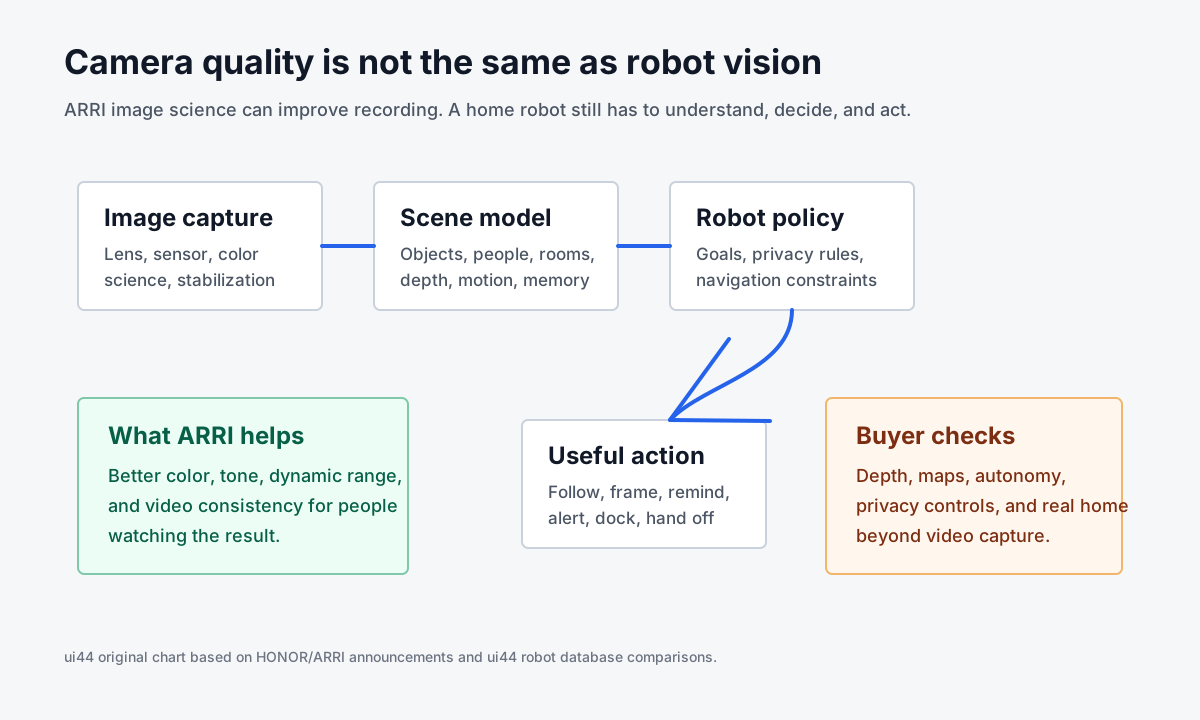
We already covered the category question in Is the HONOR Robot Phone a home robot?. This follow-up looks at a narrower buyer question: if HONOR really ships a phone with a robotic camera module and ARRI-tuned video, what would still need to be true before it deserves to be judged beside home robots like Amazon Astro, Samsung Ballie, Sony aibo, Loona, or Miko 3?
What HONOR and ARRI actually signal
The official HONOR/ARRI story is strongest on imaging, not autonomy.
HONOR's global announcement frames the collaboration around ARRI image science for consumer devices. The same page says the first results are planned for the upcoming HONOR Robot Phone later in 2026. HONOR's Chinese announcement goes further on lab context: it says HONOR is upgrading its imaging lab to a professional cinematic imaging lab, bringing ARRI ALEXA equipment into research use, and applying the jointly developed imaging technology first to Robot Phone and then more broadly to the Magic9 line.
For buyers, the positive read is straightforward:
- HONOR is not treating Robot Phone as a throwaway concept.
- The company is putting serious camera-brand credibility behind it.
- The Robot Phone's moving camera could be used for auto-framing, subject tracking, remote check-ins, family videos, pet videos, and creator-style motion shots.
- If the phone can physically aim the camera, better color and image consistency become more useful than they would be in a fixed selfie camera.
But the cautious read is just as important:
- ARRI is known for cinema camera systems and image science, not consumer home robot navigation.
- A beautiful video pipeline does not automatically provide depth understanding, room mapping, safe motion, or trustworthy autonomy.
- HONOR has not yet published the final Robot Phone sensor stack, price, battery behavior, privacy model, or specific home-automation behaviors.
- "Robot Phone" could still land closer to a camera-first mobile device than a true household robot.
That does not make the product uninteresting. It just changes what buyers should verify.
Camera quality helps humans. Robot vision helps the machine.
Camera quality is about what a person sees in the final image: color, tone, sharpness, dynamic range, noise, skin rendering, motion consistency, and the overall look of a clip. ARRI's reputation sits here. If HONOR can make a moving phone camera produce better-looking video, that is a real consumer benefit.
Robot vision is about what the machine understands. It asks different questions:
- Where am I in the room?
- What objects are nearby?
- Which things are people, pets, furniture, stairs, doors, toys, or cables?
- Is this person asking for attention, moving away, or trying to pass through?
- Can I move without colliding, startling someone, or entering a private area?
- If my view is blocked, how do I recover?
Those questions usually need more than a single pretty camera feed. They may need depth sensors, time-of-flight sensors, inertial measurement, microphones, floor sensing, local maps, identity recognition, obstacle avoidance, and rules that govern what the robot may do with the data it collects.
That is why robot buyers should be careful with the phrase "better vision." Better-looking video is one kind of vision. Better machine perception is another.
What the ui44 database shows
The home robots already in ui44's database make the gap clear.
Amazon Astro is listed at $1,599 and combines a 1080p periscope camera, a 5MP bezel camera, infrared vision, ultrasonic sensors, a laser ground sensor, infrared ground sensor, and a time-of-flight sensor. The point is not that Astro is perfect. It is that its home-monitoring value depends on movement, remote access, visual ID, Ring integration, obstacle handling, and navigation together. The camera is only one part of the system.
Samsung Ballie is still in development in the database with no confirmed price, but Samsung positions it around autonomous home navigation, projector utility, SmartThings control, pet and family monitoring, reminders, voice interaction, and environmental sensing. Ballie is not trying to be a cinema camera. Its promise is that a small rolling robot can understand enough of a home context to be useful.
temi V3 is a more commercial example, but its sensor stack is instructive: 360-degree LIDAR, two depth cameras, a 13MP RGB camera, an IMU, linear time-of-flight sensors, and centimeter-scale autonomous navigation claims. The camera matters, but the navigation layer is what lets the robot move through a space with purpose.
Sony aibo, listed at $3,199.99, uses a front camera, SLAM camera, time-of-flight sensing, ranging sensors, touch sensors, IMUs, microphones, motion sensing, and light sensing. Its value is not video quality. It is the embodied feedback loop: recognize people, respond socially, move, learn patterns, and recharge.
Even lower-priced companions show the same pattern. Loona, listed at $442, combines a 720p RGB camera with a 3D time-of-flight sensor, touch sensing, motion sensors, and microphones. Miko 3, listed at €269, combines a 720p wide-angle camera with time-of-flight ranging, odometry, microphones, and touch sensors.
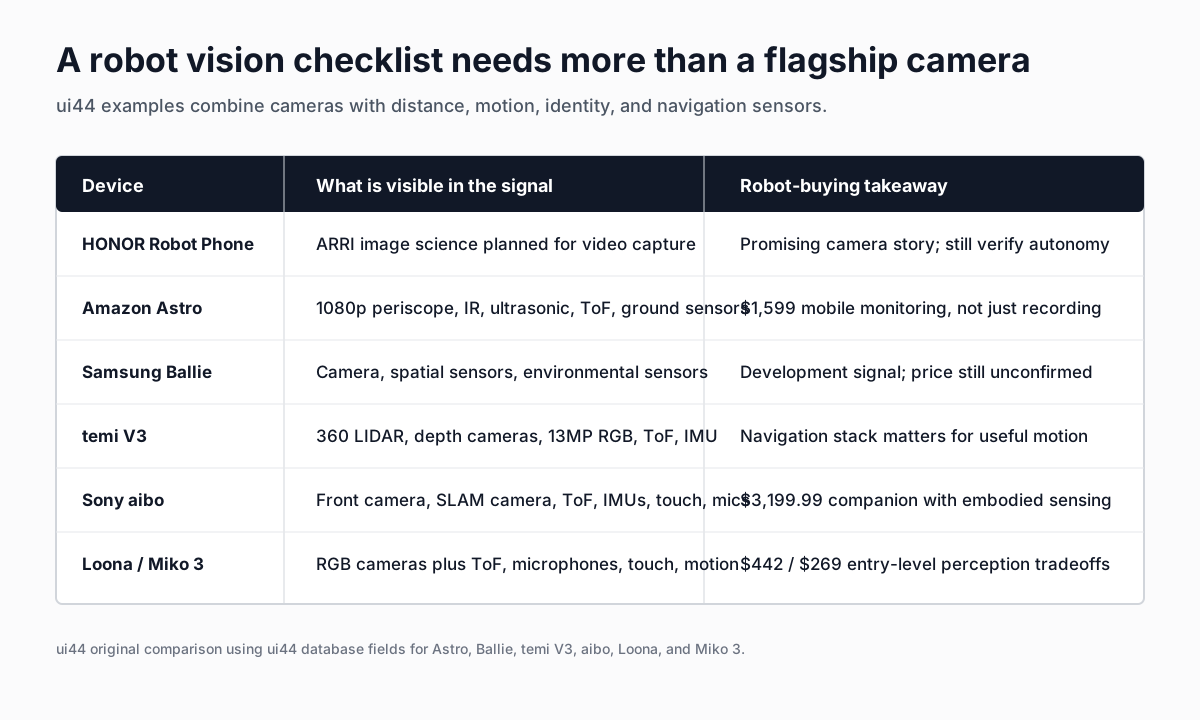
None of these examples says HONOR cannot build useful robot perception. They show what HONOR still needs to disclose.
The Robot Phone could be useful without being a full home robot
There is a practical middle ground here. The HONOR Robot Phone does not need to replace Astro, Ballie, aibo, or Loona to be useful.
A camera module that can physically move could improve everyday phone behaviors:
- keeping a person centered during a video call
- tracking a child or pet while recording
- reframing a cooking, exercise, or desk setup without a tripod
- acting as a smarter remote camera when the owner is away
- pairing phone intelligence with a more expressive physical interface
Those are meaningful features, especially if the ARRI collaboration gives the output a better look. The danger is overreading that into "home robot."
For a home robot buyer, the better question is not "does the Robot Phone have a robotic camera?" It is "what job does the robotic part do better than a phone on a stand, a smart display, or a security camera?"
If the answer is better framing and more cinematic capture, the product belongs in a camera-first category. If the answer includes persistent home context, safe autonomous repositioning, privacy-aware monitoring, and reliable person/pet/object understanding, then it starts to overlap with home robots.
What should HONOR disclose before launch?
The Robot Phone will be easier to judge when HONOR publishes final buyer-facing details. Until then, the key questions are concrete.
First, what sensors are on the robotic module? A camera-only implementation can still be clever, but it will have different limits from a camera plus depth, ToF, IMU, microphone array, and proximity sensing. Buyers should look for the full sensor list, not only the camera brand story.
Second, does the device build any local spatial model? If the Robot Phone only aims its camera at a subject, that is useful auto-framing. If it understands where the subject is relative to the desk, floor, doorway, and other people, that is closer to robot perception.
Third, what can it do without being manually steered? A home robot has an action loop. It can patrol, follow, dock, remind, alert, project, call, entertain, or hand off to other devices. A phone with a moving camera may only point, tilt, and record. The difference should be visible in demos.
Fourth, how does HONOR handle privacy? A movable camera inside a home is more sensitive than a normal phone camera. Buyers should expect clear answers about local processing, cloud processing, recording indicators, permission controls, room restrictions, guest modes, child use, and whether the camera can be disabled physically or in software.
Fifth, what is the price and replacement risk? A €269 Miko 3 and a $442 Loona are impulse-adjacent companion robots for some families. A $1,599 Astro is a more serious home-monitoring purchase. A phone with premium camera engineering could land far above both. If the Robot Phone is expensive, the robot features need to be more than novelty.
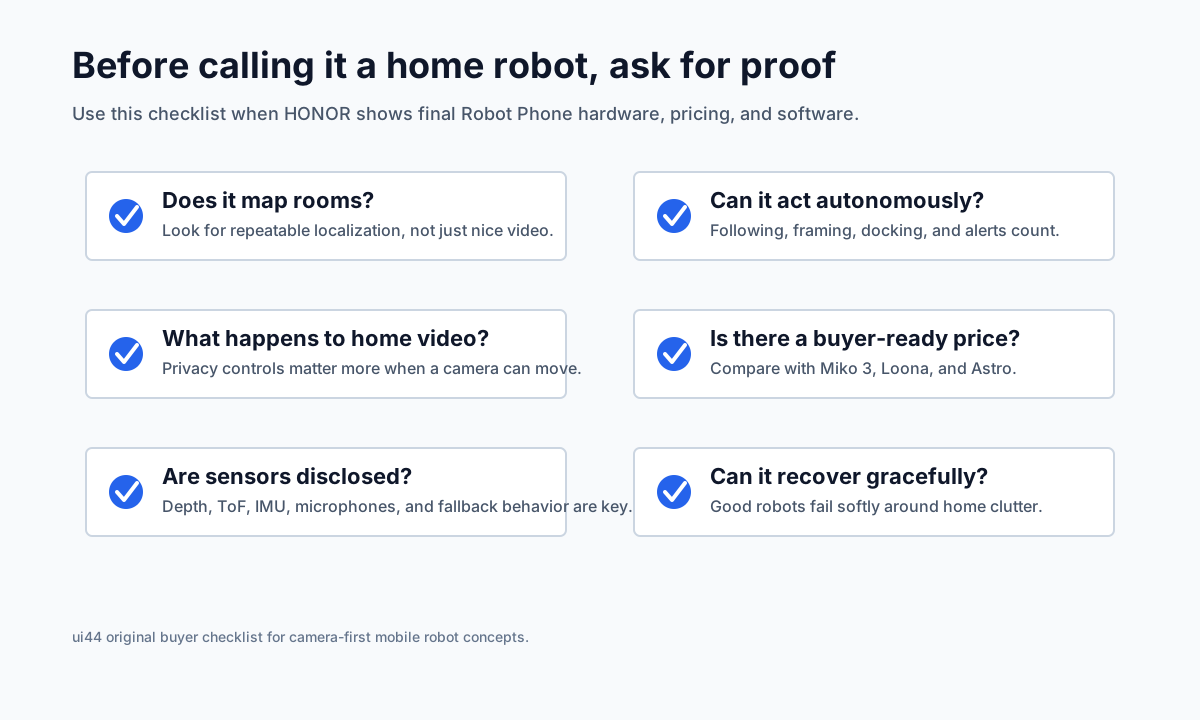
How to compare it when reviews arrive
When final HONOR Robot Phone reviews appear, do not start with camera samples. Start with behaviors.
Watch for repeatability. A robot feature that works once on a stage may not work on a cluttered kitchen counter, a low-light bedroom, or a living room with pets. Good reviews should show repeated attempts, failed attempts, and recovery behavior.
Watch for the boundary between local and cloud intelligence. If every useful feature depends on cloud inference, that can affect speed, privacy, reliability, and subscription risk. If the phone does more locally, reviewers should be able to test airplane-mode limits or reduced-connectivity behavior.
Watch for how the device moves when people are not performing for it. A robot camera that smoothly tracks a presenter is different from one that handles a child darting through frame, a dog walking behind a sofa, or two people talking over each other.
Watch for what happens after the clip. Does the Robot Phone simply capture video, or does it create reminders, security alerts, smart-home actions, or follow-up context? The more the system can close the loop from sensing to useful action, the more robot-like it becomes.
And watch for whether HONOR's own messaging changes. If launch materials focus mostly on cinematic video, treat it as a brilliant imaging device with a robotic trick. If launch materials emphasize mapped spaces, autonomous behaviors, safe home operation, and device-to-device coordination, then it may deserve a place in the broader home robot conversation.
Bottom line
HONOR's ARRI partnership makes the Robot Phone more credible as an imaging product. It does not, by itself, make the Robot Phone a credible home robot.
That is not a criticism. It is the right standard. Home robots are not defined by whether they can see. They are defined by what they understand, what they are allowed to do, how safely they act, and whether their behavior is useful enough to justify another intelligent camera in the home.
The Robot Phone could become an important bridge product: familiar like a phone, physically expressive like a robot, and better at capturing real life than a fixed camera. But until HONOR discloses the final sensor stack, autonomy model, privacy controls, and price, buyers should treat ARRI image science as a strong camera signal, not proof of robot vision.
Sources & References
- HONOR China: HONOR and ARRI cinematic imaging lab announcement
- HONOR Global: HONOR and ARRI strategic technical collaboration
- HONOR Global: HONOR MWC 2026 Robot Phone keynote coverage
- ui44 database pages for Amazon Astro, Samsung Ballie, temi V3, Sony aibo, Loona, and Miko 3
Related in the database
Use this article as a privacy verification workflow
Turn the article into a privacy verification pass grounded in the robots, manufacturers, and components it actually references.
HONOR Robot Phone: ARRI Cameras vs Robot Vision already points you toward 6 linked robots, 6 manufacturers, and 5 countries inside the ui44 database. That matters because strong buyer guidance is easier to apply when you can move immediately from a claim or warning into concrete product pages, manufacturer directories, component explainers, and country-level context instead of treating the article as an isolated opinion piece. The fastest next step is to turn the article into a shortlist workflow: open the linked robot pages, verify which specs are actually published for those models, then compare the surrounding manufacturer and component context before you decide whether the underlying claim changes your buying plan.
For this topic, the useful discipline is to separate the editorial lesson from the catalog evidence. The article gives you the framing, but the robot pages tell you what each product actually ships with today: sensor stack, connectivity methods, listed price, release timing, category, and support-relevant compatibility notes. The manufacturer pages then show whether you are looking at a one-off launch, a broader lineup pattern, or a company that spans multiple categories. That layered workflow reduces the risk of buying on a single marketing phrase or a single support FAQ.
Use the robot pages to confirm which products actually expose cameras, microphones, Wi-Fi, or voice systems, then use the manufacturer pages to decide how much of the privacy question seems product-specific versus brand-wide. On this route cluster, Astro, Ballie, and temi V3 form the fastest reality check. If you want a quick working shortlist, open Compare Astro, Ballie, and temi V3 next, then keep this article open as the reasoning layer while you compare structured data side by side.
Practical Takeaway
Every robot, manufacturer, category, component, and country reference below resolves to a real ui44 page, keeping the follow-up path grounded in database records rather than generic advice.
Suggested next steps in ui44
- Open Astro and note the listed sensors, connectivity methods, and voice stack before you interpret any policy claim.
- Cross-check the wider brand context on Amazon so you can see whether the privacy question touches one model or a broader lineup.
- Use the linked component pages to confirm how common the relevant sensors and connectivity layers are across the database.
- Keep a short note of which policy layers you checked, which device features are actually present on the robot page, and which items still depend on region- or app-level confirmation.
- Finish with Compare Astro, Ballie, and temi V3 so the policy reading sits next to structured product data.
Robot profiles worth opening next
Use the linked product pages as the evidence layer
The linked robot pages are where this article becomes operational. Instead of asking whether the headline is interesting, use the robot entries to inspect the actual mix of sensors, connectivity options, batteries, pricing, release timing, and stated capabilities attached to the products mentioned in the article. That is the easiest way to see whether the warning or opportunity described here affects one product family, a specific design pattern, or an entire buying lane.
Astro is tracked on ui44 as a active security & patrol robot from Amazon. The database currently records a listed price of $1,599, a release date of 2021, Not officially disclosed battery life, Not officially disclosed charging time, and a published stack that includes 5MP Bezel Camera, 1080p Periscope Camera (132° FOV), and Infrared Vision plus Wi-Fi 802.11ac and Bluetooth.
For privacy-focused reading, this page matters because it shows the concrete device surface behind the policy discussion. Use it to verify whether Astro combines sensors and connectivity in a way that could change the in-home data footprint, and compare the listed capabilities such as Autonomous Home Patrol, Visual ID (face recognition), and Remote Home Monitoring with any cloud, app, or voice layers, including Amazon Alexa.
Ballie is tracked on ui44 as a development companions robot from Samsung. The database currently records a listed price of Price TBA, a release date of TBD, Not officially disclosed battery life, Not officially disclosed charging time, and a published stack that includes Camera, Spatial Sensors, and Environmental Sensors plus Wi-Fi and SmartThings.
For privacy-focused reading, this page matters because it shows the concrete device surface behind the policy discussion. Use it to verify whether Ballie combines sensors and connectivity in a way that could change the in-home data footprint, and compare the listed capabilities such as Autonomous Home Navigation, Built-in Projector (Wall & Floor), and Smart Home Control via SmartThings with any cloud, app, or voice layers, including Bixby.
temi V3 is tracked on ui44 as a available commercial robot from temi. The database currently records a listed price of Price TBA, a release date of 2022, Up to 8 hours battery life, Autonomous docking (220V/110V) charging time, and a published stack that includes 360° LIDAR, 2x Depth Cameras, and RGB Camera (13MP, 120° FOV) plus Wi-Fi 5 (802.11 a/b/g/n/ac, 2.4G/5G) and Bluetooth 5.1 BLE.
For privacy-focused reading, this page matters because it shows the concrete device surface behind the policy discussion. Use it to verify whether temi V3 combines sensors and connectivity in a way that could change the in-home data footprint, and compare the listed capabilities such as Autonomous Navigation (5cm accuracy), Human Follow Mode, and Telepresence Video Calling with any cloud, app, or voice layers, including temi AI Assistant.
aibo (ERS-1000)
Sony · Companions · Available
aibo (ERS-1000) is tracked on ui44 as a available companions robot from Sony. The database currently records a listed price of $3,200, a release date of 2018-01, ~2 hours battery life, ~3 hours charging time, and a published stack that includes Front Camera, SLAM Camera, and Time-of-Flight Sensor plus Wi-Fi 802.11 b/g/n (2.4GHz) and LTE.
For privacy-focused reading, this page matters because it shows the concrete device surface behind the policy discussion. Use it to verify whether aibo (ERS-1000) combines sensors and connectivity in a way that could change the in-home data footprint, and compare the listed capabilities such as Emotion Recognition, Face Recognition (up to 100 faces), and Voice Command Recognition (100+ commands) with any cloud, app, or voice layers.
Loona is tracked on ui44 as a available companions robot from KEYi Tech. The database currently records a listed price of $442, a release date of 2023, 2 hours continuous playtime; 1350 mAh, 11.1 V lithium-ion rechargeable battery battery life, Not officially disclosed charging time, and a published stack that includes 3D Time-of-Flight (ToF) Sensor, 720p RGB Camera, and Touch Sensor plus Wi-Fi (Dual-band 2.4G/5.8G, 802.11a/b/g/n) and USB Type-C (charging).
For privacy-focused reading, this page matters because it shows the concrete device surface behind the policy discussion. Use it to verify whether Loona combines sensors and connectivity in a way that could change the in-home data footprint, and compare the listed capabilities such as Face Recognition, Voice Commands, and Emotion Expression (LCD face) with any cloud, app, or voice layers.
Manufacturer context behind the article
Check whether this is one product story or a broader company pattern
Manufacturer pages add the privacy context that individual product pages cannot show on their own. They help you check whether cameras, microphones, cloud accounts, app controls, and policy assumptions appear across a broader lineup or stay tied to one specific product story.
Amazon
ui44 currently tracks 1 robot from Amazon across 1 category. The company is grouped under USA, and the current catalog footprint on ui44 includes Astro.
That wider brand context matters because privacy questions rarely stop at one FAQ page. A manufacturer route helps you see whether the article is centered on one premium model or on a company that has several relevant products and therefore more than one place where the same policy or app assumptions might matter. The category mix here currently points toward Security & Patrol as the most useful next route if you want to see whether this article reflects a wider pattern inside the brand.
Samsung
ui44 currently tracks 2 robots from Samsung across 2 categorys. The company is grouped under South Korea, and the current catalog footprint on ui44 includes Ballie, Bespoke AI Jet Bot Steam Ultra.
That wider brand context matters because privacy questions rarely stop at one FAQ page. A manufacturer route helps you see whether the article is centered on one premium model or on a company that has several relevant products and therefore more than one place where the same policy or app assumptions might matter. The category mix here currently points toward Companions, Cleaning as the most useful next route if you want to see whether this article reflects a wider pattern inside the brand.
temi
ui44 currently tracks 1 robot from temi across 1 category. The company is grouped under Israel, and the current catalog footprint on ui44 includes temi V3.
That wider brand context matters because privacy questions rarely stop at one FAQ page. A manufacturer route helps you see whether the article is centered on one premium model or on a company that has several relevant products and therefore more than one place where the same policy or app assumptions might matter. The category mix here currently points toward Commercial as the most useful next route if you want to see whether this article reflects a wider pattern inside the brand.
Sony
ui44 currently tracks 2 robots from Sony across 2 categorys. The company is grouped under Japan, and the current catalog footprint on ui44 includes aibo (ERS-1000), QRIO.
That wider brand context matters because privacy questions rarely stop at one FAQ page. A manufacturer route helps you see whether the article is centered on one premium model or on a company that has several relevant products and therefore more than one place where the same policy or app assumptions might matter. The category mix here currently points toward Companions, Research as the most useful next route if you want to see whether this article reflects a wider pattern inside the brand.
Broaden the scan without leaving the database
Categories, components, and countries add the wider context
Category framing
Category pages are useful when the article touches a buying pattern that shows up across brands. A category route helps you confirm whether the linked products sit in a narrow niche or whether the same question should be tested across a larger field of alternatives.
Security & Patrol
The Security & Patrol category page currently groups 5 tracked robots from 5 manufacturers. ui44 describes this lane as: Autonomous surveillance and patrol robots that monitor homes, businesses, and perimeters — keeping watch without an operator on site.
That makes the category route a practical follow-up when you want to check whether the products linked in this article are typical for the lane or whether they sit at one edge of the market. Useful starting examples currently include Astro, Vision 60, K7 Autonomous Security Robot.
Companions
The Companions category page currently groups 53 tracked robots from 48 manufacturers. ui44 describes this lane as: Social robots, robot pets, and elderly-care companions designed for emotional connection and everyday support at home.
That makes the category route a practical follow-up when you want to check whether the products linked in this article are typical for the lane or whether they sit at one edge of the market. Useful starting examples currently include PARO, Abi, Next-Generation Companion Robot.
Country and ecosystem context
Country pages give extra context when support practices, launch sequencing, regulatory posture, or manufacturer mix matter. They are not a substitute for model-level verification, but they do help you see which ecosystems cluster together and which manufacturers sit in the same regional field when you broaden the search beyond the article headline.
USA
The USA route currently groups 89 tracked robots from 69 manufacturers in ui44. That gives you a useful regional lens when the article points toward support practices, launch sequencing, or brand clusters that may share similar ecosystem assumptions.
On the current route, manufacturers like Faraday Future, iRobot, Boston Dynamics make the page a good way to broaden the scan without losing the regional context that often shapes availability, documentation style, and adjacent alternatives.
South Korea
The South Korea route currently groups 9 tracked robots from 7 manufacturers in ui44. That gives you a useful regional lens when the article points toward support practices, launch sequencing, or brand clusters that may share similar ecosystem assumptions.
On the current route, manufacturers like ROBOTIS, Samsung, GenON make the page a good way to broaden the scan without losing the regional context that often shapes availability, documentation style, and adjacent alternatives.
Israel
The Israel route currently groups 5 tracked robots from 5 manufacturers in ui44. That gives you a useful regional lens when the article points toward support practices, launch sequencing, or brand clusters that may share similar ecosystem assumptions.
On the current route, manufacturers like Flytrex, Intuition Robotics, Maytronics make the page a good way to broaden the scan without losing the regional context that often shapes availability, documentation style, and adjacent alternatives.
Questions to answer before you move from reading to buying
A follow-up FAQ built from the entities already linked in this article
Frequently Asked Questions
Which page should I open first after reading “HONOR Robot Phone: ARRI Cameras vs Robot Vision”?
Start with Astro. That gives you a concrete product anchor for the article’s main claim. From there, branch into the manufacturer and component pages so you can tell whether the article is describing one specific model, a repeated brand pattern, or a wider technology issue that affects multiple shortlist options.
How do the manufacturer pages change the buying decision?
Amazon help you zoom out from one article and one product. On ui44 they show lineup breadth, category spread, and the neighboring robots tied to the same company. That context is useful when you are deciding whether a risk belongs to a single model, whether it shows up across a brand’s portfolio, and whether you should keep looking at alternatives before committing.
When should I switch from reading to side-by-side comparison?
Move into Compare Astro, Ballie, and temi V3 as soon as you understand the article’s main warning or promise. The article explains what to watch for, but the compare view is where you can check whether price, status, battery life, connectivity, sensors, and category fit still make the robot a good match for your own home and budget.
Where to go next in ui44
Keep the research chain inside the database
If you want to keep going, these follow-on pages give you the cleanest expansion path from article to research session. Open the comparison route first if you are deciding between products today. Open the manufacturer, category, and component routes if you still need to understand the broader pattern behind the claim.
Written by
ui44 Team
Published July 4, 2026
Share this article
Open a plain share link on X or Bluesky. No embeds, no widgets, no cookie baggage.