That is more interesting than a cute face. If a robot can move through a kitchen, reach into a cabinet, handle tools, or decide the next step in a chore, the buyer does not just need a start button. They need a way to understand what the machine is about to do before it does it.
Why does Eno make the interface question concrete?
Eno is listed in the ui44 database as a commercial general-purpose robot rather than a consumer product. The important home signal is the type of agency Genesis is describing. The robot uses a wheeled base, articulated panels that adjust height and reach, dual arms, and dexterous hands. Genesis says its GENE system is intended to understand high-level goals, retain context, reason through changing conditions, and manage long-horizon tasks.
That description moves the interface problem beyond "is the robot on?" A robot vacuum can blink, beep, or show a map in an app because its task is narrow. A mobile manipulator has to make many more choices in shared human space. It may need to decide which object to move first, whether a surface is safe to touch, when to ask for permission, and how to recover if the task changes.
The cognitive interface is Genesis's answer to that trust gap. The company says it plans to offer a proprietary screen that can make Eno's actions and decision-making visible to people around it. That is a buyer-relevant feature even if Eno reaches homes later than factories, hospitals, or hotels, because it sets a standard for what more capable robots may have to disclose.
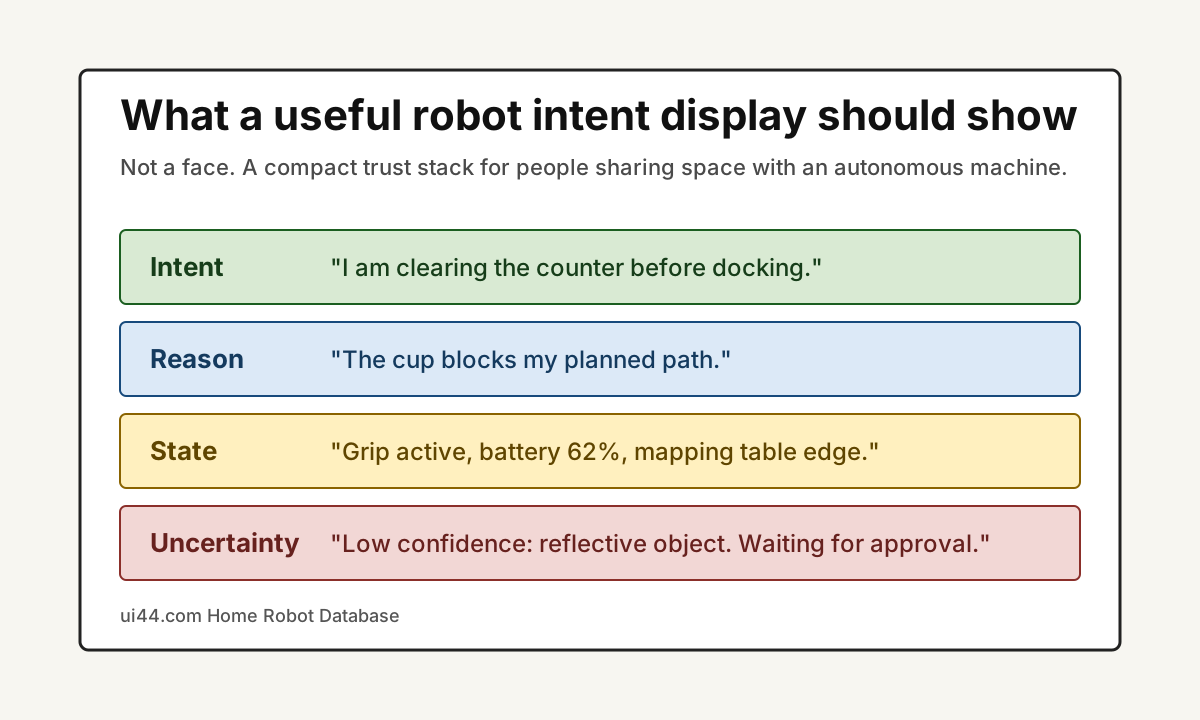
A display should show intent, not personality
The easy version of a robot screen is a face. Faces can be useful for social robots, but they are not enough for a machine that can pick things up. The more useful version is a compact operational display.
For a home robot, "intent" should mean a plain-language statement of the next meaningful action. Not "working." Not a spinning icon. Something closer to "moving the mug to clear the counter" or "waiting because the chair blocks my route." Intent is valuable because it gives a person a chance to interrupt the robot before a bad action starts.
"Reasoning" should not be an artificial transcript of every model token. It should expose the decision factor that matters to a nearby human: obstacle detected, low confidence, object identity uncertain, grip force limited, route changed, task requires approval. If the robot says it is pausing because it is unsure whether an item is fragile, that is a real safety feature. If it just says "thinking," it is theater.
"Operational state" is the least glamorous and often the most useful. Battery level, arm state, payload estimate, camera occlusion, mapping status, docking status, privacy mode, and network state help people understand whether the robot is capable of the task they requested. A home robot with arms should probably be more transparent than a smart speaker because its mistakes are physical.
The comparison across current robot types
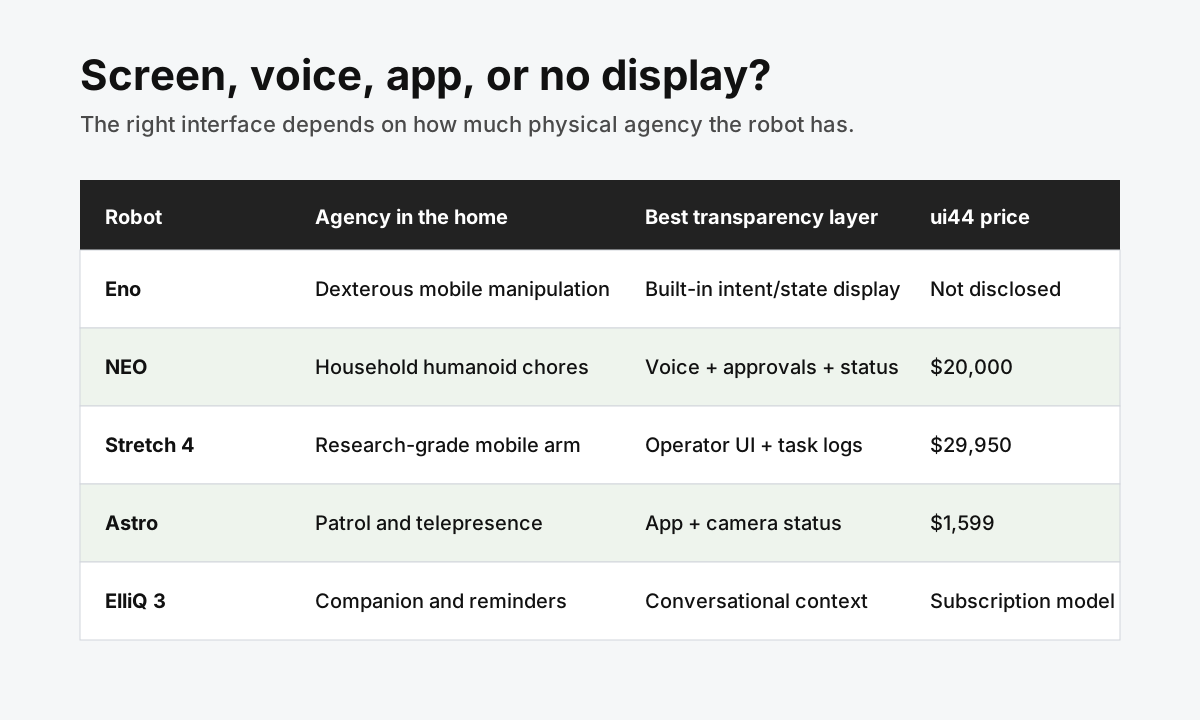
ui44's database shows how different the interface needs are across home-facing robots. Amazon Astro is listed at $1,599 and focuses on patrol, remote monitoring, video calling, and Alexa. Its most important transparency layer is mostly app and camera status: where it is, whether it is watching, and what route it is taking.
ElliQ 3 is a companion robot for conversation, reminders, video calling, and wellness programs. For that class, transparency is less about manipulator safety and more about conversational context: why it is prompting, what it remembers, and whether a health reminder came from a routine or a detected change.
Hello Robot Stretch 4, listed at $29,950, is a mobile manipulator with a 160 cm height, a 45 cm diameter footprint, autonomous mapping and navigation, 3D SLAM, self charging, and roughly 8 hours of battery life under light CPU load. That kind of robot benefits from logs, teleoperation views, and explicit task state because it is close to the threshold where a display becomes a safety tool.
1X NEO, listed at $20,000, is more direct as a home humanoid signal. ui44 tracks it as a 167 cm, 30 kg humanoid with about 4 hours of battery life and capabilities such as household chores, tidying, adaptive learning, and gentle manipulation. If a humanoid is going to move objects around a home, voice alone may not be enough. The user needs persistent state that can be checked from across the room.
When a screen is the right answer
A built-in screen makes the most sense when three things are true.
First, the robot acts near people. If the robot moves in the same room as a person, a local display can communicate faster than a phone notification. Nobody should have to unlock an app to know why a robot arm just stopped beside a table.
Second, the robot has meaningful autonomy. A remote-controlled device can show a connection indicator and call it a day. A robot that plans multi-step work needs to expose the current plan, the next action, and the reason it is deviating from the original request.
Third, the robot has physical consequence. A screen is less critical for a stationary companion that cannot touch anything. It becomes more important for a wheeled robot with an arm, and more important again for a humanoid that can enter rooms, open things, and manipulate everyday objects.
That does not mean every robot needs a large face-like panel. Some robots may be better served by e-paper status strips, LED state bars, voice summaries, phone approvals, or a wall dashboard. The key is not the display technology. The key is whether the robot can reveal enough about its next action that the human can make a timely decision.
When a screen is not enough
There is also a risk that "cognitive interface" becomes a branding layer over an opaque system. A display can create misplaced trust if it only shows reassuring messages. The hard questions are measurable.
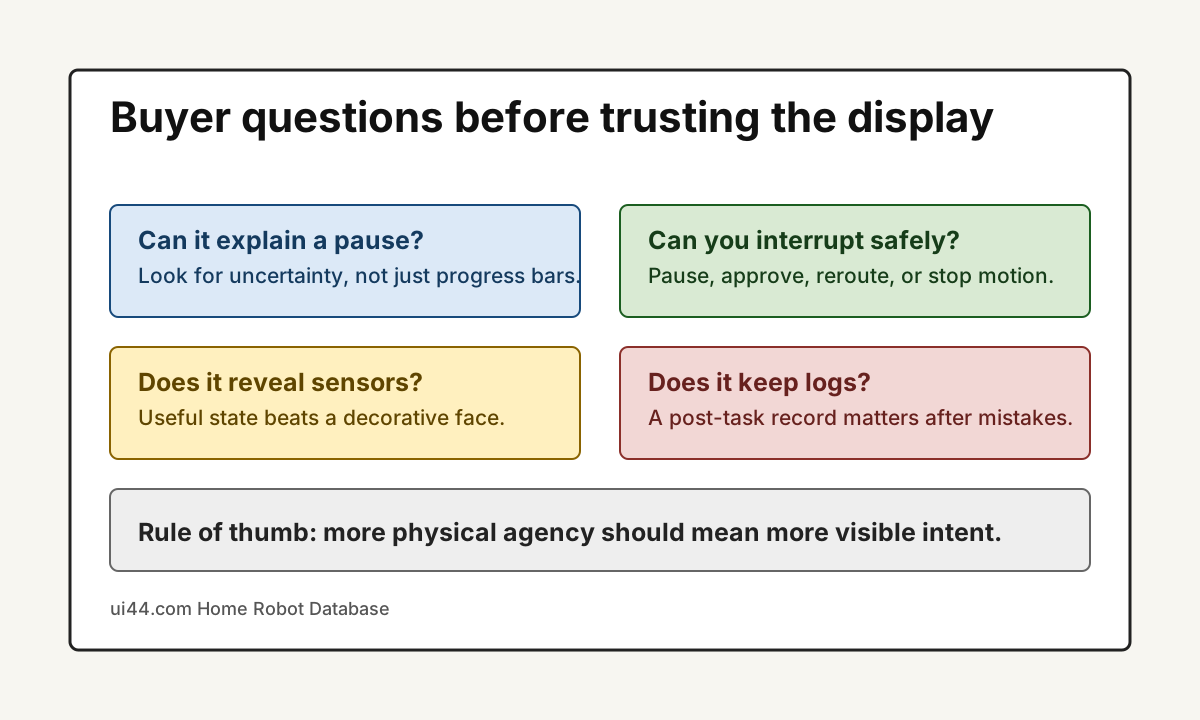
Can the robot show uncertainty? A trustworthy system should admit when object recognition, route planning, or grip planning is low confidence. It should not pretend every plan is equally certain.
Can the person interrupt? The interface should support pause, stop, reroute, approve, reject, and handoff. A status display without control is only half a safety feature.
Can the system keep a record? After a mistake, the owner needs to know what happened. A brief event log is more useful than a cheerful animation. For care robots or elder-care deployments, logs may also matter for caregivers and service providers.
Can it protect privacy? A display that shows camera status, microphone state, cloud connection, local processing mode, and retention settings may matter as much as the robot's chore list. The more a robot senses, the more visible its sensing should be.
What buyers should ask before paying
Home robot buyers should treat intent display as part of the spec sheet, especially for humanoids and mobile manipulators. The question is not "does it have a screen?" The better question is "what does the robot reveal when it is about to act?"
Ask whether the robot can explain a pause in simple language. Ask whether the user can approve sensitive actions before the robot touches objects, enters rooms, or shares data. Ask whether the robot shows its current mode locally on the body, not only in a cloud app. Ask whether it records enough task history to diagnose a failure. Ask whether the interface works when the network is down.
For a robot like Figure 02 or Figure 03, the transparency problem is not only emotional trust. It is coordination. ui44 tracks Figure 02 as a 168 cm, 70 kg humanoid with speech-to-speech conversation, pick-and-place, automotive assembly support, and 16 DoF hands. Figure 03 is listed at 173 cm, 61 kg, with roughly 5 hours of battery life and capabilities including complex manipulation, learning from demonstration, and multi-step planning. Those are exactly the kinds of systems where "what are you doing next?" becomes a practical household question.
The likely standard for capable home robots
The first widely useful home robots with arms may not look like Eno. Some will be humanoids. Some will be wheeled manipulators. Some will be companion robots with limited physical abilities. But the trust standard should travel across form factors: the robot should make its intent legible before its motion becomes surprising.
That matters because home environments are messy in ways factories are not. A family member moves a chair. A pet crosses the room. A cup is heavier than expected. A caregiver changes the routine. A child asks the robot to do something it should not do. In those moments, a visible plan and a visible uncertainty state can be more useful than a more expressive animated face.
The buyer takeaway is simple: as robots gain arms, height, navigation, memory, and planning, interfaces must move from decoration to disclosure. Eno's optional cognitive interface is not proof that every future home robot needs a screen. It is proof that the market is starting to ask the right question.
Before a robot handles your things, you should be able to see what it thinks it is doing.
Related in the database
Use this article as a privacy verification workflow
Turn the article into a privacy verification pass grounded in the robots, manufacturers, and components it actually references.
Do Home Robots Need Intent Displays? already points you toward 7 linked robots, 6 manufacturers, and 4 countries inside the ui44 database. That matters because strong buyer guidance is easier to apply when you can move immediately from a claim or warning into concrete product pages, manufacturer directories, component explainers, and country-level context instead of treating the article as an isolated opinion piece. The fastest next step is to turn the article into a shortlist workflow: open the linked robot pages, verify which specs are actually published for those models, then compare the surrounding manufacturer and component context before you decide whether the underlying claim changes your buying plan.
For this topic, the useful discipline is to separate the editorial lesson from the catalog evidence. The article gives you the framing, but the robot pages tell you what each product actually ships with today: sensor stack, connectivity methods, listed price, release timing, category, and support-relevant compatibility notes. The manufacturer pages then show whether you are looking at a one-off launch, a broader lineup pattern, or a company that spans multiple categories. That layered workflow reduces the risk of buying on a single marketing phrase or a single support FAQ.
Use the robot pages to confirm which products actually expose cameras, microphones, Wi-Fi, or voice systems, then use the manufacturer pages to decide how much of the privacy question seems product-specific versus brand-wide. On this route cluster, Eno, NEO, and Figure 02 form the fastest reality check. If you want a quick working shortlist, open Compare Eno, NEO, and Figure 02 next, then keep this article open as the reasoning layer while you compare structured data side by side.
Practical Takeaway
Every robot, manufacturer, category, component, and country reference below resolves to a real ui44 page, keeping the follow-up path grounded in database records rather than generic advice.
Suggested next steps in ui44
- Open Eno and note the listed sensors, connectivity methods, and voice stack before you interpret any policy claim.
- Cross-check the wider brand context on Genesis AI so you can see whether the privacy question touches one model or a broader lineup.
- Use the linked component pages to confirm how common the relevant sensors and connectivity layers are across the database.
- Keep a short note of which policy layers you checked, which device features are actually present on the robot page, and which items still depend on region- or app-level confirmation.
- Finish with Compare Eno, NEO, and Figure 02 so the policy reading sits next to structured product data.
Robot profiles worth opening next
Use the linked product pages as the evidence layer
The linked robot pages are where this article becomes operational. Instead of asking whether the headline is interesting, use the robot entries to inspect the actual mix of sensors, connectivity options, batteries, pricing, release timing, and stated capabilities attached to the products mentioned in the article. That is the easiest way to see whether the warning or opportunity described here affects one product family, a specific design pattern, or an entire buying lane.
Eno
Genesis AI · Commercial · Development
Eno is tracked on ui44 as a development commercial robot from Genesis AI. The database currently records a listed price of Price TBA, a release date of 2026-06-16, Not officially disclosed battery life, Not officially disclosed charging time, and a published stack that includes Vision/perception stack for GENE; exact camera and sensor hardware not officially disclosed plus Not officially disclosed.
For privacy-focused reading, this page matters because it shows the concrete device surface behind the policy discussion. Use it to verify whether Eno combines sensors and connectivity in a way that could change the in-home data footprint, and compare the listed capabilities such as General-purpose mobile manipulation, Wheeled indoor mobility, and Dual-arm dexterous manipulation with any cloud, app, or voice layers.
NEO
1X Technologies · Humanoid · Pre-order
NEO is tracked on ui44 as a pre-order humanoid robot from 1X Technologies. The database currently records a listed price of $20,000, a release date of 2025-10-28, ~4 hours battery life, Not disclosed charging time, and a published stack that includes RGB Cameras, Depth Sensors, and Tactile Skin plus Wi-Fi and Bluetooth.
For privacy-focused reading, this page matters because it shows the concrete device surface behind the policy discussion. Use it to verify whether NEO combines sensors and connectivity in a way that could change the in-home data footprint, and compare the listed capabilities such as Household Chores, Tidying Up, and Safe Human Interaction with any cloud, app, or voice layers.
Figure 02 is tracked on ui44 as a discontinued humanoid robot from Figure AI. The database currently records a listed price of Price TBA, a release date of 2024-08-06, Not disclosed (50% greater capacity than Figure 01) battery life, Not disclosed charging time, and a published stack that includes 6 RGB Cameras, Onboard Vision Language Model, and Microphones plus Wi-Fi and Bluetooth.
For privacy-focused reading, this page matters because it shows the concrete device surface behind the policy discussion. Use it to verify whether Figure 02 combines sensors and connectivity in a way that could change the in-home data footprint, and compare the listed capabilities such as Autonomous Task Execution, Speech-to-Speech Conversation, and Pick and Place with any cloud, app, or voice layers, including OpenAI Custom Model.
Figure 03 is tracked on ui44 as a active humanoid robot from Figure AI. The database currently records a listed price of Price TBA, a release date of 2025-10-09, ~5 hours battery life, Not disclosed charging time, and a published stack that includes Stereo Vision, Depth Cameras, and Force Sensors plus Wi-Fi and Bluetooth.
For privacy-focused reading, this page matters because it shows the concrete device surface behind the policy discussion. Use it to verify whether Figure 03 combines sensors and connectivity in a way that could change the in-home data footprint, and compare the listed capabilities such as Complex Manipulation, Warehouse Work, and Manufacturing Tasks with any cloud, app, or voice layers.
Stretch 4
Hello Robot · Home Assistants · Available
Stretch 4 is tracked on ui44 as a available home assistants robot from Hello Robot. The database currently records a listed price of $29,950, a release date of 2026-05-12, 8 hours (light CPU load) battery life, Not officially disclosed charging time, and a published stack that includes Wide-FOV depth sensing, High-resolution RGB cameras, and Calibrated RGB + depth perception plus its listed connectivity stack.
For privacy-focused reading, this page matters because it shows the concrete device surface behind the policy discussion. Use it to verify whether Stretch 4 combines sensors and connectivity in a way that could change the in-home data footprint, and compare the listed capabilities such as Mobile Manipulation, Omnidirectional Indoor Mobility, and Autonomous Mapping and Navigation with any cloud, app, or voice layers.
Manufacturer context behind the article
Check whether this is one product story or a broader company pattern
Manufacturer pages add the privacy context that individual product pages cannot show on their own. They help you check whether cameras, microphones, cloud accounts, app controls, and policy assumptions appear across a broader lineup or stay tied to one specific product story.
Genesis AI
ui44 currently tracks 1 robot from Genesis AI across 1 category. The company is grouped under France, and the current catalog footprint on ui44 includes Eno.
That wider brand context matters because privacy questions rarely stop at one FAQ page. A manufacturer route helps you see whether the article is centered on one premium model or on a company that has several relevant products and therefore more than one place where the same policy or app assumptions might matter. The category mix here currently points toward Commercial as the most useful next route if you want to see whether this article reflects a wider pattern inside the brand.
1X Technologies
ui44 currently tracks 2 robots from 1X Technologies across 1 category. The company is grouped under Norway, and the current catalog footprint on ui44 includes NEO, EVE.
That wider brand context matters because privacy questions rarely stop at one FAQ page. A manufacturer route helps you see whether the article is centered on one premium model or on a company that has several relevant products and therefore more than one place where the same policy or app assumptions might matter. The category mix here currently points toward Humanoid as the most useful next route if you want to see whether this article reflects a wider pattern inside the brand.
Figure AI
ui44 currently tracks 2 robots from Figure AI across 1 category. The company is grouped under USA, and the current catalog footprint on ui44 includes Figure 03, Figure 02.
That wider brand context matters because privacy questions rarely stop at one FAQ page. A manufacturer route helps you see whether the article is centered on one premium model or on a company that has several relevant products and therefore more than one place where the same policy or app assumptions might matter. The category mix here currently points toward Humanoid as the most useful next route if you want to see whether this article reflects a wider pattern inside the brand.
Hello Robot
ui44 currently tracks 2 robots from Hello Robot across 1 category. The company is grouped under USA, and the current catalog footprint on ui44 includes Stretch 3, Stretch 4.
That wider brand context matters because privacy questions rarely stop at one FAQ page. A manufacturer route helps you see whether the article is centered on one premium model or on a company that has several relevant products and therefore more than one place where the same policy or app assumptions might matter. The category mix here currently points toward Home Assistants as the most useful next route if you want to see whether this article reflects a wider pattern inside the brand.
Broaden the scan without leaving the database
Categories, components, and countries add the wider context
Category framing
Category pages are useful when the article touches a buying pattern that shows up across brands. A category route helps you confirm whether the linked products sit in a narrow niche or whether the same question should be tested across a larger field of alternatives.
Commercial
The Commercial category page currently groups 44 tracked robots from 38 manufacturers. ui44 describes this lane as: Delivery robots, warehouse automation, and hospitality service bots — robots built for business and commercial operations.
That makes the category route a practical follow-up when you want to check whether the products linked in this article are typical for the lane or whether they sit at one edge of the market. Useful starting examples currently include G2 Air, aeo, Pepper.
Humanoid
The Humanoid category page currently groups 129 tracked robots from 92 manufacturers. ui44 describes this lane as: Full-size bipedal humanoid robots built to work alongside people — from factory floors to household tasks. Compare the cutting edge of humanoid robotics.
That makes the category route a practical follow-up when you want to check whether the products linked in this article are typical for the lane or whether they sit at one edge of the market. Useful starting examples currently include NEO, EVE, Mornine M1.
Country and ecosystem context
Country pages give extra context when support practices, launch sequencing, regulatory posture, or manufacturer mix matter. They are not a substitute for model-level verification, but they do help you see which ecosystems cluster together and which manufacturers sit in the same regional field when you broaden the search beyond the article headline.
France
The France route currently groups 8 tracked robots from 7 manufacturers in ui44. That gives you a useful regional lens when the article points toward support practices, launch sequencing, or brand clusters that may share similar ecosystem assumptions.
On the current route, manufacturers like Pollen Robotics, Aldebaran / Maxtronics, Aldebaran Robotics make the page a good way to broaden the scan without losing the regional context that often shapes availability, documentation style, and adjacent alternatives.
Norway
The Norway route currently groups 2 tracked robots from 1 manufacturers in ui44. That gives you a useful regional lens when the article points toward support practices, launch sequencing, or brand clusters that may share similar ecosystem assumptions.
On the current route, manufacturers like 1X Technologies make the page a good way to broaden the scan without losing the regional context that often shapes availability, documentation style, and adjacent alternatives.
USA
The USA route currently groups 89 tracked robots from 69 manufacturers in ui44. That gives you a useful regional lens when the article points toward support practices, launch sequencing, or brand clusters that may share similar ecosystem assumptions.
On the current route, manufacturers like Faraday Future, iRobot, Boston Dynamics make the page a good way to broaden the scan without losing the regional context that often shapes availability, documentation style, and adjacent alternatives.
Questions to answer before you move from reading to buying
A follow-up FAQ built from the entities already linked in this article
Frequently Asked Questions
Which page should I open first after reading “Do Home Robots Need Intent Displays?”?
Start with Eno. That gives you a concrete product anchor for the article’s main claim. From there, branch into the manufacturer and component pages so you can tell whether the article is describing one specific model, a repeated brand pattern, or a wider technology issue that affects multiple shortlist options.
How do the manufacturer pages change the buying decision?
Genesis AI help you zoom out from one article and one product. On ui44 they show lineup breadth, category spread, and the neighboring robots tied to the same company. That context is useful when you are deciding whether a risk belongs to a single model, whether it shows up across a brand’s portfolio, and whether you should keep looking at alternatives before committing.
When should I switch from reading to side-by-side comparison?
Move into Compare Eno, NEO, and Figure 02 as soon as you understand the article’s main warning or promise. The article explains what to watch for, but the compare view is where you can check whether price, status, battery life, connectivity, sensors, and category fit still make the robot a good match for your own home and budget.
Where to go next in ui44
Keep the research chain inside the database
If you want to keep going, these follow-on pages give you the cleanest expansion path from article to research session. Open the comparison route first if you are deciding between products today. Open the manufacturer, category, and component routes if you still need to understand the broader pattern behind the claim.
Written by
ui44 Team
Published June 27, 2026
Share this article
Open a plain share link on X or Bluesky. No embeds, no widgets, no cookie baggage.