That question used to feel theoretical. A robot vacuum map was sensitive, but the machine stayed close to one job. A humanoid or mobile companion is different. It sees rooms from human height, hears household routines, learns task sequences, may receive instructions through a phone app, and in some cases can be remotely guided by a human operator. The robot is no longer only a device in the home. It is a moving sensor platform connected to an AI stack, a manufacturer account, cloud services, app stores, firmware updates, and support teams.
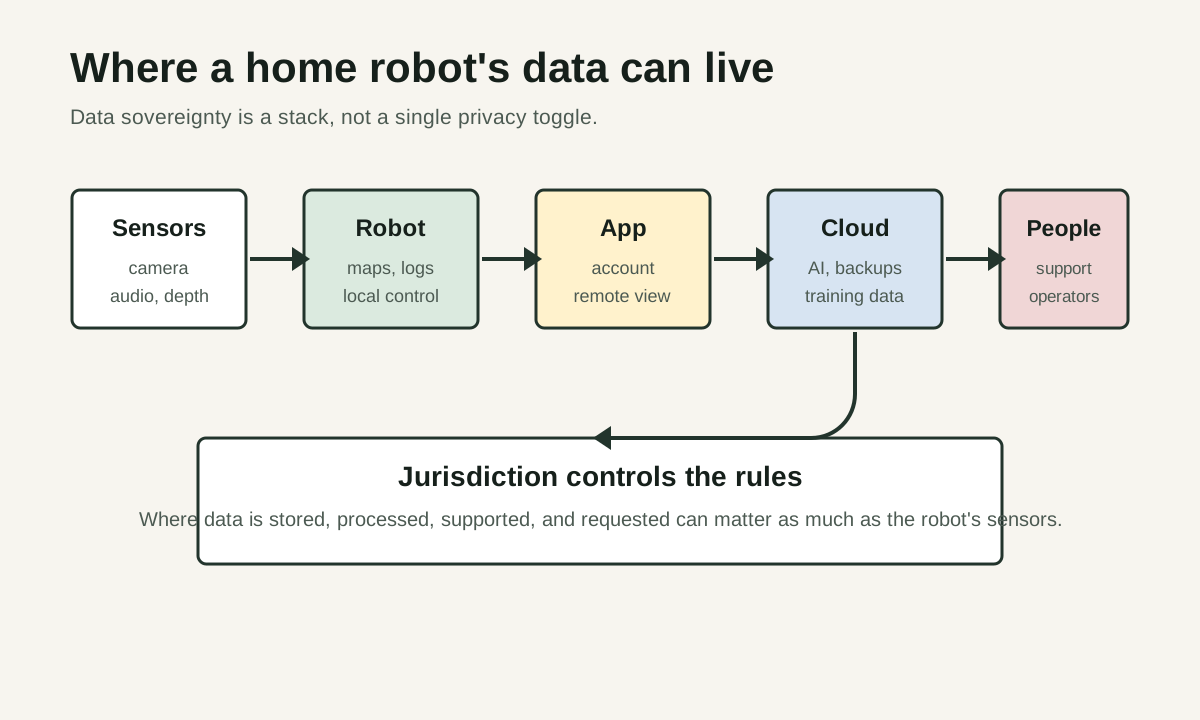
Wandercraft framed the same issue from an industrial angle in its article "When a foreign robot enters a European factory, it's our secrets that leave with it". For factories, the concern is process knowledge, production data, and strategic autonomy. For homes, the data is more personal: floor plans, voices, faces, mobility routines, children's rooms, medication cabinets, work-from-home screens, and the learned habits that make a household recognizable.
This is not an argument against connected robots. Cloud services can make robots more useful, safer, and easier to update. It is an argument for asking better questions before a machine with cameras, microphones, arms, and mobility becomes part of daily life.
What "Data Sovereignty" Means For A Home Robot
Data sovereignty means data is subject to the laws, access rules, and enforcement practices of the place where it is collected, stored, processed, or controlled. For a home robot, there are at least five layers to inspect:
- Sensor data: video, audio, depth, lidar, inertial data, force readings, touch events, and household maps.
- Control data: app commands, joystick inputs, teleoperation sessions, chore schedules, and remote support actions.
- Learning data: task demonstrations, failure cases, room labels, object memories, and model-training examples.
- Account data: owner identity, address, payment history, device serial number, warranty records, and support tickets.
- Operational data: logs, firmware versions, network identifiers, crash dumps, diagnostics, and security events.
The sovereignty question is not answered by a single line in a privacy policy. A vendor might store video locally but process voice commands in a cloud model. It might keep robot maps on-device but upload diagnostic logs. It might use domestic cloud hosting for one market and a different stack elsewhere. It might allow a remote operator to view a live session without retaining the video. Each of those choices changes the buyer's risk.
The practical buyer question is: can I tell what leaves the robot, when it leaves, where it goes, how long it is kept, and who can access it?
Why Humanoids Raise The Stakes
The ui44 database already shows why this matters. The home and near-home humanoid market is shifting from lab demos toward products that buyers can actually compare:
Robot
- ui44 category
- Humanoid
- ui44 price/status
- $20,000, pre-order
- Why the data question matters
- Built for home chores, voice use, app control, learning, and scheduled expert assistance.
Robot
- ui44 category
- Humanoid
- ui44 price/status
- $13,500, available
- Why the data question matters
- Lower-cost humanoid platform where app, firmware, connectivity, and jurisdiction questions matter.
Robot
- ui44 category
- Humanoid
- ui44 price/status
- $4,900, pre-order
- Why the data question matters
- Aggressive pricing makes buyer scrutiny of cloud dependence and updates even more important.
Robot
- ui44 category
- Humanoid
- ui44 price/status
- Active, price not listed
- Why the data question matters
- A general-purpose humanoid direction where perception and task learning are core to value.
Robot
- ui44 category
- Humanoid
- ui44 price/status
- $69,999, available
- Why the data question matters
- A high-end humanoid platform where enterprise-grade data controls may matter to home-adjacent pilots.
Robot
- ui44 category
- Companion
- ui44 price/status
- $442, available
- Why the data question matters
- Smaller companion robots still collect interaction data, audio/video context, and home behavior signals.
| Robot | ui44 category | ui44 price/status | Why the data question matters |
|---|---|---|---|
| 1X NEO | Humanoid | $20,000, pre-order | Built for home chores, voice use, app control, learning, and scheduled expert assistance. |
| Unitree G1 | Humanoid | $13,500, available | Lower-cost humanoid platform where app, firmware, connectivity, and jurisdiction questions matter. |
| Unitree R1 | Humanoid | $4,900, pre-order | Aggressive pricing makes buyer scrutiny of cloud dependence and updates even more important. |
| Figure 03 | Humanoid | Active, price not listed | A general-purpose humanoid direction where perception and task learning are core to value. |
| Galaxea R1 Pro | Humanoid | $69,999, available | A high-end humanoid platform where enterprise-grade data controls may matter to home-adjacent pilots. |
| Loona | Companion | $442, available | Smaller companion robots still collect interaction data, audio/video context, and home behavior signals. |
The jump from a $442 companion robot to a $20,000 home humanoid is not only a price jump. It is a sensor and agency jump. A companion robot may observe a room and respond socially. A humanoid is being sold around the promise of doing work in the same spaces people cook, dress, argue, recover from illness, and care for children.
1X's official NEO page is a useful example because it makes the data trade-off visible. The company says NEO works autonomously by default, but for chores it does not know, an owner can schedule a 1X Expert to guide it. The same page describes NEO using Redwood AI for learning and repeating tasks, a mobile app for managing chores and monitoring the robot, and remote control through a mobile app and VR device. Those are valuable features. They are also the exact places where a buyer should ask how live video, task demonstrations, operator access, and training data are governed.
The Robot Data Map Buyers Should Draw
Before buying a connected humanoid, draw the data map in plain language. If you cannot fill in the boxes, that is the point. The missing boxes are questions for the manufacturer.
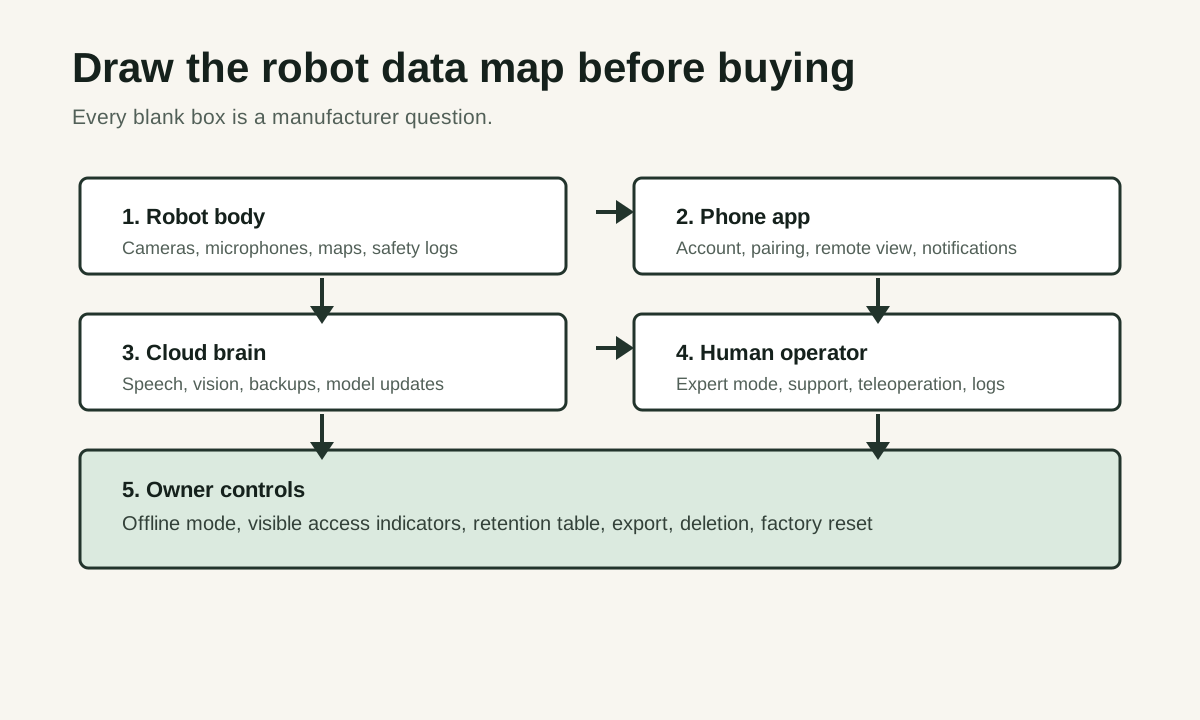
Start with the robot body. Which sensors are always active? Which turn on only during a task? Does the robot have visible indicators for camera, microphone, teleoperation, or recording states? Can those sensors be disabled physically or only through software?
Then move to the app. The app may handle pairing, maps, device control, owner accounts, remote view, notifications, firmware updates, and support. App privacy matters because the phone often becomes the control room for the robot. Unitree's privacy policy for Unitree Go, for example, describes collection of device connection information such as device identifiers and network setup data, operation control settings and logs, image transmission and photo/video functions, and says certain information is stored in Unitree Go and the local device rather than uploaded to the server. It also says user information is stored in the People's Republic of China. A buyer does not have to treat that as automatically good or bad, but it is a concrete jurisdiction fact that belongs in the purchase decision.
Next, inspect the cloud brain. A general-purpose robot may need online models for speech, visual recognition, task planning, and software updates. Ask whether the robot can complete core functions offline, whether cloud processing can be disabled, and whether disabling it turns the product into an expensive statue.
Finally, inspect the human layer. Teleoperation, expert mode, remote support, and fleet learning are different things. A remote support engineer diagnosing an error is not the same as a scheduled operator guiding the robot through laundry. A model-training pipeline that uses anonymized failure clips is not the same as a live human seeing your bedroom. The interface should make those states obvious.
What Should You Ask Before A Home Humanoid Enters The House?
1. Can the robot work without cloud processing?
The answer rarely needs to be all or nothing. A useful robot can have local safety controls, local navigation, local obstacle avoidance, and cloud-assisted language or model updates. What matters is whether the buyer can identify the fallback mode.
Ask the manufacturer:
- Which features work offline?
- Which features require a manufacturer account?
- Which features require cloud AI?
- What happens if the company shuts down the service?
- Can maps, routines, and learned tasks be exported or deleted?
For a buyer, "cloud optional" and "cloud required" are not small distinctions. If the robot's useful brain is mostly a remote service, the purchase is partly a subscription to the manufacturer's continued existence, security posture, and jurisdiction.
2. Who can see through the robot?
This is the most concrete privacy question. A home robot with remote monitoring, app viewing, expert assistance, or teleoperation should make access visible and auditable.
Ask:
- Can a human operator ever see live camera feeds?
- Is operator access owner-initiated every time?
- Is there a persistent indicator on the robot during remote access?
- Are sessions recorded?
- Can bystanders opt out or be masked?
- Can the owner review an access log?
Remote help can be genuinely useful. Folding laundry, opening doors, and handling irregular objects are hard problems. Early robots may need human guidance to be useful at all. The buyer's standard should not be "never teleoperate." It should be "no hidden teleoperation, no unclear recording, no vague access controls."
3. Where are logs, maps, and training examples stored?
Robot data is not just video. A map of a home can reveal room layout, furniture, work patterns, sleeping areas, entry points, and daily routines. Operation logs can reveal when people are home. Task histories can reveal physical limitations or caregiving routines. Voice transcripts can reveal names, appointments, purchases, and stress.
Ask for a retention table. It should say what is stored locally, what is uploaded, what is used for training, what is shared with vendors, and how long each category is retained. If the vendor cannot provide that, treat it as a product maturity signal.
The best version is simple: local-first maps, explicit consent for training data, easy deletion, owner-visible export, short diagnostic retention, and clear separation between support data and model-improvement data.
4. Which country has practical control?
This is the sovereignty part buyers often miss. A robot can be physically in Germany or the United States while its app account, cloud processing, firmware distribution, or support staff sits elsewhere. Jurisdiction may affect government requests, dispute resolution, breach notification, consumer rights, and data subject access.
The relevant question is not just "where is the company incorporated?" Ask:
- Where is personal data stored?
- Where are backups stored?
- Where are support teams located?
- Which legal entity sells and supports the product in your region?
- Which privacy regulator has authority?
- Are there local data-processing terms for your country or region?
For home robots, this matters because the data is intimate. A floor plan from a warehouse is business-sensitive. A floor plan from a home can be personally revealing.
5. Can you delete the robot's memory before resale or repair?
Used robots will become normal. Repairs will become normal. Family moves, divorces, rentals, and estate sales will all create cases where a robot changes hands.
Ask whether the robot supports:
- A true factory reset that clears maps, accounts, tokens, logs, and learned routines.
- A repair mode that limits technician access.
- An owner-visible list of paired phones and cloud accounts.
- A way to revoke remote access after transfer.
- A deletion receipt or account-side confirmation.
If a robot learns the home, deletion should be treated like wiping a phone, not like unplugging a toaster.
A Simple Risk Matrix For Buyers
The best purchase is not always the most private robot. It is the robot whose data behavior matches the household's tolerance.
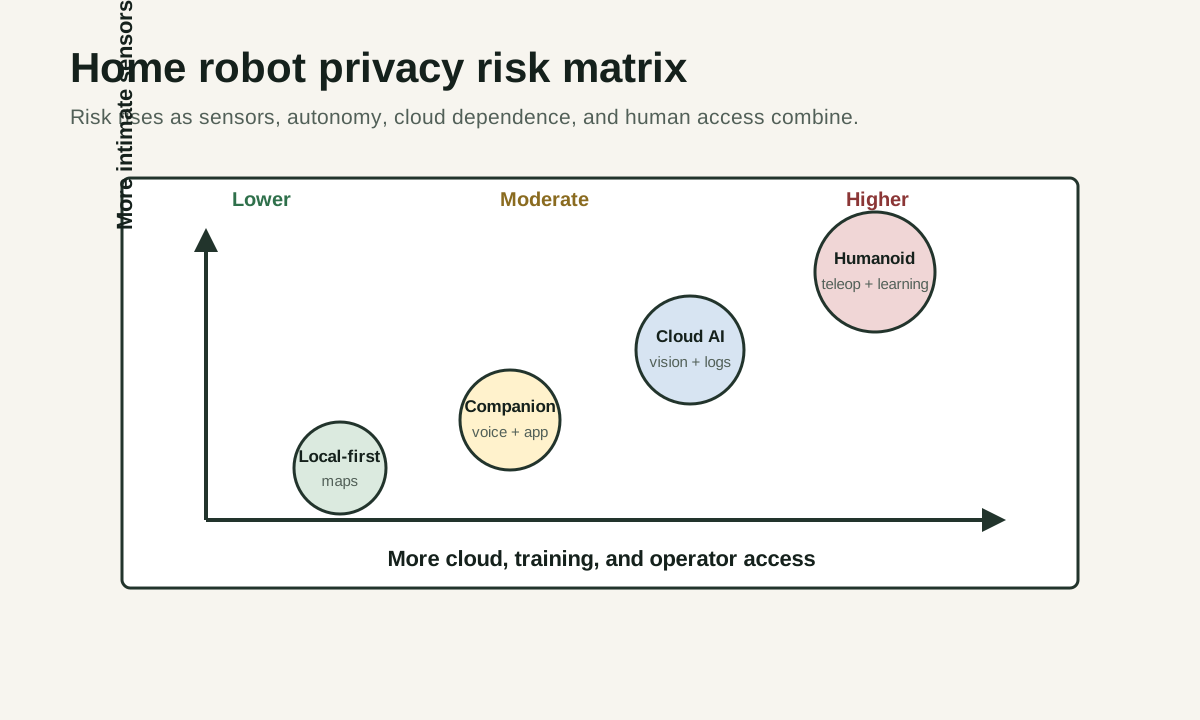
Lower risk: a robot that processes maps locally, has no live operator mode, uses clear camera indicators, stores minimal logs, and provides easy deletion.
Moderate risk: a robot that uses cloud AI for voice or object recognition, uploads diagnostic logs, and depends on an app account, but offers clear controls and retention terms.
Higher risk: a robot with mobile cameras, microphones, remote monitoring, remote operation, cloud training, vague retention, unclear jurisdiction, or no user-visible access logs.
By that framing, the most important distinction is not category alone. A small companion robot can be risky if it records constantly and has unclear cloud retention. A humanoid can be more acceptable if it has strong local processing, obvious indicators, explicit session consent, and transparent deletion. The risk comes from the full stack.
What Good Manufacturer Answers Look Like
Good answers are specific. "We care about privacy" is not specific. "Video used for scheduled expert assistance is streamed live, not retained by default, visible through an on-robot indicator, and excluded from training unless the owner opts in" is specific.
Look for these signals:
- A public privacy policy that covers the robot product, not only the marketing website.
- A product security page with vulnerability disclosure instructions.
- Region-specific data-processing terms for major markets.
- A list of subprocessors or cloud providers.
- A retention table for maps, logs, media, training examples, and support tickets.
- Clear controls for teleoperation, remote viewing, and model training.
- Local reset and account deletion instructions.
- Separate consent for children, guests, and bystanders where relevant.
The absence of those signals does not mean a robot is unsafe. It means the buyer is being asked to trust a complex system without enough evidence.
The ui44 Buyer Checklist
Bottom Line
Home robot data sovereignty is going to matter more as robots become more capable. The buyer's home is not just a deployment site. It is the training environment, the map source, the support context, and sometimes the live workspace for a remote operator.
That does not make connected robots a bad idea. It makes transparency a product feature. A serious home robot company should be able to explain where the robot's brain runs, where the data lives, who can see through it, how learning data is used, and how the owner can delete the home from the system.
Until those answers are standard, compare robots by more than price, payload, and demos. Compare the data path too.
Related in the database
Use this article as a privacy verification workflow
Turn the article into a privacy verification pass grounded in the robots, manufacturers, and components it actually references.
Who Owns Your Home Robot's Brain Data? already points you toward 6 linked robots, 6 manufacturers, and 3 countries inside the ui44 database. That matters because strong buyer guidance is easier to apply when you can move immediately from a claim or warning into concrete product pages, manufacturer directories, component explainers, and country-level context instead of treating the article as an isolated opinion piece. The fastest next step is to turn the article into a shortlist workflow: open the linked robot pages, verify which specs are actually published for those models, then compare the surrounding manufacturer and component context before you decide whether the underlying claim changes your buying plan.
For this topic, the useful discipline is to separate the editorial lesson from the catalog evidence. The article gives you the framing, but the robot pages tell you what each product actually ships with today: sensor stack, connectivity methods, listed price, release timing, category, and support-relevant compatibility notes. The manufacturer pages then show whether you are looking at a one-off launch, a broader lineup pattern, or a company that spans multiple categories. That layered workflow reduces the risk of buying on a single marketing phrase or a single support FAQ.
Use the robot pages to confirm which products actually expose cameras, microphones, Wi-Fi, or voice systems, then use the manufacturer pages to decide how much of the privacy question seems product-specific versus brand-wide. On this route cluster, NEO, Figure 03, and G1 form the fastest reality check. If you want a quick working shortlist, open Compare NEO, Figure 03, and G1 next, then keep this article open as the reasoning layer while you compare structured data side by side.
Practical Takeaway
Every robot, manufacturer, category, component, and country reference below resolves to a real ui44 page, keeping the follow-up path grounded in database records rather than generic advice.
Suggested next steps in ui44
- Open NEO and note the listed sensors, connectivity methods, and voice stack before you interpret any policy claim.
- Cross-check the wider brand context on 1X Technologies so you can see whether the privacy question touches one model or a broader lineup.
- Use the linked component pages to confirm how common the relevant sensors and connectivity layers are across the database.
- Keep a short note of which policy layers you checked, which device features are actually present on the robot page, and which items still depend on region- or app-level confirmation.
- Finish with Compare NEO, Figure 03, and G1 so the policy reading sits next to structured product data.
Robot profiles worth opening next
Use the linked product pages as the evidence layer
The linked robot pages are where this article becomes operational. Instead of asking whether the headline is interesting, use the robot entries to inspect the actual mix of sensors, connectivity options, batteries, pricing, release timing, and stated capabilities attached to the products mentioned in the article. That is the easiest way to see whether the warning or opportunity described here affects one product family, a specific design pattern, or an entire buying lane.
NEO
1X Technologies · Humanoid · Pre-order
NEO is tracked on ui44 as a pre-order humanoid robot from 1X Technologies. The database currently records a listed price of $20,000, a release date of 2025-10-28, ~4 hours battery life, Not disclosed charging time, and a published stack that includes RGB Cameras, Depth Sensors, and Tactile Skin plus Wi-Fi and Bluetooth.
For privacy-focused reading, this page matters because it shows the concrete device surface behind the policy discussion. Use it to verify whether NEO combines sensors and connectivity in a way that could change the in-home data footprint, and compare the listed capabilities such as Household Chores, Tidying Up, and Safe Human Interaction with any cloud, app, or voice layers.
Figure 03 is tracked on ui44 as a active humanoid robot from Figure AI. The database currently records a listed price of Price TBA, a release date of 2025-10-09, ~5 hours battery life, Not disclosed charging time, and a published stack that includes Stereo Vision, Depth Cameras, and Force Sensors plus Wi-Fi and Bluetooth.
For privacy-focused reading, this page matters because it shows the concrete device surface behind the policy discussion. Use it to verify whether Figure 03 combines sensors and connectivity in a way that could change the in-home data footprint, and compare the listed capabilities such as Complex Manipulation, Warehouse Work, and Manufacturing Tasks with any cloud, app, or voice layers.
G1 is tracked on ui44 as a available humanoid robot from Unitree. The database currently records a listed price of $13,500, a release date of 2024-05-13, ~2 hours battery life, Not disclosed charging time, and a published stack that includes Depth Camera, 3D LiDAR, and 4 Microphone Array plus Wi-Fi 6 and Bluetooth 5.2.
For privacy-focused reading, this page matters because it shows the concrete device surface behind the policy discussion. Use it to verify whether G1 combines sensors and connectivity in a way that could change the in-home data footprint, and compare the listed capabilities such as Bipedal Walking, Object Manipulation, and Dexterous Hands (optional Dex3-1) with any cloud, app, or voice layers.
R1
Unitree Robotics · Humanoid · Pre-order
R1 is tracked on ui44 as a pre-order humanoid robot from Unitree Robotics. The database currently records a listed price of $4,900, a release date of 2025, ~1 hour (mixed activity) battery life, Not officially disclosed charging time, and a published stack that includes Monocular camera (R1 Air); binocular camera (R1/R1 EDU), 4-Mic Array, and Dual 6-Axis IMU plus Wi-Fi 6 and Bluetooth 5.2.
For privacy-focused reading, this page matters because it shows the concrete device surface behind the policy discussion. Use it to verify whether R1 combines sensors and connectivity in a way that could change the in-home data footprint, and compare the listed capabilities such as Bipedal Walking & Running, Cartwheels & Handstands, and Push Recovery with any cloud, app, or voice layers, including UnifoLM (voice + image commands).
Loona is tracked on ui44 as a available companions robot from KEYi Tech. The database currently records a listed price of $442, a release date of 2023, 2 hours continuous playtime; 1350 mAh, 11.1 V lithium-ion rechargeable battery battery life, Not officially disclosed charging time, and a published stack that includes 3D Time-of-Flight (ToF) Sensor, 720p RGB Camera, and Touch Sensor plus Wi-Fi (Dual-band 2.4G/5.8G, 802.11a/b/g/n) and USB Type-C (charging).
For privacy-focused reading, this page matters because it shows the concrete device surface behind the policy discussion. Use it to verify whether Loona combines sensors and connectivity in a way that could change the in-home data footprint, and compare the listed capabilities such as Face Recognition, Voice Commands, and Emotion Expression (LCD face) with any cloud, app, or voice layers.
Manufacturer context behind the article
Check whether this is one product story or a broader company pattern
Manufacturer pages add the privacy context that individual product pages cannot show on their own. They help you check whether cameras, microphones, cloud accounts, app controls, and policy assumptions appear across a broader lineup or stay tied to one specific product story.
1X Technologies
ui44 currently tracks 2 robots from 1X Technologies across 1 category. The company is grouped under Norway, and the current catalog footprint on ui44 includes NEO, EVE.
That wider brand context matters because privacy questions rarely stop at one FAQ page. A manufacturer route helps you see whether the article is centered on one premium model or on a company that has several relevant products and therefore more than one place where the same policy or app assumptions might matter. The category mix here currently points toward Humanoid as the most useful next route if you want to see whether this article reflects a wider pattern inside the brand.
Figure AI
ui44 currently tracks 2 robots from Figure AI across 1 category. The company is grouped under USA, and the current catalog footprint on ui44 includes Figure 03, Figure 02.
That wider brand context matters because privacy questions rarely stop at one FAQ page. A manufacturer route helps you see whether the article is centered on one premium model or on a company that has several relevant products and therefore more than one place where the same policy or app assumptions might matter. The category mix here currently points toward Humanoid as the most useful next route if you want to see whether this article reflects a wider pattern inside the brand.
Unitree
ui44 currently tracks 2 robots from Unitree across 1 category. The company is grouped under China, and the current catalog footprint on ui44 includes H1, G1.
That wider brand context matters because privacy questions rarely stop at one FAQ page. A manufacturer route helps you see whether the article is centered on one premium model or on a company that has several relevant products and therefore more than one place where the same policy or app assumptions might matter. The category mix here currently points toward Humanoid as the most useful next route if you want to see whether this article reflects a wider pattern inside the brand.
Unitree Robotics
ui44 currently tracks 9 robots from Unitree Robotics across 3 categorys. The company is grouped under China, and the current catalog footprint on ui44 includes B2, B1, Go2.
That wider brand context matters because privacy questions rarely stop at one FAQ page. A manufacturer route helps you see whether the article is centered on one premium model or on a company that has several relevant products and therefore more than one place where the same policy or app assumptions might matter. The category mix here currently points toward Quadruped, Humanoid, Research as the most useful next route if you want to see whether this article reflects a wider pattern inside the brand.
Broaden the scan without leaving the database
Categories, components, and countries add the wider context
Category framing
Category pages are useful when the article touches a buying pattern that shows up across brands. A category route helps you confirm whether the linked products sit in a narrow niche or whether the same question should be tested across a larger field of alternatives.
Humanoid
The Humanoid category page currently groups 129 tracked robots from 92 manufacturers. ui44 describes this lane as: Full-size bipedal humanoid robots built to work alongside people — from factory floors to household tasks. Compare the cutting edge of humanoid robotics.
That makes the category route a practical follow-up when you want to check whether the products linked in this article are typical for the lane or whether they sit at one edge of the market. Useful starting examples currently include NEO, EVE, Mornine M1.
Companions
The Companions category page currently groups 53 tracked robots from 48 manufacturers. ui44 describes this lane as: Social robots, robot pets, and elderly-care companions designed for emotional connection and everyday support at home.
That makes the category route a practical follow-up when you want to check whether the products linked in this article are typical for the lane or whether they sit at one edge of the market. Useful starting examples currently include PARO, Abi, Next-Generation Companion Robot.
Country and ecosystem context
Country pages give extra context when support practices, launch sequencing, regulatory posture, or manufacturer mix matter. They are not a substitute for model-level verification, but they do help you see which ecosystems cluster together and which manufacturers sit in the same regional field when you broaden the search beyond the article headline.
Norway
The Norway route currently groups 2 tracked robots from 1 manufacturers in ui44. That gives you a useful regional lens when the article points toward support practices, launch sequencing, or brand clusters that may share similar ecosystem assumptions.
On the current route, manufacturers like 1X Technologies make the page a good way to broaden the scan without losing the regional context that often shapes availability, documentation style, and adjacent alternatives.
USA
The USA route currently groups 89 tracked robots from 69 manufacturers in ui44. That gives you a useful regional lens when the article points toward support practices, launch sequencing, or brand clusters that may share similar ecosystem assumptions.
On the current route, manufacturers like Faraday Future, iRobot, Boston Dynamics make the page a good way to broaden the scan without losing the regional context that often shapes availability, documentation style, and adjacent alternatives.
China
The China route currently groups 189 tracked robots from 87 manufacturers in ui44. That gives you a useful regional lens when the article points toward support practices, launch sequencing, or brand clusters that may share similar ecosystem assumptions.
On the current route, manufacturers like AGIBOT, Dreame, Unitree Robotics make the page a good way to broaden the scan without losing the regional context that often shapes availability, documentation style, and adjacent alternatives.
Questions to answer before you move from reading to buying
A follow-up FAQ built from the entities already linked in this article
Frequently Asked Questions
Which page should I open first after reading “Who Owns Your Home Robot's Brain Data?”?
Start with NEO. That gives you a concrete product anchor for the article’s main claim. From there, branch into the manufacturer and component pages so you can tell whether the article is describing one specific model, a repeated brand pattern, or a wider technology issue that affects multiple shortlist options.
How do the manufacturer pages change the buying decision?
1X Technologies help you zoom out from one article and one product. On ui44 they show lineup breadth, category spread, and the neighboring robots tied to the same company. That context is useful when you are deciding whether a risk belongs to a single model, whether it shows up across a brand’s portfolio, and whether you should keep looking at alternatives before committing.
When should I switch from reading to side-by-side comparison?
Move into Compare NEO, Figure 03, and G1 as soon as you understand the article’s main warning or promise. The article explains what to watch for, but the compare view is where you can check whether price, status, battery life, connectivity, sensors, and category fit still make the robot a good match for your own home and budget.
Where to go next in ui44
Keep the research chain inside the database
If you want to keep going, these follow-on pages give you the cleanest expansion path from article to research session. Open the comparison route first if you are deciding between products today. Open the manufacturer, category, and component routes if you still need to understand the broader pattern behind the claim.
Written by
ui44 Team
Published July 11, 2026
Share this article
Open a plain share link on X or Bluesky. No embeds, no widgets, no cookie baggage.