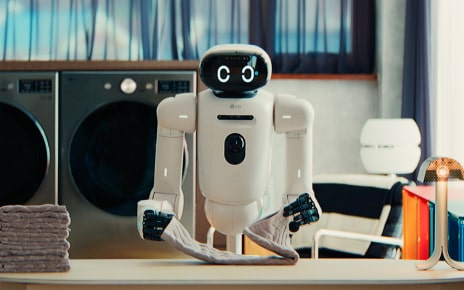
The short answer is that home humanoid robot regulation is starting to catch up, but it is still fragmented. In 2026, companies are already showing robots folding laundry, carrying objects, watching rooms, learning routines, and responding to voice commands. The rulebook is not keeping pace cleanly. A robot can look futuristic in a demo and still leave basic buyer questions unanswered: what safety standard was it tested to, what happens if it loses balance, where do the camera feeds go, and how much of the "autonomy" still depends on remote humans behind the scenes?
That is why HEIS 2026 is worth paying attention to. China unveiled it as the first national-level standard system built specifically for humanoid robots and embodied intelligence. That is a real shift. It means at least one major market is trying to stop treating humanoids like a weird edge case squeezed into older industrial or generic AI frameworks.
But buyers should not overread it. HEIS 2026 is an important framework, not a magic trust seal for every robot claiming to be home-ready.
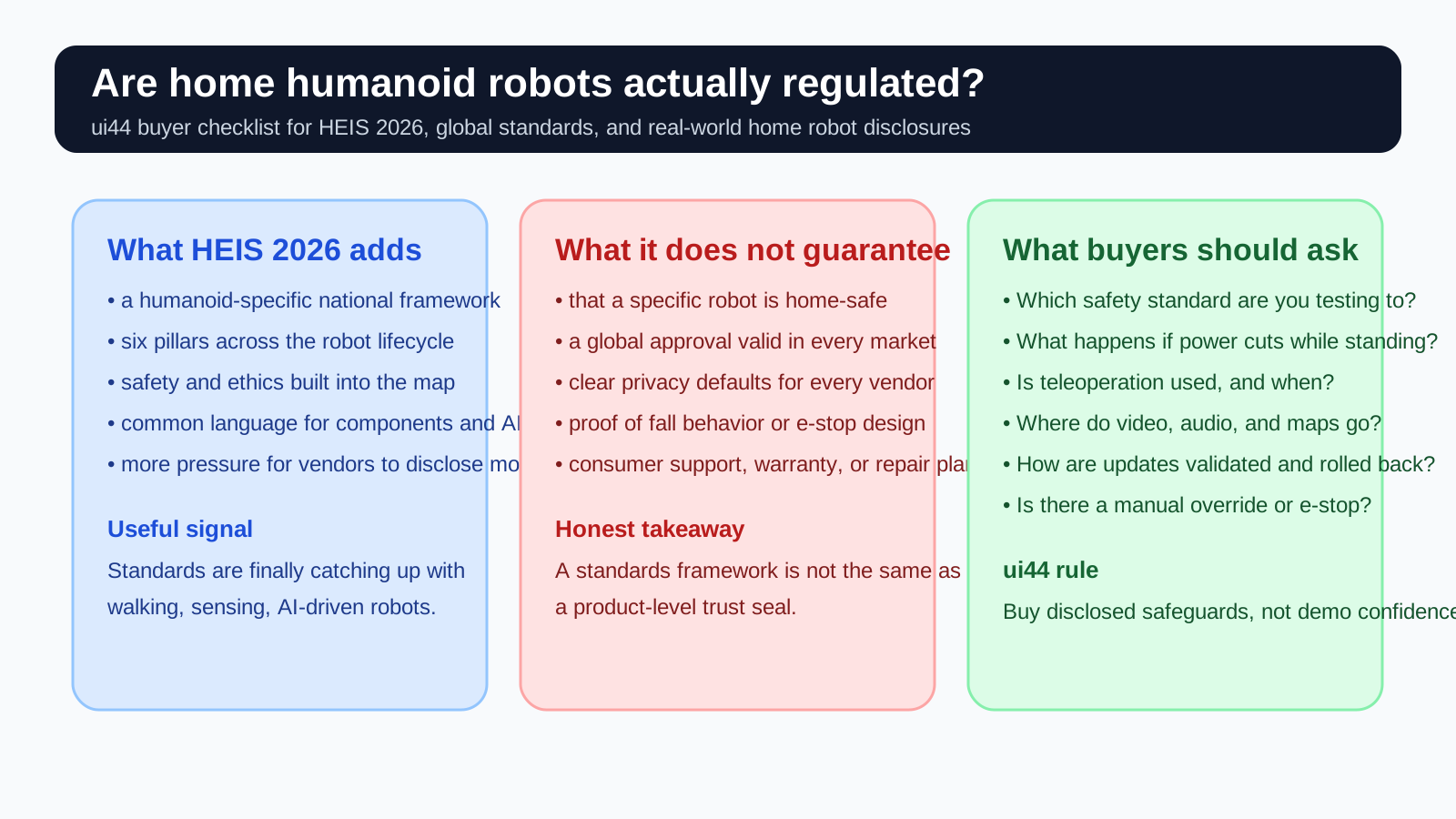
At ui44, the more useful way to read the moment is this: standards are finally starting to catch up, but the robots themselves still need to earn trust one product disclosure at a time. If you want to compare actual products while you read, open our robot database and compare tool, because the gaps in vendor disclosures are just as important as the headline demos.
Are home humanoid robots actually regulated under HEIS 2026?
According to China's State Council Information Office and multiple industry summaries, HEIS 2026 is China's first comprehensive top-level standard system for humanoid robotics and embodied intelligence. SCIO says the framework was developed by more than 120 research institutions, enterprises, and industry users under MIIT's HEIS technical committee.
The structure matters. SCIO describes six pillars:
- foundational and common standards
- neuromorphic and intelligent computing
- limbs and components
- full-system integration
- application
- safety and ethics
That sounds bureaucratic, but it is actually buyer-relevant. Why? Because a real home robot is not just a walking body. It is a stack of components, AI models, control loops, sensors, data policies, and failure modes. A framework that tries to cover the full lifecycle is much closer to the real problem than pretending a humanoid is just another appliance.
SCIO also says the goal is to promote humanoid robots' integration into households while maintaining the safety bottom line. That is the key line. It shows Chinese regulators and industry are no longer talking only about robot capability. They are also talking about the conditions under which those capabilities become acceptable around people.
That is a big deal because most current global standards were not written with a bipedal, camera-heavy, AI-driven household machine in mind.
What HEIS 2026 does not mean
This is where the hype needs a brake.
HEIS 2026 does not mean that every humanoid on sale in China is now proven safe for homes. It does not mean Europe and North America automatically recognize the same framework. And it does not mean the average buyer can stop asking hard questions about privacy, teleoperation, falls, or software updates.
The cleanest way to think about it is this:
- a framework tells you what kinds of standards and tests a market thinks matter
- a product disclosure tells you what a specific robot maker is actually willing to reveal today
- a certification or conformity process tells you whether a specific product was really evaluated against a concrete standard
Those are not interchangeable.
That distinction matters a lot in home robotics, because the biggest trust risks are still product-level risks. If a robot stands 167 cm tall, weighs 30 kg, has cameras, depth sensing, microphones, cloud connectivity, and moving arms, the buyer still needs answers about things like force limits, emergency stop design, failure behavior, and data handling.
Take 1X NEO. In ui44's database, it is a $20,000 home-focused humanoid listed as Pre-order, with a 167 cm height, 30 kg weight, about 4 hours of battery life, and sensors that include RGB cameras, depth sensors, tactile skin, and a microphone array. That is exactly the sort of product that makes buyers care about regulation. It is explicitly home-facing. It also shows why a broad standards story is only the start of the buyer conversation.

In other words, HEIS 2026 is encouraging. But for a buyer, it is still more useful as a signal that the market is getting serious than as proof that a specific robot already deserves trust.
Outside China, the rulebook is still a patchwork
The global picture is much less tidy than a single headline about regulation can make it seem.
The most relevant existing international standard is still ISO 13482:2014, which covers personal care robots. ISO says it addresses three types in particular: mobile servant robots, physical assistant robots, and person carrier robots. It focuses on inherently safe design, protective measures, information for use, and hazards involving human-robot physical contact.
That is useful, but notice the mismatch. ISO 13482 was not built as a dedicated "home humanoid" rulebook. It is broader, older, and shaped around personal care robot categories rather than the current flood of AI-heavy household humanoid marketing.
In North America, the landscape is also fragmented. UL Solutions says it can certify robots to ANSI/CAN/UL 3300 and ISO 13482, and it describes UL 3300 as the safety standard for service, communication, information, education, and entertainment robots. NIST's standards overview also points to ASTM Committee F45 as a standards body for industrial and commercial robotics, automation, and autonomous systems. That is real infrastructure, but it is still not the same thing as a simple home-humanoid standard every buyer can recognize at a glance.
Europe adds another layer. The EU AI Act is explicitly risk-based. The EUR-Lex summary says the stricter rules apply as risk rises, and it includes AI used as safety components in products covered by EU harmonization law among its high-risk areas. Again, that matters, but it is regulation of AI systems and risk categories, not a one-page answer to "is this home humanoid approved like a washing machine?"
Here is the practical summary:
Framework
HEIS 2026
- What it covers well
- Humanoid-specific national structure across the full lifecycle
- What it does not solve for buyers
- Not a universal product-level trust seal
Framework
ISO 13482
- What it covers well
- Personal care robot safety and human-robot contact hazards
- What it does not solve for buyers
- Not a dedicated 2026 home humanoid playbook
Framework
UL 3300
- What it covers well
- Safety path for service and public-facing robots
- What it does not solve for buyers
- Not a single consumer shorthand for household humanoids
Framework
ASTM F45
- What it covers well
- Ongoing standards development and test-method work
- What it does not solve for buyers
- Too abstract for everyday purchase decisions
Framework
EU AI Act
- What it covers well
- Risk-based oversight for AI systems, including some product safety cases
- What it does not solve for buyers
- Does not replace robot-specific hardware and behavior disclosures
| Framework | What it covers well | What it does not solve for buyers |
|---|---|---|
| HEIS 2026 | Humanoid-specific national structure across the full lifecycle | Not a universal product-level trust seal |
| ISO 13482 | Personal care robot safety and human-robot contact hazards | Not a dedicated 2026 home humanoid playbook |
| UL 3300 | Safety path for service and public-facing robots | Not a single consumer shorthand for household humanoids |
| ASTM F45 | Ongoing standards development and test-method work | Too abstract for everyday purchase decisions |
| EU AI Act | Risk-based oversight for AI systems, including some product safety cases | Does not replace robot-specific hardware and behavior disclosures |
So yes, home humanoid robots are becoming more regulated. But no, the market is not yet at the point where a normal buyer can assume the basics are already settled.

What ui44's database says buyers should verify right now
This is where ui44 is most useful. The industry talks a lot about the future of home robots in general. Our database lets you compare what specific products are actually disclosing now.
Here is a snapshot of the current home-adjacent field from ui44:
Robot
- ui44 status
- Pre-order
- Price in ui44
- $20,000
- Buyer-relevant disclosed signals
- Home-focused positioning, tactile skin, cameras, depth sensors, microphone array, Wi-Fi/Bluetooth
- What still feels thin
- Public certification details and household safety process are still not front-and-center in the ui44 entry
Robot
- ui44 status
- Pre-order
- Price in ui44
- From $4,900
- Buyer-relevant disclosed signals
- Binocular cameras, 4-mic array, voice and image interaction, OTA updates
- What still feels thin
- Very affordable for a humanoid, but still more early-adopter platform than trusted home helper
Robot
- ui44 status
- Available
- Price in ui44
- $13,500
- Buyer-relevant disclosed signals
- Depth camera, 3D LiDAR, microphone array, optional dexterous hands, OTA upgrades
- What still feels thin
- Public pricing is strong, but home-use safety language is still limited
Robot
- ui44 status
- Pre-order
- Price in ui44
- From $2,899
- Buyer-relevant disclosed signals
- Fall detection, mobile safety checks, LiDAR, iTOF depth, vision camera, multilingual interaction
- What still feels thin
- Connectivity details are sparse and retail availability is still reservation-style
Robot
- ui44 status
- Development
- Price in ui44
- No public price
- Buyer-relevant disclosed signals
- Dual 7-DoF arms, five fingers per hand, ThinQ integration, voice-based generative AI
- What still feels thin
- No clear consumer launch timing or retail-spec disclosure yet
Robot
- ui44 status
- Development
- Price in ui44
- $9,999 metadata placeholder
- Buyer-relevant disclosed signals
- Multiple cameras, depth sensing, tactile feedback, on-device VLA model
- What still feels thin
- Wider launch timing and detailed hardware specs remain limited
Robot
- ui44 status
- Active
- Price in ui44
- No announced price
- Buyer-relevant disclosed signals
- Stereo vision, depth cameras, force sensors, tactile arrays, about 5 hours battery
- What still feels thin
- Not positioned as a normal consumer home purchase yet
| Robot | ui44 status | Price in ui44 | Buyer-relevant disclosed signals | What still feels thin |
|---|---|---|---|---|
| 1X NEO | Pre-order | $20,000 | Home-focused positioning, tactile skin, cameras, depth sensors, microphone array, Wi-Fi/Bluetooth | Public certification details and household safety process are still not front-and-center in the ui44 entry |
| Unitree R1 | Pre-order | From $4,900 | Binocular cameras, 4-mic array, voice and image interaction, OTA updates | Very affordable for a humanoid, but still more early-adopter platform than trusted home helper |
| Unitree G1 | Available | $13,500 | Depth camera, 3D LiDAR, microphone array, optional dexterous hands, OTA upgrades | Public pricing is strong, but home-use safety language is still limited |
| Zeroth M1 | Pre-order | From $2,899 | Fall detection, mobile safety checks, LiDAR, iTOF depth, vision camera, multilingual interaction | Connectivity details are sparse and retail availability is still reservation-style |
| LG CLOiD | Development | No public price | Dual 7-DoF arms, five fingers per hand, ThinQ integration, voice-based generative AI | No clear consumer launch timing or retail-spec disclosure yet |
| SwitchBot onero H1 | Development | $9,999 metadata placeholder | Multiple cameras, depth sensing, tactile feedback, on-device VLA model | Wider launch timing and detailed hardware specs remain limited |
| Figure 03 | Active | No announced price | Stereo vision, depth cameras, force sensors, tactile arrays, about 5 hours battery | Not positioned as a normal consumer home purchase yet |
That table tells a more honest story than most promo videos.
The strongest recurring pattern is that vendors are increasingly comfortable disclosing sensing, AI, and demo capabilities. Cameras, LiDAR, depth sensing, microphones, VLA models, app ecosystems, and voice interaction now appear routinely.
The weaker pattern is around the stuff buyers should arguably care about first:
- explicit product-level safety standard claims
- fall behavior in a real household
- manual override or emergency-stop details
- teleoperation disclosure
- data retention and cloud-routing defaults
- support, repair, and rollback plans after software updates
That does not mean the companies are ignoring those topics internally. It means buyers often still cannot compare them cleanly from public materials.
The buyer checklist that matters more than the headline
If a company says its robot is ready for the home, here are the questions I would ask before trusting the demo.
1. Which concrete safety standard or test program are you using?
"We take safety seriously" is not an answer. A real answer points to a standard, a conformity path, or a named test program.
2. What happens if the robot loses power while standing or carrying something?
This is one reason humanoids are different from fixed robot arms and even from many robot vacuums. Falls are not a theoretical edge case. They are a normal risk category.
3. Is teleoperation used, and in which situations?
This should be a normal question, not a scandal question. Shared autonomy can be useful. Hidden human intervention is what breaks trust.
4. Where do video, audio, maps, and home routines go?
A robot that uses cameras, microphones, depth sensing, and room mapping is also a data product. Buyers should know what stays local, what goes to the cloud, how long it is retained, and whether it is used for training.
5. Is there a manual override, emergency stop, or clear shutdown path?
The more autonomous the marketing gets, the more important the manual escape hatch becomes.
6. How are software updates validated, and can you roll back a bad one?
A robot in the home is never just hardware. It is a moving software stack. Update policy is a safety issue.
7. What support model exists after purchase?
If a robot is pre-order only, reservation-based, or still labeled development, you should assume the support story is immature until proven otherwise.
8. Are the product claims narrow and believable?
This is maybe the simplest rule of all. A robot that promises three narrow tasks and explains them clearly is easier to trust than a robot that promises to be a general-purpose household partner with no equally detailed safety and privacy documentation.
That is why I think buyers should read HEIS 2026 as a positive sign for the industry, then immediately go back to the product pages and ask whether the robot maker is matching that seriousness.

ui44's bottom line
So, are home humanoid robots actually regulated?
Partly, increasingly, and not yet in the simple consumer-friendly way most buyers probably assume.
China's HEIS 2026 is the clearest sign so far that humanoid-specific standards are becoming real policy infrastructure instead of a future talking point. ISO 13482, UL 3300, ASTM F45 work, and the EU AI Act all matter too. But the global landscape is still a stack of overlapping frameworks, not a single easy badge that tells you a household robot is fully mature.
For buyers, that means the most practical move is not to wait for a perfect regulatory headline. It is to compare actual robots and reward the companies that disclose the most about safety, privacy, control, and support.
Right now, the safest buying posture is simple:
- trust specific disclosures more than futuristic demos
- trust narrow believable tasks more than broad assistant promises
- trust clear standards language more than vague safety talk
- trust honest limitations more than launch-stage theater
If you want to pressure-test a robot before the market gets cleaner, start with our pages for 1X NEO, Unitree R1, Unitree G1, Zeroth M1, SwitchBot onero H1, LG CLOiD, and Figure 03, then use ui44 Compare to see which companies are actually giving you enough information to deserve the benefit of the doubt.
Written by
ui44 Team
Published April 22, 2026
Share this article
Open a plain share link on X or Bluesky. No embeds, no widgets, no cookie baggage.