That makes Cinnamon 1 worth watching. It does not make it a home robot yet.
The useful question for a home-robot buyer is not "does this look human?" It is whether Cinnamon 1's industrial-first design path can eventually cross into homes better than the many social, service, and bipedal robots that came before it. Using Donut's official claims and ui44's robot database, the answer is cautious: Cinnamon 1 is a credible signal in Japan's humanoid comeback, but the home-readiness proof is still missing.
What Donut Robotics actually says about Cinnamon 1
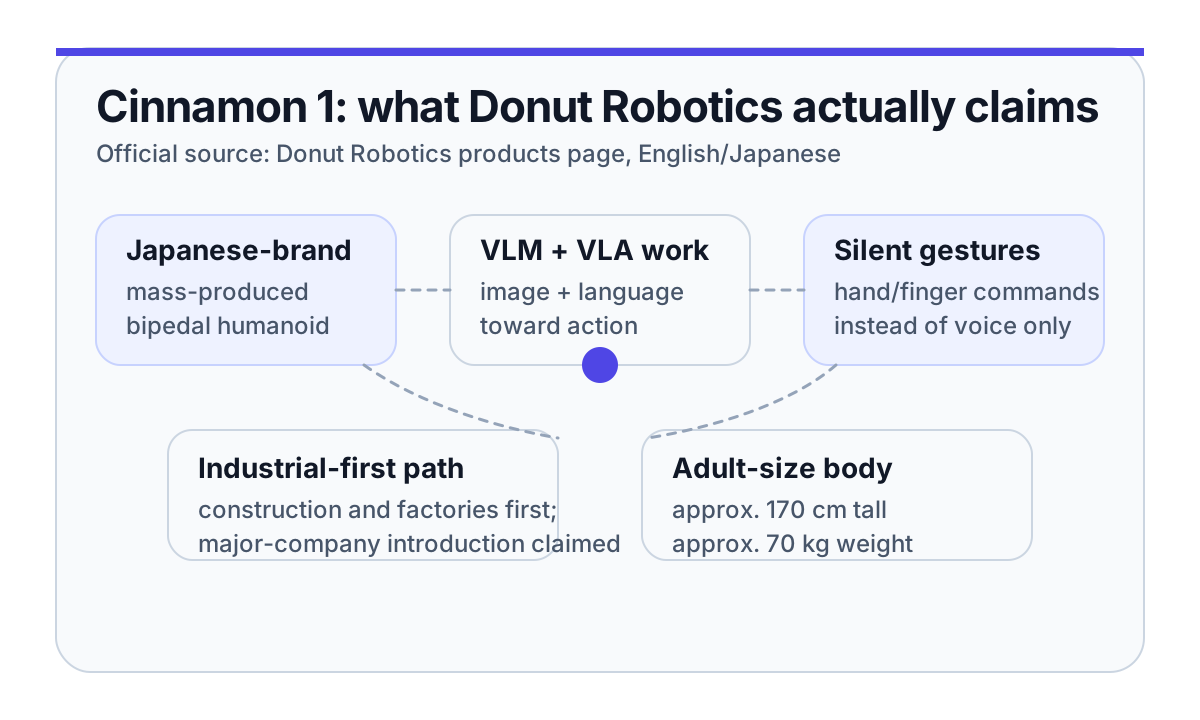
Donut Robotics' official English product page describes Cinnamon 1 as a "mass-produced humanoid" and says it is the first mass-produced bipedal humanoid from a Japanese brand. The company lists four concrete claims that matter.
First, Cinnamon 1 is a full-size biped. Donut gives the body as roughly 170 cm tall and 70 kg. That puts it close to adult human scale, not toy scale and not the compact desk-robot category. A body that size has obvious upside for reaching counters, doors, shelves, and work surfaces. It also creates obvious home risks: falling mass, floor damage, finger pinch points, stair danger, and a service burden closer to a vehicle than a gadget.
Second, Donut says the robot includes a VLM, or Vision-Language Model, for understanding images and language. The company also says it has begun work on its own VLA, or Vision-Language-Action system, to move from language understanding toward action. That wording matters. It is not the same as saying Cinnamon 1 can autonomously fold laundry, load a dishwasher, or handle arbitrary household mess. It means Donut is pointing in the same direction as the broader physical-AI market: perception, language, planning, and motion have to become one loop.
Third, the company emphasizes Silent Gesture Control. The practical pitch is easy to understand. In a factory, construction site, shop, hospital, or care facility, voice commands can fail because the environment is noisy, sensitive, or public. Hand and finger gestures can be faster, less awkward, and easier to supervise. In a home, gestures could also be useful when people are sleeping, when speech recognition struggles, or when a user wants a quick directional command.
Fourth, the initial target is not the living room. Donut says Cinnamon 1 is initially intended for construction sites and factories, and that it has already been introduced to major companies. Treat that as the central fact. This is a worksite-first humanoid story, not a consumer launch.
Donut's same product page also lists Cinnamon Guide, a next-generation customer-service robot with patrol, shoplifting deterrence, customer service, translation, and sales functions. Unlike Cinnamon 1, Cinnamon Guide has public price framing: ¥2.2 million including tax or from ¥62,000 per month. That does not give us a Cinnamon 1 price, but it does show Donut's near-term commercial pattern: service robots for organizations that can justify a monthly or capital expense.
Why silent gesture control is more than a gimmick
Gesture control sounds small until you compare it with the failure modes of home robots. Voice is not always private. Apps are slow when your hands are full. Full autonomy is brittle. Teleoperation is expensive and awkward. A good robot needs several command channels, and gesture can be one of the more natural ones.
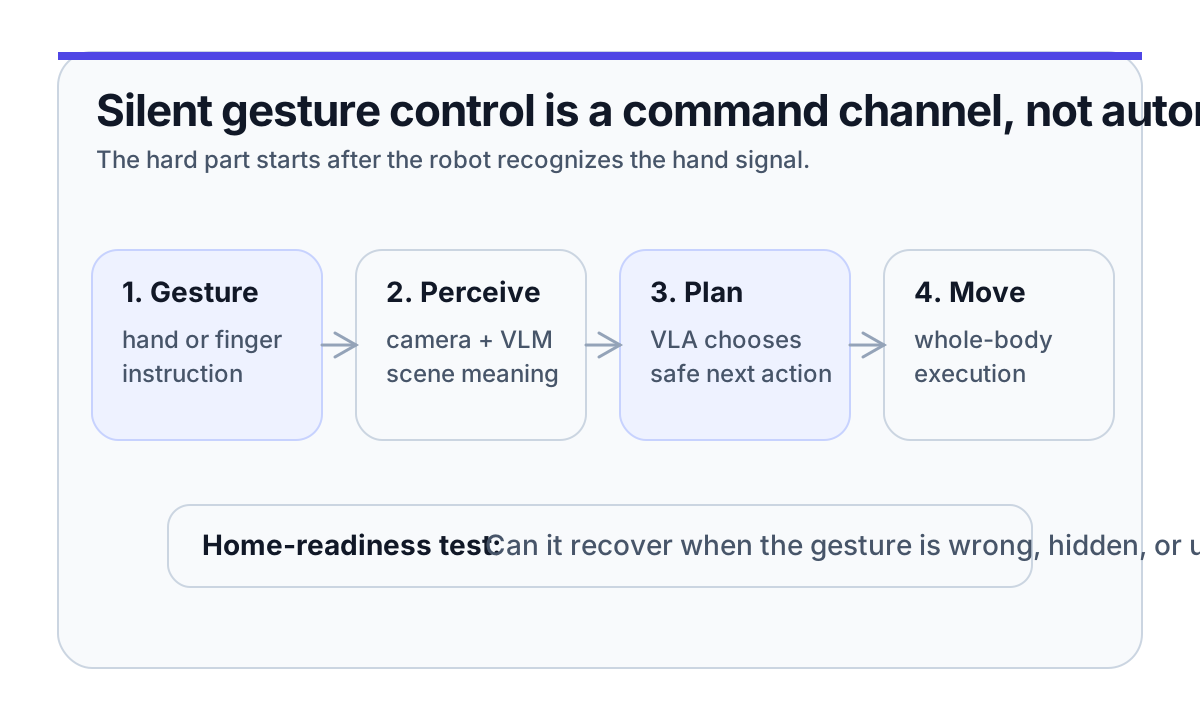
The catch is that recognizing a gesture is only the first step. A humanoid has to see the human, infer the command, understand the surrounding scene, decide whether the requested action is safe, and then execute a movement without hurting anyone or damaging the environment. If the user points at a cup, does the robot know which cup? If the user waves it away, does it step backward safely? If the gesture is ambiguous, does it ask for confirmation? If a child copies the gesture, does it obey?
Those are not interface-polish questions. They are safety questions.
For homes, the most valuable version of gesture control may be limited rather than open-ended: stop, come here, go there, hand me that, pause, follow me, back up, cancel, and emergency halt. A narrow gesture vocabulary can be tested, certified, and explained. A theatrical demo where every hand motion triggers a complex behavior is less useful if it cannot prove reliability under bad lighting, occluded hands, mirrors, pets, and clutter.
This is where Cinnamon 1 should be judged differently from a robot vacuum or smart speaker. A voice assistant can misunderstand a song request and annoy you. A 70 kg biped misunderstanding a motion command is a physical incident.
How Cinnamon 1 compares with robots ui44 already tracks
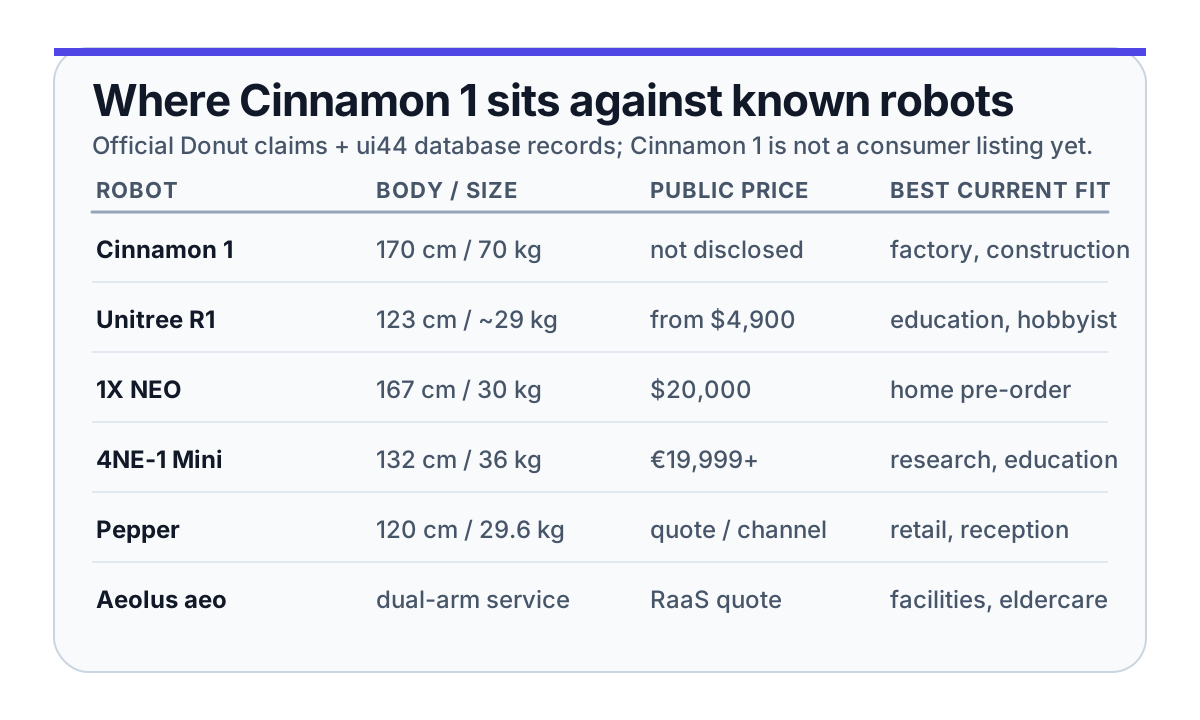
ui44 now tracks 261 robots from 156 manufacturers, so the database gives us a useful reality check. Cinnamon 1 is not best understood in isolation. It sits between several categories that already exist: low-cost bipedal research robots, home-humanoid preorders, social service robots, and dual-arm facility robots.
Robot
Cinnamon 1
- What ui44 tracks
- Donut says approx. 170 cm, approx. 70 kg, VLM, VLA work, gesture control, factory/construction first. Public price and runtime are not disclosed.
- What it teaches about Cinnamon 1
- Serious adult-size humanoid positioning, but not yet enough buyer data.
Robot
- What ui44 tracks
- From $4,900, 123 cm, ~29 kg, about 1 hour mixed-activity battery, pre-order, agile bipedal focus.
- What it teaches about Cinnamon 1
- Low price can drive attention, but locomotion demos do not equal useful home chores.
Robot
- What ui44 tracks
- $20,000 early-adopter price, 167 cm, 30 kg, about 4 hours battery, home-focused pre-order.
- What it teaches about Cinnamon 1
- The most relevant home-humanoid benchmark because it explicitly targets household work.
Robot
- What ui44 tracks
- From €19,999, 132 cm, 36 kg, about 2.5 hours, 3 kg payload, pre-order.
- What it teaches about Cinnamon 1
- A smaller humanoid may be easier to deploy, but payload and hand capability still matter.
Robot
- What ui44 tracks
- 120 cm, 29.6 kg, roughly 12 hours shop-use battery, social/reception robot with a long deployment history.
- What it teaches about Cinnamon 1
- Public social robots scale only when tied to repeatable jobs, not just personality.
Robot
- What ui44 tracks
- Dual 7-DOF arms, 3.6 kg single-arm lift, RaaS pricing, facility/eldercare workflows.
- What it teaches about Cinnamon 1
- Dual-arm service robots may reach useful work before bipedal humanoids do.
Robot
- What ui44 tracks
- Available humanoid platform with a historical $79,000 listed price, 28 upper-body DoF, industrial/service framing.
- What it teaches about Cinnamon 1
- Full-size humanoid hardware is still expensive and often industrial first.
| Robot | What ui44 tracks | What it teaches about Cinnamon 1 |
|---|---|---|
| Cinnamon 1 | Donut says approx. 170 cm, approx. 70 kg, VLM, VLA work, gesture control, factory/construction first. Public price and runtime are not disclosed. | Serious adult-size humanoid positioning, but not yet enough buyer data. |
| Unitree R1 | From $4,900, 123 cm, ~29 kg, about 1 hour mixed-activity battery, pre-order, agile bipedal focus. | Low price can drive attention, but locomotion demos do not equal useful home chores. |
| 1X NEO | $20,000 early-adopter price, 167 cm, 30 kg, about 4 hours battery, home-focused pre-order. | The most relevant home-humanoid benchmark because it explicitly targets household work. |
| NEURA 4NE-1 Mini | From €19,999, 132 cm, 36 kg, about 2.5 hours, 3 kg payload, pre-order. | A smaller humanoid may be easier to deploy, but payload and hand capability still matter. |
| Pepper | 120 cm, 29.6 kg, roughly 12 hours shop-use battery, social/reception robot with a long deployment history. | Public social robots scale only when tied to repeatable jobs, not just personality. |
| Aeolus aeo | Dual 7-DOF arms, 3.6 kg single-arm lift, RaaS pricing, facility/eldercare workflows. | Dual-arm service robots may reach useful work before bipedal humanoids do. |
| DOBOT Atom | Available humanoid platform with a historical $79,000 listed price, 28 upper-body DoF, industrial/service framing. | Full-size humanoid hardware is still expensive and often industrial first. |
That comparison makes Cinnamon 1 look less like a sudden home-robot breakthrough and more like a new entrant in the service-humanoid lane. Its adult height is close to 1X NEO, but its weight is much higher: about 70 kg versus NEO's 30 kg in the ui44 database. That extra mass may make sense on a worksite. It is harder to accept in a private hallway unless safety, balance, and contact behavior are proven.
It is also much larger than Unitree R1 and NEURA 4NE-1 Mini, which are both closer to education, research, and early-adopter experimentation. Cinnamon 1 seems to be chasing usefulness in human-scale work environments, not a hobbyist price point.
Japan's practical path may be service first, not home first
Cinnamon 1 also fits a broader Japanese robotics pattern. Japan has a long history of humanoid ambition, from ASIMO-style public demos to service robots in stores and care facilities. ui44 covered that context in the Japan humanoid robot comeback analysis: the strongest near-term Japanese humanoid path often runs through industrial validation, public facilities, care settings, and robot-ready environments before ordinary apartments.
Donut's own portfolio supports that reading. Cinnamon Guide is explicitly a customer-service robot. It patrols stores, translates, talks to customers, and helps with product sales. The published price and monthly fee make sense for a business that can measure traffic, staff load, translation coverage, or theft deterrence. They make much less sense for a household that wants help with dishes.
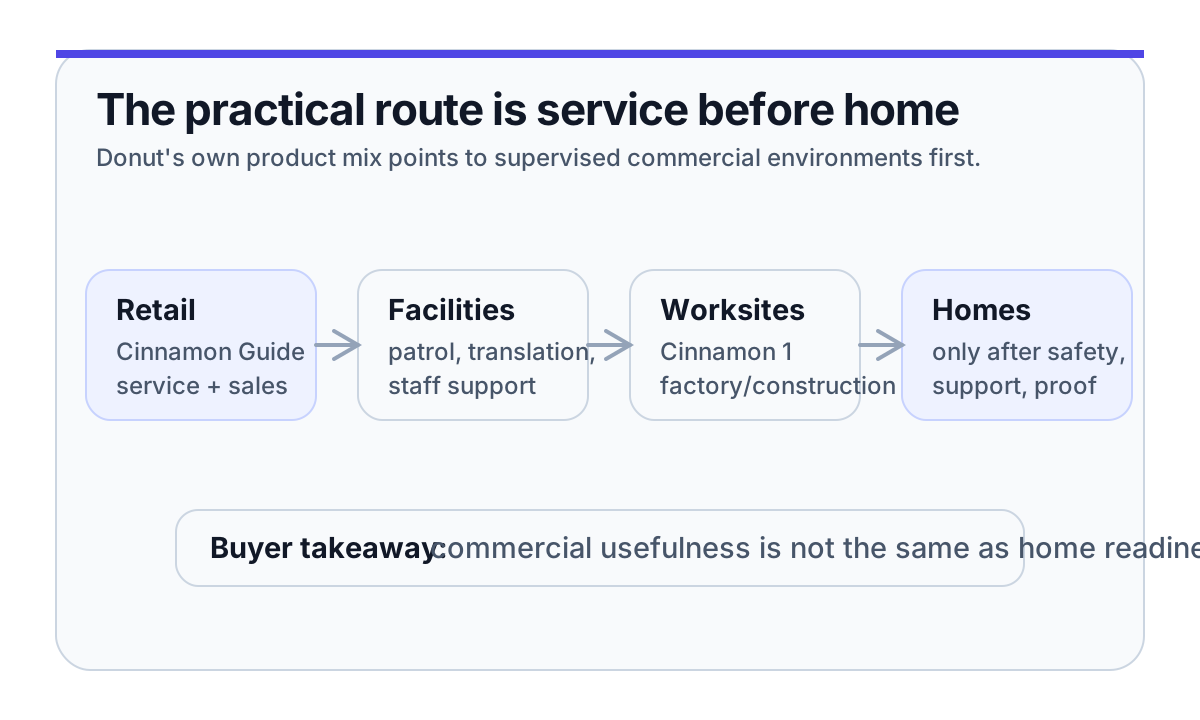
The same lesson shows up in Pepper. Pepper became one of the world's most recognizable social humanoids, and the ui44 database lists it with a 120 cm body, 29.6 kg weight, many sensors, and roughly 12 hours of shop-use battery life. But Pepper's most durable roles were public and semi-public: stores, banks, events, airports, hospitals, schools, and reception. It was easier to justify as a greeter or programmed interaction point than as a general home companion.
LOVOT proves a different Japanese home-robot lesson. It does not try to be useful in the chore sense. It is a companion robot priced at ¥577,500 for LOVOT 3.0, plus a required care plan from ¥9,900 per month, and it succeeds by being emotionally clear: warm, pet-like, expressive, and deliberately non-utilitarian. That is a cleaner home proposition than "maybe this humanoid can do everything."
Cinnamon 1 is aiming at the harder middle: a human-shaped robot that does physical work and can be guided naturally. That could matter. But history says this category becomes real first where tasks are repeatable and supervision is available.
What does Cinnamon 1 still need to prove for homes?
The missing data is not a minor footnote. It is the article.
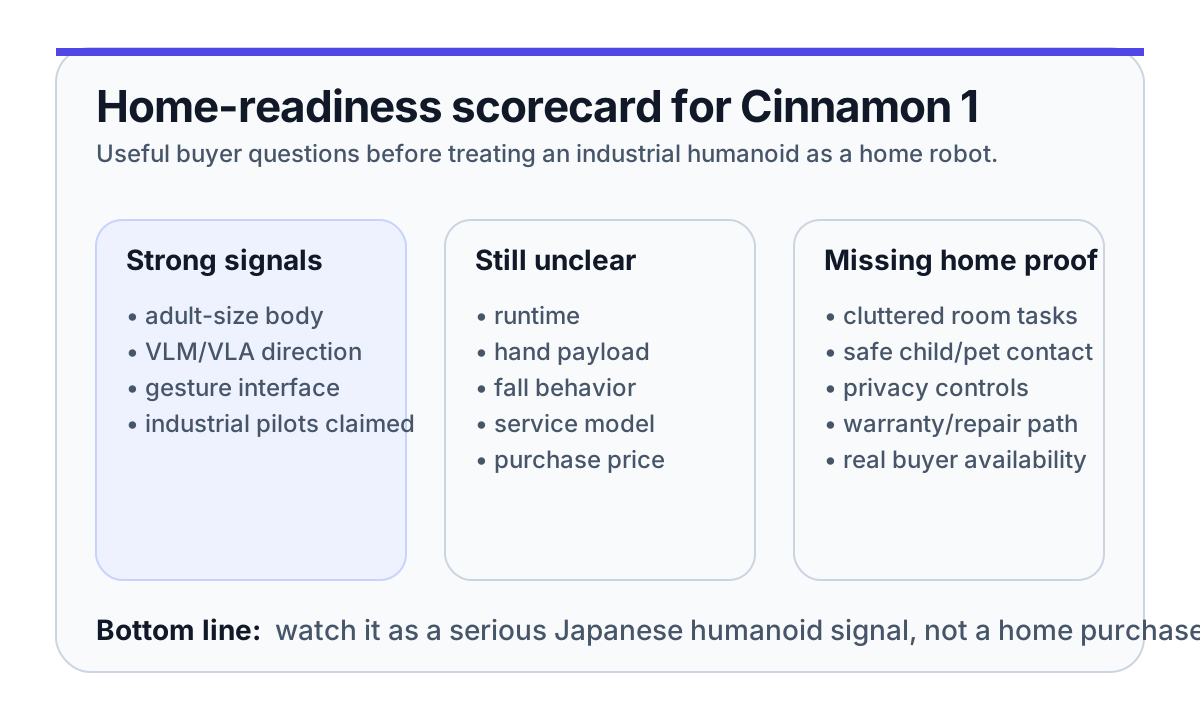
Here is the evidence that would move Cinnamon 1 from "interesting industrial humanoid" toward "plausible future home robot."
1. Runtime and charging. Donut does not publish Cinnamon 1 battery life on the official product page. That is a major gap. A home robot that needs frequent charging, battery swaps, or careful thermal management will struggle unless its tasks are short and scheduled. 1X NEO claims about 4 hours in the ui44 database; Unitree R1 is closer to 1 hour. Cinnamon 1 needs a number.
2. Hand capability and payload. A humanoid body is only as useful as its hands. Can Cinnamon 1 grasp soft clothes, thin dishes, handles, bottles, bags, and oddly shaped objects? What can it lift at arm extension? What happens when an object slips? Donut's current public summary does not answer those questions.
3. Safety certification and fall behavior. A 70 kg biped in a home needs a documented safety story. How does it detect people and pets? How does it behave around stairs? What is the maximum contact force? Does it kneel, sit, or recover after a fall? Can a user physically stop it? These details matter more than whether the robot can recognize a stylish hand signal.
4. Real task evidence in cluttered rooms. Construction and factories are hard, but they are not the same as homes. Homes have soft objects, children, pets, narrow passages, reflective surfaces, rugs, low tables, changing layouts, and fragile personal items. A useful demo would show Cinnamon 1 doing boring tasks repeatedly: carrying laundry, opening a normal door, picking objects off a floor, navigating around pets, and asking for help when uncertain.
5. Service model and privacy. Every serious home humanoid will need updates, support, remote diagnostics, maybe teleoperation, and probably cloud AI. Buyers should ask what data is recorded, whether cameras stay local, whether human operators can connect, how permissions work, and who repairs the robot. Donut's public Cinnamon 1 page does not yet give a consumer service model.
6. Price and buyer availability. Third-party databases sometimes list speculative prices for Cinnamon 1, but Donut's official product page does not publish a Cinnamon 1 price. Until there is an official price, warranty, delivery region, and support plan, it is not a consumer buying decision.
What to watch next
The most promising thing about Cinnamon 1 is not that it is Japanese or bipedal. It is that Donut Robotics is trying to solve a practical control problem. If a robot can be guided with gestures, understand the scene with vision-language models, and map that intent into safe action, it could feel less like programming and more like working with a capable assistant.
But home buyers should watch for boring evidence, not theatrical evidence:
- a published Cinnamon 1 spec sheet with runtime, payload, hand type, speed, sensors, and safety limits;
- real deployments named by industry, task, and duration, not only "introduced to major companies";
- video of long, uncut task attempts rather than clipped motion reels;
- failure handling, including refused unsafe commands and recovery from ambiguous gestures;
- a clear statement about whether Donut intends Cinnamon 1 for homes, facilities, or industrial customers first.
If those signals appear, Cinnamon 1 could become one of the more interesting Japanese humanoid robots to track. If they do not, it remains a useful marker of where the industry is heading: away from voice-only assistants, toward physical AI systems that combine sight, language, gesture, and motion.
Bottom line
Cinnamon 1 is not a robot you should expect to buy for your home today. It is an industrial-first humanoid with a smart interface idea and incomplete public buyer data.
That is still meaningful. The home-robot market needs better command channels than voice and better physical intelligence than scripted demos. Donut Robotics is pointing at both problems. For now, the right way to read Cinnamon 1 is as a Japan-specific service-humanoid signal: watch the gesture control, watch the VLA progress, and wait for proof that the robot can do useful work safely outside controlled worksites.
For actual buying research today, compare more concrete options in the ui44 database: 1X NEO for home-humanoid ambition, Unitree R1 for low-cost bipedal experimentation, NEURA 4NE-1 Mini for a smaller humanoid preorder, Pepper for social-service lessons, and Aeolus aeo or Mirokaï for service robots already aimed at real facilities. The question is not which robot looks most human. It is which one has the clearest job, safest body, and most honest evidence.
Related in the database
Use this article as a privacy verification workflow
Turn the article into a privacy verification pass grounded in the robots, manufacturers, and components it actually references.
Donut Robotics Cinnamon 1: Home Reality Check already points you toward 8 linked robots, 8 manufacturers, and 6 countries inside the ui44 database. That matters because strong buyer guidance is easier to apply when you can move immediately from a claim or warning into concrete product pages, manufacturer directories, component explainers, and country-level context instead of treating the article as an isolated opinion piece. The fastest next step is to turn the article into a shortlist workflow: open the linked robot pages, verify which specs are actually published for those models, then compare the surrounding manufacturer and component context before you decide whether the underlying claim changes your buying plan.
For this topic, the useful discipline is to separate the editorial lesson from the catalog evidence. The article gives you the framing, but the robot pages tell you what each product actually ships with today: sensor stack, connectivity methods, listed price, release timing, category, and support-relevant compatibility notes. The manufacturer pages then show whether you are looking at a one-off launch, a broader lineup pattern, or a company that spans multiple categories. That layered workflow reduces the risk of buying on a single marketing phrase or a single support FAQ.
Use the robot pages to confirm which products actually expose cameras, microphones, Wi-Fi, or voice systems, then use the manufacturer pages to decide how much of the privacy question seems product-specific versus brand-wide. On this route cluster, R1, NEO, and 4NE-1 Mini form the fastest reality check. If you want a quick working shortlist, open Compare R1, NEO, and 4NE-1 Mini next, then keep this article open as the reasoning layer while you compare structured data side by side.
Practical Takeaway
Every robot, manufacturer, category, component, and country reference below resolves to a real ui44 page, keeping the follow-up path grounded in database records rather than generic advice.
Suggested next steps in ui44
- Open R1 and note the listed sensors, connectivity methods, and voice stack before you interpret any policy claim.
- Cross-check the wider brand context on Unitree Robotics so you can see whether the privacy question touches one model or a broader lineup.
- Use the linked component pages to confirm how common the relevant sensors and connectivity layers are across the database.
- Keep a short note of which policy layers you checked, which device features are actually present on the robot page, and which items still depend on region- or app-level confirmation.
- Finish with Compare R1, NEO, and 4NE-1 Mini so the policy reading sits next to structured product data.
Robot profiles worth opening next
Use the linked product pages as the evidence layer
The linked robot pages are where this article becomes operational. Instead of asking whether the headline is interesting, use the robot entries to inspect the actual mix of sensors, connectivity options, batteries, pricing, release timing, and stated capabilities attached to the products mentioned in the article. That is the easiest way to see whether the warning or opportunity described here affects one product family, a specific design pattern, or an entire buying lane.
R1
Unitree Robotics · Humanoid · Pre-order
R1 is tracked on ui44 as a pre-order humanoid robot from Unitree Robotics. The database currently records a listed price of $4,900, a release date of 2025, ~1 hour (mixed activity) battery life, Not officially disclosed charging time, and a published stack that includes Monocular camera (R1 Air); binocular camera (R1/R1 EDU), 4-Mic Array, and Dual 6-Axis IMU plus Wi-Fi 6 and Bluetooth 5.2.
For privacy-focused reading, this page matters because it shows the concrete device surface behind the policy discussion. Use it to verify whether R1 combines sensors and connectivity in a way that could change the in-home data footprint, and compare the listed capabilities such as Bipedal Walking & Running, Cartwheels & Handstands, and Push Recovery with any cloud, app, or voice layers, including UnifoLM (voice + image commands).
NEO
1X Technologies · Humanoid · Pre-order
NEO is tracked on ui44 as a pre-order humanoid robot from 1X Technologies. The database currently records a listed price of $20,000, a release date of 2025-10-28, ~4 hours battery life, Not disclosed charging time, and a published stack that includes RGB Cameras, Depth Sensors, and Tactile Skin plus Wi-Fi and Bluetooth.
For privacy-focused reading, this page matters because it shows the concrete device surface behind the policy discussion. Use it to verify whether NEO combines sensors and connectivity in a way that could change the in-home data footprint, and compare the listed capabilities such as Household Chores, Tidying Up, and Safe Human Interaction with any cloud, app, or voice layers.
4NE-1 Mini
NEURA Robotics · Humanoid · Pre-order
4NE-1 Mini is tracked on ui44 as a pre-order humanoid robot from NEURA Robotics. The database currently records a listed price of €19,999, a release date of 2026-01-05, ~2.5 hours battery life, Not disclosed charging time, and a published stack that includes Multi-camera Array, Force/Torque Sensors, and 3D Vision plus Wi-Fi 6 and Gigabit Ethernet.
For privacy-focused reading, this page matters because it shows the concrete device surface behind the policy discussion. Use it to verify whether 4NE-1 Mini combines sensors and connectivity in a way that could change the in-home data footprint, and compare the listed capabilities such as 25 Degrees of Freedom, Autonomous Navigation, and Object Manipulation (Pro tier: 12-DOF dexterous hands) with any cloud, app, or voice layers, including Built-in Multi-language Voice Recognition.
Pepper
Aldebaran Robotics · Commercial · Available
Pepper is tracked on ui44 as a available commercial robot from Aldebaran Robotics. The database currently records a listed price of Price TBA, a release date of 2014-06, ~12 hours (shop use) battery life, ~8 hours 20 minutes charging time, and a published stack that includes RGB Camera ×2 (forehead + mouth), 3D Depth Sensor, and Microphone ×4 plus Wi-Fi 802.11 a/b/g/n (2.4/5 GHz) and Ethernet.
For privacy-focused reading, this page matters because it shows the concrete device surface behind the policy discussion. Use it to verify whether Pepper combines sensors and connectivity in a way that could change the in-home data footprint, and compare the listed capabilities such as Emotion Recognition, Facial Expression Analysis, and Natural Conversation with any cloud, app, or voice layers, including Multilingual Speech Recognition & Synthesis.
aeo
Aeolus Robotics · Commercial · Active
aeo is tracked on ui44 as a active commercial robot from Aeolus Robotics. The database currently records a listed price of Price TBA, a release date of 2023, Not publicly disclosed battery life, Not publicly disclosed charging time, and a published stack that includes Vision system (posture/position and anomaly detection) plus Web apps and Native smartphone apps.
For privacy-focused reading, this page matters because it shows the concrete device surface behind the policy discussion. Use it to verify whether aeo combines sensors and connectivity in a way that could change the in-home data footprint, and compare the listed capabilities such as Dual 7-DOF manipulator arms, Autonomous elevator operation, and Door operation with any cloud, app, or voice layers.
Manufacturer context behind the article
Check whether this is one product story or a broader company pattern
Manufacturer pages add the privacy context that individual product pages cannot show on their own. They help you check whether cameras, microphones, cloud accounts, app controls, and policy assumptions appear across a broader lineup or stay tied to one specific product story.
Unitree Robotics
ui44 currently tracks 9 robots from Unitree Robotics across 3 categorys. The company is grouped under China, and the current catalog footprint on ui44 includes B2, B1, Go2.
That wider brand context matters because privacy questions rarely stop at one FAQ page. A manufacturer route helps you see whether the article is centered on one premium model or on a company that has several relevant products and therefore more than one place where the same policy or app assumptions might matter. The category mix here currently points toward Quadruped, Humanoid, Research as the most useful next route if you want to see whether this article reflects a wider pattern inside the brand.
1X Technologies
ui44 currently tracks 2 robots from 1X Technologies across 1 category. The company is grouped under Norway, and the current catalog footprint on ui44 includes NEO, EVE.
That wider brand context matters because privacy questions rarely stop at one FAQ page. A manufacturer route helps you see whether the article is centered on one premium model or on a company that has several relevant products and therefore more than one place where the same policy or app assumptions might matter. The category mix here currently points toward Humanoid as the most useful next route if you want to see whether this article reflects a wider pattern inside the brand.
NEURA Robotics
ui44 currently tracks 4 robots from NEURA Robotics across 3 categorys. The company is grouped under Germany, and the current catalog footprint on ui44 includes 4NE-1, 4NE-1 Mini, MiPA.
That wider brand context matters because privacy questions rarely stop at one FAQ page. A manufacturer route helps you see whether the article is centered on one premium model or on a company that has several relevant products and therefore more than one place where the same policy or app assumptions might matter. The category mix here currently points toward Humanoid, Home Assistants, Quadruped as the most useful next route if you want to see whether this article reflects a wider pattern inside the brand.
Aldebaran Robotics
ui44 currently tracks 1 robot from Aldebaran Robotics across 1 category. The company is grouped under France, and the current catalog footprint on ui44 includes Pepper.
That wider brand context matters because privacy questions rarely stop at one FAQ page. A manufacturer route helps you see whether the article is centered on one premium model or on a company that has several relevant products and therefore more than one place where the same policy or app assumptions might matter. The category mix here currently points toward Commercial as the most useful next route if you want to see whether this article reflects a wider pattern inside the brand.
Broaden the scan without leaving the database
Categories, components, and countries add the wider context
Category framing
Category pages are useful when the article touches a buying pattern that shows up across brands. A category route helps you confirm whether the linked products sit in a narrow niche or whether the same question should be tested across a larger field of alternatives.
Humanoid
The Humanoid category page currently groups 129 tracked robots from 92 manufacturers. ui44 describes this lane as: Full-size bipedal humanoid robots built to work alongside people — from factory floors to household tasks. Compare the cutting edge of humanoid robotics.
That makes the category route a practical follow-up when you want to check whether the products linked in this article are typical for the lane or whether they sit at one edge of the market. Useful starting examples currently include NEO, EVE, Mornine M1.
Commercial
The Commercial category page currently groups 44 tracked robots from 38 manufacturers. ui44 describes this lane as: Delivery robots, warehouse automation, and hospitality service bots — robots built for business and commercial operations.
That makes the category route a practical follow-up when you want to check whether the products linked in this article are typical for the lane or whether they sit at one edge of the market. Useful starting examples currently include G2 Air, aeo, Pepper.
Country and ecosystem context
Country pages give extra context when support practices, launch sequencing, regulatory posture, or manufacturer mix matter. They are not a substitute for model-level verification, but they do help you see which ecosystems cluster together and which manufacturers sit in the same regional field when you broaden the search beyond the article headline.
China
The China route currently groups 189 tracked robots from 87 manufacturers in ui44. That gives you a useful regional lens when the article points toward support practices, launch sequencing, or brand clusters that may share similar ecosystem assumptions.
On the current route, manufacturers like AGIBOT, Dreame, Unitree Robotics make the page a good way to broaden the scan without losing the regional context that often shapes availability, documentation style, and adjacent alternatives.
Norway
The Norway route currently groups 2 tracked robots from 1 manufacturers in ui44. That gives you a useful regional lens when the article points toward support practices, launch sequencing, or brand clusters that may share similar ecosystem assumptions.
On the current route, manufacturers like 1X Technologies make the page a good way to broaden the scan without losing the regional context that often shapes availability, documentation style, and adjacent alternatives.
Germany
The Germany route currently groups 13 tracked robots from 9 manufacturers in ui44. That gives you a useful regional lens when the article points toward support practices, launch sequencing, or brand clusters that may share similar ecosystem assumptions.
On the current route, manufacturers like NEURA Robotics, Bosch, Agile Robots make the page a good way to broaden the scan without losing the regional context that often shapes availability, documentation style, and adjacent alternatives.
Questions to answer before you move from reading to buying
A follow-up FAQ built from the entities already linked in this article
Frequently Asked Questions
Which page should I open first after reading “Donut Robotics Cinnamon 1: Home Reality Check”?
Start with R1. That gives you a concrete product anchor for the article’s main claim. From there, branch into the manufacturer and component pages so you can tell whether the article is describing one specific model, a repeated brand pattern, or a wider technology issue that affects multiple shortlist options.
How do the manufacturer pages change the buying decision?
Unitree Robotics help you zoom out from one article and one product. On ui44 they show lineup breadth, category spread, and the neighboring robots tied to the same company. That context is useful when you are deciding whether a risk belongs to a single model, whether it shows up across a brand’s portfolio, and whether you should keep looking at alternatives before committing.
When should I switch from reading to side-by-side comparison?
Move into Compare R1, NEO, and 4NE-1 Mini as soon as you understand the article’s main warning or promise. The article explains what to watch for, but the compare view is where you can check whether price, status, battery life, connectivity, sensors, and category fit still make the robot a good match for your own home and budget.
Where to go next in ui44
Keep the research chain inside the database
If you want to keep going, these follow-on pages give you the cleanest expansion path from article to research session. Open the comparison route first if you are deciding between products today. Open the manufacturer, category, and component routes if you still need to understand the broader pattern behind the claim.
Written by
ui44 Team
Published May 10, 2026
Share this article
Open a plain share link on X or Bluesky. No embeds, no widgets, no cookie baggage.