That still does not mean your future home humanoid needs seasonal outfits. It does mean clothing and soft covers deserve a more practical question: what job does the fabric do? In a home, a robot's outer layer touches people, furniture, dust, kitchens, pets, children, sensors, charging contacts, and the buyer's patience. If clothing helps manage those interfaces, it is not a gimmick. If it only hides immature hardware, it is marketing.
The Seoul runway is really a home robot design question
Robot fashion sounds like a cultural story because Galaxy Corporation comes from entertainment. The company manages artists, brands itself around "enter-tech," and is testing whether robots can perform, tour, and create fan moments. The first buyer lesson is not that home robots should dress like pop idols. It is that humanoids are moving from labs into public spaces where appearance, body language, and social readability affect whether people want to stand near them.
That matters for homes because a home is less controlled than a stage. A robot in an arena can perform a choreographed routine with staff nearby. A robot in an apartment has to pass a family member in a hallway, move near a sofa, wait beside a child, pick up laundry, navigate pets, and communicate when it is recording, stuck, hot, charging, or waiting for remote help.
Clothing is one way to make that interaction legible. Humans already use uniforms, aprons, reflective strips, gloves, and protective covers to say "I am working," "I am safe to approach," or "this surface can get dirty." Robots may need similar conventions, but with stricter engineering limits. A sleeve that blocks a camera, traps heat, snags in an elbow joint, muffles a speaker, or covers a charging contact is not fashion. It is a product defect.
What clothing can actually do for a home humanoid
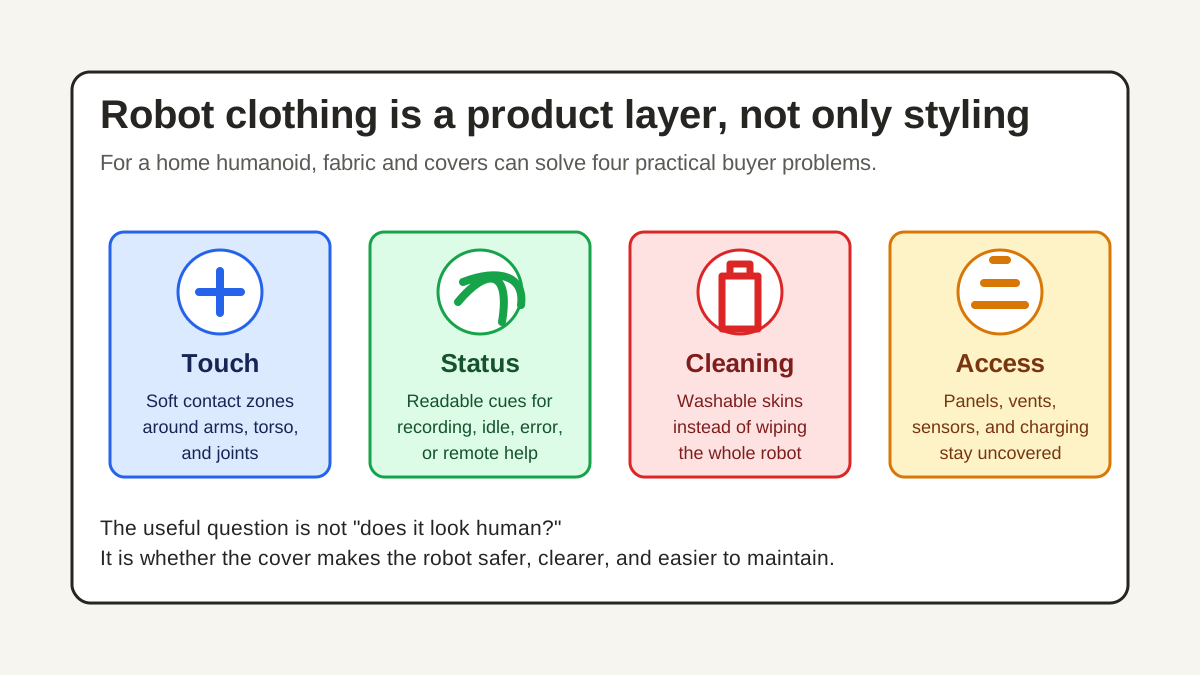
For buyers, the useful version of robot clothing has four jobs.
First, it can soften contact. A full-size humanoid such as Unitree H2 is listed in the ui44 database as a 182 cm humanoid with a $29,900 price and a full-size body. A smaller robot such as Unitree G1 is listed at $13,500 and described as 132 cm tall and 35 kg. Those are not toys. Even when the robot is compliant and carefully controlled, hard housings, exposed edges, and moving joints change how comfortable people feel around it. Soft covers can make incidental shoulder, hip, or arm contact less unpleasant, especially in tight rooms.
Second, clothing can separate dirty tasks from clean hardware. If a home robot handles laundry, trash, kitchen spills, plant care, or shoes, buyers will want washable layers. A removable apron, cuff, or forearm cover is easier to clean than the robot body. This is the same reason people use oven mitts and work gloves. The fabric is not decorative; it is a replaceable wear surface.
Third, clothing can carry status. A home robot should make its state obvious from across the room. A colored shoulder band, front panel, or illuminated patch could show when the robot is idle, following a person, using cameras, waiting for confirmation, charging, or under remote assistance. This is especially important for home-focused systems that may include human help in the loop. The visible cue should not depend only on an app notification.
Fourth, clothing can give a robot a place in the home without pretending it is human. A cover can make a machine feel less like bare lab equipment, but the goal should be clarity, not deception. A robot that looks friendlier while still clearly reading as a machine is healthier than one that tries to pass as a person.
The ui44 database shows why one answer will not fit every robot
The clothing question changes by body type. A wheeled home assistant, a compact educational humanoid, a full-size biped, and a soft-bodied home humanoid all need different outer layers.
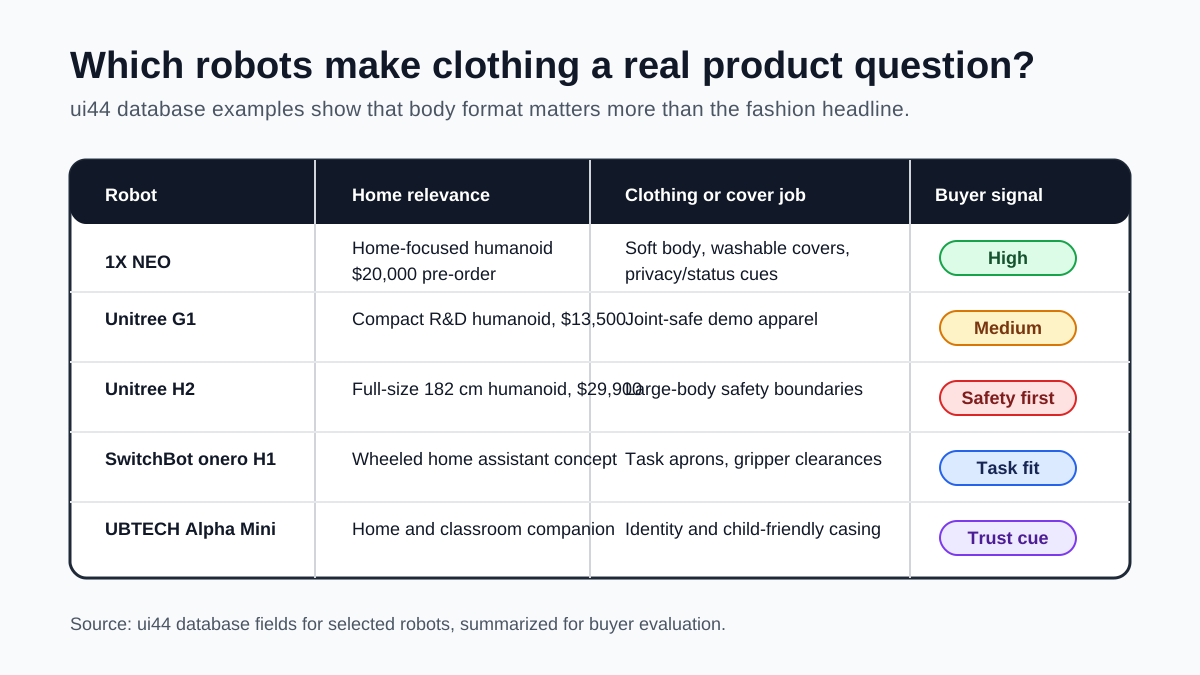
1X NEO is the clearest home example in the database. ui44 lists it as a $20,000 pre-order humanoid from 1X Technologies, designed for safe human coexistence with a soft, lightweight body. For a robot like that, clothing is part of the safety and domestic trust story. If the body is meant to be soft, the outer textile layer has to be durable, washable, and honest about where sensors and actuators are.
SwitchBot onero H1 points to a different path. ui44 lists it as a $9,999 development-stage home assistant, a wheeled household robot with 22 degrees of freedom and arms for chores such as grasping, pushing, opening, and organizing. It may not need a humanoid outfit. It may need task-specific covers: a kitchen-safe apron, gripper covers, washable forearm sleeves, and clear markings that show where cameras and tactile sensors are.
UBTECH Alpha Mini is smaller and more companion-oriented. For a compact education or classroom-style robot, clothing is mostly about identity, approachability, and child-friendly interaction. The engineering risk is still real, but the stakes are different from a full-size biped moving beside furniture.
Unitree's humanoids sit in another category. The Unitree G1 is comparatively affordable for research and development, while the Unitree H2 is a full-size platform. On stage, clothing can help a humanoid read as a performer. In the home, the same clothing would need to prove it does not interfere with balance, thermal management, joint range, fall recovery, or maintenance.
Clothing can make robots safer, or less safe
The safety case is not automatic. Clothing can help only if it is designed with the robot from the beginning.
A good robot cover leaves cameras, depth sensors, microphones, speakers, vents, force sensors, bumpers, emergency stop controls, and charging contacts unobstructed. It should not add loose loops near elbows, knees, wheels, grippers, or ankle joints. It should not shed fibers into fans. It should not change the robot's center of mass enough to affect balance. It should not make hot components hotter.
This is where runway robots and home robots diverge. A fashion show can use costumes for a short, supervised performance. A home robot needs covers that survive weeks of dust, cooking smells, laundry lint, sunlight, pet hair, spilled drinks, and repeated washing. The fabric has to be part of the maintenance plan.
Buyers should also look for testing language. Has the maker tested snagging? Has it measured thermal impact with the cover installed? Are replacement covers sold as parts? Can a user remove the cover without exposing sharp internal edges or voiding a warranty? Can the robot detect when a required cover is missing or incorrectly attached? These are boring questions, but boring is good when the robot is moving near people.
The emotional layer still matters
It would be a mistake to reduce clothing only to engineering. Appearance affects adoption. A robot that looks too industrial may be technically impressive and still feel wrong in a bedroom, kitchen, or eldercare setting. A robot that looks intentionally dressed for a role may be easier to understand: helper, cleaner, companion, tutor, or performer.
The risk is that clothing becomes a shortcut around capability. A charming jacket does not make a robot safe around children. A friendly face panel does not prove it can handle a dropped object. A soft sleeve does not guarantee safe force control. For home buyers, the emotional layer is valuable only when it sits on top of real task ability, real safety evidence, and real service support.
The Seoul demos are useful because they put this tension in public. Robot concerts and fashion shows expose whether people want robots to perform with human cultural signals. Home robots face a quieter version of the same question every day. Do people want a machine that disappears into appliance language, or a social body with readable cues? The answer may vary by room and task.
What buyers should ask before paying for robot apparel
If robot makers begin selling official outfits, skins, sleeves, aprons, or fashion packs, buyers should treat them like functional accessories first.
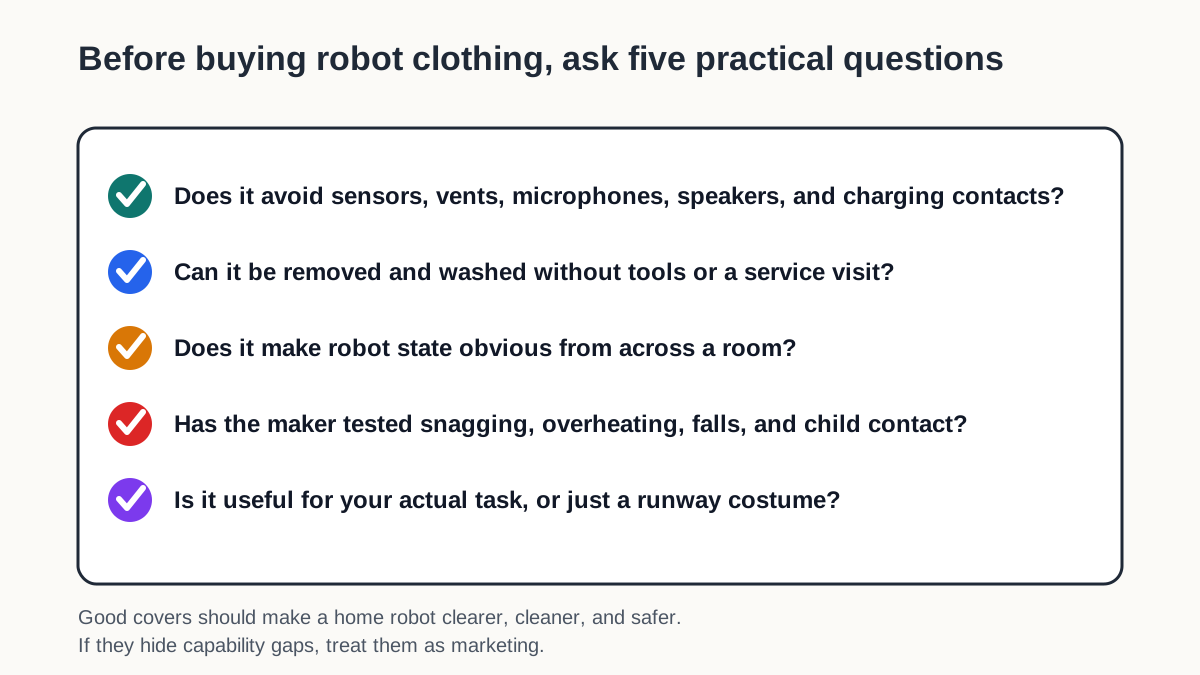
Ask whether the cover is washable, replaceable, and covered by warranty. Ask whether third-party covers are allowed. Ask which sensors must remain exposed. Ask whether the robot's app can confirm that a cover is installed correctly. Ask whether the outfit is rated for specific tasks such as kitchen work, cleaning, child interaction, or outdoor use. If the maker cannot answer, wait.
For home humanoids, the best accessories may look less like fashion and more like workwear. A laundry sleeve. A kitchen-safe apron. A high-visibility band for child mode. A privacy sash that lights up during camera use. A soft shoulder cover for hallway contact. A dust cover for storage. These are not glamorous, but they solve real home problems.
So, do home humanoid robots need clothes?
Some will. Not because robots need to be cute, and not because a runway makes a machine useful. Home humanoids may need soft, removable, washable, visible outer layers because homes are messy social spaces. People need to know what the robot is doing. The robot needs to touch objects without scaring people. Maintenance needs to be simple. Sensors and joints need protection without obstruction.
The better question is whether the clothing is part of the robot's product design or just a costume placed over unfinished hardware. If it improves safety, cleaning, status, and comfort, it belongs in the conversation. If it hides missing capability, buyers should ignore the outfit and look back at the basics: task performance, force control, privacy, support, and price.
Robot fashion will get headlines because it is strange and easy to photograph. The more important development will be quieter: the first home robots whose covers are as thoughtfully designed as their hands, cameras, batteries, and software. That is when clothing stops being a joke and starts becoming another line item in the home robot spec sheet.
Related in the database
Use this article as a privacy verification workflow
Turn the article into a privacy verification pass grounded in the robots, manufacturers, and components it actually references.
Do Home Humanoid Robots Need Clothes? already points you toward 5 linked robots, 5 manufacturers, and 3 countries inside the ui44 database. That matters because strong buyer guidance is easier to apply when you can move immediately from a claim or warning into concrete product pages, manufacturer directories, component explainers, and country-level context instead of treating the article as an isolated opinion piece. The fastest next step is to turn the article into a shortlist workflow: open the linked robot pages, verify which specs are actually published for those models, then compare the surrounding manufacturer and component context before you decide whether the underlying claim changes your buying plan.
For this topic, the useful discipline is to separate the editorial lesson from the catalog evidence. The article gives you the framing, but the robot pages tell you what each product actually ships with today: sensor stack, connectivity methods, listed price, release timing, category, and support-relevant compatibility notes. The manufacturer pages then show whether you are looking at a one-off launch, a broader lineup pattern, or a company that spans multiple categories. That layered workflow reduces the risk of buying on a single marketing phrase or a single support FAQ.
Use the robot pages to confirm which products actually expose cameras, microphones, Wi-Fi, or voice systems, then use the manufacturer pages to decide how much of the privacy question seems product-specific versus brand-wide. On this route cluster, G1, Unitree H2, and NEO form the fastest reality check. If you want a quick working shortlist, open Compare G1, Unitree H2, and NEO next, then keep this article open as the reasoning layer while you compare structured data side by side.
Practical Takeaway
Every robot, manufacturer, category, component, and country reference below resolves to a real ui44 page, keeping the follow-up path grounded in database records rather than generic advice.
Suggested next steps in ui44
- Open G1 and note the listed sensors, connectivity methods, and voice stack before you interpret any policy claim.
- Cross-check the wider brand context on Unitree so you can see whether the privacy question touches one model or a broader lineup.
- Use the linked component pages to confirm how common the relevant sensors and connectivity layers are across the database.
- Keep a short note of which policy layers you checked, which device features are actually present on the robot page, and which items still depend on region- or app-level confirmation.
- Finish with Compare G1, Unitree H2, and NEO so the policy reading sits next to structured product data.
Robot profiles worth opening next
Use the linked product pages as the evidence layer
The linked robot pages are where this article becomes operational. Instead of asking whether the headline is interesting, use the robot entries to inspect the actual mix of sensors, connectivity options, batteries, pricing, release timing, and stated capabilities attached to the products mentioned in the article. That is the easiest way to see whether the warning or opportunity described here affects one product family, a specific design pattern, or an entire buying lane.
G1 is tracked on ui44 as a available humanoid robot from Unitree. The database currently records a listed price of $13,500, a release date of 2024-05-13, ~2 hours battery life, Not disclosed charging time, and a published stack that includes Depth Camera, 3D LiDAR, and 4 Microphone Array plus Wi-Fi 6 and Bluetooth 5.2.
For privacy-focused reading, this page matters because it shows the concrete device surface behind the policy discussion. Use it to verify whether G1 combines sensors and connectivity in a way that could change the in-home data footprint, and compare the listed capabilities such as Bipedal Walking, Object Manipulation, and Dexterous Hands (optional Dex3-1) with any cloud, app, or voice layers.
Unitree H2
Unitree Robotics · Humanoid · Available
Unitree H2 is tracked on ui44 as a available humanoid robot from Unitree Robotics. The database currently records a listed price of $29,900, a release date of 2025-10-20, About 3 hours battery life, Not officially disclosed charging time, and a published stack that includes Binocular Camera (Wide FOV), Array Microphone, and IMU plus Wi-Fi 6 and Bluetooth 5.2.
For privacy-focused reading, this page matters because it shows the concrete device surface behind the policy discussion. Use it to verify whether Unitree H2 combines sensors and connectivity in a way that could change the in-home data footprint, and compare the listed capabilities such as 31 Degrees of Freedom, 360 N·m Peak Leg Joint Torque, and 120 N·m Peak Arm Joint Torque with any cloud, app, or voice layers, including Built-in Voice Interaction.
NEO
1X Technologies · Humanoid · Pre-order
NEO is tracked on ui44 as a pre-order humanoid robot from 1X Technologies. The database currently records a listed price of $20,000, a release date of 2025-10-28, ~4 hours battery life, Not disclosed charging time, and a published stack that includes RGB Cameras, Depth Sensors, and Tactile Skin plus Wi-Fi and Bluetooth.
For privacy-focused reading, this page matters because it shows the concrete device surface behind the policy discussion. Use it to verify whether NEO combines sensors and connectivity in a way that could change the in-home data footprint, and compare the listed capabilities such as Household Chores, Tidying Up, and Safe Human Interaction with any cloud, app, or voice layers.
onero H1 is tracked on ui44 as a development home assistants robot from SwitchBot. The database currently records a listed price of $9,999, a release date of 2026-01-04, Not officially disclosed battery life, Not officially disclosed charging time, and a published stack that includes Multiple cameras, Depth sensing, and Tactile feedback sensing plus its listed connectivity stack.
For privacy-focused reading, this page matters because it shows the concrete device surface behind the policy discussion. Use it to verify whether onero H1 combines sensors and connectivity in a way that could change the in-home data footprint, and compare the listed capabilities such as Indoor wheeled home navigation, Household object manipulation, and Grasping, pushing, opening, and organizing tasks with any cloud, app, or voice layers.
Alpha Mini
UBTECH · Companions · Available
Alpha Mini is tracked on ui44 as a available companions robot from UBTECH. The database currently records a listed price of Price TBA, a release date of 2018, Not publicly specified battery life, Not publicly specified charging time, and a published stack that includes Distance Sensor, Acceleration Sensor, and Gyroscope plus 2G/3G/4G and Wi-Fi (802.11a/b/g/n).
For privacy-focused reading, this page matters because it shows the concrete device surface behind the policy discussion. Use it to verify whether Alpha Mini combines sensors and connectivity in a way that could change the in-home data footprint, and compare the listed capabilities such as Voice Interaction, Face and Object Recognition, and Walking and Dynamic Motions with any cloud, app, or voice layers.
Manufacturer context behind the article
Check whether this is one product story or a broader company pattern
Manufacturer pages add the privacy context that individual product pages cannot show on their own. They help you check whether cameras, microphones, cloud accounts, app controls, and policy assumptions appear across a broader lineup or stay tied to one specific product story.
Unitree
ui44 currently tracks 2 robots from Unitree across 1 category. The company is grouped under China, and the current catalog footprint on ui44 includes H1, G1.
That wider brand context matters because privacy questions rarely stop at one FAQ page. A manufacturer route helps you see whether the article is centered on one premium model or on a company that has several relevant products and therefore more than one place where the same policy or app assumptions might matter. The category mix here currently points toward Humanoid as the most useful next route if you want to see whether this article reflects a wider pattern inside the brand.
Unitree Robotics
ui44 currently tracks 9 robots from Unitree Robotics across 3 categorys. The company is grouped under China, and the current catalog footprint on ui44 includes B2, B1, Go2.
That wider brand context matters because privacy questions rarely stop at one FAQ page. A manufacturer route helps you see whether the article is centered on one premium model or on a company that has several relevant products and therefore more than one place where the same policy or app assumptions might matter. The category mix here currently points toward Quadruped, Humanoid, Research as the most useful next route if you want to see whether this article reflects a wider pattern inside the brand.
1X Technologies
ui44 currently tracks 2 robots from 1X Technologies across 1 category. The company is grouped under Norway, and the current catalog footprint on ui44 includes NEO, EVE.
That wider brand context matters because privacy questions rarely stop at one FAQ page. A manufacturer route helps you see whether the article is centered on one premium model or on a company that has several relevant products and therefore more than one place where the same policy or app assumptions might matter. The category mix here currently points toward Humanoid as the most useful next route if you want to see whether this article reflects a wider pattern inside the brand.
SwitchBot
ui44 currently tracks 3 robots from SwitchBot across 3 categorys. The company is grouped under USA, and the current catalog footprint on ui44 includes K20+ Pro, onero H1, KATA Friends.
That wider brand context matters because privacy questions rarely stop at one FAQ page. A manufacturer route helps you see whether the article is centered on one premium model or on a company that has several relevant products and therefore more than one place where the same policy or app assumptions might matter. The category mix here currently points toward Cleaning, Home Assistants, Companions as the most useful next route if you want to see whether this article reflects a wider pattern inside the brand.
Broaden the scan without leaving the database
Categories, components, and countries add the wider context
Category framing
Category pages are useful when the article touches a buying pattern that shows up across brands. A category route helps you confirm whether the linked products sit in a narrow niche or whether the same question should be tested across a larger field of alternatives.
Humanoid
The Humanoid category page currently groups 129 tracked robots from 92 manufacturers. ui44 describes this lane as: Full-size bipedal humanoid robots built to work alongside people — from factory floors to household tasks. Compare the cutting edge of humanoid robotics.
That makes the category route a practical follow-up when you want to check whether the products linked in this article are typical for the lane or whether they sit at one edge of the market. Useful starting examples currently include NEO, EVE, Mornine M1.
Home Assistants
The Home Assistants category page currently groups 16 tracked robots from 14 manufacturers. ui44 describes this lane as: Arm-based household helpers — laundry folders, kitchen robots, and mobile manipulators that take on hands-on physical tasks around the home.
That makes the category route a practical follow-up when you want to check whether the products linked in this article are typical for the lane or whether they sit at one edge of the market. Useful starting examples currently include Robody, Futuring 2 (F2), Stretch 3.
Country and ecosystem context
Country pages give extra context when support practices, launch sequencing, regulatory posture, or manufacturer mix matter. They are not a substitute for model-level verification, but they do help you see which ecosystems cluster together and which manufacturers sit in the same regional field when you broaden the search beyond the article headline.
China
The China route currently groups 189 tracked robots from 87 manufacturers in ui44. That gives you a useful regional lens when the article points toward support practices, launch sequencing, or brand clusters that may share similar ecosystem assumptions.
On the current route, manufacturers like AGIBOT, Dreame, Unitree Robotics make the page a good way to broaden the scan without losing the regional context that often shapes availability, documentation style, and adjacent alternatives.
Norway
The Norway route currently groups 2 tracked robots from 1 manufacturers in ui44. That gives you a useful regional lens when the article points toward support practices, launch sequencing, or brand clusters that may share similar ecosystem assumptions.
On the current route, manufacturers like 1X Technologies make the page a good way to broaden the scan without losing the regional context that often shapes availability, documentation style, and adjacent alternatives.
USA
The USA route currently groups 89 tracked robots from 69 manufacturers in ui44. That gives you a useful regional lens when the article points toward support practices, launch sequencing, or brand clusters that may share similar ecosystem assumptions.
On the current route, manufacturers like Faraday Future, iRobot, Boston Dynamics make the page a good way to broaden the scan without losing the regional context that often shapes availability, documentation style, and adjacent alternatives.
Questions to answer before you move from reading to buying
A follow-up FAQ built from the entities already linked in this article
Frequently Asked Questions
Which page should I open first after reading “Do Home Humanoid Robots Need Clothes?”?
Start with G1. That gives you a concrete product anchor for the article’s main claim. From there, branch into the manufacturer and component pages so you can tell whether the article is describing one specific model, a repeated brand pattern, or a wider technology issue that affects multiple shortlist options.
How do the manufacturer pages change the buying decision?
Unitree help you zoom out from one article and one product. On ui44 they show lineup breadth, category spread, and the neighboring robots tied to the same company. That context is useful when you are deciding whether a risk belongs to a single model, whether it shows up across a brand’s portfolio, and whether you should keep looking at alternatives before committing.
When should I switch from reading to side-by-side comparison?
Move into Compare G1, Unitree H2, and NEO as soon as you understand the article’s main warning or promise. The article explains what to watch for, but the compare view is where you can check whether price, status, battery life, connectivity, sensors, and category fit still make the robot a good match for your own home and budget.
Where to go next in ui44
Keep the research chain inside the database
If you want to keep going, these follow-on pages give you the cleanest expansion path from article to research session. Open the comparison route first if you are deciding between products today. Open the manufacturer, category, and component routes if you still need to understand the broader pattern behind the claim.
Written by
ui44 Team
Published June 23, 2026
Share this article
Open a plain share link on X or Bluesky. No embeds, no widgets, no cookie baggage.