That is why Singapore's new Punggol Digital District robot testbed is worth watching even if you are shopping for a robot for an apartment. According to JTC's May 2026 announcement, PDD is being set up as Singapore's first mixed-use public testbed for multi-operator robots, with delivery, cleaning, patrol, and embodied AI trials planned for later in 2026. Taiwan's ITRI AI Robotics Innovation & Development Center, launched in May 2026, points in the same direction: real-world validation before mass deployment.
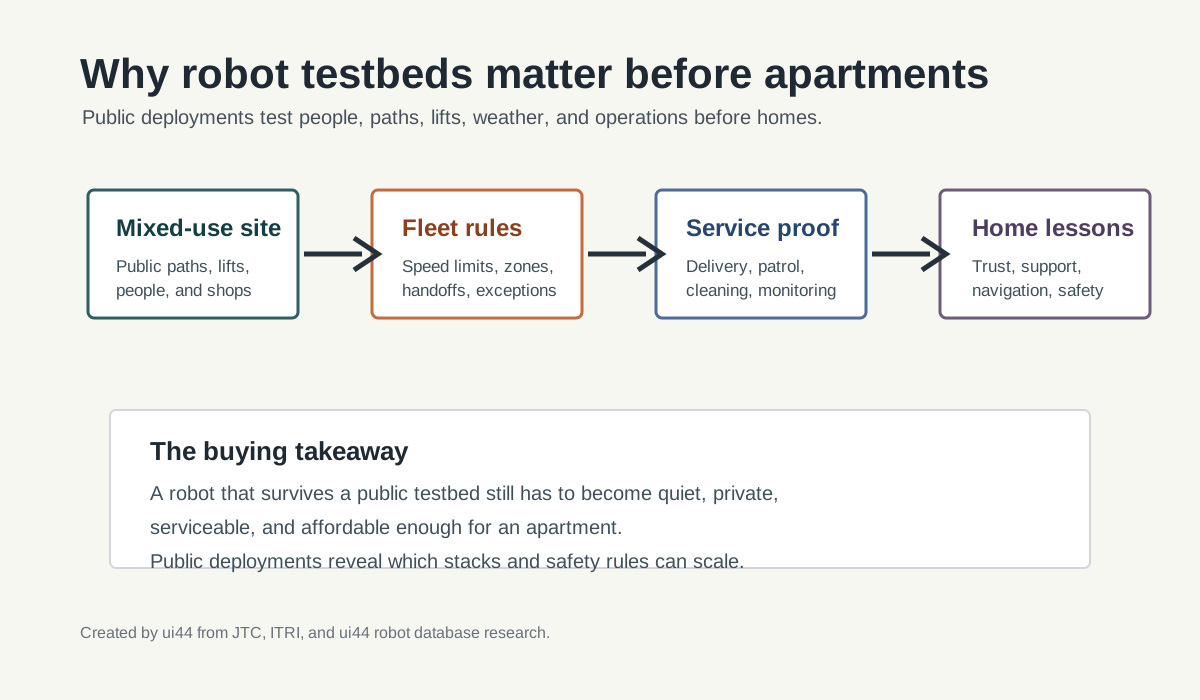
For home buyers, the point is simple: do not treat public testbeds as remote government news. They are one of the clearest previews of which robot capabilities are becoming dependable enough to leave the lab.
Why Public Space Comes Before Private Homes
Homes are small, private, irregular, and emotionally loaded. That makes them a terrible first large-scale test environment for expensive robots. A home robot has to avoid pets, children, laundry, low furniture, stairs, reflections, privacy boundaries, and people who do not want to become beta testers. If the robot fails, the buyer has to live with the failure.
Public districts are different. They are still messy, but the mess can be measured and managed. A campus can define lanes, speed limits, lift access, geofenced areas, handoff points, charging zones, and human supervisor workflows. A business park can test whether a delivery robot actually completes routes, whether a patrol robot sends useful alerts, and whether a cleaning robot improves service frequency instead of just moving labor around.
That is the real value of a public testbed. It creates a repeatable middle step between a lab demo and a consumer product page. Before a company claims that a robot can help at home, it should be able to show that the same navigation, remote support, safety, and service logic survived somewhere more structured than a trade show booth.
What Singapore's PDD Testbed Is Really Testing
The Punggol Digital District announcement matters because it is not just one robot operator doing one narrow pilot. IMDA, JTC, and the Singapore Institute of Technology are working with industry partners on a multi-use-case and multi-operator environment. The initial design partners named by JTC include Certis, DHL, Grab, and QuikBot for services such as food and parcel delivery, security patrolling, and cleaning. JTC also names FieldAI and Thoughtworks as knowledge partners, plus Slamtec, Unitree, and QuikBot as robotics companies involved in embodied AI use cases.
That mix is important. A single delivery robot can look good on a clean sidewalk. A multi-operator district asks harder questions:
- What happens when delivery, cleaning, patrol, and mobility robots share the same path?
- Who gets priority near a lift or doorway?
- How does the district define speed, safety, and operating zones?
- Who responds when the robot is blocked, damaged, lost, or confusing pedestrians?
- Can the service work outside normal office hours without turning into a remote-control job?
JTC also says the PDD testbed is supported by a precinct-level exemption framework under Singapore's Active Mobility Act, subject to safeguards and conditions. That is not a consumer feature, but it is a serious deployment signal. Regulations, insurance, infrastructure, and operator accountability are not optional extras for physical AI. They are part of whether robots can scale.
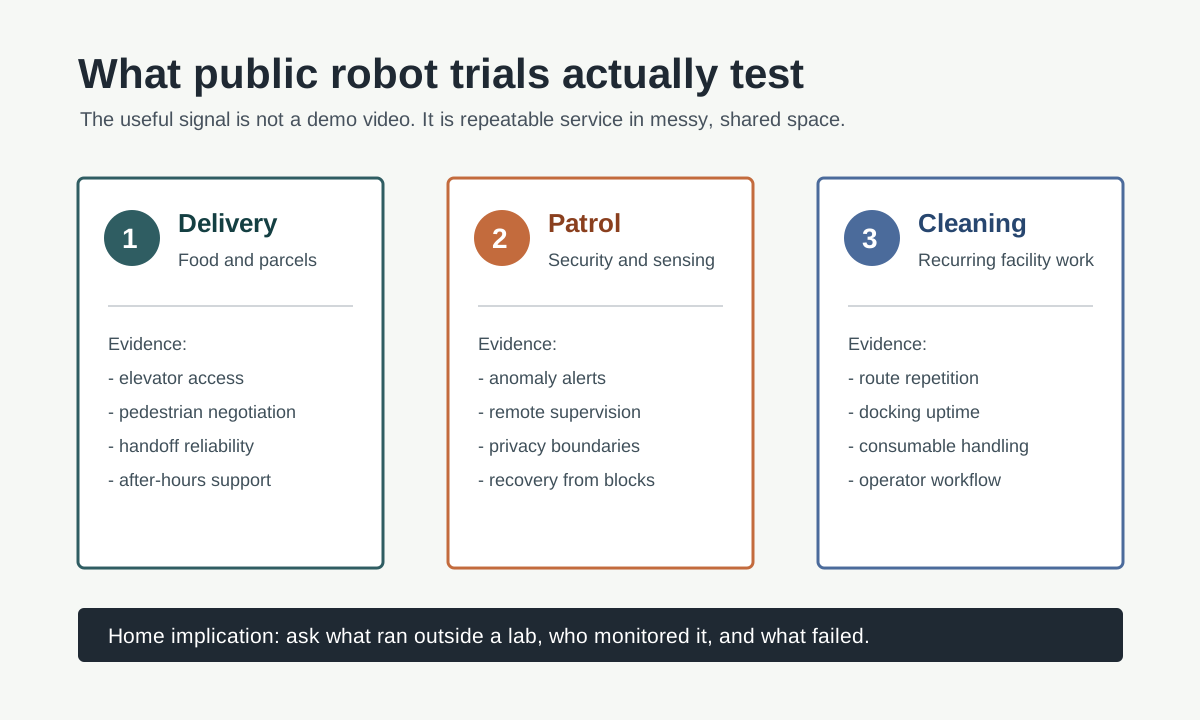
For a home robot buyer, the lesson is not that you need a delivery robot in your hallway. It is that useful autonomy is operational. The robot has to navigate, yes, but it also has to recover from mistakes, fit into rules, accept supervision, dock reliably, and do something valuable enough to justify maintenance and support.
Taiwan's ARIDC Shows the Same Pattern
ITRI's AI Robotics Innovation & Development Center in Tainan is a different kind of signal, but it points to the same conclusion. ITRI says the center is built to develop and validate AI-powered robotics for healthcare, logistics, food services, and disaster response. It also describes incubation space, advanced computing infrastructure, digital twin workloads, collaborative robotics, physics simulations, and startup support.
That does not sound like a home robot showroom. It sounds like the missing industrial layer behind future home robots: simulation, testing, manufacturing partners, service design, and sector-specific validation.
This matters because home robotics has a habit of jumping straight from "watch this impressive demo" to "imagine this doing chores in your kitchen." The practical middle is less glamorous. It asks whether the robot can repeat the same task hundreds of times, whether the software can be updated safely, whether parts can be replaced, whether support teams can diagnose failures, and whether the system works with real infrastructure.
If the future home robot market is healthy, more of its products will have roots in these public and commercial validation loops. They will not all start as consumer gadgets. Some will come from delivery, telepresence, patrol, eldercare, facility service, or research platforms that slowly move closer to the home.
The ui44 Buyer Lens: Which Robots Are Close?
The ui44 database already shows how uneven the market is. There are inexpensive companion robots, wheeled home monitors, quadruped research platforms, humanoid pre-orders, and commercial telepresence robots. They all get called robots, but they are at very different levels of readiness.
Robot
- ui44 category
- Companions
- Price in database
- €269
- Current buyer signal
- Affordable educational companion, not a mobile service robot
Robot
- ui44 category
- Companions
- Price in database
- $442
- Current buyer signal
- Strong interactive personality and simple navigation
Robot
- ui44 category
- Security & Patrol
- Price in database
- $1,599
- Current buyer signal
- Home patrol and remote monitoring are already productized
Robot
- ui44 category
- Quadruped
- Price in database
- $1,600
- Current buyer signal
- Capable mobility platform, more developer/enthusiast than chore robot
Robot
- ui44 category
- Humanoid
- Price in database
- $4,900
- Current buyer signal
- Pre-order humanoid platform with voice/image interaction and ROS 2 support
Robot
- ui44 category
- Humanoid
- Price in database
- $13,500
- Current buyer signal
- Available humanoid research platform with optional dexterous hands
Robot
- ui44 category
- Humanoid
- Price in database
- $20,000
- Current buyer signal
- Pre-order household humanoid positioned around chores and safe interaction
| Robot | ui44 category | Price in database | Current buyer signal |
|---|---|---|---|
| Miko 3 | Companions | €269 | Affordable educational companion, not a mobile service robot |
| Loona | Companions | $442 | Strong interactive personality and simple navigation |
| Amazon Astro | Security & Patrol | $1,599 | Home patrol and remote monitoring are already productized |
| Unitree Go2 | Quadruped | $1,600 | Capable mobility platform, more developer/enthusiast than chore robot |
| Unitree R1 | Humanoid | $4,900 | Pre-order humanoid platform with voice/image interaction and ROS 2 support |
| Unitree G1 | Humanoid | $13,500 | Available humanoid research platform with optional dexterous hands |
| 1X NEO | Humanoid | $20,000 | Pre-order household humanoid positioned around chores and safe interaction |
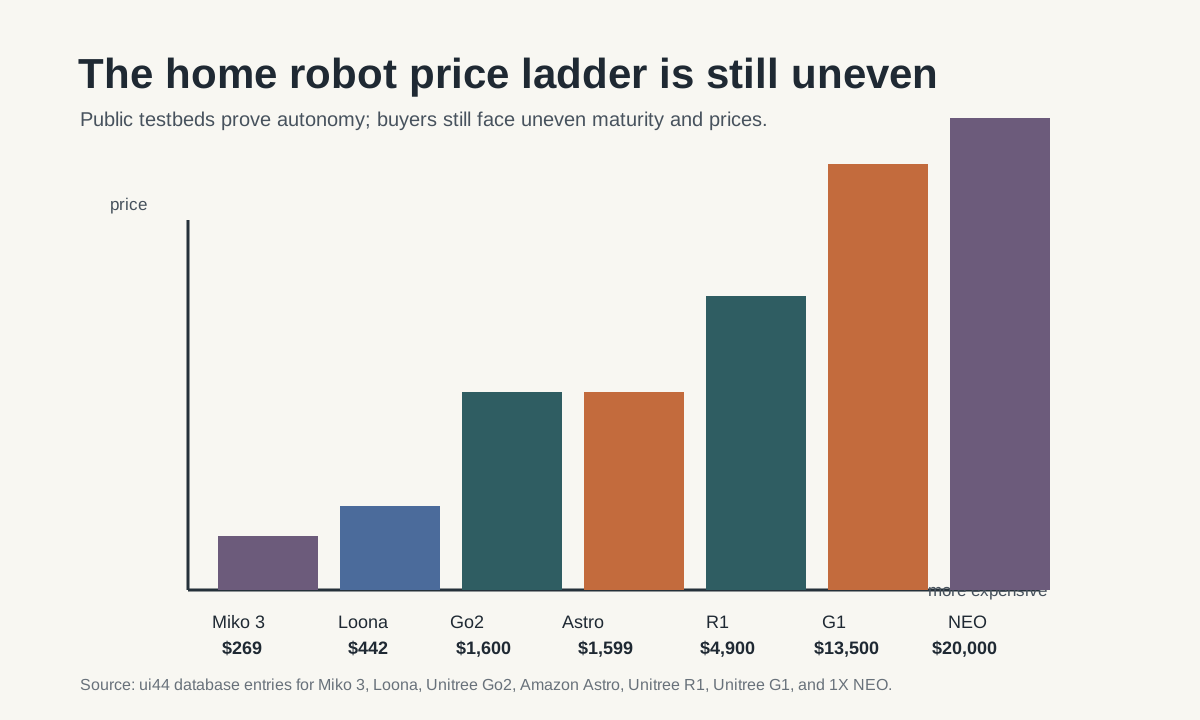
This spread explains why public testbeds matter. A €269 companion robot and a $20,000 household humanoid are not separated only by size and price. They are separated by the amount of physical risk, operational complexity, and support burden the buyer is being asked to accept.
Amazon Astro is a useful reference because it narrows the job. It patrols a home, offers remote monitoring, works with Alexa and Ring, and stays inside a relatively constrained service model. That is much closer to a realistic consumer robot than a general-purpose humanoid that promises to tidy, carry, and manipulate objects throughout the home.
temi V3 is another useful bridge. It is a commercial telepresence and navigation robot with human follow, autonomous charging, face recognition, a touchscreen, a tray, and remote management. It is not a normal consumer home robot, but its strengths are exactly the kind of capabilities that public buildings can validate before consumer versions become plausible.
The humanoid and quadruped entries show the other side of the market. Unitree Go2 brings LiDAR mapping, obstacle avoidance, voice commands, OTA updates, and secondary development at a much lower price than most humanoids. Unitree G1 and Unitree R1 move toward manipulation and bipedal robotics, but they still read more like platforms than finished household appliances. 1X NEO is explicitly aimed at household chores, but at $20,000 and pre-order status in the ui44 database, it is still a high-conviction bet rather than a low-risk purchase.
What Public Testbeds Can Prove
Public robot testbeds will not prove everything a home buyer needs. They will not show whether a robot is gentle around your cat, whether it respects your privacy expectations, or whether it can handle the clutter pattern of your apartment. They can, however, prove several things that matter before a robot crosses your doorway.
First, they can prove navigation under social pressure. It is one thing to map a tidy room. It is another to operate around people who are distracted, impatient, carrying food, entering lifts, or walking in groups. A home robot does not need to behave like a street delivery robot, but it does need the same discipline: slow down, yield, reroute, and fail visibly rather than dangerously.
Second, they can prove support models. A robot that needs human help every few routes may still be commercially useful if one operator supervises many units. At home, the owner becomes the first line of support unless the company has a strong service model. Public deployments expose whether the robot company can diagnose problems remotely, push updates, replace parts, and keep uptime high.
Third, they can prove infrastructure assumptions. Robots love invisible infrastructure: maps, beacons, APIs, lift integrations, charging docks, rules, and defined zones. A buyer should ask how much of the robot's advertised autonomy depends on the environment being prepared for it. If the answer is "a lot," that may be acceptable in a campus and unacceptable in a normal home.
Fourth, they can prove whether the service is worth repeating. A delivery robot that saves time every evening has a clearer job than a home robot that sometimes carries an object across a room. Repetition reveals value. If a robot cannot deliver a repeatable service in a public setting, it is unlikely to become a reliable general helper at home.
What Buyers Should Ask Before Getting Excited
When a company says its robot is ready for home use, ask for evidence that looks more like a deployment record than a demo reel.
- Has the robot operated around strangers, not just employees?
- Can it work without a handler walking beside it?
- What happens when it loses network connectivity?
- Does it have a documented remote support path?
- Are maps, docks, cloud services, subscriptions, and replacement parts required?
- Which tasks are autonomous, and which are teleoperated or scripted?
- What is the real maintenance routine after the first month?
- Has the company tested the robot in shared buildings, lifts, corridors, or public paths?
Those questions are not pessimistic. They are the difference between buying a robot and buying a promise.
The Bottom Line
Public testbeds are not a detour from home robotics. They are one of the ways home robotics becomes real.
Punggol Digital District matters because it puts multiple robot services, operators, and rules into a shared environment. ITRI's ARIDC matters because it builds validation infrastructure around robotics rather than treating physical AI as software with wheels. Together, they suggest that the path to a capable home robot will run through public deployments, commercial services, and hard operational lessons.
For buyers, that makes the near-term advice clearer. Companion robots such as Miko 3 and Loona can be judged as interactive products. Home patrol robots such as Amazon Astro can be judged by monitoring, navigation, and ecosystem fit. Platforms such as Unitree Go2, Unitree G1, and Unitree R1 should be judged as developer or early-adopter systems. Household humanoids such as 1X NEO should be judged by deployment evidence, not just ambition.
The public robot testbed is the preview. The home robot that deserves your money is the one that turns those public lessons into a product you can trust in private.
Related in the database
Use this article as a privacy verification workflow
Turn the article into a privacy verification pass grounded in the robots, manufacturers, and components it actually references.
Public Robot Testbeds Are the Home Robot Preview already points you toward 9 linked robots, 8 manufacturers, and 6 countries inside the ui44 database. That matters because strong buyer guidance is easier to apply when you can move immediately from a claim or warning into concrete product pages, manufacturer directories, component explainers, and country-level context instead of treating the article as an isolated opinion piece. The fastest next step is to turn the article into a shortlist workflow: open the linked robot pages, verify which specs are actually published for those models, then compare the surrounding manufacturer and component context before you decide whether the underlying claim changes your buying plan.
For this topic, the useful discipline is to separate the editorial lesson from the catalog evidence. The article gives you the framing, but the robot pages tell you what each product actually ships with today: sensor stack, connectivity methods, listed price, release timing, category, and support-relevant compatibility notes. The manufacturer pages then show whether you are looking at a one-off launch, a broader lineup pattern, or a company that spans multiple categories. That layered workflow reduces the risk of buying on a single marketing phrase or a single support FAQ.
Use the robot pages to confirm which products actually expose cameras, microphones, Wi-Fi, or voice systems, then use the manufacturer pages to decide how much of the privacy question seems product-specific versus brand-wide. On this route cluster, NEO, G1, and Go2 form the fastest reality check. If you want a quick working shortlist, open Compare NEO, G1, and Go2 next, then keep this article open as the reasoning layer while you compare structured data side by side.
Practical Takeaway
Every robot, manufacturer, category, component, and country reference below resolves to a real ui44 page, keeping the follow-up path grounded in database records rather than generic advice.
Suggested next steps in ui44
- Open NEO and note the listed sensors, connectivity methods, and voice stack before you interpret any policy claim.
- Cross-check the wider brand context on 1X Technologies so you can see whether the privacy question touches one model or a broader lineup.
- Use the linked component pages to confirm how common the relevant sensors and connectivity layers are across the database.
- Keep a short note of which policy layers you checked, which device features are actually present on the robot page, and which items still depend on region- or app-level confirmation.
- Finish with Compare NEO, G1, and Go2 so the policy reading sits next to structured product data.
Robot profiles worth opening next
Use the linked product pages as the evidence layer
The linked robot pages are where this article becomes operational. Instead of asking whether the headline is interesting, use the robot entries to inspect the actual mix of sensors, connectivity options, batteries, pricing, release timing, and stated capabilities attached to the products mentioned in the article. That is the easiest way to see whether the warning or opportunity described here affects one product family, a specific design pattern, or an entire buying lane.
NEO
1X Technologies · Humanoid · Pre-order
NEO is tracked on ui44 as a pre-order humanoid robot from 1X Technologies. The database currently records a listed price of $20,000, a release date of 2025-10-28, ~4 hours battery life, Not disclosed charging time, and a published stack that includes RGB Cameras, Depth Sensors, and Tactile Skin plus Wi-Fi and Bluetooth.
For privacy-focused reading, this page matters because it shows the concrete device surface behind the policy discussion. Use it to verify whether NEO combines sensors and connectivity in a way that could change the in-home data footprint, and compare the listed capabilities such as Household Chores, Tidying Up, and Safe Human Interaction with any cloud, app, or voice layers.
G1 is tracked on ui44 as a available humanoid robot from Unitree. The database currently records a listed price of $13,500, a release date of 2024-05-13, ~2 hours battery life, Not disclosed charging time, and a published stack that includes Depth Camera, 3D LiDAR, and 4 Microphone Array plus Wi-Fi 6 and Bluetooth 5.2.
For privacy-focused reading, this page matters because it shows the concrete device surface behind the policy discussion. Use it to verify whether G1 combines sensors and connectivity in a way that could change the in-home data footprint, and compare the listed capabilities such as Bipedal Walking, Object Manipulation, and Dexterous Hands (optional Dex3-1) with any cloud, app, or voice layers.
Go2
Unitree Robotics · Quadruped · Available
Go2 is tracked on ui44 as a available quadruped robot from Unitree Robotics. The database currently records a listed price of $1,600, a release date of 2023-07-12, 1–2h (standard) / 2–4h (EDU long endurance) battery life, Not officially disclosed charging time, and a published stack that includes 4D LiDAR L2 (360°×96° hemispherical), HD Wide-angle Camera, and Depth Camera (EDU) plus Wi-Fi 6 and Bluetooth 5.2.
For privacy-focused reading, this page matters because it shows the concrete device surface behind the policy discussion. Use it to verify whether Go2 combines sensors and connectivity in a way that could change the in-home data footprint, and compare the listed capabilities such as Quadruped Walking & Running, Advanced AI Gaits (roll-over, obstacle climbing), and 3D LiDAR Mapping with any cloud, app, or voice layers, including Offline voice interaction (Pro/X/EDU).
R1
Unitree Robotics · Humanoid · Pre-order
R1 is tracked on ui44 as a pre-order humanoid robot from Unitree Robotics. The database currently records a listed price of $4,900, a release date of 2025, ~1 hour (mixed activity) battery life, Not officially disclosed charging time, and a published stack that includes Monocular camera (R1 Air); binocular camera (R1/R1 EDU), 4-Mic Array, and Dual 6-Axis IMU plus Wi-Fi 6 and Bluetooth 5.2.
For privacy-focused reading, this page matters because it shows the concrete device surface behind the policy discussion. Use it to verify whether R1 combines sensors and connectivity in a way that could change the in-home data footprint, and compare the listed capabilities such as Bipedal Walking & Running, Cartwheels & Handstands, and Push Recovery with any cloud, app, or voice layers, including UnifoLM (voice + image commands).
Astro is tracked on ui44 as a active security & patrol robot from Amazon. The database currently records a listed price of $1,599, a release date of 2021, Not officially disclosed battery life, Not officially disclosed charging time, and a published stack that includes 5MP Bezel Camera, 1080p Periscope Camera (132° FOV), and Infrared Vision plus Wi-Fi 802.11ac and Bluetooth.
For privacy-focused reading, this page matters because it shows the concrete device surface behind the policy discussion. Use it to verify whether Astro combines sensors and connectivity in a way that could change the in-home data footprint, and compare the listed capabilities such as Autonomous Home Patrol, Visual ID (face recognition), and Remote Home Monitoring with any cloud, app, or voice layers, including Amazon Alexa.
Manufacturer context behind the article
Check whether this is one product story or a broader company pattern
Manufacturer pages add the privacy context that individual product pages cannot show on their own. They help you check whether cameras, microphones, cloud accounts, app controls, and policy assumptions appear across a broader lineup or stay tied to one specific product story.
1X Technologies
ui44 currently tracks 2 robots from 1X Technologies across 1 category. The company is grouped under Norway, and the current catalog footprint on ui44 includes NEO, EVE.
That wider brand context matters because privacy questions rarely stop at one FAQ page. A manufacturer route helps you see whether the article is centered on one premium model or on a company that has several relevant products and therefore more than one place where the same policy or app assumptions might matter. The category mix here currently points toward Humanoid as the most useful next route if you want to see whether this article reflects a wider pattern inside the brand.
Unitree
ui44 currently tracks 2 robots from Unitree across 1 category. The company is grouped under China, and the current catalog footprint on ui44 includes H1, G1.
That wider brand context matters because privacy questions rarely stop at one FAQ page. A manufacturer route helps you see whether the article is centered on one premium model or on a company that has several relevant products and therefore more than one place where the same policy or app assumptions might matter. The category mix here currently points toward Humanoid as the most useful next route if you want to see whether this article reflects a wider pattern inside the brand.
Unitree Robotics
ui44 currently tracks 9 robots from Unitree Robotics across 3 categorys. The company is grouped under China, and the current catalog footprint on ui44 includes B2, B1, Go2.
That wider brand context matters because privacy questions rarely stop at one FAQ page. A manufacturer route helps you see whether the article is centered on one premium model or on a company that has several relevant products and therefore more than one place where the same policy or app assumptions might matter. The category mix here currently points toward Quadruped, Humanoid, Research as the most useful next route if you want to see whether this article reflects a wider pattern inside the brand.
Amazon
ui44 currently tracks 1 robot from Amazon across 1 category. The company is grouped under USA, and the current catalog footprint on ui44 includes Astro.
That wider brand context matters because privacy questions rarely stop at one FAQ page. A manufacturer route helps you see whether the article is centered on one premium model or on a company that has several relevant products and therefore more than one place where the same policy or app assumptions might matter. The category mix here currently points toward Security & Patrol as the most useful next route if you want to see whether this article reflects a wider pattern inside the brand.
Broaden the scan without leaving the database
Categories, components, and countries add the wider context
Category framing
Category pages are useful when the article touches a buying pattern that shows up across brands. A category route helps you confirm whether the linked products sit in a narrow niche or whether the same question should be tested across a larger field of alternatives.
Humanoid
The Humanoid category page currently groups 129 tracked robots from 92 manufacturers. ui44 describes this lane as: Full-size bipedal humanoid robots built to work alongside people — from factory floors to household tasks. Compare the cutting edge of humanoid robotics.
That makes the category route a practical follow-up when you want to check whether the products linked in this article are typical for the lane or whether they sit at one edge of the market. Useful starting examples currently include NEO, EVE, Mornine M1.
Quadruped
The Quadruped category page currently groups 25 tracked robots from 16 manufacturers. ui44 describes this lane as: Four-legged robot dogs and quadrupeds built for rough terrain, inspection, and exploration — going where wheels can't.
That makes the category route a practical follow-up when you want to check whether the products linked in this article are typical for the lane or whether they sit at one edge of the market. Useful starting examples currently include Argos X1, D1 Pro, D2 Max.
Country and ecosystem context
Country pages give extra context when support practices, launch sequencing, regulatory posture, or manufacturer mix matter. They are not a substitute for model-level verification, but they do help you see which ecosystems cluster together and which manufacturers sit in the same regional field when you broaden the search beyond the article headline.
Norway
The Norway route currently groups 2 tracked robots from 1 manufacturers in ui44. That gives you a useful regional lens when the article points toward support practices, launch sequencing, or brand clusters that may share similar ecosystem assumptions.
On the current route, manufacturers like 1X Technologies make the page a good way to broaden the scan without losing the regional context that often shapes availability, documentation style, and adjacent alternatives.
China
The China route currently groups 189 tracked robots from 87 manufacturers in ui44. That gives you a useful regional lens when the article points toward support practices, launch sequencing, or brand clusters that may share similar ecosystem assumptions.
On the current route, manufacturers like AGIBOT, Dreame, Unitree Robotics make the page a good way to broaden the scan without losing the regional context that often shapes availability, documentation style, and adjacent alternatives.
USA
The USA route currently groups 89 tracked robots from 69 manufacturers in ui44. That gives you a useful regional lens when the article points toward support practices, launch sequencing, or brand clusters that may share similar ecosystem assumptions.
On the current route, manufacturers like Faraday Future, iRobot, Boston Dynamics make the page a good way to broaden the scan without losing the regional context that often shapes availability, documentation style, and adjacent alternatives.
Questions to answer before you move from reading to buying
A follow-up FAQ built from the entities already linked in this article
Frequently Asked Questions
Which page should I open first after reading “Public Robot Testbeds Are the Home Robot Preview”?
Start with NEO. That gives you a concrete product anchor for the article’s main claim. From there, branch into the manufacturer and component pages so you can tell whether the article is describing one specific model, a repeated brand pattern, or a wider technology issue that affects multiple shortlist options.
How do the manufacturer pages change the buying decision?
1X Technologies help you zoom out from one article and one product. On ui44 they show lineup breadth, category spread, and the neighboring robots tied to the same company. That context is useful when you are deciding whether a risk belongs to a single model, whether it shows up across a brand’s portfolio, and whether you should keep looking at alternatives before committing.
When should I switch from reading to side-by-side comparison?
Move into Compare NEO, G1, and Go2 as soon as you understand the article’s main warning or promise. The article explains what to watch for, but the compare view is where you can check whether price, status, battery life, connectivity, sensors, and category fit still make the robot a good match for your own home and budget.
Where to go next in ui44
Keep the research chain inside the database
If you want to keep going, these follow-on pages give you the cleanest expansion path from article to research session. Open the comparison route first if you are deciding between products today. Open the manufacturer, category, and component routes if you still need to understand the broader pattern behind the claim.
Written by
ui44 Team
Published July 9, 2026
Share this article
Open a plain share link on X or Bluesky. No embeds, no widgets, no cookie baggage.