The practical buyer question is simple: does this mean Nanoleaf has a real robot, or is this another smart-home brand using AI language before the product exists? Right now, the honest answer is closer to watchlist than buyer guide. Nanoleaf has published a broad AI-and-robotics direction, and The Verge reports that the company has at least three embodied-AI products planned around an AI toy, a desk companion, and a robotic microcontroller. But there is no public Nanoleaf robot price, no final spec sheet, no launch page, and no checkout path.
That makes Nanoleaf a useful case study, not a product recommendation. If a lighting company wants to become an AI robot company, buyers should ask the same questions ui44 asks of every home robot: what moves, what senses, what runs locally, what costs money after purchase, and what can you actually buy?
Does Nanoleaf have a robot yet?
Not in the way shoppers usually mean it.
Nanoleaf's own post, "Evolving Nanoleaf: Bringing Access Into Innovation", says the company is building toward AI and robotics and describes robotics as a natural next step alongside AI. The post talks about AI supporting creativity, productivity, wellness, childhood development, and daily life, while making new technology more attainable. It does not name a robot, publish dimensions, show a price, or say which countries will get a product first.
The more concrete details come from The Verge's report on Nanoleaf's pivot. CEO Gimmy Chu told The Verge that Matter and other open standards are making smart lighting easier to commoditize, and that Nanoleaf is looking toward embodied AI: intelligence in hardware that can do something in the real world, not just a chatbot inside a speaker. The Verge says images shared by Chu point to three product directions: an AI-powered toy, a desk companion, and a robotic microcontroller.
That is promising, but it is still not enough to classify Nanoleaf as a shipping robot company. It is a signal. The question is whether the signal becomes a robot with enough hardware, software, safety, and support to matter after the first launch video.
Why smart-home brands want robots now
The smart-home business has a problem: once every bulb, plug, switch, and light strip speaks the same standards, the devices become easier to compare on price. That is good for buyers. It is harder for brands that used to differentiate through ecosystem lock-in.
Robots offer a different kind of differentiation. A robot can move, look around, follow a person, react to touch, build routines, and become a character in the home. That is why companies from Samsung to SwitchBot are pushing beyond static smart-home devices.
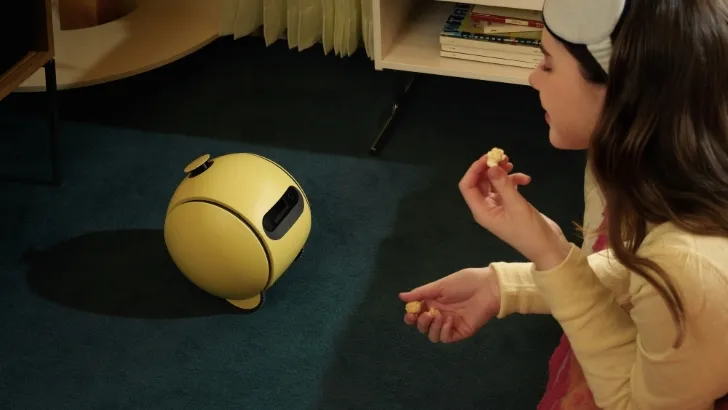
Samsung Ballie is the cleanest example. Ballie is listed in ui44 as a development-stage companion robot with no public price, no confirmed release date, SmartThings control, a built-in projector, cameras, spatial and environmental sensors, and an AI stack that Samsung has described as using Google Gemini plus Samsung language models. The concept is basically a mobile smart-home interface: a rolling robot that can project information, help with calls, control appliances, and watch pets or family members.
Ballie also shows the danger. It has been demonstrated for years, but ui44 still tracks it as Development, with no public retail path. A brand can understand the smart home perfectly and still struggle to ship a consumer robot.
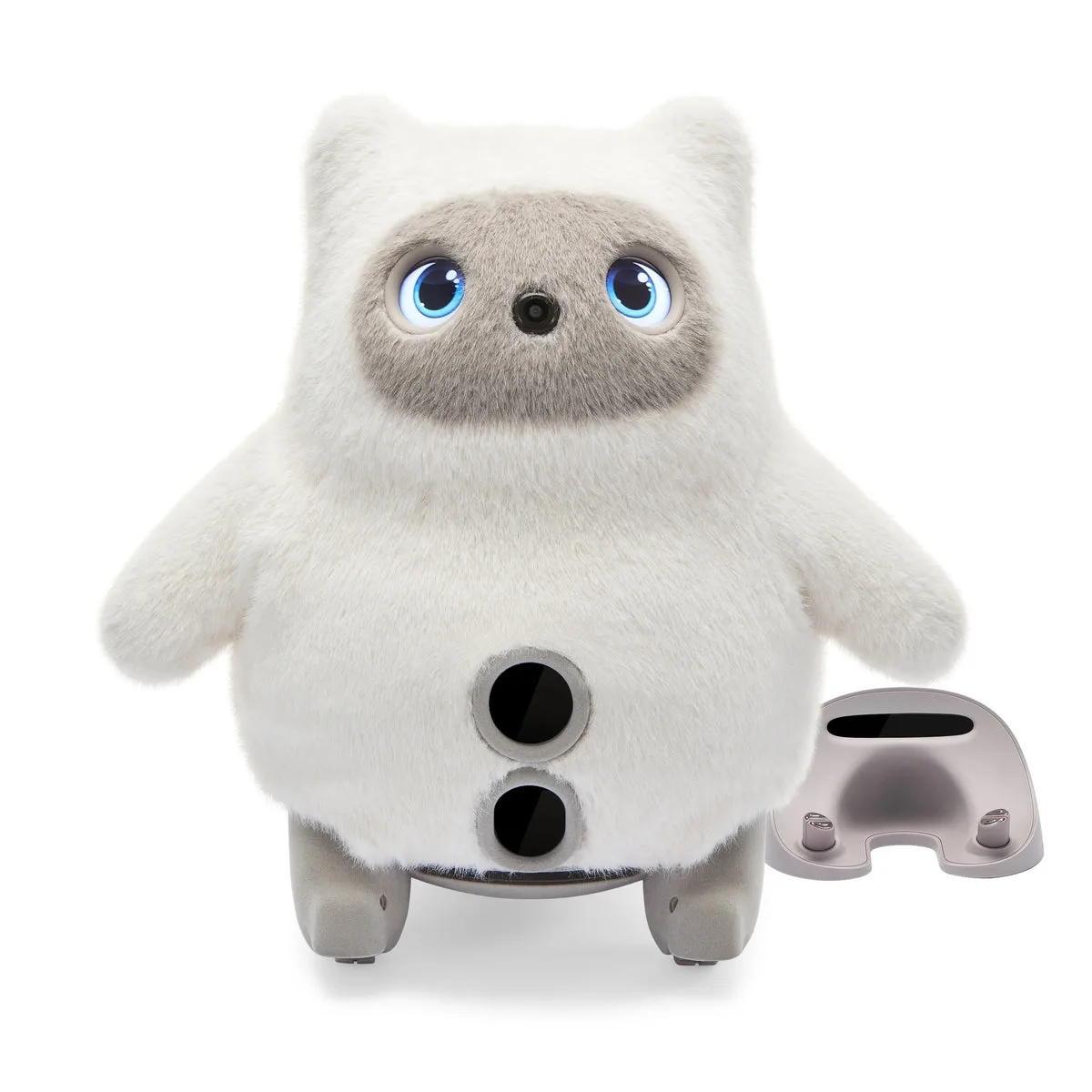
SwitchBot shows the other path. KATA Friends is already listed in ui44 as Available, with the official U.S. product JSON showing Noa and Niko variants at about $699. It is not a chores robot. It is a soft-bodied AI pet companion with autonomous movement, obstacle avoidance, self-docking, voice-command interaction, gesture recognition, touch-responsive behavior, face recognition, emotion cues, diary memories, and an on-device LLM for core responses. It also has a software-plan reality: Companion Care is separate after the included period, with plan options such as $14.99/month, $399.99/year, or a $999.99 one-time plan.
That is the kind of detail Nanoleaf will eventually need to publish if it wants robot buyers, not just smart-home curiosity.
The ui44 database reality check
The current AI companion market is not one thing. It includes mobile security robots, child-focused desk robots, pet-like companions, and still-development concepts. Here is the useful comparison point for Nanoleaf.
Robot
- ui44 status
- Development
- Price signal
- No pricing announced
- What it proves
- A smart-home brand can imagine a mobile home interface with projector, cameras, SmartThings, and Gemini
- Buyer caution
- Years of demos still do not equal a buyable product
Robot
- ui44 status
- Available
- Price signal
- About $699, plus Companion Care options
- What it proves
- AI companion robots can ship as soft-bodied pets with local interaction, memories, and self-docking
- Buyer caution
- The ongoing software plan matters as much as the hardware price
Robot
- ui44 status
- Available
- Price signal
- $999 official store JSON
- What it proves
- A wheeled home robot can combine GPT-4o mini voice interaction, Visual SLAM, 4K video, patrols, Alexa, and remote care
- Buyer caution
- It is closer to monitoring and communication than general household help
Robot
- ui44 status
- Available in Japan
- Price signal
- ¥577,500 for LOVOT 3.0, care plan from ¥9,900/month
- What it proves
- Emotional companionship can be a product category on its own, with 50+ sensors, body warmth, recognition, and auto-charging
- Buyer caution
- The real cost is hardware plus required monthly care
Robot
- ui44 status
- Development
- Price signal
- No price; planned for 2027
- What it proves
- A companion robot does not need a screen or voice if body language and on-device AI are the product
- Buyer caution
- Not shipping yet; claims still need buyer verification
Robot
- ui44 status
- Available
- Price signal
- $299, often on sale; optional Miko Max subscription
- What it proves
- A kid-focused AI robot can combine conversation, games, camera, microphones, touch, parent controls, COPPA, and kidSAFE+
- Buyer caution
- Child AI claims need stricter privacy and content checks
| Robot | ui44 status | Price signal | What it proves | Buyer caution |
|---|---|---|---|---|
| Samsung Ballie | Development | No pricing announced | A smart-home brand can imagine a mobile home interface with projector, cameras, SmartThings, and Gemini | Years of demos still do not equal a buyable product |
| SwitchBot KATA Friends | Available | About $699, plus Companion Care options | AI companion robots can ship as soft-bodied pets with local interaction, memories, and self-docking | The ongoing software plan matters as much as the hardware price |
| Enabot EBO X | Available | $999 official store JSON | A wheeled home robot can combine GPT-4o mini voice interaction, Visual SLAM, 4K video, patrols, Alexa, and remote care | It is closer to monitoring and communication than general household help |
| LOVOT | Available in Japan | ¥577,500 for LOVOT 3.0, care plan from ¥9,900/month | Emotional companionship can be a product category on its own, with 50+ sensors, body warmth, recognition, and auto-charging | The real cost is hardware plus required monthly care |
| Familiar | Development | No price; planned for 2027 | A companion robot does not need a screen or voice if body language and on-device AI are the product | Not shipping yet; claims still need buyer verification |
| Miko 3 | Available | $299, often on sale; optional Miko Max subscription | A kid-focused AI robot can combine conversation, games, camera, microphones, touch, parent controls, COPPA, and kidSAFE+ | Child AI claims need stricter privacy and content checks |
The pattern is clear. A credible AI companion robot needs more than a friendly form factor. It needs a defined use case, real sensors, a battery and charging story, a support plan, privacy boundaries, and a price that includes the software layer.
What Nanoleaf's robots would need to prove
Nanoleaf has advantages if it enters this market. It already knows connected hardware, lighting design, app control, scenes, Thread, Matter, and home ambience. Its official company page describes Nanoleaf as a smart-home and IoT company founded in 2012, with a global footprint across Toronto, Shenzhen, Paris, Hong Kong, and the Philippines. That matters because consumer robots are not just AI models. They are supply chains, plastics, motors, batteries, firmware, apps, packaging, returns, and support.
But those strengths do not automatically create a good robot.
1. The product needs a job, not just a personality
An AI desk companion is a form factor, not a reason to buy. Is the job learning, creative play, presence, calendar reminders, accessibility, ambient lighting, pet-like companionship, smart-home control, or coding/robotics education? Each one leads to different hardware.
If Nanoleaf's first robot is for early childhood development, it will be judged against child-focused products like Miko 3, which already claims face and voice recognition, educational content, touch interaction, parent controls, and kid-focused certifications. If it is a desk companion, it will be judged against the growing desktop-robot category and against whether it adds anything beyond a screen, speaker, and expressive face.

2. The body needs to matter
A robot should justify being a robot. Familiar is interesting because its body is the interface: 23 degrees of freedom, a fuzzy touch-sensitive exterior, autonomous walking, facial-expression and tone-of-voice interpretation, and no screen or voice-first assistant. KATA Friends uses movement, touch, facial memory, and expressive eyes to feel different from a chatbot.
If a Nanoleaf robot mostly sits on a desk and talks, buyers should ask why it is not just a smart display or speaker. If it has a robotic microcontroller angle, the question changes: is this a maker platform, a STEM kit, a smart-home bridge, or a robot brain for third-party hardware?
3. Privacy has to be explicit
Companion robots often include cameras, microphones, face recognition, emotion cues, diaries, location history, and household routines. Those are intimate signals. Nanoleaf's lighting products are already home devices, but a robot that watches a child, remembers faces, or reacts to family behavior is a different privacy category.
The minimum bar should be clear answers on local processing, cloud processing, voice recordings, camera storage, parent controls, account deletion, software updates, and what happens if the subscription ends.
4. The subscription model should be visible on day one
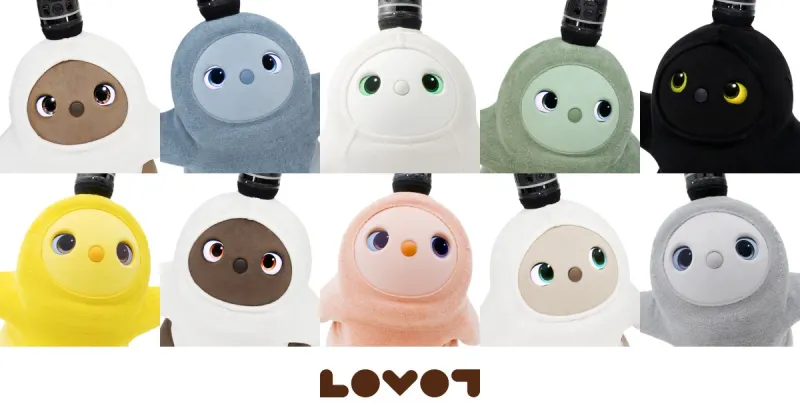
The robot market is moving toward hardware plus service. LOVOT requires a care plan from ¥9,900/month. KATA Friends has Companion Care plan options. Miko 3 has optional Miko Max content. These are not small footnotes; they shape the real ownership cost.
If Nanoleaf launches an AI toy or desk companion, the first spec sheet should say what works without a subscription, what needs a cloud plan, and whether the robot still has basic value if the AI service changes.
What buyers should watch before taking the claim seriously
If Nanoleaf shows a robot prototype later in 2026, do not judge it by the launch video alone. Use this checklist instead:
- Retail path: Is there a product page, country list, price, warranty, and checkout flow?
- Embodiment: Does it move, sense, touch, dock, or manipulate in a way that matters?
- Battery and charging: How long does it run, and can it return to a dock on its own?
- AI boundary: Which features run locally, which use the cloud, and what happens offline?
- Smart-home role: Is it actually useful with Matter, Thread, HomeKit, SmartThings, Alexa, Google Home, or Home Assistant, or is it isolated in its own app?
- Child and family safety: If the product targets children, are the privacy, content, moderation, and parent-control claims specific?
- Software cost: Is the companion personality included, or does the best version require a monthly plan?
- Repair and longevity: Can batteries, docks, accessories, or damaged parts be replaced?
The strongest version of a Nanoleaf robot would use the company's lighting and smart-home strengths in a way existing companion robots do not: spatial awareness of rooms, ambient feedback through lights, routines that blend robot behavior with lighting scenes, and local control that does not turn every moment into a cloud event. The weakest version would be a cute AI gadget with a vague robot label and no durable job.
Verdict: interesting signal, not a buy button
Nanoleaf's AI-and-robotics move is worth watching because it comes from a real consumer-hardware company, not a render-only startup. The company has shipped connected products for years, understands smart-home setup friction, and has a reason to look beyond commodity lighting.
But the market already has enough evidence to be skeptical. Samsung has shown how long a smart-home robot can remain stuck between demo and retail. LOVOT and KATA Friends show that emotional companions can ship, but also that ownership costs and software plans matter. EBO X shows that a practical home robot can be more monitoring device than friend. Familiar shows how compelling a physical companion can look before availability, price, and support are proven.
So the right answer to "Nanoleaf robots" is not hype or dismissal. It is a scorecard. When Nanoleaf publishes a real robot, compare it against the database on /compare, check whether it belongs with real companion robots in /categories, and ask whether the body solves a problem a normal smart-home device cannot.
Until then, Nanoleaf is not a robot brand yet. It is a smart-home brand making a credible bet that the next interface for the home may need a body.
Related in the database
Use this article as a setup-friction workflow
Turn the article into a first-day setup pass grounded in the robots, manufacturers, and countries it actually references.
Nanoleaf Robots: Smart Home AI Companions? already points you toward 6 linked robots, 6 manufacturers, and 5 countries inside the ui44 database. Treat those links as a first-day setup trail: open the robot pages, check what is actually published about charging, battery life, control method, app or OTA support, and recovery, then use the surrounding manufacturer and country context to judge whether the article describes a low-friction product path or a still-specialist deployment.
For setup topics, the useful discipline is to separate a polished demo from the work required after the box arrives. The article gives you the narrative, but the robot pages show the operational clues: dimensions, weight, battery runtime, charging time, controller support, listed availability, and the capabilities that might need supervision. Manufacturer pages then reveal whether the same setup assumptions repeat across a wider lineup.
Use the robot pages to verify what happens between delivery and the first useful task: size, weight, battery, charger or dock path, controller, app, OTA support, and recovery cues. On this route cluster, Ballie, KATA Friends, and EBO X form the fastest setup-friction reality check. If you want a quick working shortlist, open Compare Ballie, KATA Friends, and EBO X next, then keep this article open while you compare first-day setup evidence side by side.
Practical Takeaway
The links below stay tied to the robots, manufacturers, and countries actually referenced by this setup article, so the checklist remains grounded in published ui44 records rather than generic humanoid advice.
Suggested next steps in ui44
- Open Ballie and check the concrete first-day fields: box contents, charger or dock path, battery life, controller, app, OTA support, and recovery options.
- Use Samsung to see whether the company’s broader lineup looks appliance-like, developer-first, or still closer to a pilot deployment.
- Run Compare Ballie, KATA Friends, and EBO X with the article open and compare battery, size, weight, price path, status, and support cues side by side.
- Write down the first realistic task each robot can plausibly attempt on day one, then separate low-friction setup signals from impressive but still lab-style demos.
Robot profiles worth opening next
Use the linked product pages as the evidence layer
The linked robot pages are where this setup article becomes operational. Use the robot entries to inspect the actual mix of size, weight, battery runtime, charging path, control method, pricing, availability, and stated capabilities attached to the products mentioned in the article. That is the easiest way to see whether the first useful task looks appliance-like, developer-led, or still dependent on supervised experimentation.
Ballie is tracked on ui44 as a development companions robot from Samsung. The database currently records a listed price of Price TBA, a release date of TBD, Not officially disclosed battery life, Not officially disclosed charging time, and a published stack that includes Camera, Spatial Sensors, and Environmental Sensors plus Wi-Fi and SmartThings.
For setup-friction reading, this page matters because it shows the physical and support burden behind the demo. Use it to verify whether Ballie has a credible day-one path across charging, control, recovery, battery limits, and listed capabilities such as Autonomous Home Navigation, Built-in Projector (Wall & Floor), and Smart Home Control via SmartThings, with voice support noted as Bixby.
KATA Friends
SwitchBot · Companions · Available
KATA Friends is tracked on ui44 as a available companions robot from SwitchBot. The database currently records a listed price of $699, a release date of 2026-05-12, Not officially disclosed battery life, Not officially disclosed; CNET reports an 8-hour sleep/charge schedule charging time, and a published stack that includes Cameras, Microphones, and Touch sensors in ears, hands, tummy, and back plus SwitchBot companion app and On-device/offline AI interaction for core responses.
For setup-friction reading, this page matters because it shows the physical and support burden behind the demo. Use it to verify whether KATA Friends has a credible day-one path across charging, control, recovery, battery limits, and listed capabilities such as AI pet companionship, Autonomous indoor movement, and Obstacle avoidance.
EBO X is tracked on ui44 as a available companions robot from Enabot. The database currently records a listed price of $999, a release date of 2023-05, 2-3 hours battery life, 2 hours charging time, and a published stack that includes 4K one-axis stabilized camera, 8MP ultra-low-light sensor, and 106° camera FOV plus 2.4GHz Wi-Fi and 5GHz Wi-Fi.
For setup-friction reading, this page matters because it shows the physical and support burden behind the demo. Use it to verify whether EBO X has a credible day-one path across charging, control, recovery, battery limits, and listed capabilities such as Autonomous home patrol, Two-way video communication, and AI voice interactions, with voice support noted as Amazon Alexa.
LOVOT is tracked on ui44 as a available companions robot from GROOVE X. The database currently records a listed price of ¥577,500, a release date of 2019, 30-45 minutes active, then returns to nest battery life, 15-30 minutes (on charging nest) charging time, and a published stack that includes Horn Top Camera (half-sphere), Horn Front Camera, and Depth Camera plus Wi-Fi and Bluetooth.
For setup-friction reading, this page matters because it shows the physical and support burden behind the demo. Use it to verify whether LOVOT has a credible day-one path across charging, control, recovery, battery limits, and listed capabilities such as Emotional Companionship, Person Recognition, and Touch Response (full body sensors).
Familiar
Familiar Machines & Magic · Quadruped · Development
Familiar is tracked on ui44 as a development quadruped robot from Familiar Machines & Magic. The database currently records a listed price of Price TBA, a release date of 2027, Not disclosed battery life, Not disclosed charging time, and a published stack that includes Vision (facial expression and gesture recognition), Audio (tone of voice analysis), and Touch-sensitive exterior (3D-knitted fuzzy covering) plus Not disclosed.
For setup-friction reading, this page matters because it shows the physical and support burden behind the demo. Use it to verify whether Familiar has a credible day-one path across charging, control, recovery, battery limits, and listed capabilities such as Quadruped Walking (23 DOF), Autonomous Navigation, and Emotional Intelligence (EQ over IQ).
Manufacturer context behind the article
Check whether this is one product story or a broader company pattern
Manufacturer pages add the setup context that individual product pages cannot show on their own. They help you check whether a brand repeats the same controller, battery, update, support, and availability patterns across multiple robots, or whether the article is really describing one early product path. That matters for humanoids because first-day friction usually comes from the surrounding ecosystem as much as from the robot itself.
Samsung
ui44 currently tracks 2 robots from Samsung across 2 categorys. The company is grouped under South Korea, and the current catalog footprint on ui44 includes Ballie, Bespoke AI Jet Bot Steam Ultra.
That wider brand context matters because setup friction is rarely just a box problem. A manufacturer route helps you see whether the company has repeated controller, battery, support, and update patterns across its lineup, or whether the article is really about one early product story. The category mix here currently points toward Companions, Cleaning as the most useful next route if you want to see whether this article reflects a wider pattern inside the brand.
SwitchBot
ui44 currently tracks 3 robots from SwitchBot across 3 categorys. The company is grouped under USA, and the current catalog footprint on ui44 includes K20+ Pro, onero H1, KATA Friends.
That wider brand context matters because setup friction is rarely just a box problem. A manufacturer route helps you see whether the company has repeated controller, battery, support, and update patterns across its lineup, or whether the article is really about one early product story. The category mix here currently points toward Cleaning, Home Assistants, Companions as the most useful next route if you want to see whether this article reflects a wider pattern inside the brand.
Enabot
ui44 currently tracks 3 robots from Enabot across 1 category. The company is grouped under China, and the current catalog footprint on ui44 includes EBO X, EBO Max FamilyBot, EBO Mini Sport FamilyBot.
That wider brand context matters because setup friction is rarely just a box problem. A manufacturer route helps you see whether the company has repeated controller, battery, support, and update patterns across its lineup, or whether the article is really about one early product story. The category mix here currently points toward Companions as the most useful next route if you want to see whether this article reflects a wider pattern inside the brand.
GROOVE X
ui44 currently tracks 1 robot from GROOVE X across 1 category. The company is grouped under Japan, and the current catalog footprint on ui44 includes LOVOT.
That wider brand context matters because setup friction is rarely just a box problem. A manufacturer route helps you see whether the company has repeated controller, battery, support, and update patterns across its lineup, or whether the article is really about one early product story. The category mix here currently points toward Companions as the most useful next route if you want to see whether this article reflects a wider pattern inside the brand.
Broaden the scan without leaving the database
Categories, components, and countries add the wider context
Category framing
Category pages are useful when the article touches a buying pattern that shows up across brands. A category route helps you confirm whether the linked products sit in a narrow niche or whether the same question should be tested across a larger field of alternatives.
Companions
The Companions category page currently groups 53 tracked robots from 48 manufacturers. ui44 describes this lane as: Social robots, robot pets, and elderly-care companions designed for emotional connection and everyday support at home.
That makes the category route a practical follow-up when you want to check whether the products linked in this article are typical for the lane or whether they sit at one edge of the market. Useful starting examples currently include PARO, Abi, Next-Generation Companion Robot.
Quadruped
The Quadruped category page currently groups 25 tracked robots from 16 manufacturers. ui44 describes this lane as: Four-legged robot dogs and quadrupeds built for rough terrain, inspection, and exploration — going where wheels can't.
That makes the category route a practical follow-up when you want to check whether the products linked in this article are typical for the lane or whether they sit at one edge of the market. Useful starting examples currently include Argos X1, D1 Pro, D2 Max.
Country and ecosystem context
Country pages give extra context when support practices, launch sequencing, regulatory posture, or manufacturer mix matter. They are not a substitute for model-level verification, but they do help you see which ecosystems cluster together and which manufacturers sit in the same regional field when you broaden the search beyond the article headline.
South Korea
The South Korea route currently groups 9 tracked robots from 7 manufacturers in ui44. That gives you a useful regional lens when the article points toward support practices, launch sequencing, or brand clusters that may share similar ecosystem assumptions.
On the current route, manufacturers like ROBOTIS, Samsung, GenON make the page a good way to broaden the scan without losing the regional context that often shapes availability, documentation style, and adjacent alternatives.
USA
The USA route currently groups 89 tracked robots from 69 manufacturers in ui44. That gives you a useful regional lens when the article points toward support practices, launch sequencing, or brand clusters that may share similar ecosystem assumptions.
On the current route, manufacturers like Faraday Future, iRobot, Boston Dynamics make the page a good way to broaden the scan without losing the regional context that often shapes availability, documentation style, and adjacent alternatives.
China
The China route currently groups 189 tracked robots from 87 manufacturers in ui44. That gives you a useful regional lens when the article points toward support practices, launch sequencing, or brand clusters that may share similar ecosystem assumptions.
On the current route, manufacturers like AGIBOT, Dreame, Unitree Robotics make the page a good way to broaden the scan without losing the regional context that often shapes availability, documentation style, and adjacent alternatives.
Questions to answer before you move from reading to buying
A follow-up FAQ built from the entities already linked in this article
Frequently Asked Questions
Which page should I open first after reading “Nanoleaf Robots: Smart Home AI Companions?”?
Start with Ballie. That gives you a concrete product anchor for the article’s main claim. From there, branch into the manufacturer and component pages so you can tell whether the article is describing one specific model, a repeated brand pattern, or a wider technology issue that affects multiple shortlist options.
How do the manufacturer pages change the buying decision?
Samsung help you zoom out from one article and one product. On ui44 they show lineup breadth, category spread, and the neighboring robots tied to the same company. That context is useful when you are deciding whether a risk belongs to a single model, whether it shows up across a brand’s portfolio, and whether you should keep looking at alternatives before committing.
When should I switch from reading to side-by-side comparison?
Move into Compare Ballie, KATA Friends, and EBO X as soon as you understand the article’s main warning or promise. The article explains what to watch for, but the compare view is where you can check whether price, status, battery life, connectivity, sensors, and category fit still make the robot a good match for your own home and budget.
Where to go next in ui44
Keep the research chain inside the database
If you want to keep going, these follow-on pages give you the cleanest expansion path from article to research session. Open the comparison route first if you are deciding between products today. Open the manufacturer, category, and component routes if you still need to understand the broader pattern behind the claim.
Written by
ui44 Team
Published May 15, 2026
Share this article
Open a plain share link on X or Bluesky. No embeds, no widgets, no cookie baggage.