That sounds unserious until you look at the companion-robot market honestly. Many of the home robots people actually keep around are not useful in the appliance sense. They are useful because they create routine, comfort, play, shared attention, or a small social ritual that was not there before.
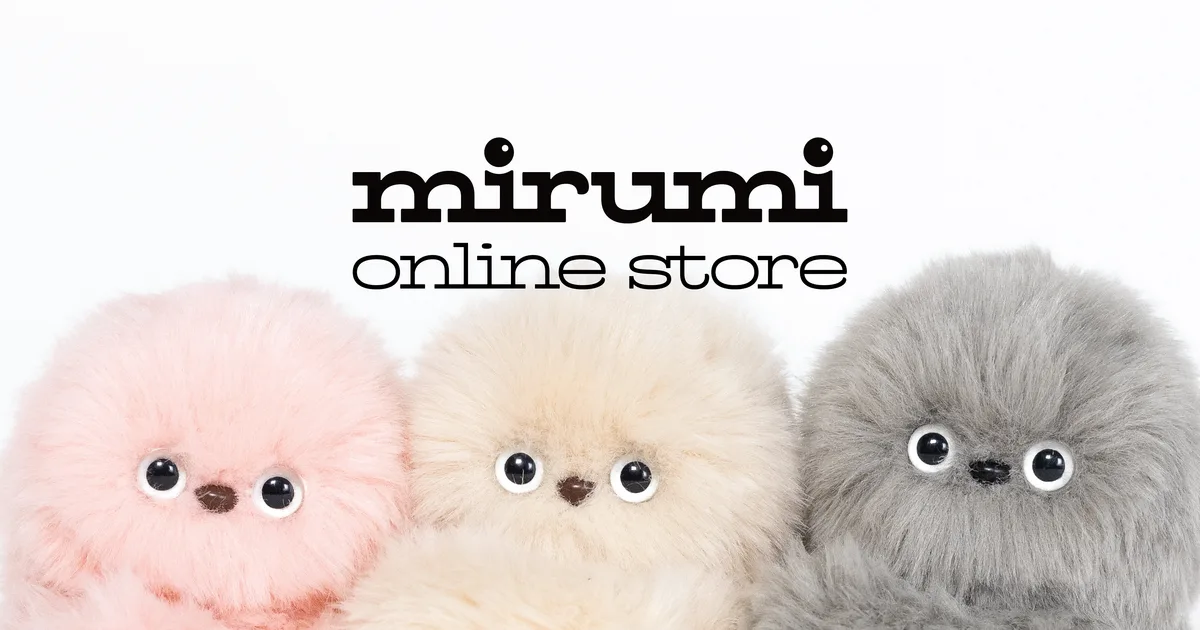
So the buyer question is not "is Mirumi useful?" in the same way a robot vacuum is useful. It is whether a passive companion robot can earn a place in your life without doing chores. The answer depends on which kind of companionship you actually want.
What is Mirumi, exactly?
Mirumi is a small charm robot from Yukai Engineering, the Japanese company behind several intentionally soft social-robot experiments. The ui44 database lists Mirumi at $165.99 from the official U.S. store, with Japan retail launch pricing at ¥19,800 and Japanese sales beginning on April 23, 2026.
The hardware is deliberately simple: about 100 × 110 × 140 mm, around 155 g, roughly 8 hours of battery life, USB-C charging, a head touch sensor, dual sound sensors, a distance sensor and an IMU. The important part is not a large AI model. It is an onboard behavior algorithm that chooses baby-like glances, head-turns, touch reactions and spontaneous motions.
Yukai Engineering's Japanese launch material describes Mirumi as a "ちら見" charm robot: a little creature that glances at people, reacts to voices or loud sounds, and creates a small moment of shared attention. Robot Start's Japanese coverage reports the same core details: April 23 Japan launch, ¥19,800 price, three colors, about 155 g, about 8 hours per charge, and dozens of motion patterns inspired by a baby's brief upward glance.
That framing matters. Mirumi is not a failed assistant because it cannot answer your calendar question. It is closer to a moving accessory, a tiny social prop, or a deliberately low-utility companion.
Passive companion robots are not one category
The word "companion robot" gets stretched too far. A $165 clip-on charm, a $2,899 Sony robot dog, a ¥577,500 Japanese emotional robot, and a senior-care subscription device are all called companions, but they solve very different problems.
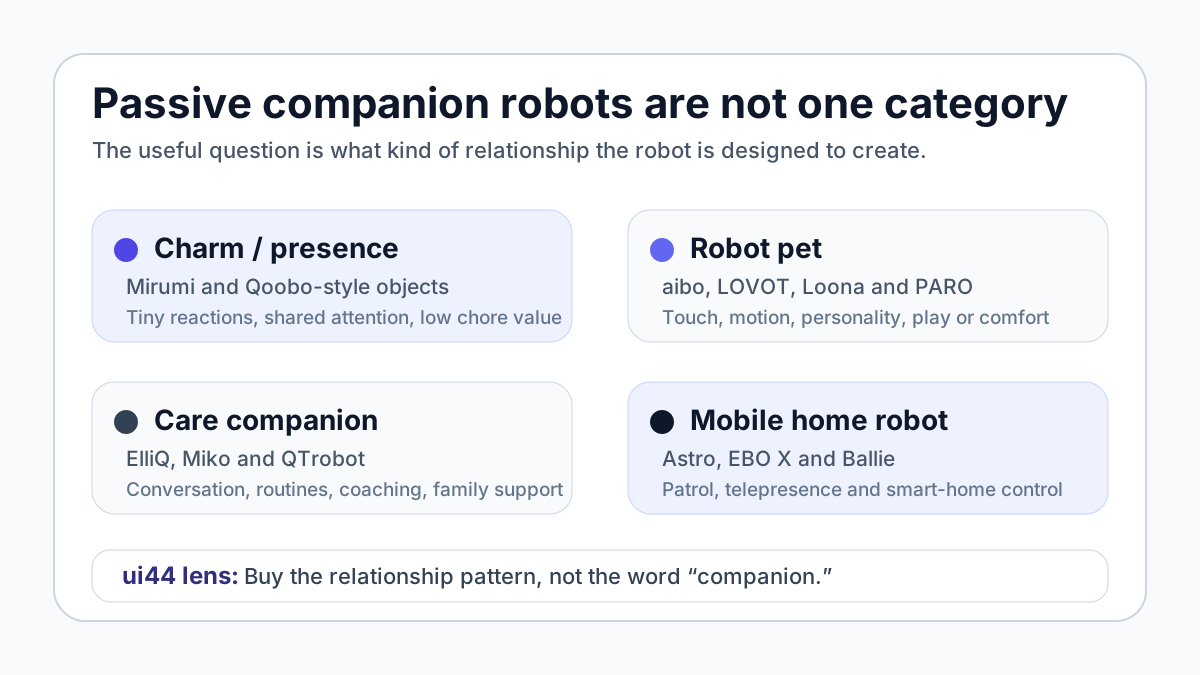
A useful way to separate them is by interaction load:
Robot type
Passive charm robot
- What it gives you
- Tiny reactions, presence, shared attention
- What it asks from you
- Almost no setup or training
- Good fit
- Someone who wants delight, not tasks
- Bad fit
- Anyone expecting assistant features
Robot type
Robot pet
- What it gives you
- Touch, movement, personality, play
- What it asks from you
- Charging, space, emotional buy-in
- Good fit
- Families, collectors, loneliness support
- Bad fit
- Buyers who dislike maintenance or subscriptions
Robot type
Care companion
- What it gives you
- Conversation, reminders, check-ins, routines
- What it asks from you
- Personal data, trust, subscription cost
- Good fit
- Older adults or caregivers with a clear goal
- Bad fit
- People who only want a toy
Robot type
Mobile home robot
- What it gives you
- Cameras, patrol, telepresence, smart-home control
- What it asks from you
- Mapping, privacy choices, network reliability
- Good fit
- Monitoring and room-to-room presence
- Bad fit
- Anyone uncomfortable with cameras indoors
| Robot type | What it gives you | What it asks from you | Good fit | Bad fit |
|---|---|---|---|---|
| Passive charm robot | Tiny reactions, presence, shared attention | Almost no setup or training | Someone who wants delight, not tasks | Anyone expecting assistant features |
| Robot pet | Touch, movement, personality, play | Charging, space, emotional buy-in | Families, collectors, loneliness support | Buyers who dislike maintenance or subscriptions |
| Care companion | Conversation, reminders, check-ins, routines | Personal data, trust, subscription cost | Older adults or caregivers with a clear goal | People who only want a toy |
| Mobile home robot | Cameras, patrol, telepresence, smart-home control | Mapping, privacy choices, network reliability | Monitoring and room-to-room presence | Anyone uncomfortable with cameras indoors |
Mirumi sits at the far passive end. That makes it less capable than almost everything else in the category, but also less demanding. It does not need to map your house, collect a face library, navigate around pets, or persuade you to subscribe to a cloud service.
Why would anyone want a robot that does not do chores?
Because companionship is not always task completion. Sometimes the job is to make a room feel less inert, to prompt a smile, or to give people something to notice together.
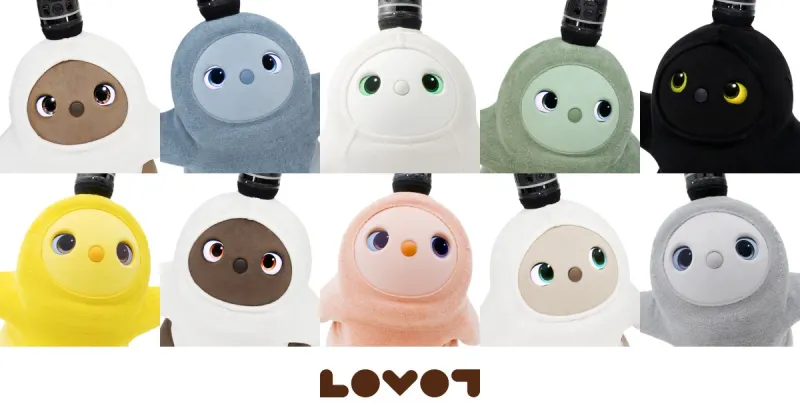
LOVOT is the clearest premium version of that idea in the ui44 database. The current LOVOT 3.0 is listed at ¥577,500, requires a monthly care plan from ¥9,900, weighs about 4.6 kg, and uses cameras, thermal sensing, touch sensors, microphones, 13 degrees of freedom and expressive OLED eyes. It is not cheap, and its active battery life is only about 30-45 minutes before it returns to its nest. But the product is built around warmth, recognition, touch, and personality development, not household labor.
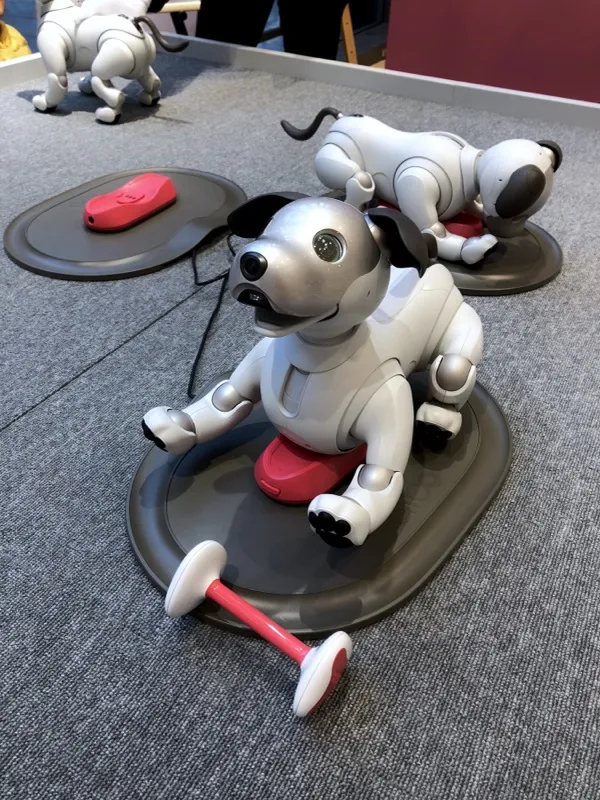
Sony aibo makes the same point in a robot-pet form. It costs $2,899.99 in the U.S. with a required subscription plan, has 22 axes of movement, face recognition for up to 100 faces, touch sensors, microphones, SLAM and time-of-flight sensing, roughly 2 hours of battery life, and a long history as a premium robot dog. aibo is more capable than Mirumi, but its value is still emotional and social before it is practical.
PARO, the therapeutic seal robot, is even more direct. It is not a general assistant. It exists to offer calming tactile interaction in care settings. That is a valid robot category, but it should be evaluated by comfort, safety, durability and care outcomes rather than by whether it can run a smart home.
The lesson is uncomfortable for a database full of specs: sometimes a robot's least quantifiable feature is the main product. Sensors and motors matter, but so does whether the robot is actually pleasant enough to keep nearby.
Mirumi versus a robot pet: cheaper, lighter, less capable
Mirumi's advantage is that it is small, affordable and low-commitment. At $165.99 in the U.S. store and ¥19,800 in Japan, it is closer to a premium toy or fashion accessory than a household appliance. It weighs about as much as a phone and clips to a bag or handle. If the novelty fades, you have not reorganized your living room around it.
The trade-off is obvious: Mirumi cannot roam, dock itself, play fetch, recognize a family member, take photos, or have a real conversation. It reacts. That is very different from a robot pet.
Here is the practical comparison:
Robot
- Price in ui44
- $165.99 / ¥19,800
- Weight
- 155 g
- Battery / power
- About 8 hours
- Core interaction
- Shy glances, sound and touch response
Robot
- Price in ui44
- $499
- Weight
- 1.1 kg
- Battery / power
- 1.5 hours continuous play; up to 30 hours depending on use
- Core interaction
- Mobile petbot, camera, touch, voice, games, ChatGPT conversations
Robot
- Price in ui44
- $2,899.99 plus subscription
- Weight
- 2.2 kg
- Battery / power
- About 2 hours
- Core interaction
- Robot dog behavior, face recognition, tricks, touch, photos
Robot
- Price in ui44
- ¥577,500 plus care plan
- Weight
- 4.6 kg
- Battery / power
- 30-45 minutes active
- Core interaction
- Emotional warmth, recognition, touch response, autonomous movement
| Robot | Price in ui44 | Weight | Battery / power | Core interaction |
|---|---|---|---|---|
| Mirumi | $165.99 / ¥19,800 | 155 g | About 8 hours | Shy glances, sound and touch response |
| Loona | $499 | 1.1 kg | 1.5 hours continuous play; up to 30 hours depending on use | Mobile petbot, camera, touch, voice, games, ChatGPT conversations |
| aibo | $2,899.99 plus subscription | 2.2 kg | About 2 hours | Robot dog behavior, face recognition, tricks, touch, photos |
| LOVOT | ¥577,500 plus care plan | 4.6 kg | 30-45 minutes active | Emotional warmth, recognition, touch response, autonomous movement |
This is why Mirumi is best understood as a "passive companion" rather than a robot pet. A robot pet invites you to interact. Mirumi mostly interrupts the day with a tiny social signal.
That can be either charming or thin, depending on your expectations. If you want a moving character, buy higher in the stack. If you want a small creature-like object that occasionally makes people react, Mirumi's restraint is the point.
The real competition may be plush toys, not humanoids
Mirumi's competitors are not Amazon Astro or humanoids. Astro is a $1,599.99 invitation-only mobile home robot with cameras, Alexa, home patrol, Visual ID, Ring integration and remote monitoring. It carries an entirely different privacy and utility profile.
Mirumi is also not trying to be Pepper, the 120 cm social humanoid that became famous as a retail, reception, education and elder-care platform. Pepper has cameras, lasers, sonar, microphones, a tablet and a wheeled base. Mirumi has a tiny body, simple sensing and no assistant promise.
The closer comparison is a plush object with a robotic twist. That is why its behavior design matters more than its raw specification sheet. If the motion is too repetitive, it becomes a gimmick. If the timing is good, it can feel oddly alive.
This is also where passive robots may avoid a trap that hurt earlier social robots: overpromising. The more a robot claims to be an assistant, friend, teacher, therapist or family member, the more scrutiny it deserves. A tiny charm robot can stay honest by doing very little and doing it consistently.
When a passive companion robot makes sense
A passive companion robot can make sense if you are buying it for one of these reasons:
- You want a social object, not a service robot. Mirumi is closer to a charm or desk creature than a smart-home hub.
- You like low-friction emotional design. No mapping, no obstacle setup, no room permissions, no chore configuration.
- You want something portable. At about 155 g, Mirumi can ride on a bag in a way that a robot pet cannot.
- You are comfortable with novelty as the point. The first few weeks of delight may be the product, not a decade of utility.
- You are buying a gift for someone who enjoys cute technology. That is a different buyer from someone comparing cleaning performance or navigation.
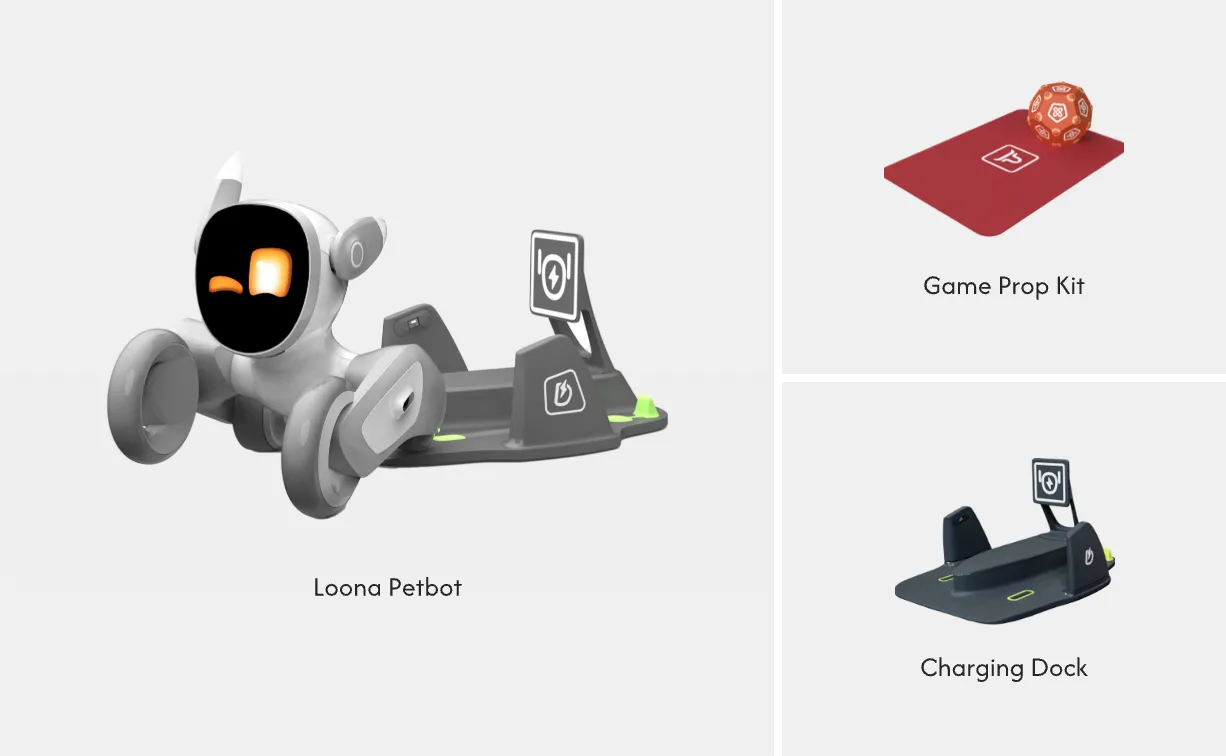
A robot like Loona makes more sense if you want active play. Loona is a $499 wheeled petbot with a 720p camera, 3D time-of-flight sensor, touch sensor, four-microphone array, app controls, remote monitoring, Blockly programming, auto-docking and ChatGPT-4o integration. That is a lot more robot for more money, but it also brings more setup and more ways to disappoint you.
Miko 3 is better if the goal is child-focused learning and conversation. ElliQ 3 is more serious if the goal is older adult companionship, wellness prompts, health tracking, video calling and proactive conversation, though its enrollment fee and monthly subscription put it in a different category from a charm robot.
EBO X is a better fit if you want a camera-equipped mobile family monitor. That also means you should think harder about privacy, Wi-Fi reliability and whether a rolling camera belongs in your home.
When Mirumi is probably the wrong robot
Do not buy Mirumi if you want practical utility. It will not clean, fetch, monitor, remind, teach, translate, patrol or make video calls. It is not an AI assistant with fur.
Do not buy it if you dislike objects that ask for emotional attention without performing a task. Passive companion robots live or die on whether their small behaviors feel welcome. If that sounds annoying, trust that instinct.
Do not buy it as a substitute for care technology. A social charm can lift a moment, but it is not a senior-care platform, therapeutic device, mobility aid, medical tool or safety monitor.
And be realistic about support. Mirumi is newly launched, Japan-first in retail terms, and its U.S. store is taking pre-orders. That does not make it unsafe, but it does mean buyers should check shipping dates, warranty coverage, color availability and return policy before treating it like a mature mass-market gadget.
So, do home robots need to be useful?
Yes, but usefulness is broader than chores. A home robot can be useful because it saves time, improves safety, supports care, teaches a child, keeps watch, or simply makes people feel more connected to the space around them.
Mirumi argues for the last version. It is a reminder that home robotics is not only a race toward humanoids and appliances. Some robots will earn attention by being small, limited and emotionally legible.
That does not mean every charm robot deserves hype. The honest verdict is more specific: Mirumi is interesting because it knows what it is. It is a passive companion robot for people who want delight over capability. If you need a robot to do work, buy something else. If you want a tiny machine that turns glances into a social moment, Mirumi is one of the clearest examples yet.
Related in the database
Use this article as a privacy verification workflow
Turn the article into a privacy verification pass grounded in the robots, manufacturers, and components it actually references.
Mirumi and Passive Companion Robots: Useful? already points you toward 10 linked robots, 10 manufacturers, and 6 countries inside the ui44 database. That matters because strong buyer guidance is easier to apply when you can move immediately from a claim or warning into concrete product pages, manufacturer directories, component explainers, and country-level context instead of treating the article as an isolated opinion piece. The fastest next step is to turn the article into a shortlist workflow: open the linked robot pages, verify which specs are actually published for those models, then compare the surrounding manufacturer and component context before you decide whether the underlying claim changes your buying plan.
For this topic, the useful discipline is to separate the editorial lesson from the catalog evidence. The article gives you the framing, but the robot pages tell you what each product actually ships with today: sensor stack, connectivity methods, listed price, release timing, category, and support-relevant compatibility notes. The manufacturer pages then show whether you are looking at a one-off launch, a broader lineup pattern, or a company that spans multiple categories. That layered workflow reduces the risk of buying on a single marketing phrase or a single support FAQ.
Use the robot pages to confirm which products actually expose cameras, microphones, Wi-Fi, or voice systems, then use the manufacturer pages to decide how much of the privacy question seems product-specific versus brand-wide. On this route cluster, Mirumi, LOVOT, and aibo (ERS-1000) form the fastest reality check. If you want a quick working shortlist, open Compare Mirumi, LOVOT, and aibo (ERS-1000) next, then keep this article open as the reasoning layer while you compare structured data side by side.
Practical Takeaway
Every robot, manufacturer, category, component, and country reference below resolves to a real ui44 page, keeping the follow-up path grounded in database records rather than generic advice.
Suggested next steps in ui44
- Open Mirumi and note the listed sensors, connectivity methods, and voice stack before you interpret any policy claim.
- Cross-check the wider brand context on Yukai Engineering so you can see whether the privacy question touches one model or a broader lineup.
- Use the linked component pages to confirm how common the relevant sensors and connectivity layers are across the database.
- Keep a short note of which policy layers you checked, which device features are actually present on the robot page, and which items still depend on region- or app-level confirmation.
- Finish with Compare Mirumi, LOVOT, and aibo (ERS-1000) so the policy reading sits next to structured product data.
Robot profiles worth opening next
Use the linked product pages as the evidence layer
The linked robot pages are where this article becomes operational. Instead of asking whether the headline is interesting, use the robot entries to inspect the actual mix of sensors, connectivity options, batteries, pricing, release timing, and stated capabilities attached to the products mentioned in the article. That is the easiest way to see whether the warning or opportunity described here affects one product family, a specific design pattern, or an entire buying lane.
Mirumi
Yukai Engineering · Companions · Available
Mirumi is tracked on ui44 as a available companions robot from Yukai Engineering. The database currently records a listed price of ¥19,800, a release date of 2026-04-23, Approximately 8 hours battery life, Approximately 2 hours charging time, and a published stack that includes Touch Sensor (head) and Microphone (sound/voice response) plus USB-C (charging).
For privacy-focused reading, this page matters because it shows the concrete device surface behind the policy discussion. Use it to verify whether Mirumi combines sensors and connectivity in a way that could change the in-home data footprint, and compare the listed capabilities such as Shy Glance and Head-Turn Reactions, Sound and Voice Response, and Touch Response with any cloud, app, or voice layers.
LOVOT is tracked on ui44 as a available companions robot from GROOVE X. The database currently records a listed price of ¥577,500, a release date of 2019, 30-45 minutes active, then returns to nest battery life, 15-30 minutes (on charging nest) charging time, and a published stack that includes Horn Top Camera (half-sphere), Horn Front Camera, and Depth Camera plus Wi-Fi and Bluetooth.
For privacy-focused reading, this page matters because it shows the concrete device surface behind the policy discussion. Use it to verify whether LOVOT combines sensors and connectivity in a way that could change the in-home data footprint, and compare the listed capabilities such as Emotional Companionship, Person Recognition, and Touch Response (full body sensors) with any cloud, app, or voice layers.
aibo (ERS-1000)
Sony · Companions · Available
aibo (ERS-1000) is tracked on ui44 as a available companions robot from Sony. The database currently records a listed price of $3,200, a release date of 2018-01, ~2 hours battery life, ~3 hours charging time, and a published stack that includes Front Camera, SLAM Camera, and Time-of-Flight Sensor plus Wi-Fi 802.11 b/g/n (2.4GHz) and LTE.
For privacy-focused reading, this page matters because it shows the concrete device surface behind the policy discussion. Use it to verify whether aibo (ERS-1000) combines sensors and connectivity in a way that could change the in-home data footprint, and compare the listed capabilities such as Emotion Recognition, Face Recognition (up to 100 faces), and Voice Command Recognition (100+ commands) with any cloud, app, or voice layers.
PARO is tracked on ui44 as a active companions robot from AIST. The database currently records a listed price of Price TBA, a release date of 2003, Not officially disclosed battery life, Not officially disclosed charging time, and a published stack that includes Tactile sensors, Light sensor, and Audition (audio) sensor plus Not publicly detailed.
For privacy-focused reading, this page matters because it shows the concrete device surface behind the policy discussion. Use it to verify whether PARO combines sensors and connectivity in a way that could change the in-home data footprint, and compare the listed capabilities such as Therapeutic companionship, Responds to touch, voice direction, and handling, and Learns preferred user interactions with any cloud, app, or voice layers.
Loona is tracked on ui44 as a available companions robot from KEYi Tech. The database currently records a listed price of $442, a release date of 2023, 2 hours continuous playtime; 1350 mAh, 11.1 V lithium-ion rechargeable battery battery life, Not officially disclosed charging time, and a published stack that includes 3D Time-of-Flight (ToF) Sensor, 720p RGB Camera, and Touch Sensor plus Wi-Fi (Dual-band 2.4G/5.8G, 802.11a/b/g/n) and USB Type-C (charging).
For privacy-focused reading, this page matters because it shows the concrete device surface behind the policy discussion. Use it to verify whether Loona combines sensors and connectivity in a way that could change the in-home data footprint, and compare the listed capabilities such as Face Recognition, Voice Commands, and Emotion Expression (LCD face) with any cloud, app, or voice layers.
Manufacturer context behind the article
Check whether this is one product story or a broader company pattern
Manufacturer pages add the privacy context that individual product pages cannot show on their own. They help you check whether cameras, microphones, cloud accounts, app controls, and policy assumptions appear across a broader lineup or stay tied to one specific product story.
Yukai Engineering
ui44 currently tracks 1 robot from Yukai Engineering across 1 category. The company is grouped under Japan, and the current catalog footprint on ui44 includes Mirumi.
That wider brand context matters because privacy questions rarely stop at one FAQ page. A manufacturer route helps you see whether the article is centered on one premium model or on a company that has several relevant products and therefore more than one place where the same policy or app assumptions might matter. The category mix here currently points toward Companions as the most useful next route if you want to see whether this article reflects a wider pattern inside the brand.
GROOVE X
ui44 currently tracks 1 robot from GROOVE X across 1 category. The company is grouped under Japan, and the current catalog footprint on ui44 includes LOVOT.
That wider brand context matters because privacy questions rarely stop at one FAQ page. A manufacturer route helps you see whether the article is centered on one premium model or on a company that has several relevant products and therefore more than one place where the same policy or app assumptions might matter. The category mix here currently points toward Companions as the most useful next route if you want to see whether this article reflects a wider pattern inside the brand.
Sony
ui44 currently tracks 2 robots from Sony across 2 categorys. The company is grouped under Japan, and the current catalog footprint on ui44 includes aibo (ERS-1000), QRIO.
That wider brand context matters because privacy questions rarely stop at one FAQ page. A manufacturer route helps you see whether the article is centered on one premium model or on a company that has several relevant products and therefore more than one place where the same policy or app assumptions might matter. The category mix here currently points toward Companions, Research as the most useful next route if you want to see whether this article reflects a wider pattern inside the brand.
AIST
ui44 currently tracks 3 robots from AIST across 2 categorys. The company is grouped under Japan, and the current catalog footprint on ui44 includes HRP-4C, HRP-5P, PARO.
That wider brand context matters because privacy questions rarely stop at one FAQ page. A manufacturer route helps you see whether the article is centered on one premium model or on a company that has several relevant products and therefore more than one place where the same policy or app assumptions might matter. The category mix here currently points toward Research, Companions as the most useful next route if you want to see whether this article reflects a wider pattern inside the brand.
Broaden the scan without leaving the database
Categories, components, and countries add the wider context
Category framing
Category pages are useful when the article touches a buying pattern that shows up across brands. A category route helps you confirm whether the linked products sit in a narrow niche or whether the same question should be tested across a larger field of alternatives.
Companions
The Companions category page currently groups 53 tracked robots from 48 manufacturers. ui44 describes this lane as: Social robots, robot pets, and elderly-care companions designed for emotional connection and everyday support at home.
That makes the category route a practical follow-up when you want to check whether the products linked in this article are typical for the lane or whether they sit at one edge of the market. Useful starting examples currently include PARO, Abi, Next-Generation Companion Robot.
Security & Patrol
The Security & Patrol category page currently groups 5 tracked robots from 5 manufacturers. ui44 describes this lane as: Autonomous surveillance and patrol robots that monitor homes, businesses, and perimeters — keeping watch without an operator on site.
That makes the category route a practical follow-up when you want to check whether the products linked in this article are typical for the lane or whether they sit at one edge of the market. Useful starting examples currently include Astro, Vision 60, K7 Autonomous Security Robot.
Country and ecosystem context
Country pages give extra context when support practices, launch sequencing, regulatory posture, or manufacturer mix matter. They are not a substitute for model-level verification, but they do help you see which ecosystems cluster together and which manufacturers sit in the same regional field when you broaden the search beyond the article headline.
Japan
The Japan route currently groups 26 tracked robots from 17 manufacturers in ui44. That gives you a useful regional lens when the article points toward support practices, launch sequencing, or brand clusters that may share similar ecosystem assumptions.
On the current route, manufacturers like AIST, SoftBank Robotics, Toyota make the page a good way to broaden the scan without losing the regional context that often shapes availability, documentation style, and adjacent alternatives.
USA
The USA route currently groups 89 tracked robots from 69 manufacturers in ui44. That gives you a useful regional lens when the article points toward support practices, launch sequencing, or brand clusters that may share similar ecosystem assumptions.
On the current route, manufacturers like Faraday Future, iRobot, Boston Dynamics make the page a good way to broaden the scan without losing the regional context that often shapes availability, documentation style, and adjacent alternatives.
France
The France route currently groups 8 tracked robots from 7 manufacturers in ui44. That gives you a useful regional lens when the article points toward support practices, launch sequencing, or brand clusters that may share similar ecosystem assumptions.
On the current route, manufacturers like Pollen Robotics, Aldebaran / Maxtronics, Aldebaran Robotics make the page a good way to broaden the scan without losing the regional context that often shapes availability, documentation style, and adjacent alternatives.
Questions to answer before you move from reading to buying
A follow-up FAQ built from the entities already linked in this article
Frequently Asked Questions
Which page should I open first after reading “Mirumi and Passive Companion Robots: Useful?”?
Start with Mirumi. That gives you a concrete product anchor for the article’s main claim. From there, branch into the manufacturer and component pages so you can tell whether the article is describing one specific model, a repeated brand pattern, or a wider technology issue that affects multiple shortlist options.
How do the manufacturer pages change the buying decision?
Yukai Engineering help you zoom out from one article and one product. On ui44 they show lineup breadth, category spread, and the neighboring robots tied to the same company. That context is useful when you are deciding whether a risk belongs to a single model, whether it shows up across a brand’s portfolio, and whether you should keep looking at alternatives before committing.
When should I switch from reading to side-by-side comparison?
Move into Compare Mirumi, LOVOT, and aibo (ERS-1000) as soon as you understand the article’s main warning or promise. The article explains what to watch for, but the compare view is where you can check whether price, status, battery life, connectivity, sensors, and category fit still make the robot a good match for your own home and budget.
Where to go next in ui44
Keep the research chain inside the database
If you want to keep going, these follow-on pages give you the cleanest expansion path from article to research session. Open the comparison route first if you are deciding between products today. Open the manufacturer, category, and component routes if you still need to understand the broader pattern behind the claim.
Written by
ui44 Team
Published April 29, 2026
Share this article
Open a plain share link on X or Bluesky. No embeds, no widgets, no cookie baggage.