Article 18 min read 4,083 words

LimX Luna: Stage Humanoid, Not Home Helper Yet

LimX Luna is the kind of humanoid that looks closer to a product than a lab rig. It is full size, fabric wrapped, built for interaction, and presented with choreography tools rather than warehouse-demo bravado. That makes it easy to imagine Luna in a hotel lobby, a shopping mall, a tourist attraction, or a brand event.

ui44 Team All articles

It does not make Luna a normal home robot yet. The useful question for buyers is not "can it move like a person?" It is "does this robot solve a private-home problem better than a simpler machine?" On the public data available today, LimX Luna is much easier to understand as a commercial performance humanoid than as a near-term household helper.
LimX Luna humanoid robot buyer readout with height weight speed and battery context
Scroll sideways to inspect the full chart.

What LimX Luna Actually Is

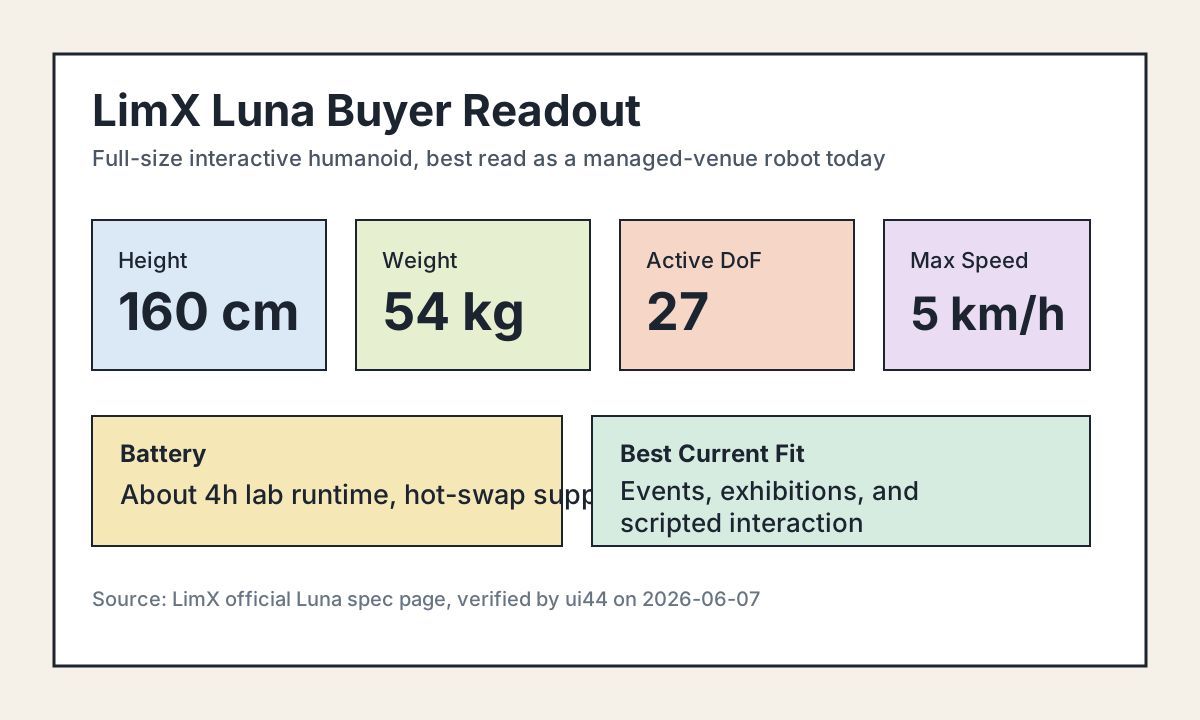
LimX describes Luna as a full-size interactive humanoid robot. The current official Luna specification lists a 160 cm body, 54 kg weight with battery, 27 active degrees of freedom, a 5 km/h max walking speed, and about 4 hours of lab-measured battery life. Its arm payload is listed at 3 kg, and the battery is a drawer-style module with hot-swap support and roughly 1 hour charging.

Those are not toy numbers. Luna is human-scale, heavy enough to require real safety planning, and mobile enough to work in a managed venue. The interaction package also points toward public-facing work: face interaction screen, microphone, speaker, LED indicator strip, app control, OTA updates, optional custom skin, and a content development kit that supports video imitation, manual teaching, choreography, smart tasks, and swarm control.

That last cluster is the tell. Luna is not being framed around laundry, dishes, pantry organization, or elder-care transfer support. It is being framed around repeatable presence: appear, move, greet, perform, guide, and hold attention.

Why The Stage Comes Before The Living Room

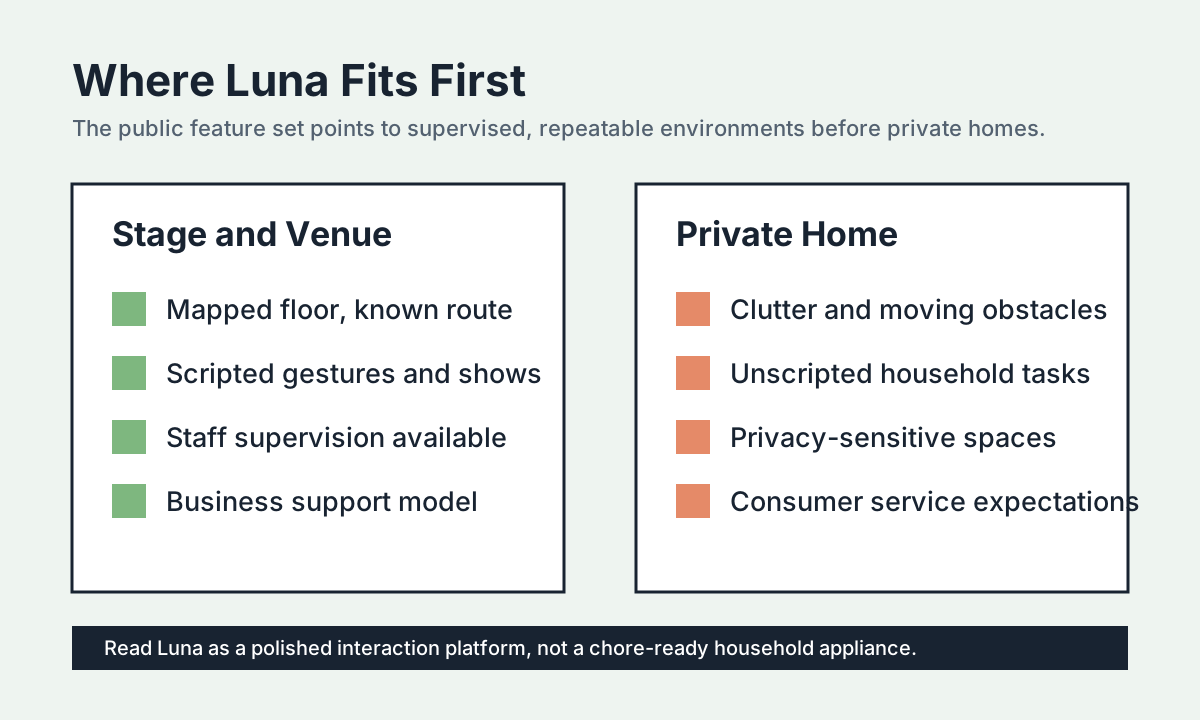
A stage, trade-show booth, retail floor, or tourist venue gives a humanoid robot advantages that a home does not. The floor can be mapped and controlled. The audience can be kept at a respectful distance. The task can be rehearsed. Staff can supervise. The robot can be turned into an event asset even if it cannot handle the messy long tail of domestic chores.

Homes are the opposite. They are narrow, cluttered, unpredictable, and full of fragile objects. A useful home robot has to know what it should not touch, how to recover when a human interrupts it, when to ask for help, and how to operate around pets, kids, furniture, stairs, thresholds, cables, laundry piles, and privacy-sensitive spaces.

That gap is why Luna's public feature set makes sense. Choreography, manual teaching, video imitation, and swarm control are valuable when the buyer is a venue operator or integrator. They are less persuasive for a family that wants the robot to unload groceries without rehearsal.
LimX Luna commercial venue path compared with private home readiness
Scroll sideways to inspect the full chart.

The Spec Sheet Says "Managed Environment"

Luna's official spec is strong in the categories that matter for expressive motion. The 27 active degrees of freedom allow a more natural upper body and leg movement than a simple service kiosk on wheels. The 5 km/h walking speed gives it enough pace for a show floor. The 3 kg arm payload gives it room for light props, gestures, and simple demonstrations. The content development kit matters because it lets teams author routines instead of waiting for general-purpose autonomy to arrive.

The sensor list is more cautious. LimX's current English spec page lists an in-house 6-axis IMU and RGB camera. That is enough to describe a robot built around motion control and guided interaction, but it is not the same as publishing a dense home autonomy stack with depth cameras, force-rich manipulation, home object recognition, and clear domestic safety modes.

That does not mean Luna lacks internal engineering. LimX has broader humanoid work around motion control, VGM video-to-motion demonstrations, and its COSA agentic operating-system framing. It means a buyer should separate platform capability from product responsibility. A demo that can perform a taught routine is not the same thing as a home robot that can safely improvise around a family.

How Luna Compares With Other Humanoids In ui44

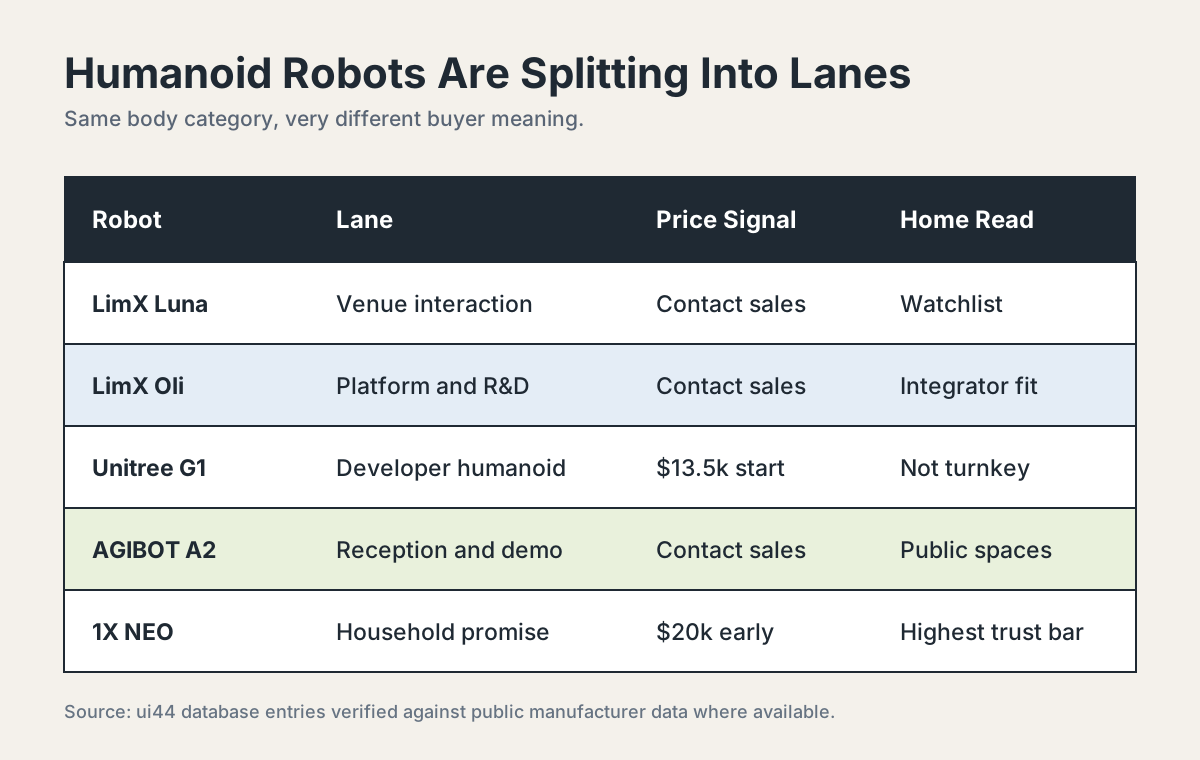
Luna sits in an interesting middle lane. It is more polished and venue-oriented than many research humanoids, but less directly home-positioned than a robot like 1X NEO. It shares LimX DNA with LimX Oli, but Luna's body language and tooling are pointed toward commercial interaction.

Robot

LimX Luna

ui44 status
Prototype
Public price signal
Contact sales; no official checkout price
What the buyer should notice
Full-size interactive humanoid for venues, choreography, and managed public scenarios

Robot

LimX Oli

ui44 status
Available
Public price signal
Contact sales
What the buyer should notice
More research and platform-oriented, with COSA and loco-manipulation framing

Robot

Unitree G1

ui44 status
Available
Public price signal
Starts around $13,500 before tax and shipping
What the buyer should notice
Lower-cost humanoid platform, more developer/research than turnkey home helper

Robot

AGIBOT A2

ui44 status
Available
Public price signal
Contact sales
What the buyer should notice
Public interaction, reception, exhibition, and guided-presentation use cases

Robot

1X NEO

ui44 status
Pre-order
Public price signal
$20,000 early-adopter price
What the buyer should notice
Explicit household positioning, but still a high-trust early product category

The pattern is clear: humanoids are fragmenting. Some are research platforms, some are commercial greeters, some are entertainment systems, and some are being sold as future home helpers. A buyer should not collapse all of those into one "humanoid robot" bucket.
LimX Luna compared with Oli Unitree G1 AGIBOT A2 and 1X NEO for home robot buyers
Scroll sideways to inspect the full chart.

Price Is Still A Buyer Unknown

LimX's official Luna page points interested buyers toward contact sales rather than a public checkout flow. That matters. For a home buyer, "contact sales" usually means the product is not packaged for ordinary consumer ownership. It may require business procurement, integration support, maintenance arrangements, training, regional availability checks, or use-case scoping.

Secondary coverage has circulated guide-price claims, but ui44 is treating Luna's public price as unverified until it appears in manufacturer sales material. That is the right standard for home-robot buying advice. A rumored number can be useful context, but it should not become the basis for a household purchase decision.

For comparison, Unitree G1 has a public starting price around $13,500 before tax and shipping, while 1X NEO has a $20,000 early-adopter price. Luna may be a different product category entirely: a business-facing interactive robot where the real cost includes deployment, support, content creation, and staff oversight.

What Would Make Luna Home-Ready?

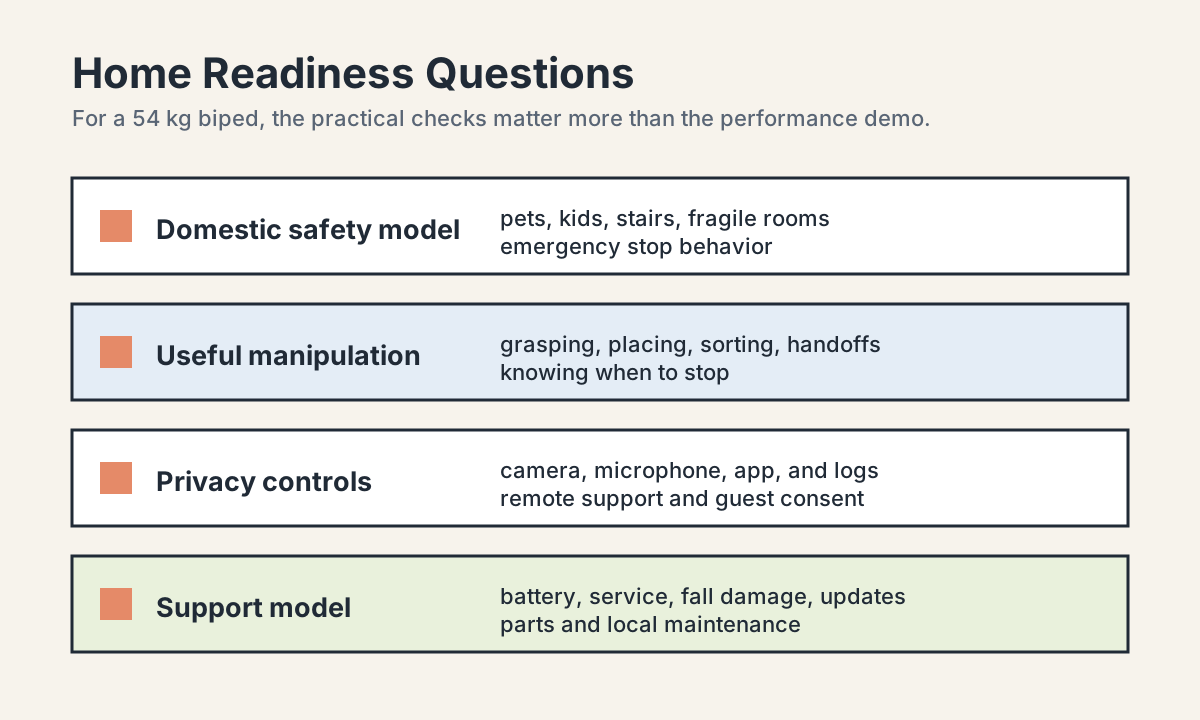
The next version of a Luna-like robot would need more than smoother motion to become credible in a private home. The missing pieces are boring, which is exactly why they matter.

First, it needs a clear domestic safety model. Can it detect a pet underfoot, avoid a child running into its path, stop gracefully near glassware, and recover from someone moving furniture after mapping? A full-size 54 kg biped is not a smart speaker. Buyers need to know how it behaves when the room stops matching the demo.

Second, it needs practical manipulation proof. A 3 kg arm payload is useful, but home work depends on gripping, placing, opening, wiping, sorting, and handing off objects under uncertainty. The hard part is not lifting a prop. It is deciding what the object is, where it belongs, and when not to continue.

Third, it needs privacy controls that normal people can understand. A robot with cameras, microphones, face interaction, app control, and cloud-adjacent development tools has to explain what it records, where data is processed, how remote support works, and how guests can opt out.

Fourth, it needs a support model. Battery replacement, fall recovery, damaged skin panels, failed joints, updates, calibration, and local service are not side details. They are the difference between a cool demo and an appliance someone can live with.
LimX Luna home readiness checklist for safety manipulation privacy and support
Scroll sideways to inspect the full chart.

Who Should Care About Luna Today?

Venue operators, brand-experience teams, hospitality groups, robot integrators, and research labs should watch Luna closely. It suggests that the humanoid market is moving beyond exposed-metal developer bodies and toward robots designed to be seen by ordinary people. That is a real shift.

Home buyers should care for a different reason. Luna is a signal about the path humanoids may take before they reach the home. The first commercially useful full-size social humanoids may not clean kitchens. They may perform in public, host scripted interactions, and generate enough deployment experience to improve hardware, motion libraries, safety tooling, and service infrastructure.

That is not disappointing. It is probably the sensible route. Public commercial spaces can pay for supervised deployments and content creation. Homes need a much higher trust bar at a much lower tolerance for awkwardness.

Bottom Line

LimX Luna looks like a serious interactive humanoid, but not a household helper yet. The official specs point to a 160 cm, 54 kg, 27-DOF robot with 5 km/h walking speed, about 4 hours of lab-measured battery life, 3 kg arm payload, and tools for choreography, video imitation, manual teaching, and swarm control.

That is exciting for staged commercial interaction. It is not enough to prove private-home usefulness.

If you are tracking home robots, Luna belongs on the watchlist because it shows how humanoids are becoming more approachable, more polished, and more socially legible. If you are shopping for a home helper, treat it as a market signal rather than a buying shortlist item. Compare it with LimX Oli, Unitree G1, AGIBOT A2, and 1X NEO, then ask the practical question: what supervised environment is this robot actually ready to work in today?

Database context

Use this article as a privacy verification workflow

Turn the article into a real verification pass

LimX Luna: Stage Humanoid, Not Home Helper Yet already points you toward 5 linked robots, 4 manufacturers, and 2 countries inside the ui44 database. That matters because strong buyer guidance is easier to apply when you can move immediately from a claim or warning into concrete product pages, manufacturer directories, component explainers, and country-level context instead of treating the article as an isolated opinion piece. The fastest next step is to turn the article into a shortlist workflow: open the linked robot pages, verify which specs are actually published for those models, then compare the surrounding manufacturer and component context before you decide whether the underlying claim changes your buying plan.

For this topic, the useful discipline is to separate the editorial lesson from the catalog evidence. The article gives you the framing, but the robot pages tell you what each product actually ships with today: sensor stack, connectivity methods, listed price, release timing, category, and support-relevant compatibility notes. The manufacturer pages then show whether you are looking at a one-off launch, a broader lineup pattern, or a company that spans multiple categories. That layered workflow reduces the risk of buying on a single marketing phrase or a single support FAQ.

Use the robot pages to confirm which products actually expose cameras, microphones, Wi-Fi, or voice systems, then use the manufacturer pages to decide how much of the privacy question seems product-specific versus brand-wide. On this route cluster, Luna, NEO, and Oli form the fastest reality check. If you want a quick working shortlist, open Compare Luna, NEO, and Oli next, then keep this article open as the reasoning layer while you compare structured data side by side.

Practical Takeaway

Every robot, manufacturer, category, component, and country reference below resolves to a real ui44 page, keeping the follow-up path grounded in database records rather than generic advice.

Suggested next steps in ui44

  1. Open Luna and note the listed sensors, connectivity methods, and voice stack before you interpret any policy claim.
  2. Cross-check the wider brand context on LimX Dynamics so you can see whether the privacy question touches one model or a broader lineup.
  3. Use the linked component pages to confirm how common the relevant sensors and connectivity layers are across the database.
  4. Keep a short note of which policy layers you checked, which device features are actually present on the robot page, and which items still depend on region- or app-level confirmation.
  5. Finish with Compare Luna, NEO, and Oli so the policy reading sits next to structured product data.

Database context

Robot profiles worth opening next

Use the linked product pages as the evidence layer

The linked robot pages are where this article becomes operational. Instead of asking whether the headline is interesting, use the robot entries to inspect the actual mix of sensors, connectivity options, batteries, pricing, release timing, and stated capabilities attached to the products mentioned in the article. That is the easiest way to see whether the warning or opportunity described here affects one product family, a specific design pattern, or an entire buying lane.

Luna

LimX Dynamics · Humanoid · Prototype

Price TBA

Luna is tracked on ui44 as a prototype humanoid robot from LimX Dynamics. The database currently records a listed price of Price TBA, a release date of 2026, About 4 hours per charge (LimX laboratory data; actual runtime varies) battery life, About 1 hour charging time, and a published stack that includes In-house 6-axis IMU and RGB Cameras plus Wi-Fi 6 and Bluetooth.

For privacy-focused reading, this page matters because it shows the concrete device surface behind the policy discussion. Use it to verify whether Luna combines sensors and connectivity in a way that could change the in-home data footprint, and compare the listed capabilities such as 27 Active Degrees of Freedom, Bipedal Walking with Human-like Gait, and Choreography and Manual Teaching via Content Development Kit with any cloud, app, or voice layers.

NEO

1X Technologies · Humanoid · Pre-order

$20,000

NEO is tracked on ui44 as a pre-order humanoid robot from 1X Technologies. The database currently records a listed price of $20,000, a release date of 2025-10-28, ~4 hours battery life, Not disclosed charging time, and a published stack that includes RGB Cameras, Depth Sensors, and Tactile Skin plus Wi-Fi and Bluetooth.

For privacy-focused reading, this page matters because it shows the concrete device surface behind the policy discussion. Use it to verify whether NEO combines sensors and connectivity in a way that could change the in-home data footprint, and compare the listed capabilities such as Household Chores, Tidying Up, and Safe Human Interaction with any cloud, app, or voice layers.

Oli

LimX Dynamics · Humanoid · Available

Price TBA

Oli is tracked on ui44 as a available humanoid robot from LimX Dynamics. The database currently records a listed price of Price TBA, a release date of 2025-07-30, About 2h (lab power-test room; actual data may vary) battery life, Not disclosed charging time, and a published stack that includes Self-developed 6-axis IMU, Head-mounted depth camera, and Chest-mounted depth camera plus WiFi 6 and Bluetooth.

For privacy-focused reading, this page matters because it shows the concrete device surface behind the policy discussion. Use it to verify whether Oli combines sensors and connectivity in a way that could change the in-home data footprint, and compare the listed capabilities such as Loco-manipulation (walk + manipulate simultaneously), Rough Terrain Navigation, and 31 Degrees of Freedom with any cloud, app, or voice layers, including Voice/Text Prompt Interaction.

G1

Unitree · Humanoid · Available

$13,500

G1 is tracked on ui44 as a available humanoid robot from Unitree. The database currently records a listed price of $13,500, a release date of 2024-05-13, ~2 hours battery life, Not disclosed charging time, and a published stack that includes Depth Camera, 3D LiDAR, and 4 Microphone Array plus Wi-Fi 6 and Bluetooth 5.2.

For privacy-focused reading, this page matters because it shows the concrete device surface behind the policy discussion. Use it to verify whether G1 combines sensors and connectivity in a way that could change the in-home data footprint, and compare the listed capabilities such as Bipedal Walking, Object Manipulation, and Dexterous Hands (optional Dex3-1) with any cloud, app, or voice layers.

A2

AGIBOT · Humanoid · Available

Price TBA

A2 is tracked on ui44 as a available humanoid robot from AGIBOT. The database currently records a listed price of Price TBA, a release date of 2026-05, 2 hours (700 Wh swappable battery) battery life, Charging supported via standby station; exact charging time not officially disclosed charging time, and a published stack that includes LiDAR, RGB-D Cameras, and Fisheye Cameras plus Remote control and Smartphone control.

For privacy-focused reading, this page matters because it shows the concrete device surface behind the policy discussion. Use it to verify whether A2 combines sensors and connectivity in a way that could change the in-home data footprint, and compare the listed capabilities such as Humanoid Human-Robot Interaction, Marketing and Customer Service, and Exhibition and Guided Presentations with any cloud, app, or voice layers.

Database context

Manufacturer context behind the article

Check whether this is one product story or a broader company pattern

Manufacturer pages add the privacy context that individual product pages cannot show on their own. They help you check whether cameras, microphones, cloud accounts, app controls, and policy assumptions appear across a broader lineup or stay tied to one specific product story.

LimX Dynamics

ui44 currently tracks 4 robots from LimX Dynamics across 2 categorys. The company is grouped under China, and the current catalog footprint on ui44 includes Oli, Luna, TRON 1.

That wider brand context matters because privacy questions rarely stop at one FAQ page. A manufacturer route helps you see whether the article is centered on one premium model or on a company that has several relevant products and therefore more than one place where the same policy or app assumptions might matter. The category mix here currently points toward Humanoid, Research as the most useful next route if you want to see whether this article reflects a wider pattern inside the brand.

1X Technologies

ui44 currently tracks 2 robots from 1X Technologies across 1 category. The company is grouped under Norway, and the current catalog footprint on ui44 includes NEO, EVE.

That wider brand context matters because privacy questions rarely stop at one FAQ page. A manufacturer route helps you see whether the article is centered on one premium model or on a company that has several relevant products and therefore more than one place where the same policy or app assumptions might matter. The category mix here currently points toward Humanoid as the most useful next route if you want to see whether this article reflects a wider pattern inside the brand.

Unitree

ui44 currently tracks 2 robots from Unitree across 1 category. The company is grouped under China, and the current catalog footprint on ui44 includes H1, G1.

That wider brand context matters because privacy questions rarely stop at one FAQ page. A manufacturer route helps you see whether the article is centered on one premium model or on a company that has several relevant products and therefore more than one place where the same policy or app assumptions might matter. The category mix here currently points toward Humanoid as the most useful next route if you want to see whether this article reflects a wider pattern inside the brand.

AGIBOT

ui44 currently tracks 9 robots from AGIBOT across 3 categorys. The company is grouped under China, and the current catalog footprint on ui44 includes A2 Ultra, X2, Expedition A3.

That wider brand context matters because privacy questions rarely stop at one FAQ page. A manufacturer route helps you see whether the article is centered on one premium model or on a company that has several relevant products and therefore more than one place where the same policy or app assumptions might matter. The category mix here currently points toward Humanoid, Quadruped, Commercial as the most useful next route if you want to see whether this article reflects a wider pattern inside the brand.

Database context

Broaden the scan without leaving the database

Categories, components, and countries add the wider context

Category framing

Category pages are useful when the article touches a buying pattern that shows up across brands. A category route helps you confirm whether the linked products sit in a narrow niche or whether the same question should be tested across a larger field of alternatives.

Humanoid

The Humanoid category page currently groups 110 tracked robots from 80 manufacturers. ui44 describes this lane as: Full-size bipedal humanoid robots designed to work alongside humans. From factory floors to household tasks, these machines represent the cutting edge of robotics.

That makes the category route a practical follow-up when you want to check whether the products linked in this article are typical for the lane or whether they sit at one edge of the market. Useful starting examples currently include NEO, EVE, Mornine M1.

Country and ecosystem context

Country pages give extra context when support practices, launch sequencing, regulatory posture, or manufacturer mix matter. They are not a substitute for model-level verification, but they do help you see which ecosystems cluster together and which manufacturers sit in the same regional field when you broaden the search beyond the article headline.

China

The China route currently groups 171 tracked robots from 79 manufacturers in ui44. That gives you a useful regional lens when the article points toward support practices, launch sequencing, or brand clusters that may share similar ecosystem assumptions.

On the current route, manufacturers like Dreame, AGIBOT, Unitree Robotics make the page a good way to broaden the scan without losing the regional context that often shapes availability, documentation style, and adjacent alternatives.

Norway

The Norway route currently groups 2 tracked robots from 1 manufacturers in ui44. That gives you a useful regional lens when the article points toward support practices, launch sequencing, or brand clusters that may share similar ecosystem assumptions.

On the current route, manufacturers like 1X Technologies make the page a good way to broaden the scan without losing the regional context that often shapes availability, documentation style, and adjacent alternatives.

Database context

Questions to answer before you move from reading to buying

A follow-up FAQ built from the entities already linked in this article

Frequently Asked Questions

Which page should I open first after reading “LimX Luna: Stage Humanoid, Not Home Helper Yet”?

Start with Luna. That gives you a concrete product anchor for the article’s main claim. From there, branch into the manufacturer and component pages so you can tell whether the article is describing one specific model, a repeated brand pattern, or a wider technology issue that affects multiple shortlist options.

How do the manufacturer pages change the buying decision?

LimX Dynamics help you zoom out from one article and one product. On ui44 they show lineup breadth, category spread, and the neighboring robots tied to the same company. That context is useful when you are deciding whether a risk belongs to a single model, whether it shows up across a brand’s portfolio, and whether you should keep looking at alternatives before committing.

When should I switch from reading to side-by-side comparison?

Move into Compare Luna, NEO, and Oli as soon as you understand the article’s main warning or promise. The article explains what to watch for, but the compare view is where you can check whether price, status, battery life, connectivity, sensors, and category fit still make the robot a good match for your own home and budget.

Database context

Where to go next in ui44

Keep the research chain inside the database

If you want to keep going, these follow-on pages give you the cleanest expansion path from article to research session. Open the comparison route first if you are deciding between products today. Open the manufacturer, category, and component routes if you still need to understand the broader pattern behind the claim.

UT

Written by

ui44 Team

Published June 7, 2026

Share this article

Open a plain share link on X or Bluesky. No embeds, no widgets, no cookie baggage.

Explore the database

Go beyond the headlines

Compare specs, features, and prices across 100+ robots from leading manufacturers worldwide.