Still harder than any marketing clip suggests — and that gap between box arriving and first useful thing happening is the most honest way to judge which humanoids are close to real homes.
Setup friction is separate from autonomy, separate from price, and separate from demo polish. A robot can look incredible in a staged video and still require hours of calibration, developer tools, or expert supervision before it does anything useful in your living room.
This guide focuses on exactly that gap. Not "is it autonomous?" — we cover that in our teleop vs autonomy guide. Not "who is shipping?" — we cover that in our shipping timeline comparison. Here the question is simpler: after you open the box, how much work stands between you and a running robot?
My short answer:
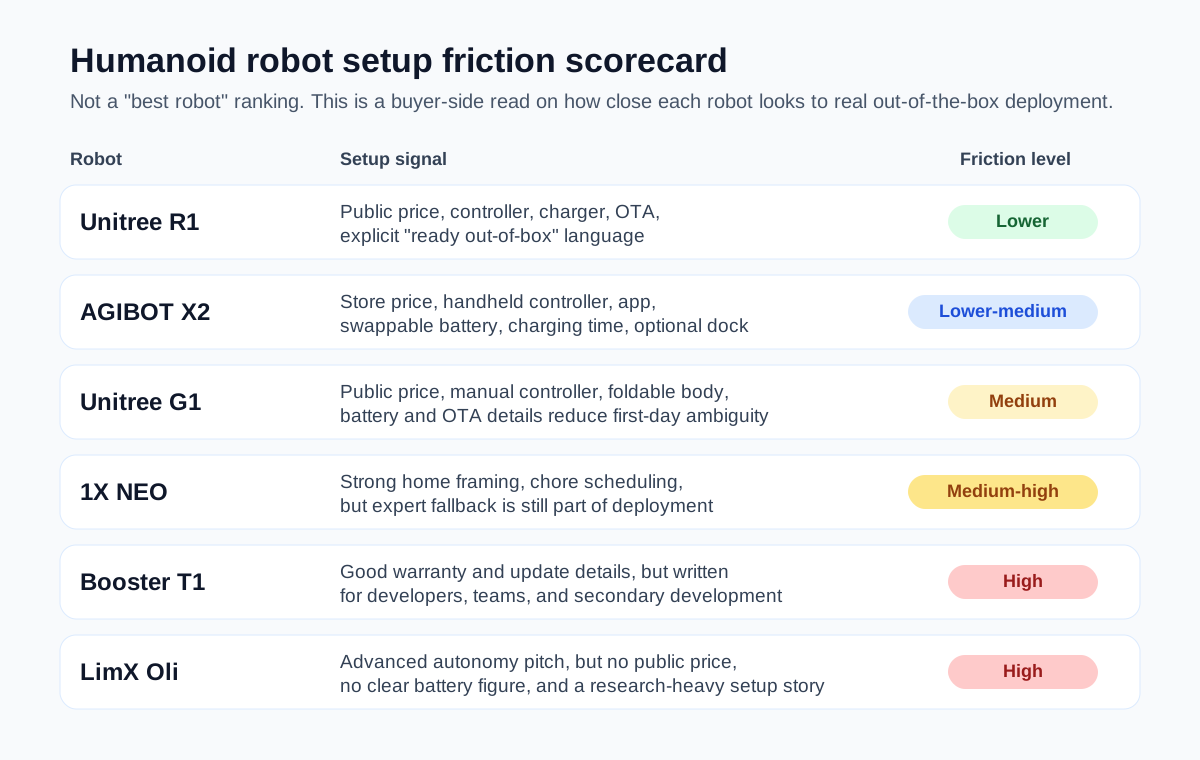
- Unitree R1 and AGIBOT X2 currently give the clearest unboxing-to-first-use signals
- Unitree G1 is buyable, but still feels more like a developer platform than a home appliance
- 1X NEO has the strongest home pitch, but its official messaging still assumes human fallback for unfamiliar tasks
- Booster T1 and LimX Oli look promising, but their public setup stories still read like research deployments
The six steps between unboxing and first task
For a robot vacuum, setup means charging, Wi-Fi, app pairing, and maybe a mapping run — maybe 20 minutes total.
For a humanoid, setup breaks into six separate friction points:
- Physical unboxing: how large, heavy, and fragile is the machine? Can one person lift it?
- Power and charging: can you swap batteries, charge directly, or use a dock? How long until it is ready?
- First control path: does it ship with a manual controller, app, voice flow, or only developer SDK tools?
- Safety and supervision: does the maker explicitly warn about distance, rescue procedures, or expert help on first use?
- First useful task: is the robot pitched around real household chores or open-ended experimentation?
- Support and updates: are OTA firmware updates, warranties, and replacement workflows clearly described?
The closer a humanoid gets to answering all six clearly on its product page, the closer it is to feeling like an appliance instead of a lab project.
Setup friction comparison: which humanoids feel closest to unboxing and running?
This is not a ranking of the "best" humanoid. It is a comparison of which robots look closest to low-friction unboxing instead of lab-style integration.
Robot
- Price path
- From $4,900
- What is in the box
- Controller, charger, battery, OTA, Wi-Fi/Bluetooth
- Time to first power-on
- Official page says "ready out-of-box"
- First-task clarity
- Movement demos, voice/image interaction, not household chores
Robot
- Price path
- $24,240 official store
- What is in the box
- Handheld controller, mobile app, direct charging, swappable battery
- Time to first power-on
- ~1.5 hours charging time stated on product page
- First-task clarity
- Patrol, carrying, manipulation with optional accessories
Robot
- Price path
- From $13,500
- What is in the box
- Controller, quick-release battery, charger, OTA
- Time to first power-on
- ~2 hours battery life; foldable body for transport
- First-task clarity
- Developer/research platform framing, optional dexterous hands
Robot
- Price path
- $20,000 early adopter; official page highlights $200 deposit
- What is in the box
- Home-chore framing, scheduling, 1X Expert guided help
- Time to first power-on
- Early-access model; setup includes expert onboarding
- First-task clarity
- Explicit household chore lists and scheduling
Robot
- Price path
- Inquiry only
- What is in the box
- OTA, Bluetooth app, USB/Ethernet, 1-year warranty
- Time to first power-on
- Developer-focused; no consumer onboarding described
- First-task clarity
- RoboCup, research, rapid prototyping
Robot
- Price path
- Contact sales
- What is in the box
- Voice/text prompting, OTA motion library, Python SDK
- Time to first power-on
- No public deployment workflow or battery details
- First-task clarity
- Loco-manipulation, research platform
| Robot | Price path | What is in the box | Time to first power-on | First-task clarity |
|---|---|---|---|---|
| Unitree R1 | From $4,900 | Controller, charger, battery, OTA, Wi-Fi/Bluetooth | Official page says "ready out-of-box" | Movement demos, voice/image interaction, not household chores |
| AGIBOT X2 | $24,240 official store | Handheld controller, mobile app, direct charging, swappable battery | ~1.5 hours charging time stated on product page | Patrol, carrying, manipulation with optional accessories |
| Unitree G1 | From $13,500 | Controller, quick-release battery, charger, OTA | ~2 hours battery life; foldable body for transport | Developer/research platform framing, optional dexterous hands |
| 1X NEO | $20,000 early adopter; official page highlights $200 deposit | Home-chore framing, scheduling, 1X Expert guided help | Early-access model; setup includes expert onboarding | Explicit household chore lists and scheduling |
| Booster T1 | Inquiry only | OTA, Bluetooth app, USB/Ethernet, 1-year warranty | Developer-focused; no consumer onboarding described | RoboCup, research, rapid prototyping |
| LimX Oli | Contact sales | Voice/text prompting, OTA motion library, Python SDK | No public deployment workflow or battery details | Loco-manipulation, research platform |
Want to inspect the spec sheets side by side? ui44's compare tool shows how these robots differ on battery, size, pricing, and development support. For the deeper autonomy question — whether "running" actually means autonomous or remote-controlled — read our teleop vs autonomy guide.
AGIBOT X2: the most complete unboxing-to-deployment story
The AGIBOT X2 is one of the clearest signs that setup friction is becoming a real buying topic.
In ui44's database, X2 is 131 cm tall, weighs 35 to 39 kg, starts at $24,240, walks at up to 1.8 m/s, and runs about 2 hours at a modest walking pace. More importantly for setup, AGIBOT's official page spells out things buyers actually need to know before unboxing day: charging time of about 1.5 hours, direct charging, swappable battery support, a handheld controller, mobile app support, and an optional auto-charging dock on the Ultra model.
That is exactly the kind of boring detail that matters. When a robot maker tells you how you will charge it, recover it, and control it on day one, the setup story is getting real.

X2 still is not consumer-simple. The most interesting manipulation accessories are optional, taxes and import duties are extra, and the fuller development story lives on the Ultra version. But compared with many humanoid launches, X2 looks less like a concept and more like a product someone could actually unbox and power on without an integration team.
Unitree R1: the clearest low-friction unboxing signal, with real caveats
Unitree R1 may be the most interesting setup case in the whole category.
Its official page is unusually concrete for a humanoid: from $4,900, manual controller included, charger included, OTA upgrades, quick-release battery, and a line that says the robot is "ready out-of-box to empower." ui44 tracks the standard R1 at about 123 cm, 29 kg, roughly 1 hour of battery life, and 26 degrees of freedom.
That is a very strong unboxing signal for the price. It means Unitree is at least trying to reduce the gap between ordering a humanoid and actually powering one on.
But the caveat matters just as much. R1 is positioned around agile movement, voice and image interaction, and optional development features — not around reliable household manipulation. Unitree's own page also warns that the humanoid industry is still early and that individuals should understand the robot's limitations before buying.
So yes, R1 looks easier to unbox and run than most humanoids. No, that does not make it the first truly useful home helper.
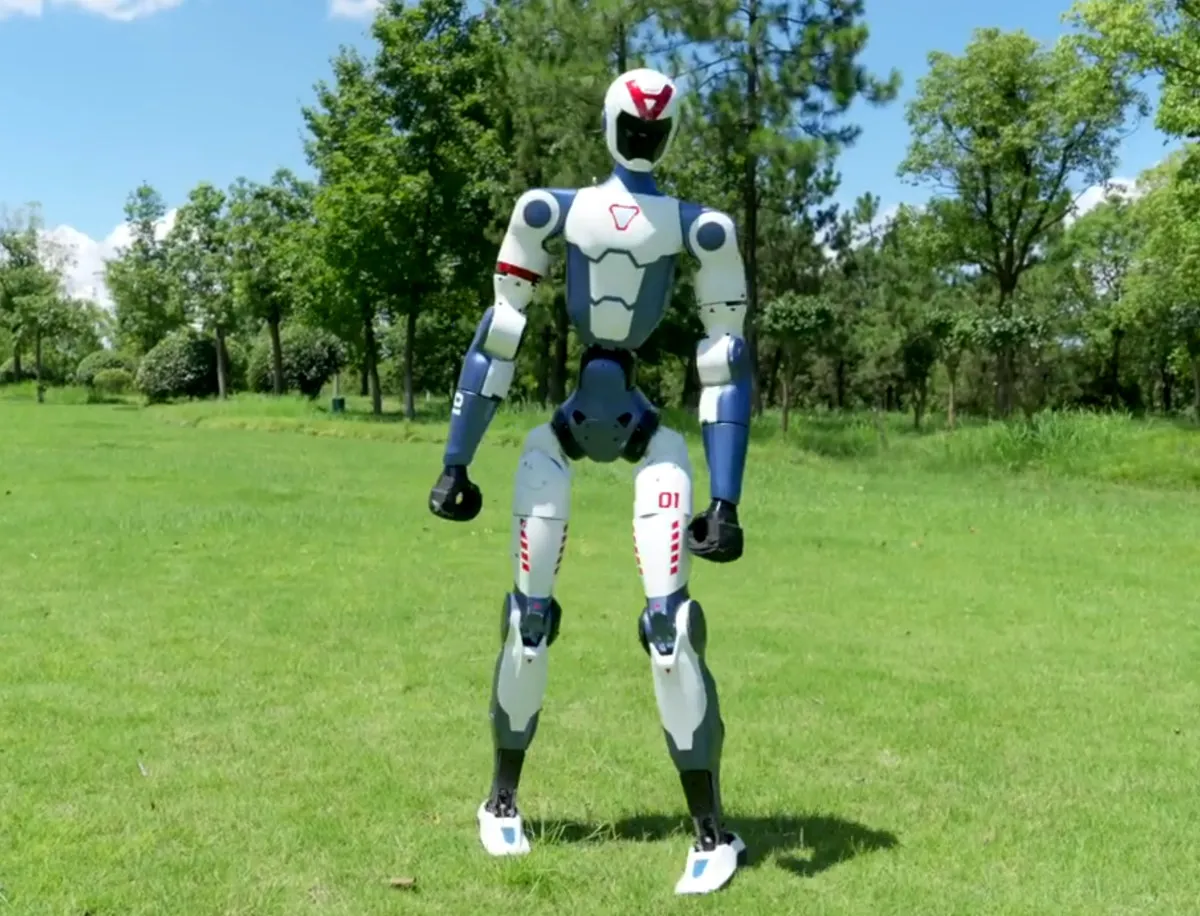
What about humanoids that are buyable, but not yet appliance-like?
Unitree G1: clearer purchase path, still developer-first
The Unitree G1 is one of the most important robots in ui44's database because it gives buyers a real public starting price of $13,500. At 132 cm and 35 kg, it is smaller than many full-size humanoids, and its official page includes the kind of day-one details that reduce friction: manual controller, smart battery, charger, OTA, about 2 hours of battery life, and a foldable body that compresses to about 69 cm.
Those are good unboxing signals.
At the same time, G1 still reads as a platform for researchers, educators, and developers. Optional dexterous hands, EDU expansion up to 43 degrees of freedom, and secondary development support are exciting, but they also tell you the robot is being sold partly as a robotics toolchain — not just as a household product.
That is why G1 sits in the middle. It is much easier to evaluate than a vague contact-sales humanoid, but it is not yet an everyday appliance.
1X NEO: best home narrative, but the setup story still includes human backup
If you care about the home specifically, 1X NEO is still one of the most important robots to watch.
ui44 tracks NEO at $20,000 for early adopters, 167 cm, 30 kg, and around 4 hours of battery life. The official 1X page also gives a strong household framing: NEO is quiet, soft, designed for safe interaction, and can take chore lists or schedules. That is exactly the language you want if the goal is to move humanoids out of the lab and into homes.
The catch is that 1X also says "NEO works autonomously by default. For any chore it doesn't know, you can schedule a 1X Expert to guide it." That is refreshingly honest, but it also reveals the real setup model. NEO is not being sold as a box-you-open-and-forget robot. It is being sold as an early home robot that still needs human fallback when the world gets messy.
That makes NEO more believable, not less. But it means the unboxing experience includes a managed onboarding layer, not just a controller and an app.

What about robots that still look like deployment projects?
Booster T1: impressively concrete for developers, not for households
Booster T1 is a good example of a robot that reduces some friction while still clearly targeting expert users.
In ui44's database, T1 stands 118 cm tall, weighs 30 kg, and offers 2 hours walking / 4 hours standing battery life. Booster's official page adds useful unboxing details, including Wi-Fi 6, Bluetooth 5.2, USB and Ethernet expansion, firmware upgrade support, secondary development, and a 1-year warranty.
That is a more mature support story than many humanoids offer. But the whole page is still framed around developers, RoboCup teams, research institutes, and rapid prototyping. Even when setup looks concrete, the target user still matters. T1 looks installable for a robotics team. That is not the same as easy for a home buyer.
LimX Oli: advanced capabilities, thin public setup story
LimX Oli may be one of the most technically interesting robots here. ui44 tracks it at 165 cm, 55 kg, 31 degrees of freedom, voice and text prompting, rough-terrain navigation, self-recovery, ROS 2 and Python SDK compatibility, and OTA-updatable motion libraries.
But from an unboxing perspective, the missing details are the story.
There is no public price, no clear battery figure on the official materials we could verify, and no appliance-like explanation of first-day deployment. Instead, the pitch centers on loco-manipulation, agentic operating systems, and research-platform value.
That may be fine if you are a lab or advanced pilot customer. It is not yet the language of a home robot you casually install next weekend.
Why unboxing friction matters more than another demo video
Humanoid buyers are not just buying locomotion. They are buying the gap between demo success and repeatable deployment.
A polished demo can hide all kinds of setup friction:
- the robot may need expert supervision on first power-on
- the useful task may require a carefully staged environment
- charging and recovery may be awkward or undocumented
- accessories may be required for the real manipulation story
- software updates may still be doing a lot of heavy lifting
- the company may still be learning what the first real customer workflow is
That is why unboxing-to-first-task is such a strong filter. When you move the question from "Can it walk?" to "Can a non-expert get value within an hour of opening the box?" the leaderboard changes.
If I had to summarize the market in one line: the first humanoids that feel mainstream will probably win by reducing unboxing friction before they fully solve general household intelligence.
That could mean smaller robots, simpler first tasks, clearer controller flows, stronger batteries, better recovery paths, or even expert-assisted onboarding. The key is not magic autonomy. The key is lowering the pain between delivery and first useful task.
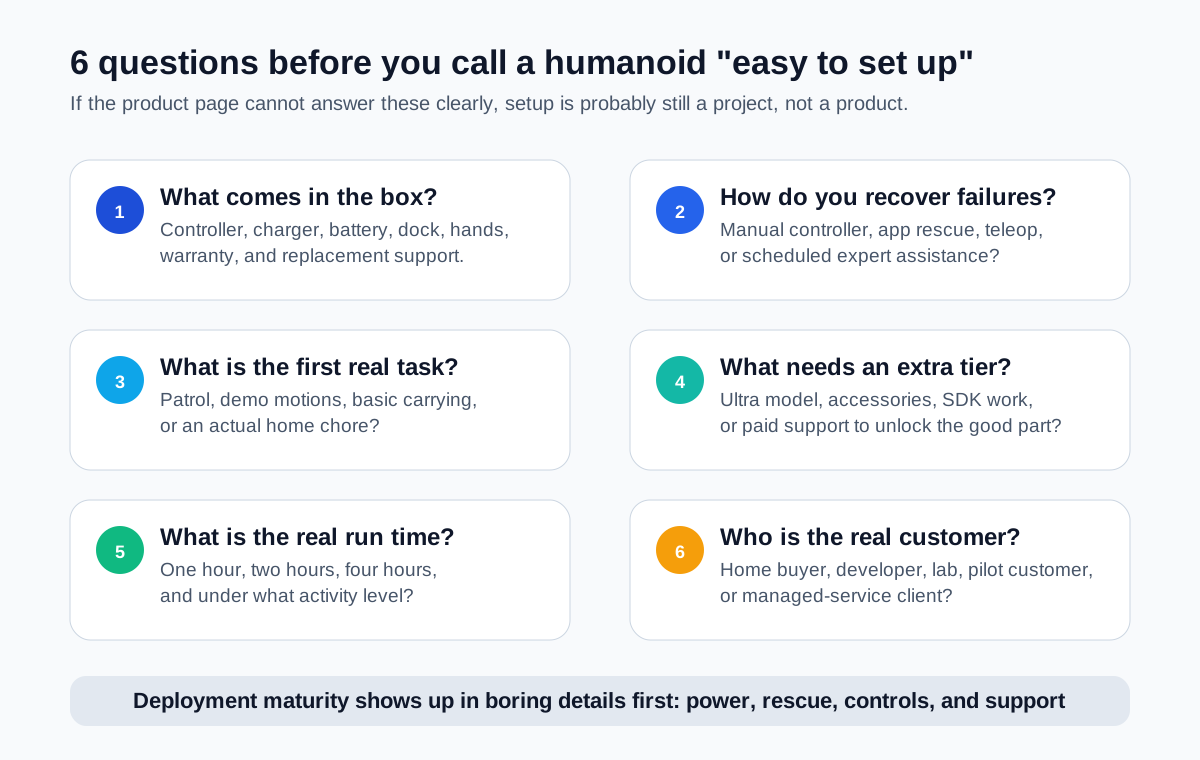
Six questions to ask before calling any humanoid "easy to set up"
Before putting down money, ask these practical questions about what happens after the box arrives:
- What exactly is included in the box? Charger, controller, extra battery, dock, hands, warranty, support documentation?
- How do I recover the robot when it fails? Manual controller, app, teleop support, or a scheduled expert session?
- What is the first realistic task? Patrol, demo motions, basic carrying, or an actual household chore?
- How much of the useful story depends on optional extras? Accessories, Ultra tiers, SDK integration, or paid expert help?
- What is the real operating window? One hour, two hours, four hours — and under what conditions?
- Does the company sound like a hardware seller, a platform vendor, or a managed service? Those are very different unboxing experiences.
If a company cannot answer those questions clearly, the robot probably is not close to low-friction deployment yet.
The bottom line
The hard part of humanoid robots is no longer just making them move. It is making them easy to set up.
Right now, Unitree R1 and AGIBOT X2 give the clearest unboxing signals because their official pages talk about real first-day details: controllers, batteries, charging time, OTA updates, and pricing. Unitree G1 is also meaningfully closer to a real buying decision than most humanoids, even if it still feels developer-first. 1X NEO remains the most compelling home narrative, but it is honest enough to admit that human backup still matters for new tasks. Booster T1 and LimX Oli look promising, but more as advanced platforms than easy home installs.
The humanoids that matter first may not be the ones with the wildest clips. They may be the ones that make unboxing, charging, recovery, and first use feel boring.
And honestly, that would be progress.
Related in the database
Use this article as a setup-friction workflow
Turn the article into a first-day setup pass grounded in the robots, manufacturers, and countries it actually references.
How Hard Is Humanoid Robot Setup in 2026? already points you toward 6 linked robots, 5 manufacturers, and 2 countries inside the ui44 database. Treat those links as a first-day setup trail: open the robot pages, check what is actually published about charging, battery life, control method, app or OTA support, and recovery, then use the surrounding manufacturer and country context to judge whether the article describes a low-friction product path or a still-specialist deployment.
For setup topics, the useful discipline is to separate a polished demo from the work required after the box arrives. The article gives you the narrative, but the robot pages show the operational clues: dimensions, weight, battery runtime, charging time, controller support, listed availability, and the capabilities that might need supervision. Manufacturer pages then reveal whether the same setup assumptions repeat across a wider lineup.
Use the robot pages to verify what happens between delivery and the first useful task: size, weight, battery, charger or dock path, controller, app, OTA support, and recovery cues. On this route cluster, R1, G1, and X2 form the fastest setup-friction reality check. If you want a quick working shortlist, open Compare R1, G1, and X2 next, then keep this article open while you compare first-day setup evidence side by side.
Practical Takeaway
The links below stay tied to the robots, manufacturers, and countries actually referenced by this setup article, so the checklist remains grounded in published ui44 records rather than generic humanoid advice.
Suggested next steps in ui44
- Open R1 and check the concrete first-day fields: box contents, charger or dock path, battery life, controller, app, OTA support, and recovery options.
- Use Unitree Robotics to see whether the company’s broader lineup looks appliance-like, developer-first, or still closer to a pilot deployment.
- Run Compare R1, G1, and X2 with the article open and compare battery, size, weight, price path, status, and support cues side by side.
- Write down the first realistic task each robot can plausibly attempt on day one, then separate low-friction setup signals from impressive but still lab-style demos.
Robot profiles worth opening next
Use the linked product pages as the evidence layer
The linked robot pages are where this setup article becomes operational. Use the robot entries to inspect the actual mix of size, weight, battery runtime, charging path, control method, pricing, availability, and stated capabilities attached to the products mentioned in the article. That is the easiest way to see whether the first useful task looks appliance-like, developer-led, or still dependent on supervised experimentation.
R1
Unitree Robotics · Humanoid · Pre-order
R1 is tracked on ui44 as a pre-order humanoid robot from Unitree Robotics. The database currently records a listed price of $4,900, a release date of 2025, ~1 hour (mixed activity) battery life, Not officially disclosed charging time, and a published stack that includes Monocular camera (R1 Air); binocular camera (R1/R1 EDU), 4-Mic Array, and Dual 6-Axis IMU plus Wi-Fi 6 and Bluetooth 5.2.
For setup-friction reading, this page matters because it shows the physical and support burden behind the demo. Use it to verify whether R1 has a credible day-one path across charging, control, recovery, battery limits, and listed capabilities such as Bipedal Walking & Running, Cartwheels & Handstands, and Push Recovery, with voice support noted as UnifoLM (voice + image commands).
G1
Unitree Robotics · Humanoid · Available
G1 is tracked on ui44 as a available humanoid robot from Unitree Robotics. The database currently records a listed price of $13,500, a release date of 2024-05-13, ~2 hours battery life, Not disclosed charging time, and a published stack that includes Depth Camera, 3D LiDAR, and 4 Microphone Array plus Wi-Fi 6 and Bluetooth 5.2.
For setup-friction reading, this page matters because it shows the physical and support burden behind the demo. Use it to verify whether G1 has a credible day-one path across charging, control, recovery, battery limits, and listed capabilities such as Bipedal Walking, Object Manipulation, and Dexterous Hands (optional Dex3-1, EDU only).
X2 is tracked on ui44 as a available humanoid robot from AGIBOT. The database currently records a listed price of $24,240, a release date of 2025, ~2 hours at 0.5 m/s walking battery life, ~1.5 hours charging time, and a published stack that includes 3D LiDAR (Ultra), RGB-D Camera (Ultra), and RGB Cameras plus Wi-Fi and Bluetooth.
For setup-friction reading, this page matters because it shows the physical and support burden behind the demo. Use it to verify whether X2 has a credible day-one path across charging, control, recovery, battery limits, and listed capabilities such as Bipedal Walking, 25-30 DOF Articulation, and Object Manipulation (with OmniHand accessory).
NEO
1X Technologies · Humanoid · Pre-order
NEO is tracked on ui44 as a pre-order humanoid robot from 1X Technologies. The database currently records a listed price of $20,000, a release date of 2025-10-28, ~4 hours battery life, Not disclosed charging time, and a published stack that includes RGB Cameras, Depth Sensors, and Tactile Skin plus Wi-Fi and Bluetooth.
For setup-friction reading, this page matters because it shows the physical and support burden behind the demo. Use it to verify whether NEO has a credible day-one path across charging, control, recovery, battery limits, and listed capabilities such as Household Chores, Tidying Up, and Safe Human Interaction.
Oli
LimX Dynamics · Humanoid · Available
Oli is tracked on ui44 as a available humanoid robot from LimX Dynamics. The database currently records a listed price of Price TBA, a release date of 2025-07-30, About 2h (lab power-test room; actual data may vary) battery life, Not disclosed charging time, and a published stack that includes Self-developed 6-axis IMU, Head-mounted depth camera, and Chest-mounted depth camera plus WiFi 6 and Bluetooth.
For setup-friction reading, this page matters because it shows the physical and support burden behind the demo. Use it to verify whether Oli has a credible day-one path across charging, control, recovery, battery limits, and listed capabilities such as Loco-manipulation (walk + manipulate simultaneously), Rough Terrain Navigation, and 31 Degrees of Freedom, with voice support noted as Voice/Text Prompt Interaction.
Manufacturer context behind the article
Check whether this is one product story or a broader company pattern
Manufacturer pages add the setup context that individual product pages cannot show on their own. They help you check whether a brand repeats the same controller, battery, update, support, and availability patterns across multiple robots, or whether the article is really describing one early product path. That matters for humanoids because first-day friction usually comes from the surrounding ecosystem as much as from the robot itself.
Unitree Robotics
ui44 currently tracks 11 robots from Unitree Robotics across 3 categorys. The company is grouped under China, and the current catalog footprint on ui44 includes H1, G1, B2.
That wider brand context matters because setup friction is rarely just a box problem. A manufacturer route helps you see whether the company has repeated controller, battery, support, and update patterns across its lineup, or whether the article is really about one early product story. The category mix here currently points toward Humanoid, Quadruped, Research as the most useful next route if you want to see whether this article reflects a wider pattern inside the brand.
AGIBOT
ui44 currently tracks 10 robots from AGIBOT across 3 categorys. The company is grouped under China, and the current catalog footprint on ui44 includes A2 Ultra, X2, Expedition A3.
That wider brand context matters because setup friction is rarely just a box problem. A manufacturer route helps you see whether the company has repeated controller, battery, support, and update patterns across its lineup, or whether the article is really about one early product story. The category mix here currently points toward Humanoid, Quadruped, Commercial as the most useful next route if you want to see whether this article reflects a wider pattern inside the brand.
1X Technologies
ui44 currently tracks 2 robots from 1X Technologies across 1 category. The company is grouped under Norway, and the current catalog footprint on ui44 includes NEO, EVE.
That wider brand context matters because setup friction is rarely just a box problem. A manufacturer route helps you see whether the company has repeated controller, battery, support, and update patterns across its lineup, or whether the article is really about one early product story. The category mix here currently points toward Humanoid as the most useful next route if you want to see whether this article reflects a wider pattern inside the brand.
LimX Dynamics
ui44 currently tracks 4 robots from LimX Dynamics across 2 categorys. The company is grouped under China, and the current catalog footprint on ui44 includes Oli, Luna, TRON 1.
That wider brand context matters because setup friction is rarely just a box problem. A manufacturer route helps you see whether the company has repeated controller, battery, support, and update patterns across its lineup, or whether the article is really about one early product story. The category mix here currently points toward Humanoid, Research as the most useful next route if you want to see whether this article reflects a wider pattern inside the brand.
Broaden the scan without leaving the database
Categories, components, and countries add the wider context
Category framing
Category pages are useful when the article touches a buying pattern that shows up across brands. A category route helps you confirm whether the linked products sit in a narrow niche or whether the same question should be tested across a larger field of alternatives.
Humanoid
The Humanoid category page currently groups 129 tracked robots from 91 manufacturers. ui44 describes this lane as: Full-size bipedal humanoid robots built to work alongside people — from factory floors to household tasks. Compare the cutting edge of humanoid robotics.
That makes the category route a practical follow-up when you want to check whether the products linked in this article are typical for the lane or whether they sit at one edge of the market. Useful starting examples currently include NEO, EVE, Mornine M1.
Country and ecosystem context
Country pages give extra context when support practices, launch sequencing, regulatory posture, or manufacturer mix matter. They are not a substitute for model-level verification, but they do help you see which ecosystems cluster together and which manufacturers sit in the same regional field when you broaden the search beyond the article headline.
China
The China route currently groups 189 tracked robots from 86 manufacturers in ui44. That gives you a useful regional lens when the article points toward support practices, launch sequencing, or brand clusters that may share similar ecosystem assumptions.
On the current route, manufacturers like Unitree Robotics, AGIBOT, Dreame make the page a good way to broaden the scan without losing the regional context that often shapes availability, documentation style, and adjacent alternatives.
Norway
The Norway route currently groups 2 tracked robots from 1 manufacturers in ui44. That gives you a useful regional lens when the article points toward support practices, launch sequencing, or brand clusters that may share similar ecosystem assumptions.
On the current route, manufacturers like 1X Technologies make the page a good way to broaden the scan without losing the regional context that often shapes availability, documentation style, and adjacent alternatives.
Questions to answer before you move from reading to buying
A follow-up FAQ built from the entities already linked in this article
Frequently Asked Questions
Which page should I open first after reading “How Hard Is Humanoid Robot Setup in 2026?”?
Start with R1. That gives you a concrete product anchor for the article’s main claim. From there, branch into the manufacturer and component pages so you can tell whether the article is describing one specific model, a repeated brand pattern, or a wider technology issue that affects multiple shortlist options.
How do the manufacturer pages change the buying decision?
Unitree Robotics help you zoom out from one article and one product. On ui44 they show lineup breadth, category spread, and the neighboring robots tied to the same company. That context is useful when you are deciding whether a risk belongs to a single model, whether it shows up across a brand’s portfolio, and whether you should keep looking at alternatives before committing.
When should I switch from reading to side-by-side comparison?
Move into Compare R1, G1, and X2 as soon as you understand the article’s main warning or promise. The article explains what to watch for, but the compare view is where you can check whether price, status, battery life, connectivity, sensors, and category fit still make the robot a good match for your own home and budget.
Where to go next in ui44
Keep the research chain inside the database
If you want to keep going, these follow-on pages give you the cleanest expansion path from article to research session. Open the comparison route first if you are deciding between products today. Open the manufacturer, category, and component routes if you still need to understand the broader pattern behind the claim.
Written by
ui44 Team
Published April 24, 2026
Share this article
Open a plain share link on X or Bluesky. No embeds, no widgets, no cookie baggage.