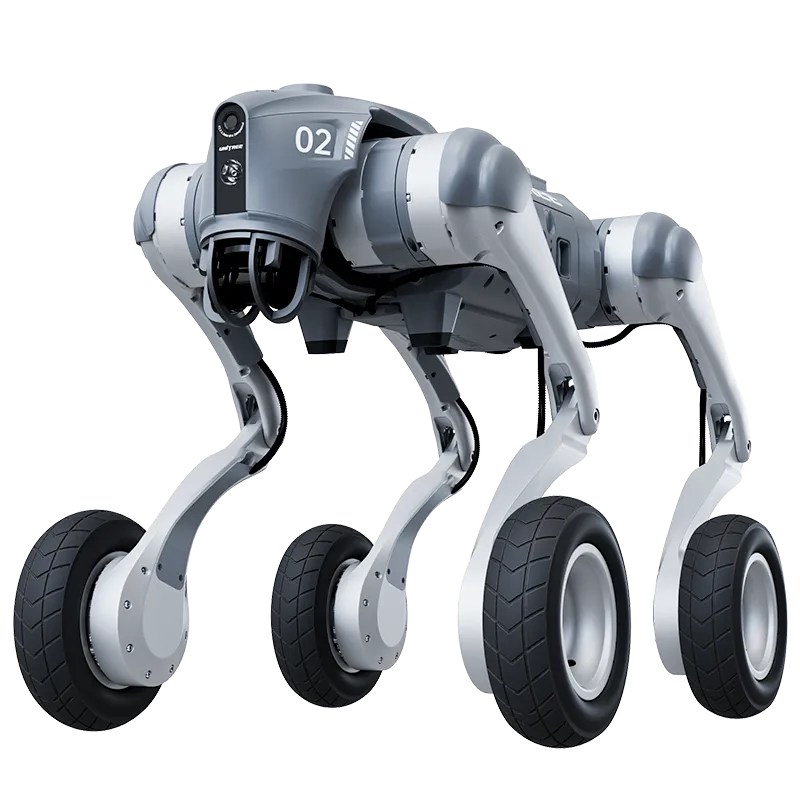
Article 20 min read 4,636 words

Why Humanoid Robot Hardware Fails First

ui44 Team All articles

Humanoid robot reliability is not mainly a chatbot problem. Better AI helps a robot choose a task, talk through a failure, and try a different grasp. It does not magically repair a hot knee actuator, a loose wrist cable, a worn gripper, or a battery pack that cannot survive daily charging.

That is the practical buyer lesson hiding behind the 2026 humanoid boom. The most impressive demos show reasoning, walking, and manipulation. The most important ownership questions are more boring: what breaks, how often, who fixes it, how much replacement parts cost, and whether the robot fails safely in a kitchen full of people, pets, rugs, cables, and wet floors.
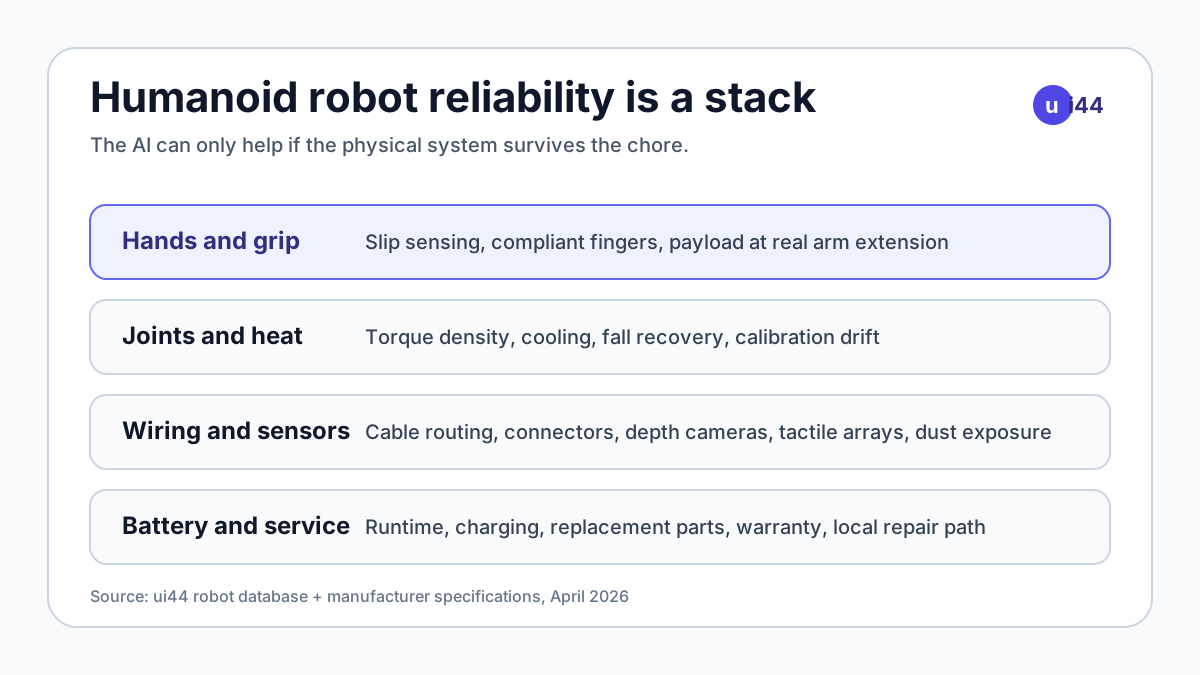
humanoid robot reliability stack chart showing hands, joints, wiring, battery, and service as home robot failure points
Scroll sideways to inspect the full chart.

This is not an argument against home humanoids. It is an argument for reading the hardware sheet before you read the AI claims. In the ui44 database, the most interesting humanoids already show very different reliability bets: 1X NEO emphasizes a soft, lightweight home body; Figure 03 emphasizes tactile hands and wireless charging; Unitree G1 emphasizes accessible research hardware; and Atlas shows what enterprise-grade robustness looks like when the target customer is a factory, not a family.

Why does humanoid robot reliability start with the hand?

Hands are where home-robot hype meets reality. Walking across a room is hard, but a household chore usually fails at contact: the robot pinches a soft bag, misses a handle, drops a cup, twists a cable, or grips a toy too hard. A model can infer that the object is a mug. The hardware still has to feel slip, move precisely, and survive thousands of awkward grasps.

That is why recent humanoid announcements spend so much time on fingertips. In its Figure 03 launch note, Figure says the robot's hand was redesigned around palm cameras, compliant fingertips, and internal tactile sensors that can detect very small forces. Sanctuary AI takes another path with Phoenix, which ui44 lists as a 170 cm, 70 kg humanoid with 75-DOF hands and more than 1,000 tactile sensors. Unitree G1 keeps the base robot cheaper and smaller, then makes dexterous hands an optional part of the higher-end development configuration.
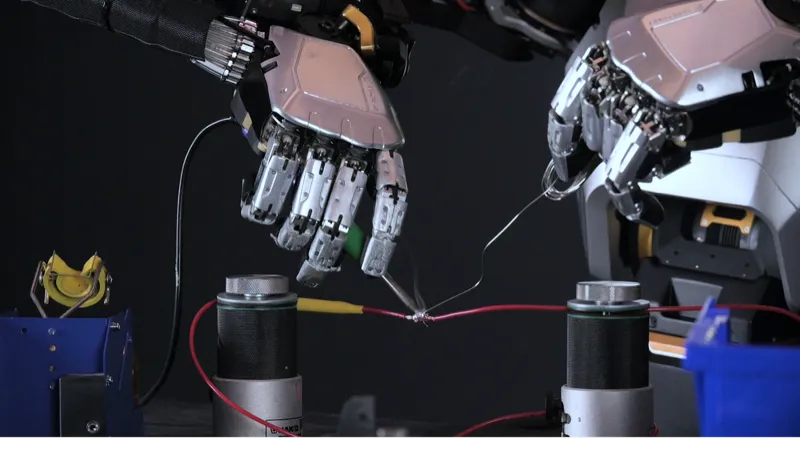
Sanctuary AI Phoenix humanoid robot hands and tactile sensing hardware for humanoid robot reliability

For buyers, the key is not "does it have hands?" It is "what kind of hands, and what happens when they wear out?" A useful home robot needs more than fingers. It needs replaceable fingertips, protected joints, calibrated sensors, safe force limits, and a service path when the end effector becomes the first consumable. A robot that can only pick up the same demo object under perfect lighting is not a household helper yet.

Which 2026 humanoids show the hardware trade-off?

The ui44 database makes the trade-off visible. Cheaper humanoids tend to be lighter, shorter-runtime, and more research-oriented. Larger enterprise robots have stronger hardware, but they are heavier, contact-sales products meant for controlled workplaces.

Robot

Unitree R1

Hardware signal
Movement-first, low-cost humanoid
ui44 data point
From $4,900; about 29 kg for R1; about 1 hour runtime
Buyer read
Exciting entry price, but treat it as early hardware rather than a home appliance

Robot

Unitree G1

Hardware signal
Compact research platform with optional dexterous hands
ui44 data point
$13,500 starting price; 35 kg; about 2 hours runtime; 23 DOF base robot
Buyer read
Strong developer value, but the home buyer still needs support, warranty, and task proof

Robot

1X NEO

Hardware signal
Soft, lightweight home-focused body
ui44 data point
$20,000 early-adopter price; 30 kg; about 4 hours runtime
Buyer read
The safest-looking home pitch, but still an early-access product with guided learning

Robot

Figure 03

Hardware signal
Tactile fingers, palm cameras, wireless charging
ui44 data point
No public price; 60 kg; about 5 hours runtime
Buyer read
Serious home-intent hardware, but not a normal consumer checkout product

Robot

Phoenix

Hardware signal
Highly dexterous tactile hands
ui44 data point
70 kg; 75-DOF hands; 1,000+ tactile sensors
Buyer read
Dexterity is the point, but complexity raises service and durability questions

Robot

Apptronik Apollo

Hardware signal
Heavy-duty enterprise humanoid
ui44 data point
73 kg; about 4 hours runtime; heavy payload around 25 kg
Buyer read
Factory-first reliability path, not a home preorder

Robot

Atlas

Hardware signal
Industrial robustness and serviceability
ui44 data point
90 kg; 4 hours runtime; IP67; 50 kg instant lift
Buyer read
Shows what durable humanoid hardware can look like when cost and environment differ
Unitree G1 compact humanoid robot showing affordable research hardware trade-offs for home humanoid robot reliability

The table does not say one robot is "best." It says hardware choices are visible if you look. A 30 kg soft home robot and a 90 kg industrial humanoid have very different risk profiles. A low-cost pre-order and an enterprise pilot should not be evaluated with the same checklist.

Unitree's own product pages are unusually direct about this. Both the G1 and R1 pages warn individual users to understand the limitations of humanoid robots before purchase and to keep a safe distance because the machines are complex and powerful. That is responsible wording. It is also a reminder that a humanoid is not a smart speaker with legs.

Can software updates fix weak humanoid hardware?

Software can improve a lot. Over-the-air updates can tune walking, add recovery behaviors, improve perception, and make a robot less likely to repeat a bad grasp. Fleet learning can help a company notice common failures sooner. Figure 03's launch material even frames wireless data offload as part of continuous learning: robots return data so the model can improve.

But software cannot turn a low-torque wrist into a high-payload arm. It cannot make a hot motor run cool without enough thermal margin. It cannot add tactile sensors that were never installed. It cannot make a battery pack last an entire day if the platform has one hour of mixed activity. And it cannot make a fragile connector reliable after repeated falls, bumps, and emergency stops.

This is where actuator quality matters. Industry analysts often point out that humanoid robots use dozens of joints, and those joint actuators can represent a large share of the bill of materials. That is not just a cost issue. It is a maintenance issue. A single bad knee, shoulder, wrist, or ankle can turn a useful robot into an expensive object waiting for service.

For home buyers, the software-update question should be specific:

  • Does the robot have enough torque and sensing for the chore before any future update?
  • Are hands, batteries, covers, and high-wear modules user-replaceable?
  • Does the warranty cover actuators and dexterous hands, or only the main body?
  • Is there a published service interval or expected duty cycle?
  • Can the robot stop safely if a joint reports abnormal load or heat?

If those answers are vague, the product may still be fascinating. It is just not ready to be treated like a dependable home appliance.

Why do factories get reliable humanoids before homes?

Factories are easier places to make humanoids reliable. That sounds backwards because factories are harsh, but they are also structured. Lighting can be controlled. Workstations repeat. Floors are flat. Humans can be trained to keep clear. Maintenance staff are nearby. A robot can be assigned one profitable job and measured against that job every shift.

Homes are the opposite. A home robot must handle surprise clutter, pets, cables, chair legs, narrow bathrooms, children, reflective surfaces, wet floors, and objects that move between rooms. Nobody wants to submit a maintenance ticket because the robot bent a finger while loading a dishwasher.
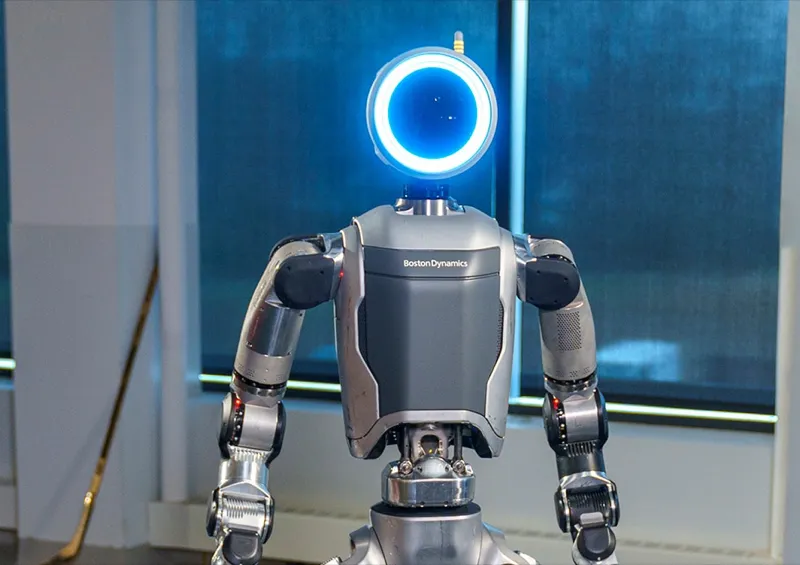
Boston Dynamics Atlas electric humanoid robot showing industrial-grade hardware reliability and serviceability

That is why the strongest reliability claims still come from industrial robots. Boston Dynamics describes Atlas as an enterprise-grade industrial humanoid with self-swappable batteries, fleet management through Orbit, an IP67 rating, 4 hours of battery life, and heavy-lift specs far beyond home robots. UBTECH's Walker S2 similarly centers its official pitch on autonomous battery swapping for continuous operation and a 15 kg handling capability in industrial environments.

None of that makes Atlas or Walker S2 a normal home robot. It shows the level of hardware system design required when uptime matters. A home humanoid will need a lighter, safer, cheaper version of the same thinking: not just a clever model, but charging, diagnostics, modules, service, and safe failure modes.

What should you ask before buying a humanoid robot?

A serious humanoid buyer should ask hardware questions before autonomy questions. Autonomy decides what the robot tries. Hardware decides whether it can keep trying safely.

Use this checklist before treating any home humanoid preorder as more than an early-adopter experiment:

  1. What is the rated payload at useful reach? A vertical lift claim is less helpful than a payload rating with the arm extended toward a counter or shelf.
  2. Which parts are consumables? Fingertips, gripper pads, covers, batteries, and wheels or foot pads may need replacement before the robot feels old.
  3. How long is the warranty on hands and actuators? The expensive failure points are not always covered like the screen or shell.
  4. Can the robot self-diagnose hardware faults? Look for joint load, heat, battery, and sensor-health reporting rather than only app-level error codes.
  5. What happens after a fall or collision? The answer should include safe power-down, inspection steps, and whether remote support can clear the robot for use again.
  6. Is local repair available? A 30 kg to 90 kg humanoid is not something most owners will casually ship across borders.
  7. Can it work offline or degraded? Cloud AI can be useful, but basic stop, dock, and manual recovery should not depend on a perfect internet connection.
  8. How many real task-hours has the company logged? Demo clips are useful; deployment hours, service logs, and repeated customer workflows are better.

1X NEO soft home humanoid robot emphasizing lightweight hardware and safe interaction for home robot reliability

The best answer does not have to be perfect. Early products rarely are. But the manufacturer should be able to explain the trade-offs. 1X NEO, for example, is interesting because 1X talks openly about soft design, tendon actuation, early autonomy, and Expert Mode for chores the robot cannot yet do by itself. That framing is more useful than pretending the robot is already a fully independent housekeeper.

Which hardware profile is safest for the first wave of home robots?

The safest first wave is probably not the strongest humanoid. It is the robot with the narrowest honest job, the lightest safe body, and the clearest service plan.

For many homes, that points away from full-size humanoids and toward constrained mobile manipulators or single-purpose robots. Hello Robot Stretch 3 is a useful contrast: it costs $24,950, weighs 24.5 kg, has a 2 kg payload, and uses a wheeled base with a telescoping arm. It is not trying to look like a person. It is designed around indoor mobile manipulation, assistive research, ROS 2, Python SDK access, and teleoperation. That may be less glamorous than a biped, but fewer degrees of freedom can mean fewer things to break.

A full humanoid can still be the right bet for developers, labs, and early adopters who want to participate in the learning curve. Unitree R1 puts humanoid hardware into a price band that was unthinkable a few years ago. XPENG Iron shows how car companies are bringing vehicle supply chains, batteries, sensors, and chips into robots. Figure 03 shows how a company can design directly for home-safe materials, tactile hands, and mass manufacturing.

The buyer mistake is not being excited. The mistake is treating every AI demo as proof that the hardware is ready for domestic uptime.

So what does hardware reliability really mean?

A reliable home humanoid is not the robot that wins the prettiest demo. It is the robot that can do a useful task repeatedly, fail gently, explain what went wrong, recover without drama, and get repaired without turning ownership into a logistics project.

That is why the next meaningful milestone for home humanoids will not be a single viral video. It will be something more mundane: published service terms, replacement-part pricing, clear payload ratings, battery-health reporting, field-hour data, and honest boundaries around what the robot should not do.

Until then, compare humanoids the way you would compare early electric vehicles or expensive appliances. The AI matters. The app matters. But the real question is whether the joints, hands, wiring, battery, and support system can survive the home after the novelty wears off.

Database context

Use this article as a warranty and coverage workflow

Turn the article into a real verification pass

Why Humanoid Robot Hardware Fails First already points you toward 10 linked robots, 10 manufacturers, and 4 countries inside the ui44 database. That matters because strong buyer guidance is easier to apply when you can move immediately from a claim or warning into concrete product pages, manufacturer directories, component explainers, and country-level context instead of treating the article as an isolated opinion piece. The fastest next step is to turn the article into a shortlist workflow: open the linked robot pages, verify which specs are actually published for those models, then compare the surrounding manufacturer and component context before you decide whether the underlying claim changes your buying plan.

For this topic, the useful discipline is to separate the editorial lesson from the catalog evidence. The article gives you the framing, but the robot pages tell you what each product actually ships with today: sensor stack, connectivity methods, listed price, release timing, category, and support-relevant compatibility notes. The manufacturer pages then show whether you are looking at a one-off launch, a broader lineup pattern, or a company that spans multiple categories. That layered workflow reduces the risk of buying on a single marketing phrase or a single support FAQ.

The most practical move is to keep warranty language and product context together. Compare the linked robots first, then check whether the manufacturer pages suggest a mature service lane or a more limited lineup. On this article, NEO, Figure 03, and G1 are the right place to start. If you want a quick working shortlist, open Compare NEO, Figure 03, and G1 next, then keep this article open as the reasoning layer while you compare structured data side by side.

Practical Takeaway

Every robot, manufacturer, category, component, and country reference below resolves to a real ui44 page, keeping the follow-up path grounded in database records rather than generic advice.

Suggested next steps in ui44

  1. Compare the listed price, release timing, and category fit of the linked robots before you treat warranty length as a direct value proxy.
  2. Open 1X Technologies to see whether the brand has several relevant models in the same lane or whether the article is centered on one flagship product.
  3. Record what the article proves, what still depends on seller or region rules, and which consumables or battery-related details you still need to verify externally.
  4. Use Compare NEO, Figure 03, and G1 before checkout so the warranty conversation stays anchored to a real shortlist.
  5. Do not treat the article as the final source of truth on coverage terms. Treat it as the framing layer that tells you which documentation you still need to inspect before purchase.

Database context

Robot profiles worth opening next

Use the linked product pages as the evidence layer

The linked robot pages are where this article becomes operational. Instead of asking whether the headline is interesting, use the robot entries to inspect the actual mix of sensors, connectivity options, batteries, pricing, release timing, and stated capabilities attached to the products mentioned in the article. That is the easiest way to see whether the warning or opportunity described here affects one product family, a specific design pattern, or an entire buying lane.

NEO

1X Technologies · Humanoid · Pre-order

$20,000

NEO is tracked on ui44 as a pre-order humanoid robot from 1X Technologies. The database currently records a listed price of $20,000, a release date of 2025-10-28, ~4 hours battery life, Not disclosed charging time, and a published stack that includes RGB Cameras, Depth Sensors, and Tactile Skin plus Wi-Fi and Bluetooth.

For warranty and coverage questions, the robot page gives you the operating context that fine print often leaves out. Review the published capability mix, including Household Chores, Tidying Up, and Safe Human Interaction, and the listed battery and charging profile before deciding whether a coverage term meaningfully reduces your ownership risk or merely sounds reassuring in isolation.

Figure 03

Figure AI · Humanoid · Active

Price TBA

Figure 03 is tracked on ui44 as a active humanoid robot from Figure AI. The database currently records a listed price of Price TBA, a release date of TBD, ~5 hours battery life, Not disclosed charging time, and a published stack that includes Stereo Vision, Depth Cameras, and Force Sensors plus Wi-Fi and Bluetooth.

For warranty and coverage questions, the robot page gives you the operating context that fine print often leaves out. Review the published capability mix, including Complex Manipulation, Warehouse Work, and Manufacturing Tasks, and the listed battery and charging profile before deciding whether a coverage term meaningfully reduces your ownership risk or merely sounds reassuring in isolation.

G1

Unitree · Humanoid · Available

$13,500

G1 is tracked on ui44 as a available humanoid robot from Unitree. The database currently records a listed price of $13,500, a release date of 2024, ~2 hours battery life, Not disclosed charging time, and a published stack that includes Depth Camera, 3D LiDAR, and 4 Microphone Array plus Wi-Fi 6 and Bluetooth 5.2.

For warranty and coverage questions, the robot page gives you the operating context that fine print often leaves out. Review the published capability mix, including Bipedal Walking, Object Manipulation, and Dexterous Hands (optional Dex3-1), and the listed battery and charging profile before deciding whether a coverage term meaningfully reduces your ownership risk or merely sounds reassuring in isolation.

Atlas (Electric)

Boston Dynamics · Humanoid · Active

Price TBA

Atlas (Electric) is tracked on ui44 as a active humanoid robot from Boston Dynamics. The database currently records a listed price of Price TBA, a release date of 2026, ~4 hours battery life, Not disclosed charging time, and a published stack that includes 360° camera view and Tactile plus Wi-Fi and Ethernet.

For warranty and coverage questions, the robot page gives you the operating context that fine print often leaves out. Review the published capability mix, including Heavy Lifting (50kg Instant, 30kg Sustained), Precise Manipulation, and Dynamic Recovery, and the listed battery and charging profile before deciding whether a coverage term meaningfully reduces your ownership risk or merely sounds reassuring in isolation.

Phoenix

Sanctuary AI · Humanoid · Active

Price TBA

Phoenix is tracked on ui44 as a active humanoid robot from Sanctuary AI. The database currently records a listed price of Price TBA, a release date of TBD, Not disclosed battery life, Not disclosed charging time, and a published stack that includes Tactile Sensors (1000+), Vision System, and Proprioception plus Wi-Fi and 5G.

For warranty and coverage questions, the robot page gives you the operating context that fine print often leaves out. Review the published capability mix, including Human-like Dexterity, Retail Tasks, and Assembly Work, and the listed battery and charging profile before deciding whether a coverage term meaningfully reduces your ownership risk or merely sounds reassuring in isolation.

Database context

Manufacturer context behind the article

Check whether this is one product story or a broader company pattern

Manufacturer pages add the support context that individual product pages cannot show on their own. They help you check whether the article is pointing at one coverage promise or at a company with a broader service footprint and multiple products to maintain.

1X Technologies

ui44 currently tracks 2 robots from 1X Technologies across 1 category. The company is grouped under Norway, and the current catalog footprint on ui44 includes NEO, EVE.

That wider brand context matters because support confidence is easier to judge when you can see the company’s overall footprint, not just one warranty phrase attached to one product. A broader tracked lineup can change how you interpret the article’s coverage discussion. The category mix here currently points toward Humanoid as the most useful next route if you want to see whether this article reflects a wider pattern inside the brand.

Figure AI

ui44 currently tracks 2 robots from Figure AI across 1 category. The company is grouped under USA, and the current catalog footprint on ui44 includes Figure 03, Figure 02.

That wider brand context matters because support confidence is easier to judge when you can see the company’s overall footprint, not just one warranty phrase attached to one product. A broader tracked lineup can change how you interpret the article’s coverage discussion. The category mix here currently points toward Humanoid as the most useful next route if you want to see whether this article reflects a wider pattern inside the brand.

Unitree

ui44 currently tracks 2 robots from Unitree across 1 category. The company is grouped under China, and the current catalog footprint on ui44 includes H1, G1.

That wider brand context matters because support confidence is easier to judge when you can see the company’s overall footprint, not just one warranty phrase attached to one product. A broader tracked lineup can change how you interpret the article’s coverage discussion. The category mix here currently points toward Humanoid as the most useful next route if you want to see whether this article reflects a wider pattern inside the brand.

Boston Dynamics

ui44 currently tracks 3 robots from Boston Dynamics across 2 categorys. The company is grouped under USA, and the current catalog footprint on ui44 includes Atlas (Electric), Spot, Stretch.

That wider brand context matters because support confidence is easier to judge when you can see the company’s overall footprint, not just one warranty phrase attached to one product. A broader tracked lineup can change how you interpret the article’s coverage discussion. The category mix here currently points toward Humanoid, Commercial as the most useful next route if you want to see whether this article reflects a wider pattern inside the brand.

Database context

Broaden the scan without leaving the database

Categories, components, and countries add the wider context

Category framing

Category pages are useful when the article touches a buying pattern that shows up across brands. A category route helps you confirm whether the linked products sit in a narrow niche or whether the same question should be tested across a larger field of alternatives.

Humanoid

The Humanoid category page currently groups 64 tracked robots from 46 manufacturers. ui44 describes this lane as: Full-size bipedal humanoid robots designed to work alongside humans. From factory floors to household tasks, these machines represent the cutting edge of robotics.

That makes the category route a practical follow-up when you want to check whether the products linked in this article are typical for the lane or whether they sit at one edge of the market. Useful starting examples currently include NEO, EVE, Mornine M1.

Home Assistants

The Home Assistants category page currently groups 12 tracked robots from 12 manufacturers. ui44 describes this lane as: Arm-based household helpers — laundry folders, kitchen robots, and mobile manipulators that handle physical tasks at home.

That makes the category route a practical follow-up when you want to check whether the products linked in this article are typical for the lane or whether they sit at one edge of the market. Useful starting examples currently include Robody, Futuring 2 (F2), Stretch 3.

Country and ecosystem context

Country pages give extra context when support practices, launch sequencing, regulatory posture, or manufacturer mix matter. They are not a substitute for model-level verification, but they do help you see which ecosystems cluster together and which manufacturers sit in the same regional field when you broaden the search beyond the article headline.

Norway

The Norway route currently groups 2 tracked robots from 1 manufacturers in ui44. That gives you a useful regional lens when the article points toward support practices, launch sequencing, or brand clusters that may share similar ecosystem assumptions.

On the current route, manufacturers like 1X Technologies make the page a good way to broaden the scan without losing the regional context that often shapes availability, documentation style, and adjacent alternatives.

USA

The USA route currently groups 16 tracked robots from 12 manufacturers in ui44. That gives you a useful regional lens when the article points toward support practices, launch sequencing, or brand clusters that may share similar ecosystem assumptions.

On the current route, manufacturers like Boston Dynamics, Figure AI, Tesla make the page a good way to broaden the scan without losing the regional context that often shapes availability, documentation style, and adjacent alternatives.

China

The China route currently groups 47 tracked robots from 14 manufacturers in ui44. That gives you a useful regional lens when the article points toward support practices, launch sequencing, or brand clusters that may share similar ecosystem assumptions.

On the current route, manufacturers like AGIBOT, Roborock, Unitree Robotics make the page a good way to broaden the scan without losing the regional context that often shapes availability, documentation style, and adjacent alternatives.

Database context

Questions to answer before you move from reading to buying

A follow-up FAQ built from the entities already linked in this article

Frequently Asked Questions

Which page should I open first after reading “Why Humanoid Robot Hardware Fails First”?

Start with NEO. That gives you a concrete product anchor for the article’s main claim. From there, branch into the manufacturer and component pages so you can tell whether the article is describing one specific model, a repeated brand pattern, or a wider technology issue that affects multiple shortlist options.

How do the manufacturer pages change the buying decision?

1X Technologies help you zoom out from one article and one product. On ui44 they show lineup breadth, category spread, and the neighboring robots tied to the same company. That context is useful when you are deciding whether a risk belongs to a single model, whether it shows up across a brand’s portfolio, and whether you should keep looking at alternatives before committing.

When should I switch from reading to side-by-side comparison?

Move into Compare NEO, Figure 03, and G1 as soon as you understand the article’s main warning or promise. The article explains what to watch for, but the compare view is where you can check whether price, status, battery life, connectivity, sensors, and category fit still make the robot a good match for your own home and budget.

Database context

Where to go next in ui44

Keep the research chain inside the database

If you want to keep going, these follow-on pages give you the cleanest expansion path from article to research session. Open the comparison route first if you are deciding between products today. Open the manufacturer, category, and component routes if you still need to understand the broader pattern behind the claim.

UT

Written by

ui44 Team

Published April 29, 2026

Share this article

Open a plain share link on X or Bluesky. No embeds, no widgets, no cookie baggage.

Explore the database

Go beyond the headlines

Compare specs, features, and prices across 100+ robots from leading manufacturers worldwide.