That is why a recent Apple Machine Learning Research project called ARMOR is worth watching. The work is research, not a consumer product announcement, but the signal is practical: humanoid robots may need distributed, body-mounted depth sensing before they can move confidently through ordinary homes.
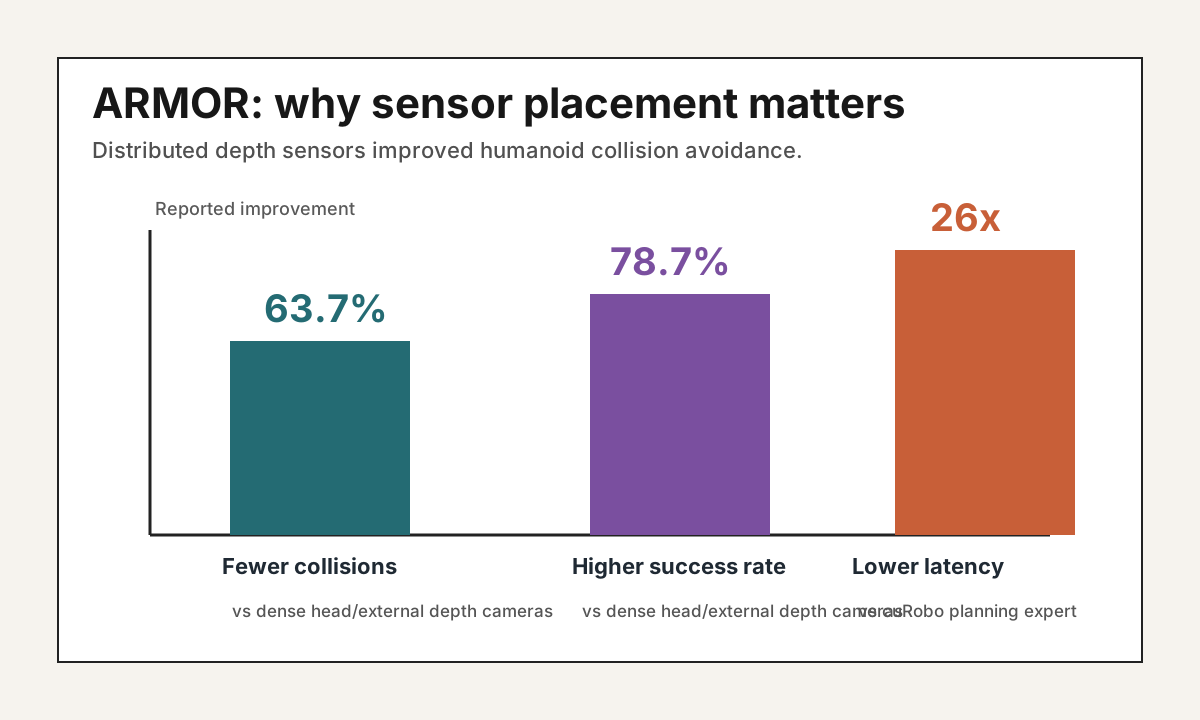
The ARMOR team reports that its wearable-like depth sensor layout reduced collisions by 63.7 percent and improved success rate by 78.7 percent compared with dense head-mounted and externally mounted depth camera setups. Against a cuRobo planning expert, Apple reports 31.6 percent fewer collisions, 16.9 percent higher success rate, and 26x lower computational latency. The real-world deployment used a Fourier GR-1, which makes the work especially relevant to the home humanoid category rather than only to warehouse AMRs or lab arms.
The buyer takeaway is simple: when a company shows a humanoid walking through a tidy demo room, do not only ask whether it has cameras. Ask where the cameras are, what parts of the robot body they protect, and whether the robot can plan quickly enough when the room changes.
Why Are Head Cameras Not Enough?
Most people understand robot perception as a face problem. If the robot has cameras in its head, it can see. If it has depth sensing or LiDAR, it can map the room. That is partly true, but it misses the awkward geometry of a humanoid.
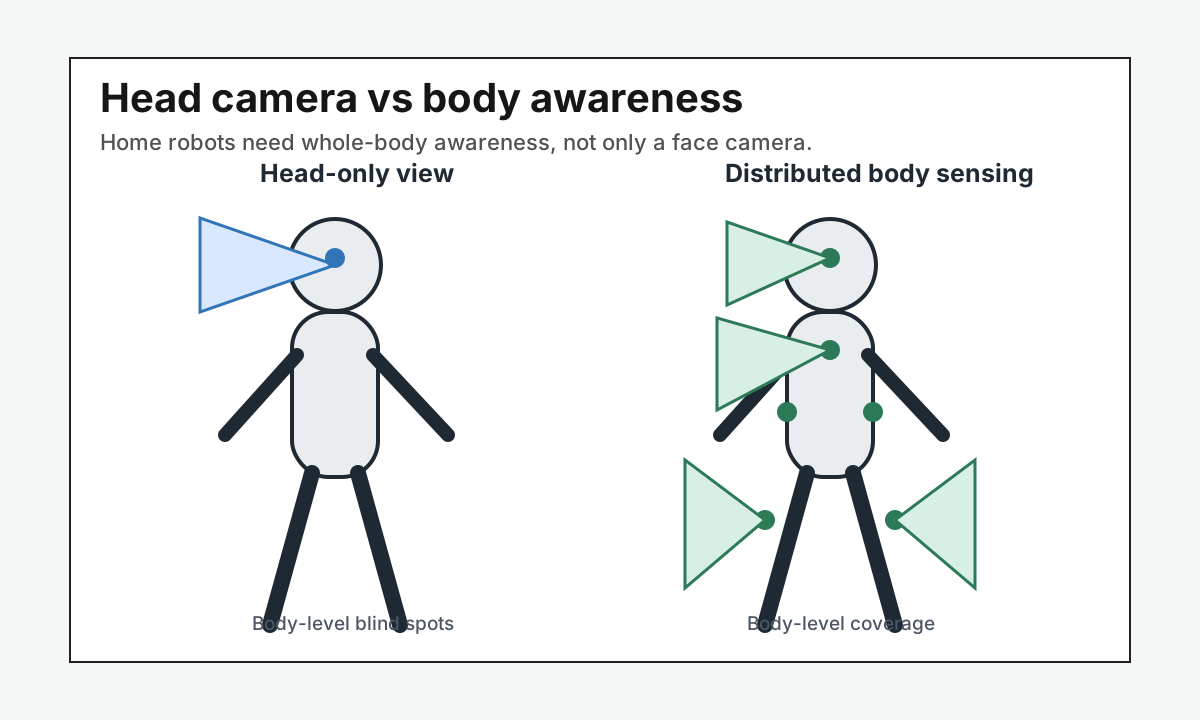
A humanoid is tall, heavy, jointed, and constantly changing shape. Its shoulder, elbow, wrist, hip, knee, and foot all occupy different parts of space during a step or reach. A head-mounted camera can see the world ahead, but it may not see the side of a kitchen island near the hip, the edge of a dining chair near the knee, or the pet toy near the ankle at the right moment.
That matters more at home than in a lab. Homes are not motion-capture stages. They have glossy floors, moving people, loose rugs, open drawers, pets, children's toys, table legs, and narrow gaps between furniture. A robot that can walk across an empty studio may still be a poor fit for a small apartment if it cannot sense and protect the volume of its whole body.
This is also why "collision avoidance" is too vague as a buying claim. A small robot vacuum avoids obstacles by steering around them. A humanoid has to avoid collisions while balancing, swinging limbs, carrying payloads, and sometimes reaching into cabinets or over counters. The same phrase hides a much harder problem.
What Apple ARMOR Actually Tested
ARMOR stands for an egocentric perception system for humanoid collision avoidance and motion planning. Apple describes it as a hardware and software approach that uses wearable-like depth sensors on the robot, plus a transformer-based imitation learning policy trained in simulation using about 86 hours of human motion from the AMASS dataset.
The important part is not that Apple used the word "humanoid." It is that the comparison was about sensor placement and planning latency:
ARMOR comparison
Distributed depth sensing vs dense head/external depth cameras
- Reported result
- 63.7% fewer collisions
- Why it matters at home
- A camera in the head may not protect the whole body
ARMOR comparison
Same comparison
- Reported result
- 78.7% success-rate improvement
- Why it matters at home
- Fewer bumps are useful only if the robot still completes the motion
ARMOR comparison
ARMOR policy vs cuRobo planning expert
- Reported result
- 31.6% fewer collisions
- Why it matters at home
- Planning quality matters after the scene changes
ARMOR comparison
ARMOR policy vs cuRobo planning expert
- Reported result
- 26x lower computational latency
- Why it matters at home
- A home robot cannot pause for heavy planning every time someone moves
| ARMOR comparison | Reported result | Why it matters at home |
|---|---|---|
| Distributed depth sensing vs dense head/external depth cameras | 63.7% fewer collisions | A camera in the head may not protect the whole body |
| Same comparison | 78.7% success-rate improvement | Fewer bumps are useful only if the robot still completes the motion |
| ARMOR policy vs cuRobo planning expert | 31.6% fewer collisions | Planning quality matters after the scene changes |
| ARMOR policy vs cuRobo planning expert | 26x lower computational latency | A home robot cannot pause for heavy planning every time someone moves |
The caveat is just as important: this is a research result. It does not prove that any current home humanoid is ready to navigate a family room unsupervised. It does suggest a useful test for future product claims. If a humanoid company only talks about a head camera, a front depth sensor, or a neural network, the missing question is whether the robot has body-level spatial awareness.
The ui44 Database View
The home humanoid market is still split between research platforms, pre-order products, and development programs. The sensor story looks different across those groups.
Robot
- Status in ui44
- Active
- Price signal
- No public list price
- Relevant sensor notes
- RealSense camera, six RGB cameras, IMU, force/torque sensors, visual perception, 165cm and 55kg
Robot
- Status in ui44
- Pre-order
- Price signal
- $20,000
- Relevant sensor notes
- RGB cameras, depth sensors, tactile skin, microphone array, soft lightweight body, 167cm and 30kg
Robot
- Status in ui44
- Available
- Price signal
- From $13,500
- Relevant sensor notes
- Depth camera, 3D LiDAR, microphone array, optional dexterous hands, 132cm and 35kg
Robot
- Status in ui44
- Pre-order
- Price signal
- From $4,900
- Relevant sensor notes
- Monocular or binocular camera depending model, dual IMU, microphone array, 123cm and about 29kg
Robot
- Status in ui44
- Development
- Price signal
- Target around $30,000
- Relevant sensor notes
- Cameras, force/torque sensors, IMU, touch sensors, factory-oriented public evidence
Robot
- Status in ui44
- Available
- Price signal
- $69,999
- Relevant sensor notes
- Stereo-ready head camera, five chassis cameras, 360-degree LiDAR, optional wrist depth cameras
| Robot | Status in ui44 | Price signal | Relevant sensor notes |
|---|---|---|---|
| Fourier GR-1 | Active | No public list price | RealSense camera, six RGB cameras, IMU, force/torque sensors, visual perception, 165cm and 55kg |
| 1X NEO | Pre-order | $20,000 | RGB cameras, depth sensors, tactile skin, microphone array, soft lightweight body, 167cm and 30kg |
| Unitree G1 | Available | From $13,500 | Depth camera, 3D LiDAR, microphone array, optional dexterous hands, 132cm and 35kg |
| Unitree R1 | Pre-order | From $4,900 | Monocular or binocular camera depending model, dual IMU, microphone array, 123cm and about 29kg |
| Tesla Optimus Gen 2 | Development | Target around $30,000 | Cameras, force/torque sensors, IMU, touch sensors, factory-oriented public evidence |
| Galaxea R1 Pro | Available | $69,999 | Stereo-ready head camera, five chassis cameras, 360-degree LiDAR, optional wrist depth cameras |

There is no single winner in that table. 1X NEO is the most explicitly home-facing, with a $20,000 pre-order price, a softer 30kg body, tactile skin, and household chore positioning. That makes perception and safe contact central to its value. If NEO is going to work around furniture and people, body awareness is not a bonus feature. It is part of the core promise.
Unitree G1 is different. At $13,500, it is one of the most accessible humanoids in the database, but it is still best understood as a research and development platform. Its depth camera and 3D LiDAR help, and its lower 132cm height may reduce some household risk, but a buyer should not treat availability as proof of domestic collision safety.
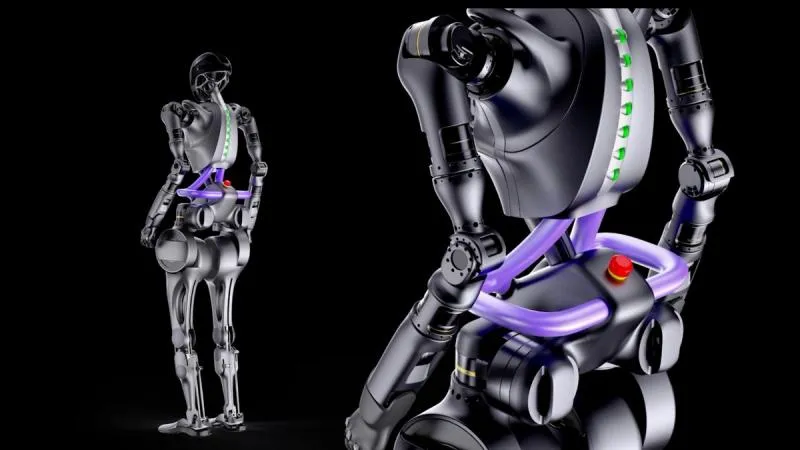
Fourier GR-1 is the bridge between research and embodied hardware in this specific story because ARMOR was deployed on a real GR-1. In ui44's database, GR-1 is a 165cm, 55kg active humanoid platform with bipedal walking, stair climbing, payload carrying, force/torque sensors, IMU, cameras, and visual perception. That is exactly the kind of robot where whole-body collision avoidance matters: big enough to do useful work, but also big enough to damage furniture or hurt someone if motion planning is sloppy.
What Body-Mounted Sensing Could Change At Home
The best case for body-mounted depth sensing is not that it makes a humanoid smarter in the abstract. It is that it gives the planner fresher geometry around the parts of the robot most likely to collide.
In a kitchen, that could mean a robot notices a drawer handle near its hip while turning. In a hallway, it could mean the robot sees that its knee path is too close to a shoe rack. Near a dining table, it could mean the arm planner understands where the elbow will travel while lifting a plate.
It also changes what "safe around people" should mean. Human-aware navigation is not only about avoiding a person as a moving obstacle on a floor map. It is about a tall articulated machine knowing the volume of space its body will occupy during the next movement. A humanoid that can stop before stepping on a foot but still swings an elbow into someone is not truly home-safe.
The hard part is latency. More sensors can mean more data, more calibration, more failure modes, and more compute. ARMOR's 26x latency improvement versus a planning expert is interesting because home robots need quick reactions. A robot that spends too long planning may become frustrating, and a robot that skips planning may become unsafe.
What Should Buyers Ask Before Pre-Ordering?
For the next wave of home-facing humanoids, ask more specific questions than "does it have AI?"
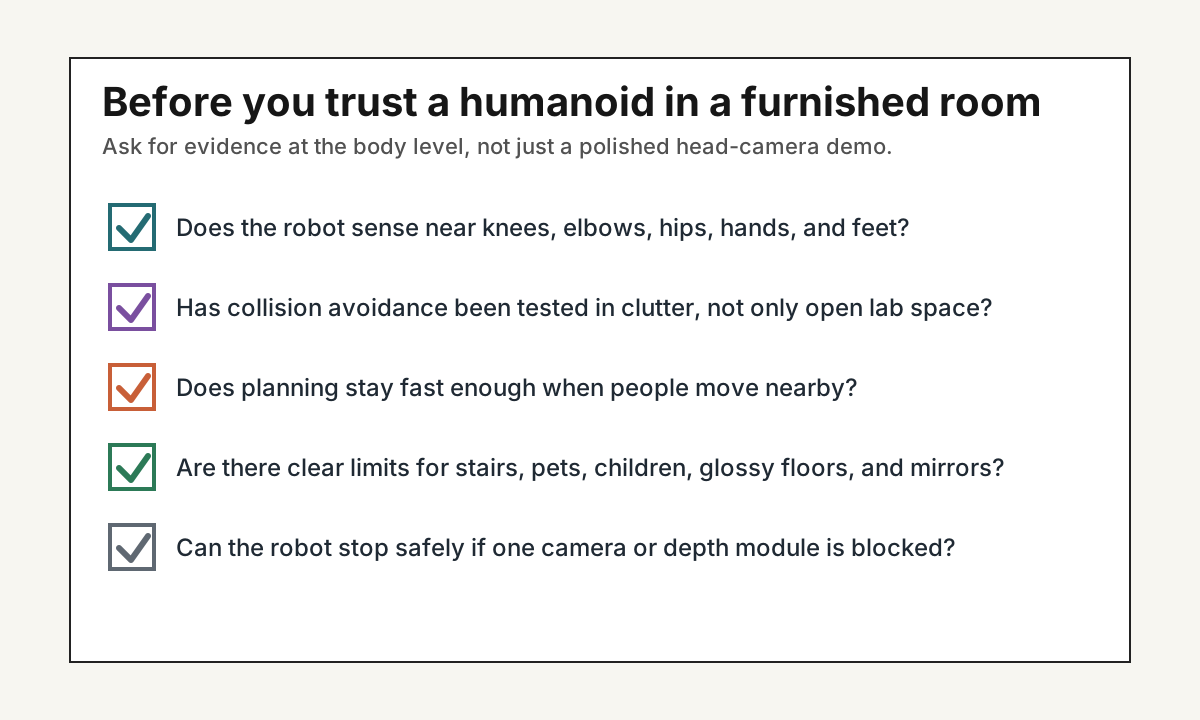
Ask whether the robot has depth sensing only in the head or also near the torso, arms, hands, knees, or base. Ask whether the company has tested in cluttered rooms with furniture at multiple heights. Ask what happens if one sensor is blocked by clothing, a carried object, dust, or glare. Ask whether collision avoidance works while the robot is carrying something, not only while walking empty-handed.
For a product like NEO, the most important evidence would be home trials with repeated tasks: carrying laundry around furniture, opening cabinets near people, walking through narrow hallways, and reacting when someone unexpectedly steps close. For a platform like Unitree G1 or R1, the important evidence is different: developer documentation, sensor access, simulation support, and whether third-party teams can add or validate body-level perception themselves.
For expensive R&D machines such as Galaxea R1 Pro, the question is whether the platform's richer sensor stack and 360-degree LiDAR translate into manipulation safety in human spaces. It may have more perception hardware than a small humanoid, but it is also a 170cm dual-arm mobile manipulator with a much higher price and a research/industrial buyer profile.
What Could Go Wrong
Body-mounted sensors are not a magic fix. They add calibration requirements. They can be occluded by the robot's own limbs. They may struggle with reflective surfaces, glass, sunlight, or small moving objects. They also introduce cost and design trade-offs: every exposed sensor needs protection, wiring, compute, and a place on the body that does not interfere with motion.
There is also a privacy angle. More cameras and depth sensors around the body can capture more of the home. A useful home humanoid will need clear privacy controls, local processing where possible, visible recording states, and owner control over stored data. The safest robot is not only the one that avoids furniture. It is the one that does not turn a home into an uncontrolled sensor network.
Finally, sensor placement cannot rescue weak behavior design. A robot should slow down near people, avoid surprise movements, explain when it needs help, and fail gracefully. The best perception system still needs conservative product rules around children, pets, stairs, wet floors, clutter, and night operation.
Bottom Line
ARMOR is not a buying recommendation for any one robot. It is a signpost for how to judge the next generation of home humanoid claims.
If a humanoid is meant to share a real home, head cameras and demo videos are not enough. Look for evidence that the robot understands its whole body in space, plans fast enough for changing rooms, and has been tested around furniture and people at the body level. The most credible home humanoids will not merely see the room. They will know where their elbows, knees, hips, hands, and feet are about to go.
Related in the database
Use this article as a privacy verification workflow
Turn the article into a privacy verification pass grounded in the robots, manufacturers, and components it actually references.
Humanoid Collision Avoidance Needs Body Sensors already points you toward 6 linked robots, 6 manufacturers, and 3 countries inside the ui44 database. That matters because strong buyer guidance is easier to apply when you can move immediately from a claim or warning into concrete product pages, manufacturer directories, component explainers, and country-level context instead of treating the article as an isolated opinion piece. The fastest next step is to turn the article into a shortlist workflow: open the linked robot pages, verify which specs are actually published for those models, then compare the surrounding manufacturer and component context before you decide whether the underlying claim changes your buying plan.
For this topic, the useful discipline is to separate the editorial lesson from the catalog evidence. The article gives you the framing, but the robot pages tell you what each product actually ships with today: sensor stack, connectivity methods, listed price, release timing, category, and support-relevant compatibility notes. The manufacturer pages then show whether you are looking at a one-off launch, a broader lineup pattern, or a company that spans multiple categories. That layered workflow reduces the risk of buying on a single marketing phrase or a single support FAQ.
Use the robot pages to confirm which products actually expose cameras, microphones, Wi-Fi, or voice systems, then use the manufacturer pages to decide how much of the privacy question seems product-specific versus brand-wide. On this route cluster, GR-1, NEO, and G1 form the fastest reality check. If you want a quick working shortlist, open Compare GR-1, NEO, and G1 next, then keep this article open as the reasoning layer while you compare structured data side by side.
Practical Takeaway
Every robot, manufacturer, category, component, and country reference below resolves to a real ui44 page, keeping the follow-up path grounded in database records rather than generic advice.
Suggested next steps in ui44
- Open GR-1 and note the listed sensors, connectivity methods, and voice stack before you interpret any policy claim.
- Cross-check the wider brand context on Fourier so you can see whether the privacy question touches one model or a broader lineup.
- Use the linked component pages to confirm how common the relevant sensors and connectivity layers are across the database.
- Keep a short note of which policy layers you checked, which device features are actually present on the robot page, and which items still depend on region- or app-level confirmation.
- Finish with Compare GR-1, NEO, and G1 so the policy reading sits next to structured product data.
Robot profiles worth opening next
Use the linked product pages as the evidence layer
The linked robot pages are where this article becomes operational. Instead of asking whether the headline is interesting, use the robot entries to inspect the actual mix of sensors, connectivity options, batteries, pricing, release timing, and stated capabilities attached to the products mentioned in the article. That is the easiest way to see whether the warning or opportunity described here affects one product family, a specific design pattern, or an entire buying lane.
GR-1 is tracked on ui44 as a active humanoid robot from Fourier. The database currently records a listed price of Price TBA, a release date of 2023, 2 hours (Humanoid.Guide; not manufacturer-published) battery life, Not disclosed charging time, and a published stack that includes 1 RealSense Camera, 1 ring-shaped microphone sensor, and 6 RGB cameras (pure vision perception solution) plus Wi-Fi and Ethernet.
For privacy-focused reading, this page matters because it shows the concrete device surface behind the policy discussion. Use it to verify whether GR-1 combines sensors and connectivity in a way that could change the in-home data footprint, and compare the listed capabilities such as Bipedal Walking, Object Manipulation, and Uneven Terrain Navigation with any cloud, app, or voice layers.
NEO
1X Technologies · Humanoid · Pre-order
NEO is tracked on ui44 as a pre-order humanoid robot from 1X Technologies. The database currently records a listed price of $20,000, a release date of 2025-10-28, ~4 hours battery life, Not disclosed charging time, and a published stack that includes RGB Cameras, Depth Sensors, and Tactile Skin plus Wi-Fi and Bluetooth.
For privacy-focused reading, this page matters because it shows the concrete device surface behind the policy discussion. Use it to verify whether NEO combines sensors and connectivity in a way that could change the in-home data footprint, and compare the listed capabilities such as Household Chores, Tidying Up, and Safe Human Interaction with any cloud, app, or voice layers.
G1 is tracked on ui44 as a available humanoid robot from Unitree. The database currently records a listed price of $13,500, a release date of 2024-05-13, ~2 hours battery life, Not disclosed charging time, and a published stack that includes Depth Camera, 3D LiDAR, and 4 Microphone Array plus Wi-Fi 6 and Bluetooth 5.2.
For privacy-focused reading, this page matters because it shows the concrete device surface behind the policy discussion. Use it to verify whether G1 combines sensors and connectivity in a way that could change the in-home data footprint, and compare the listed capabilities such as Bipedal Walking, Object Manipulation, and Dexterous Hands (optional Dex3-1) with any cloud, app, or voice layers.
R1
Unitree Robotics · Humanoid · Pre-order
R1 is tracked on ui44 as a pre-order humanoid robot from Unitree Robotics. The database currently records a listed price of $4,900, a release date of 2025, ~1 hour (mixed activity) battery life, Not officially disclosed charging time, and a published stack that includes Monocular camera (R1 Air); binocular camera (R1/R1 EDU), 4-Mic Array, and Dual 6-Axis IMU plus Wi-Fi 6 and Bluetooth 5.2.
For privacy-focused reading, this page matters because it shows the concrete device surface behind the policy discussion. Use it to verify whether R1 combines sensors and connectivity in a way that could change the in-home data footprint, and compare the listed capabilities such as Bipedal Walking & Running, Cartwheels & Handstands, and Push Recovery with any cloud, app, or voice layers, including UnifoLM (voice + image commands).
Optimus Gen 2
Tesla · Humanoid · Development
Optimus Gen 2 is tracked on ui44 as a development humanoid robot from Tesla. The database currently records a listed price of Price TBA, a release date of 2023-12-13, Not officially disclosed battery life, Not officially disclosed charging time, and a published stack that includes Cameras, Force/Torque Sensors, and IMU plus Wi-Fi and Bluetooth.
For privacy-focused reading, this page matters because it shows the concrete device surface behind the policy discussion. Use it to verify whether Optimus Gen 2 combines sensors and connectivity in a way that could change the in-home data footprint, and compare the listed capabilities such as Bipedal Walking, Object Manipulation, and Factory Tasks with any cloud, app, or voice layers.
Manufacturer context behind the article
Check whether this is one product story or a broader company pattern
Manufacturer pages add the privacy context that individual product pages cannot show on their own. They help you check whether cameras, microphones, cloud accounts, app controls, and policy assumptions appear across a broader lineup or stay tied to one specific product story.
Fourier
ui44 currently tracks 3 robots from Fourier across 1 category. The company is grouped under China, and the current catalog footprint on ui44 includes GR-2, GR-1, GR-3.
That wider brand context matters because privacy questions rarely stop at one FAQ page. A manufacturer route helps you see whether the article is centered on one premium model or on a company that has several relevant products and therefore more than one place where the same policy or app assumptions might matter. The category mix here currently points toward Humanoid as the most useful next route if you want to see whether this article reflects a wider pattern inside the brand.
1X Technologies
ui44 currently tracks 2 robots from 1X Technologies across 1 category. The company is grouped under Norway, and the current catalog footprint on ui44 includes NEO, EVE.
That wider brand context matters because privacy questions rarely stop at one FAQ page. A manufacturer route helps you see whether the article is centered on one premium model or on a company that has several relevant products and therefore more than one place where the same policy or app assumptions might matter. The category mix here currently points toward Humanoid as the most useful next route if you want to see whether this article reflects a wider pattern inside the brand.
Unitree
ui44 currently tracks 2 robots from Unitree across 1 category. The company is grouped under China, and the current catalog footprint on ui44 includes H1, G1.
That wider brand context matters because privacy questions rarely stop at one FAQ page. A manufacturer route helps you see whether the article is centered on one premium model or on a company that has several relevant products and therefore more than one place where the same policy or app assumptions might matter. The category mix here currently points toward Humanoid as the most useful next route if you want to see whether this article reflects a wider pattern inside the brand.
Unitree Robotics
ui44 currently tracks 9 robots from Unitree Robotics across 3 categorys. The company is grouped under China, and the current catalog footprint on ui44 includes B2, B1, Go2.
That wider brand context matters because privacy questions rarely stop at one FAQ page. A manufacturer route helps you see whether the article is centered on one premium model or on a company that has several relevant products and therefore more than one place where the same policy or app assumptions might matter. The category mix here currently points toward Quadruped, Humanoid, Research as the most useful next route if you want to see whether this article reflects a wider pattern inside the brand.
Broaden the scan without leaving the database
Categories, components, and countries add the wider context
Category framing
Category pages are useful when the article touches a buying pattern that shows up across brands. A category route helps you confirm whether the linked products sit in a narrow niche or whether the same question should be tested across a larger field of alternatives.
Humanoid
The Humanoid category page currently groups 129 tracked robots from 92 manufacturers. ui44 describes this lane as: Full-size bipedal humanoid robots built to work alongside people — from factory floors to household tasks. Compare the cutting edge of humanoid robotics.
That makes the category route a practical follow-up when you want to check whether the products linked in this article are typical for the lane or whether they sit at one edge of the market. Useful starting examples currently include NEO, EVE, Mornine M1.
Country and ecosystem context
Country pages give extra context when support practices, launch sequencing, regulatory posture, or manufacturer mix matter. They are not a substitute for model-level verification, but they do help you see which ecosystems cluster together and which manufacturers sit in the same regional field when you broaden the search beyond the article headline.
China
The China route currently groups 189 tracked robots from 87 manufacturers in ui44. That gives you a useful regional lens when the article points toward support practices, launch sequencing, or brand clusters that may share similar ecosystem assumptions.
On the current route, manufacturers like AGIBOT, Dreame, Unitree Robotics make the page a good way to broaden the scan without losing the regional context that often shapes availability, documentation style, and adjacent alternatives.
Norway
The Norway route currently groups 2 tracked robots from 1 manufacturers in ui44. That gives you a useful regional lens when the article points toward support practices, launch sequencing, or brand clusters that may share similar ecosystem assumptions.
On the current route, manufacturers like 1X Technologies make the page a good way to broaden the scan without losing the regional context that often shapes availability, documentation style, and adjacent alternatives.
USA
The USA route currently groups 89 tracked robots from 69 manufacturers in ui44. That gives you a useful regional lens when the article points toward support practices, launch sequencing, or brand clusters that may share similar ecosystem assumptions.
On the current route, manufacturers like Faraday Future, iRobot, Boston Dynamics make the page a good way to broaden the scan without losing the regional context that often shapes availability, documentation style, and adjacent alternatives.
Questions to answer before you move from reading to buying
A follow-up FAQ built from the entities already linked in this article
Frequently Asked Questions
Which page should I open first after reading “Humanoid Collision Avoidance Needs Body Sensors”?
Start with GR-1. That gives you a concrete product anchor for the article’s main claim. From there, branch into the manufacturer and component pages so you can tell whether the article is describing one specific model, a repeated brand pattern, or a wider technology issue that affects multiple shortlist options.
How do the manufacturer pages change the buying decision?
Fourier help you zoom out from one article and one product. On ui44 they show lineup breadth, category spread, and the neighboring robots tied to the same company. That context is useful when you are deciding whether a risk belongs to a single model, whether it shows up across a brand’s portfolio, and whether you should keep looking at alternatives before committing.
When should I switch from reading to side-by-side comparison?
Move into Compare GR-1, NEO, and G1 as soon as you understand the article’s main warning or promise. The article explains what to watch for, but the compare view is where you can check whether price, status, battery life, connectivity, sensors, and category fit still make the robot a good match for your own home and budget.
Where to go next in ui44
Keep the research chain inside the database
If you want to keep going, these follow-on pages give you the cleanest expansion path from article to research session. Open the comparison route first if you are deciding between products today. Open the manufacturer, category, and component routes if you still need to understand the broader pattern behind the claim.
Written by
ui44 Team
Published July 5, 2026
Share this article
Open a plain share link on X or Bluesky. No embeds, no widgets, no cookie baggage.