That is why LG CNS's PhysicalWorks launch is worth watching even though it is an industrial and smart-city platform today. The signal is not that a factory robot manager is suddenly a consumer product. The signal is that robot fleets are becoming mixed, specialized, and messy — exactly the direction homes will follow if patrol robots, mobile manipulators, lawn robots, companion robots, and smart appliances all become real products.
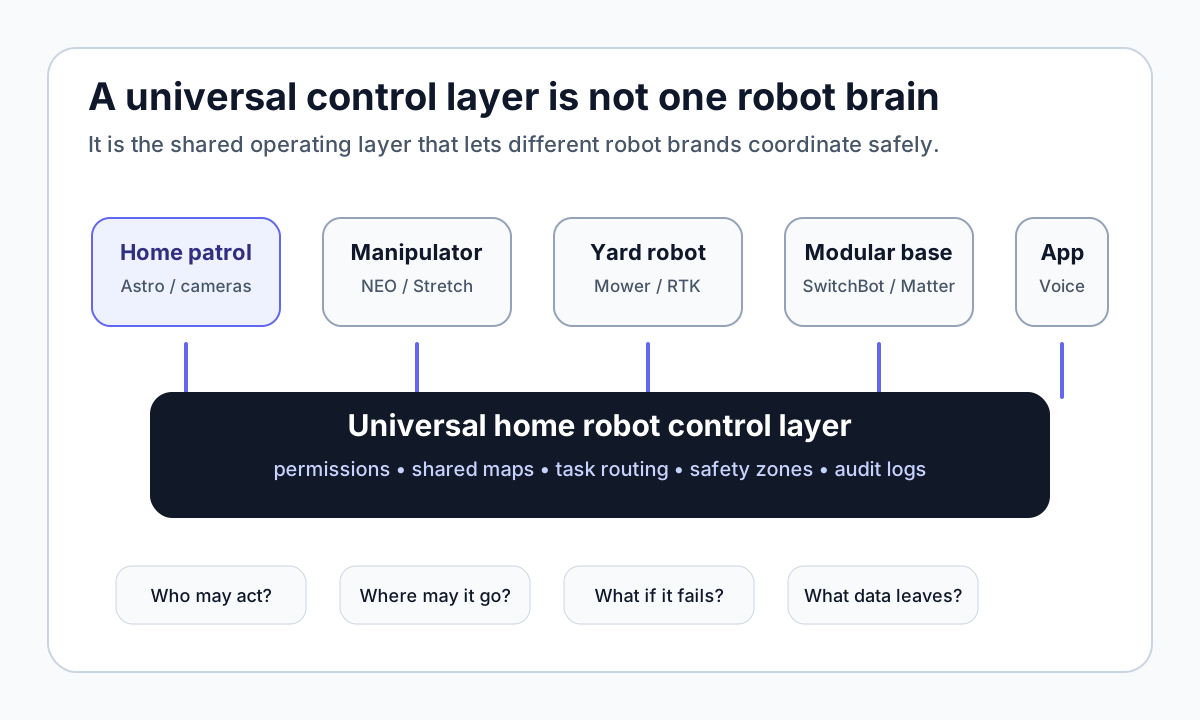
For buyers, the practical question is simple: will tomorrow's home robots share a control layer, or will every robot behave like a sealed island?
What did LG CNS PhysicalWorks actually show?
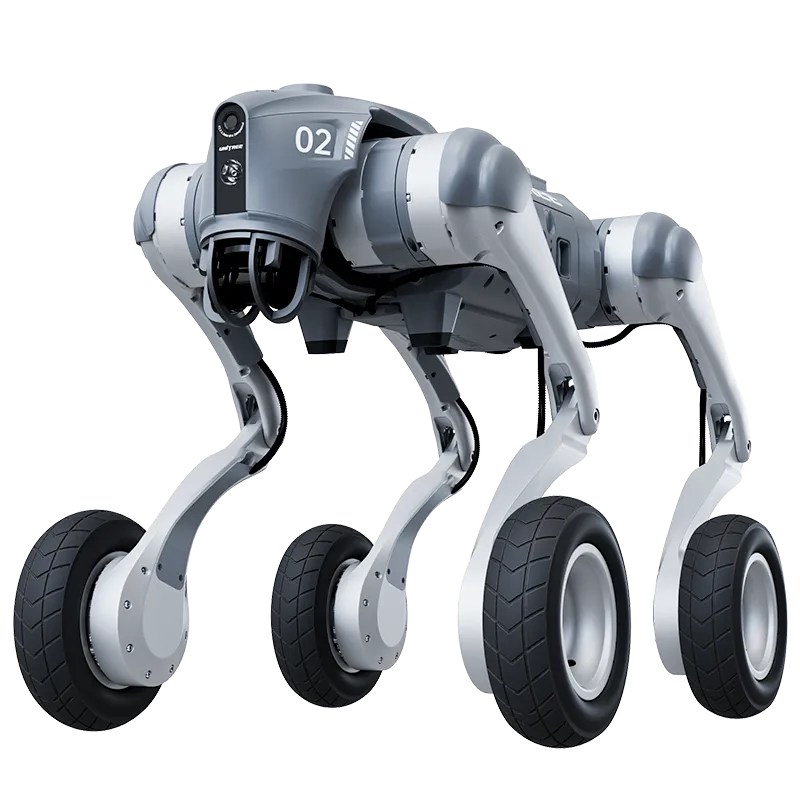
The Korea Herald described LG CNS PhysicalWorks as a platform for running robots from different manufacturers under a single control layer. In the company's live demonstration, a Unitree bipedal humanoid picked up packaged items, a Deep Robotics M20 quadruped moved the box, Dexmate's Vega wheeled humanoid loaded it onto a shelf, and a Bear Robotics Carti-100 logistics robot took over transport when the quadruped was reassigned to patrol duty.
That demo matters because the robots were not all from one vendor. They also were not simply following the same route in parallel. The platform had to understand who was available, what task each robot could do, where the handoff should happen, and how to keep the workflow moving when one robot was pulled away. According to the Korea Herald report, the staged handoff took about 90 seconds and none of the robots was remotely controlled.
The Korea Times added the architecture detail. PhysicalWorks has two named pieces:
- PhysicalWorks Forge for training, simulation, verification, deployment, and feedback from robot operations.
- PhysicalWorks Baton for standardizing operational data and control interfaces, allocating tasks, optimizing traffic routes, and adjusting workflows across multiple robot types or makes.
LG CNS also said Baton is already managing patrol, barista, cargo-handling, and cleaning robots in Busan's smart-city pilot. For large AMR or AGV operations, it claims more than 15 percent productivity improvement and up to 18 percent lower operational cost. Those numbers are industrial, not household, but the pattern is very relevant: mixed robots need shared context, not just a nicer voice command.
Why this matters for home robots
A normal home will not start with a humanoid robot doing everything. It will probably start with several narrower robots: a patrol robot, a yard robot, a mobile manipulator, a cleaning robot, maybe a companion robot, and a smart-home assistant. Each one may be useful on its own. The pain starts when they overlap.
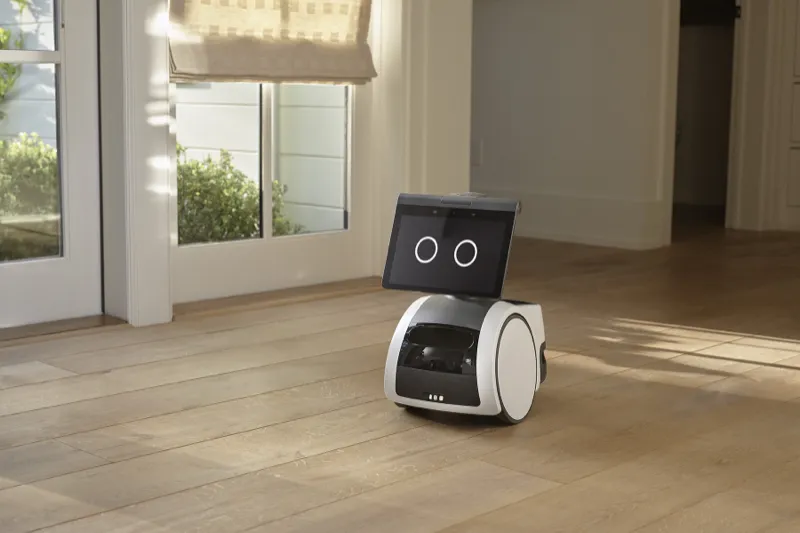
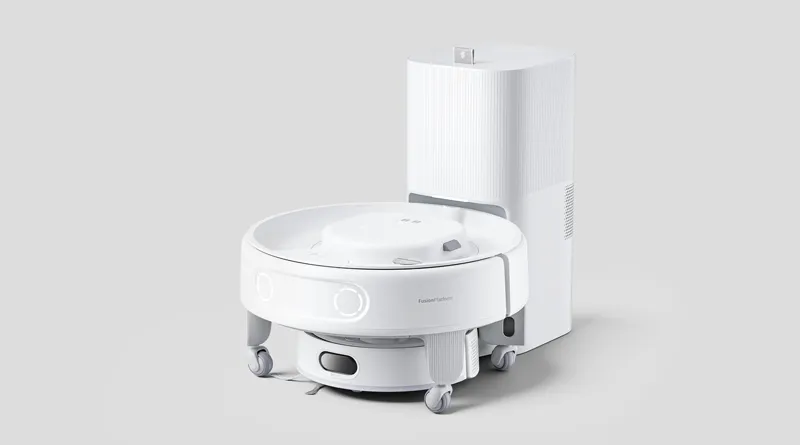
Today, Amazon Astro is a mobile home-monitoring robot with Alexa, Ring integration, room-to-room navigation, Visual ID, and remote video features. SwitchBot K20+ Pro is a modular platform that can carry an air purifier, security camera, fan, or other add-ons. Segway Navimow i105 and Yarbo M show how outdoor robots already bring their own maps, zones, schedules, and app controls. Samsung Ballie points toward smart-home coordination through SmartThings, though it remains a delayed development product.
Now add a physical helper. 1X NEO is a $20,000 pre-order home humanoid with a soft body, about four hours of battery life, visual/spatial awareness, and an official Expert Mode for chores it does not yet know. Hello Robot Stretch 4 is a $29,950 available mobile manipulator with ROS 2, Python SDK support, self-charging, an 8-hour light-load runtime, and a 2.5 kg extended / 4 kg retracted payload.
That is the moment a universal control layer becomes more than a geeky integration problem. If a home has multiple physical agents, the house needs a way to answer questions like:
- Which robot is allowed into the bedroom?
- Which robot may stream video outside the home?
- Which robot can open, carry, or hand off an object?
- Which map is the source of truth when furniture moves?
- Who gets priority in a hallway or near stairs?
- What happens if one robot fails halfway through a chore?
A voice assistant can start a task. A control layer has to coordinate the messy middle.
The database view: useful robots already have incompatible strengths
The ui44 database makes the interoperability problem clearer. The robots that matter are not interchangeable. They have different bodies, risk levels, runtimes, interfaces, and ownership models.
Robot
- ui44 database snapshot
- $1,599.99 invitation pricing; active; 44 cm, 9.35 kg; Alexa, Ring, Visual ID, home patrol and remote monitoring
- Why a control layer matters
- It handles awareness and monitoring, but video, identity, patrol zones, and smart-home permissions need clear boundaries.
Robot
- ui44 database snapshot
- $20,000 early-adopter pre-order; 167 cm, 30 kg; about 4 hours battery; household chores and Expert Mode
- Why a control layer matters
- A physical helper needs task permissions, human fallback rules, and logs for what was autonomous versus guided.
Robot
- ui44 database snapshot
- $29,950; available; 160 cm, 46 kg; 8 hours light-load runtime; ROS 2/Python SDK; 2.5 kg extended arm payload
- Why a control layer matters
- It is the kind of open mobile manipulator that developers can integrate, but it still needs safe household role limits.
Robot
- ui44 database snapshot
- Starts at $13,500; available; 132 cm, 35 kg; about 2 hours battery; ROS 2 and Unitree SDK; optional dexterous hands
- Why a control layer matters
- It is affordable for a humanoid, but Unitree itself warns individual users to understand humanoid limitations before purchase.
Robot
- ui44 database snapshot
- From $699.99; available; modular FusionPlatform; up to 8 kg carry platform; Matter via SwitchBot Hub
- Why a control layer matters
- It shows a practical ecosystem approach: move existing smart-home devices around, but still mostly inside one vendor universe.
Robot
- ui44 database snapshot
- Pre-order from $2,199; modular yard platform; mower, snow, leaf, and trimming modules; NetRTK navigation
- Why a control layer matters
- Outdoor robots need weather, boundary, slope, and schedule context that indoor robots usually do not understand.
| Robot | ui44 database snapshot | Why a control layer matters |
|---|---|---|
| Amazon Astro | $1,599.99 invitation pricing; active; 44 cm, 9.35 kg; Alexa, Ring, Visual ID, home patrol and remote monitoring | It handles awareness and monitoring, but video, identity, patrol zones, and smart-home permissions need clear boundaries. |
| 1X NEO | $20,000 early-adopter pre-order; 167 cm, 30 kg; about 4 hours battery; household chores and Expert Mode | A physical helper needs task permissions, human fallback rules, and logs for what was autonomous versus guided. |
| Hello Robot Stretch 4 | $29,950; available; 160 cm, 46 kg; 8 hours light-load runtime; ROS 2/Python SDK; 2.5 kg extended arm payload | It is the kind of open mobile manipulator that developers can integrate, but it still needs safe household role limits. |
| Unitree G1 | Starts at $13,500; available; 132 cm, 35 kg; about 2 hours battery; ROS 2 and Unitree SDK; optional dexterous hands | It is affordable for a humanoid, but Unitree itself warns individual users to understand humanoid limitations before purchase. |
| SwitchBot K20+ Pro | From $699.99; available; modular FusionPlatform; up to 8 kg carry platform; Matter via SwitchBot Hub | It shows a practical ecosystem approach: move existing smart-home devices around, but still mostly inside one vendor universe. |
| Yarbo M | Pre-order from $2,199; modular yard platform; mower, snow, leaf, and trimming modules; NetRTK navigation | Outdoor robots need weather, boundary, slope, and schedule context that indoor robots usually do not understand. |
The obvious lesson is that one robot will not own the whole home. Astro may know who is home. Stretch may reach a counter. NEO may eventually learn a chore. SwitchBot may move a small appliance. Yarbo or Navimow may manage the yard. A useful household system has to route work between specialists instead of asking one machine to become everything.
What a real home robot control layer would need
A home version of PhysicalWorks would not simply be a dashboard with robot names. It would need several layers that buyers can actually inspect.
1. Identity and permission management
A robot that only vacuums does not need the same permission model as a robot with arms, cameras, microphones, and access to doors. A universal layer should let the owner say: this robot may enter the kitchen, this robot may not enter bedrooms, this robot may carry objects under 2 kg, and this robot may stream video only when Away mode is active.
That matters for Amazon Astro, because remote monitoring and Visual ID are core features. It matters even more for humanoids and mobile manipulators, because physical actions create liability. A good system should separate see, move, touch, carry, open, and share data permissions instead of treating all robot access as one big yes/no toggle.
2. Shared maps without shared overreach
Every mobile robot builds some version of the home: rooms, zones, obstacles, charging docks, no-go lines, work areas, and probably people. The hard part is letting robots use enough spatial context to cooperate without forcing every map, video feed, and behavioral log into every vendor cloud.
A practical control layer should support common concepts like rooms, thresholds, stairs, pet zones, fragile zones, and temporary blocks. It should also let an owner decide which details are shared. A yard robot does not need indoor bedroom maps. A companion robot does not need the mower's boundary wire or RTK data. A manipulator may need counter geometry, but not children's room video history.
3. Task routing and handoff rules
PhysicalWorks is interesting because the demo was not just four robots moving. It was a handoff chain. Homes will need the same idea in smaller ways.
Imagine asking for this: "Bring the package from the front hall to the kitchen counter, then remind me after dinner." Astro might detect the delivery or send a remote alert. A mobile manipulator might pick it up. A voice assistant might ask for confirmation before a robot touches it. A calendar or reminder system might handle the final step.
Without task routing, each robot performs its own isolated trick. With task routing, the home can assign the job to the safest available robot, pause if a person enters the hallway, ask for approval before opening a door, and recover if one robot is low on battery.
4. Safety zones, fallback, and audit logs
The bigger the robot, the more important this becomes. 1X NEO is designed around a soft home body and safe human interaction, but it is still a 167 cm, 30 kg physical system. Unitree G1 is 35 kg, starts at $13,500, and Unitree's own G1 page tells individual users to understand the limitations of humanoid robots before purchase.
A home control layer should record what happened when a task failed. Was the robot autonomous? Was a remote expert involved? Did the owner approve the next action? Was a no-go zone crossed? If an object breaks or a pet is scared, the answer cannot be "check five separate apps."

5. Local control where it actually matters
Cloud services will not disappear. They are useful for model updates, fleet learning, remote support, and heavy AI workloads. But a home robot control layer should keep safety-critical basics local: emergency stop, no-go zones, room permissions, docking, unlock/lock rules, and logs for recent physical actions.
If an internet connection drops, the correct behavior is not "the robot forgets where it may go." The correct behavior is degraded autonomy with conservative limits. Patrol can stop. Manipulation can pause. The robot can dock. The owner should still be able to see what happened locally.
What buyers should ask today
There is no consumer-grade PhysicalWorks for the home today. Matter helps with smart-home devices, and platforms like SmartThings, Alexa, Google Home, Apple Home, SwitchBot, and Home Assistant can coordinate many non-robot devices. But a robot that sees, moves, touches, and learns is a different category from a light bulb or thermostat.
If you are buying a serious home robot now, ask these questions before getting excited about demos:
- Does it expose an API or only a closed app? Open interfaces matter when the robot becomes part of a larger household system.
- Can maps, rooms, and no-go zones be exported or shared safely? A robot that traps everything in one cloud account creates future lock-in.
- Can permissions be separated by action? Video, audio, navigation, manipulation, purchases, door control, and data sharing should not be one permission.
- What happens when the robot is low on battery, blocked, or unsure? The answer should include fallback behavior, not just "AI handles it."
- Can humans review what happened? Logs matter for trust, insurance, caregiving, and troubleshooting.
- Does the company support local emergency stop and local safety zones? The answer should not depend entirely on a subscription or cloud connection.
- Will it work with the rest of your home? A robot that only cooperates inside one brand ecosystem may still be useful, but buyers should understand the lock-in.
The honest limitation: standards may lag the robots
This is where buyers should stay skeptical. The robotics industry is moving faster than consumer interoperability standards. A platform like LG CNS PhysicalWorks can work in factories and smart cities because one integrator can own the deployment, define the workflow, choose the robots, tune the interfaces, and be paid for custom integration.
Homes are harder in a different way. The environment changes constantly. The owner is not a facilities manager. Pets, kids, guests, stairs, clutter, privacy, and liability all vary from one household to another. A universal control layer for homes has to be powerful enough for real robots and simple enough for normal people.
That means the near-term market will probably be uneven:
- Single-brand ecosystems will arrive first, because companies can control the hardware, app, maps, accessories, and subscriptions.
- Developer-friendly robots like Stretch 4 and Unitree G1 will be easier for labs and integrators to coordinate, but not necessarily easier for normal buyers.
- Smart-home bridges will cover simple commands before they cover safe physical task handoffs.
- Local-first privacy features will become a buying criterion as robots add cameras, microphones, maps, and manipulation.
For ui44, this is the key takeaway: home robot readiness is not just body shape, price, battery life, or AI model quality. It is also systems integration.
Bottom line
LG CNS PhysicalWorks is not a home product. It is still one of the clearest signs of where home robotics has to go.
The future home robot stack will not be a single magic humanoid replacing every appliance. It will be a mixed fleet: patrol, cleaning, yard care, manipulation, companionship, smart-home control, and maybe a humanoid for general chores. The winners will be the robots that can cooperate safely, not just perform impressive solo demos.
If you are evaluating a robot today, look past the highlight reel. Ask how it shares maps, how it handles permissions, how it fails, how it logs actions, and whether it can fit into a broader home robot control layer. The best robot in the house may eventually be the one that knows when to hand the task to another one.
Related in the database
Use this article as a privacy verification workflow
Turn the article into a privacy verification pass grounded in the robots, manufacturers, and components it actually references.
Home Robots Need a Universal Control Layer already points you toward 8 linked robots, 8 manufacturers, and 4 countries inside the ui44 database. That matters because strong buyer guidance is easier to apply when you can move immediately from a claim or warning into concrete product pages, manufacturer directories, component explainers, and country-level context instead of treating the article as an isolated opinion piece. The fastest next step is to turn the article into a shortlist workflow: open the linked robot pages, verify which specs are actually published for those models, then compare the surrounding manufacturer and component context before you decide whether the underlying claim changes your buying plan.
For this topic, the useful discipline is to separate the editorial lesson from the catalog evidence. The article gives you the framing, but the robot pages tell you what each product actually ships with today: sensor stack, connectivity methods, listed price, release timing, category, and support-relevant compatibility notes. The manufacturer pages then show whether you are looking at a one-off launch, a broader lineup pattern, or a company that spans multiple categories. That layered workflow reduces the risk of buying on a single marketing phrase or a single support FAQ.
Use the robot pages to confirm which products actually expose cameras, microphones, Wi-Fi, or voice systems, then use the manufacturer pages to decide how much of the privacy question seems product-specific versus brand-wide. On this route cluster, Astro, K20+ Pro, and Navimow i105 form the fastest reality check. If you want a quick working shortlist, open Compare Astro, K20+ Pro, and Navimow i105 next, then keep this article open as the reasoning layer while you compare structured data side by side.
Practical Takeaway
Every robot, manufacturer, category, component, and country reference below resolves to a real ui44 page, keeping the follow-up path grounded in database records rather than generic advice.
Suggested next steps in ui44
- Open Astro and note the listed sensors, connectivity methods, and voice stack before you interpret any policy claim.
- Cross-check the wider brand context on Amazon so you can see whether the privacy question touches one model or a broader lineup.
- Use the linked component pages to confirm how common the relevant sensors and connectivity layers are across the database.
- Keep a short note of which policy layers you checked, which device features are actually present on the robot page, and which items still depend on region- or app-level confirmation.
- Finish with Compare Astro, K20+ Pro, and Navimow i105 so the policy reading sits next to structured product data.
Robot profiles worth opening next
Use the linked product pages as the evidence layer
The linked robot pages are where this article becomes operational. Instead of asking whether the headline is interesting, use the robot entries to inspect the actual mix of sensors, connectivity options, batteries, pricing, release timing, and stated capabilities attached to the products mentioned in the article. That is the easiest way to see whether the warning or opportunity described here affects one product family, a specific design pattern, or an entire buying lane.
Astro is tracked on ui44 as a active security & patrol robot from Amazon. The database currently records a listed price of $1,599, a release date of 2021, Not officially disclosed battery life, Not officially disclosed charging time, and a published stack that includes 5MP Bezel Camera, 1080p Periscope Camera (132° FOV), and Infrared Vision plus Wi-Fi 802.11ac and Bluetooth.
For privacy-focused reading, this page matters because it shows the concrete device surface behind the policy discussion. Use it to verify whether Astro combines sensors and connectivity in a way that could change the in-home data footprint, and compare the listed capabilities such as Autonomous Home Patrol, Visual ID (face recognition), and Remote Home Monitoring with any cloud, app, or voice layers, including Amazon Alexa.
K20+ Pro is tracked on ui44 as a available cleaning robot from SwitchBot. The database currently records a listed price of $699, a release date of 2025-06, 3500 mAh battery capacity; runtime not officially disclosed battery life, About 4 hours charging time, and a published stack that includes DToF laser radar, Triple laser obstacle-avoidance sensors, and Cliff/fall-prevention sensors plus Wi-Fi (2.4GHz / 5GHz) and Bluetooth.
For privacy-focused reading, this page matters because it shows the concrete device surface behind the policy discussion. Use it to verify whether K20+ Pro combines sensors and connectivity in a way that could change the in-home data footprint, and compare the listed capabilities such as Robot Vacuum Cleaning, FusionPlatform Modular System (ClawLock attachment), and Smart Delivery (up to 8 kg payload) with any cloud, app, or voice layers, including Amazon Alexa and Google Assistant.
Navimow i105
Segway Navimow · Lawn & Garden · Available
Navimow i105 is tracked on ui44 as a available lawn & garden robot from Segway Navimow. The database currently records a listed price of $799, a release date of 2024-03, Up to 60 minutes full-charge mowing time battery life, 90 minutes charging time, and a published stack that includes 140° RGB Fisheye Camera and RTK/GNSS Positioning plus Bluetooth and Wi-Fi.
For privacy-focused reading, this page matters because it shows the concrete device surface behind the policy discussion. Use it to verify whether Navimow i105 combines sensors and connectivity in a way that could change the in-home data footprint, and compare the listed capabilities such as Wire-Free Lawn Mowing, AI-Assisted Mapping, and Multi-Zone Management with any cloud, app, or voice layers, including Alexa and Google Assistant.
Yarbo M is tracked on ui44 as a pre-order lawn & garden robot from Yarbo. The database currently records a listed price of $2,199, a release date of 2026-08, ~110 min mowing (M20i model); varies by module and terrain battery life, 30–80 min (630W wireless fast charging via dock) charging time, and a published stack that includes NetRTK Wireless Positioning, LiDAR (M20i model only), and AI Computer Vision Camera (M20i model only) plus Wi-Fi and Bluetooth.
For privacy-focused reading, this page matters because it shows the concrete device surface behind the policy discussion. Use it to verify whether Yarbo M combines sensors and connectivity in a way that could change the in-home data footprint, and compare the listed capabilities such as Modular All-Season Yard Care (4 swappable modules), Lawn Mowing — Dual Straight Blades, 5–10.2 cm Height, and Snow Plowing — 60 cm Blade, ±25° Steering, Quiet Operation with any cloud, app, or voice layers.
Ballie is tracked on ui44 as a development companions robot from Samsung. The database currently records a listed price of Price TBA, a release date of TBD, Not officially disclosed battery life, Not officially disclosed charging time, and a published stack that includes Camera, Spatial Sensors, and Environmental Sensors plus Wi-Fi and SmartThings.
For privacy-focused reading, this page matters because it shows the concrete device surface behind the policy discussion. Use it to verify whether Ballie combines sensors and connectivity in a way that could change the in-home data footprint, and compare the listed capabilities such as Autonomous Home Navigation, Built-in Projector (Wall & Floor), and Smart Home Control via SmartThings with any cloud, app, or voice layers, including Bixby.
Manufacturer context behind the article
Check whether this is one product story or a broader company pattern
Manufacturer pages add the privacy context that individual product pages cannot show on their own. They help you check whether cameras, microphones, cloud accounts, app controls, and policy assumptions appear across a broader lineup or stay tied to one specific product story.
Amazon
ui44 currently tracks 1 robot from Amazon across 1 category. The company is grouped under USA, and the current catalog footprint on ui44 includes Astro.
That wider brand context matters because privacy questions rarely stop at one FAQ page. A manufacturer route helps you see whether the article is centered on one premium model or on a company that has several relevant products and therefore more than one place where the same policy or app assumptions might matter. The category mix here currently points toward Security & Patrol as the most useful next route if you want to see whether this article reflects a wider pattern inside the brand.
SwitchBot
ui44 currently tracks 3 robots from SwitchBot across 3 categorys. The company is grouped under USA, and the current catalog footprint on ui44 includes K20+ Pro, onero H1, KATA Friends.
That wider brand context matters because privacy questions rarely stop at one FAQ page. A manufacturer route helps you see whether the article is centered on one premium model or on a company that has several relevant products and therefore more than one place where the same policy or app assumptions might matter. The category mix here currently points toward Cleaning, Home Assistants, Companions as the most useful next route if you want to see whether this article reflects a wider pattern inside the brand.
Segway Navimow
ui44 currently tracks 4 robots from Segway Navimow across 1 category. The company is grouped under China, and the current catalog footprint on ui44 includes Navimow i105, Navimow X350, Navimow i2 LiDAR Pro.
That wider brand context matters because privacy questions rarely stop at one FAQ page. A manufacturer route helps you see whether the article is centered on one premium model or on a company that has several relevant products and therefore more than one place where the same policy or app assumptions might matter. The category mix here currently points toward Lawn & Garden as the most useful next route if you want to see whether this article reflects a wider pattern inside the brand.
Yarbo
ui44 currently tracks 1 robot from Yarbo across 1 category. The company is grouped under USA, and the current catalog footprint on ui44 includes Yarbo M.
That wider brand context matters because privacy questions rarely stop at one FAQ page. A manufacturer route helps you see whether the article is centered on one premium model or on a company that has several relevant products and therefore more than one place where the same policy or app assumptions might matter. The category mix here currently points toward Lawn & Garden as the most useful next route if you want to see whether this article reflects a wider pattern inside the brand.
Broaden the scan without leaving the database
Categories, components, and countries add the wider context
Category framing
Category pages are useful when the article touches a buying pattern that shows up across brands. A category route helps you confirm whether the linked products sit in a narrow niche or whether the same question should be tested across a larger field of alternatives.
Security & Patrol
The Security & Patrol category page currently groups 5 tracked robots from 5 manufacturers. ui44 describes this lane as: Autonomous surveillance and patrol robots that monitor homes, businesses, and perimeters — keeping watch without an operator on site.
That makes the category route a practical follow-up when you want to check whether the products linked in this article are typical for the lane or whether they sit at one edge of the market. Useful starting examples currently include Astro, Vision 60, K7 Autonomous Security Robot.
Cleaning
The Cleaning category page currently groups 62 tracked robots from 27 manufacturers. ui44 describes this lane as: Robot vacuums, mops, pool cleaners, and window cleaners — the workhorses of home automation that keep every surface spotless.
That makes the category route a practical follow-up when you want to check whether the products linked in this article are typical for the lane or whether they sit at one edge of the market. Useful starting examples currently include Scuba V3, EcoSurfer S2, Scuba V3 Ultra.
Country and ecosystem context
Country pages give extra context when support practices, launch sequencing, regulatory posture, or manufacturer mix matter. They are not a substitute for model-level verification, but they do help you see which ecosystems cluster together and which manufacturers sit in the same regional field when you broaden the search beyond the article headline.
USA
The USA route currently groups 89 tracked robots from 69 manufacturers in ui44. That gives you a useful regional lens when the article points toward support practices, launch sequencing, or brand clusters that may share similar ecosystem assumptions.
On the current route, manufacturers like Faraday Future, iRobot, Boston Dynamics make the page a good way to broaden the scan without losing the regional context that often shapes availability, documentation style, and adjacent alternatives.
China
The China route currently groups 189 tracked robots from 87 manufacturers in ui44. That gives you a useful regional lens when the article points toward support practices, launch sequencing, or brand clusters that may share similar ecosystem assumptions.
On the current route, manufacturers like AGIBOT, Dreame, Unitree Robotics make the page a good way to broaden the scan without losing the regional context that often shapes availability, documentation style, and adjacent alternatives.
South Korea
The South Korea route currently groups 9 tracked robots from 7 manufacturers in ui44. That gives you a useful regional lens when the article points toward support practices, launch sequencing, or brand clusters that may share similar ecosystem assumptions.
On the current route, manufacturers like ROBOTIS, Samsung, GenON make the page a good way to broaden the scan without losing the regional context that often shapes availability, documentation style, and adjacent alternatives.
Questions to answer before you move from reading to buying
A follow-up FAQ built from the entities already linked in this article
Frequently Asked Questions
Which page should I open first after reading “Home Robots Need a Universal Control Layer”?
Start with Astro. That gives you a concrete product anchor for the article’s main claim. From there, branch into the manufacturer and component pages so you can tell whether the article is describing one specific model, a repeated brand pattern, or a wider technology issue that affects multiple shortlist options.
How do the manufacturer pages change the buying decision?
Amazon help you zoom out from one article and one product. On ui44 they show lineup breadth, category spread, and the neighboring robots tied to the same company. That context is useful when you are deciding whether a risk belongs to a single model, whether it shows up across a brand’s portfolio, and whether you should keep looking at alternatives before committing.
When should I switch from reading to side-by-side comparison?
Move into Compare Astro, K20+ Pro, and Navimow i105 as soon as you understand the article’s main warning or promise. The article explains what to watch for, but the compare view is where you can check whether price, status, battery life, connectivity, sensors, and category fit still make the robot a good match for your own home and budget.
Where to go next in ui44
Keep the research chain inside the database
If you want to keep going, these follow-on pages give you the cleanest expansion path from article to research session. Open the comparison route first if you are deciding between products today. Open the manufacturer, category, and component routes if you still need to understand the broader pattern behind the claim.
Written by
ui44 Team
Published May 17, 2026
Share this article
Open a plain share link on X or Bluesky. No embeds, no widgets, no cookie baggage.