That sounds obvious, but many robot demos still happen in clean, human-free spaces. The robot completes a chore because nobody interrupts it. Real homes are the opposite: people interrupt constantly. They reach, correct, hesitate, spill, change their minds, and share the workspace.
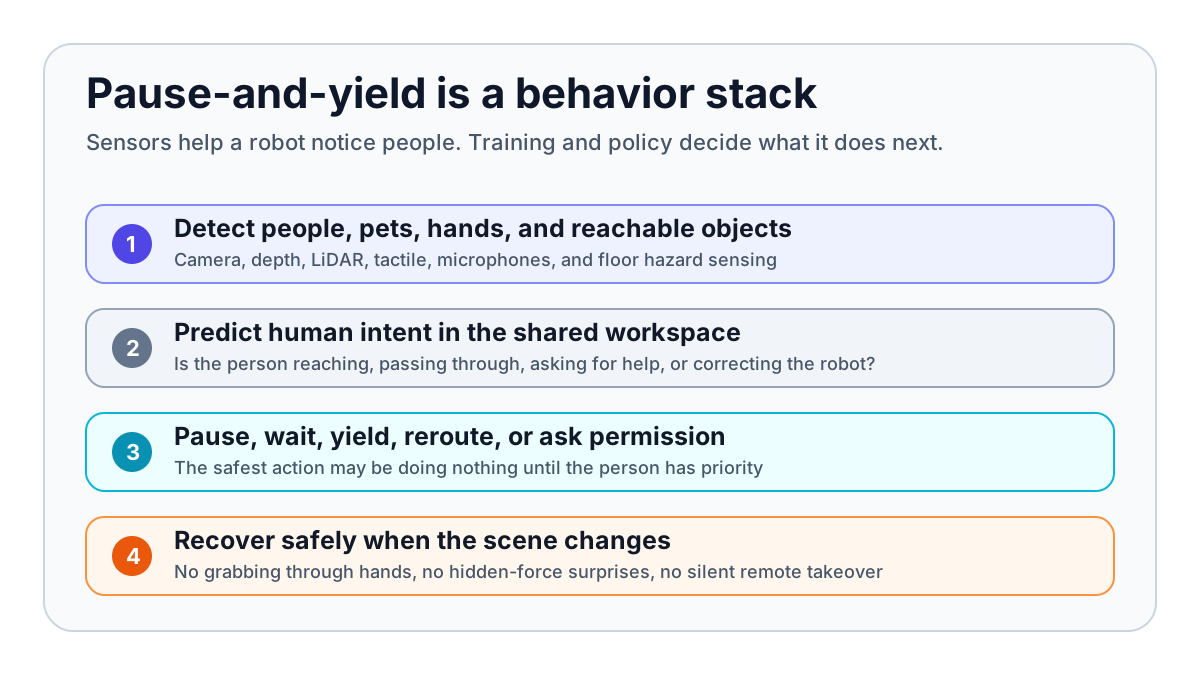
That is why Config's recent human-present training demo is useful. The important claim is not that one lab robot can sort recycling. It is that a robot trained on people being present can learn to pause, wait, and yield in ways a human-absent model does not. For buyers, that shifts the safety question from "does it have sensors?" to "has it learned what people are likely to do next?"
What did Config's pause-and-yield demo show?
In Teaching Robots to Coexist with Humans, Config argues that the hardest part of deployment is not only executing a task; it is operating where people are present. The company describes a recycling sorting setup where a robot sorts cans while a person sorts other materials in the same bin area.
The comparison is simple and sharp. A model trained only on human-absent data collides with a person and does not wait when someone is nearby. A model trained on human-present demonstrations learns to pause when a person reaches into the bin, wait while the person works nearby, and yield space without an explicit hard-coded safety rule.
That last detail matters. Traditional safety thinking often starts with rules: stop when something is too close, slow down near a human, set a geofence, limit force. Those are still necessary. But Config is pointing at a behavioral layer: patterns in demonstrations can teach the robot that human actions take priority in a shared workspace.
The company backs the demo with broader data-platform claims. Its product page says CFG-1 is a 2-billion-parameter foundation model trained on 100,000 hours of in-house human action data, with about 20,000 hours per month of ongoing data collection, a native 3-minute memory, and reported under 50 ms inference latency on an RTX
- In its earlier technical preview,
Config says its pipeline can adapt CFG-1 to a target task and robot with focused teleoperation data, describing a roughly 48-hour task-specific deployment loop and a popcorn-serving policy that improved from 43% ± 9% success after one revised strategy to 76% ± 7% after two online improvement rounds.
None of that proves a consumer home robot is ready to work freely around a family. It does prove the right test is getting harder. The next benchmark is not just "can the robot pick up the can?" It is "does the robot stop when your hand enters the scene?"

Why is a pause more important than a faster robot?
Speed is easy to market. Human-aware behavior is harder to see in a spec table. But in a home, the safest action is often to do less.
A robot moving through a hallway should slow down when someone steps out of a bedroom. A mobile manipulator reaching toward a countertop should stop when a person reaches for the same mug. A laundry robot should know whether a hand in the basket is a correction, a request for help, or a hazard. A companion robot should not keep nudging someone who is upset, busy, or physically unstable.
The lesson from Config is that "collision avoidance" is only the first rung. Avoiding impact is the minimum. Useful shared-space behavior also includes:
- Waiting when a person is already using the workspace.
- Yielding the shorter path, the object, or the attention channel.
- Rerouting rather than forcing a person to move.
- Asking permission before touching ambiguous objects.
- Recovering when the human changes the scene mid-task.
That is especially important for humanoids and mobile manipulators. A wheeled security robot can usually stop and be annoying. A 30 kg humanoid with arms can create a much more serious failure mode if it reaches through a hand, trips near a person, or keeps executing a task after the household context has changed.
Which ui44 robots make the safety question concrete?
The ui44 database is useful here because it separates broad AI language from the physical facts: weight, height, payload, sensors, availability, price, and the actual category of robot. A pause-and-yield checklist looks different for a stationary companion than for a mobile humanoid. You can use /compare to put these trade-offs side by side before a deposit or pilot request.
Robot
- ui44 database snapshot
- $20,000 early-adopter pre-order; 167 cm; 30 kg; ~4 hours battery; RGB cameras, depth sensors, tactile skin, microphone array
- Why pause-and-yield matters
- 1X markets NEO as a home robot for chores with soft, gentle interaction and an Expert Mode for tasks it does not know. Buyers should ask what happens when a person interrupts a chore, how remote guidance is disclosed, and whether the robot has learned human-present recovery behavior.
Robot
- ui44 database snapshot
- $29,950; available for research, enterprise, and in-home assistive pilots; 160 cm; 46 kg; 2.5 kg arm payload extended; 8-hour light-load runtime
- Why pause-and-yield matters
- Stretch 4 is not trying to look like a person, but it has the right physical risk: a mobile base, reach, depth sensing, LiDAR, a wrist camera, and assistive deployments. Its value is as a transparent platform for testing safe, observable behavior.
Robot
- ui44 database snapshot
- $1,599.99 invitation-only; 44 cm; 9.35 kg; periscope camera, ultrasonic sensors, infrared sensors, laser ground sensor, time-of-flight sensor
- Why pause-and-yield matters
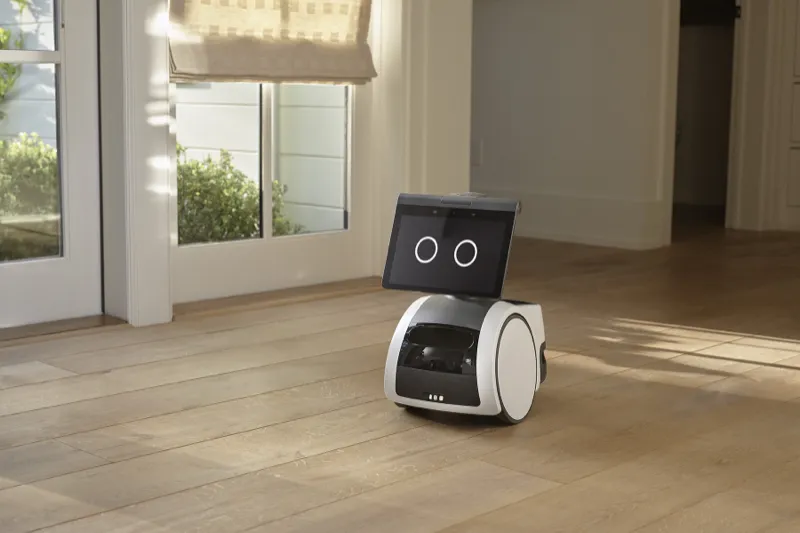
- Astro shows the lower-risk end of the spectrum: mobile, social, and camera-rich, but without arms. The safety question is mostly navigation, privacy, recognition, and whether it avoids being in the way.
Robot
- ui44 database snapshot
- Development status; no pricing announced; camera, spatial sensors, environmental sensors; Gemini plus Samsung language models
- Why pause-and-yield matters
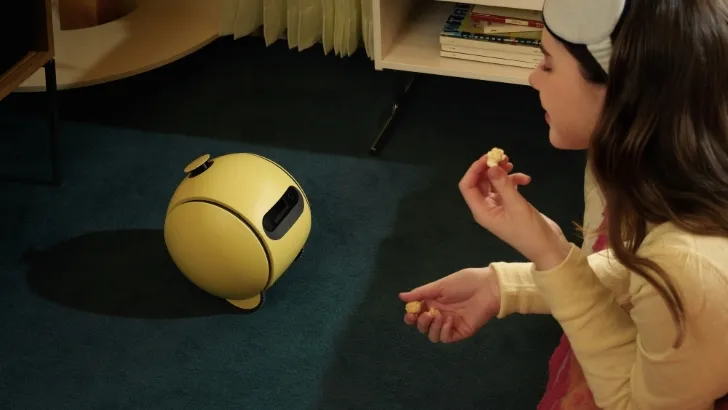
- Samsung's Ballie pitch is adaptive behavior in the home: reminders, SmartThings control, greeting people, and personalized responses. Until specs and availability are clear, the key question is how much real-world yielding it can do beyond conversation.
Robot
- ui44 database snapshot
- $7,999 upfront or $450/month; laundry-focused home assistant; stationary, mains powered, 20 degrees of freedom
- Why pause-and-yield matters
- Isaac 0 is interesting because it narrows the problem. Folding laundry in a constrained station is easier to safety-bound than roaming the whole home. Even there, hand-in-basket interruptions and teleoperation disclosure matter.
Robot
- ui44 database snapshot
- Development status; pricing not disclosed; computer vision, obstacle and stair detection, human and pet recognition
- Why pause-and-yield matters
- Floor decluttering sounds simple until toys, pets, feet, and people overlap. The buyer question is whether the robot recognizes humans and pets only as obstacles, or has a policy for yielding and asking before moving ambiguous objects.
Robot
- ui44 database snapshot
- Development status; pricing not announced; small-dog-size quadruped; vision, audio, touch-sensitive exterior; on-device multimodal AI
- Why pause-and-yield matters
- Familiar is more social than chore-focused, but its promise depends on reading household context. If a robot claims emotional intelligence, pause-and-yield becomes social: when to approach, when to back off, and when not to interrupt.
| Robot | ui44 database snapshot | Why pause-and-yield matters |
|---|---|---|
| 1X NEO | $20,000 early-adopter pre-order; 167 cm; 30 kg; ~4 hours battery; RGB cameras, depth sensors, tactile skin, microphone array | 1X markets NEO as a home robot for chores with soft, gentle interaction and an Expert Mode for tasks it does not know. Buyers should ask what happens when a person interrupts a chore, how remote guidance is disclosed, and whether the robot has learned human-present recovery behavior. |
| Hello Robot Stretch 4 | $29,950; available for research, enterprise, and in-home assistive pilots; 160 cm; 46 kg; 2.5 kg arm payload extended; 8-hour light-load runtime | Stretch 4 is not trying to look like a person, but it has the right physical risk: a mobile base, reach, depth sensing, LiDAR, a wrist camera, and assistive deployments. Its value is as a transparent platform for testing safe, observable behavior. |
| Amazon Astro | $1,599.99 invitation-only; 44 cm; 9.35 kg; periscope camera, ultrasonic sensors, infrared sensors, laser ground sensor, time-of-flight sensor | Astro shows the lower-risk end of the spectrum: mobile, social, and camera-rich, but without arms. The safety question is mostly navigation, privacy, recognition, and whether it avoids being in the way. |
| Samsung Ballie | Development status; no pricing announced; camera, spatial sensors, environmental sensors; Gemini plus Samsung language models | Samsung's Ballie pitch is adaptive behavior in the home: reminders, SmartThings control, greeting people, and personalized responses. Until specs and availability are clear, the key question is how much real-world yielding it can do beyond conversation. |
| Weave Isaac 0 | $7,999 upfront or $450/month; laundry-focused home assistant; stationary, mains powered, 20 degrees of freedom | Isaac 0 is interesting because it narrows the problem. Folding laundry in a constrained station is easier to safety-bound than roaming the whole home. Even there, hand-in-basket interruptions and teleoperation disclosure matter. |
| Clutterbot Rovie | Development status; pricing not disclosed; computer vision, obstacle and stair detection, human and pet recognition | Floor decluttering sounds simple until toys, pets, feet, and people overlap. The buyer question is whether the robot recognizes humans and pets only as obstacles, or has a policy for yielding and asking before moving ambiguous objects. |
| Familiar | Development status; pricing not announced; small-dog-size quadruped; vision, audio, touch-sensitive exterior; on-device multimodal AI | Familiar is more social than chore-focused, but its promise depends on reading household context. If a robot claims emotional intelligence, pause-and-yield becomes social: when to approach, when to back off, and when not to interrupt. |
What should buyers ask before trusting "safe around people"?
If a home robot claims it can share space with people, ask for evidence in plain language. The goal is not to interrogate every research paper. It is to avoid mistaking a sensor list for a safety case.
1. Was the robot trained or tested with people present?
A demo in an empty room is useful, but it does not answer the home question. Look for examples where a person reaches into the workspace, crosses the path, corrects the robot, stands nearby, or changes the task halfway through. Config's demo is valuable because it compares human-absent and human-present training on the same kind of shared task.
2. What exactly does the robot do when interrupted?
"Obstacle avoidance" is vague. Better answers are specific: the robot pauses, backs away, lowers the arm, releases grip, asks for confirmation, waits for a clear workspace, or hands control to a human. For arms, the answer should include what happens during contact or near-contact, not just navigation.
3. Are people and pets first-class objects in the policy?
Some robots detect humans and pets only to avoid them. That is different from understanding priority. A useful home robot needs to know that a reaching hand, a caregiver helping someone stand, a child crawling, and a dog sniffing a toy are not equivalent obstacles.
4. How is remote help disclosed?
Remote assistance can be reasonable, especially for early home robots. 1X says NEO's Expert Mode lets a 1X Expert guide the robot through chores it does not know. Weave's Isaac 0 entry in the ui44 database also notes remote teleoperation assist. That is not automatically bad. The buyer question is consent: who can connect, when are they visible, what can they see, and can every household member pause or block the session?
5. What data leaves the home?
Human-present training and adaptation can require sensitive data: images of rooms, hands, faces, voices, habits, clothing, medication areas, children's toys, and daily routines. Some products emphasize local processing, including Familiar with on-device data control claims. Others rely on cloud AI, remote experts, or fleet learning. Buyers should ask what is stored, what is used for model improvement, and whether opt-out makes the robot less capable.
6. How heavy, fast, and strong is the robot?
Physical specs change the risk. Amazon Astro is 9.35 kg and has no manipulator. 1X NEO is listed in the ui44 database at 30 kg. Stretch 4 is 46 kg with a 2.5 kg extended-arm payload and a 4 kg retracted-arm payload. Unitree G1, although more developer/research oriented than a finished home helper, starts at $13,500, weighs about 35 kg, and Unitree's official page explicitly cautions users to keep sufficient safe distance from people.
The bigger and more capable the robot, the more important explicit pause, yield, force limiting, and recovery behavior become.
Which claims are still too early?
The safest interpretation of today's market is conservative: no consumer home robot has yet proven general, unsupervised operation around ordinary household chaos. Some robots can patrol. Some can converse. Some can fold laundry in a bounded setup. Some can navigate research homes. Some humanoids can perform scripted chores or teleoperated tasks. That is progress, not proof.
Config's posts are also not a consumer product review. They are a signal about training direction. A robot foundation model that learns from human-present data may become better at shared spaces, but buyers should still look for product proof: published limits, clear fail states, physical specs, privacy controls, and demos where people interrupt the robot in believable ways.
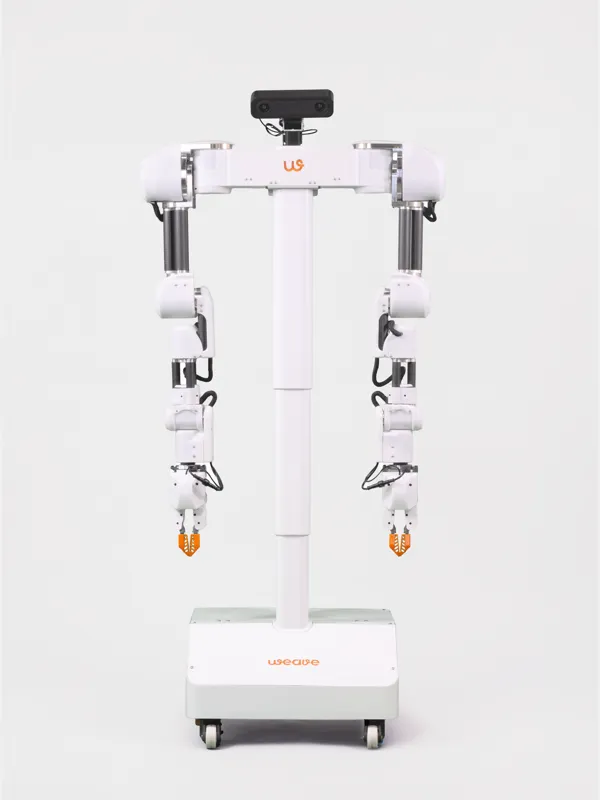
This is why constrained products may be more believable than general-purpose promises. A laundry station like Isaac 0 has a narrower work envelope. A stationary elder-care companion like ElliQ 3 has a different risk profile because it is not roaming with an arm. A mobile companion like Ballie or Astro must be judged mostly on movement, privacy, and social timing. A humanoid like NEO needs a much higher bar because it is intended to act in the same spaces and object fields as people.
What is the practical buyer checklist?
- A human-present demo, not only a robot-alone demo.
- A clear interruption behavior, such as pause, yield, back away, release,
- A remote-assistance policy that every household member can understand.
- A data policy for room video, voice, teleoperation, and model training.
- A physical-risk summary: weight, payload, force limits, speed limits, and
Bottom line: safe home robots need manners, not just sensors
The next useful safety feature may not sound futuristic. It may be a robot that waits.
Config's pause-and-yield demo is a good reminder that homes are shared spaces, not empty test cells. The robot that wins trust will not be the one that charges through a chore fastest. It will be the one that notices a person entering the scene, understands that the person has priority, pauses without drama, and recovers cleanly when the room changes.
That is the standard buyers should apply to every home robot claim in 2026: not just "can it do the task?" but "can it do the task while the rest of the house is still living around it?"
Related in the database
Use this article as a privacy verification workflow
Turn the article into a privacy verification pass grounded in the robots, manufacturers, and components it actually references.
Can Home Robots Safely Work Around People? already points you toward 9 linked robots, 9 manufacturers, and 7 countries inside the ui44 database. That matters because strong buyer guidance is easier to apply when you can move immediately from a claim or warning into concrete product pages, manufacturer directories, component explainers, and country-level context instead of treating the article as an isolated opinion piece. The fastest next step is to turn the article into a shortlist workflow: open the linked robot pages, verify which specs are actually published for those models, then compare the surrounding manufacturer and component context before you decide whether the underlying claim changes your buying plan.
For this topic, the useful discipline is to separate the editorial lesson from the catalog evidence. The article gives you the framing, but the robot pages tell you what each product actually ships with today: sensor stack, connectivity methods, listed price, release timing, category, and support-relevant compatibility notes. The manufacturer pages then show whether you are looking at a one-off launch, a broader lineup pattern, or a company that spans multiple categories. That layered workflow reduces the risk of buying on a single marketing phrase or a single support FAQ.
Use the robot pages to confirm which products actually expose cameras, microphones, Wi-Fi, or voice systems, then use the manufacturer pages to decide how much of the privacy question seems product-specific versus brand-wide. On this route cluster, NEO, Stretch 4, and Astro form the fastest reality check. If you want a quick working shortlist, open Compare NEO, Stretch 4, and Astro next, then keep this article open as the reasoning layer while you compare structured data side by side.
Practical Takeaway
Every robot, manufacturer, category, component, and country reference below resolves to a real ui44 page, keeping the follow-up path grounded in database records rather than generic advice.
Suggested next steps in ui44
- Open NEO and note the listed sensors, connectivity methods, and voice stack before you interpret any policy claim.
- Cross-check the wider brand context on 1X Technologies so you can see whether the privacy question touches one model or a broader lineup.
- Use the linked component pages to confirm how common the relevant sensors and connectivity layers are across the database.
- Keep a short note of which policy layers you checked, which device features are actually present on the robot page, and which items still depend on region- or app-level confirmation.
- Finish with Compare NEO, Stretch 4, and Astro so the policy reading sits next to structured product data.
Robot profiles worth opening next
Use the linked product pages as the evidence layer
The linked robot pages are where this article becomes operational. Instead of asking whether the headline is interesting, use the robot entries to inspect the actual mix of sensors, connectivity options, batteries, pricing, release timing, and stated capabilities attached to the products mentioned in the article. That is the easiest way to see whether the warning or opportunity described here affects one product family, a specific design pattern, or an entire buying lane.
NEO
1X Technologies · Humanoid · Pre-order
NEO is tracked on ui44 as a pre-order humanoid robot from 1X Technologies. The database currently records a listed price of $20,000, a release date of 2025-10-28, ~4 hours battery life, Not disclosed charging time, and a published stack that includes RGB Cameras, Depth Sensors, and Tactile Skin plus Wi-Fi and Bluetooth.
For privacy-focused reading, this page matters because it shows the concrete device surface behind the policy discussion. Use it to verify whether NEO combines sensors and connectivity in a way that could change the in-home data footprint, and compare the listed capabilities such as Household Chores, Tidying Up, and Safe Human Interaction with any cloud, app, or voice layers.
Stretch 4
Hello Robot · Home Assistants · Available
Stretch 4 is tracked on ui44 as a available home assistants robot from Hello Robot. The database currently records a listed price of $29,950, a release date of 2026-05-12, 8 hours (light CPU load) battery life, Not officially disclosed charging time, and a published stack that includes Wide-FOV depth sensing, High-resolution RGB cameras, and Calibrated RGB + depth perception plus its listed connectivity stack.
For privacy-focused reading, this page matters because it shows the concrete device surface behind the policy discussion. Use it to verify whether Stretch 4 combines sensors and connectivity in a way that could change the in-home data footprint, and compare the listed capabilities such as Mobile Manipulation, Omnidirectional Indoor Mobility, and Autonomous Mapping and Navigation with any cloud, app, or voice layers.
Astro is tracked on ui44 as a active security & patrol robot from Amazon. The database currently records a listed price of $1,599, a release date of 2021, Not officially disclosed battery life, Not officially disclosed charging time, and a published stack that includes 5MP Bezel Camera, 1080p Periscope Camera (132° FOV), and Infrared Vision plus Wi-Fi 802.11ac and Bluetooth.
For privacy-focused reading, this page matters because it shows the concrete device surface behind the policy discussion. Use it to verify whether Astro combines sensors and connectivity in a way that could change the in-home data footprint, and compare the listed capabilities such as Autonomous Home Patrol, Visual ID (face recognition), and Remote Home Monitoring with any cloud, app, or voice layers, including Amazon Alexa.
Ballie is tracked on ui44 as a development companions robot from Samsung. The database currently records a listed price of Price TBA, a release date of TBD, Not officially disclosed battery life, Not officially disclosed charging time, and a published stack that includes Camera, Spatial Sensors, and Environmental Sensors plus Wi-Fi and SmartThings.
For privacy-focused reading, this page matters because it shows the concrete device surface behind the policy discussion. Use it to verify whether Ballie combines sensors and connectivity in a way that could change the in-home data footprint, and compare the listed capabilities such as Autonomous Home Navigation, Built-in Projector (Wall & Floor), and Smart Home Control via SmartThings with any cloud, app, or voice layers, including Bixby.
Isaac 0
Weave Robotics · Home Assistants · Available
Isaac 0 is tracked on ui44 as a available home assistants robot from Weave Robotics. The database currently records a listed price of $3,999, a release date of 2026-02, Mains powered (600W, 120V) battery life, N/A (plugged in) charging time, and a published stack that includes Vision System and Proprioceptive Sensors plus Wi-Fi 2.4GHz/5GHz and Ethernet.
For privacy-focused reading, this page matters because it shows the concrete device surface behind the policy discussion. Use it to verify whether Isaac 0 combines sensors and connectivity in a way that could change the in-home data footprint, and compare the listed capabilities such as Laundry Folding, T-shirts, Long Sleeves, Sweaters, and Pants and Towels with any cloud, app, or voice layers.
Manufacturer context behind the article
Check whether this is one product story or a broader company pattern
Manufacturer pages add the privacy context that individual product pages cannot show on their own. They help you check whether cameras, microphones, cloud accounts, app controls, and policy assumptions appear across a broader lineup or stay tied to one specific product story.
1X Technologies
ui44 currently tracks 2 robots from 1X Technologies across 1 category. The company is grouped under Norway, and the current catalog footprint on ui44 includes NEO, EVE.
That wider brand context matters because privacy questions rarely stop at one FAQ page. A manufacturer route helps you see whether the article is centered on one premium model or on a company that has several relevant products and therefore more than one place where the same policy or app assumptions might matter. The category mix here currently points toward Humanoid as the most useful next route if you want to see whether this article reflects a wider pattern inside the brand.
Hello Robot
ui44 currently tracks 2 robots from Hello Robot across 1 category. The company is grouped under USA, and the current catalog footprint on ui44 includes Stretch 3, Stretch 4.
That wider brand context matters because privacy questions rarely stop at one FAQ page. A manufacturer route helps you see whether the article is centered on one premium model or on a company that has several relevant products and therefore more than one place where the same policy or app assumptions might matter. The category mix here currently points toward Home Assistants as the most useful next route if you want to see whether this article reflects a wider pattern inside the brand.
Amazon
ui44 currently tracks 1 robot from Amazon across 1 category. The company is grouped under USA, and the current catalog footprint on ui44 includes Astro.
That wider brand context matters because privacy questions rarely stop at one FAQ page. A manufacturer route helps you see whether the article is centered on one premium model or on a company that has several relevant products and therefore more than one place where the same policy or app assumptions might matter. The category mix here currently points toward Security & Patrol as the most useful next route if you want to see whether this article reflects a wider pattern inside the brand.
Samsung
ui44 currently tracks 2 robots from Samsung across 2 categorys. The company is grouped under South Korea, and the current catalog footprint on ui44 includes Ballie, Bespoke AI Jet Bot Steam Ultra.
That wider brand context matters because privacy questions rarely stop at one FAQ page. A manufacturer route helps you see whether the article is centered on one premium model or on a company that has several relevant products and therefore more than one place where the same policy or app assumptions might matter. The category mix here currently points toward Companions, Cleaning as the most useful next route if you want to see whether this article reflects a wider pattern inside the brand.
Broaden the scan without leaving the database
Categories, components, and countries add the wider context
Category framing
Category pages are useful when the article touches a buying pattern that shows up across brands. A category route helps you confirm whether the linked products sit in a narrow niche or whether the same question should be tested across a larger field of alternatives.
Humanoid
The Humanoid category page currently groups 129 tracked robots from 92 manufacturers. ui44 describes this lane as: Full-size bipedal humanoid robots built to work alongside people — from factory floors to household tasks. Compare the cutting edge of humanoid robotics.
That makes the category route a practical follow-up when you want to check whether the products linked in this article are typical for the lane or whether they sit at one edge of the market. Useful starting examples currently include NEO, EVE, Mornine M1.
Home Assistants
The Home Assistants category page currently groups 16 tracked robots from 14 manufacturers. ui44 describes this lane as: Arm-based household helpers — laundry folders, kitchen robots, and mobile manipulators that take on hands-on physical tasks around the home.
That makes the category route a practical follow-up when you want to check whether the products linked in this article are typical for the lane or whether they sit at one edge of the market. Useful starting examples currently include Robody, Futuring 2 (F2), Stretch 3.
Country and ecosystem context
Country pages give extra context when support practices, launch sequencing, regulatory posture, or manufacturer mix matter. They are not a substitute for model-level verification, but they do help you see which ecosystems cluster together and which manufacturers sit in the same regional field when you broaden the search beyond the article headline.
Norway
The Norway route currently groups 2 tracked robots from 1 manufacturers in ui44. That gives you a useful regional lens when the article points toward support practices, launch sequencing, or brand clusters that may share similar ecosystem assumptions.
On the current route, manufacturers like 1X Technologies make the page a good way to broaden the scan without losing the regional context that often shapes availability, documentation style, and adjacent alternatives.
USA
The USA route currently groups 89 tracked robots from 69 manufacturers in ui44. That gives you a useful regional lens when the article points toward support practices, launch sequencing, or brand clusters that may share similar ecosystem assumptions.
On the current route, manufacturers like Faraday Future, iRobot, Boston Dynamics make the page a good way to broaden the scan without losing the regional context that often shapes availability, documentation style, and adjacent alternatives.
South Korea
The South Korea route currently groups 9 tracked robots from 7 manufacturers in ui44. That gives you a useful regional lens when the article points toward support practices, launch sequencing, or brand clusters that may share similar ecosystem assumptions.
On the current route, manufacturers like ROBOTIS, Samsung, GenON make the page a good way to broaden the scan without losing the regional context that often shapes availability, documentation style, and adjacent alternatives.
Questions to answer before you move from reading to buying
A follow-up FAQ built from the entities already linked in this article
Frequently Asked Questions
Which page should I open first after reading “Can Home Robots Safely Work Around People?”?
Start with NEO. That gives you a concrete product anchor for the article’s main claim. From there, branch into the manufacturer and component pages so you can tell whether the article is describing one specific model, a repeated brand pattern, or a wider technology issue that affects multiple shortlist options.
How do the manufacturer pages change the buying decision?
1X Technologies help you zoom out from one article and one product. On ui44 they show lineup breadth, category spread, and the neighboring robots tied to the same company. That context is useful when you are deciding whether a risk belongs to a single model, whether it shows up across a brand’s portfolio, and whether you should keep looking at alternatives before committing.
When should I switch from reading to side-by-side comparison?
Move into Compare NEO, Stretch 4, and Astro as soon as you understand the article’s main warning or promise. The article explains what to watch for, but the compare view is where you can check whether price, status, battery life, connectivity, sensors, and category fit still make the robot a good match for your own home and budget.
Where to go next in ui44
Keep the research chain inside the database
If you want to keep going, these follow-on pages give you the cleanest expansion path from article to research session. Open the comparison route first if you are deciding between products today. Open the manufacturer, category, and component routes if you still need to understand the broader pattern behind the claim.
Written by
ui44 Team
Published May 18, 2026
Share this article
Open a plain share link on X or Bluesky. No embeds, no widgets, no cookie baggage.