That matters because a home robot has to do more than understand a command. It has to move through cluttered rooms, stop when a plan changes, recover from odd postures, and keep its arms, torso, legs, sensors, and safety limits coordinated. A language model can say "bring the bottle to the counter." It does not, by itself, solve the continuous body-control problem between the sofa, the charger, and the counter.
AGIBOT's May 2026 BFM-2 announcement is useful because it names that missing layer directly. AGIBOT describes BFM-2 as an end-to-end Motion-Between motion foundation model for humanoids: a system that reasons from the robot's current physical state toward a target movement instead of replaying fixed transitions.
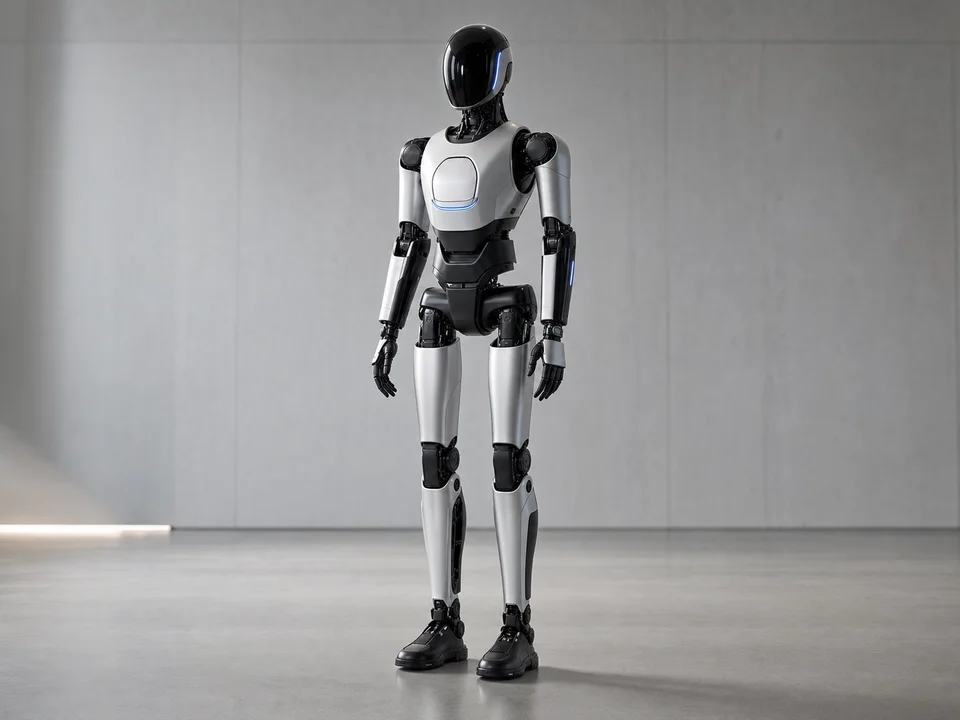
For home buyers, the claim is not "BFM-2 is ready for your kitchen." It is more specific: serious humanoid vendors are starting to separate the robot's task brain from its motion brain. That split is one of the signals to watch if you are comparing early humanoids, compact bipeds, and wheeled manipulators in 2026.
What AGIBOT Is Claiming With BFM-2
AGIBOT says BFM-2 moves beyond preset trajectories and simple fall-recovery behaviors. The company frames the model around a Motion-Between idea: the robot looks at its live whole-body state, contact conditions, and high-level intent, then generates a path from "where the body is now" to "where the body needs to be."
That sounds abstract, but it maps cleanly to everyday home failures.
If a robot is already leaning, holding something, interrupted mid-turn, or standing in a poor stance, the motion system cannot simply play the next pre-written animation. It needs to bridge from a messy physical state to a safer useful state. The bridge is the point.
AGIBOT also says the future BFM-3 direction will add more multimodal inputs: vision, touch, speech, spatial semantics, and environmental topology. That is important because a home is not a stage. Furniture moves. Floors have thresholds. People walk through the planned path. A robot that only reacts after a fall is less interesting than one that continuously adapts its posture before the problem becomes dramatic.
The cautious interpretation: BFM-2 is a platform signal, not a consumer feature you can verify in a store today. It tells us AGIBOT is investing in the low-level movement layer that must exist under any useful home humanoid.
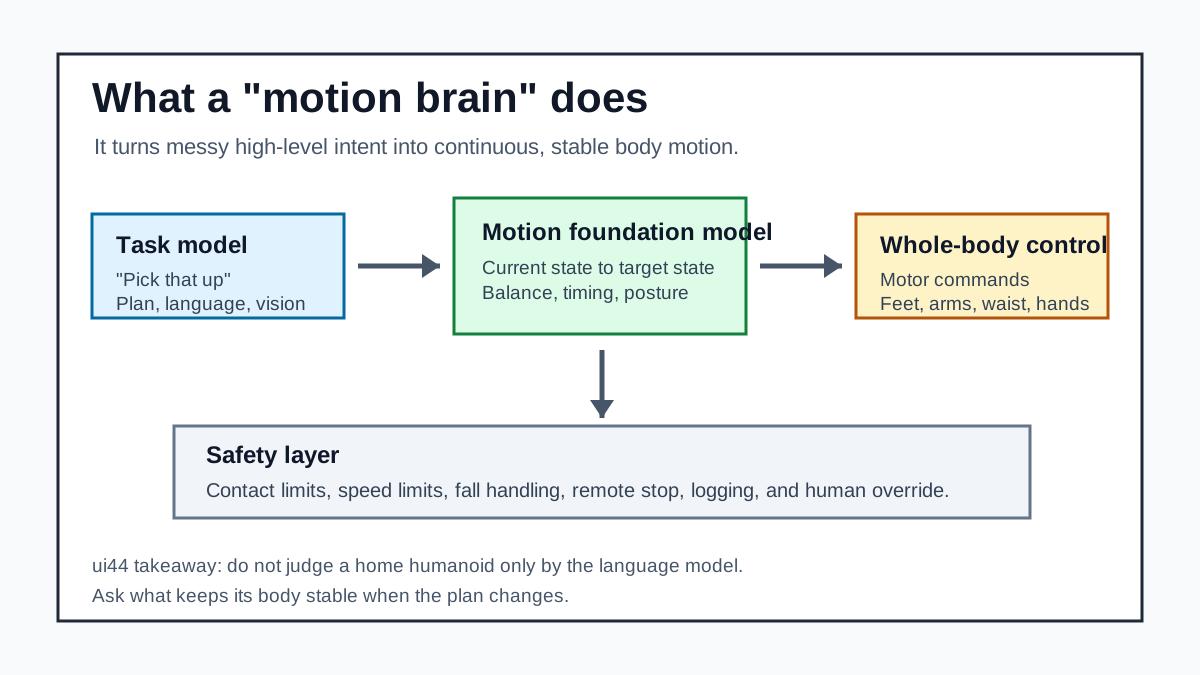
Why A Chatbot Brain Is Not Enough
Most robot announcements emphasize the top of the stack: large language models, vision-language-action systems, voice interaction, and general reasoning. Those layers matter. A home robot needs to understand requests, objects, rooms, and constraints.
But the body has its own problem set.
A task model can decide that the robot should step left, reach forward, or turn around. The motion system decides how the body gets there without losing balance or colliding with its own limits. This is why foundation-model work for humanoid control has become a real research lane, not just a branding phrase. The related Behavior Foundation Model for Humanoid Robots paper describes whole-body control as a problem of generating behaviors that guide the robot toward goal states across varied tasks.
For homes, the distinction is practical:
Layer
Task model
- What buyers usually hear
- "It uses an LLM"
- What to ask instead
- Can it handle interrupted instructions and changing goals?
Layer
Perception
- What buyers usually hear
- "It has cameras and LiDAR"
- What to ask instead
- Can it detect low obstacles, hands, edges, and people in motion?
Layer
Motion model
- What buyers usually hear
- "It walks and recovers"
- What to ask instead
- Can it generate safe transitions from awkward real states?
Layer
Safety layer
- What buyers usually hear
- "It has safety features"
- What to ask instead
- What speed, payload, stop, logging, and remote-help limits exist?
| Layer | What buyers usually hear | What to ask instead |
|---|---|---|
| Task model | "It uses an LLM" | Can it handle interrupted instructions and changing goals? |
| Perception | "It has cameras and LiDAR" | Can it detect low obstacles, hands, edges, and people in motion? |
| Motion model | "It walks and recovers" | Can it generate safe transitions from awkward real states? |
| Safety layer | "It has safety features" | What speed, payload, stop, logging, and remote-help limits exist? |
That last mile is where home-readiness will be won or lost. A robot that understands your sentence but cannot smoothly re-plan its body around a chair is still a demo machine.
The AGIBOT Hardware Context
BFM-2 is not being announced in a vacuum. AGIBOT already has several bodies in the ui44 database, and the differences between them show why one motion model is not the same thing as one home product.
The AGIBOT A2 is a full-size interactive service humanoid. Our database lists it at 169 cm and 69 kg, with 40+ active degrees of freedom, a 700 Wh swappable battery, about 2 hours of runtime, LiDAR, RGB-D cameras, fisheye cameras, microphones, speakers, force/torque sensing, dexterous hands, an interactive screen, and an AI stack that includes LLM/RAG dialogue, ActionGPT-style motion generation, 3D SLAM, and mobility planning. AGIBOT has positioned A2 for reception, guidance, exhibitions, and customer interaction.
That is closer to "public-space service humanoid" than "home helper." Still, it is a useful example because A2 has the kind of whole-body complexity that makes a motion foundation layer relevant.
The AGIBOT X2 is the more compact buyer comparison. ui44 lists the X2 at $24,240 from AGIBOT's official store, before taxes, duties, and customs costs. The compact biped stands 131 cm tall, weighs 35 kg in the base version or 39 kg in X2 Ultra form, runs for about 2 hours at 0.5 m/s walking, and reaches up to 1.8 m/s. The Ultra version lists 30 degrees of freedom, 3D LiDAR, RGB-D sensing, and an NVIDIA Orin NX board rated at 157 TOPS.

X2 is exactly the kind of robot where the "motion brain" question becomes concrete. It is small enough to be imaginable in a lab, school, showroom, or careful home pilot. It is also constrained: ui44 records AGIBOT's payload spec as 3 kg maximum in specific postures and no more than 1 kg across the full range. A smart buyer should ask how the robot behaves when carrying something near those limits, when a step is interrupted, or when a command changes while the robot is already moving.
The AGIBOT Expedition A3 pushes the other direction. ui44 lists it at about $45,000 and 173 cm tall, with a 55 kg body, up to 10 hours of endurance from dual 1,152 Wh battery packs, 10-second hot-swappable battery replacement, 7 km/h speed, and 3 kg nominal single-arm payload with 5 kg peak. It is a deployment and interaction platform, not a consumer chore robot, but its long runtime and fleet-style features show why AGIBOT is treating motion, task execution, and interaction as a platform stack.
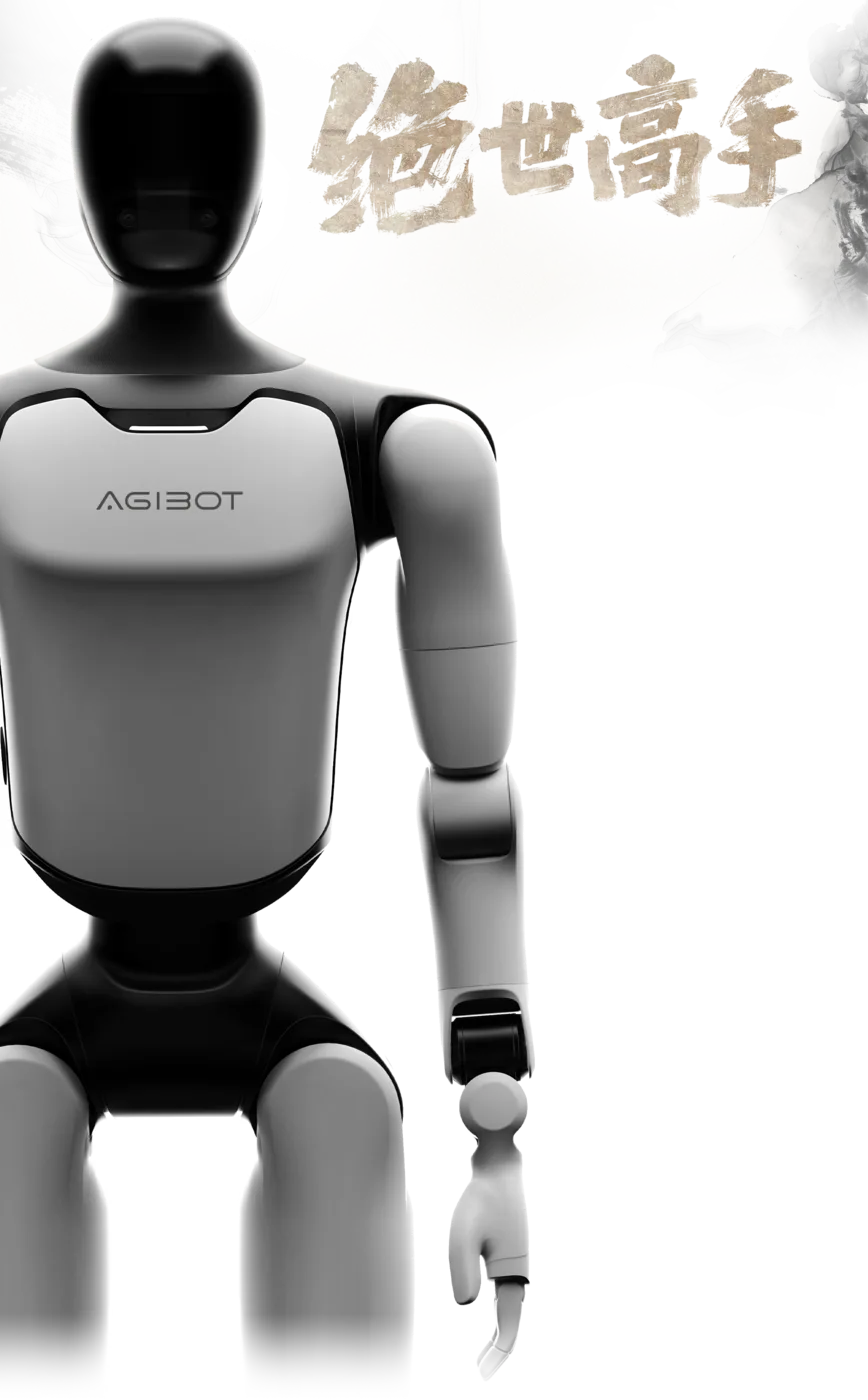
The AGIBOT G1 is also worth watching even though it is a wheeled humanoid-style robot, not a biped. ui44 records it as a Genie-family robot for industrial, commercial, and domestic scenarios, with 26 degrees of freedom, force sensors on both arms, eight upper-body cameras, front and rear RGB-D cameras, LiDAR, 3 kg continuous one-arm handling, and a working height over 2 m. Wheeled bodies avoid some legged locomotion problems, but they still need stable arm, waist, perception, and contact behavior.
The Buyer Signal: Ask About Transitions
The best buyer question is not "does it have AGI?" It is "what happens between states?"
Ask vendors to show the robot starting from a non-perfect pose. Ask what happens when the voice command changes mid-motion. Ask whether the robot can pause, yield, and resume without resetting the task. Ask how payload limits change when the arm is extended, the body is turning, or the robot is near a table edge. Ask whether recovery behavior is a canned demo or a general transition system.
Those questions reveal much more than a polished choreography video.
A motion brain also matters for remote operation. Many near-term home robots will rely on teleoperation, supervised autonomy, or a human-assist mode. If the low-level motion model can smooth unstable human input, maintain balance, and respect contact limits, remote help becomes more useful. If not, teleoperation just moves the risk from software planning to human control.
How This Compares With Cheaper Humanoids
AGIBOT is not the only company a home buyer will compare. The Unitree G1 is still the common price anchor because ui44 lists it from $13,500 before tax and shipping, with a 132 cm, 35 kg body, about 2 hours of battery life, 3D LiDAR, depth sensing, and more than 2 m/s trot speed. The newer Unitree R1 pushes the entry price even lower, with an R1 Air pre-sale from $4,900 and a standard R1 at $5,900, though with a shorter mixed-activity runtime around 1 hour.
Lower price is real progress. It also increases the importance of honest motion claims. A less expensive humanoid can be exciting for hobbyists, developers, and schools without being a reliable home assistant. The difference is not just height, speed, or the number of cameras. It is how gracefully the robot handles ordinary physical uncertainty.
That is why BFM-2 is interesting even if you are not buying an AGIBOT. It points to the comparison category buyers should demand across brands:
Robot
AGIBOT X2
- ui44 price signal
- $24,240
- Motion-readiness question
- Can the compact biped recover and re-plan while carrying light objects?
Robot
AGIBOT A2
- ui44 price signal
- Contact sales
- Motion-readiness question
- Can a full-size service humanoid keep interaction and movement stable together?
Robot
AGIBOT A3
- ui44 price signal
- ~$45,000
- Motion-readiness question
- Do fleet and stage-motion tools translate into safer daily movement?
Robot
Unitree G1
- ui44 price signal
- From $13,500
- Motion-readiness question
- How much motion generalization exists beyond developer demos?
Robot
Unitree R1
- ui44 price signal
- From $4,900 pre-sale
- Motion-readiness question
- What reliability is sacrificed to reach the lower entry price?
| Robot | ui44 price signal | Motion-readiness question |
|---|---|---|
| AGIBOT X2 | $24,240 | Can the compact biped recover and re-plan while carrying light objects? |
| AGIBOT A2 | Contact sales | Can a full-size service humanoid keep interaction and movement stable together? |
| AGIBOT A3 | ~$45,000 | Do fleet and stage-motion tools translate into safer daily movement? |
| Unitree G1 | From $13,500 | How much motion generalization exists beyond developer demos? |
| Unitree R1 | From $4,900 pre-sale | What reliability is sacrificed to reach the lower entry price? |
What Would Count As Real Home Evidence?
A useful home motion model should show up in boring tests.
It should recover from awkward positions without needing a reset. It should slow down near people and furniture. It should handle small command changes without freezing. It should keep payload limits conservative and visible. It should produce logs a service team can review after a near miss. It should have clear override controls. It should work when the environment is not arranged for a demo video.
This is where AGIBOT's BFM-2 language is promising but still incomplete for buyers. The company is describing the right class of problem: continuous whole-body motion generation from messy states. What buyers need next is evidence across specific bodies, tasks, payloads, surfaces, and safety limits.
Until that evidence is public, treat "motion foundation model" as a technical signal, not a purchase guarantee.
Bottom Line
Yes, home humanoids need a motion brain. More precisely, they need a motion layer that sits between high-level AI and motors, and that layer has to be good at the uncomfortable middle of real-world movement: interrupted commands, awkward postures, contact limits, payload shifts, and safe recovery.
AGIBOT BFM-2 is important because it puts that layer in the spotlight. It also helps buyers ask better questions. Do not stop at "which model powers the chatbot?" Ask how the robot turns intent into stable motion, what it can recover from, and how those capabilities map to the exact body you are considering.
For now, ui44 would treat AGIBOT's motion-model work as a positive platform signal for A2, X2, A3, and G1, not as proof that any of them is ready to do unsupervised home chores. The first credible home humanoids will not be the ones with the loudest AI claims. They will be the ones whose bodies can handle the quiet, messy transitions between every task.
Related in the database
Use this article as a buyer workflow
Turn the article into a real verification pass grounded in the robots, manufacturers, categories, components, and countries it actually references.
Do Home Humanoids Need a Motion Brain? already points you toward 6 linked robots, 3 manufacturers, and 1 country inside the ui44 database. That matters because strong buyer guidance is easier to apply when you can move immediately from a claim or warning into concrete product pages, manufacturer directories, component explainers, and country-level context instead of treating the article as an isolated opinion piece. The fastest next step is to turn the article into a shortlist workflow: open the linked robot pages, verify which specs are actually published for those models, then compare the surrounding manufacturer and component context before you decide whether the underlying claim changes your buying plan.
For this topic, the useful discipline is to separate the editorial lesson from the catalog evidence. The article gives you the framing, but the robot pages tell you what each product actually ships with today: sensor stack, connectivity methods, listed price, release timing, category, and support-relevant compatibility notes. The manufacturer pages then show whether you are looking at a one-off launch, a broader lineup pattern, or a company that spans multiple categories. That layered workflow reduces the risk of buying on a single marketing phrase or a single support FAQ.
The fastest win is to keep the article’s editorial framing tied to real product pages. That way you can test whether A2, X2, and Expedition A3 still make sense once price, category, release timing, and surrounding manufacturer context are visible in one place. If you want a quick working shortlist, open Compare A2, X2, and Expedition A3 next, then keep this article open as the reasoning layer while you compare structured data side by side.
Practical Takeaway
Every robot, manufacturer, category, component, and country reference below resolves to a real ui44 page, keeping the follow-up path grounded in database records rather than generic advice.
Suggested next steps in ui44
- Open A2 first so the article’s main point is anchored to a real robot page.
- Use AGIBOT to see the broader company context around the products linked in the article.
- Open the linked component pages when you want to separate a shared technology pattern from a single-brand story.
- Build a working shortlist with Compare A2, X2, and Expedition A3.
- Keep a short note of what is already verified in the article and what still needs live confirmation from current vendor documentation.
Robot profiles worth opening next
Use the linked product pages as the evidence layer
The linked robot pages are where this article becomes operational. Instead of asking whether the headline is interesting, use the robot entries to inspect the actual mix of sensors, connectivity options, batteries, pricing, release timing, and stated capabilities attached to the products mentioned in the article. That is the easiest way to see whether the warning or opportunity described here affects one product family, a specific design pattern, or an entire buying lane.
A2 is tracked on ui44 as a available humanoid robot from AGIBOT. The database currently records a listed price of ¥198,000, a release date of 2024-08-18, 2 hours (700 Wh swappable battery) battery life, Charging supported via standby station; exact charging time not officially disclosed charging time, and a published stack that includes LiDAR, RGB-D Cameras, and Fisheye Cameras plus Remote control and Smartphone control.
For general buyer research, this route gives you the concrete profile that the article alone cannot. Compare the published capabilities of Humanoid Human-Robot Interaction, Marketing and Customer Service, and Exhibition and Guided Presentations with the linked alternatives so the final decision is based on actual product fit, not just the framing of the article.
X2 is tracked on ui44 as a available humanoid robot from AGIBOT. The database currently records a listed price of $24,240, a release date of 2025, ~2 hours at 0.5 m/s walking battery life, ~1.5 hours charging time, and a published stack that includes 3D LiDAR (Ultra), RGB-D Camera (Ultra), and RGB Cameras plus Wi-Fi and Bluetooth.
For general buyer research, this route gives you the concrete profile that the article alone cannot. Compare the published capabilities of Bipedal Walking, 25-30 DOF Articulation, and Object Manipulation (with OmniHand accessory) with the linked alternatives so the final decision is based on actual product fit, not just the framing of the article.
Expedition A3
AGIBOT · Humanoid · Active
Expedition A3 is tracked on ui44 as a active humanoid robot from AGIBOT. The database currently records a listed price of Price TBA, a release date of 2026-04, Up to 10 hours (dual 1,152 Wh hot-swappable battery system) battery life, ≤2 hours; supports direct charging and battery swapping; 10-second battery swap per product page charging time, and a published stack that includes RGB binocular camera, GPS, and UWB positioning plus Wi-Fi and 4G/5G mobile network.
For general buyer research, this route gives you the concrete profile that the article alone cannot. Compare the published capabilities of Bipedal Walking & Running, Aerial Kicks & Dynamic Maneuvers, and 31-57 DOF Whole-Body Articulation Depending on Configuration with the linked alternatives so the final decision is based on actual product fit, not just the framing of the article.
G1 is tracked on ui44 as a available humanoid robot from AGIBOT. The database currently records a listed price of Price TBA, a release date of TBD, 4h+ runtime battery life, Not officially disclosed charging time, and a published stack that includes Six-axis force sensors on both arms, Eight high-resolution upper-body cameras, and Front and rear RGB-D cameras plus Wired data connection and Cloud data transmission.
For general buyer research, this route gives you the concrete profile that the article alone cannot. Compare the published capabilities of 26-DOF Wheeled Manipulation, One-Arm 3 kg Continuous Handling, and Working Height over 2 m with the linked alternatives so the final decision is based on actual product fit, not just the framing of the article.
G1 is tracked on ui44 as a available humanoid robot from Unitree. The database currently records a listed price of $13,500, a release date of 2024-05-13, ~2 hours battery life, Not disclosed charging time, and a published stack that includes Depth Camera, 3D LiDAR, and 4 Microphone Array plus Wi-Fi 6 and Bluetooth 5.2.
For general buyer research, this route gives you the concrete profile that the article alone cannot. Compare the published capabilities of Bipedal Walking, Object Manipulation, and Dexterous Hands (optional Dex3-1) with the linked alternatives so the final decision is based on actual product fit, not just the framing of the article.
Manufacturer context behind the article
Check whether this is one product story or a broader company pattern
Manufacturer pages add the market context that individual product pages cannot show on their own. They help you check whether the article is centered on a brand with a deep lineup, whether that brand spans several categories, and how much of its ui44 footprint depends on one flagship model versus a broader product strategy.
AGIBOT
ui44 currently tracks 10 robots from AGIBOT across 3 categorys. The company is grouped under China, and the current catalog footprint on ui44 includes A2 Ultra, X2, Expedition A3.
That wider brand context matters because the best buying decision usually depends on lineup depth and adjacent options, not just the one model featured most prominently in the article. The category mix here currently points toward Humanoid, Quadruped, Commercial as the most useful next route if you want to see whether this article reflects a wider pattern inside the brand.
Unitree
ui44 currently tracks 2 robots from Unitree across 1 category. The company is grouped under China, and the current catalog footprint on ui44 includes H1, G1.
That wider brand context matters because the best buying decision usually depends on lineup depth and adjacent options, not just the one model featured most prominently in the article. The category mix here currently points toward Humanoid as the most useful next route if you want to see whether this article reflects a wider pattern inside the brand.
Unitree Robotics
ui44 currently tracks 9 robots from Unitree Robotics across 3 categorys. The company is grouped under China, and the current catalog footprint on ui44 includes B2, B1, Go2.
That wider brand context matters because the best buying decision usually depends on lineup depth and adjacent options, not just the one model featured most prominently in the article. The category mix here currently points toward Quadruped, Humanoid, Research as the most useful next route if you want to see whether this article reflects a wider pattern inside the brand.
Broaden the scan without leaving the database
Categories, components, and countries add the wider context
Category framing
Category pages are useful when the article touches a buying pattern that shows up across brands. A category route helps you confirm whether the linked products sit in a narrow niche or whether the same question should be tested across a larger field of alternatives.
Humanoid
The Humanoid category page currently groups 129 tracked robots from 92 manufacturers. ui44 describes this lane as: Full-size bipedal humanoid robots built to work alongside people — from factory floors to household tasks. Compare the cutting edge of humanoid robotics.
That makes the category route a practical follow-up when you want to check whether the products linked in this article are typical for the lane or whether they sit at one edge of the market. Useful starting examples currently include NEO, EVE, Mornine M1.
Country and ecosystem context
Country pages give extra context when support practices, launch sequencing, regulatory posture, or manufacturer mix matter. They are not a substitute for model-level verification, but they do help you see which ecosystems cluster together and which manufacturers sit in the same regional field when you broaden the search beyond the article headline.
China
The China route currently groups 189 tracked robots from 87 manufacturers in ui44. That gives you a useful regional lens when the article points toward support practices, launch sequencing, or brand clusters that may share similar ecosystem assumptions.
On the current route, manufacturers like AGIBOT, Dreame, Unitree Robotics make the page a good way to broaden the scan without losing the regional context that often shapes availability, documentation style, and adjacent alternatives.
Questions to answer before you move from reading to buying
A follow-up FAQ built from the entities already linked in this article
Frequently Asked Questions
Which page should I open first after reading “Do Home Humanoids Need a Motion Brain?”?
Start with A2. That gives you a concrete product anchor for the article’s main claim. From there, branch into the manufacturer and component pages so you can tell whether the article is describing one specific model, a repeated brand pattern, or a wider technology issue that affects multiple shortlist options.
How do the manufacturer pages change the buying decision?
AGIBOT help you zoom out from one article and one product. On ui44 they show lineup breadth, category spread, and the neighboring robots tied to the same company. That context is useful when you are deciding whether a risk belongs to a single model, whether it shows up across a brand’s portfolio, and whether you should keep looking at alternatives before committing.
When should I switch from reading to side-by-side comparison?
Move into Compare A2, X2, and Expedition A3 as soon as you understand the article’s main warning or promise. The article explains what to watch for, but the compare view is where you can check whether price, status, battery life, connectivity, sensors, and category fit still make the robot a good match for your own home and budget.
Where to go next in ui44
Keep the research chain inside the database
If you want to keep going, these follow-on pages give you the cleanest expansion path from article to research session. Open the comparison route first if you are deciding between products today. Open the manufacturer, category, and component routes if you still need to understand the broader pattern behind the claim.
Written by
ui44 Team
Published June 22, 2026
Share this article
Open a plain share link on X or Bluesky. No embeds, no widgets, no cookie baggage.