Article 21 min read 4,762 words

Gemini Robotics Partners: Which Robots Get Google AI?

Google DeepMind's Gemini Robotics page now reads less like a lab demo and more like an ecosystem map. The named partners and trusted testers include Apptronik, Boston Dynamics, Agile Robots, Agility Robotics, Enchanted Tools, PAL Robotics, Rainbow Robotics, Collaborative Robotics, and Universal Robots. That does not mean every robot on that list is about to become a consumer home assistant.

ui44 Team All articles

It does mean something useful for buyers: the next generation of home robots is unlikely to be judged only by motors, payload, and battery life. The software brain matters too, especially when the robot has to understand a spoken request, choose a safe action, and recover when the room changes.
Apptronik Apollo Gemini Robotics partner humanoid robot

The buyer-friendly way to read the partner list is simple: which physical robot bodies could realistically benefit from Gemini Robotics, and what still keeps them out of normal homes?

What Google DeepMind is actually offering

Gemini Robotics is not one product. Google describes a stack of models and tools for physical agents:

  • Gemini Robotics 1.5 is presented as a vision-language-action model. In plain English: it can connect what a robot sees, what a person says, and what the robot should physically do.
  • Gemini Robotics-ER 1.6 is a higher-level embodied reasoning model. Google says it can reason about spatial layouts, task plans, success detection, and tool calls, including a Boston Dynamics inspection example where Spot reads gauges and sight glasses.
  • Gemini Robotics On-Device is the latency/privacy-relevant piece: a VLA model optimized to run locally on robot hardware, at least for selected trusted testers and SDK users.

That distinction matters. A robot can use an embodied reasoning model to decide what should happen next, but it still needs reliable low-level controllers, sensors, safety limits, and a body that can do the motion. A voice model that understands "put the blue cup in the sink" is not the same thing as a safe robot that can find the cup, grasp it without crushing it, navigate around a dog, and avoid spilling liquid near electronics.

Google's own language is careful. The company talks about robots of different shapes and sizes, multiple embodiments, tool use, dynamic interaction, dexterity, and safety layers. It also lists partners and trusted testers rather than consumer launches. For home buyers, that is the right level of excitement: powerful signal, not checkout-page evidence.

The clearest match: Apptronik Apollo

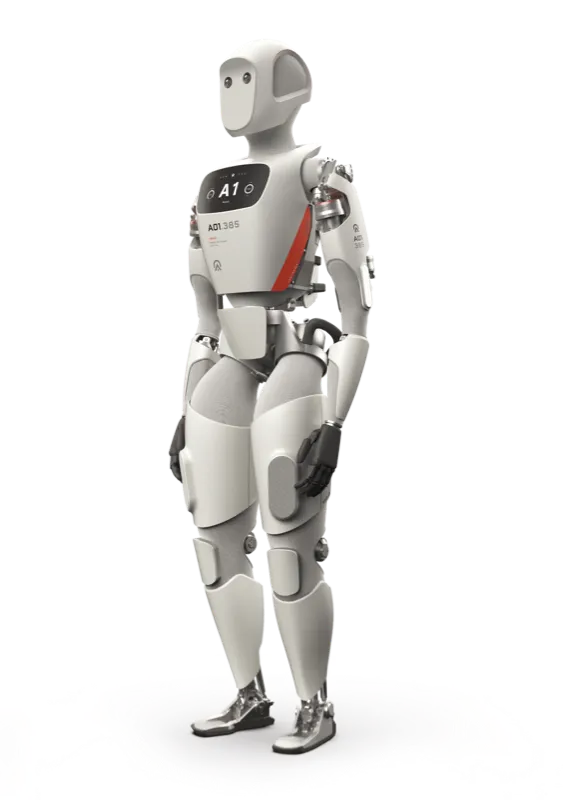
Apptronik is the cleanest partner-to-robot mapping because Google and Apptronik announced a strategic partnership around humanoid robots, and Google's Gemini Robotics page explicitly mentions Apollo as an example humanoid embodiment.

In the ui44 database, Apptronik Apollo is a 173 cm, 73 kg humanoid with roughly four hours of battery life, a heavy-payload use case around 25 kg, vision, force/torque sensing, an IMU, proprioceptive sensing, and enterprise-only pricing. Apptronik positions Apollo first for manufacturing and logistics, not private homes. Its current buyer path is not "add to cart"; it is enterprise deployment.

That is exactly why Apollo is interesting. It has a human-scale body, arms, and workplace deployment targets where generalization matters. If Gemini Robotics helps a robot interpret natural-language changes, transfer skills across tasks, or choose safer actions in dynamic spaces, Apollo is the sort of platform where that could be tested before home versions exist.

But Apollo is not a home robot yet. The home gap is not just price. It is also serviceability, liability, child/pet safety, noisy household variation, and the absence of a consumer support model. A Gemini-powered Apollo in a factory pilot would be a meaningful robotics milestone, but it would still be a long way from a robot that tidies a kitchen unsupervised.
Boston Dynamics Atlas Gemini Robotics industrial humanoid robot

Boston Dynamics: Atlas is the halo, Spot is the practical signal

Boston Dynamics is the most visible name on the list, but the important split is between humanoid ambition and commercial reality.

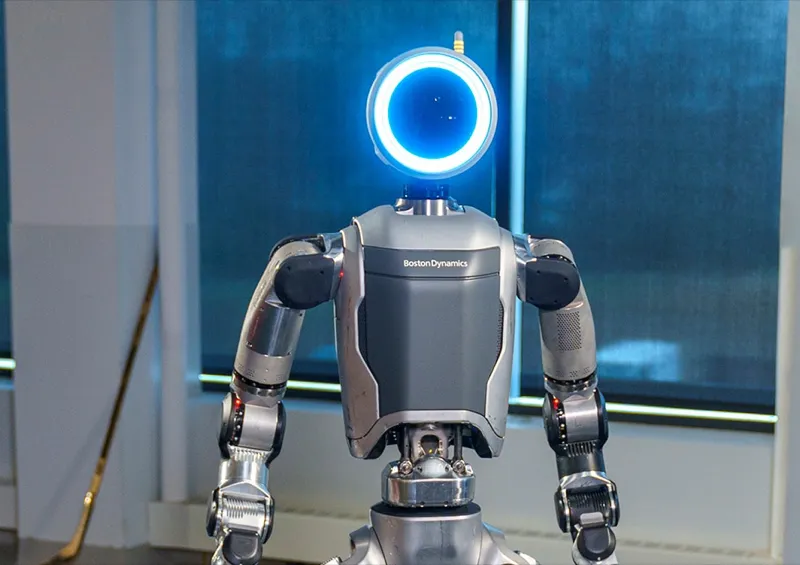
Atlas Electric is the headline humanoid. The ui44 profile lists it as a 190 cm, 90 kg industrial humanoid with 56 degrees of freedom, roughly four hours of battery life, a 50 kg instant lift / 30 kg sustained lift claim, self-swappable batteries in under three minutes, and IP67 rating. Boston Dynamics and Google DeepMind say their partnership focuses on Gemini Robotics foundation models for Atlas, starting with industrial tasks and automotive manufacturing.

That makes sense. Atlas has the mobility and manipulation headroom that a foundation model wants to exploit. It can use a richer AI stack because the body is capable enough for tasks beyond simple inspection. But it is also far beyond what a normal home can absorb today: no public consumer pricing, enterprise access, and an industrial safety context.

Spot is the more practical near-term signal. It is not a home robot dog. It is a 33.8 kg commercial quadruped with about 90 minutes of battery life, 14 kg payload capacity, IP54 weather resistance, autonomous navigation, self-charging, optional arm manipulation, and enterprise contact-sales pricing. Google's Robotics-ER 1.6 article highlights instrument reading for Spot: gauges, sight glasses, and digital readouts in industrial facilities.

That sounds boring compared with a humanoid folding laundry, but it is exactly what physical AI needs: repeated, valuable tasks with clear success criteria. If Spot can reliably walk to equipment, capture images, read instruments, detect completion, and escalate anomalies, that is a stronger autonomy proof than a one-off household demo.

Agility Digit and Agile ONE: warehouses before kitchens

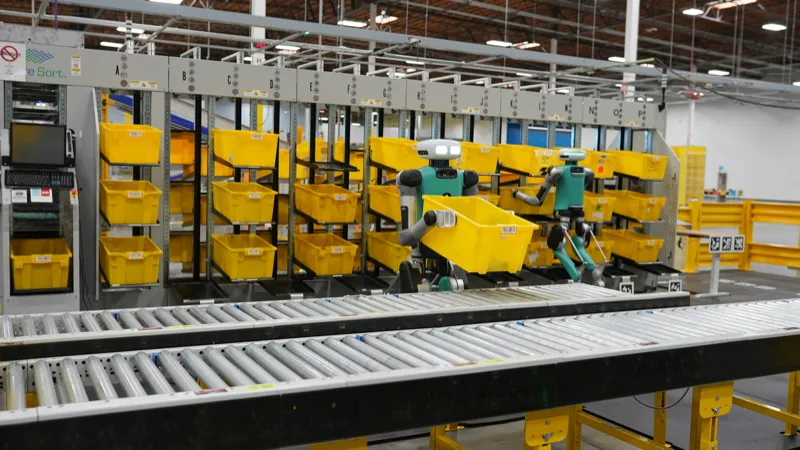
Agility Robotics is listed as a trusted tester, and Digit is one of the best examples of a humanoid-shaped robot that is already closer to paid work than to home chores. In ui44, Digit is a 175 cm, 65 kg humanoid with about four hours of runtime, 16 kg box-carrying capability, LiDAR, RGB-D cameras, IMU, force sensors, and enterprise RaaS positioning. Its public deployments are logistics and warehouse focused.
Agility Digit Gemini Robotics trusted tester warehouse humanoid

That is a good fit for a model that improves task interpretation and adaptation. Warehouse work has variation, but it is still constrained compared with homes: standard containers, defined workflows, limited object categories, and controlled worker procedures. A Gemini-style reasoning layer could help with exceptions, rerouting, instruction changes, or success detection without pretending the robot can suddenly load every dishwasher.

Agile Robots appears on Google's page as a partner. ui44's Agile ONE profile describes a 174 cm industrial humanoid in development, planned for series production in 2026, with cameras, LiDAR, force/torque sensors, tactile sensors, microphones, 2 m/s speed, and 21-joint dexterous hands. Its current positioning is factory-side: material handling, machine tending, tool use, and precision assembly.

For buyers, the pattern is consistent. Gemini Robotics access is strongest where there is a real body, a real workflow, and a commercial reason to collect data. Factories and warehouses are not side quests; they are where the boring safety and reliability loops get paid for.

Enchanted Tools and PAL Robotics: social presence and research bodies

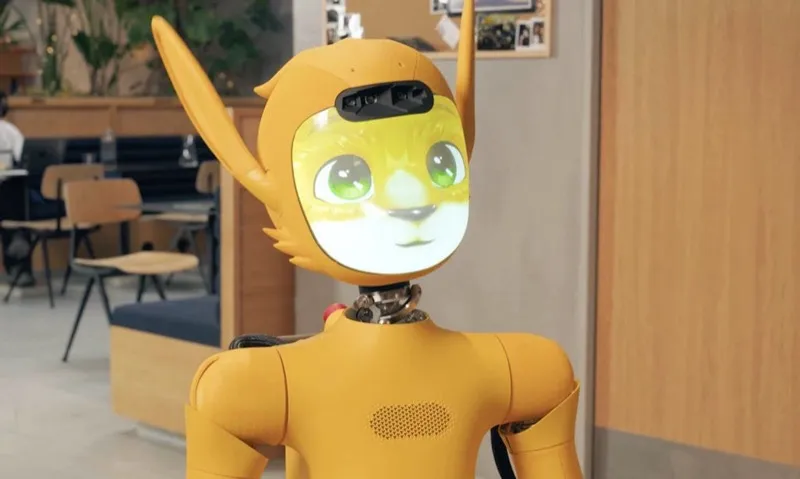
Not every Gemini Robotics tester looks like a warehouse worker. Enchanted Tools is especially relevant to home-robot watchers because Mirokaï combines social design, navigation, arms, and service-environment interaction in a smaller rolling body.

ui44 lists Mirokaï as a 123 cm, roughly 26 kg robot with about four hours of battery life, an omnidirectional rolling globe base, torque-controlled arms, object grasping, multi-LLM conversation, VSLAM navigation, GDPR-compliant face tracking, and hospital/concierge-style use cases. The home relevance is not that Mirokaï is a consumer product. It is that social robots need a different kind of AI stack: language, memory, navigation, expression, and safe movement around people, not just lifting boxes.
Enchanted Tools Mirokai social robot Gemini Robotics trusted tester

PAL Robotics is another useful category marker. Its robots are research and applied-development platforms rather than home products, but that makes them important for embodied AI. TIAGo Pro is a dual-arm mobile manipulator with two 7-DoF torque-sensed arms, 3 kg payload per arm, quick tool changers, dual 360-degree LiDAR, ROS 2 integrations, MoveIt 2, Nav2, MuJoCo, Gazebo, and teleoperation hooks. KANGAROO is a 1.58 m biped research humanoid with three-hour autonomy, optional arms, dynamic locomotion, ROS 2 control, and reinforcement-learning tooling.

These are not buyer recommendations. They are important because the home robot problem is not one robot shape. A future home helper may be a wheeled mobile manipulator, a compact humanoid, a social service robot, or a quadruped with an arm. Google's multiple-embodiment claim only matters if it survives transfer across bodies like these.

The partner list, mapped to actual buyer relevance

Google-listed company

Apptronik

ui44 robot body to watch
Apollo
Why it matters
Human-scale humanoid explicitly tied to Gemini Robotics work
Home-buyer caveat
Enterprise only; no public consumer price

Google-listed company

Boston Dynamics

ui44 robot body to watch
Atlas, Spot
Why it matters
High-end humanoid plus proven quadruped inspection platform
Home-buyer caveat
Industrial focus; no normal home sales path

Google-listed company

Agility Robotics

ui44 robot body to watch
Digit
Why it matters
Paid logistics deployments and humanoid workflow data
Home-buyer caveat
Warehouse RaaS, not home chores

Google-listed company

Agile Robots

ui44 robot body to watch
Agile ONE
Why it matters
Dexterous industrial humanoid with Gemini integration noted in ui44 data
Home-buyer caveat
Development/industrial positioning

Google-listed company

Enchanted Tools

ui44 robot body to watch
Mirokaï
Why it matters
Social/service robot shape with navigation and arms
Home-buyer caveat
Partnership use cases before home sales

Google-listed company

PAL Robotics

ui44 robot body to watch
TIAGo Pro, KANGAROO
Why it matters
Research bodies for manipulation, locomotion, and embodied AI
Home-buyer caveat
Quote-only research platforms

Google-listed company

Rainbow Robotics, Collaborative Robotics, Universal Robots

ui44 robot body to watch
Not a direct home-buyer signal yet in ui44's current home-robot lens
Why it matters
Important robotics ecosystem names
Home-buyer caveat
Do not treat access as a consumer launch

The table is intentionally conservative. A company can be an excellent robotics partner without having a robot that belongs in a private home. Access to Gemini Robotics is best read as a capability-development signal, not a shipping claim.

What would make this matter for home robots?

For a home buyer, the question is not "does the robot use Gemini?" The useful questions are more specific:

  1. Is the AI local enough for latency and privacy? A robot that waits on the cloud before every motion is a bad fit for fast safety decisions. On-device models are promising, but buyers should still ask what runs locally, what is uploaded, and what happens when the internet drops.
  2. Can the robot prove success detection? Homes are full of ambiguous tasks. "Clean this up" is not done until the object is in the right place and the robot can tell it is done. Google's emphasis on success detection is a good sign.
  3. Does the body match the task? A brilliant model cannot give a small arm a 20 kg payload. Check specs in the ui44 compare tool: reach, payload, runtime, sensors, certifications, and service model still matter.
  4. Is there a bounded workflow? Instrument reading, box handling, guided delivery, and tray carrying are easier to validate than "do anything in my kitchen." The first home-ready skills will probably look narrow and boring.
  5. Who is responsible when it fails? A model provider, robot manufacturer, cloud platform, installer, and home owner may all be involved. Until support and liability are clear, treat demos as demos.

This is also why Google's safety language matters. The company describes layered safety: low-level robot controllers for collision avoidance and stability, plus semantic checks about whether an action is safe in context. That is the right architecture. It is not enough by itself, but it is better than pretending a language model can be trusted as the only safety layer.

Bottom line: Gemini access is a signal, not a launch date

Gemini Robotics partners are worth watching because they connect advanced AI models to actual robot bodies: Apollo, Atlas, Spot, Digit, Agile ONE, Mirokaï, TIAGo Pro, and KANGAROO all represent different answers to the same question: what kind of body should a useful physical agent have?

The answer for homes is still unsettled. Humanoids are flexible but expensive and hard to certify. Quadrupeds are mobile but socially awkward indoors. Wheeled manipulators may be safer and more practical but less exciting. Social robots can fit human spaces, yet still need credible manipulation and privacy controls.

So do not buy the phrase "powered by Gemini" as a guarantee. Use it as one line in a broader checklist: real robot body, published specs, bounded tasks, local safety, privacy controls, service plan, and evidence from repeated deployments.

The exciting part is not that Google has a magic robot brain. The exciting part is that the serious robot companies are starting to test shared AI layers across very different machines. If that works, the home robot market gets a clearer path from industrial proof to household utility. If it does not, the specs in the database will keep telling the truth: a robot is only as useful as the body, safety system, and support model behind the demo.

Sources & References

Database context

Use this article as a privacy verification workflow

Turn the article into a real verification pass

Gemini Robotics Partners: Which Robots Get Google AI? already points you toward 8 linked robots, 6 manufacturers, and 4 countries inside the ui44 database. That matters because strong buyer guidance is easier to apply when you can move immediately from a claim or warning into concrete product pages, manufacturer directories, component explainers, and country-level context instead of treating the article as an isolated opinion piece. The fastest next step is to turn the article into a shortlist workflow: open the linked robot pages, verify which specs are actually published for those models, then compare the surrounding manufacturer and component context before you decide whether the underlying claim changes your buying plan.

For this topic, the useful discipline is to separate the editorial lesson from the catalog evidence. The article gives you the framing, but the robot pages tell you what each product actually ships with today: sensor stack, connectivity methods, listed price, release timing, category, and support-relevant compatibility notes. The manufacturer pages then show whether you are looking at a one-off launch, a broader lineup pattern, or a company that spans multiple categories. That layered workflow reduces the risk of buying on a single marketing phrase or a single support FAQ.

Use the robot pages to confirm which products actually expose cameras, microphones, Wi-Fi, or voice systems, then use the manufacturer pages to decide how much of the privacy question seems product-specific versus brand-wide. On this route cluster, Apollo, Atlas (Electric), and Spot form the fastest reality check. If you want a quick working shortlist, open Compare Apollo, Atlas (Electric), and Spot next, then keep this article open as the reasoning layer while you compare structured data side by side.

Practical Takeaway

Every robot, manufacturer, category, component, and country reference below resolves to a real ui44 page, keeping the follow-up path grounded in database records rather than generic advice.

Suggested next steps in ui44

  1. Open Apollo and note the listed sensors, connectivity methods, and voice stack before you interpret any policy claim.
  2. Cross-check the wider brand context on Apptronik so you can see whether the privacy question touches one model or a broader lineup.
  3. Use the linked component pages to confirm how common the relevant sensors and connectivity layers are across the database.
  4. Keep a short note of which policy layers you checked, which device features are actually present on the robot page, and which items still depend on region- or app-level confirmation.
  5. Finish with Compare Apollo, Atlas (Electric), and Spot so the policy reading sits next to structured product data.

Database context

Robot profiles worth opening next

Use the linked product pages as the evidence layer

The linked robot pages are where this article becomes operational. Instead of asking whether the headline is interesting, use the robot entries to inspect the actual mix of sensors, connectivity options, batteries, pricing, release timing, and stated capabilities attached to the products mentioned in the article. That is the easiest way to see whether the warning or opportunity described here affects one product family, a specific design pattern, or an entire buying lane.

Apollo

Apptronik · Humanoid · Active

Price TBA

Apollo is tracked on ui44 as a active humanoid robot from Apptronik. The database currently records a listed price of Price TBA, a release date of TBD, ~4 hours battery life, Not disclosed charging time, and a published stack that includes Vision System, Force/Torque Sensors, and IMU plus Wi-Fi and Ethernet.

For privacy-focused reading, this page matters because it shows the concrete device surface behind the policy discussion. Use it to verify whether Apollo combines sensors and connectivity in a way that could change the in-home data footprint, and compare the listed capabilities such as Warehouse Operations, Manufacturing Tasks, and Heavy Payload (~25kg) with any cloud, app, or voice layers.

Atlas (Electric)

Boston Dynamics · Humanoid · Active

Price TBA

Atlas (Electric) is tracked on ui44 as a active humanoid robot from Boston Dynamics. The database currently records a listed price of Price TBA, a release date of 2026, ~4 hours battery life, Not disclosed charging time, and a published stack that includes 360° camera view and Tactile plus Wi-Fi and Ethernet.

For privacy-focused reading, this page matters because it shows the concrete device surface behind the policy discussion. Use it to verify whether Atlas (Electric) combines sensors and connectivity in a way that could change the in-home data footprint, and compare the listed capabilities such as Heavy Lifting (50kg Instant, 30kg Sustained), Precise Manipulation, and Dynamic Recovery with any cloud, app, or voice layers.

Spot

Boston Dynamics · Commercial · Active

Price TBA

Spot is tracked on ui44 as a active commercial robot from Boston Dynamics. The database currently records a listed price of Price TBA, a release date of 2020, ~90 minutes battery life, 60 minutes charging time, and a published stack that includes 360° Stereo Cameras, Time-of-Flight Sensor, and Ultrasonic Sensors (front + rear) plus Wi-Fi 2.4GHz/5GHz and Ethernet.

For privacy-focused reading, this page matters because it shows the concrete device surface behind the policy discussion. Use it to verify whether Spot combines sensors and connectivity in a way that could change the in-home data footprint, and compare the listed capabilities such as Autonomous Industrial Inspection, Stair Climbing (±30° slopes), and Dynamic Obstacle Avoidance with any cloud, app, or voice layers.

Digit

Agility · Humanoid · Active

Price TBA

Digit is tracked on ui44 as a active humanoid robot from Agility. The database currently records a listed price of Price TBA, a release date of 2023, ~4 hours battery life, ~2 hours charging time, and a published stack that includes LiDAR, RGB-D Cameras, and IMU plus Wi-Fi and 5G.

For privacy-focused reading, this page matters because it shows the concrete device surface behind the policy discussion. Use it to verify whether Digit combines sensors and connectivity in a way that could change the in-home data footprint, and compare the listed capabilities such as Box Carrying (16kg), Stair Navigation, and Warehouse Operations with any cloud, app, or voice layers.

Agile ONE

Agile Robots · Humanoid · Development

Price TBA

Agile ONE is tracked on ui44 as a development humanoid robot from Agile Robots. The database currently records a listed price of Price TBA, a release date of 2025-11-19, Not officially disclosed battery life, Not officially disclosed charging time, and a published stack that includes LiDAR, Cameras, and Force/Torque Sensors plus Not officially disclosed.

For privacy-focused reading, this page matters because it shows the concrete device surface behind the policy discussion. Use it to verify whether Agile ONE combines sensors and connectivity in a way that could change the in-home data footprint, and compare the listed capabilities such as Bipedal Walking, Autonomous Navigation, and Dexterous Manipulation (21-joint hands) with any cloud, app, or voice layers.

Database context

Manufacturer context behind the article

Check whether this is one product story or a broader company pattern

Manufacturer pages add the privacy context that individual product pages cannot show on their own. They help you check whether cameras, microphones, cloud accounts, app controls, and policy assumptions appear across a broader lineup or stay tied to one specific product story.

Apptronik

ui44 currently tracks 1 robot from Apptronik across 1 category. The company is grouped under USA, and the current catalog footprint on ui44 includes Apollo.

That wider brand context matters because privacy questions rarely stop at one FAQ page. A manufacturer route helps you see whether the article is centered on one premium model or on a company that has several relevant products and therefore more than one place where the same policy or app assumptions might matter. The category mix here currently points toward Humanoid as the most useful next route if you want to see whether this article reflects a wider pattern inside the brand.

Boston Dynamics

ui44 currently tracks 3 robots from Boston Dynamics across 2 categorys. The company is grouped under USA, and the current catalog footprint on ui44 includes Atlas (Electric), Spot, Stretch.

That wider brand context matters because privacy questions rarely stop at one FAQ page. A manufacturer route helps you see whether the article is centered on one premium model or on a company that has several relevant products and therefore more than one place where the same policy or app assumptions might matter. The category mix here currently points toward Humanoid, Commercial as the most useful next route if you want to see whether this article reflects a wider pattern inside the brand.

Agility

ui44 currently tracks 1 robot from Agility across 1 category. The company is grouped under USA, and the current catalog footprint on ui44 includes Digit.

That wider brand context matters because privacy questions rarely stop at one FAQ page. A manufacturer route helps you see whether the article is centered on one premium model or on a company that has several relevant products and therefore more than one place where the same policy or app assumptions might matter. The category mix here currently points toward Humanoid as the most useful next route if you want to see whether this article reflects a wider pattern inside the brand.

Agile Robots

ui44 currently tracks 1 robot from Agile Robots across 1 category. The company is grouped under Germany, and the current catalog footprint on ui44 includes Agile ONE.

That wider brand context matters because privacy questions rarely stop at one FAQ page. A manufacturer route helps you see whether the article is centered on one premium model or on a company that has several relevant products and therefore more than one place where the same policy or app assumptions might matter. The category mix here currently points toward Humanoid as the most useful next route if you want to see whether this article reflects a wider pattern inside the brand.

Database context

Broaden the scan without leaving the database

Categories, components, and countries add the wider context

Category framing

Category pages are useful when the article touches a buying pattern that shows up across brands. A category route helps you confirm whether the linked products sit in a narrow niche or whether the same question should be tested across a larger field of alternatives.

Humanoid

The Humanoid category page currently groups 99 tracked robots from 70 manufacturers. ui44 describes this lane as: Full-size bipedal humanoid robots designed to work alongside humans. From factory floors to household tasks, these machines represent the cutting edge of robotics.

That makes the category route a practical follow-up when you want to check whether the products linked in this article are typical for the lane or whether they sit at one edge of the market. Useful starting examples currently include NEO, EVE, Mornine M1.

Commercial

The Commercial category page currently groups 34 tracked robots from 28 manufacturers. ui44 describes this lane as: Delivery robots, warehouse automation, hospitality service bots, and other robots built for business operations.

That makes the category route a practical follow-up when you want to check whether the products linked in this article are typical for the lane or whether they sit at one edge of the market. Useful starting examples currently include G2 Air, aeo, Pepper.

Country and ecosystem context

Country pages give extra context when support practices, launch sequencing, regulatory posture, or manufacturer mix matter. They are not a substitute for model-level verification, but they do help you see which ecosystems cluster together and which manufacturers sit in the same regional field when you broaden the search beyond the article headline.

USA

The USA route currently groups 71 tracked robots from 56 manufacturers in ui44. That gives you a useful regional lens when the article points toward support practices, launch sequencing, or brand clusters that may share similar ecosystem assumptions.

On the current route, manufacturers like iRobot, Boston Dynamics, Faraday Future make the page a good way to broaden the scan without losing the regional context that often shapes availability, documentation style, and adjacent alternatives.

Germany

The Germany route currently groups 8 tracked robots from 5 manufacturers in ui44. That gives you a useful regional lens when the article points toward support practices, launch sequencing, or brand clusters that may share similar ecosystem assumptions.

On the current route, manufacturers like NEURA Robotics, Bosch, Agile Robots make the page a good way to broaden the scan without losing the regional context that often shapes availability, documentation style, and adjacent alternatives.

France

The France route currently groups 5 tracked robots from 4 manufacturers in ui44. That gives you a useful regional lens when the article points toward support practices, launch sequencing, or brand clusters that may share similar ecosystem assumptions.

On the current route, manufacturers like Pollen Robotics, Aldebaran / Maxtronics, Aldebaran Robotics make the page a good way to broaden the scan without losing the regional context that often shapes availability, documentation style, and adjacent alternatives.

Database context

Questions to answer before you move from reading to buying

A follow-up FAQ built from the entities already linked in this article

Frequently Asked Questions

Which page should I open first after reading “Gemini Robotics Partners: Which Robots Get Google AI?”?

Start with Apollo. That gives you a concrete product anchor for the article’s main claim. From there, branch into the manufacturer and component pages so you can tell whether the article is describing one specific model, a repeated brand pattern, or a wider technology issue that affects multiple shortlist options.

How do the manufacturer pages change the buying decision?

Apptronik help you zoom out from one article and one product. On ui44 they show lineup breadth, category spread, and the neighboring robots tied to the same company. That context is useful when you are deciding whether a risk belongs to a single model, whether it shows up across a brand’s portfolio, and whether you should keep looking at alternatives before committing.

When should I switch from reading to side-by-side comparison?

Move into Compare Apollo, Atlas (Electric), and Spot as soon as you understand the article’s main warning or promise. The article explains what to watch for, but the compare view is where you can check whether price, status, battery life, connectivity, sensors, and category fit still make the robot a good match for your own home and budget.

Database context

Where to go next in ui44

Keep the research chain inside the database

If you want to keep going, these follow-on pages give you the cleanest expansion path from article to research session. Open the comparison route first if you are deciding between products today. Open the manufacturer, category, and component routes if you still need to understand the broader pattern behind the claim.

UT

Written by

ui44 Team

Published May 31, 2026

Share this article

Open a plain share link on X or Bluesky. No embeds, no widgets, no cookie baggage.

Explore the database

Go beyond the headlines

Compare specs, features, and prices across 100+ robots from leading manufacturers worldwide.