If that becomes a product, it would not look like another robot vacuum or a factory humanoid squeezed into a living room. It would be an attempt to turn a known game character into a physical companion: a robot with a voice, body, memory, personality, and brand relationship that already exists before the first unit ships.
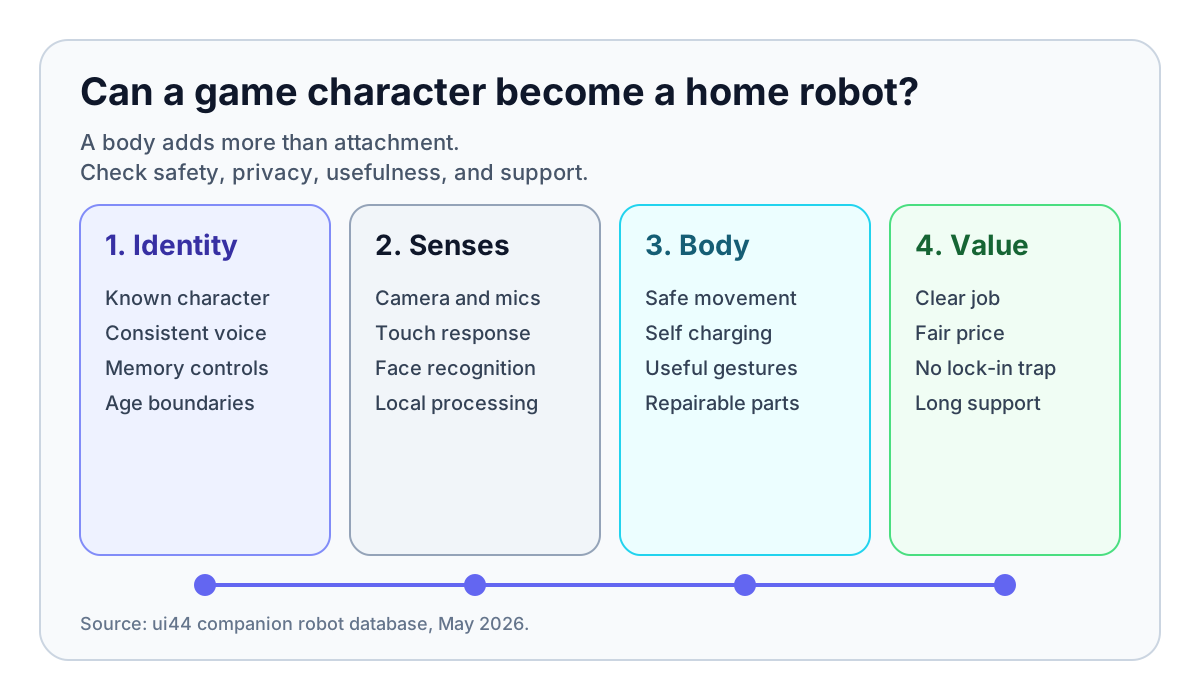
That is a smart business bet, but buyers should read it carefully. A character people love on a phone is not automatically a useful, private, repairable, or safe home robot. The body raises the stakes.
What is Papergames actually signaling?
TechNode reported that Papergames had posted multiple AI-robotics-related roles, including an AI robotics structural lead, hardware engineer, and product manager focused on hardware supply chains. TechNode framed the move as Papergames entering the AI companion robot space and trying to extend virtual-character emotional value into physical hardware.
The important word is signaling. There is no public Papergames robot spec sheet, no price, no shipping date, no official home safety claim, and no product page with sensors, battery life, repair terms, or privacy controls. For now, this is a market signal rather than a buyer-ready robot.
The company does have the IP side. Infold Games' official catalogue lists Love Nikki, Mr Love: Queen's Choice, Shining Nikki, Love and Deepspace, Infinity Nikki, and other titles. Those are not generic chatbot skins. They are worlds built around character attachment, recurring interaction, cosmetics, voice, story events, and long-term fandom.
That is why the robotics angle is worth watching. Most companion robots start with hardware and then try to earn affection. A game-character robot could start with affection and then try to justify the hardware.
Why would game IP change the companion robot market?
Companion robots have always had an emotional problem. They need to be lovable enough that people forgive their limits, but useful enough that the purchase does not become a novelty toy after two weeks.
Game IP changes the first half of that equation. A buyer may already know the character's voice, humor, story, and relationship style. The robot does not have to introduce itself from zero. It can arrive with a built-in emotional contract: "you already care about me, now I can exist in your room."
That could make a real difference for adoption. It also creates new risks:
- Higher willingness to pay. TechNode cites high-end companion robot prices around 30,000 to 360,000 yuan, roughly $4,200 to $50,400. A beloved character could make expensive hardware feel more acceptable.
- More intimate data. A character that remembers preferences, moods, photos, routines, and relationship history is handling more sensitive context than a novelty desk toy.
- Subscription pressure. If the emotional value depends on cloud dialogue, character events, outfits, or memory storage, the real price may be monthly.
- Stronger lock-in. Losing a robot could mean losing a companion identity, not just replacing a device.
The healthiest version is not a manipulative gacha mechanic with wheels. It is a clear, consent-based companion product where the user owns their data, knows what the robot can see, and can understand what happens when the service ends.
What can current companion robots teach us?
The ui44 database already shows several ways companies are trying to make robots feel present at home. None of them solves the whole Papergames question, but together they show the checklist a character robot would need to pass.
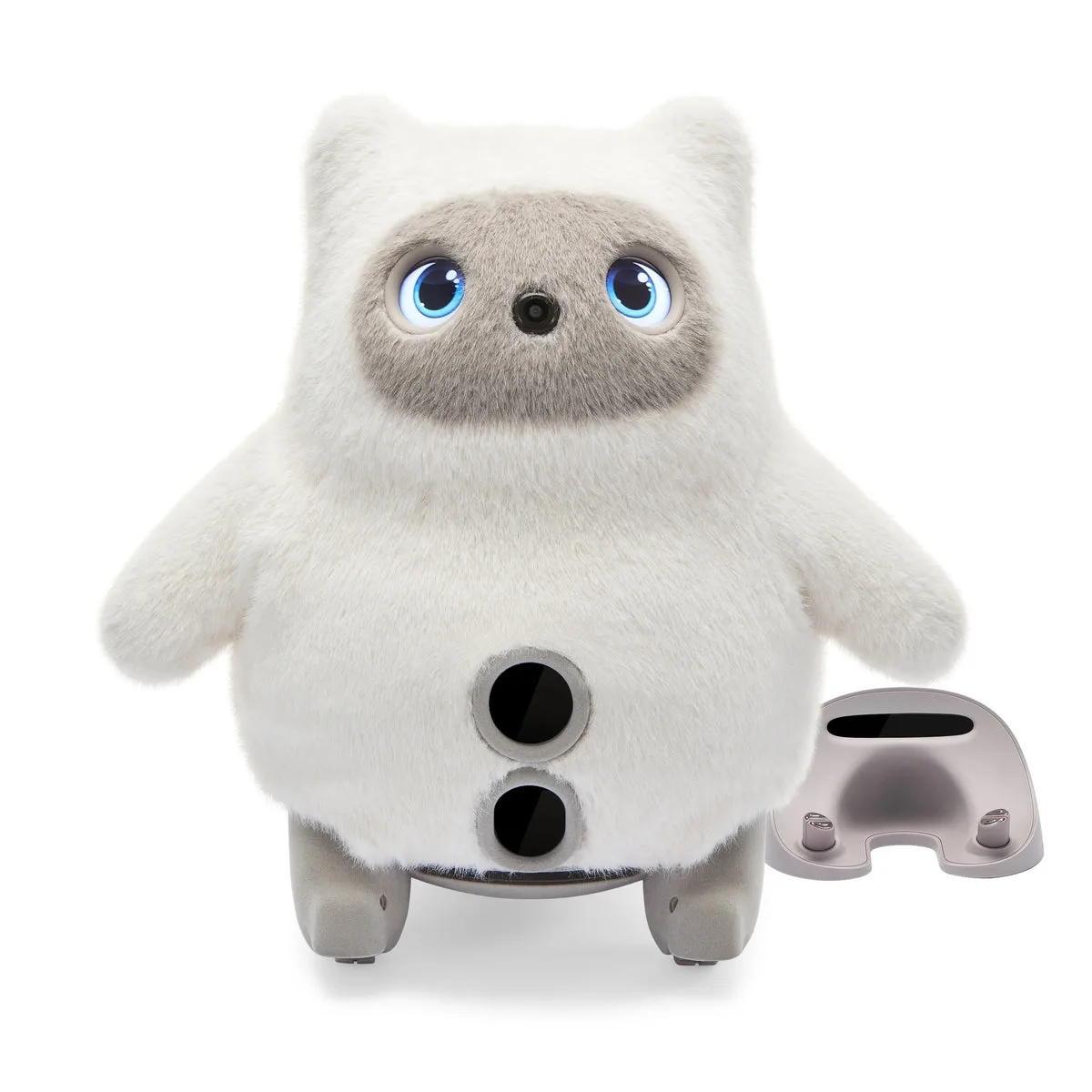
SwitchBot KATA Friends is the closest current example of a character-like AI pet in ui44. It is available in the U.S. at about $699, with Noa and Niko variants, on-device LLM interaction, face recognition, voice and gesture understanding, touch sensors, obstacle avoidance, self-docking, diary memories, and Companion Care plans after the included period. That makes it a useful baseline: personality and memory are becoming real product features, not just marketing language.
Loona is cheaper at $429 for the current official Premium bundle. It brings a 720p camera, 3D time-of-flight sensor, 4-microphone array, face recognition, autonomous navigation, games, Blockly programming, and ChatGPT-4o conversations. Loona shows how much emotion can be created with a small wheeled body and expressive screen face, but it also shows the privacy question: camera, microphone, app, cloud AI, and family/kid use all need clear boundaries.
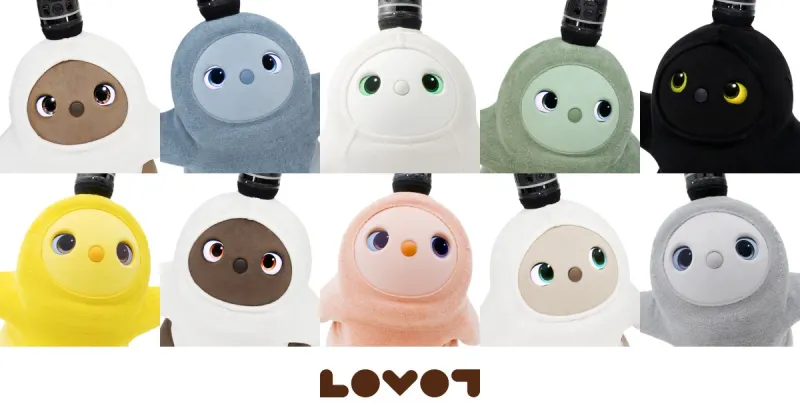
LOVOT sits at the premium end. The current LOVOT 3.0 is listed in ui44 at ¥577,500, with a monthly care plan from ¥9,900/month. It uses more than 50 sensors, touch response across the body, a warm body temperature, room mapping, person recognition, thermal person detection, and personality development over time. LOVOT is important because it proves a robot can be commercially built around being loved rather than doing chores.
Sony aibo is another durable reference point. The ERS-1000 is listed at $2,899.99 with a subscription plan, 22 axes of movement, OLED eyes, face recognition for up to 100 faces, more than 100 voice commands, roughly 2 hours of battery life, and autonomous return to its charging station. If a game-character robot wants to become a premium emotional pet, aibo is one of the standards it has to beat.
What would a character robot need before it deserves trust?
A Papergames-style robot would need more than a famous face and a polished voice. The product should answer five practical questions.
First, what is processed locally? A companion robot can see rooms, hear conversations, recognize faces, and learn routines. If the emotional model lives mostly in the cloud, buyers should know exactly which audio, video, images, transcripts, and memories leave the home.
Second, who controls memory? The most valuable feature of a character robot is continuity. The same feature can become a trap if the user cannot view, correct, export, delete, or transfer memory. ui44 has covered this before with companion robot repair and personality transfer: if the robot breaks, the relationship should not be held hostage by a proprietary account.
Third, what does the body actually do? A wheeled desk pet, plush stress companion, rolling projector, quadruped, and humanoid are very different products. A game character does not need arms to be emotionally valuable, but it should not imply household help unless it can navigate safely, charge itself, avoid obstacles, and recover from errors.
Fourth, what happens when the service changes? Emotional AI products often need server-side speech, event content, subscriptions, app support, or safety moderation. Buyers should ask whether the robot still works as a local companion if the subscription lapses, the game shuts down, or the character license changes.
Fifth, what boundaries exist for minors and vulnerable users? Many character fandoms include teenagers and young adults, and companion robots can be used by children, older adults, or people experiencing loneliness. A responsible product should separate companionship from persuasion, spending pressure, and emotional dependency.
How should buyers compare emotional AI robots?
Here is the simple version: compare the robot like a relationship device, not just a gadget.
Robot
- Price/status in ui44
- About $699, Available
- What it proves
- On-device AI pet, memory, self-docking, subscriptions
- What to watch
- Long-term Companion Care cost
Robot
- Price/status in ui44
- $429, Available
- What it proves
- Low-cost expressive petbot with camera, voice, and ChatGPT
- What to watch
- Privacy and child/family settings
Robot
- Price/status in ui44
- ¥577,500 + care plan, Available
- What it proves
- Premium robot built mainly for affection
- What to watch
- High upfront and monthly cost
Robot
- Price/status in ui44
- $2,899.99 + plan, Available
- What it proves
- Durable premium robotic pet model
- What to watch
- Cloud/service dependency
Robot
- Price/status in ui44
- No price, 2027 target
- What it proves
- On-device nonverbal quadruped companion
- What to watch
- Development-stage claims
Robot
- Price/status in ui44
- $429, Available
- What it proves
- Small emotional AI plush with local voice features
- What to watch
- Limited physical capability
Robot
- Price/status in ui44
- Lease initiation + subscription
- What it proves
- Proactive elder companion with care features
- What to watch
- U.S.-only service and subscription
| Robot | Price/status in ui44 | What it proves | What to watch |
|---|---|---|---|
| KATA Friends | About $699, Available | On-device AI pet, memory, self-docking, subscriptions | Long-term Companion Care cost |
| Loona | $429, Available | Low-cost expressive petbot with camera, voice, and ChatGPT | Privacy and child/family settings |
| LOVOT | ¥577,500 + care plan, Available | Premium robot built mainly for affection | High upfront and monthly cost |
| Sony aibo | $2,899.99 + plan, Available | Durable premium robotic pet model | Cloud/service dependency |
| Familiar | No price, 2027 target | On-device nonverbal quadruped companion | Development-stage claims |
| Moflin | $429, Available | Small emotional AI plush with local voice features | Limited physical capability |
| ElliQ 3 | Lease initiation + subscription | Proactive elder companion with care features | U.S.-only service and subscription |
A future Papergames robot would need to be placed in that table, not outside it. If it costs like LOVOT, it needs more than a familiar voice. If it asks for the privacy surface of a mobile companion, it needs controls as clear as a security camera. If it claims to be a household assistant, it needs evidence closer to a mobile robot than a chatbot.
Is the useful version closer to a pet, a toy, or a home assistant?
The most realistic first product is probably not a humanoid that does chores. It is more likely to be an expressive desktop, plush, wheeled, or small mobile companion that preserves character identity and adds light embodied behavior: looking toward the user, reacting to touch, moving around a room, greeting at predictable times, taking photos with consent, or linking to a phone app.
That is not a failure. Miko 3, Moflin, KATA Friends, and Loona all show that small bodies can carry emotional value. The mistake would be selling that as general home robotics.
A character robot becomes a toy when it mainly entertains and relies on novelty. It becomes a pet-like companion when it builds routines, responds to touch, recognizes household members, and remains satisfying even without complex chores. It becomes a home assistant only when it can perform useful tasks: reminders, safe monitoring, smart-home control, telepresence, fall alerts, or room-to-room movement that actually works.

Familiar is a useful counterexample because it goes almost the opposite direction from a voiced game character. ui44 tracks Familiar as a 2027 development-stage quadruped companion with no public price, 23 degrees of freedom, a touch-sensitive 3D-knitted exterior, on-device multimodal AI, and no screen or voice-first interface. It is betting that body language can be more comfortable than constant conversation.
A game-character robot may choose the opposite: voice, dialogue, roleplay, and identity first. Neither path is automatically better. The buyer question is which one creates healthier companionship in the actual home.
What is the bottom line for Papergames and home robots?
Papergames entering robotics would be a real signal because it brings a different kind of asset to home robotics: not a better suction motor, not a cheaper arm, not a warehouse autonomy stack, but a large audience already emotionally invested in virtual characters.
That could help companion robots escape the cold-start problem. It could also make the category more manipulative if companies confuse affection with consent.
The best version of a game-character robot would be transparent about price, privacy, memory, safety, repair, and service life. It would say plainly what the robot can do without the cloud. It would make emotional memory portable or at least erasable. It would avoid spending pressure inside a relationship-like interface. And it would explain whether the body is there for real utility or mostly for presence.
Until Papergames publishes hardware details, the right conclusion is cautious interest. The idea is plausible. The market is not empty. But a loved character still has to pass the same test as every home robot in the ui44 database: what can it sense, what can it do, what does it cost, and what does the owner give up in return?
Related in the database
Use this article as a privacy verification workflow
Turn the article into a privacy verification pass grounded in the robots, manufacturers, and components it actually references.
Will Game Characters Become Home Robots? already points you toward 8 linked robots, 8 manufacturers, and 4 countries inside the ui44 database. That matters because strong buyer guidance is easier to apply when you can move immediately from a claim or warning into concrete product pages, manufacturer directories, component explainers, and country-level context instead of treating the article as an isolated opinion piece. The fastest next step is to turn the article into a shortlist workflow: open the linked robot pages, verify which specs are actually published for those models, then compare the surrounding manufacturer and component context before you decide whether the underlying claim changes your buying plan.
For this topic, the useful discipline is to separate the editorial lesson from the catalog evidence. The article gives you the framing, but the robot pages tell you what each product actually ships with today: sensor stack, connectivity methods, listed price, release timing, category, and support-relevant compatibility notes. The manufacturer pages then show whether you are looking at a one-off launch, a broader lineup pattern, or a company that spans multiple categories. That layered workflow reduces the risk of buying on a single marketing phrase or a single support FAQ.
Use the robot pages to confirm which products actually expose cameras, microphones, Wi-Fi, or voice systems, then use the manufacturer pages to decide how much of the privacy question seems product-specific versus brand-wide. On this route cluster, KATA Friends, Loona, and LOVOT form the fastest reality check. If you want a quick working shortlist, open Compare KATA Friends, Loona, and LOVOT next, then keep this article open as the reasoning layer while you compare structured data side by side.
Practical Takeaway
Every robot, manufacturer, category, component, and country reference below resolves to a real ui44 page, keeping the follow-up path grounded in database records rather than generic advice.
Suggested next steps in ui44
- Open KATA Friends and note the listed sensors, connectivity methods, and voice stack before you interpret any policy claim.
- Cross-check the wider brand context on SwitchBot so you can see whether the privacy question touches one model or a broader lineup.
- Use the linked component pages to confirm how common the relevant sensors and connectivity layers are across the database.
- Keep a short note of which policy layers you checked, which device features are actually present on the robot page, and which items still depend on region- or app-level confirmation.
- Finish with Compare KATA Friends, Loona, and LOVOT so the policy reading sits next to structured product data.
Robot profiles worth opening next
Use the linked product pages as the evidence layer
The linked robot pages are where this article becomes operational. Instead of asking whether the headline is interesting, use the robot entries to inspect the actual mix of sensors, connectivity options, batteries, pricing, release timing, and stated capabilities attached to the products mentioned in the article. That is the easiest way to see whether the warning or opportunity described here affects one product family, a specific design pattern, or an entire buying lane.
KATA Friends
SwitchBot · Companions · Available
KATA Friends is tracked on ui44 as a available companions robot from SwitchBot. The database currently records a listed price of $699, a release date of 2026-05-12, Not officially disclosed battery life, Not officially disclosed; CNET reports an 8-hour sleep/charge schedule charging time, and a published stack that includes Cameras, Microphones, and Touch sensors in ears, hands, tummy, and back plus SwitchBot companion app and On-device/offline AI interaction for core responses.
For privacy-focused reading, this page matters because it shows the concrete device surface behind the policy discussion. Use it to verify whether KATA Friends combines sensors and connectivity in a way that could change the in-home data footprint, and compare the listed capabilities such as AI pet companionship, Autonomous indoor movement, and Obstacle avoidance with any cloud, app, or voice layers.
Loona is tracked on ui44 as a available companions robot from KEYi Tech. The database currently records a listed price of $442, a release date of 2023, 2 hours continuous playtime; 1350 mAh, 11.1 V lithium-ion rechargeable battery battery life, Not officially disclosed charging time, and a published stack that includes 3D Time-of-Flight (ToF) Sensor, 720p RGB Camera, and Touch Sensor plus Wi-Fi (Dual-band 2.4G/5.8G, 802.11a/b/g/n) and USB Type-C (charging).
For privacy-focused reading, this page matters because it shows the concrete device surface behind the policy discussion. Use it to verify whether Loona combines sensors and connectivity in a way that could change the in-home data footprint, and compare the listed capabilities such as Face Recognition, Voice Commands, and Emotion Expression (LCD face) with any cloud, app, or voice layers.
LOVOT is tracked on ui44 as a available companions robot from GROOVE X. The database currently records a listed price of ¥577,500, a release date of 2019, 30-45 minutes active, then returns to nest battery life, 15-30 minutes (on charging nest) charging time, and a published stack that includes Horn Top Camera (half-sphere), Horn Front Camera, and Depth Camera plus Wi-Fi and Bluetooth.
For privacy-focused reading, this page matters because it shows the concrete device surface behind the policy discussion. Use it to verify whether LOVOT combines sensors and connectivity in a way that could change the in-home data footprint, and compare the listed capabilities such as Emotional Companionship, Person Recognition, and Touch Response (full body sensors) with any cloud, app, or voice layers.
aibo (ERS-1000)
Sony · Companions · Available
aibo (ERS-1000) is tracked on ui44 as a available companions robot from Sony. The database currently records a listed price of $3,200, a release date of 2018-01, ~2 hours battery life, ~3 hours charging time, and a published stack that includes Front Camera, SLAM Camera, and Time-of-Flight Sensor plus Wi-Fi 802.11 b/g/n (2.4GHz) and LTE.
For privacy-focused reading, this page matters because it shows the concrete device surface behind the policy discussion. Use it to verify whether aibo (ERS-1000) combines sensors and connectivity in a way that could change the in-home data footprint, and compare the listed capabilities such as Emotion Recognition, Face Recognition (up to 100 faces), and Voice Command Recognition (100+ commands) with any cloud, app, or voice layers.
Familiar
Familiar Machines & Magic · Quadruped · Development
Familiar is tracked on ui44 as a development quadruped robot from Familiar Machines & Magic. The database currently records a listed price of Price TBA, a release date of 2027, Not disclosed battery life, Not disclosed charging time, and a published stack that includes Vision (facial expression and gesture recognition), Audio (tone of voice analysis), and Touch-sensitive exterior (3D-knitted fuzzy covering) plus Not disclosed.
For privacy-focused reading, this page matters because it shows the concrete device surface behind the policy discussion. Use it to verify whether Familiar combines sensors and connectivity in a way that could change the in-home data footprint, and compare the listed capabilities such as Quadruped Walking (23 DOF), Autonomous Navigation, and Emotional Intelligence (EQ over IQ) with any cloud, app, or voice layers.
Manufacturer context behind the article
Check whether this is one product story or a broader company pattern
Manufacturer pages add the privacy context that individual product pages cannot show on their own. They help you check whether cameras, microphones, cloud accounts, app controls, and policy assumptions appear across a broader lineup or stay tied to one specific product story.
SwitchBot
ui44 currently tracks 3 robots from SwitchBot across 3 categorys. The company is grouped under USA, and the current catalog footprint on ui44 includes K20+ Pro, onero H1, KATA Friends.
That wider brand context matters because privacy questions rarely stop at one FAQ page. A manufacturer route helps you see whether the article is centered on one premium model or on a company that has several relevant products and therefore more than one place where the same policy or app assumptions might matter. The category mix here currently points toward Cleaning, Home Assistants, Companions as the most useful next route if you want to see whether this article reflects a wider pattern inside the brand.
KEYi Tech
ui44 currently tracks 2 robots from KEYi Tech across 1 category. The company is grouped under USA, and the current catalog footprint on ui44 includes Loona, Loona DeskMate.
That wider brand context matters because privacy questions rarely stop at one FAQ page. A manufacturer route helps you see whether the article is centered on one premium model or on a company that has several relevant products and therefore more than one place where the same policy or app assumptions might matter. The category mix here currently points toward Companions as the most useful next route if you want to see whether this article reflects a wider pattern inside the brand.
GROOVE X
ui44 currently tracks 1 robot from GROOVE X across 1 category. The company is grouped under Japan, and the current catalog footprint on ui44 includes LOVOT.
That wider brand context matters because privacy questions rarely stop at one FAQ page. A manufacturer route helps you see whether the article is centered on one premium model or on a company that has several relevant products and therefore more than one place where the same policy or app assumptions might matter. The category mix here currently points toward Companions as the most useful next route if you want to see whether this article reflects a wider pattern inside the brand.
Sony
ui44 currently tracks 2 robots from Sony across 2 categorys. The company is grouped under Japan, and the current catalog footprint on ui44 includes aibo (ERS-1000), QRIO.
That wider brand context matters because privacy questions rarely stop at one FAQ page. A manufacturer route helps you see whether the article is centered on one premium model or on a company that has several relevant products and therefore more than one place where the same policy or app assumptions might matter. The category mix here currently points toward Companions, Research as the most useful next route if you want to see whether this article reflects a wider pattern inside the brand.
Broaden the scan without leaving the database
Categories, components, and countries add the wider context
Category framing
Category pages are useful when the article touches a buying pattern that shows up across brands. A category route helps you confirm whether the linked products sit in a narrow niche or whether the same question should be tested across a larger field of alternatives.
Companions
The Companions category page currently groups 53 tracked robots from 48 manufacturers. ui44 describes this lane as: Social robots, robot pets, and elderly-care companions designed for emotional connection and everyday support at home.
That makes the category route a practical follow-up when you want to check whether the products linked in this article are typical for the lane or whether they sit at one edge of the market. Useful starting examples currently include PARO, Abi, Next-Generation Companion Robot.
Quadruped
The Quadruped category page currently groups 25 tracked robots from 16 manufacturers. ui44 describes this lane as: Four-legged robot dogs and quadrupeds built for rough terrain, inspection, and exploration — going where wheels can't.
That makes the category route a practical follow-up when you want to check whether the products linked in this article are typical for the lane or whether they sit at one edge of the market. Useful starting examples currently include Argos X1, D1 Pro, D2 Max.
Country and ecosystem context
Country pages give extra context when support practices, launch sequencing, regulatory posture, or manufacturer mix matter. They are not a substitute for model-level verification, but they do help you see which ecosystems cluster together and which manufacturers sit in the same regional field when you broaden the search beyond the article headline.
USA
The USA route currently groups 89 tracked robots from 69 manufacturers in ui44. That gives you a useful regional lens when the article points toward support practices, launch sequencing, or brand clusters that may share similar ecosystem assumptions.
On the current route, manufacturers like Faraday Future, iRobot, Boston Dynamics make the page a good way to broaden the scan without losing the regional context that often shapes availability, documentation style, and adjacent alternatives.
Japan
The Japan route currently groups 26 tracked robots from 17 manufacturers in ui44. That gives you a useful regional lens when the article points toward support practices, launch sequencing, or brand clusters that may share similar ecosystem assumptions.
On the current route, manufacturers like AIST, SoftBank Robotics, Toyota make the page a good way to broaden the scan without losing the regional context that often shapes availability, documentation style, and adjacent alternatives.
Israel
The Israel route currently groups 5 tracked robots from 5 manufacturers in ui44. That gives you a useful regional lens when the article points toward support practices, launch sequencing, or brand clusters that may share similar ecosystem assumptions.
On the current route, manufacturers like Flytrex, Intuition Robotics, Maytronics make the page a good way to broaden the scan without losing the regional context that often shapes availability, documentation style, and adjacent alternatives.
Questions to answer before you move from reading to buying
A follow-up FAQ built from the entities already linked in this article
Frequently Asked Questions
Which page should I open first after reading “Will Game Characters Become Home Robots?”?
Start with KATA Friends. That gives you a concrete product anchor for the article’s main claim. From there, branch into the manufacturer and component pages so you can tell whether the article is describing one specific model, a repeated brand pattern, or a wider technology issue that affects multiple shortlist options.
How do the manufacturer pages change the buying decision?
SwitchBot help you zoom out from one article and one product. On ui44 they show lineup breadth, category spread, and the neighboring robots tied to the same company. That context is useful when you are deciding whether a risk belongs to a single model, whether it shows up across a brand’s portfolio, and whether you should keep looking at alternatives before committing.
When should I switch from reading to side-by-side comparison?
Move into Compare KATA Friends, Loona, and LOVOT as soon as you understand the article’s main warning or promise. The article explains what to watch for, but the compare view is where you can check whether price, status, battery life, connectivity, sensors, and category fit still make the robot a good match for your own home and budget.
Where to go next in ui44
Keep the research chain inside the database
If you want to keep going, these follow-on pages give you the cleanest expansion path from article to research session. Open the comparison route first if you are deciding between products today. Open the manufacturer, category, and component routes if you still need to understand the broader pattern behind the claim.
Written by
ui44 Team
Published May 19, 2026
Share this article
Open a plain share link on X or Bluesky. No embeds, no widgets, no cookie baggage.