DEEP Robotics' official DR02 page is the clearest signal so far. The company describes DR02 as an industrial-level humanoid with full-body IP66 dust and water protection, a -20°C to 55°C operating range, modular quick-detach arms and legs, and outdoor operation in rain, humidity, dust, cold storage and hot workshops. That does not make DR02 a consumer robot. It does make the checklist for future home robots more concrete.
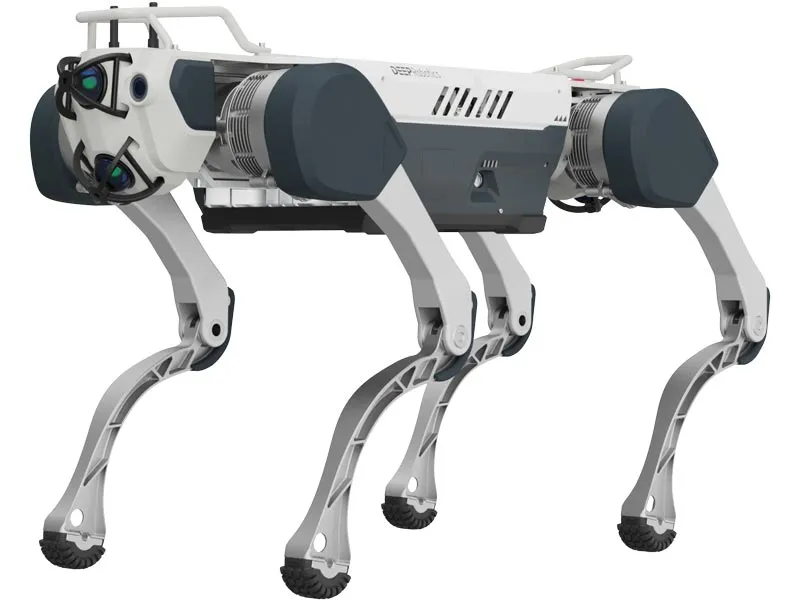
The short answer: yes, humanoid robots can work outside, but only if the whole system is designed for it. A walking demo in sunshine is not the same as a robot that can cross a wet threshold, recognize a fallen branch, keep its battery safe, and return to a dock without dragging mud through the house.
Why weatherproofing is a home-readiness feature
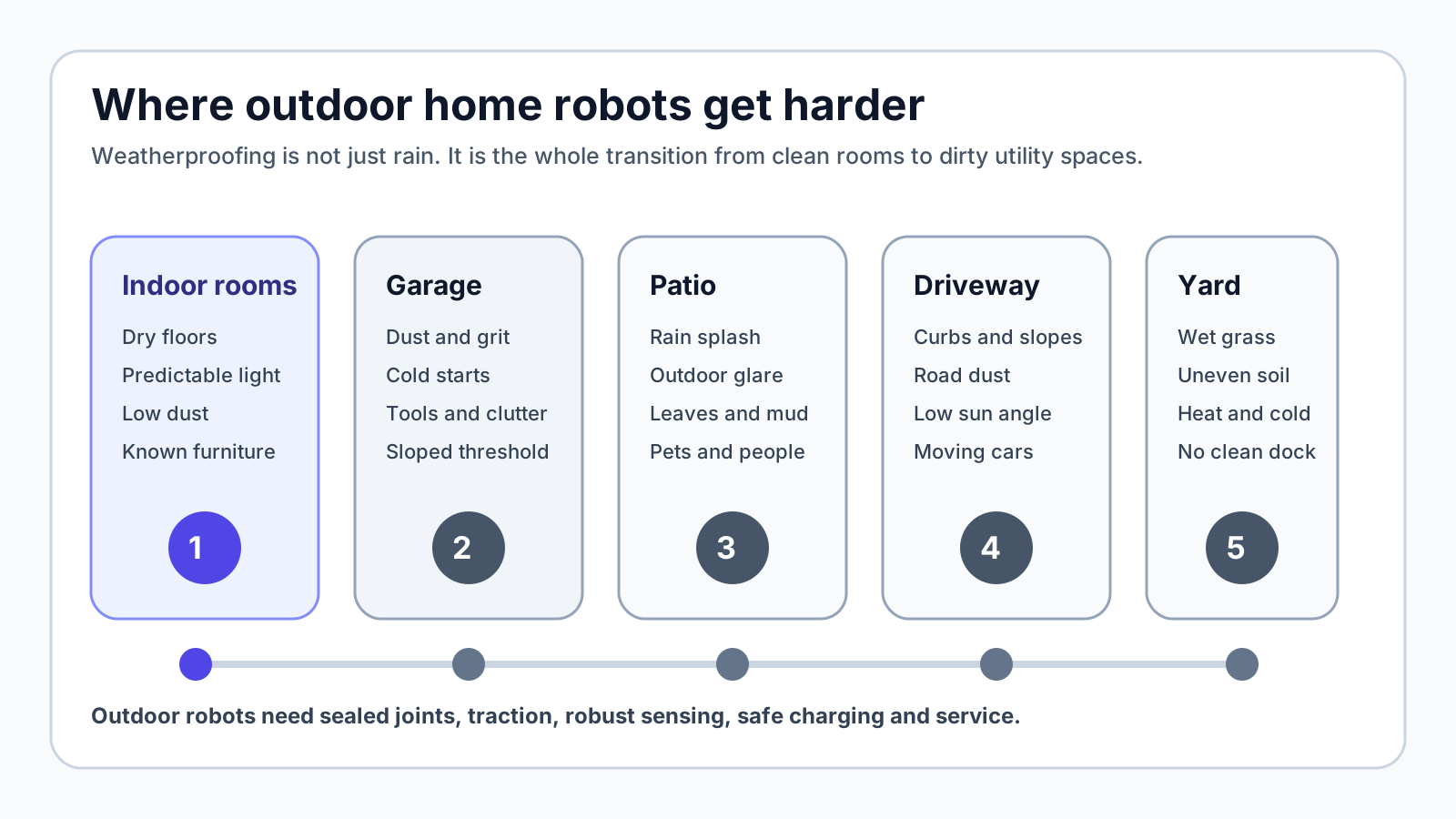
A home is not just carpet and countertops. Real houses include patios, garages, balconies, driveways, sheds, porches, garden paths, utility rooms, laundry areas, pet doors, wet shoes, dust, leaves, glare, fogged camera covers, and seasonal temperature swings. A robot that cannot leave a clean floor plan is useful in a narrower set of chores.
That matters because many appealing home tasks are boundary tasks:
- bring a package from the porch;
- carry recycling to the garage;
- inspect a strange noise near the gate;
- fetch a garden tool from the shed;
- move between kitchen, pantry, laundry and utility space;
- help someone with mobility limitations check outside without going outside;
- wipe up a spill near a door before it spreads indoors.
None of these require a robot to be a superhero. They require boring durability: sealed joints, protected cameras, traction, stable behavior around slopes and thresholds, reliable charging, and a fail-safe when the robot is unsure.
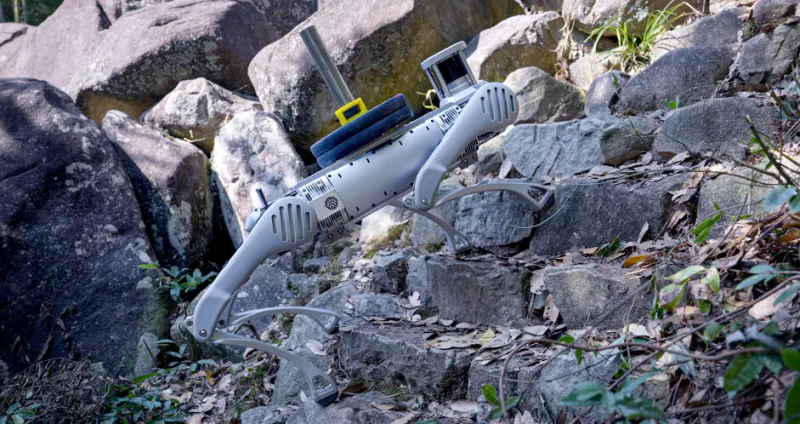
That is also why quadrupeds have been the outdoor proving ground. In the ui44 database, DEEPRobotics X30 is an IP67 industrial quadruped that operates from -20°C to 55°C, climbs 45° slopes, uses quick-swap batteries, and is aimed at inspection, security, surveying and rescue. Unitree B2 is another rugged industrial quadruped, with IP67 ingress protection, a -20°C to 55°C operating range, more than 6 m/s claimed speed in special configurations, and a continuous walking load above 40 kg.
Humanoids add arms and human-shaped reach, but they also add failure points. Hands, elbows, knees, waist joints, necks, speakers, microphones, cameras, battery doors and charging contacts all need protection.
What DR02 changes, and what it does not
DR02 is important because it moves ruggedization from robot dogs into the humanoid conversation. DEEP Robotics says the robot has an IP66 full-body waterproof and dustproof rating, can operate from -20°C to 55°C, walks at 1.5 m/s, reaches a 4 m/s top speed, climbs stairs up to 25 cm, and uses modular quick-detach forearms, full arms and legs to reduce downtime.
Those details are more useful than a vague "AI helper" claim. IP66 means the manufacturer is talking about dust-tight protection and powerful water jets, not just a glossy shell. The temperature range covers cold garages and hot workshops. The modular repair claim matters because outdoor robots break in ordinary ways: feet wear down, seals age, batteries swell, cameras get scratched, and limbs hit objects.
But DR02 does not prove that a humanoid is ready to take out your bins. It is an industrial robot, not a home appliance. Price, support, safety certification, noise, weight, privacy policy, insurance, local service, spare parts, dock placement and behavior around children or pets are separate questions. A home robot needs consumer-grade trust, not just industrial toughness.
The best way to read DR02 is as a spec signal. If a future home humanoid claims it can work outdoors but gives no IP rating, no temperature range, no wet-floor behavior, no docking limits and no repair plan, it is probably not ready for outdoor chores.
How to read IP ratings without overreading them
IP ratings are useful, but they are easy to overinterpret. The first digit is protection against solids such as dust. The second digit is protection against water. Roughly:
- IP54 means limited dust protection and splashing-water protection.
- IP66 means dust-tight protection and protection against powerful water jets.
- IP67 means dust-tight protection and temporary immersion protection under defined test conditions.
Those numbers do not automatically mean a robot can be hosed down every day, charge safely in rain, work after salt exposure, survive mud packed into a knee joint, or keep its cameras clean. The rating applies to specific test conditions and a specific product configuration.
That distinction matters at home. A robot could be sealed while walking but not safe to charge when wet. It could survive rain but lose visual navigation when water beads on a camera. It could be dust-tight but still need frequent foot, seal or filter maintenance. It could cross a wet driveway but become unsafe on ice.
Spot is a useful comparison. Boston Dynamics lists Spot at IP54 with a -20°C to 55°C operating range, 14 kg payload capacity and about 90 minutes of average runtime. Spot is clearly built for rougher places than a living room, but Boston Dynamics still sells it through enterprise workflows, not a consumer checkout page. Rugged does not automatically mean domestic.
What ui44's robot database already shows
Outdoor readiness is not one spec. It is a bundle. Here are the most relevant signals from ui44's database and official product pages.
Robot
DEEP Robotics DR02
- Form
- Humanoid
- Outdoor-relevant specs
- Officially described as IP66, -20°C to 55°C, 1.5 m/s walk, 4 m/s top speed, 25 cm stair climbing, modular arms and legs
- Why it matters for homes
- Shows rugged humanoid specs are becoming explicit, even if the product is industrial
Robot
- Form
- Humanoid
- Outdoor-relevant specs
- ui44 tracks IP67, -20°C to 40°C, 4-hour battery, 50 kg instant / 30 kg sustained lift
- Why it matters for homes
- Enterprise humanoids are starting to publish durability specs, not just demo videos
Robot
- Form
- Quadruped
- Outdoor-relevant specs
- IP67, -20°C to 55°C, 45° slope climbing, 2.5-4h endurance
- Why it matters for homes
- Rugged legged robots already work in inspection and rescue settings
Robot
- Form
- Quadruped
- Outdoor-relevant specs
- IP67, -20°C to 55°C, 40+ kg continuous walking load, 4-6h battery
- Why it matters for homes
- Outdoor mobility, payload and endurance can coexist, but in enterprise form
Robot
- Form
- Quadruped
- Outdoor-relevant specs
- IP67, wet and bumpy terrain navigation, 90-120 min battery
- Why it matters for homes
- Industrial inspection robots prove autonomy must survive messy facilities
Robot
- Form
- Quadruped
- Outdoor-relevant specs
- IP67, -40°C to 55°C, modular field repair, 3+ hours continuous walking
- Why it matters for homes
- Field repair and communications matter as much as walking ability
Robot
- Form
- Quadruped
- Outdoor-relevant specs
- IP54, -20°C to 55°C, autonomous charging, self-righting, 14 kg payload
- Why it matters for homes
- A lower IP rating can still be useful if deployment limits are clear
| Robot | Form | Outdoor-relevant specs | Why it matters for homes |
|---|---|---|---|
| DEEP Robotics DR02 | Humanoid | Officially described as IP66, -20°C to 55°C, 1.5 m/s walk, 4 m/s top speed, 25 cm stair climbing, modular arms and legs | Shows rugged humanoid specs are becoming explicit, even if the product is industrial |
| Boston Dynamics Atlas | Humanoid | ui44 tracks IP67, -20°C to 40°C, 4-hour battery, 50 kg instant / 30 kg sustained lift | Enterprise humanoids are starting to publish durability specs, not just demo videos |
| DEEPRobotics X30 | Quadruped | IP67, -20°C to 55°C, 45° slope climbing, 2.5-4h endurance | Rugged legged robots already work in inspection and rescue settings |
| Unitree B2 | Quadruped | IP67, -20°C to 55°C, 40+ kg continuous walking load, 4-6h battery | Outdoor mobility, payload and endurance can coexist, but in enterprise form |
| ANYmal D | Quadruped | IP67, wet and bumpy terrain navigation, 90-120 min battery | Industrial inspection robots prove autonomy must survive messy facilities |
| Ghost Vision 60 | Quadruped | IP67, -40°C to 55°C, modular field repair, 3+ hours continuous walking | Field repair and communications matter as much as walking ability |
| Spot | Quadruped | IP54, -20°C to 55°C, autonomous charging, self-righting, 14 kg payload | A lower IP rating can still be useful if deployment limits are clear |
The pattern is obvious: the most credible outdoor machines today are still quadrupeds and commercial platforms. Humanoids are catching up, but the home buyer should judge them by the same boring deployment specs used for industrial robots.
What would an outdoor home humanoid actually do?
A useful outdoor home humanoid should start with low-drama chores. The most realistic first jobs are not mowing the lawn or building a deck. They are short-distance, low-speed, supervised tasks near the home.
Good early examples include porch checks, garage patrols, simple carrying, returning misplaced items from a patio, fetching small tools, bringing in empty bins, or acting as a mobile camera for someone who cannot easily walk outside. These tasks benefit from human-shaped reach and arms, but they can be bounded by clear rules: do not leave the property, do not enter the road, do not lift heavy or sharp objects, do not operate in lightning, do not cross ice, and return to the dock when confidence is low.
The harder chores are tempting but risky. Carrying full trash bins involves weight, traction, property-line navigation and pinch hazards. Handling packages involves theft risk and privacy. Garden work introduces sharp tools, pets, children, wet grass and uneven terrain. Poolside chores add water, slippery surfaces and electrical safety. Snow and ice introduce falling risk for both the robot and people around it.
That is why an outdoor home robot should have a visible operating envelope. A buyer should know where the robot can go, what weather it can tolerate, what it must avoid, and whether it can recover from common failures without a service call.
The buyer checklist: what to ask before believing an outdoor claim
- What is the IP rating, and for which configuration? A robot with an arm,
- What is the operating temperature range? Ask separately about charging,
- What surfaces has it actually tested? Concrete, tile, wood decking, wet
- How does perception work in rain, glare and darkness? Cameras, LiDAR,
- What happens when it is unsure? The best outdoor robot is conservative:
- Can normal parts be replaced quickly? Feet, seals, batteries, limb
- Where does it dock? An outdoor-capable robot still needs a safe charging
- Who supports it locally? Rugged robots are still machines. Service access
So, can humanoid robots work outside?
Yes, but the honest answer is narrower than the hype. Industrial humanoids such as DR02 and Atlas show that weatherproofing, operating-temperature ranges and serviceability are moving into humanoid design. Rugged quadrupeds such as X30, B2, ANYmal D, Vision 60 and Spot show that robots can already work in dirty, wet, hot, cold and dangerous places when they are engineered and supported for those environments.
The consumer version will take longer. A home robot that goes outside needs more than a pair of legs and a large language model. It needs sealed hardware, explainable limits, conservative autonomy, a repair plan, privacy controls, insurance clarity and a safe way to charge.
If you are evaluating an outdoor humanoid robot, ignore the most cinematic part of the demo and look for the dullest line in the spec sheet. IP rating, temperature range, terrain limits, battery safety and serviceability will tell you more about home readiness than a robot waving in the rain.
Related in the database
Use this article as a privacy verification workflow
Turn the article into a privacy verification pass grounded in the robots, manufacturers, and components it actually references.
Can Humanoid Robots Work Outside at Home? already points you toward 6 linked robots, 5 manufacturers, and 3 countries inside the ui44 database. That matters because strong buyer guidance is easier to apply when you can move immediately from a claim or warning into concrete product pages, manufacturer directories, component explainers, and country-level context instead of treating the article as an isolated opinion piece. The fastest next step is to turn the article into a shortlist workflow: open the linked robot pages, verify which specs are actually published for those models, then compare the surrounding manufacturer and component context before you decide whether the underlying claim changes your buying plan.
For this topic, the useful discipline is to separate the editorial lesson from the catalog evidence. The article gives you the framing, but the robot pages tell you what each product actually ships with today: sensor stack, connectivity methods, listed price, release timing, category, and support-relevant compatibility notes. The manufacturer pages then show whether you are looking at a one-off launch, a broader lineup pattern, or a company that spans multiple categories. That layered workflow reduces the risk of buying on a single marketing phrase or a single support FAQ.
Use the robot pages to confirm which products actually expose cameras, microphones, Wi-Fi, or voice systems, then use the manufacturer pages to decide how much of the privacy question seems product-specific versus brand-wide. On this route cluster, X30, B2, and Spot form the fastest reality check. If you want a quick working shortlist, open Compare X30, B2, and Spot next, then keep this article open as the reasoning layer while you compare structured data side by side.
Practical Takeaway
Every robot, manufacturer, category, component, and country reference below resolves to a real ui44 page, keeping the follow-up path grounded in database records rather than generic advice.
Suggested next steps in ui44
- Open X30 and note the listed sensors, connectivity methods, and voice stack before you interpret any policy claim.
- Cross-check the wider brand context on DEEPRobotics so you can see whether the privacy question touches one model or a broader lineup.
- Use the linked component pages to confirm how common the relevant sensors and connectivity layers are across the database.
- Keep a short note of which policy layers you checked, which device features are actually present on the robot page, and which items still depend on region- or app-level confirmation.
- Finish with Compare X30, B2, and Spot so the policy reading sits next to structured product data.
Robot profiles worth opening next
Use the linked product pages as the evidence layer
The linked robot pages are where this article becomes operational. Instead of asking whether the headline is interesting, use the robot entries to inspect the actual mix of sensors, connectivity options, batteries, pricing, release timing, and stated capabilities attached to the products mentioned in the article. That is the easiest way to see whether the warning or opportunity described here affects one product family, a specific design pattern, or an entire buying lane.
X30
DEEPRobotics · Quadruped · Active
X30 is tracked on ui44 as a active quadruped robot from DEEPRobotics. The database currently records a listed price of Price TBA, a release date of 2023, 2.5-4h (≥10km range) battery life, Not disclosed charging time, and a published stack that includes Depth Cameras, RGB Cameras, and Fusion Perception System plus Ethernet.
For privacy-focused reading, this page matters because it shows the concrete device surface behind the policy discussion. Use it to verify whether X30 combines sensors and connectivity in a way that could change the in-home data footprint, and compare the listed capabilities such as Autonomous Inspection, 45° Slope Climbing, and 20cm Obstacle Traversal with any cloud, app, or voice layers.
B2
Unitree Robotics · Quadruped · Active
B2 is tracked on ui44 as a active quadruped robot from Unitree Robotics. The database currently records a listed price of Price TBA, a release date of 2023-11-03, 4–6 hours (unloaded walking >5h / 20km; 20kg load >4h / 15km) battery life, Not disclosed (plug-in battery swap supported) charging time, and a published stack that includes 3D LiDAR, Depth Camera ×2, and Optical Camera ×2 plus 1000M Ethernet ×4 and USB 3.0 ×4.
For privacy-focused reading, this page matters because it shows the concrete device surface behind the policy discussion. Use it to verify whether B2 combines sensors and connectivity in a way that could change the in-home data footprint, and compare the listed capabilities such as Industrial Inspection, Emergency Rescue, and Power Line Patrol with any cloud, app, or voice layers.
Spot
Boston Dynamics · Commercial · Active
Spot is tracked on ui44 as a active commercial robot from Boston Dynamics. The database currently records a listed price of Price TBA, a release date of 2020, ~90 minutes battery life, 60 minutes charging time, and a published stack that includes 360° Stereo Cameras, Time-of-Flight Sensor, and Ultrasonic Sensors (front + rear) plus Wi-Fi 2.4GHz/5GHz and Ethernet.
For privacy-focused reading, this page matters because it shows the concrete device surface behind the policy discussion. Use it to verify whether Spot combines sensors and connectivity in a way that could change the in-home data footprint, and compare the listed capabilities such as Autonomous Industrial Inspection, Stair Climbing (±30° slopes), and Dynamic Obstacle Avoidance with any cloud, app, or voice layers.
Atlas (Electric)
Boston Dynamics · Humanoid · Active
Atlas (Electric) is tracked on ui44 as a active humanoid robot from Boston Dynamics. The database currently records a listed price of Price TBA, a release date of 2026, ~4 hours battery life, Not disclosed charging time, and a published stack that includes 360° camera view and Tactile plus Wi-Fi and Ethernet.
For privacy-focused reading, this page matters because it shows the concrete device surface behind the policy discussion. Use it to verify whether Atlas (Electric) combines sensors and connectivity in a way that could change the in-home data footprint, and compare the listed capabilities such as Heavy Lifting (50kg Instant, 30kg Sustained), Precise Manipulation, and Dynamic Recovery with any cloud, app, or voice layers.
ANYmal D is tracked on ui44 as a active commercial robot from ANYbotics. The database currently records a listed price of Price TBA, a release date of 2023, 90-120 minutes battery life, 100 min (70% quick charge), 3h full charging time, and a published stack that includes 360° LiDAR, 6 Depth Cameras, and 2 Optical Teleop Cameras plus Wi-Fi and 4G/LTE.
For privacy-focused reading, this page matters because it shows the concrete device surface behind the policy discussion. Use it to verify whether ANYmal D combines sensors and connectivity in a way that could change the in-home data footprint, and compare the listed capabilities such as Autonomous Industrial Inspection, Stair Climbing (open grated stairs), and Wet & Bumpy Terrain Navigation with any cloud, app, or voice layers.
Manufacturer context behind the article
Check whether this is one product story or a broader company pattern
Manufacturer pages add the privacy context that individual product pages cannot show on their own. They help you check whether cameras, microphones, cloud accounts, app controls, and policy assumptions appear across a broader lineup or stay tied to one specific product story.
DEEPRobotics
ui44 currently tracks 5 robots from DEEPRobotics across 2 categorys. The company is grouped under China, and the current catalog footprint on ui44 includes X30, LYNX M20, Lynx S10.
That wider brand context matters because privacy questions rarely stop at one FAQ page. A manufacturer route helps you see whether the article is centered on one premium model or on a company that has several relevant products and therefore more than one place where the same policy or app assumptions might matter. The category mix here currently points toward Quadruped, Humanoid as the most useful next route if you want to see whether this article reflects a wider pattern inside the brand.
Unitree Robotics
ui44 currently tracks 9 robots from Unitree Robotics across 3 categorys. The company is grouped under China, and the current catalog footprint on ui44 includes B2, B1, Go2.
That wider brand context matters because privacy questions rarely stop at one FAQ page. A manufacturer route helps you see whether the article is centered on one premium model or on a company that has several relevant products and therefore more than one place where the same policy or app assumptions might matter. The category mix here currently points toward Quadruped, Humanoid, Research as the most useful next route if you want to see whether this article reflects a wider pattern inside the brand.
Boston Dynamics
ui44 currently tracks 3 robots from Boston Dynamics across 2 categorys. The company is grouped under USA, and the current catalog footprint on ui44 includes Atlas (Electric), Spot, Stretch.
That wider brand context matters because privacy questions rarely stop at one FAQ page. A manufacturer route helps you see whether the article is centered on one premium model or on a company that has several relevant products and therefore more than one place where the same policy or app assumptions might matter. The category mix here currently points toward Humanoid, Commercial as the most useful next route if you want to see whether this article reflects a wider pattern inside the brand.
ANYbotics
ui44 currently tracks 2 robots from ANYbotics across 1 category. The company is grouped under Switzerland, and the current catalog footprint on ui44 includes ANYmal D, ANYmal X.
That wider brand context matters because privacy questions rarely stop at one FAQ page. A manufacturer route helps you see whether the article is centered on one premium model or on a company that has several relevant products and therefore more than one place where the same policy or app assumptions might matter. The category mix here currently points toward Commercial as the most useful next route if you want to see whether this article reflects a wider pattern inside the brand.
Broaden the scan without leaving the database
Categories, components, and countries add the wider context
Category framing
Category pages are useful when the article touches a buying pattern that shows up across brands. A category route helps you confirm whether the linked products sit in a narrow niche or whether the same question should be tested across a larger field of alternatives.
Quadruped
The Quadruped category page currently groups 25 tracked robots from 16 manufacturers. ui44 describes this lane as: Four-legged robot dogs and quadrupeds built for rough terrain, inspection, and exploration — going where wheels can't.
That makes the category route a practical follow-up when you want to check whether the products linked in this article are typical for the lane or whether they sit at one edge of the market. Useful starting examples currently include Argos X1, D1 Pro, D2 Max.
Commercial
The Commercial category page currently groups 44 tracked robots from 38 manufacturers. ui44 describes this lane as: Delivery robots, warehouse automation, and hospitality service bots — robots built for business and commercial operations.
That makes the category route a practical follow-up when you want to check whether the products linked in this article are typical for the lane or whether they sit at one edge of the market. Useful starting examples currently include G2 Air, aeo, Pepper.
Country and ecosystem context
Country pages give extra context when support practices, launch sequencing, regulatory posture, or manufacturer mix matter. They are not a substitute for model-level verification, but they do help you see which ecosystems cluster together and which manufacturers sit in the same regional field when you broaden the search beyond the article headline.
China
The China route currently groups 189 tracked robots from 87 manufacturers in ui44. That gives you a useful regional lens when the article points toward support practices, launch sequencing, or brand clusters that may share similar ecosystem assumptions.
On the current route, manufacturers like AGIBOT, Dreame, Unitree Robotics make the page a good way to broaden the scan without losing the regional context that often shapes availability, documentation style, and adjacent alternatives.
USA
The USA route currently groups 89 tracked robots from 69 manufacturers in ui44. That gives you a useful regional lens when the article points toward support practices, launch sequencing, or brand clusters that may share similar ecosystem assumptions.
On the current route, manufacturers like Faraday Future, iRobot, Boston Dynamics make the page a good way to broaden the scan without losing the regional context that often shapes availability, documentation style, and adjacent alternatives.
Switzerland
The Switzerland route currently groups 5 tracked robots from 4 manufacturers in ui44. That gives you a useful regional lens when the article points toward support practices, launch sequencing, or brand clusters that may share similar ecosystem assumptions.
On the current route, manufacturers like ANYbotics, All3, Hexagon Robotics make the page a good way to broaden the scan without losing the regional context that often shapes availability, documentation style, and adjacent alternatives.
Questions to answer before you move from reading to buying
A follow-up FAQ built from the entities already linked in this article
Frequently Asked Questions
Which page should I open first after reading “Can Humanoid Robots Work Outside at Home?”?
Start with X30. That gives you a concrete product anchor for the article’s main claim. From there, branch into the manufacturer and component pages so you can tell whether the article is describing one specific model, a repeated brand pattern, or a wider technology issue that affects multiple shortlist options.
How do the manufacturer pages change the buying decision?
DEEPRobotics help you zoom out from one article and one product. On ui44 they show lineup breadth, category spread, and the neighboring robots tied to the same company. That context is useful when you are deciding whether a risk belongs to a single model, whether it shows up across a brand’s portfolio, and whether you should keep looking at alternatives before committing.
When should I switch from reading to side-by-side comparison?
Move into Compare X30, B2, and Spot as soon as you understand the article’s main warning or promise. The article explains what to watch for, but the compare view is where you can check whether price, status, battery life, connectivity, sensors, and category fit still make the robot a good match for your own home and budget.
Where to go next in ui44
Keep the research chain inside the database
If you want to keep going, these follow-on pages give you the cleanest expansion path from article to research session. Open the comparison route first if you are deciding between products today. Open the manufacturer, category, and component routes if you still need to understand the broader pattern behind the claim.
Written by
ui44 Team
Published May 1, 2026
Share this article
Open a plain share link on X or Bluesky. No embeds, no widgets, no cookie baggage.