1X NEO is one of the most interesting home robots in ui44's database because it is not just another concept render. It has a real preorder page, a real published price of $20,000, a stated 2026 U.S. delivery window, and a clear home-first pitch. But the official 1X materials also say early owners get basic autonomy, and that for chores NEO does not yet know, you can schedule a 1X Expert to supervise and help it learn.
That is the part buyers should focus on. NEO looks less like a finished robot maid and more like a very ambitious early-access home humanoid program.

Should you preorder 1X NEO right now?
For most households, no.
For a small group of wealthy, patient early adopters, maybe.
That is not a knock on 1X. It is just the honest read once you combine 1X's own preorder language with the recent public hands-on coverage. The recent videos make NEO feel real, but they also make it feel early. You are not buying a silent, fully independent butler that disappears into the background. You are buying a full-size humanoid that still needs structured help, software updates, and a forgiving owner.
On ui44, NEO is currently listed at $20,000, 167 cm, 30 kg, and about 4 hours of battery life. That already tells you this is not in the same category as small companion robots like Samsung Ballie, LOVOT, or Zeroth M1. NEO is a much more serious piece of hardware, with much more serious expectations attached.
The question is not whether NEO is impressive. It is. The question is whether it is impressive enough to justify a preorder in its current state.
What do the real demos actually reveal?
The best thing about the public NEO demos is that they make the product feel less abstract. The worst thing about them is that they also make the tradeoffs harder to ignore.
What stands out is not some magical new household capability. It is the overall vibe of the machine:
- careful rather than fast
- presentable rather than invisible
- promising rather than finished
- home-aware, but not yet home-effortless
That matches 1X's own official wording more than the splashiest marketing lines do. On the 1X order page, the company says NEO arrives with basic autonomy, can grow through software updates, and supports Scheduled Expert Mode for complex chores it does not yet know. It also offers app-based remote control.
That matters because it changes the buyer story.
The real product here is not just a robot body. It is a package of:
- early hardware
- ongoing learning
- premium support
- remote supervision when needed
- and your willingness to live inside that learning loop
If you were hoping for a home humanoid that shows up already polished enough to quietly handle laundry, dishes, and tidying with no drama, 1X's own preorder terms are the clearest warning sign that we are not there yet.
What are you really buying for $20,000?
According to 1X's official preorder flow, the Early Access option includes ownership, a 3-year warranty, premium support, and priority delivery. There is also a $499 per month subscription option, but 1X says that version will ship later.
That pricing structure tells you a lot.
This is not being sold like a mature appliance. It is being sold like a premium, managed early-adopter product. That does not make it fake. If anything, it makes it more credible than companies that imply full autonomy without explaining the escape hatches.
Still, buyers should read the details with clear eyes:
Official 1X signal
$20,000 Early Access price
- What it means for a buyer
- This is luxury-tech money, not impulse-gadget money
Official 1X signal
$200 refundable deposit
- What it means for a buyer
- 1X wants preorder demand early, before broad proof exists
Official 1X signal
Basic autonomy at launch
- What it means for a buyer
- You are not getting the final capability set on day one
Official 1X signal
Scheduled Expert Mode
- What it means for a buyer
- Some tasks may still need supervised help to work well
Official 1X signal
2026 U.S. deliveries
- What it means for a buyer
- You are betting on a future ship window, not buying a robot today
Official 1X signal
$499/month option later
- What it means for a buyer
- 1X expects some buyers to prefer a service model over outright ownership
| Official 1X signal | What it means for a buyer |
|---|---|
| $20,000 Early Access price | This is luxury-tech money, not impulse-gadget money |
| $200 refundable deposit | 1X wants preorder demand early, before broad proof exists |
| Basic autonomy at launch | You are not getting the final capability set on day one |
| Scheduled Expert Mode | Some tasks may still need supervised help to work well |
| 2026 U.S. deliveries | You are betting on a future ship window, not buying a robot today |
| $499/month option later | 1X expects some buyers to prefer a service model over outright ownership |
The physical hardware is also more serious than the price alone suggests. On its official order page, 1X says NEO is 5'6", 66 pounds, carries 55 pounds, and uses a soft body with tendon-driven actuation. That is impressive. It is also a reminder that this is a large machine you must trust in your living space, not a cute sidekick you can ignore when it gets something wrong.
Is 1X NEO really autonomous enough for a normal home?
Not yet in the way most buyers probably mean.
This is where 1X is both refreshingly honest and still a little slippery. The company clearly says NEO is designed for full autonomy over time, but it also says early owners get foundational or basic autonomy and may need expert help for unknown chores.
So the honest answer is:
- autonomous enough to be interesting
- not autonomous enough to feel appliance-like
- more transparent than many humanoid rivals about that gap
That last point is important. I would rather see 1X openly admit the product is still learning than pretend the problem is solved. A home humanoid that can ask for help is more believable than one that claims it can already do everything.
But that honesty cuts both ways. It also means a preorder buyer is volunteering for a product stage that most normal households should probably avoid.
If you want a robot that behaves more like a stable consumer product today, smaller or narrower home robots may fit better.
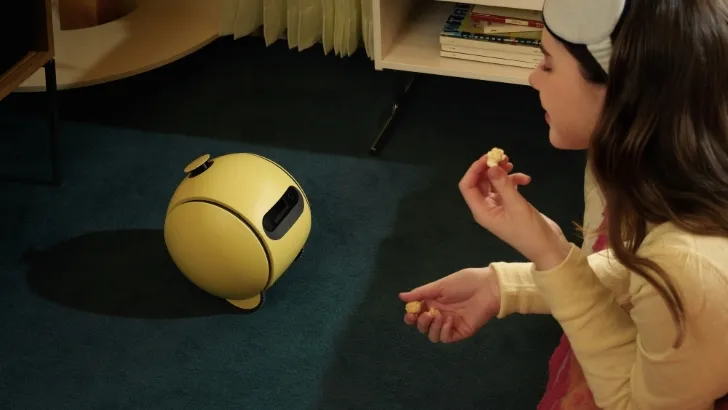
How does 1X NEO compare with other home robots?
This is the most useful frame for real buyers. NEO should not just be compared with other humanoid headlines. It should be compared with the kinds of home robots you could actually imagine living with.
Robot
- ui44 status
- Pre-order
- Price in DB
- $20,000
- Best fit
- Early adopters who want the most ambitious home-humanoid bet
- Main tradeoff
- High price, early autonomy, supervised-learning reality
Robot
- ui44 status
- Development
- Price in DB
- No price announced
- Best fit
- Buyers who want smart-home help, monitoring, and voice/projector utility
- Main tradeoff
- No retail launch, no arms, still delayed
Robot
- ui44 status
- Pre-order
- Price in DB
- $2,899
- Best fit
- Buyers curious about a much smaller, cheaper home robot experiment
- Main tradeoff
- Much less physical capability than NEO
Robot
- ui44 status
- Available
- Price in DB
- ¥577,500 plus monthly plan
- Best fit
- Buyers who want emotional companionship, not chores
- Main tradeoff
- Expensive for a non-helper robot
Robot
- ui44 status
- Development
- Price in DB
- No price announced
- Best fit
- Buyers interested in appliance-centric home help
- Main tradeoff
- Still demo-stage, no clear retail path
| Robot | ui44 status | Price in DB | Best fit | Main tradeoff |
|---|---|---|---|---|
| 1X NEO | Pre-order | $20,000 | Early adopters who want the most ambitious home-humanoid bet | High price, early autonomy, supervised-learning reality |
| Samsung Ballie | Development | No price announced | Buyers who want smart-home help, monitoring, and voice/projector utility | No retail launch, no arms, still delayed |
| Zeroth M1 | Pre-order | $2,899 | Buyers curious about a much smaller, cheaper home robot experiment | Much less physical capability than NEO |
| LOVOT | Available | ¥577,500 plus monthly plan | Buyers who want emotional companionship, not chores | Expensive for a non-helper robot |
| LG CLOiD | Development | No price announced | Buyers interested in appliance-centric home help | Still demo-stage, no clear retail path |
That table reveals something important.
NEO is not obviously the best home robot for most people. It is the most ambitious one in this group, but ambition is not the same thing as fit.
If your real goal is easier smart-home control, Ballie may actually be the less risky concept, even with Samsung's delays.
If your real goal is to experiment with a home robot without spending luxury-car money, Zeroth M1 is far more approachable, even though it is much less capable.
If your real goal is emotional presence, not chores, LOVOT is already a finished product category in a way NEO is not.
And if your real goal is seeing what a more appliance-centered household helper could look like, LG CLOiD may be the more practical design direction, even if it is also still unbuyable.
What makes NEO different from Ballie, Zeroth M1, LOVOT, and LG CLOiD?
The biggest difference is that NEO is trying to be a general physical helper in a real home-sized body.
That is why the preorder question is so hard. A robot like Ballie can be useful without touching much. A robot like LOVOT can succeed without doing chores at all. A robot like Zeroth M1 can survive as a lighter, cheaper companion and monitoring device.
NEO is aiming higher than all of them.
That higher ambition shows up in the data:
- NEO is far larger than Ballie, LOVOT, and Zeroth M1
- NEO is far more expensive than Zeroth M1 and far more physically capable than companion bots
- NEO is more clearly home-focused than many industrial humanoids, but still much less mature than normal home appliances
- NEO is one of the few products that openly blends autonomy, remote supervision, and household manipulation into a single buyer offer
That is exciting. It is also exactly why buyers need to be tougher, not softer, on preorder logic.

What are the biggest practical risks before you preorder?
If you are still tempted, here are the risks that matter most.
1. You are buying into a training curve
1X is not hiding this. NEO improves over time, and complex tasks may need expert guidance. That means your experience depends partly on future software progress, not just today's hardware.
2. Your home becomes part of the product story
NEO uses cameras, audio, memory, and contextual awareness. That is central to its value, but it also means privacy tolerance is part of the buying decision. If you are already uneasy about camera-based home robots, a humanoid with this much situational awareness is not the place to push yourself.
3. The form factor is still a burden
A 167 cm, 30 kg robot has presence. Even if 1X has done impressive work on soft materials, low noise, and safer actuation, this is still a large moving machine. You will notice it. Guests will notice it. Your layout will matter.
4. The price leaves little room for forgiveness
At $20,000, you can accept some weirdness only if you see yourself as a serious early adopter. At $2,000, people tolerate beta energy. At $20,000, tolerance shrinks fast.
5. Delivery timing is still future tense
A preorder is not a shipped robot. If your buying impulse comes from current hype rather than a clear use case, waiting will almost certainly give you better information and probably better hardware.
Who should actually preorder 1X NEO?
You are a plausible NEO buyer if most of the following are true:
- you are comfortable spending $20,000 on experimental home tech
- you want to help shape an early category, not just consume a finished product
- you have a strong tolerance for updates, edge cases, and supervised workflows
- you are comfortable with a robot using cameras, microphones, and memory at home
- you want a robot for physical household assistance, not just companionship or smart-home control
You should probably wait if any of these sound like you:
- you want reliable chore automation on day one
- you hate babysitting expensive gadgets
- you mainly want a lighter companion robot
- you are unsure about privacy tradeoffs
- you are comparing NEO against a vacation, a car, or other big-ticket real-life purchases
That last one matters. For most people, the question is not "Is NEO cool?" It is "Is NEO the best use of $20,000 in my life right now?" For almost everyone, the answer is no.

So, should you preorder 1X NEO or wait?
My recommendation is to wait unless you explicitly want to be part of the experiment.
1X NEO is one of the most credible home-humanoid products on the market because 1X is at least trying to explain how the system actually works. The combination of a real preorder flow, a real price, a real 2026 delivery target, and an open acknowledgment that NEO will keep learning puts it ahead of a lot of vague humanoid hype.
But credibility is not the same thing as readiness.
Right now, NEO looks like a fascinating first-generation home humanoid with a clear path to getting better, not a polished home robot that normal households should confidently buy. If you want to compare it side by side with other home robots, ui44's robot database and compare tool are the best next step.
The honest buyer verdict is this:
- preorder NEO if you want front-row access to the category
- wait if you want dependable home help
- look at Ballie, LOVOT, and Zeroth M1 if you want a less intense entry point into home robotics
That may sound conservative, but for a $20,000 preorder, conservative is the right tone.
What does 1X's track record tell us about NEO's chances?
1X Technologies (formerly Halodi Robotics) was founded in Norway and has been working on humanoid robots since 2014. The company's earlier robot, Eve, was a wheeled humanoid deployed in commercial settings like security patrols and logistics support. That matters because it means 1X is not starting from zero — the company has years of real-world deployment experience, even if those deployments were not in homes.
1X has also attracted serious funding. Notable investors include OpenAI's startup fund, which led a $23.5M round in 2023, and EQT Ventures. That backing is meaningful because it means 1X has the financial runway to iterate, but it also means the company is under investor pressure to ship a product that justifies its valuation.
The transition from wheeled commercial robots (Eve) to a bipedal home humanoid (NEO) is a big leap. Wheeled robots are mechanically simpler and operate in more predictable environments. Homes are cluttered, unpredictable, and full of edge cases that commercial hallways never prepare a robot for. 1X knows this, which is why the Scheduled Expert Mode exists — it is an admission that the software cannot yet handle every situation alone.
So the track record says: 1X is experienced enough to be taken seriously and funded enough to survive the early-adopter phase. But the track record does not prove that NEO will work reliably in your home. Nobody's track record proves that yet, because no company has shipped a mature home humanoid at scale.
How does NEO fit into the broader humanoid robot landscape?
NEO exists in a crowded field of humanoid robots, but most of its competitors are targeting factories and warehouses, not living rooms.
Figure 03 has made headlines with White House appearances and Helix autonomy demos, but its commercial focus remains industrial. Tesla's Optimus Gen 2 is building robots for Tesla factories first. Unitree's H1 has shipped over 5,500 units, but almost all went to research labs and industrial customers.
NEO stands out because it is one of the very few humanoids explicitly pitched at home users with a preorder page open to consumers. That alone makes it worth watching. But the "home-first" positioning also means NEO faces a harder problem than robots operating in controlled commercial spaces.
If you are tracking the whole humanoid space, not just the home segment, ui44's categories page breaks down every robot by type, including humanoids, companion robots, vacuum robots, and more.
Frequently Asked Questions
Can I buy 1X NEO today?
You can place a $200 refundable deposit on 1X's website, but the robot has
not started shipping to consumers yet. 1X says deliveries will begin in 2026 for
U.S. customers.
How much does 1X NEO cost?
The Early Access purchase price is $20,000. 1X has also mentioned a
$499/month subscription option, but that version is expected to ship later
than the outright purchase model.
Is 1X NEO fully autonomous?
Not yet for all tasks. 1X says NEO ships with basic autonomy and can handle
a foundational set of chores on its own. For tasks it does not yet know, 1X
offers Scheduled Expert Mode, where a remote operator helps guide the robot
through the chore so it can learn.
How big is 1X NEO?
NEO stands 167 cm (5'6") and weighs 30 kg (66 lbs). It can carry up to
25 kg (55 lbs). This is a full-size humanoid — not a compact desktop robot.
What is Scheduled Expert Mode?
It is 1X's term for remote-supervised operation. When NEO encounters a chore it
cannot handle independently, a human expert can remotely guide it through the
task. Over time, the robot is supposed to learn from those sessions and reduce
its reliance on expert help.
Should I preorder 1X NEO or wait for a cheaper model?
For most buyers, waiting makes more sense. The home humanoid category is moving
fast — prices are dropping and capabilities are improving. The
price timeline for humanoid robots
shows that sub-$10,000 humanoids are likely within 2–3 years. Unless you
specifically want to be an early adopter at $20,000, patience will likely reward
you with better specs at a lower price.
Does 1X NEO work without Wi-Fi?
1X has not published detailed offline capability specs. Given that NEO relies on
cloud-connected learning, app control, and Scheduled Expert Mode, a stable
internet connection is almost certainly required for full functionality. If
offline reliability is important to you, this is a question to ask 1X support
before placing a deposit.
Written by
ui44 Team
Published April 14, 2026
Share this article
Open a plain share link on X or Bluesky. No embeds, no widgets, no cookie baggage.