The question isn't whether humanoid robots will become affordable. It's how fast. Using real production data, manufacturer cost targets, and pricing from 150+ robots in our database, here's an honest timeline for when a humanoid robot will cost less than $10,000, $5,000, and eventually under $1,000.
Spoiler: for a basic model, under $10K could happen within 2-3 years.
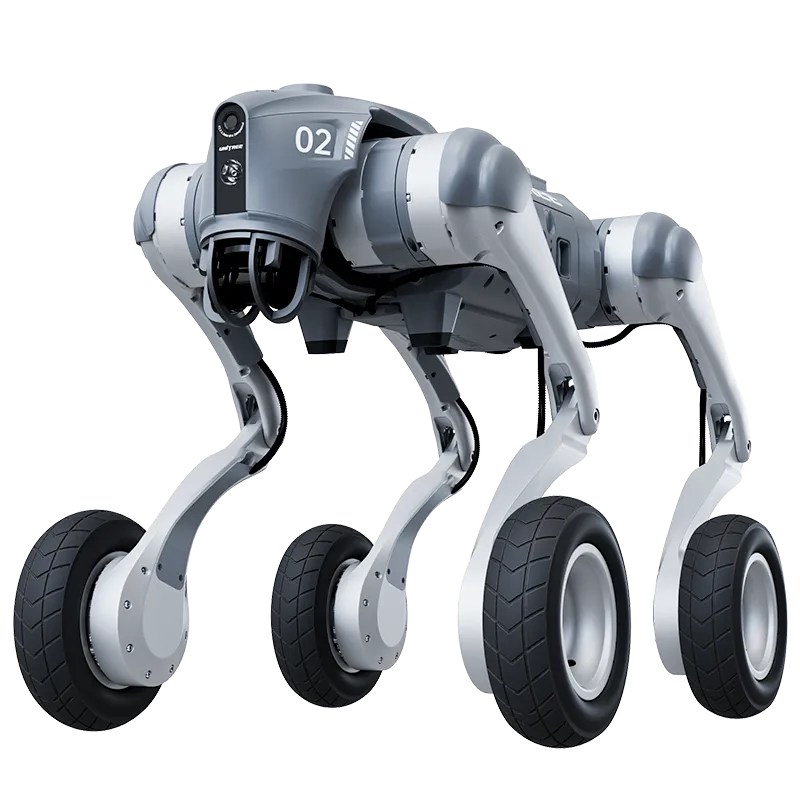
The Price Collapse So Far: A 95% Drop in 2 Years
Let's put real numbers on the table. Here are the cheapest humanoid robots you can actually buy today, from our database:
Robot
- Price
- $13,500
- Height
- 132cm
- Status
- Available now
Robot
- Price
- $19,990
- Height
- 131cm
- Status
- Available
Robot
- Price
- $20,000 ($499/mo)
- Height
- 167cm
- Status
- Pre-order
Robot
- Price
- $29,900
- Height
- 182cm
- Status
- Available
Robot
- Price
- ~$30,000
- Height
- 178cm
- Status
- Active
Robot
- Price
- $34,999
- Height
- 118cm
- Status
- Active
| Robot | Price | Height | Status |
|---|---|---|---|
| Unitree G1 | $13,500 | 132cm | Available now |
| FF Master | $19,990 | 131cm | Available |
| 1X NEO | $20,000 ($499/mo) | 167cm | Pre-order |
| Unitree H2 | $29,900 | 182cm | Available |
| Kepler Forerunner K1 | ~$30,000 | 178cm | Active |
| Booster T1 | $34,999 | 118cm | Active |
For context, Agility's Digit — one of the most commercially successful humanoid robots — costs approximately $250,000 per year on a Robots-as-a-Service (RaaS) lease. That's the "enterprise" tier, and it's what most humanoid robots actually cost when they leave the lab.
The gap between $250K and $13.5K is the story of an entire industry learning to manufacture at scale — and it's accelerating.
Why Prices Are Dropping So Fast
Three forces are driving the collapse:
- Chinese mass production. In 2025, Chinese manufacturers shipped 13,000+ humanoid robots, capturing ~90% of global output (TrendForce, April 2026). Unitree alone shipped ~5,500 units. AGiBOT crossed 10,000 cumulative units by March 2026. This isn't prototypes — this is production-line output.
- Standardized supply chains. AGiBOT went from 1,000 units to 10,000 units in nine months because it built a standardized supply chain for humanoid components — joint modules, dexterous hands, sensors. The more robots you build, the cheaper each one gets.
- Competition. There are now over 20 companies building full-size humanoid robots in China alone. When Unitree prices the G1 at $13,500, every competitor has to justify charging more. This is the same commoditization pattern that reshaped consumer electronics — premium Western brands competing against dramatically cheaper alternatives that deliver 90% of the capability at 20% of the price.
The Milestone Timeline: When Does Each Price Point Hit?
Based on manufacturer announcements, production data, and our database pricing trends, here's a realistic timeline. We're grading each prediction by confidence level.
$20,000 — Already Here (2025-2026) ✅
This milestone has been reached. The 1X NEO is taking pre-orders at $20,000 (or $499/month), targeting US home deliveries in 2026. Unitree's G1 is available today at $13,500 — already below $20K. UBTECH, which shipped 1,079 humanoids in 2025, targets a unit production cost of under $20,000 by 2030, but retail prices from Chinese manufacturers have already beaten that timeline.
Under $10,000 — 2027-2028 (High Confidence)
This is the big one. Here's why it's likely within 2-3 years:
UBTECH's cost trajectory: UBTECH reported 37.7% gross margins on humanoid revenue in 2025. They're targeting 20-30% annual manufacturing cost reductions. If they hit even the low end (20% per year), a $20K production cost becomes $12.8K by 2028. As volume drives down unit costs and competition compresses margins, sub-$10K is achievable.
Unitree's scale play: Unitree's IPO filing shows 60% gross margins across its robotics business. With planned annual capacity of 75,000 humanoids, economies of scale will push unit economics down further. The G1 is already $13,500 — a next-generation model at higher volume could plausibly hit $9,999 by 2027-2028.
The "good enough" floor: The Unitree G1 proves you don't need a $100K robot to be useful. At 132cm and 35kg, it's compact but capable. A smaller, simpler humanoid — designed specifically for home tasks rather than research — could reach $10K sooner than a full-size one. EngineAI's PM01 at 140cm was briefly promoted at ~88,000 yuan (~$12,000) in early 2025. Push that down 20% and you're at $9,600.
Under $5,000 — 2029-2031 (Medium Confidence)
This is where it gets speculative but still grounded. The analogy: Chinese smartphone makers took premium phones from $800 to $150 in under a decade. The same component commoditization is starting in humanoid robotics.
Key enablers:
- Actuator costs (the joints that make robots move) are the single biggest expense, often 40-60% of BOM (bill of materials). Multiple Chinese companies are now mass-producing actuators, and prices are falling fast.
- Compute costs — the AI chips running these robots — follow Moore's Law. NVIDIA Jetson modules that cost $2,000 in 2023 now have competitors at $200.
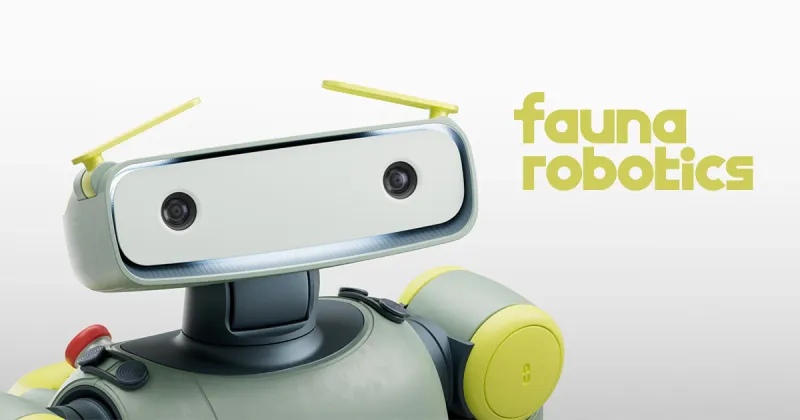
- Simplified designs. The Fauna Sprout (107cm, 22.7kg, 29 degrees of freedom (DOF)) is a "kid-size" humanoid that's already available as a developer platform. Scale that design up slightly, add basic home capabilities, and a $5K home helper isn't absurd by 2030.
The catch: a $5,000 humanoid won't fold your laundry. It'll be more like a Roomba with legs — capable of basic navigation, object retrieval, and simple tasks. But for many people, that's enough.
Under $1,000 — 2033-2035+ (Low Confidence, Speculative)
This is the "smartphone price" milestone that Elon Musk has hinted at for Tesla's Optimus. It's theoretically possible but depends on breakthroughs we can't count on:
- Mass production in the millions (not thousands) of units per year
- Battery costs continuing their decline
- Actuator designs becoming as commoditized as electric motors
- AI compute becoming essentially free
Morgan Stanley's projection of 1 billion humanoid robots by 2050 implies eventual pricing well under $1,000. But that's a 25-year horizon with enormous uncertainty. The honest answer: under $1K is a 2030s conversation, not a 2020s one.
What Determines the Price? The Four Cost Drivers
Understanding what actually makes humanoid robots expensive helps you evaluate whether a price claim is realistic.
1. Actuators (40-60% of cost)
The joints that move the robot's arms, legs, and hands are the most expensive components. A full-size humanoid has 30-50+ actuators, each costing hundreds to thousands of dollars. Prices are dropping as Chinese manufacturers standardize designs, but this is the biggest lever. When someone promises a $5K humanoid, ask: "What actuators does it use, and who makes them?"
2. Compute / AI (15-25% of cost)
Running real-time perception, navigation, and manipulation requires serious computing power. Most humanoids use NVIDIA Jetson modules ($500-2,000). As AI chip competition intensifies (Qualcomm, Huawei, custom ASICs), this cost will shrink.
3. Sensors and Hands (10-20% of cost)
LiDAR, cameras, force sensors, and dexterous hands add up fast. AGiBOT's A2 Ultra features 6-DOF dexterous hands — impressive but expensive. Cheaper humanoids simplify the hands (basic grippers instead of five-fingered dexterity) and use fewer sensors.

4. Assembly and Low Volume (10-20% of cost)
Building 100 robots per year is expensive per unit. Building 10,000 changes the economics entirely. This is why Chinese manufacturers with volume are winning on price — they're amortizing fixed costs across far more units.
The China Factor: Why Geography Matters for Price
If you're waiting for an affordable humanoid, you're probably waiting for a Chinese one. The data is unambiguous:
- 13,000+ humanoid robots shipped globally in 2025
- ~90% came from Chinese manufacturers
- Unitree (~5,500 units), AGiBOT (5,168 units), UBTECH (~1,079 units) are the volume leaders
- China's humanoid output is projected to grow 94% in 2026 (TrendForce)
The implication: the first sub-$10K humanoid for consumers will almost certainly come from a Chinese company. Western brands like Tesla, Figure, and Agility are focused on premium industrial applications (factories, warehouses) where buyers pay $50K-$250K. Chinese companies are building the "Android" to their "iPhone" — not as capable, but dramatically cheaper.
But Will Western Consumers Buy Chinese Humanoids?
That's the real question. Regulatory barriers, data privacy concerns, and geopolitical tensions could keep Chinese humanoids out of Western homes even if they're the cheapest option. The US is already tightening rules on Chinese connected devices. A robot that maps your entire home and has cameras in every room is a very different proposition than a phone or a vacuum.
Which Robots Are Closest to the $10K Line?
From our database, here are the humanoids closest to breaking the $10,000 barrier:
Robot
- Current Price
- $13,500
- Why It Matters
- Cheapest full humanoid you can buy today. 132cm, 35kg, ~2hr battery. Next-gen model could break $10K.
Robot
- Current Price
- ~$12,000 (est.)
- Why It Matters
- 140cm compact humanoid. Briefly promoted at ~88K yuan in China. Volume production could push lower.
Robot
- Current Price
- Contact sales
- Why It Matters
- 107cm, developer-focused. If Amazon scales production via their acquisition, a consumer version could be disruptive.
Robot
- Current Price
- $4,900
- Why It Matters
- Compact bipedal humanoid (123cm, 29kg) with agile locomotion including cartwheels and handstands. Shows sub-$5K is already here for small-form-factor humanoids.
| Robot | Current Price | Why It Matters |
|---|---|---|
| Unitree G1 | $13,500 | Cheapest full humanoid you can buy today. 132cm, 35kg, ~2hr battery. Next-gen model could break $10K. |
| EngineAI PM01 | ~$12,000 (est.) | 140cm compact humanoid. Briefly promoted at ~88K yuan in China. Volume production could push lower. |
| Fauna Sprout | Contact sales | 107cm, developer-focused. If Amazon scales production via their acquisition, a consumer version could be disruptive. |
| Unitree R1 | $4,900 | Compact bipedal humanoid (123cm, 29kg) with agile locomotion including cartwheels and handstands. Shows sub-$5K is already here for small-form-factor humanoids. |
The Unitree G1 is the most likely candidate to cross $10K first. At $13,500 today, a 25-30% price reduction through volume manufacturing and component cost drops would bring it to the threshold. Given Unitree's 75,000-unit annual capacity plan, this is achievable.
What Does a $10,000 Humanoid Actually Do?
Let's be honest about what you get at this price point. A $10K humanoid in 2027-2028 will NOT:
- Fold your laundry autonomously and reliably
- Cook complex meals
- Navigate a cluttered home with 100% reliability
- Replace human care for elderly or disabled family members
It WILL likely:
- Walk around your home without falling over
- Pick up and carry objects (with limitations)
- Respond to voice commands for basic tasks
- Serve as a platform that gets better over time via software updates
- Be impressive enough to justify the purchase for early adopters
Think of it as the first iPhone — revolutionary in concept, limited in execution, but clearly the beginning of something massive.
How We Built This Timeline
This analysis draws on:
- 150+ robots tracked in the ui44 database, with real pricing data per model
- UBTECH 2025 financials — 1,079 units shipped, 2,203% humanoid revenue growth, $20K cost target by 2030
- TrendForce April 2026 report — 94% output growth projected, Unitree/AGiBOT capturing 80% of market
- Unitree IPO prospectus — 60% gross margins, 75K annual capacity target, 5,500 units shipped in 2025
- AGiBOT production data — 10,000th unit milestone reached March 2026
We cross-reference manufacturer claims with independent data wherever possible. When a company says their robot will cost $X, we check if their production volume, supply chain, and margins support that claim. No hype — just the math.
Is It Worth Waiting?
If you're a researcher or developer, don't wait — the Unitree G1 at $13,500 is already the best value in humanoid robotics. The Booster T1 at $34,999 offers more DOF and compute for serious research.
If you're a consumer hoping for a home helper, the honest answer is: wait. Today's humanoids at $10-20K are research platforms, not household appliances. They lack the reliability, battery life, and software maturity for real home use. By 2028-2029, a $10K humanoid that handles basic tasks (bringing items, monitoring your home, answering questions) is a realistic bet.
And if you're tracking the industry, bookmark our humanoid robot comparison page — we update pricing as it changes, and in this market, it changes fast.
What to Watch Before You Believe a Sub-$10K Claim
Not every "$9,999 humanoid" announcement will mean the market has truly crossed that line. In practice, three checks matter.
First, look for real shipment volume, not a concept teaser. A company that has already shipped hundreds or thousands of units is much more likely to hit a lower price sustainably than a startup showing a one-off demo robot.
Second, check what configuration the price actually covers. Some low price claims exclude dexterous hands, advanced sensors, batteries, or support. A sub-$10K base model may be real, but the useful configuration might still land well above that once options are added.
Third, compare the claim against the robot's intended use case. A compact research platform, a kid-size developer robot, and a full-height home helper are not the same product class. Unitree R1-level pricing is already possible for a smaller biped, but that does not automatically mean a capable home humanoid has become cheap.
For buyers, the milestone that matters most is not the first headline below $10,000. It is the first robot below $10,000 that ships in volume, has a clear support path, and can perform a repeatable set of real tasks without constant operator babysitting.
Frequently Asked Questions
What Is the Cheapest Humanoid Robot You Can Buy Right Now?
The Unitree G1 at $13,500 is the cheapest
full humanoid robot available for purchase today. At 132cm and 35kg, it offers
23 degrees of freedom, a 2-hour battery, and an optional dexterous hand upgrade
(Dex3-1). For something even cheaper, the Unitree R1 Air
starts at $4,900 — but at just 123cm with limited manipulation capabilities,
it's more of a research platform than a home helper.
When Will Humanoid Robots Be Affordable for Regular Consumers?
Based on current production trajectories and cost reduction targets from
manufacturers like UBTECH (20-30% annual cost cuts), a **basic humanoid under
$10,000 is likely by 2027-2028**. A more capable home assistant under $5,000
could arrive by 2029-2031. However, "affordable" for mass consumer adoption
(under $2,000) is likely a 2030s milestone.
Why Are Humanoid Robots So Expensive?
The biggest cost driver is actuators (the motorized joints), which account
for 40-60% of the bill of materials. A full-size humanoid needs 30-50+
actuators. Compute hardware (AI chips) adds another 15-25%, and sensors with
dexterous hands account for 10-20%. As Chinese manufacturers standardize these
components and scale production to tens of thousands of units, costs are falling
rapidly — down 95% in just two years.
Should I Buy a Humanoid Robot Now or Wait?
If you're a researcher or developer: buy now. The Unitree G1 at $13,500 offers
tremendous value for R&D. If you're a consumer wanting a home helper: wait.
Today's humanoids are research platforms without the reliability, battery life,
or software for real household use. By 2028-2029, a $10K consumer-grade humanoid
for basic tasks is a realistic expectation. Track pricing changes on our
Can Chinese Humanoid Robots Be Sold in the US?
There's no blanket ban, but regulatory scrutiny is increasing. US rules on
Chinese connected devices are tightening, and a robot that maps your home with
cameras and LiDAR faces more regulatory hurdles than a phone or vacuum. For now,
Chinese humanoids like the Unitree G1 are available in the US for research and
development purposes. Consumer sales will depend on data privacy compliance,
which remains an evolving area.
---
_Data sourced from the ui44 robot database (150+ robots, 103 manufacturers),
TrendForce, Humanoids Daily, manufacturer financial reports, and SEC filings.
Prices verified as of April 2026. All manufacturer targets are aspirational and
not guaranteed._
Written by
ui44 Team
Published April 10, 2026
Share this article
Open a plain share link on X or Bluesky. No embeds, no widgets, no cookie baggage.