That distinction matters. A $200 refundable deposit feels small next to a $20,000 home humanoid. But the deposit is the door into a waitlist, an order invitation, future purchase terms, privacy choices, delivery timing, and service promises that are not as simple as the product page headline.

The short version: NEO is one of the most concrete home-humanoid products in the ui44 database, but the safest buyer posture is to treat the order invitation as the real decision point. The deposit gets you in line. It does not make the robot mature, autonomous, serviced, or delivered.
What happens after the $200 1X NEO deposit?
1X's official order page currently lists two buyer paths for NEO:
Path
Early Access ownership
- Official price signal
- $20,000
- What 1X lists
- ownership, 3-year warranty, premium support, priority delivery
- Buyer read
- the serious early-adopter path
Path
Standard subscription
- Official price signal
- $499/month
- What 1X lists
- monthly subscription, starter productivity package, standard delivery
- Buyer read
- lower upfront cost, but final terms matter
| Path | Official price signal | What 1X lists | Buyer read |
|---|---|---|---|
| Early Access ownership | $20,000 | ownership, 3-year warranty, premium support, priority delivery | the serious early-adopter path |
| Standard subscription | $499/month | monthly subscription, starter productivity package, standard delivery | lower upfront cost, but final terms matter |
The same page says the deposit due today is $200, labels it fully refundable, and says U.S. deliveries start in 2026. The legal terms add the important mechanics: a preorder places you on a waitlist to receive an order invitation when a robot becomes available for you.
The order of invitations may vary. 1X's terms explicitly say factors can include geographic location and whether the customer is choosing purchase or monthly subscription. That means a deposit is not simply a numbered ticket where every buyer can infer exact delivery order from signup time.
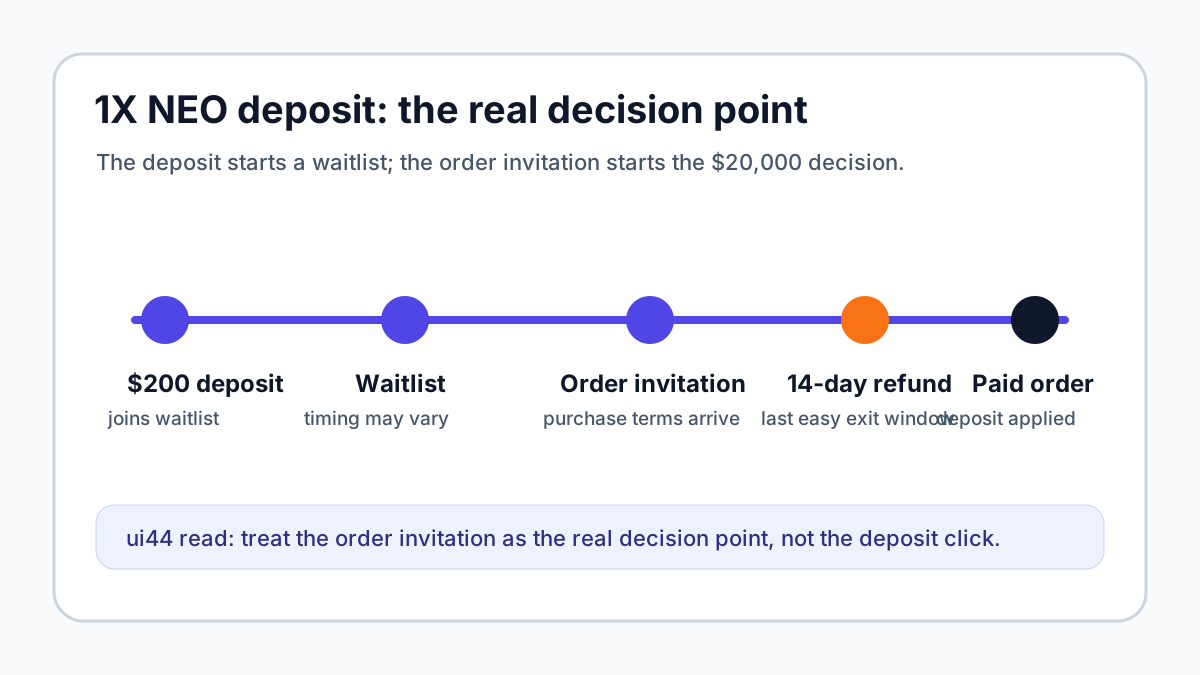
The highest-friction moment is the invitation stage. According to the pre-order terms, you can cancel for a full refund until 14 days after 1X sends the order invitation. After that 14-day window, the deposit becomes non-refundable even if you do not complete the robot order. 1X also says final pricing and add-ons may change before acceptance, and detailed shipping, delivery, warranty, and cancellation terms come later in the Order Invitation or Terms of Sale.
That is not unusual for an early-access product, but it changes how buyers should behave. Do not treat the deposit confirmation email as the whole deal. Treat the future order invitation as a fresh document you need to read carefully.
The six questions to answer before the refund window closes
The most practical 1X NEO checklist is not about whether a humanoid robot is exciting. It obviously is. It is about whether the specific offer in front of you matches your household, risk tolerance, and budget.
Before the 14-day post-invitation window closes, get clear answers to these six questions.
1. Which version of the purchase terms are you accepting?
The preorder terms say the later Order Invitation and Terms of Sale will contain additional details. That is where buyers should confirm the final price, applicable taxes, delivery fees, warranty terms, service process, subscription minimums, cancellation rights, and what happens if delivery slips.
The headline numbers are useful, but they are not enough. A home humanoid is not a normal gadget. It is hardware, software, cloud services, remote assistance, maintenance, and in-home data collection bundled into one decision.
2. Are you buying ownership or a service relationship?
The $20,000 ownership path and the $499/month subscription path may be for different buyers even if the robot body is similar. Ownership sounds cleaner, but the product still depends on updates, support, learning systems, and maybe service features. Subscription lowers the entry cost, but the future details matter: minimum commitment, included repairs, upgrades, data terms, and what happens when you cancel.
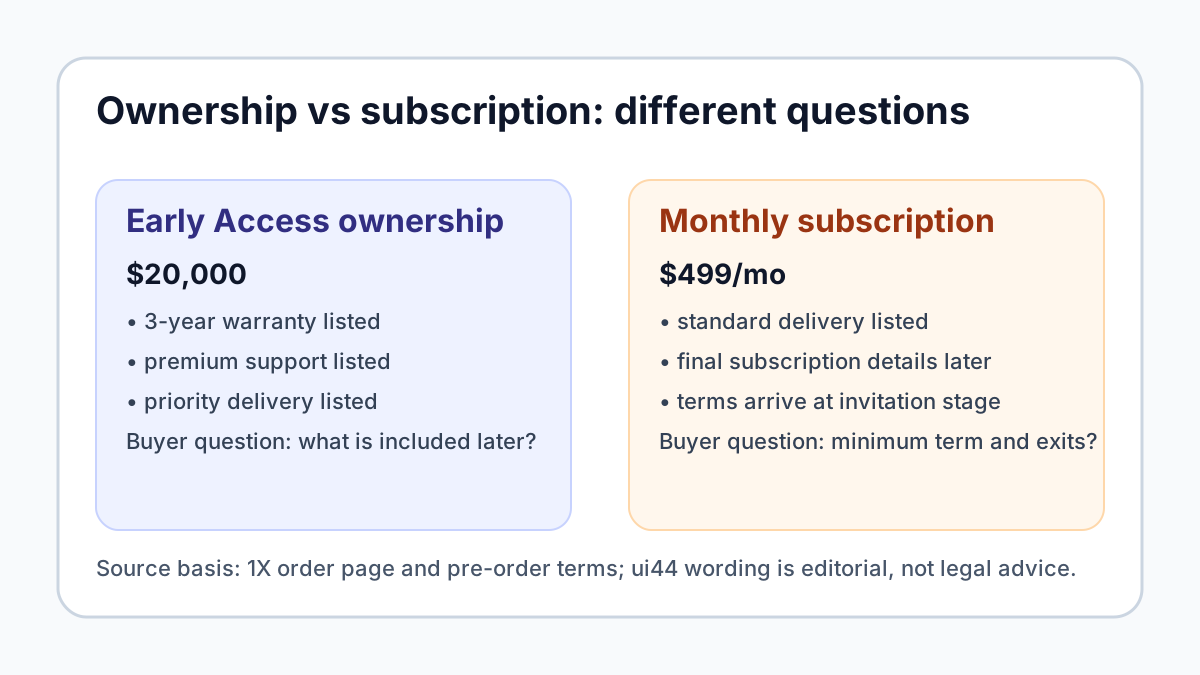
This is where NEO differs from most robot vacuums, lawn robots, or small companions. If a basic appliance loses a cloud feature, it may still do its core job. A home humanoid may rely on software, remote help, fleet learning, account services, and future capability unlocks to feel useful at all.
3. What autonomy is actually available on delivery day?
On ui44, 1X NEO is tracked as a Pre-order humanoid at $20,000, about 167 cm tall, 30 kg, with roughly 4 hours of battery life, RGB/depth sensing, tactile skin, microphones, the 1X app, and capabilities such as household chores, tidying, adaptive learning, and gentle manipulation.
1X's order page adds stronger current specs: 5'6", 66 lb, 842 Wh battery capacity, 22-degree-of-freedom hands on each side, 7-degree-of- freedom arms on each side, Wi-Fi, Bluetooth, 5G, four beamforming microphones, dual 8.85MP 90Hz stereo fisheye cameras, and a NEO Cortex using NVIDIA Jetson Thor.
Those are serious specs. They do not answer the most important home question: which chores work autonomously on day one?
1X says NEO arrives with basic or foundational autonomy for early owners and grows over time. It also advertises Scheduled Expert Mode for complex tasks the robot does not yet know. That is a more honest model than pretending a general housekeeper is finished. It also means buyers should request a concrete delivery task list, not just a demo reel.
4. When can a 1X Expert see or control the robot?
NEO's value proposition includes cameras, microphones, memory, visual intelligence, app monitoring, remote control, and Expert Mode. Those features are central to the product. They are also the features that make the privacy question non-optional.
The order page's FAQ headings include direct questions about whether a 1X Expert can connect at any time, whether data sharing is required, and how 1X will use data. If you are buying, do not infer the answers from marketing copy. Get the actual policy that applies to the robot, not just the website privacy policy.
Our practical threshold: before paying the full order, you should understand when Expert Mode can start, what the operator can see, whether each session is scheduled or owner-approved, whether recordings are retained, whether household data trains future models, and how guests or family members are protected.
5. Who repairs the robot, and how quickly?
The ownership offer lists a 3-year warranty and premium support. That is a strong signal, but warranty length is not the same as service readiness.
NEO has hands, tendons, soft coverings, batteries, sensors, cameras, microphones, compute, wireless connections, and a mobile body. A normal consumer robot can sometimes be boxed and mailed for repair. A full-size humanoid may require a different support model.
Ask specifically about battery replacement, soft-suit wear, hand or tendon service, parts availability, repair turnaround, in-home service coverage, and what happens if the robot cannot safely operate. These questions sound boring only until a $20,000 robot is standing idle in a hallway.
6. Does your home fit the early-access reality?
The NEO sales pitch is home-first, but homes are wildly inconsistent. Stairs, thresholds, rugs, pets, children, lighting, glass doors, narrow corridors, low furniture, unreliable Wi-Fi, and privacy expectations can all change the experience.
Before the refund window closes, ask what 1X considers a supported home environment. If the answer depends on an in-home setup process, get that in writing. If the robot's best use cases are still structured and scheduled, plan around that instead of imagining an invisible housekeeper.
How NEO compares with other humanoid preorder risks
NEO is not the only robot asking buyers to believe in a future capability curve. The difference is that 1X is making one of the clearest home-first offers.
From the ui44 database:
Robot
- Status
- Pre-order
- Price signal
- $20,000 ownership; $499/month listed by 1X
- Buyer context
- most explicit consumer-home humanoid offer
Robot
- Status
- Pre-order
- Price signal
- €19,999 Standard; €29,999 Pro
- Buyer context
- compact cognitive humanoid for research, education, and light service roles
Robot
- Status
- Pre-order
- Price signal
- from $4,900
- Buyer context
- affordable biped platform, less chores-first than NEO
Robot
- Status
- Active
- Price signal
- no public consumer price
- Buyer context
- home-oriented, but not directly orderable by ordinary buyers
Robot
- Status
- Development
- Price signal
- target around $30,000, not on sale
- Buyer context
- huge manufacturing ambition, no consumer purchase path yet
| Robot | Status | Price signal | Buyer context |
|---|---|---|---|
| 1X NEO | Pre-order | $20,000 ownership; $499/month listed by 1X | most explicit consumer-home humanoid offer |
| NEURA 4NE-1 Mini | Pre-order | €19,999 Standard; €29,999 Pro | compact cognitive humanoid for research, education, and light service roles |
| Unitree R1 | Pre-order | from $4,900 | affordable biped platform, less chores-first than NEO |
| Figure 03 | Active | no public consumer price | home-oriented, but not directly orderable by ordinary buyers |
| Tesla Optimus Gen 2 | Development | target around $30,000, not on sale | huge manufacturing ambition, no consumer purchase path yet |
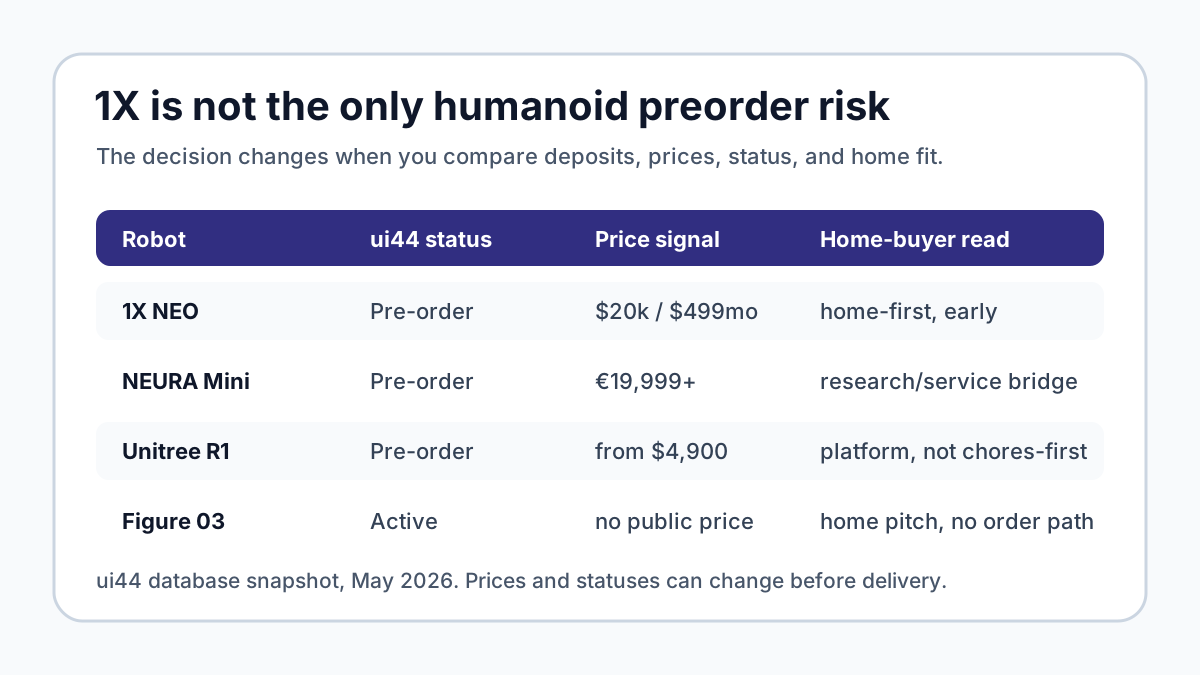
This context helps separate two questions that often get mixed together. Is NEO one of the most credible consumer humanoid attempts? Yes. Is that the same as a low-risk purchase for a normal household? No.
NEURA's Mini has a similar headline price but reads more like a compact research/service bridge. Unitree R1 is much cheaper but more obviously a platform for enthusiasts, educators, and developers. Figure's current public copy is home-oriented, but ui44 still finds no public consumer price or order path for Figure 03. Tesla may have serious technology too, but neither gives ordinary buyers the same immediate consumer order path as NEO.
That makes NEO uniquely tempting. It also makes the paperwork, privacy terms, service plan, and delivery expectations uniquely important.
A practical decision rule
If you are still before the $200 deposit, the answer is easy: only place it if you are comfortable tracking emails, reading the order invitation, and walking away if the later terms are not clear enough.
If you already placed the deposit, the deposit itself is not the problem. The problem would be sleepwalking from deposit to full order because you already feel committed.
Use this rule instead:
- Keep the preorder if the order invitation clearly answers delivery timing, refund cutoff, final price, warranty, repair process, Expert Mode consent, and data controls.
- Pause or cancel if the invitation asks for serious money before those answers are concrete.
- Wait if you want a finished appliance-like robot rather than an early home-humanoid program.
That last category includes most households. NEO may become important even if most people should not be first.
Bottom line
The 1X NEO deposit is best understood as an option to evaluate a future order, not as a small down payment on a guaranteed robot experience. The factory makes 1X more credible. The preorder terms still put the burden on buyers to read the next documents carefully.
For ui44's money, the right buyer is not simply someone who can afford $20,000. It is someone who can afford the uncertainty: early autonomy, changing terms, remote-assistance privacy, service complexity, and a delivery timeline that may not match the excitement around the product.
NEO remains one of the most interesting home robots in the market. Just do not let the $200 number distract from the real decision waiting behind it.
Related in the database
Use this article as a privacy verification workflow
Turn the article into a privacy verification pass grounded in the robots, manufacturers, and components it actually references.
1X NEO Deposit: Refund and Waitlist Checklist already points you toward 5 linked robots, 5 manufacturers, and 4 countries inside the ui44 database. That matters because strong buyer guidance is easier to apply when you can move immediately from a claim or warning into concrete product pages, manufacturer directories, component explainers, and country-level context instead of treating the article as an isolated opinion piece. The fastest next step is to turn the article into a shortlist workflow: open the linked robot pages, verify which specs are actually published for those models, then compare the surrounding manufacturer and component context before you decide whether the underlying claim changes your buying plan.
For this topic, the useful discipline is to separate the editorial lesson from the catalog evidence. The article gives you the framing, but the robot pages tell you what each product actually ships with today: sensor stack, connectivity methods, listed price, release timing, category, and support-relevant compatibility notes. The manufacturer pages then show whether you are looking at a one-off launch, a broader lineup pattern, or a company that spans multiple categories. That layered workflow reduces the risk of buying on a single marketing phrase or a single support FAQ.
Use the robot pages to confirm which products actually expose cameras, microphones, Wi-Fi, or voice systems, then use the manufacturer pages to decide how much of the privacy question seems product-specific versus brand-wide. On this route cluster, NEO, 4NE-1 Mini, and R1 form the fastest reality check. If you want a quick working shortlist, open Compare NEO, 4NE-1 Mini, and R1 next, then keep this article open as the reasoning layer while you compare structured data side by side.
Practical Takeaway
Every robot, manufacturer, category, component, and country reference below resolves to a real ui44 page, keeping the follow-up path grounded in database records rather than generic advice.
Suggested next steps in ui44
- Open NEO and note the listed sensors, connectivity methods, and voice stack before you interpret any policy claim.
- Cross-check the wider brand context on 1X Technologies so you can see whether the privacy question touches one model or a broader lineup.
- Use the linked component pages to confirm how common the relevant sensors and connectivity layers are across the database.
- Keep a short note of which policy layers you checked, which device features are actually present on the robot page, and which items still depend on region- or app-level confirmation.
- Finish with Compare NEO, 4NE-1 Mini, and R1 so the policy reading sits next to structured product data.
Robot profiles worth opening next
Use the linked product pages as the evidence layer
The linked robot pages are where this article becomes operational. Instead of asking whether the headline is interesting, use the robot entries to inspect the actual mix of sensors, connectivity options, batteries, pricing, release timing, and stated capabilities attached to the products mentioned in the article. That is the easiest way to see whether the warning or opportunity described here affects one product family, a specific design pattern, or an entire buying lane.
NEO
1X Technologies · Humanoid · Pre-order
NEO is tracked on ui44 as a pre-order humanoid robot from 1X Technologies. The database currently records a listed price of $20,000, a release date of 2025-10-28, ~4 hours battery life, Not disclosed charging time, and a published stack that includes RGB Cameras, Depth Sensors, and Tactile Skin plus Wi-Fi and Bluetooth.
For privacy-focused reading, this page matters because it shows the concrete device surface behind the policy discussion. Use it to verify whether NEO combines sensors and connectivity in a way that could change the in-home data footprint, and compare the listed capabilities such as Household Chores, Tidying Up, and Safe Human Interaction with any cloud, app, or voice layers.
4NE-1 Mini
NEURA Robotics · Humanoid · Pre-order
4NE-1 Mini is tracked on ui44 as a pre-order humanoid robot from NEURA Robotics. The database currently records a listed price of €19,999, a release date of 2026-01-05, ~2.5 hours battery life, Not disclosed charging time, and a published stack that includes Multi-camera Array, Force/Torque Sensors, and 3D Vision plus Wi-Fi 6 and Gigabit Ethernet.
For privacy-focused reading, this page matters because it shows the concrete device surface behind the policy discussion. Use it to verify whether 4NE-1 Mini combines sensors and connectivity in a way that could change the in-home data footprint, and compare the listed capabilities such as 25 Degrees of Freedom, Autonomous Navigation, and Object Manipulation (Pro tier: 12-DOF dexterous hands) with any cloud, app, or voice layers, including Built-in Multi-language Voice Recognition.
R1
Unitree Robotics · Humanoid · Pre-order
R1 is tracked on ui44 as a pre-order humanoid robot from Unitree Robotics. The database currently records a listed price of $4,900, a release date of 2025, ~1 hour (mixed activity) battery life, Not officially disclosed charging time, and a published stack that includes Monocular camera (R1 Air); binocular camera (R1/R1 EDU), 4-Mic Array, and Dual 6-Axis IMU plus Wi-Fi 6 and Bluetooth 5.2.
For privacy-focused reading, this page matters because it shows the concrete device surface behind the policy discussion. Use it to verify whether R1 combines sensors and connectivity in a way that could change the in-home data footprint, and compare the listed capabilities such as Bipedal Walking & Running, Cartwheels & Handstands, and Push Recovery with any cloud, app, or voice layers, including UnifoLM (voice + image commands).
Figure 03 is tracked on ui44 as a active humanoid robot from Figure AI. The database currently records a listed price of Price TBA, a release date of 2025-10-09, ~5 hours battery life, Not disclosed charging time, and a published stack that includes Stereo Vision, Depth Cameras, and Force Sensors plus Wi-Fi and Bluetooth.
For privacy-focused reading, this page matters because it shows the concrete device surface behind the policy discussion. Use it to verify whether Figure 03 combines sensors and connectivity in a way that could change the in-home data footprint, and compare the listed capabilities such as Complex Manipulation, Warehouse Work, and Manufacturing Tasks with any cloud, app, or voice layers.
Optimus Gen 2
Tesla · Humanoid · Development
Optimus Gen 2 is tracked on ui44 as a development humanoid robot from Tesla. The database currently records a listed price of Price TBA, a release date of 2023-12-13, Not officially disclosed battery life, Not officially disclosed charging time, and a published stack that includes Cameras, Force/Torque Sensors, and IMU plus Wi-Fi and Bluetooth.
For privacy-focused reading, this page matters because it shows the concrete device surface behind the policy discussion. Use it to verify whether Optimus Gen 2 combines sensors and connectivity in a way that could change the in-home data footprint, and compare the listed capabilities such as Bipedal Walking, Object Manipulation, and Factory Tasks with any cloud, app, or voice layers.
Manufacturer context behind the article
Check whether this is one product story or a broader company pattern
Manufacturer pages add the privacy context that individual product pages cannot show on their own. They help you check whether cameras, microphones, cloud accounts, app controls, and policy assumptions appear across a broader lineup or stay tied to one specific product story.
1X Technologies
ui44 currently tracks 2 robots from 1X Technologies across 1 category. The company is grouped under Norway, and the current catalog footprint on ui44 includes NEO, EVE.
That wider brand context matters because privacy questions rarely stop at one FAQ page. A manufacturer route helps you see whether the article is centered on one premium model or on a company that has several relevant products and therefore more than one place where the same policy or app assumptions might matter. The category mix here currently points toward Humanoid as the most useful next route if you want to see whether this article reflects a wider pattern inside the brand.
NEURA Robotics
ui44 currently tracks 4 robots from NEURA Robotics across 3 categorys. The company is grouped under Germany, and the current catalog footprint on ui44 includes 4NE-1, 4NE-1 Mini, MiPA.
That wider brand context matters because privacy questions rarely stop at one FAQ page. A manufacturer route helps you see whether the article is centered on one premium model or on a company that has several relevant products and therefore more than one place where the same policy or app assumptions might matter. The category mix here currently points toward Humanoid, Home Assistants, Quadruped as the most useful next route if you want to see whether this article reflects a wider pattern inside the brand.
Unitree Robotics
ui44 currently tracks 9 robots from Unitree Robotics across 3 categorys. The company is grouped under China, and the current catalog footprint on ui44 includes B2, B1, Go2.
That wider brand context matters because privacy questions rarely stop at one FAQ page. A manufacturer route helps you see whether the article is centered on one premium model or on a company that has several relevant products and therefore more than one place where the same policy or app assumptions might matter. The category mix here currently points toward Quadruped, Humanoid, Research as the most useful next route if you want to see whether this article reflects a wider pattern inside the brand.
Figure AI
ui44 currently tracks 2 robots from Figure AI across 1 category. The company is grouped under USA, and the current catalog footprint on ui44 includes Figure 03, Figure 02.
That wider brand context matters because privacy questions rarely stop at one FAQ page. A manufacturer route helps you see whether the article is centered on one premium model or on a company that has several relevant products and therefore more than one place where the same policy or app assumptions might matter. The category mix here currently points toward Humanoid as the most useful next route if you want to see whether this article reflects a wider pattern inside the brand.
Broaden the scan without leaving the database
Categories, components, and countries add the wider context
Category framing
Category pages are useful when the article touches a buying pattern that shows up across brands. A category route helps you confirm whether the linked products sit in a narrow niche or whether the same question should be tested across a larger field of alternatives.
Humanoid
The Humanoid category page currently groups 129 tracked robots from 92 manufacturers. ui44 describes this lane as: Full-size bipedal humanoid robots built to work alongside people — from factory floors to household tasks. Compare the cutting edge of humanoid robotics.
That makes the category route a practical follow-up when you want to check whether the products linked in this article are typical for the lane or whether they sit at one edge of the market. Useful starting examples currently include NEO, EVE, Mornine M1.
Country and ecosystem context
Country pages give extra context when support practices, launch sequencing, regulatory posture, or manufacturer mix matter. They are not a substitute for model-level verification, but they do help you see which ecosystems cluster together and which manufacturers sit in the same regional field when you broaden the search beyond the article headline.
Norway
The Norway route currently groups 2 tracked robots from 1 manufacturers in ui44. That gives you a useful regional lens when the article points toward support practices, launch sequencing, or brand clusters that may share similar ecosystem assumptions.
On the current route, manufacturers like 1X Technologies make the page a good way to broaden the scan without losing the regional context that often shapes availability, documentation style, and adjacent alternatives.
Germany
The Germany route currently groups 13 tracked robots from 9 manufacturers in ui44. That gives you a useful regional lens when the article points toward support practices, launch sequencing, or brand clusters that may share similar ecosystem assumptions.
On the current route, manufacturers like NEURA Robotics, Bosch, Agile Robots make the page a good way to broaden the scan without losing the regional context that often shapes availability, documentation style, and adjacent alternatives.
China
The China route currently groups 189 tracked robots from 87 manufacturers in ui44. That gives you a useful regional lens when the article points toward support practices, launch sequencing, or brand clusters that may share similar ecosystem assumptions.
On the current route, manufacturers like AGIBOT, Dreame, Unitree Robotics make the page a good way to broaden the scan without losing the regional context that often shapes availability, documentation style, and adjacent alternatives.
Questions to answer before you move from reading to buying
A follow-up FAQ built from the entities already linked in this article
Frequently Asked Questions
Which page should I open first after reading “1X NEO Deposit: Refund and Waitlist Checklist”?
Start with NEO. That gives you a concrete product anchor for the article’s main claim. From there, branch into the manufacturer and component pages so you can tell whether the article is describing one specific model, a repeated brand pattern, or a wider technology issue that affects multiple shortlist options.
How do the manufacturer pages change the buying decision?
1X Technologies help you zoom out from one article and one product. On ui44 they show lineup breadth, category spread, and the neighboring robots tied to the same company. That context is useful when you are deciding whether a risk belongs to a single model, whether it shows up across a brand’s portfolio, and whether you should keep looking at alternatives before committing.
When should I switch from reading to side-by-side comparison?
Move into Compare NEO, 4NE-1 Mini, and R1 as soon as you understand the article’s main warning or promise. The article explains what to watch for, but the compare view is where you can check whether price, status, battery life, connectivity, sensors, and category fit still make the robot a good match for your own home and budget.
Where to go next in ui44
Keep the research chain inside the database
If you want to keep going, these follow-on pages give you the cleanest expansion path from article to research session. Open the comparison route first if you are deciding between products today. Open the manufacturer, category, and component routes if you still need to understand the broader pattern behind the claim.
Written by
ui44 Team
Published May 7, 2026
Share this article
Open a plain share link on X or Bluesky. No embeds, no widgets, no cookie baggage.