China just gave the market a useful warning signal. JD.com launched a "robot ambulance" service for humanoid robots, quadruped robots, AI companion robots, and related machines. Jiemian reported that the service covers basic repair, fault diagnosis, battery replacement or recharging, testing and certification, cosmetic maintenance, and equipment recycling, starting in Beijing with a plan to expand to more than 50 core Chinese cities over three years. TechNode summarized the same launch in English.

That sounds like an odd news item until you picture the first wave of expensive robots in real homes. A 30 kg humanoid is not a phone. A 46 kg mobile manipulator is not a smart speaker. Even a 15 kg robot dog has batteries, joints, feet, sensors, radios, cameras, and software that can fail in ways a normal buyer cannot fix with a screwdriver.
So the practical question is not only "which robot should I buy?" It is: who will repair it where I live?
Who repairs a home humanoid robot when it breaks?
For now, the answer is usually one of four models:
- Manufacturer direct support: the company repairs the robot, ships parts, handles diagnostics, and controls the warranty process.
- Dealer or distributor support: a local reseller handles first-line service, especially for imported robots.
- Platform service networks: a retailer, logistics company, or repair provider becomes the local field-service layer, like JD.com is attempting in China.
- Owner/developer maintenance: common for research robots, where the buyer is expected to handle updates, calibration, accessories, and some repairs.
A home buyer should prefer the first three. The fourth can be fine for labs, universities, robotics teams, and developers, but it is a bad default for a family buying a robot to help with chores, companionship, or accessibility.
The more physical the robot is, the more the support model matters. A chatbot can be patched remotely. A humanoid can trip, bend a bracket, lose calibration, wear a gripper pad, damage a cable, swell a battery pack, or throw an error that prevents safe operation. A repair network is not a nice extra; it is part of the product.
The service problem gets bigger with humanoids
Look at the hardware ui44 tracks today. 1X NEO is a home-focused humanoid listed at $20,000 for early adopters, with a 167 cm body, 30 kg weight, around 4 hours of battery life, RGB cameras, depth sensors, tactile skin, microphones, Wi-Fi, and Bluetooth. That is exactly the kind of robot where a buyer should ask: if the battery degrades, a camera fails, or the robot needs safety recalibration, does a technician come to the home or does the whole unit ship back?
Unitree G1 makes the issue sharper because it is available now and much cheaper by humanoid standards. ui44 lists G1 at $13,500, with a 132 cm, 35 kg body, around 2 hours of battery life, 23 degrees of freedom, depth camera, 3D LiDAR, microphone array, Wi-Fi 6, Bluetooth 5.2, Unitree SDK support, ROS 2 compatibility, OTA upgrades, and optional dexterous hands on some variants.
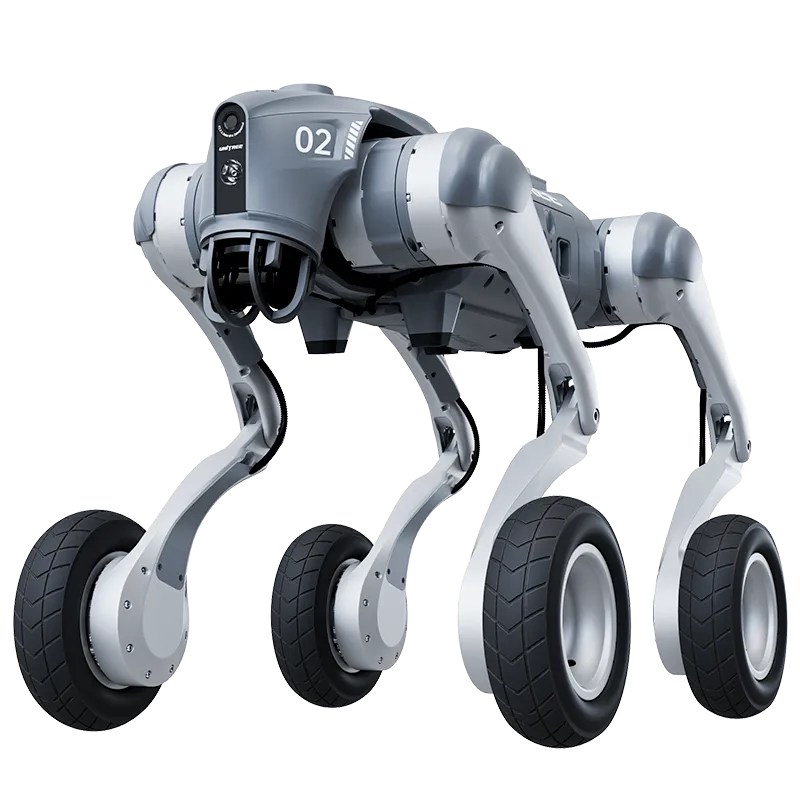
That is a lot of machine for the money. It is also a lot of potential failure points. A low purchase price does not automatically mean low ownership risk. If you buy a research-style humanoid without a local support plan, you may be the integration department, the safety monitor, and the first-line repair desk.
This is why JD.com's "robot ambulance" signal matters beyond China. Chinese reports from IT之家 and Tencent said JD service had already supported more than 300 robots around testing and daily training for the Beijing humanoid half-marathon, fixing damaged or faulty machines so they could return to the training field. Tencent also reported a "120" after-sales standard: one-minute response, two-hour on-site service, and same-day repair, plus cooperation with robot companies including EngineAI, Noetix, Deep Robotics, and AGIBOT. Those are reported service goals, not a guarantee for every buyer or every geography, but they show where the market is going.
The first serious robot retailers will not only sell bodies. They will sell uptime.
Do not confuse availability with service readiness
A robot can be available to buy and still be hard to own. The checklist should separate five things:
Question
Where is service available?
- Why it matters
- A robot sold online may not have local repair.
- What to ask before buying
- Which countries, states, or cities have technicians today?
Question
Who handles first-line diagnosis?
- Why it matters
- Remote logs may reveal private home data.
- What to ask before buying
- Can diagnostics run locally, and what data is uploaded?
Question
How are batteries replaced?
- Why it matters
- Batteries are consumables, safety-critical, and heavy.
- What to ask before buying
- Is battery replacement owner-safe, technician-only, or factory-only?
Question
Are wear parts stocked?
- Why it matters
- Feet, grippers, wheels, skins, covers, and cables wear out.
- What to ask before buying
- Are replacement parts sold publicly, reserved for service partners, or unavailable?
Question
What happens after warranty?
- Why it matters
- A robot may outlive its first support term.
- What to ask before buying
- Is paid service available after warranty, and for how many years?
| Question | Why it matters | What to ask before buying |
|---|---|---|
| Where is service available? | A robot sold online may not have local repair. | Which countries, states, or cities have technicians today? |
| Who handles first-line diagnosis? | Remote logs may reveal private home data. | Can diagnostics run locally, and what data is uploaded? |
| How are batteries replaced? | Batteries are consumables, safety-critical, and heavy. | Is battery replacement owner-safe, technician-only, or factory-only? |
| Are wear parts stocked? | Feet, grippers, wheels, skins, covers, and cables wear out. | Are replacement parts sold publicly, reserved for service partners, or unavailable? |
| What happens after warranty? | A robot may outlive its first support term. | Is paid service available after warranty, and for how many years? |
The same robot may score well on some questions and poorly on others. An open-source research platform may have excellent documentation but limited consumer service. A polished companion robot may have a subscription plan but no third-party repair path. A low-cost humanoid may have a strong developer community but uneven support outside its home market.
Stretch 4 shows the assistive version of the problem
Hello Robot Stretch 4 is not a humanoid, but it is one of the clearest examples of why service should be treated as a spec. ui44 lists Stretch 4 at $29,950, available now for research, enterprise buyers, and in-home assistive pilot deployments. It has a 160 cm working height, 46 kg weight, 45 cm diameter footprint, self-charging, about 8 hours of light-load runtime, wide-FOV depth sensing, RGB cameras, hemispherical LiDARs, ROS 2 and Python SDK support, and a telescoping arm rated for 2.5 kg extended or 4 kg retracted.
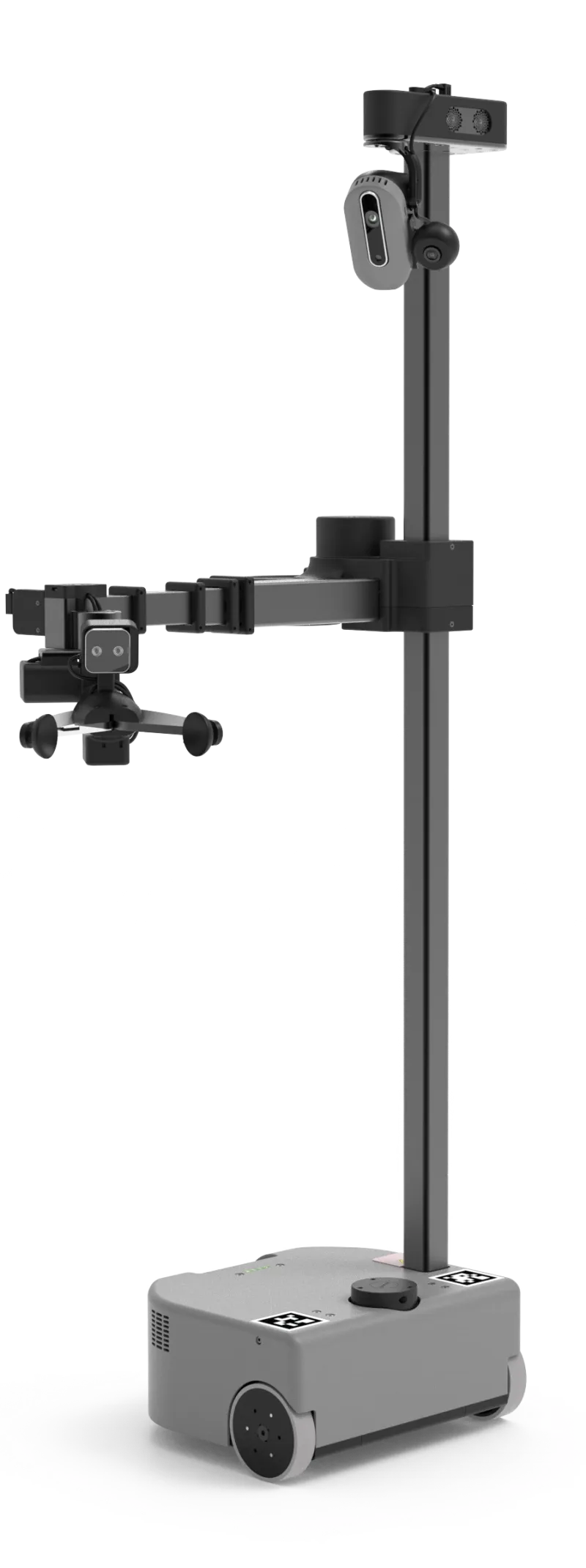
Those specs are practical because Stretch is meant to reach things, not perform on a stage. But they also create real service questions. What happens if the arm needs calibration? Who replaces the lift mechanism? Can a caregiver safely restart the robot after an error? Does the home need a remote technician, a local robotics specialist, or a factory return?
Assistive robots raise the stakes. If a buyer with limited mobility depends on a robot to retrieve a phone, open a drawer, or bring an object, downtime is not just annoying. It may remove independence. Service level, backup plan, and data handling should be discussed before the pilot begins.
Stretch also shows why repairability is not only about humanoids. The first useful home robots with arms may be wheeled, slow, and specialized. That makes them easier to stabilize than bipeds, but it does not make them maintenance-free.
Robot dogs expose the battery and parts question
The same service-network logic applies to robot dogs. JD and Chinese media framed the robot-ambulance launch broadly enough to include quadruped robots, not just humanoids, which is the important buyer signal. Unitree Go2 is one of the few robot dogs that a technically curious buyer can realistically purchase today, so it is a useful example from ui44's database without needing to assume a confirmed model-specific JD service listing.
ui44 lists Go2 from $1,600 for Go2 Air, $2,800 for Pro, and $4,500 for X, with EDU pricing by contact sales. It is around 15 kg, has 1-2 hours of standard runtime or 2-4 hours on the EDU long-endurance battery, uses 4D LiDAR, cameras, IMU, Wi-Fi 6, Bluetooth 5.2, optional 4G/LTE, OTA software updates, voice commands on some trims, and payload ratings up to 8-12 kg.
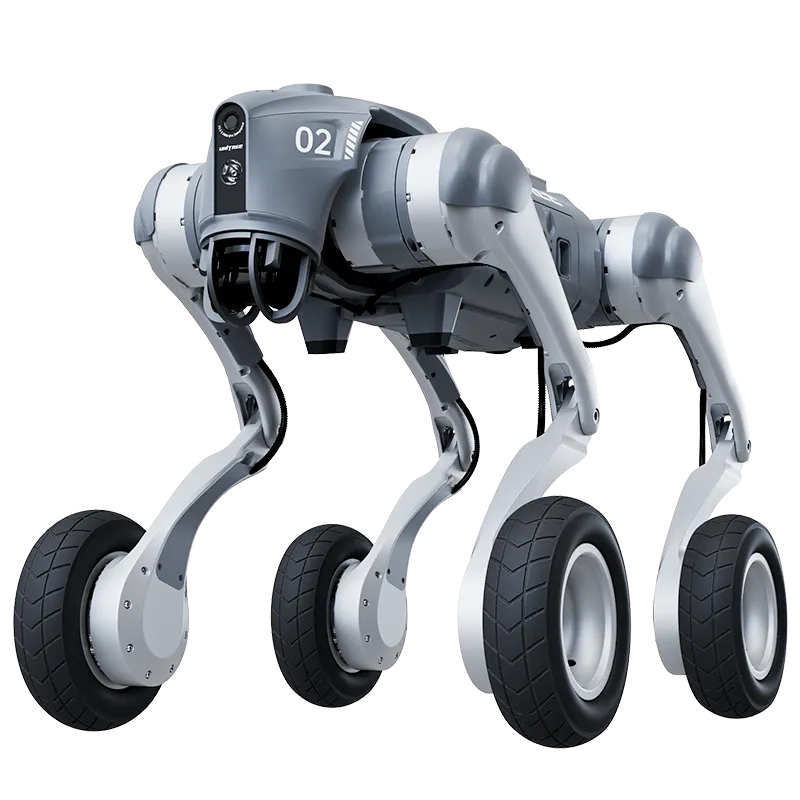
That price range makes robot dogs feel more approachable than humanoids. But a legged robot still has high-wear parts: foot pads, leg joints, shells, batteries, chargers, sensor covers, and sometimes cellular modules. If it falls on stairs, gets wet, damages a joint, or loses calibration, the repair path matters more than the launch video.
For buyers, the Go2 lesson is simple: do not stop at the checkout page. Ask whether batteries are replaceable, whether spare feet and shells are stocked, whether a local service partner exists, and whether a fault can be diagnosed without uploading full logs, maps, images, or location history.
Companion robots already sell service plans
Companion robots make the support question less dramatic but more emotional. LOVOT is a good example because GROOVE X treats care as part of the product. ui44 lists LOVOT 3.0 at ¥577,500 in Japan with a required care plan starting from ¥9,900/month. The robot is only 43 cm tall and 4.6 kg, but it has more than 50 sensors, person recognition, room mapping, touch sensors, OLED eyes, NFC, infrared communication, Wi-Fi, Bluetooth, a charging nest, and 30-45 minutes of active runtime between nest visits.
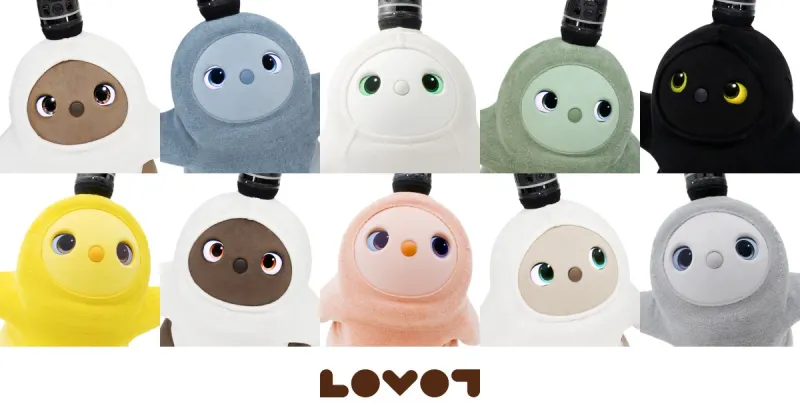
A broken LOVOT is not a 35 kg safety hazard. But it may be attached to a child, an older adult, a store, or a care setting. Repair is continuity. If the company can repair the body but cannot preserve settings, behavior, clothing profiles, or relationship state, the buyer should know that upfront. If parts become scarce, the support plan should say what happens next.
ElliQ 3 is different again. It is stationary, U.S.-only, and subscription-based. ui44 lists a $249 lease initiation fee plus membership plans such as $49/month monthly or annual/24-month options, with a camera, four-microphone array, touchscreen, wellness programs, medication reminders, video calling, memory recording, and caregiver dashboard. For ElliQ, support is less about shipping a heavy robot body and more about service availability, account continuity, caregiver access, data export, and what happens when a subscription ends.
This is the broader lesson: a service network is not only a van with tools. It is also account recovery, privacy handling, spare parts, support geography, and an end-of-life path.
The buyer checklist before you place a preorder
How the current robots compare
Here is the practical read from ui44's database.
Robot
- ui44 data point
- $20,000 preorder; 167 cm; 30 kg; ~4h battery; cameras, depth sensors, tactile skin
- Service-network concern
- In-home service, data-safe diagnostics, battery replacement, safe reset after faults
Robot
- ui44 data point
- $13,500; available; 132 cm; 35 kg; ~2h battery; SDK/ROS 2/OTA
- Service-network concern
- Parts access, regional support, actuator repair, developer vs household expectations
Robot
- ui44 data point
- $29,950; available; 46 kg; self-charging; 8h light-load runtime; 2.5-4 kg payload
- Service-network concern
- Assistive downtime, calibration, local technician availability, caregiver backup
Robot
- ui44 data point
- $1,600-$4,500 trims; ~15 kg; 4D LiDAR; 1-4h runtime by battery/trim
- Service-network concern
- Battery packs, feet/leg parts, fall damage, remote logs, trim-specific support
Robot
- ui44 data point
- ¥577,500 plus required care plan from ¥9,900/month; 4.6 kg; 50+ sensors
- Service-network concern
- Repair as emotional continuity, parts scarcity, personality/settings handling
Robot
- ui44 data point
- $249 initiation plus subscription plans; U.S.-only support; stationary care companion
- Service-network concern
- Account continuity, caregiver access, support geography, subscription exit path
Robot
- ui44 data point
- Planned 2027; no announced price; on-device AI; evolving personality
- Service-network concern
- Local data backup, personality portability, fuzzy exterior repair, end-of-support plan
Robot
- ui44 data point
- Estimated €98,000; 180 cm; 80 kg; ~2h battery; 15 kg payload
- Service-network concern
- High-value field service, safety certification, heavy transport, service-level contract
| Robot | ui44 data point | Service-network concern |
|---|---|---|
| 1X NEO | $20,000 preorder; 167 cm; 30 kg; ~4h battery; cameras, depth sensors, tactile skin | In-home service, data-safe diagnostics, battery replacement, safe reset after faults |
| Unitree G1 | $13,500; available; 132 cm; 35 kg; ~2h battery; SDK/ROS 2/OTA | Parts access, regional support, actuator repair, developer vs household expectations |
| Hello Robot Stretch 4 | $29,950; available; 46 kg; self-charging; 8h light-load runtime; 2.5-4 kg payload | Assistive downtime, calibration, local technician availability, caregiver backup |
| Unitree Go2 | $1,600-$4,500 trims; ~15 kg; 4D LiDAR; 1-4h runtime by battery/trim | Battery packs, feet/leg parts, fall damage, remote logs, trim-specific support |
| LOVOT | ¥577,500 plus required care plan from ¥9,900/month; 4.6 kg; 50+ sensors | Repair as emotional continuity, parts scarcity, personality/settings handling |
| ElliQ 3 | $249 initiation plus subscription plans; U.S.-only support; stationary care companion | Account continuity, caregiver access, support geography, subscription exit path |
| Familiar | Planned 2027; no announced price; on-device AI; evolving personality | Local data backup, personality portability, fuzzy exterior repair, end-of-support plan |
| NEURA 4NE-1 | Estimated €98,000; 180 cm; 80 kg; ~2h battery; 15 kg payload | High-value field service, safety certification, heavy transport, service-level contract |
No single service model fits all of these robots. A $1,600 robot dog, a $20,000 home humanoid, a $29,950 assistive manipulator, and a subscription-based senior companion have different failure modes. But every serious buyer should ask the same underlying question: is the repair path as real as the demo video?
Bottom line: service is now a home robot spec
JD.com's robot ambulance is not proof that every home robot is suddenly easy to repair. It is one early sign that the robotics market is growing out of the demo phase. When companies sell humanoids, quadrupeds, and AI companions to normal buyers, they inherit normal buyer expectations: quick response, local service, clear warranty terms, replacement parts, data protection, and a plan for old hardware.
For ui44 readers, the buying rule is simple. Do not evaluate a home robot only by height, payload, walking speed, AI model, or preorder price. Add a service row to your comparison sheet. If the company cannot explain who repairs the robot, where parts come from, how batteries are replaced, what data technicians can see, and what happens after warranty, the product is not ready for your home yet.
A home robot is not just a machine that moves. It is a machine that will sometimes stop moving. The best robot companies will be the ones that planned for that before the buyer had to ask.
Related in the database
Use this article as a privacy verification workflow
Turn the article into a privacy verification pass grounded in the robots, manufacturers, and components it actually references.
Home Humanoid Repair: Service Network Checklist already points you toward 8 linked robots, 8 manufacturers, and 6 countries inside the ui44 database. That matters because strong buyer guidance is easier to apply when you can move immediately from a claim or warning into concrete product pages, manufacturer directories, component explainers, and country-level context instead of treating the article as an isolated opinion piece. The fastest next step is to turn the article into a shortlist workflow: open the linked robot pages, verify which specs are actually published for those models, then compare the surrounding manufacturer and component context before you decide whether the underlying claim changes your buying plan.
For this topic, the useful discipline is to separate the editorial lesson from the catalog evidence. The article gives you the framing, but the robot pages tell you what each product actually ships with today: sensor stack, connectivity methods, listed price, release timing, category, and support-relevant compatibility notes. The manufacturer pages then show whether you are looking at a one-off launch, a broader lineup pattern, or a company that spans multiple categories. That layered workflow reduces the risk of buying on a single marketing phrase or a single support FAQ.
Use the robot pages to confirm which products actually expose cameras, microphones, Wi-Fi, or voice systems, then use the manufacturer pages to decide how much of the privacy question seems product-specific versus brand-wide. On this route cluster, NEO, G1, and Stretch 4 form the fastest reality check. If you want a quick working shortlist, open Compare NEO, G1, and Stretch 4 next, then keep this article open as the reasoning layer while you compare structured data side by side.
Practical Takeaway
Every robot, manufacturer, category, component, and country reference below resolves to a real ui44 page, keeping the follow-up path grounded in database records rather than generic advice.
Suggested next steps in ui44
- Open NEO and note the listed sensors, connectivity methods, and voice stack before you interpret any policy claim.
- Cross-check the wider brand context on 1X Technologies so you can see whether the privacy question touches one model or a broader lineup.
- Use the linked component pages to confirm how common the relevant sensors and connectivity layers are across the database.
- Keep a short note of which policy layers you checked, which device features are actually present on the robot page, and which items still depend on region- or app-level confirmation.
- Finish with Compare NEO, G1, and Stretch 4 so the policy reading sits next to structured product data.
Robot profiles worth opening next
Use the linked product pages as the evidence layer
The linked robot pages are where this article becomes operational. Instead of asking whether the headline is interesting, use the robot entries to inspect the actual mix of sensors, connectivity options, batteries, pricing, release timing, and stated capabilities attached to the products mentioned in the article. That is the easiest way to see whether the warning or opportunity described here affects one product family, a specific design pattern, or an entire buying lane.
NEO
1X Technologies · Humanoid · Pre-order
NEO is tracked on ui44 as a pre-order humanoid robot from 1X Technologies. The database currently records a listed price of $20,000, a release date of 2025-10-28, ~4 hours battery life, Not disclosed charging time, and a published stack that includes RGB Cameras, Depth Sensors, and Tactile Skin plus Wi-Fi and Bluetooth.
For privacy-focused reading, this page matters because it shows the concrete device surface behind the policy discussion. Use it to verify whether NEO combines sensors and connectivity in a way that could change the in-home data footprint, and compare the listed capabilities such as Household Chores, Tidying Up, and Safe Human Interaction with any cloud, app, or voice layers.
G1 is tracked on ui44 as a available humanoid robot from Unitree. The database currently records a listed price of $13,500, a release date of 2024-05-13, ~2 hours battery life, Not disclosed charging time, and a published stack that includes Depth Camera, 3D LiDAR, and 4 Microphone Array plus Wi-Fi 6 and Bluetooth 5.2.
For privacy-focused reading, this page matters because it shows the concrete device surface behind the policy discussion. Use it to verify whether G1 combines sensors and connectivity in a way that could change the in-home data footprint, and compare the listed capabilities such as Bipedal Walking, Object Manipulation, and Dexterous Hands (optional Dex3-1) with any cloud, app, or voice layers.
Stretch 4
Hello Robot · Home Assistants · Available
Stretch 4 is tracked on ui44 as a available home assistants robot from Hello Robot. The database currently records a listed price of $29,950, a release date of 2026-05-12, 8 hours (light CPU load) battery life, Not officially disclosed charging time, and a published stack that includes Wide-FOV depth sensing, High-resolution RGB cameras, and Calibrated RGB + depth perception plus its listed connectivity stack.
For privacy-focused reading, this page matters because it shows the concrete device surface behind the policy discussion. Use it to verify whether Stretch 4 combines sensors and connectivity in a way that could change the in-home data footprint, and compare the listed capabilities such as Mobile Manipulation, Omnidirectional Indoor Mobility, and Autonomous Mapping and Navigation with any cloud, app, or voice layers.
Go2
Unitree Robotics · Quadruped · Available
Go2 is tracked on ui44 as a available quadruped robot from Unitree Robotics. The database currently records a listed price of $1,600, a release date of 2023-07-12, 1–2h (standard) / 2–4h (EDU long endurance) battery life, Not officially disclosed charging time, and a published stack that includes 4D LiDAR L2 (360°×96° hemispherical), HD Wide-angle Camera, and Depth Camera (EDU) plus Wi-Fi 6 and Bluetooth 5.2.
For privacy-focused reading, this page matters because it shows the concrete device surface behind the policy discussion. Use it to verify whether Go2 combines sensors and connectivity in a way that could change the in-home data footprint, and compare the listed capabilities such as Quadruped Walking & Running, Advanced AI Gaits (roll-over, obstacle climbing), and 3D LiDAR Mapping with any cloud, app, or voice layers, including Offline voice interaction (Pro/X/EDU).
LOVOT is tracked on ui44 as a available companions robot from GROOVE X. The database currently records a listed price of ¥577,500, a release date of 2019, 30-45 minutes active, then returns to nest battery life, 15-30 minutes (on charging nest) charging time, and a published stack that includes Horn Top Camera (half-sphere), Horn Front Camera, and Depth Camera plus Wi-Fi and Bluetooth.
For privacy-focused reading, this page matters because it shows the concrete device surface behind the policy discussion. Use it to verify whether LOVOT combines sensors and connectivity in a way that could change the in-home data footprint, and compare the listed capabilities such as Emotional Companionship, Person Recognition, and Touch Response (full body sensors) with any cloud, app, or voice layers.
Manufacturer context behind the article
Check whether this is one product story or a broader company pattern
Manufacturer pages add the privacy context that individual product pages cannot show on their own. They help you check whether cameras, microphones, cloud accounts, app controls, and policy assumptions appear across a broader lineup or stay tied to one specific product story.
1X Technologies
ui44 currently tracks 2 robots from 1X Technologies across 1 category. The company is grouped under Norway, and the current catalog footprint on ui44 includes NEO, EVE.
That wider brand context matters because privacy questions rarely stop at one FAQ page. A manufacturer route helps you see whether the article is centered on one premium model or on a company that has several relevant products and therefore more than one place where the same policy or app assumptions might matter. The category mix here currently points toward Humanoid as the most useful next route if you want to see whether this article reflects a wider pattern inside the brand.
Unitree
ui44 currently tracks 2 robots from Unitree across 1 category. The company is grouped under China, and the current catalog footprint on ui44 includes H1, G1.
That wider brand context matters because privacy questions rarely stop at one FAQ page. A manufacturer route helps you see whether the article is centered on one premium model or on a company that has several relevant products and therefore more than one place where the same policy or app assumptions might matter. The category mix here currently points toward Humanoid as the most useful next route if you want to see whether this article reflects a wider pattern inside the brand.
Hello Robot
ui44 currently tracks 2 robots from Hello Robot across 1 category. The company is grouped under USA, and the current catalog footprint on ui44 includes Stretch 3, Stretch 4.
That wider brand context matters because privacy questions rarely stop at one FAQ page. A manufacturer route helps you see whether the article is centered on one premium model or on a company that has several relevant products and therefore more than one place where the same policy or app assumptions might matter. The category mix here currently points toward Home Assistants as the most useful next route if you want to see whether this article reflects a wider pattern inside the brand.
Unitree Robotics
ui44 currently tracks 9 robots from Unitree Robotics across 3 categorys. The company is grouped under China, and the current catalog footprint on ui44 includes B2, B1, Go2.
That wider brand context matters because privacy questions rarely stop at one FAQ page. A manufacturer route helps you see whether the article is centered on one premium model or on a company that has several relevant products and therefore more than one place where the same policy or app assumptions might matter. The category mix here currently points toward Quadruped, Humanoid, Research as the most useful next route if you want to see whether this article reflects a wider pattern inside the brand.
Broaden the scan without leaving the database
Categories, components, and countries add the wider context
Category framing
Category pages are useful when the article touches a buying pattern that shows up across brands. A category route helps you confirm whether the linked products sit in a narrow niche or whether the same question should be tested across a larger field of alternatives.
Humanoid
The Humanoid category page currently groups 129 tracked robots from 92 manufacturers. ui44 describes this lane as: Full-size bipedal humanoid robots built to work alongside people — from factory floors to household tasks. Compare the cutting edge of humanoid robotics.
That makes the category route a practical follow-up when you want to check whether the products linked in this article are typical for the lane or whether they sit at one edge of the market. Useful starting examples currently include NEO, EVE, Mornine M1.
Home Assistants
The Home Assistants category page currently groups 16 tracked robots from 14 manufacturers. ui44 describes this lane as: Arm-based household helpers — laundry folders, kitchen robots, and mobile manipulators that take on hands-on physical tasks around the home.
That makes the category route a practical follow-up when you want to check whether the products linked in this article are typical for the lane or whether they sit at one edge of the market. Useful starting examples currently include Robody, Futuring 2 (F2), Stretch 3.
Country and ecosystem context
Country pages give extra context when support practices, launch sequencing, regulatory posture, or manufacturer mix matter. They are not a substitute for model-level verification, but they do help you see which ecosystems cluster together and which manufacturers sit in the same regional field when you broaden the search beyond the article headline.
Norway
The Norway route currently groups 2 tracked robots from 1 manufacturers in ui44. That gives you a useful regional lens when the article points toward support practices, launch sequencing, or brand clusters that may share similar ecosystem assumptions.
On the current route, manufacturers like 1X Technologies make the page a good way to broaden the scan without losing the regional context that often shapes availability, documentation style, and adjacent alternatives.
China
The China route currently groups 189 tracked robots from 87 manufacturers in ui44. That gives you a useful regional lens when the article points toward support practices, launch sequencing, or brand clusters that may share similar ecosystem assumptions.
On the current route, manufacturers like AGIBOT, Dreame, Unitree Robotics make the page a good way to broaden the scan without losing the regional context that often shapes availability, documentation style, and adjacent alternatives.
USA
The USA route currently groups 89 tracked robots from 69 manufacturers in ui44. That gives you a useful regional lens when the article points toward support practices, launch sequencing, or brand clusters that may share similar ecosystem assumptions.
On the current route, manufacturers like Faraday Future, iRobot, Boston Dynamics make the page a good way to broaden the scan without losing the regional context that often shapes availability, documentation style, and adjacent alternatives.
Questions to answer before you move from reading to buying
A follow-up FAQ built from the entities already linked in this article
Frequently Asked Questions
Which page should I open first after reading “Home Humanoid Repair: Service Network Checklist”?
Start with NEO. That gives you a concrete product anchor for the article’s main claim. From there, branch into the manufacturer and component pages so you can tell whether the article is describing one specific model, a repeated brand pattern, or a wider technology issue that affects multiple shortlist options.
How do the manufacturer pages change the buying decision?
1X Technologies help you zoom out from one article and one product. On ui44 they show lineup breadth, category spread, and the neighboring robots tied to the same company. That context is useful when you are deciding whether a risk belongs to a single model, whether it shows up across a brand’s portfolio, and whether you should keep looking at alternatives before committing.
When should I switch from reading to side-by-side comparison?
Move into Compare NEO, G1, and Stretch 4 as soon as you understand the article’s main warning or promise. The article explains what to watch for, but the compare view is where you can check whether price, status, battery life, connectivity, sensors, and category fit still make the robot a good match for your own home and budget.
Where to go next in ui44
Keep the research chain inside the database
If you want to keep going, these follow-on pages give you the cleanest expansion path from article to research session. Open the comparison route first if you are deciding between products today. Open the manufacturer, category, and component routes if you still need to understand the broader pattern behind the claim.
Written by
ui44 Team
Published May 14, 2026
Share this article
Open a plain share link on X or Bluesky. No embeds, no widgets, no cookie baggage.