It also raised the buyer question that matters more than the spectacle: what did that moment really prove about autonomy?
My short answer is simple. Not much by itself. The White House appearance mattered as a visibility milestone, but the stronger evidence still comes from Figure's own technical materials, especially the Helix 02 dishwasher demo. Even there, the right takeaway is not "trust everything." It is "separate a real technical step forward from a consumer-ready home robot."
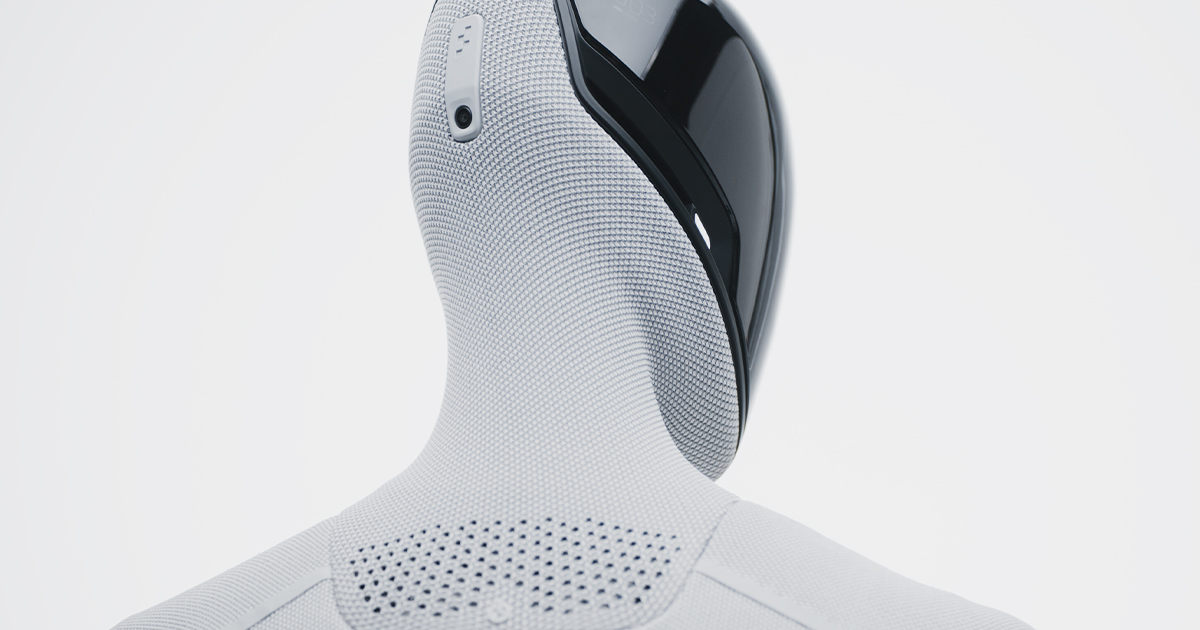
If you are comparing future home humanoids, the useful rule is this: believe the claim that comes with the clearest evidence, the clearest limits, and the clearest path to a real product.
What did the Figure 03 White House event actually prove?
The official White House statement is notable because it frames humanoids as part of a mainstream AI-and-education conversation, not as a niche robotics demo. The Office of the First Lady said the summit focused in part on "the emergence of humanoid educators as at-home tools for students" and introduced an American-made humanoid system, Figure3, to international leaders.
That matters. It shows humanoids are now being presented as future household tools in high-profile public settings.
What it does not prove is household autonomy.
A formal appearance at the White House is not the same thing as a robot completing unsupervised chores in a normal home. The White House statement does not publish reliability data, failure rates, teleoperation policy, or any evidence that Figure 03 is already ready for consumer home deployment. It proves visibility and ambition, not capability.
That distinction is why the Figure 03 White House moment is important and limited at the same time.
What do Figure's official sources actually show?
If you want better evidence than the White House appearance, the two official Figure pages that matter most are the Figure 03 launch page and the Helix 02 technical release.
The launch page makes Figure's pitch very clear. Figure 03 is designed for "Helix, the home, and the world at scale." Figure says the robot has a redesigned sensory suite, softer exterior materials, improved speech hardware, wireless inductive charging, and battery safety upgrades meant to make it safer and easier to use around people in the home.
Those are real product signals. They show Figure is not just building an industrial machine and pretending it belongs in a kitchen.
The stronger autonomy evidence comes from Helix 02. In that release, Figure says Helix 02 lets the robot unload and reload a dishwasher across a full-sized kitchen in a continuous four-minute task, "entirely from onboard sensors with no human intervention." The company also says the system completed 61 loco-manipulation actions, combining walking, manipulation, and balance in one run.
That is much more meaningful than a stage appearance. It shows a longer, more complete task in a home-like environment.
But it still has limits buyers should keep in view:
- It is still Figure's own demo, not an independent home trial.
- It does not come with published consumer reliability numbers.
- It does not change the fact that our database still lists Figure 03 with no announced price, no consumer purchase path, and a release date of TBD.
So yes, Figure has shown more than marketing fluff. No, it has not yet shown enough for buyers to treat Figure 03 like a near-term household appliance.
What counts as a trustworthy home-robot autonomy claim?
For home buyers, I think a believable autonomy claim needs four things.
- A full task, not a moment. Walking across a room or picking up one item is not enough.
- A realistic environment. Homes are cluttered, narrow, reflective, and full of soft objects.
- Some sign of recovery. If the robot hesitates, misses, or has to adjust, that matters.
- Honesty about human help. If a person is supervising or stepping in remotely, say so.
That last point matters a lot because it changes how you compare companies.
Take 1X NEO. Officially, 1X says: "NEO works autonomously by default. For any chore it doesn't know, you can schedule a 1X Expert to guide it, helping NEO learn while getting the job done." That is a more modest claim than Figure's home-autonomy vision, but it is also clearer. It tells buyers where autonomy ends and human assistance begins.

In practice, transparent assistance is easier to trust than a bigger claim with fewer disclosed limits.
Figure 03 versus 1X, Unitree, Tesla, and Agility
The easiest way to cut through the hype is to compare what each company has actually put on the table. You can also line these robots up directly in ui44's compare tool or browse the wider robots database.
Robot
- What ui44 can verify
- No announced price, 168cm, 60kg, ~5h battery, active
- Best public proof today
- Official Helix 02 four-minute kitchen task and home-focused launch materials
- Main trust gap
- No consumer price, no consumer ship date, no independent home validation
Robot
- What ui44 can verify
- Industrial model, 168cm, 70kg, discontinued
- Best public proof today
- 30,000+ BMW cars touched across 1,250+ runtime hours
- Main trust gap
- Factory proof does not automatically equal home proof
Robot
- What ui44 can verify
- $20,000, 167cm, 30kg, pre-order
- Best public proof today
- Official Expert Mode disclosure and explicit home positioning
- Main trust gap
- Still early, still not broadly deployed in ordinary homes
Robot
- What ui44 can verify
- $13,500, 132cm, 35kg, available
- Best public proof today
- You can actually buy it, and Unitree is shipping humanoids now
- Main trust gap
- More research platform than turnkey home helper
Robot
- What ui44 can verify
- Target ~$30,000, 173cm, 57kg, development
- Best public proof today
- Real factory-task positioning and huge public visibility
- Main trust gap
- No consumer ordering path and no verified home rollout
Robot
- What ui44 can verify
- Enterprise RaaS only, 175cm, 65kg, active
- Best public proof today
- Multi-company logistics deployments
- Main trust gap
- Not a home robot and not sold to consumers
| Robot | What ui44 can verify | Best public proof today | Main trust gap |
|---|---|---|---|
| Figure 03 | No announced price, 168cm, 60kg, ~5h battery, active | Official Helix 02 four-minute kitchen task and home-focused launch materials | No consumer price, no consumer ship date, no independent home validation |
| Figure 02 | Industrial model, 168cm, 70kg, discontinued | 30,000+ BMW cars touched across 1,250+ runtime hours | Factory proof does not automatically equal home proof |
| 1X NEO | $20,000, 167cm, 30kg, pre-order | Official Expert Mode disclosure and explicit home positioning | Still early, still not broadly deployed in ordinary homes |
| Unitree G1 | $13,500, 132cm, 35kg, available | You can actually buy it, and Unitree is shipping humanoids now | More research platform than turnkey home helper |
| Optimus Gen 2 | Target ~$30,000, 173cm, 57kg, development | Real factory-task positioning and huge public visibility | No consumer ordering path and no verified home rollout |
| Digit | Enterprise RaaS only, 175cm, 65kg, active | Multi-company logistics deployments | Not a home robot and not sold to consumers |
A few patterns jump out.
Figure has the strongest home narrative
Figure is doing the best job of showing a humanoid as something that belongs in a home, not just in a warehouse. The company has official language about safety, softer materials, voice interaction, wireless charging, and home-scale navigation. It is aiming at a real consumer story.
That makes Figure 03 one of the most interesting robots in the field.
It does not make it buyable yet.
Figure 02 is still Figure's best trust anchor
Oddly, the strongest reason to take Figure seriously is still Figure 02, not the White House moment. Our database notes that Figure 02 contributed to BMW production across more than 30,000 cars and 1,250+ runtime hours. That is real deployment evidence.
It does not prove home readiness, but it does prove Figure can move beyond staged concept videos.

1X is less flashy and more explicit
1X NEO is easier to reason about because 1X is more direct about the transition state between autonomy and assistance. Our database lists it at $20,000, 167cm, 30kg, and pre-order status. The official site also makes clear that an expert can step in for chores the robot does not know.
That is not full autonomy, but it is honest product framing.
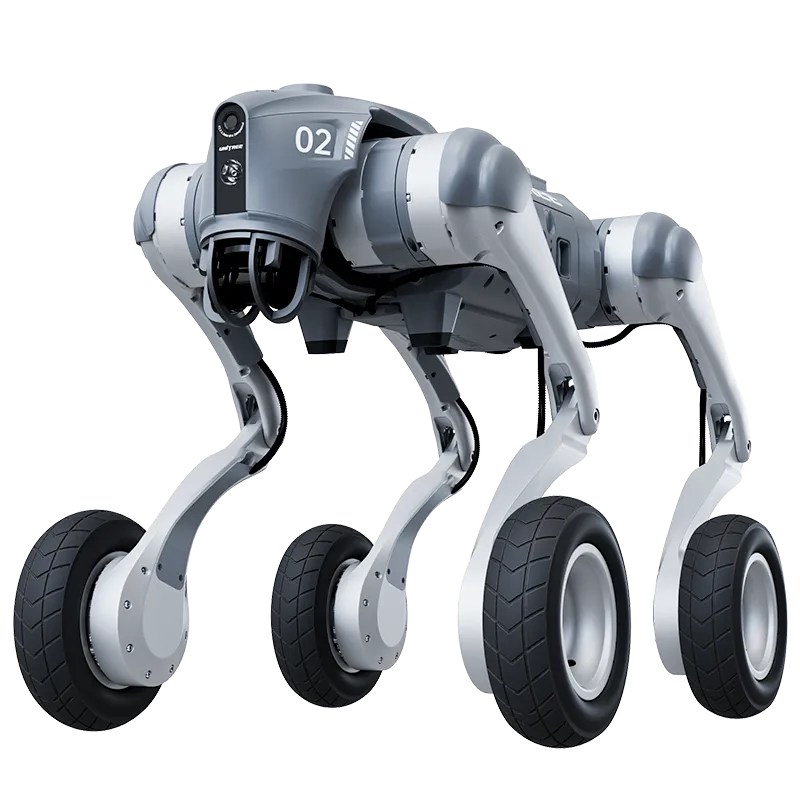
Unitree is the most concrete purchase path
Unitree G1 is the robot in this comparison that feels most like a real product transaction. ui44 lists it at $13,500, 132cm, 35kg, and available now.
That is a stronger buying signal than a polished demo alone. At the same time, G1 reads more like a development or enthusiast platform than a finished domestic helper. Availability is important, but so is product maturity.
Tesla and Agility still matter as reality checks
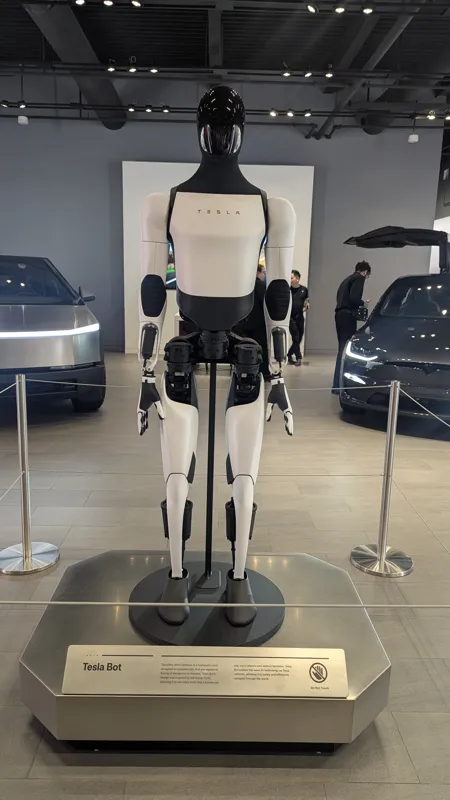
Optimus Gen 2 shapes public expectations because Tesla shapes public attention. But ui44 still lists it as development-stage hardware with an estimated target price around $30,000 and no consumer ordering path.
Digit, meanwhile, is useful because it shows what real operational proof looks like. It is not a home robot, but it is an active enterprise system with commercial deployments. That is a reminder that visible proof and consumer readiness are not the same thing.
So, should buyers trust Figure 03's autonomy pitch?
Yes, but only at the right level.
You should trust that Figure is working on a serious home-humanoid system. The official materials are more substantial than a generic teaser. The Helix 02 demo is meaningful. Figure 03's home-oriented hardware changes also suggest the company is thinking about safety and daily usability, not just industrial performance.
You should not trust the White House appearance as proof that Figure 03 is already a dependable consumer home robot.
For a buyer in 2026, the trust ladder still looks like this:
- A robot people can actually order or deploy
- A company that clearly explains where humans still help
- Longer real tasks in realistic spaces
- Only then, public appearances and polished demo moments
On that scale, Figure is promising, but still incomplete. 1X is clearer about limits. Unitree is easier to buy. Agility is more operationally proven, even outside the home. Tesla remains the clearest example of how brand power can outrun product availability.
That is why my view on Figure 03 is neither cynical nor breathless. It is one of the most credible home-humanoid visions in the market, and it is still not something a normal buyer can properly evaluate as a finished product.
What would real home validation look like?
This is the part that usually gets skipped in flashy humanoid coverage. Buyers are told to feel impressed, but they are rarely told what evidence would actually change the purchase decision.
For a home humanoid, I think meaningful validation would look more like this:
Repeated tasks, not just a hero run
One dishwasher cycle is interesting. Ten successful runs across different homes, lighting conditions, dish layouts, and interruptions would be far more useful. A good autonomy claim should survive repetition, not just a single polished video.
Ordinary homes, not carefully staged spaces
Homes are full of the little things that break clean demos: narrow walkways, chairs that moved an inch since yesterday, reflective appliance doors, children, pets, soft baskets, charging cables, and partial clutter. A robot that looks stable only in a highly controlled kitchen is still early.
Clear failure behavior
A trustworthy robot does not need to be perfect. It does need to fail in a way that makes sense. Does it stop safely? Ask for help? Retry intelligently? Skip a step and report it? Those behaviors matter more than a single highlight clip.
A support model that normal households can understand
If a robot needs a technician visit, remote supervision, subscription support, or expert intervention to finish harder chores, buyers should know that before they buy. This is one reason early ordering paths matter almost as much as the demo itself.
Real ownership details
Price, support, warranty, repair path, and delivery geography are boring compared with a White House appearance. They are also the difference between a product and a promise.
That standard may sound strict, but home robots need stricter proof than normal consumer gadgets. A phone can glitch and waste your time. A mobile humanoid in your kitchen can block a hallway, drop an object, or simply become an expensive machine that only works under ideal conditions.
Why home autonomy is harder than factory proof
This is also why Figure 02's industrial deployment and Figure 03's home story should not be merged too quickly.
A factory is hard in one way and easier in another. It is demanding, but the workflows, layouts, and safety rules are more structured. A home is smaller, less predictable, more personal, and full of edge cases that do not look like a clean benchmark task.
That is why ui44 readers should treat these proof categories separately:
- Industrial proof shows a company can deploy real hardware in operational settings.
- Consumer proof shows a household can realistically buy, set up, support, and live with the robot.
- Autonomy proof shows the robot can complete multi-step tasks with limited or no human intervention.
- Home-readiness proof shows the robot can do all of that in messy, changing, ordinary domestic spaces.
Figure 02 gives Figure meaningful industrial credibility. Figure 03 gives Figure a stronger home-facing narrative. But those are still different layers of proof, and buyers should resist the temptation to collapse them into one story just because the branding is elegant.
The same caution applies across the category. Digit shows what operational deployment can look like outside the home. 1X NEO shows what a more explicit bridge between autonomy and human assistance can look like. Unitree G1 shows what a more concrete purchase path looks like. None of those examples is a full answer by itself, but together they make the market easier to read.
How should a buyer compare a demo-first robot with a buy-now robot?
If you are actually trying to judge risk, I would use a simple order of operations.
1. Start with the buying state
Can you order it? Is the price public? Is there a support path? If the answer is no, you are not judging a near-term purchase. You are judging a roadmap.
That does not make the robot unimportant. It just changes the question. With Figure 03, the right question is not "should I buy this now?" but "is this one of the strongest signs of where the category is headed?" I think the answer to that is yes.
2. Then look at disclosed limits
A company that admits where the robot still needs help gives you more usable information than a company that only shows success moments. That is one reason I keep coming back to 1X's Expert Mode language. Even if the product is early, clear limits are buyer-friendly.
3. Then compare task depth
Ask whether the robot is proving a complete job or only a piece of one. Walking, grasping, speaking, opening a door, and placing one object are all relevant sub-skills. But a buyer wants to know whether the robot can combine those abilities over time without falling apart the moment the environment changes.
4. Then compare ownership realism
A robot can be technically impressive and still be a weak household purchase. That is where price, maintenance, battery life, support, and replacement paths come back into the picture. If you want a broader category view, that is also why our guide to humanoid robots that might actually ship to homes in 2026 is useful alongside this article.
What should buyers watch next?
If you want to know whether Figure 03 is moving from impressive to trustworthy, these are the signals that matter most over the next 6 to 12 months:
- A consumer price or a clear ordering path
- Independent home trials, not just company-shot videos
- Stronger disclosure about how often human intervention is needed
- Warranty, support, and service details
- More real tasks in messy home environments
- Evidence that success holds up across repeated runs, not one polished clip
That is also where ui44's other guides help. If you want the broader market context, start with our home robot launch claims verification playbook, our breakdown of humanoid robots that might actually ship to homes in 2026, and our analysis of when humanoid robots might drop under $10,000.
The bottom line is pretty simple. Figure 03's White House debut was a real milestone for visibility. Figure's Helix 02 demo is a real technical signal. Neither one, on its own, is the same thing as a proven home robot you should already trust with your house.
That gap is not a scandal. It is just where the market still is.
Frequently Asked Questions
Is teleoperation always a problem?
No. Hidden teleoperation is the problem. Openly disclosed human assistance is
just part of the current product reality for many early humanoids.
Has any humanoid proven full home autonomy yet?
Not at the level normal buyers should demand. We have stronger demos, early
pre-orders, and some real industrial deployment. We do not yet have broad
evidence of reliable, unsupervised household autonomy for ordinary consumers.
Why does the Figure 03 White House event matter if it proves so little?
Because it changes public attention. It shows humanoids are now being discussed
as future household tools in mainstream political and diplomatic settings, not
only inside robotics circles.
If you care most about trust, what should you prioritize?
Start with clear limits, not bold promises. A company that explains where
autonomy works, where humans still help, and how you would actually buy and
support the robot is easier to trust than a company with a better video and
fewer details.
Written by
ui44 Team
Published April 13, 2026
Share this article
Open a plain share link on X or Bluesky. No embeds, no widgets, no cookie baggage.