That is the promise behind language-coached robots. Instead of only choosing from a fixed menu of commands, a home robot would use natural language as a teaching channel. You would talk it through a new chore, correct it when it misunderstands, and eventually expect the robot to reuse the lesson without a human narrating every move.
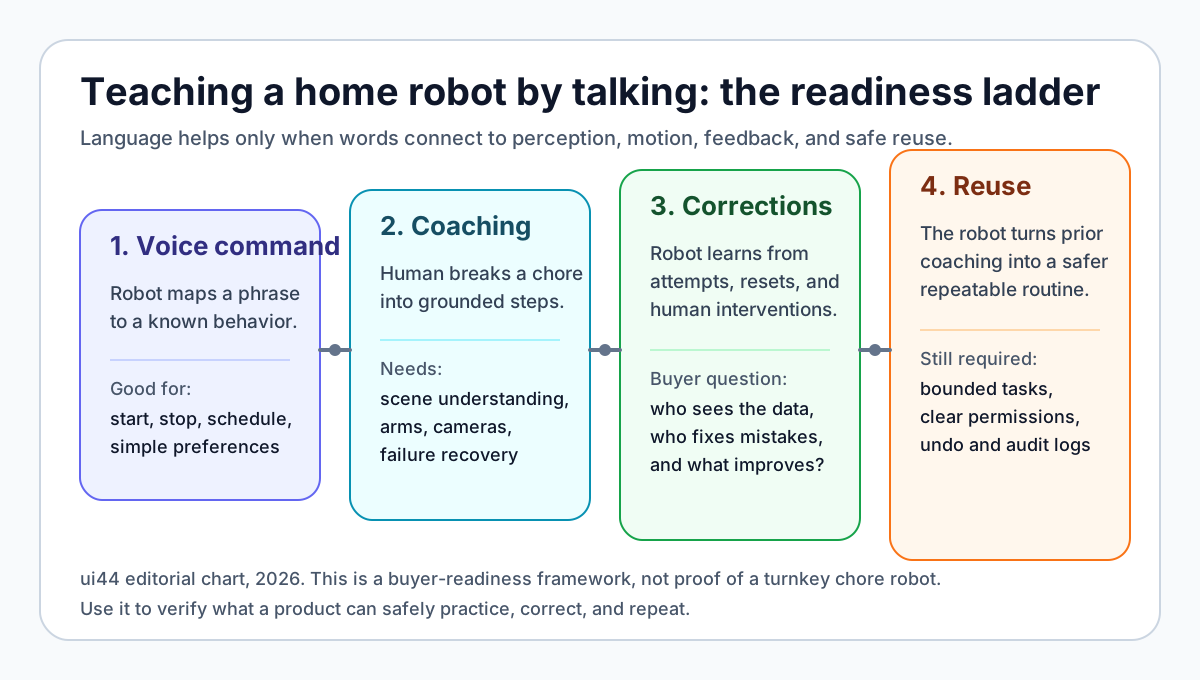
The short answer: research is moving fast enough that “talk me through this chore” is no longer science fiction. But it is not a normal consumer feature yet. In 2026, buyers should treat language coaching as a serious research signal and a useful product direction, not as proof that a robot can safely learn any household task in one afternoon.
What does “teaching by talking” actually mean?
Ordinary voice control is not teaching. If a robot vacuum starts cleaning when you say “vacuum the living room,” the robot is selecting a behavior it already knows. The language is a remote control.
Teaching by talking is different. The words change how the robot attempts a physical task. A useful language-coached robot needs to connect four things at once:
- The words: step-by-step instructions, corrections, constraints, and preferences.
- The scene: objects, surfaces, people, hazards, and the current state of the chore.
- The body: arms, grippers, sensors, balance, reach, force, and battery limits.
- The memory loop: a way to turn a successful coached attempt into a safer, repeatable routine.
Physical Intelligence's April 2026 π0.7 work is a good example of why this is suddenly worth taking seriously. The company says π0.7 can use step-by-step language coaching and visual subgoals to attempt new manipulation tasks, such as loading a sweet potato into an air fryer, even when that exact task was not in its collected demonstrations. The same post says repeated coaching can then be used to fine-tune a higher-level policy that generates subtasks autonomously.
That is the important buyer translation. The robot is not merely hearing words. It is using words to break a chore into smaller physical actions, then trying to reuse that structure later.
Why is this different from imitation learning?
ui44 has already covered the broader question of whether you can teach a home robot new chores. That article focused on demonstration: teleoperation, leader-follower control, corrections, and policy training.
Language coaching sits beside that, not above it. It is the layer that can make teaching less like programming and more like supervising.
A demonstration says, “do what I did.” Language coaching says, “here is what I meant, here is why that failed, and here is what to try next.” For messy homes, that distinction matters. You may not want to physically demonstrate every variant of folding a towel, loading a shelf, or sorting clutter. You may want to say, “the blue towel goes in the bathroom basket, but the wet one goes over the rail first.”

Physical Intelligence's earlier Hi Robot work gives the shape of this stack. It described a high-level vision-language model that “whispers” simpler language commands to a lower-level vision-language-action policy. In tests around table bussing, sandwich making, and grocery shopping, the system handled user instructions and real-time corrections better than a flat policy in the reported experiments.
That does not mean a retail home robot will ship with that exact system. It does show the direction: a home robot needs a planner that can talk itself through the chore, not just a reflex model that moves when prompted.
Which current home robots are closest to the hardware requirement?
The hardest part is that words do not fold laundry. A language-coached robot still needs a body that can do useful work. That immediately narrows the field.
Robot
- ui44 status
- Pre-order
- Price signal
- $20,000 early-adopter price
- Why it matters for language coaching
- Home-focused humanoid with soft body, tactile skin, microphones, cameras, and 1X Expert Mode for chores it does not know.
Robot
- ui44 status
- Available
- Price signal
- $29,950
- Why it matters for language coaching
- Open ROS 2/Python mobile manipulator with 8-hour light-load runtime, self-charging, VLM grasping demos, and a 2.5 kg extended arm payload.
Robot
- ui44 status
- Available
- Price signal
- $7,999 or $450/mo
- Why it matters for language coaching
- Narrow laundry-folding robot that already combines autonomy, remote assist, and model updates around one home chore.
Robot
- ui44 status
- Available
- Price signal
- Starts at $13,500
- Why it matters for language coaching
- Developer humanoid with optional dexterous hands and secondary development on EDU models, but Unitree itself warns individual buyers to understand limitations.
Robot
- ui44 status
- Active, not consumer-priced
- Price signal
- No public price
- Why it matters for language coaching
- Humanoid with Helix VLA, tactile arrays, high-frequency vision, and home-oriented design claims, but not a direct consumer product.
Robot
- ui44 status
- Pre-order
- Price signal
- $299 / $449
- Why it matters for language coaching
- Good for voice, vision, coding, and app experimentation, but it cannot perform household manipulation chores.
| Robot | ui44 status | Price signal | Why it matters for language coaching |
|---|---|---|---|
| 1X NEO | Pre-order | $20,000 early-adopter price | Home-focused humanoid with soft body, tactile skin, microphones, cameras, and 1X Expert Mode for chores it does not know. |
| Hello Robot Stretch 4 | Available | $29,950 | Open ROS 2/Python mobile manipulator with 8-hour light-load runtime, self-charging, VLM grasping demos, and a 2.5 kg extended arm payload. |
| Weave Isaac 0 | Available | $7,999 or $450/mo | Narrow laundry-folding robot that already combines autonomy, remote assist, and model updates around one home chore. |
| Unitree G1 | Available | Starts at $13,500 | Developer humanoid with optional dexterous hands and secondary development on EDU models, but Unitree itself warns individual buyers to understand limitations. |
| Figure 03 | Active, not consumer-priced | No public price | Humanoid with Helix VLA, tactile arrays, high-frequency vision, and home-oriented design claims, but not a direct consumer product. |
| Reachy Mini | Pre-order | $299 / $449 | Good for voice, vision, coding, and app experimentation, but it cannot perform household manipulation chores. |
This table is why the buyer question cannot be “does it have AI?” It has to be “what physical action can the robot safely practice?” A desk robot can learn a better greeting or camera-based app. It cannot learn to unload a dishwasher. A humanoid without reliable hands can understand your correction and still drop the plate.
What does 1X NEO tell buyers to ask?
1X NEO is the clearest consumer-facing example because its official product page uses home-language directly. 1X says NEO can take a list of chores, schedule work, operate autonomously by default, and use “Expert Mode” when it does not know a chore. In that mode, a 1X Expert can guide the robot while helping NEO learn.
That is a practical version of language coaching, but it raises three buyer questions:
- Who is doing the guiding? If a remote expert is needed, the robot may be useful before it is truly autonomous, but privacy and labor boundaries matter.
- What is learned locally versus fleet-wide? A correction in your kitchen may improve your robot, the company's model, or both.
- What chores are bounded? “Put toys in the bin” is very different from “clean the kitchen.” A safe product should define what the robot may attempt.
NEO's ui44 database entry lists a soft, lightweight 30 kg body, about 4 hours of battery life, RGB and depth sensors, tactile skin, and household-chore positioning. Those are the right ingredients for a language-coached home robot. They are still ingredients, not proof of broad chore mastery.
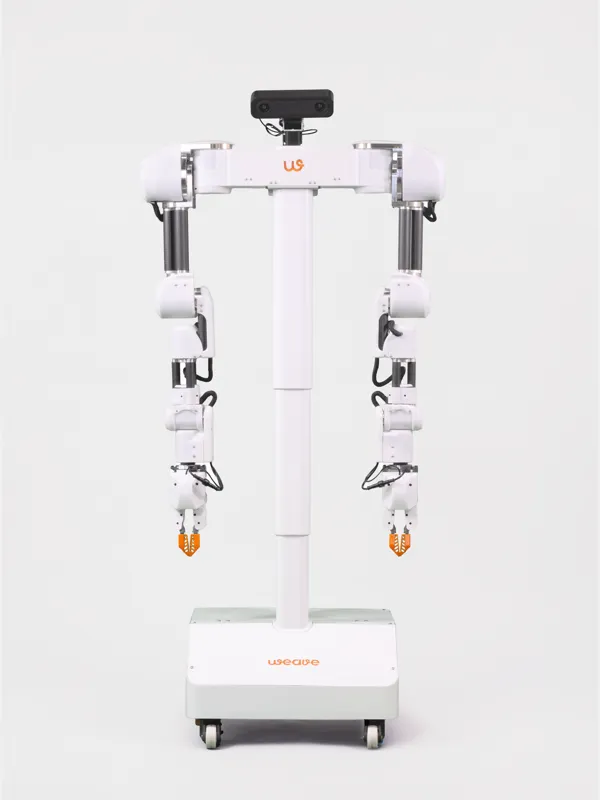
Weave Isaac 0 shows the opposite strategy: start with one constrained chore. In the ui44 database, Isaac 0 is an available laundry-folding robot at $7,999 or $450 per month. It is stationary, mains powered, and focused on folding shirts, long sleeves, sweaters, pants, and towels in roughly 30-90 minutes per load. Weave also describes remote teleoperation assist and weekly model updates.
That may be less glamorous than a walking humanoid, but it is more measurable. A narrow robot can be coached, corrected, and audited against a clear outcome: did the laundry get folded acceptably, and how often did a human intervene?
Why do corrections matter more than commands?
The best signal in the Physical Intelligence research is not that a robot can hear an instruction. It is that the system is being built around corrections, subgoals, and repeated attempts.
The company's RLT work is especially relevant here. RLT is not a consumer home feature, but it targets the exact problem that ruins household chores: the last few millimeters. Plugging in a cable, aligning a screwdriver, fastening a zip tie, or inserting a power cord may look simple to a person. For a robot, small errors in grip, wrist angle, object pose, or contact force can turn a nearly successful task into a failure.
Physical Intelligence reported that RLT improved precise stages by up to 3× and could use as little as 15 minutes of real robot data for some task phases. The buyer lesson is not “your robot will learn any chore in 15 minutes.” The lesson is that useful learning may happen at multiple levels:
- broad language coaching for the chore sequence;
- visual subgoals for the desired intermediate state;
- human corrections when the robot misunderstands;
- local practice on the fragile contact-rich step;
- safety rules that stop the robot before practice becomes damage.
That layered view is much more believable than a single magic voice command.
What should a buyer verify before trusting a coached chore claim?
A robot company making language-coaching claims should be able to answer these questions plainly:
Does the robot have the body for the task?
For chores, look for reach, payload, gripper design, force sensing, camera placement, and runtime. Hello Robot Stretch 4 is a good benchmark because its specs are concrete: 160 cm height, 45 cm footprint, 8 hours of light-load runtime, self-charging, 2.5 kg extended arm payload, 4 kg retracted payload, ROS 2/Python SDK, mapping, navigation, 3D SLAM, data-collection tools, and VLM grasping demos.
Those numbers do not make Stretch 4 a mass-market appliance. At $29,950, it is a research, assistive, and pilot-deployment platform. But it shows the physical checklist a serious chore robot must satisfy.
Does the robot learn from corrections or only obey commands?
Ask whether a correction changes future behavior. If you say “not that cup,” does the robot merely stop once, or does it update the task plan? If a remote operator fixes a grasp, is that logged as training data? Can you review or delete that data?
Is the learning bounded by permissions?
A teachable robot needs a permissions model. It should know which rooms, objects, times, and people are off-limits. This is connected to the broader question of home robot AI tool permissions: a robot that learns chores should not silently gain new authority over doors, appliances, purchases, cameras, or private rooms.
Can the robot explain what it learned?
Language coaching is useful only if the buyer can inspect the resulting routine. A good interface would show something like: “For laundry basket sorting, I now place clean towels in the hall closet basket, leave wet towels on the rail, and ask before moving clothing from the bedroom.” Without that audit trail, learning becomes guesswork.
What happens when the robot is wrong?
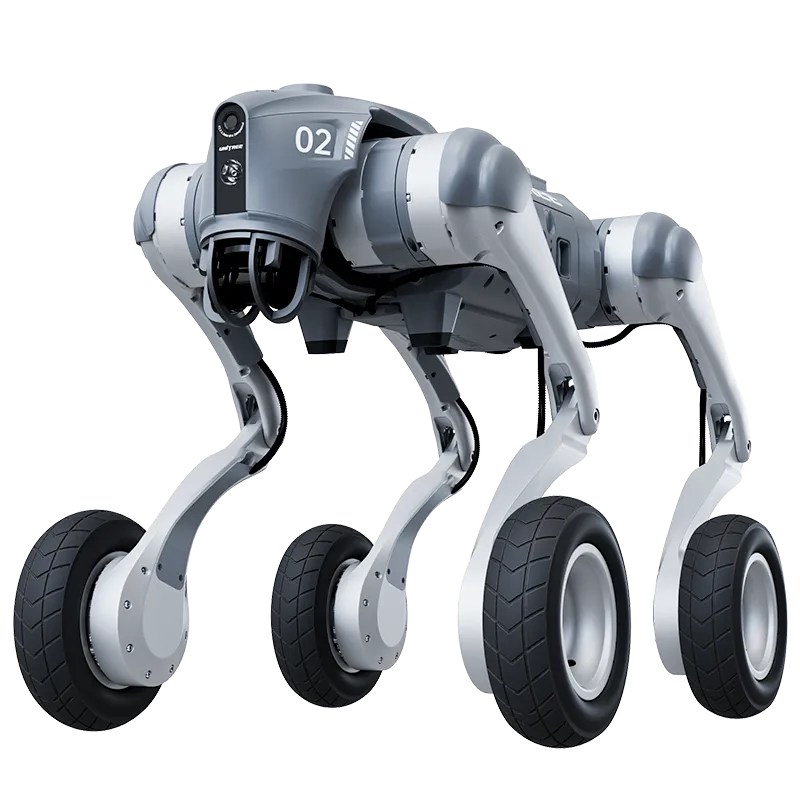
Unitree G1 is a useful cautionary example. It is available, relatively affordable for a humanoid at a $13,500 starting price, and technically interesting: 132 cm, about 35 kg, about 2 hours of battery life, depth camera, 3D LiDAR, microphone array, optional dexterous hands, and secondary development on EDU models. But Unitree's own product page warns that humanoids are in an early exploration stage and individual users should understand the limitations before purchase.
That is exactly the right tone for coached chores. The robot should fail safely, ask for help, and limit what it tries. A confident but poorly bounded home robot is worse than a cautious one.
Where do Figure 03 and Reachy Mini fit?
Figure 03 belongs in the conversation because it is built around Helix, Figure's vision-language-action system, and the official launch material emphasizes a redesigned hand system, tactile sensing, palm cameras, voice hardware, wireless charging, and home-oriented soft goods. In the ui44 database, Figure 03 is a 61 kg humanoid with about 5 hours of battery life, tactile arrays, force sensors, complex manipulation capabilities, and no public consumer price.
That makes it an important signal, not a normal shopping option. Figure is showing what a full-stack humanoid company thinks a home-capable body needs. It is not giving buyers a priced, supported consumer robot today.
Reachy Mini sits at the other end. At $299 for the Lite version and $449 for the wireless version, it is a wonderful open-source desktop robot for speech, vision, Python apps, Hugging Face integrations, and human-robot interaction. It is also a reminder that “AI robot” does not mean “chore robot.” Reachy Mini can be taught behaviors. It cannot fold towels or load an air fryer.
The practical verdict
Talking a home robot through a chore is one of the most important ideas in home robotics because it matches how people actually supervise helpers. Homes are full of exceptions: the mug that is sentimental, the towel that is still wet, the toy that belongs to one child, the pan that cannot go in the dishwasher.
Language is the natural way to communicate those exceptions. But language alone is not enough. The robot also needs capable hardware, perception, tactile or force feedback, bounded permissions, correction learning, audit logs, and a way to practice without damaging the home.
For buyers in 2026, the safest interpretation is this:
- If a robot only has voice commands, treat it as automation, not learning.
- If it can accept corrections, ask what changes after the correction.
- If it uses remote experts, ask who sees the home and how the data is handled.
- If it claims general chore learning, ask for bounded examples and success rates, not a highlight video.
- If it has no useful arms or grippers, it cannot learn physical chores no matter how good the chatbot sounds.
The most credible near-term products will probably be narrow first: laundry, tidying, fetch-and-carry, assistive reach, or one-room routines. The long-term goal is a robot that can listen, try, ask, correct itself, and remember safely. That is not here as a mass-market feature yet. But the pieces are finally visible enough that buyers should know exactly what to ask next.
Related in the database
Use this article as a privacy verification workflow
Turn the article into a privacy verification pass grounded in the robots, manufacturers, and components it actually references.
Can You Teach a Home Robot by Talking? already points you toward 6 linked robots, 6 manufacturers, and 5 countries inside the ui44 database. That matters because strong buyer guidance is easier to apply when you can move immediately from a claim or warning into concrete product pages, manufacturer directories, component explainers, and country-level context instead of treating the article as an isolated opinion piece. The fastest next step is to turn the article into a shortlist workflow: open the linked robot pages, verify which specs are actually published for those models, then compare the surrounding manufacturer and component context before you decide whether the underlying claim changes your buying plan.
For this topic, the useful discipline is to separate the editorial lesson from the catalog evidence. The article gives you the framing, but the robot pages tell you what each product actually ships with today: sensor stack, connectivity methods, listed price, release timing, category, and support-relevant compatibility notes. The manufacturer pages then show whether you are looking at a one-off launch, a broader lineup pattern, or a company that spans multiple categories. That layered workflow reduces the risk of buying on a single marketing phrase or a single support FAQ.
Use the robot pages to confirm which products actually expose cameras, microphones, Wi-Fi, or voice systems, then use the manufacturer pages to decide how much of the privacy question seems product-specific versus brand-wide. On this route cluster, NEO, Stretch 4, and Isaac 0 form the fastest reality check. If you want a quick working shortlist, open Compare NEO, Stretch 4, and Isaac 0 next, then keep this article open as the reasoning layer while you compare structured data side by side.
Practical Takeaway
Every robot, manufacturer, category, component, and country reference below resolves to a real ui44 page, keeping the follow-up path grounded in database records rather than generic advice.
Suggested next steps in ui44
- Open NEO and note the listed sensors, connectivity methods, and voice stack before you interpret any policy claim.
- Cross-check the wider brand context on 1X Technologies so you can see whether the privacy question touches one model or a broader lineup.
- Use the linked component pages to confirm how common the relevant sensors and connectivity layers are across the database.
- Keep a short note of which policy layers you checked, which device features are actually present on the robot page, and which items still depend on region- or app-level confirmation.
- Finish with Compare NEO, Stretch 4, and Isaac 0 so the policy reading sits next to structured product data.
Robot profiles worth opening next
Use the linked product pages as the evidence layer
The linked robot pages are where this article becomes operational. Instead of asking whether the headline is interesting, use the robot entries to inspect the actual mix of sensors, connectivity options, batteries, pricing, release timing, and stated capabilities attached to the products mentioned in the article. That is the easiest way to see whether the warning or opportunity described here affects one product family, a specific design pattern, or an entire buying lane.
NEO
1X Technologies · Humanoid · Pre-order
NEO is tracked on ui44 as a pre-order humanoid robot from 1X Technologies. The database currently records a listed price of $20,000, a release date of 2025-10-28, ~4 hours battery life, Not disclosed charging time, and a published stack that includes RGB Cameras, Depth Sensors, and Tactile Skin plus Wi-Fi and Bluetooth.
For privacy-focused reading, this page matters because it shows the concrete device surface behind the policy discussion. Use it to verify whether NEO combines sensors and connectivity in a way that could change the in-home data footprint, and compare the listed capabilities such as Household Chores, Tidying Up, and Safe Human Interaction with any cloud, app, or voice layers.
Stretch 4
Hello Robot · Home Assistants · Available
Stretch 4 is tracked on ui44 as a available home assistants robot from Hello Robot. The database currently records a listed price of $29,950, a release date of 2026-05-12, 8 hours (light CPU load) battery life, Not officially disclosed charging time, and a published stack that includes Wide-FOV depth sensing, High-resolution RGB cameras, and Calibrated RGB + depth perception plus its listed connectivity stack.
For privacy-focused reading, this page matters because it shows the concrete device surface behind the policy discussion. Use it to verify whether Stretch 4 combines sensors and connectivity in a way that could change the in-home data footprint, and compare the listed capabilities such as Mobile Manipulation, Omnidirectional Indoor Mobility, and Autonomous Mapping and Navigation with any cloud, app, or voice layers.
Isaac 0
Weave Robotics · Home Assistants · Available
Isaac 0 is tracked on ui44 as a available home assistants robot from Weave Robotics. The database currently records a listed price of $3,999, a release date of 2026-02, Mains powered (600W, 120V) battery life, N/A (plugged in) charging time, and a published stack that includes Vision System and Proprioceptive Sensors plus Wi-Fi 2.4GHz/5GHz and Ethernet.
For privacy-focused reading, this page matters because it shows the concrete device surface behind the policy discussion. Use it to verify whether Isaac 0 combines sensors and connectivity in a way that could change the in-home data footprint, and compare the listed capabilities such as Laundry Folding, T-shirts, Long Sleeves, Sweaters, and Pants and Towels with any cloud, app, or voice layers.
G1 is tracked on ui44 as a available humanoid robot from Unitree. The database currently records a listed price of $13,500, a release date of 2024-05-13, ~2 hours battery life, Not disclosed charging time, and a published stack that includes Depth Camera, 3D LiDAR, and 4 Microphone Array plus Wi-Fi 6 and Bluetooth 5.2.
For privacy-focused reading, this page matters because it shows the concrete device surface behind the policy discussion. Use it to verify whether G1 combines sensors and connectivity in a way that could change the in-home data footprint, and compare the listed capabilities such as Bipedal Walking, Object Manipulation, and Dexterous Hands (optional Dex3-1) with any cloud, app, or voice layers.
Figure 03 is tracked on ui44 as a active humanoid robot from Figure AI. The database currently records a listed price of Price TBA, a release date of 2025-10-09, ~5 hours battery life, Not disclosed charging time, and a published stack that includes Stereo Vision, Depth Cameras, and Force Sensors plus Wi-Fi and Bluetooth.
For privacy-focused reading, this page matters because it shows the concrete device surface behind the policy discussion. Use it to verify whether Figure 03 combines sensors and connectivity in a way that could change the in-home data footprint, and compare the listed capabilities such as Complex Manipulation, Warehouse Work, and Manufacturing Tasks with any cloud, app, or voice layers.
Manufacturer context behind the article
Check whether this is one product story or a broader company pattern
Manufacturer pages add the privacy context that individual product pages cannot show on their own. They help you check whether cameras, microphones, cloud accounts, app controls, and policy assumptions appear across a broader lineup or stay tied to one specific product story.
1X Technologies
ui44 currently tracks 2 robots from 1X Technologies across 1 category. The company is grouped under Norway, and the current catalog footprint on ui44 includes NEO, EVE.
That wider brand context matters because privacy questions rarely stop at one FAQ page. A manufacturer route helps you see whether the article is centered on one premium model or on a company that has several relevant products and therefore more than one place where the same policy or app assumptions might matter. The category mix here currently points toward Humanoid as the most useful next route if you want to see whether this article reflects a wider pattern inside the brand.
Hello Robot
ui44 currently tracks 2 robots from Hello Robot across 1 category. The company is grouped under USA, and the current catalog footprint on ui44 includes Stretch 3, Stretch 4.
That wider brand context matters because privacy questions rarely stop at one FAQ page. A manufacturer route helps you see whether the article is centered on one premium model or on a company that has several relevant products and therefore more than one place where the same policy or app assumptions might matter. The category mix here currently points toward Home Assistants as the most useful next route if you want to see whether this article reflects a wider pattern inside the brand.
Weave Robotics
ui44 currently tracks 2 robots from Weave Robotics across 1 category. The company is grouped under Denmark, and the current catalog footprint on ui44 includes Isaac 0, Isaac 1.
That wider brand context matters because privacy questions rarely stop at one FAQ page. A manufacturer route helps you see whether the article is centered on one premium model or on a company that has several relevant products and therefore more than one place where the same policy or app assumptions might matter. The category mix here currently points toward Home Assistants as the most useful next route if you want to see whether this article reflects a wider pattern inside the brand.
Unitree
ui44 currently tracks 2 robots from Unitree across 1 category. The company is grouped under China, and the current catalog footprint on ui44 includes H1, G1.
That wider brand context matters because privacy questions rarely stop at one FAQ page. A manufacturer route helps you see whether the article is centered on one premium model or on a company that has several relevant products and therefore more than one place where the same policy or app assumptions might matter. The category mix here currently points toward Humanoid as the most useful next route if you want to see whether this article reflects a wider pattern inside the brand.
Broaden the scan without leaving the database
Categories, components, and countries add the wider context
Category framing
Category pages are useful when the article touches a buying pattern that shows up across brands. A category route helps you confirm whether the linked products sit in a narrow niche or whether the same question should be tested across a larger field of alternatives.
Humanoid
The Humanoid category page currently groups 129 tracked robots from 92 manufacturers. ui44 describes this lane as: Full-size bipedal humanoid robots built to work alongside people — from factory floors to household tasks. Compare the cutting edge of humanoid robotics.
That makes the category route a practical follow-up when you want to check whether the products linked in this article are typical for the lane or whether they sit at one edge of the market. Useful starting examples currently include NEO, EVE, Mornine M1.
Home Assistants
The Home Assistants category page currently groups 16 tracked robots from 14 manufacturers. ui44 describes this lane as: Arm-based household helpers — laundry folders, kitchen robots, and mobile manipulators that take on hands-on physical tasks around the home.
That makes the category route a practical follow-up when you want to check whether the products linked in this article are typical for the lane or whether they sit at one edge of the market. Useful starting examples currently include Robody, Futuring 2 (F2), Stretch 3.
Country and ecosystem context
Country pages give extra context when support practices, launch sequencing, regulatory posture, or manufacturer mix matter. They are not a substitute for model-level verification, but they do help you see which ecosystems cluster together and which manufacturers sit in the same regional field when you broaden the search beyond the article headline.
Norway
The Norway route currently groups 2 tracked robots from 1 manufacturers in ui44. That gives you a useful regional lens when the article points toward support practices, launch sequencing, or brand clusters that may share similar ecosystem assumptions.
On the current route, manufacturers like 1X Technologies make the page a good way to broaden the scan without losing the regional context that often shapes availability, documentation style, and adjacent alternatives.
USA
The USA route currently groups 89 tracked robots from 69 manufacturers in ui44. That gives you a useful regional lens when the article points toward support practices, launch sequencing, or brand clusters that may share similar ecosystem assumptions.
On the current route, manufacturers like Faraday Future, iRobot, Boston Dynamics make the page a good way to broaden the scan without losing the regional context that often shapes availability, documentation style, and adjacent alternatives.
Denmark
The Denmark route currently groups 2 tracked robots from 1 manufacturers in ui44. That gives you a useful regional lens when the article points toward support practices, launch sequencing, or brand clusters that may share similar ecosystem assumptions.
On the current route, manufacturers like Weave Robotics make the page a good way to broaden the scan without losing the regional context that often shapes availability, documentation style, and adjacent alternatives.
Questions to answer before you move from reading to buying
A follow-up FAQ built from the entities already linked in this article
Frequently Asked Questions
Which page should I open first after reading “Can You Teach a Home Robot by Talking?”?
Start with NEO. That gives you a concrete product anchor for the article’s main claim. From there, branch into the manufacturer and component pages so you can tell whether the article is describing one specific model, a repeated brand pattern, or a wider technology issue that affects multiple shortlist options.
How do the manufacturer pages change the buying decision?
1X Technologies help you zoom out from one article and one product. On ui44 they show lineup breadth, category spread, and the neighboring robots tied to the same company. That context is useful when you are deciding whether a risk belongs to a single model, whether it shows up across a brand’s portfolio, and whether you should keep looking at alternatives before committing.
When should I switch from reading to side-by-side comparison?
Move into Compare NEO, Stretch 4, and Isaac 0 as soon as you understand the article’s main warning or promise. The article explains what to watch for, but the compare view is where you can check whether price, status, battery life, connectivity, sensors, and category fit still make the robot a good match for your own home and budget.
Where to go next in ui44
Keep the research chain inside the database
If you want to keep going, these follow-on pages give you the cleanest expansion path from article to research session. Open the comparison route first if you are deciding between products today. Open the manufacturer, category, and component routes if you still need to understand the broader pattern behind the claim.
Written by
ui44 Team
Published May 17, 2026
Share this article
Open a plain share link on X or Bluesky. No embeds, no widgets, no cookie baggage.