Article 20 min read 4,498 words

SwitchBot onero H1: Home Robot Reality Check

SwitchBot onero H1 is the kind of home robot announcement that sounds absurd until you remember who is making it. SwitchBot is not starting from zero. It already sells smart locks, hubs, curtains, sensors, robot vacuums, and the K20+ Pro, a vacuum-based mobile platform that can carry other modules around the home.

ui44 Team All articles

That does not mean the onero H1 is ready to replace a cleaner. It means the idea is worth taking seriously for a different reason: SwitchBot is trying to move from remote-controlling smart-home devices to giving the home a mobile body with arms. That is a much harder job than automating curtains, but it is also a more plausible path than dropping a disconnected humanoid into a house and hoping it figures everything out.
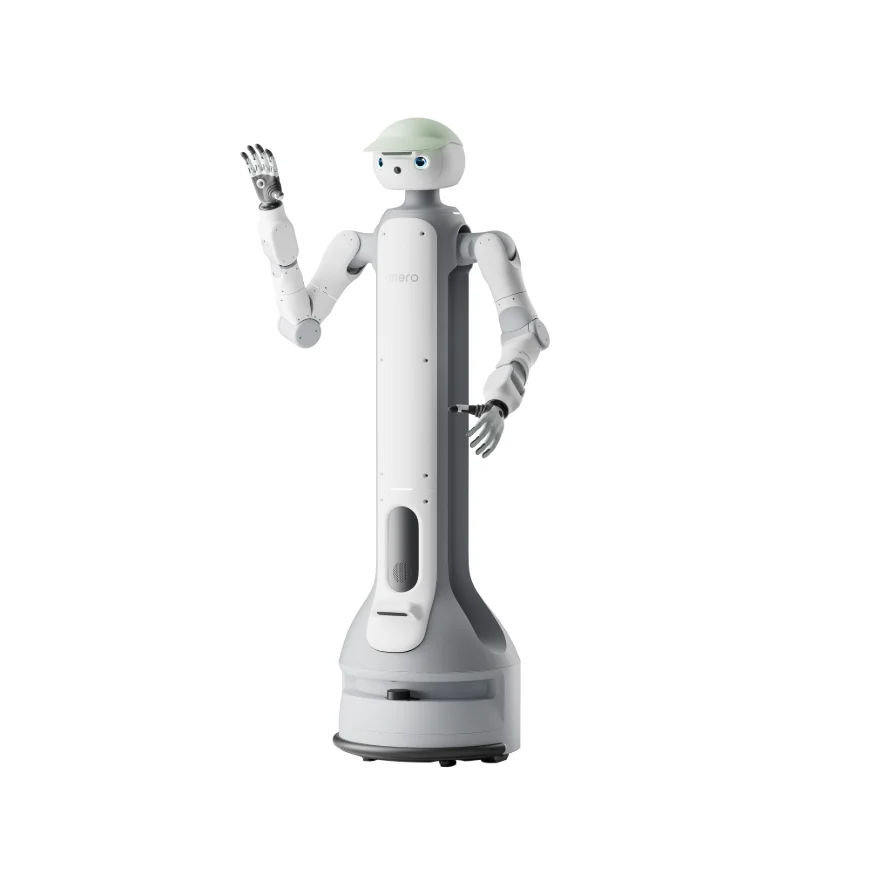
SwitchBot onero H1 household robot official product image for a home robot reality check

The short version: onero H1 is one of the more interesting household-robot signals of 2026, but it is still a development-stage product with limited public specs. The ui44 database lists it as SwitchBot onero H1 with a $9,999 product-page metadata price signal, Development status, and no confirmed public battery, payload, height, weight, speed, or shipping window. That combination is exciting to watch and risky to preorder.

What has SwitchBot actually announced?

SwitchBot describes onero H1 as its first universal humanoid household robot and as part of a broader "Smart Home 2.0" push. In its CES 2026 announcement, SwitchBot said the robot uses 22 degrees of freedom and an on-device OmniSense vision-language-action model. The public pitch is that H1 combines visual perception, depth awareness, and tactile feedback so it can understand object position, shape, and contact state.

Those words matter because housework is mostly contact work. A robot does not just need to see a mug. It needs to know where the mug is, how hard to grip it, whether it is already sliding, whether it is too close to the table edge, and what to do if the first grasp fails. SwitchBot says H1 is aimed at actions such as grasping, pushing, opening, and organizing. Its product page also mentions laundry and dishwashing, and says the vacuum robot can clean below while H1 cleans above.

Independent CES coverage described a wheeled robot with articulated arms and hands, a face, and multiple cameras in the head, arms, hands, and midsection. The demo examples included filling a coffee machine, making breakfast, washing windows, loading a washing machine, and folding or putting away clothes. That is a broad list, so buyers should separate "shown in a demo" from "supported as a reliable home feature."
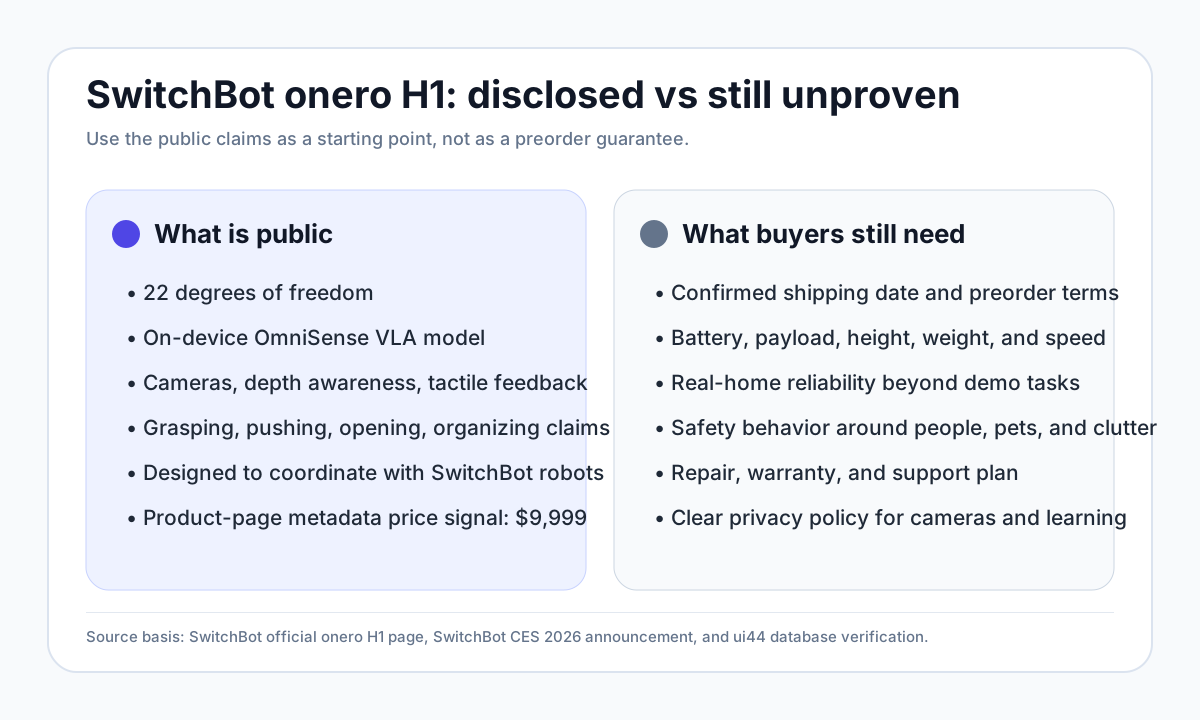
SwitchBot onero H1 disclosed specs and missing buyer proof chart

The most important missing details are ordinary product details: battery life, charging time, exact dimensions, weight, payload, gripper force, stair behavior, repair plan, warranty, privacy policy for camera data, and what happens when the robot gets stuck. Those are not boring footnotes. They are the difference between a robot you can live with and a robot you have to supervise like a science project.

Why does SwitchBot's smart-home background matter?

Most home humanoid companies start with the robot body and then work backward to household usefulness. SwitchBot is trying the opposite route. It already has an ecosystem of devices that know how to do narrow jobs: lock a door, open a curtain, sense temperature, move air, vacuum a floor, or talk to a hub. The H1 pitch is that a mobile robot with arms can coordinate with that ecosystem rather than doing every task alone.

That is a real advantage if it works. A home robot does not need to physically press every button if the device can be controlled through software. It does not need to carry a vacuum if a vacuum robot already handles the floor. The best near-term home robot may be less like a standalone maid and more like a mobile orchestrator: it sees what is happening, moves where needed, handles some objects, and delegates the rest to appliances.

The SwitchBot K20+ Pro shows the earlier version of that idea. In the ui44 database, it is an Available robot listed at $699.99 for the base configuration, with a mid-2025 release date, SwitchBot's FusionPlatform, an 8 kg payload claim, LiDAR plus dual laser sensors, and smart-home support for Alexa, Google Home, Siri Shortcuts, and Matter through a Hub. That is not a humanoid, but it is a shipped attempt to make a robot vacuum into a moving base for other household functions.
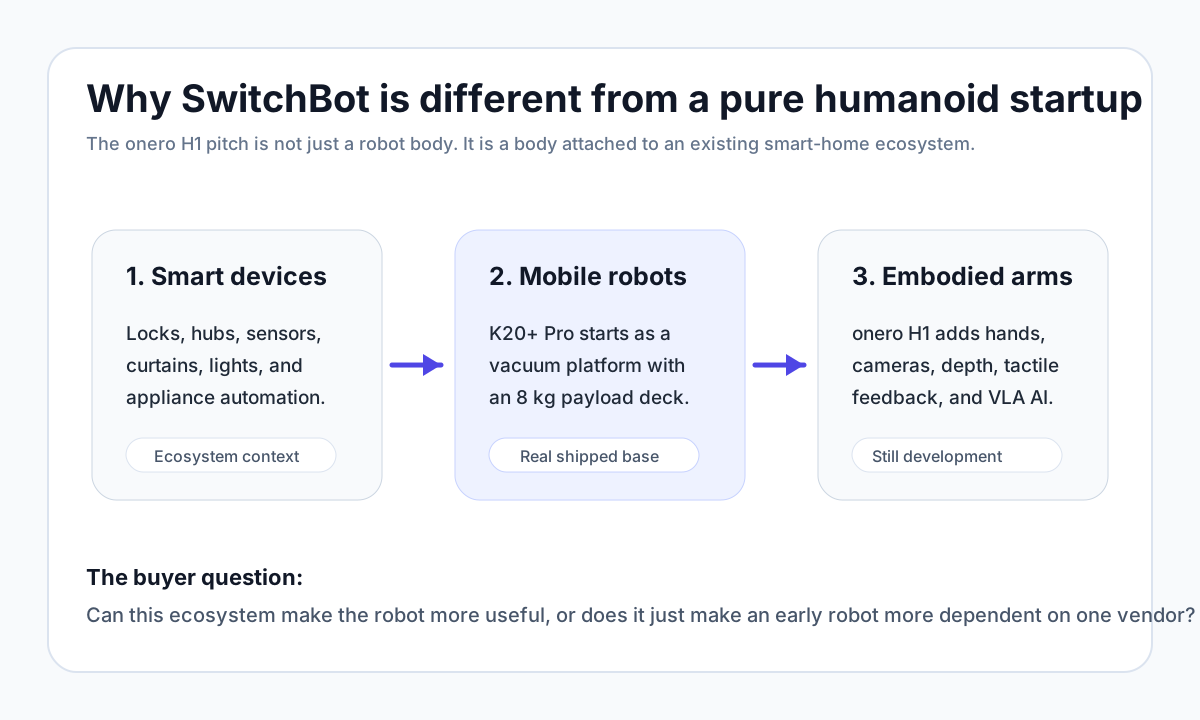
SwitchBot smart-home ecosystem path from devices to K20+ Pro to onero H1 household robot

The catch is that integration does not solve manipulation. A hub can tell a curtain motor to move. It cannot make a robot safely lift a wet glass, fold a shirt, clean around a pet bowl, or open a drawer full of clutter. That is why H1's on-device VLA model and tactile feedback claims are the interesting part. The ecosystem can reduce some work, but the arms still have to handle messy physical reality.

How does onero H1 compare with other home robots?

The easiest way to evaluate onero H1 is not to compare it with sci-fi maids. It is to compare it with real robots and near-term products already tracked in the ui44 database.

Robot ui44 status Price signal What it is good at Main buyer caveat
SwitchBot onero H1 Development $9,999 product-page metadata signal Wheeled household robot with arms, 22 DoF, on-device OmniSense VLA, cameras/depth/tactile sensing Public specs and shipping details remain limited
SwitchBot K20+ Pro Available $699.99 base Vacuum-derived mobile platform with 8 kg payload and smart-home integration Not a manipulator; floor/platform first
Samsung Ballie Development No public price or release date Rolling home companion with SmartThings, Gemini, Bixby, projector, and monitoring No arms; broad availability still uncertain
Amazon Astro Active / invitation-limited $1,599.99 Alexa, Ring, home patrol, remote care, and security-style mobility Limited purchase path and no manipulation
1X NEO Pre-order $20,000 early-adopter price Soft full-size home humanoid for household chores, 167 cm tall, 30 kg, about 4 hours runtime Expensive, early, and still proving real-home autonomy
Hello Robot Stretch 3 Active $24,950 list price Research and assistive mobile manipulation with a 2 kg payload, ROS 2, and Python SDK Powerful for labs, not a normal consumer appliance

That table explains why onero H1 is interesting. It sits between the two major paths in home robotics. On one side are mobile assistants like Ballie and Astro: useful for cameras, communication, projection, and monitoring, but physically limited. On the other side are manipulation platforms like NEO and Stretch 3: more capable in theory, but expensive and early.

SwitchBot is trying to make a manipulation robot feel like part of a consumer smart-home stack. If H1 ships near the metadata price signal, it would be cheaper than NEO and Stretch 3 but far more expensive than K20+ Pro, Ballie-style companions, or normal smart-home devices. That price range only makes sense if H1 can do contact-heavy tasks reliably enough to save real household labor.

What should buyers believe — and question?

Believe that SwitchBot is working on a more ambitious home robot than its K20+ platform. The public record supports that. The company has shown product pages, CES messaging, and a clear story about embodied AI, 22 DoF, VLA models, and coordination with existing SwitchBot devices.

Believe that wheels are a practical choice for many homes. Legs are impressive, but wheels are usually quieter, cheaper, more energy efficient, and less mechanically risky on flat indoor floors. The downside is equally obvious: stairs, thresholds, rugs, cables, and split-level homes become harder. A wheeled home robot can be useful, but only if the buyer's home layout fits the machine.

Believe that the ecosystem angle could matter. If H1 can call on a vacuum robot, smart lock, sensor, hub, or appliance routine, it may avoid some unnecessary physical work. A good home robot should not turn every chore into a dexterity challenge if software control can do it more safely.

Do not believe that a demo of laundry or dishwashing equals a dependable chore subscription. Laundry includes sorting, finding sleeves, detecting fabric types, handling damp items, avoiding delicate pieces, and deciding where each object belongs. Dishwashing includes food residue, sharp objects, breakable glass, hot surfaces, and varied cabinets. These are exactly the tasks that look easy to humans and become difficult for robots.

Do not treat the $9,999 signal as final retail truth. The ui44 database records it because SwitchBot's product-page metadata listed that number and marked the item unavailable / coming soon as of the last verification. Until SwitchBot publishes preorder terms, shipping timing, warranty coverage, and cancellation rules, buyers should treat it as a signal, not a completed offer.
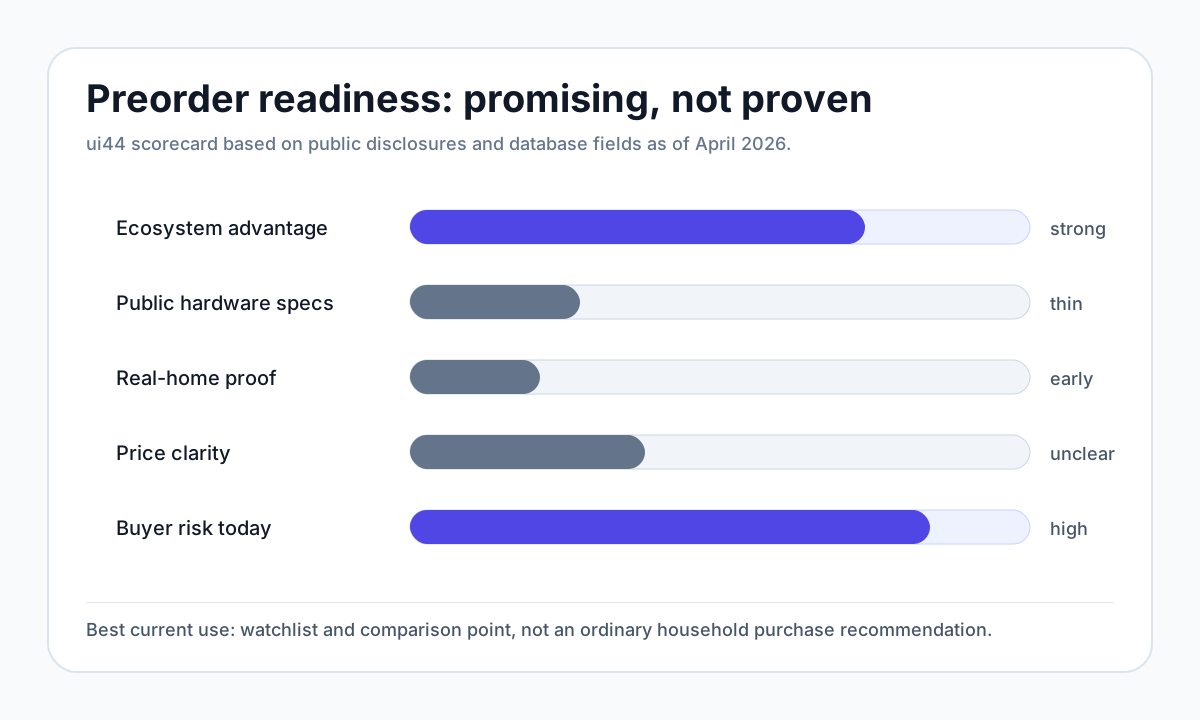
SwitchBot onero H1 preorder readiness scorecard for household robot buyers

Should you preorder SwitchBot onero H1?

If SwitchBot opens preorders soon, the smartest question is not "does it look cool?" It does. The useful question is whether the preorder page answers the same practical questions a buyer would ask about any expensive appliance.

Before paying a deposit, look for these details:

  • Final price and refund terms. Is $9,999 the real price, a placeholder, or one configuration? Is the deposit refundable?
  • Shipping window by region. A global product page is not the same as a confirmed delivery date for your country.
  • Battery life and recharge behavior. A useful home robot needs to work long enough to finish tasks, then recover without drama.
  • Payload and gripper limits. Buyers need to know what the robot can safely lift, carry, push, and open.
  • Supported task list. "Can do laundry" should become a precise list of tested tasks, fabrics, machine types, and failure conditions.
  • Remote assistance policy. If humans can help the robot remotely, who are they, when can they connect, and what do they see?
  • Camera and learning privacy. A robot with cameras in multiple body areas needs clear local-processing, cloud-upload, retention, and deletion rules.
  • Home fit requirements. Door widths, floor types, thresholds, Wi-Fi, stairs, pets, children, and clutter should all be addressed plainly.
  • Repair and consumables. Arms, wheels, batteries, cameras, and grippers are not magic. They will need service.

Those questions may sound strict, but they are what separate a real consumer robot from a spectacular demo. A $700 platform robot can be a fun experiment. A five-figure household robot has to be held to a higher standard.

Bottom Line: Watch Closely, Buy Slowly

SwitchBot onero H1 deserves attention because it connects two things that home robotics usually keeps separate: an existing smart-home ecosystem and a robot with arms. That combination could be more useful than a disconnected humanoid, especially if SwitchBot uses its devices to reduce the number of physical tasks H1 has to solve from scratch.

But the current buyer answer is still cautious. The robot is listed in ui44 as Development status, with a $9,999 metadata price signal and many core specs not yet disclosed. The fact that H1 can be described next to Samsung Ballie, Amazon Astro, 1X NEO, and Hello Robot Stretch 3 is a sign of how quickly the home robot category is broadening. It is not proof that one robot is ready to do every chore.

If you already own SwitchBot devices and you like being early, H1 is worth watching closely. If you want a dependable robot that folds laundry, clears counters, washes dishes, and works unsupervised in a normal home, wait for real shipping units, independent testing, and a complete spec sheet. The most honest read is simple: SwitchBot may have found a credible direction for household robots, but the onero H1 still has to prove it can turn a smart-home story into reliable physical work.

Database context

Use this article as a setup-friction workflow

Turn the article into a real verification pass

SwitchBot onero H1: Home Robot Reality Check already points you toward 6 linked robots, 5 manufacturers, and 3 countries inside the ui44 database. Treat those links as a first-day setup trail: open the robot pages, check what is actually published about charging, battery life, control method, app or OTA support, and recovery, then use the surrounding manufacturer and country context to judge whether the article describes a low-friction product path or a still-specialist deployment.

For setup topics, the useful discipline is to separate a polished demo from the work required after the box arrives. The article gives you the narrative, but the robot pages show the operational clues: dimensions, weight, battery runtime, charging time, controller support, listed availability, and the capabilities that might need supervision. Manufacturer pages then reveal whether the same setup assumptions repeat across a wider lineup.

Use the robot pages to verify what happens between delivery and the first useful task: size, weight, battery, charger or dock path, controller, app, OTA support, and recovery cues. On this route cluster, K20+ Pro, onero H1, and Ballie form the fastest setup-friction reality check. If you want a quick working shortlist, open Compare K20+ Pro, onero H1, and Ballie next, then keep this article open while you compare first-day setup evidence side by side.

Practical Takeaway

The links below stay tied to the robots, manufacturers, and countries actually referenced by this setup article, so the checklist remains grounded in published ui44 records rather than generic humanoid advice.

Suggested next steps in ui44

  1. Open K20+ Pro and check the concrete first-day fields: box contents, charger or dock path, battery life, controller, app, OTA support, and recovery options.
  2. Use SwitchBot to see whether the company’s broader lineup looks appliance-like, developer-first, or still closer to a pilot deployment.
  3. Run Compare K20+ Pro, onero H1, and Ballie with the article open and compare battery, size, weight, price path, status, and support cues side by side.
  4. Write down the first realistic task each robot can plausibly attempt on day one, then separate low-friction setup signals from impressive but still lab-style demos.

Database context

Robot profiles worth opening next

Use the linked product pages as the evidence layer

The linked robot pages are where this setup article becomes operational. Use the robot entries to inspect the actual mix of size, weight, battery runtime, charging path, control method, pricing, availability, and stated capabilities attached to the products mentioned in the article. That is the easiest way to see whether the first useful task looks appliance-like, developer-led, or still dependent on supervised experimentation.

K20+ Pro

SwitchBot · Cleaning · Available

$699

K20+ Pro is tracked on ui44 as a available cleaning robot from SwitchBot. The database currently records a listed price of $699, a release date of 2025-06, Not officially disclosed battery life, Not officially disclosed charging time, and a published stack that includes D-ToF LiDAR, Dual Laser Sensors, and Cliff Sensors plus Wi-Fi (2.4GHz / 5GHz) and Bluetooth.

For setup-friction reading, this page matters because it shows the physical and support burden behind the demo. Use it to verify whether K20+ Pro has a credible day-one path across charging, control, recovery, battery limits, and listed capabilities such as Robot Vacuum Cleaning, FusionPlatform Modular System (ClawLock attachment), and Smart Delivery (up to 8 kg payload), with voice support noted as Amazon Alexa and Google Assistant.

onero H1

SwitchBot · Home Assistants · Development

$9,999

onero H1 is tracked on ui44 as a development home assistants robot from SwitchBot. The database currently records a listed price of $9,999, a release date of 2026-01-04, Not officially disclosed battery life, Not officially disclosed charging time, and a published stack that includes Multiple cameras, Depth sensing, and Tactile feedback sensing plus its listed connectivity stack.

For setup-friction reading, this page matters because it shows the physical and support burden behind the demo. Use it to verify whether onero H1 has a credible day-one path across charging, control, recovery, battery limits, and listed capabilities such as Indoor wheeled home navigation, Household object manipulation, and Grasping, pushing, opening, and organizing tasks.

Ballie

Samsung · Companions · Development

Price TBA

Ballie is tracked on ui44 as a development companions robot from Samsung. The database currently records a listed price of Price TBA, a release date of TBD, Not officially disclosed battery life, Not officially disclosed charging time, and a published stack that includes Camera, Spatial Sensors, and Environmental Sensors plus Wi-Fi and SmartThings.

For setup-friction reading, this page matters because it shows the physical and support burden behind the demo. Use it to verify whether Ballie has a credible day-one path across charging, control, recovery, battery limits, and listed capabilities such as Autonomous Home Navigation, Built-in Projector (Wall & Floor), and Smart Home Control via SmartThings, with voice support noted as Bixby.

Astro

Amazon · Security & Patrol · Active

$1,599

Astro is tracked on ui44 as a active security & patrol robot from Amazon. The database currently records a listed price of $1,599, a release date of 2021, Not officially disclosed battery life, Not officially disclosed charging time, and a published stack that includes 5MP Bezel Camera, 1080p Periscope Camera (132° FOV), and Infrared Vision plus Wi-Fi 802.11ac and Bluetooth.

For setup-friction reading, this page matters because it shows the physical and support burden behind the demo. Use it to verify whether Astro has a credible day-one path across charging, control, recovery, battery limits, and listed capabilities such as Autonomous Home Patrol, Visual ID (face recognition), and Remote Home Monitoring, with voice support noted as Amazon Alexa.

NEO

1X Technologies · Humanoid · Pre-order

$20,000

NEO is tracked on ui44 as a pre-order humanoid robot from 1X Technologies. The database currently records a listed price of $20,000, a release date of 2025-10-28, ~4 hours battery life, Not disclosed charging time, and a published stack that includes RGB Cameras, Depth Sensors, and Tactile Skin plus Wi-Fi and Bluetooth.

For setup-friction reading, this page matters because it shows the physical and support burden behind the demo. Use it to verify whether NEO has a credible day-one path across charging, control, recovery, battery limits, and listed capabilities such as Household Chores, Tidying Up, and Safe Human Interaction.

Database context

Manufacturer context behind the article

Check whether this is one product story or a broader company pattern

Manufacturer pages add the setup context that individual product pages cannot show on their own. They help you check whether a brand repeats the same controller, battery, update, support, and availability patterns across multiple robots, or whether the article is really describing one early product path. That matters for humanoids because first-day friction usually comes from the surrounding ecosystem as much as from the robot itself.

SwitchBot

ui44 currently tracks 2 robots from SwitchBot across 2 categorys. The company is grouped under Unknown, and the current catalog footprint on ui44 includes K20+ Pro, onero H1.

That wider brand context matters because setup friction is rarely just a box problem. A manufacturer route helps you see whether the company has repeated controller, battery, support, and update patterns across its lineup, or whether the article is really about one early product story. The category mix here currently points toward Cleaning, Home Assistants as the most useful next route if you want to see whether this article reflects a wider pattern inside the brand.

Samsung

ui44 currently tracks 2 robots from Samsung across 2 categorys. The company is grouped under South Korea, and the current catalog footprint on ui44 includes Ballie, Bespoke AI Jet Bot Steam Ultra.

That wider brand context matters because setup friction is rarely just a box problem. A manufacturer route helps you see whether the company has repeated controller, battery, support, and update patterns across its lineup, or whether the article is really about one early product story. The category mix here currently points toward Companions, Cleaning as the most useful next route if you want to see whether this article reflects a wider pattern inside the brand.

Amazon

ui44 currently tracks 1 robot from Amazon across 1 category. The company is grouped under USA, and the current catalog footprint on ui44 includes Astro.

That wider brand context matters because setup friction is rarely just a box problem. A manufacturer route helps you see whether the company has repeated controller, battery, support, and update patterns across its lineup, or whether the article is really about one early product story. The category mix here currently points toward Security & Patrol as the most useful next route if you want to see whether this article reflects a wider pattern inside the brand.

1X Technologies

ui44 currently tracks 2 robots from 1X Technologies across 1 category. The company is grouped under Norway, and the current catalog footprint on ui44 includes NEO, EVE.

That wider brand context matters because setup friction is rarely just a box problem. A manufacturer route helps you see whether the company has repeated controller, battery, support, and update patterns across its lineup, or whether the article is really about one early product story. The category mix here currently points toward Humanoid as the most useful next route if you want to see whether this article reflects a wider pattern inside the brand.

Database context

Broaden the scan without leaving the database

Categories, components, and countries add the wider context

Category framing

Category pages are useful when the article touches a buying pattern that shows up across brands. A category route helps you confirm whether the linked products sit in a narrow niche or whether the same question should be tested across a larger field of alternatives.

Cleaning

The Cleaning category page currently groups 44 tracked robots from 22 manufacturers. ui44 describes this lane as: Robot vacuums, mops, pool cleaners, and window cleaners. The workhorses of home automation that keep your spaces spotless.

That makes the category route a practical follow-up when you want to check whether the products linked in this article are typical for the lane or whether they sit at one edge of the market. Useful starting examples currently include Scuba V3, AquaSense X, Sora 70.

Home Assistants

The Home Assistants category page currently groups 12 tracked robots from 12 manufacturers. ui44 describes this lane as: Arm-based household helpers — laundry folders, kitchen robots, and mobile manipulators that handle physical tasks at home.

That makes the category route a practical follow-up when you want to check whether the products linked in this article are typical for the lane or whether they sit at one edge of the market. Useful starting examples currently include Robody, Futuring 2 (F2), Stretch 3.

Country and ecosystem context

Country pages give extra context when support practices, launch sequencing, regulatory posture, or manufacturer mix matter. They are not a substitute for model-level verification, but they do help you see which ecosystems cluster together and which manufacturers sit in the same regional field when you broaden the search beyond the article headline.

South Korea

The South Korea route currently groups 2 tracked robots from 1 manufacturers in ui44. That gives you a useful regional lens when the article points toward support practices, launch sequencing, or brand clusters that may share similar ecosystem assumptions.

On the current route, manufacturers like Samsung make the page a good way to broaden the scan without losing the regional context that often shapes availability, documentation style, and adjacent alternatives.

USA

The USA route currently groups 16 tracked robots from 12 manufacturers in ui44. That gives you a useful regional lens when the article points toward support practices, launch sequencing, or brand clusters that may share similar ecosystem assumptions.

On the current route, manufacturers like Boston Dynamics, Figure AI, Tesla make the page a good way to broaden the scan without losing the regional context that often shapes availability, documentation style, and adjacent alternatives.

Norway

The Norway route currently groups 2 tracked robots from 1 manufacturers in ui44. That gives you a useful regional lens when the article points toward support practices, launch sequencing, or brand clusters that may share similar ecosystem assumptions.

On the current route, manufacturers like 1X Technologies make the page a good way to broaden the scan without losing the regional context that often shapes availability, documentation style, and adjacent alternatives.

Database context

Questions to answer before you move from reading to buying

A follow-up FAQ built from the entities already linked in this article

Frequently Asked Questions

Which page should I open first after reading “SwitchBot onero H1: Home Robot Reality Check”?

Start with K20+ Pro. That gives you a concrete product anchor for the article’s main claim. From there, branch into the manufacturer and component pages so you can tell whether the article is describing one specific model, a repeated brand pattern, or a wider technology issue that affects multiple shortlist options.

How do the manufacturer pages change the buying decision?

SwitchBot help you zoom out from one article and one product. On ui44 they show lineup breadth, category spread, and the neighboring robots tied to the same company. That context is useful when you are deciding whether a risk belongs to a single model, whether it shows up across a brand’s portfolio, and whether you should keep looking at alternatives before committing.

When should I switch from reading to side-by-side comparison?

Move into Compare K20+ Pro, onero H1, and Ballie as soon as you understand the article’s main warning or promise. The article explains what to watch for, but the compare view is where you can check whether price, status, battery life, connectivity, sensors, and category fit still make the robot a good match for your own home and budget.

Database context

Where to go next in ui44

Keep the research chain inside the database

If you want to keep going, these follow-on pages give you the cleanest expansion path from article to research session. Open the comparison route first if you are deciding between products today. Open the manufacturer, category, and component routes if you still need to understand the broader pattern behind the claim.

UT

Written by

ui44 Team

Published April 27, 2026

Share this article

Open a plain share link on X or Bluesky. No embeds, no widgets, no cookie baggage.

Explore the database

Go beyond the headlines

Compare specs, features, and prices across 100+ robots from leading manufacturers worldwide.