That sounds odd at first. A hotel is not a living room. Guests do not leave toys, laundry, charging cables, pets, and half-open drawers scattered across the same space for months. But hotels do combine many of the hard parts that home robots keep promising to solve: private rooms, elevators, narrow corridors, strangers, handoffs at doors, cleaning routines, service staff, privacy rules, and repeated navigation through a building that changes every day.
That is why hotel deployments matter for home buyers. They are not proof that a robot will work in your apartment next year. They are proof that a company can ship machines into messy indoor spaces, connect them to building workflows, and support them after the demo ends. For home robotics, that operating discipline may be more important than another polished humanoid video.
Why Are Hotels a Useful Middle Step for Home Robots?
The home robot problem is not just mobility. Robot vacuums already proved that a small machine can map rooms, avoid some obstacles, dock itself, and do a narrow job. The harder question is whether a more capable robot can move through shared human spaces, coordinate with people, and complete useful tasks without constant supervision.
Hotels sit between factories and homes. A factory can be redesigned around the robot. A home usually cannot. Hotels are more constrained than homes, but they still include human unpredictability: guests step out of elevators, staff park carts in corridors, room doors open, children run past, and someone eventually presses the wrong button.
That makes hospitality a useful filter. A hotel robot has to be boring in the right way. It needs to deliver towels, amenities, food, or documents without becoming an event. It needs to ride elevators, wait politely, recover when a guest blocks the path, and let staff intervene when something fails. Those are not glamorous robot features, but they are exactly the features that decide whether a future home assistant feels useful or exhausting.
What service robots are already proving
The ui44 database shows why hospitality robots are worth watching even when their current products are commercial, quote-priced, and not aimed at consumers. Several service robots already have the kind of operational clues that home robot buyers should care about.
Robot
- What ui44 tracks
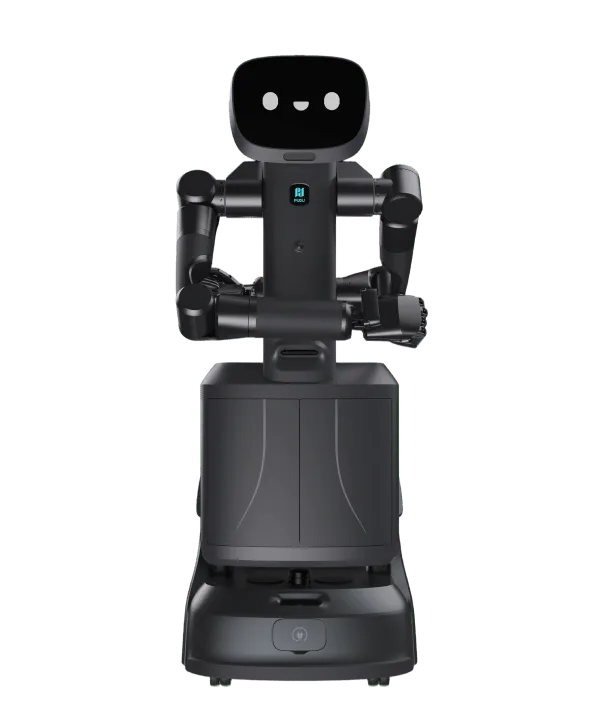
- Active commercial robot with two 7-DOF arms, PUDU DH11 dexterous hands, 15 kg delivery capacity, VSLAM plus LiDAR SLAM, automatic recharging, and a 65 cm minimum path width
- Why it matters for hotels
- It combines delivery, enclosed compartments, navigation, and manipulation hardware in one indoor platform
- Home-robot signal
- Wheeled manipulation may reach useful buildings before bipedal home humanoids
Robot
- What ui44 tracks
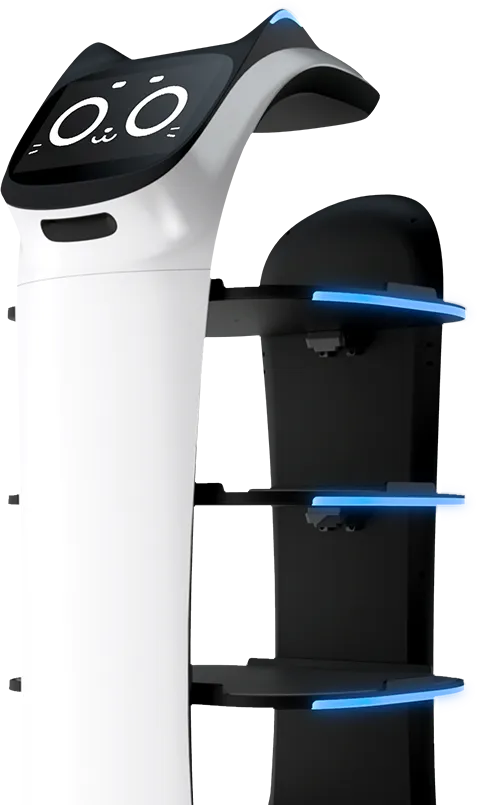
- Active commercial delivery robot with LiDAR plus visual navigation, multi-robot coordination, elevator integration, and four trays rated at 10 kg each
- Why it matters for hotels
- It shows that fleets can handle repeated item delivery in restaurants and hospitality-adjacent spaces
- Home-robot signal
- Fleet support and simple payload movement can matter more than human-shaped design
Robot
- What ui44 tracks
- Active industrial AMR with 150 kg payload, VSLAM plus LiDAR SLAM, 10-minute onboard mapping, 1-hour rapid deployment, 60 cm minimum passable width, and multi-robot collaboration
- Why it matters for hotels
- It is not a hotel room robot, but it proves heavy indoor transport discipline
- Home-robot signal
- Carrying useful weight is still a separate problem from having a friendly face
Robot
- What ui44 tracks
- Commercial telepresence robot with autonomous navigation, human follow, video calling, facial recognition, autonomous charging, a 13.3-inch touchscreen, and a 3 kg tray
- Why it matters for hotels
- It fits front-desk, concierge, clinic, and guided-service patterns
- Home-robot signal
- Telepresence and navigation may be a more realistic near-term home assistant than general chores
Robot
- What ui44 tracks
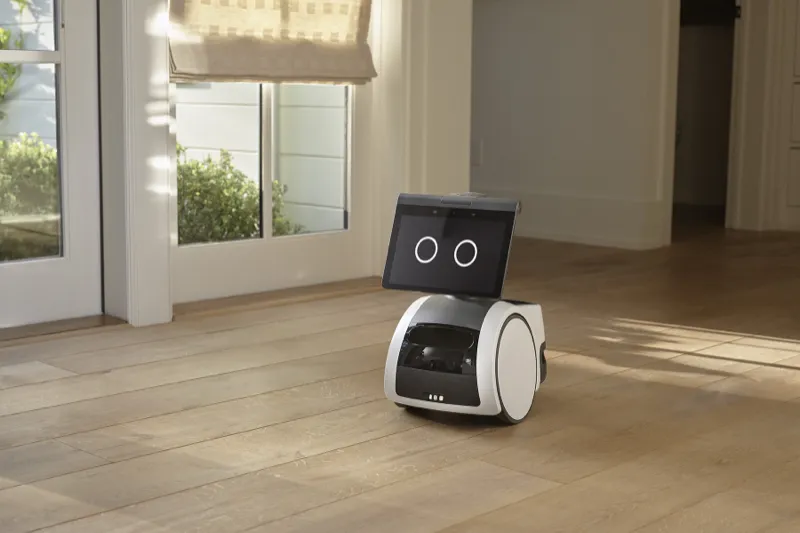
- Active home patrol robot with a $1,599 listed price, Alexa, Ring integration, Visual ID, room-to-room navigation, and remote monitoring
- Why it matters for hotels
- It is already consumer-facing, but it has no manipulator
- Home-robot signal
- Home robots need a clear job before they need arms
Robot
- What ui44 tracks
- Development-stage home assistant concept with indoor wheeled navigation, dual-arm household manipulation, ThinQ appliance coordination, and routine learning
- Why it matters for hotels
- It points at the future home version of the hotel-service stack
- Home-robot signal
- Home manipulation needs appliance integration, not just a better gripper
| Robot | What ui44 tracks | Why it matters for hotels | Home-robot signal |
|---|---|---|---|
| PUDU FlashBot Arm | Active commercial robot with two 7-DOF arms, PUDU DH11 dexterous hands, 15 kg delivery capacity, VSLAM plus LiDAR SLAM, automatic recharging, and a 65 cm minimum path width | It combines delivery, enclosed compartments, navigation, and manipulation hardware in one indoor platform | Wheeled manipulation may reach useful buildings before bipedal home humanoids |
| BellaBot | Active commercial delivery robot with LiDAR plus visual navigation, multi-robot coordination, elevator integration, and four trays rated at 10 kg each | It shows that fleets can handle repeated item delivery in restaurants and hospitality-adjacent spaces | Fleet support and simple payload movement can matter more than human-shaped design |
| PUDU T150 | Active industrial AMR with 150 kg payload, VSLAM plus LiDAR SLAM, 10-minute onboard mapping, 1-hour rapid deployment, 60 cm minimum passable width, and multi-robot collaboration | It is not a hotel room robot, but it proves heavy indoor transport discipline | Carrying useful weight is still a separate problem from having a friendly face |
| temi V3 | Commercial telepresence robot with autonomous navigation, human follow, video calling, facial recognition, autonomous charging, a 13.3-inch touchscreen, and a 3 kg tray | It fits front-desk, concierge, clinic, and guided-service patterns | Telepresence and navigation may be a more realistic near-term home assistant than general chores |
| Amazon Astro | Active home patrol robot with a $1,599 listed price, Alexa, Ring integration, Visual ID, room-to-room navigation, and remote monitoring | It is already consumer-facing, but it has no manipulator | Home robots need a clear job before they need arms |
| LG CLOiD | Development-stage home assistant concept with indoor wheeled navigation, dual-arm household manipulation, ThinQ appliance coordination, and routine learning | It points at the future home version of the hotel-service stack | Home manipulation needs appliance integration, not just a better gripper |
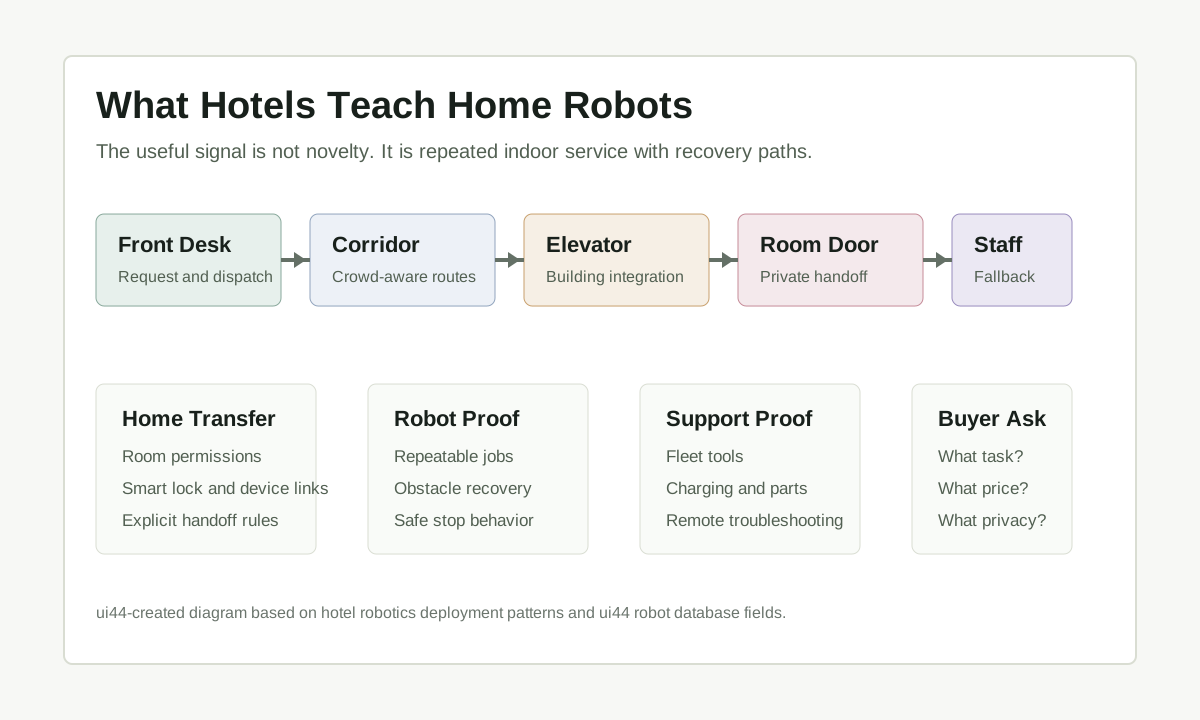
The pattern is clear: hotel robots are not one product category. They are a bundle of practical subsystems. Navigation, delivery, fleet management, elevator integration, remote support, charging, privacy boundaries, and staff handoff are all part of the product.
That bundle is relevant to homes because a future home robot will need the same kind of stack. It will need to know when it is allowed to move, who it should listen to, which rooms are private, how to recover after a failed handoff, and when to give up.
The hotel lessons that transfer to homes
The first transferable lesson is building integration. A hotel delivery robot is much more useful if it can call an elevator, authenticate a route, find the right floor, and alert the guest. A home robot has a smaller building to handle, but the same principle applies. It will need to coordinate with smart locks, cameras, appliances, calendars, speakers, and privacy modes. A robot that cannot talk to the home will eventually feel like a moving tablet.
The second lesson is supervised autonomy. Good hotel deployments do not pretend that the robot never fails. They create fallback paths: a staff member can reassign a delivery, a remote operator can inspect a problem, and the robot can stop safely rather than bluff its way through a blocked hallway. Home robots need the same humility. A machine that asks for help at the right time is more useful than one that confidently drags a cable across the floor.
The third lesson is task narrowing. Hotels do not ask a delivery robot to "help around the building." They ask it to deliver a specific item, clean a defined area, guide a visitor, patrol a corridor, or answer a front-desk request. That kind of scope is what home robot buyers should demand. "Can it help at home?" is too vague. "Can it carry a 2 kg item from the kitchen to the bedroom without recording private areas?" is testable.
The fourth lesson is service continuity. A hotel buyer cares about uptime, parts, software updates, remote fleet tools, training, and support contracts. A home buyer should care about the same things, even if the product is cute. The history of companion robots is full of devices that were charming on day one and fragile after the cloud service, app, or support model changed.
Where hotel success can mislead buyers
There is also a trap: hotels are controlled enough to make robots look more ready than they are.
A hotel corridor is easier than a child's bedroom. Elevators can be integrated through building systems. Staff can reset a robot. Guests tolerate novelty in a way family members may not. The environment is also economically different. A hotel can justify a quote-priced robot if it reduces late-night delivery runs, improves service coverage, or creates a premium guest experience. A household usually needs an upfront price, simple setup, quiet operation, and obvious daily value.
That is why buyers should separate "service robot credibility" from "home robot readiness." Pudu, Keenon, and similar service-robot companies have useful deployment experience. That does not automatically make a hotel robot a home robot. It means their operating data, fleet software, and support habits may become important if they decide to adapt machines for apartments, senior living, or private homes.
The form factor question is especially important. A humanoid robot like PUDU D9 is compelling because it promises human-compatible movement and manipulation. ui44 tracks it as a pre-order humanoid with bipedal walking, stair and slope navigation, real-time 3D semantic mapping, autonomous route planning, dual-arm manipulation, dexterous hand operations, and payload handling up to 20 kg in testing conditions. But a wheeled robot with arms may solve more indoor service tasks sooner. FlashBot Arm's 65 cm minimum path width, 15 kg delivery capacity, and enclosed compartments are not flashy, but they map to real hotel workflows.
For homes, the practical bridge may look less like a walking person and more like a small indoor service platform: wheeled, dockable, privacy-aware, able to carry items, and honest about what it cannot manipulate.
The buyer checklist
- Has the robot completed repeatable paid deployments, or only event demos?
- Can it use elevators, doors, charging docks, and fleet tools without custom
- What happens when a guest, child, pet, cart, or chair blocks the path?
- Does the robot process cameras, maps, faces, and voice data locally, in the
- Is the useful payload meaningful for home tasks, not just brochures?
- Is there a public price, warranty, support plan, parts path, and update
- Does the robot have a specific home task, or is the home story just a future
What would count as real progress
The signal to watch is not one more hotel announcement. It is whether hotel robot companies start proving home-relevant abilities in adjacent settings.
Senior-living communities are one bridge because they combine private rooms, care workflows, staff supervision, and recurring residents. Apartment buildings are another because they add package rooms, elevators, corridors, door handoffs, and shared amenities. Serviced apartments and long-stay hotels may be even closer because the same room becomes someone's temporary home.
For Pudu, the interesting question is whether FlashBot Arm and D9-style manipulation become operational products rather than separate demos. For Keenon, the question is whether its hotel and service-robot deployments become a software and support platform that can handle more private, human-sensitive spaces. For consumer companies, the question is whether robots like Astro and CLOiD can borrow the boring commercial lessons: uptime, staff-like fallback, room permissions, and explicit workflows.
The home robot race will not be won by the first company to put a robot in a hotel lobby. It will be won by the company that turns those deployments into reliable indoor autonomy, clear privacy boundaries, supported hardware, and tasks that ordinary households actually want.
The honest verdict
Hotels are not proof that home robots are solved. They are proof that the road to home robots may run through buildings where the economics, supervision, and repeatability are better.
That is good news for buyers. It means we do not have to judge future home robots only by viral demos. We can ask whether the company has operated robots in real indoor spaces, whether the product survives boring service work, and whether the same stack can shrink from a hotel corridor into a private room.
The best hotel robot companies will not just sell robots to hotels. They will learn how humans actually accept robotic help: when they trust it, when they ignore it, when they get annoyed, and when staff need to step in. That is the kind of evidence home robots need before they deserve a spot in the house.
Sources:
- Pudu Robotics, "Pudu Robotics and Shenzhen CTID Co. Ltd Launch the World's First Full-Scenario Robot-Serviced Hotel Project": https://www.pudurobotics.com/en/news/pudu-robotics-and-shenzhen-ctid-co-ltd-launch-the-worlds-first-full-scenario-robot-serviced-hotel-project
- KEENON Robotics news and smart hotel materials: https://www.keenon.com/en/news/index.html
- Pudu Robotics product records and ui44 robot database entries for PUDU FlashBot Arm, BellaBot, PUDU T150, PUDU D9, temi V3, Amazon Astro, and LG CLOiD.
Related in the database
Use this article as a privacy verification workflow
Turn the article into a privacy verification pass grounded in the robots, manufacturers, and components it actually references.
Hotel Robots Are the Home Robot Test Lab already points you toward 7 linked robots, 4 manufacturers, and 4 countries inside the ui44 database. That matters because strong buyer guidance is easier to apply when you can move immediately from a claim or warning into concrete product pages, manufacturer directories, component explainers, and country-level context instead of treating the article as an isolated opinion piece. The fastest next step is to turn the article into a shortlist workflow: open the linked robot pages, verify which specs are actually published for those models, then compare the surrounding manufacturer and component context before you decide whether the underlying claim changes your buying plan.
For this topic, the useful discipline is to separate the editorial lesson from the catalog evidence. The article gives you the framing, but the robot pages tell you what each product actually ships with today: sensor stack, connectivity methods, listed price, release timing, category, and support-relevant compatibility notes. The manufacturer pages then show whether you are looking at a one-off launch, a broader lineup pattern, or a company that spans multiple categories. That layered workflow reduces the risk of buying on a single marketing phrase or a single support FAQ.
Use the robot pages to confirm which products actually expose cameras, microphones, Wi-Fi, or voice systems, then use the manufacturer pages to decide how much of the privacy question seems product-specific versus brand-wide. On this route cluster, PUDU FlashBot Arm, BellaBot, and PUDU T150 form the fastest reality check. If you want a quick working shortlist, open Compare PUDU FlashBot Arm, BellaBot, and PUDU T150 next, then keep this article open as the reasoning layer while you compare structured data side by side.
Practical Takeaway
Every robot, manufacturer, category, component, and country reference below resolves to a real ui44 page, keeping the follow-up path grounded in database records rather than generic advice.
Suggested next steps in ui44
- Open PUDU FlashBot Arm and note the listed sensors, connectivity methods, and voice stack before you interpret any policy claim.
- Cross-check the wider brand context on Pudu Robotics so you can see whether the privacy question touches one model or a broader lineup.
- Use the linked component pages to confirm how common the relevant sensors and connectivity layers are across the database.
- Keep a short note of which policy layers you checked, which device features are actually present on the robot page, and which items still depend on region- or app-level confirmation.
- Finish with Compare PUDU FlashBot Arm, BellaBot, and PUDU T150 so the policy reading sits next to structured product data.
Robot profiles worth opening next
Use the linked product pages as the evidence layer
The linked robot pages are where this article becomes operational. Instead of asking whether the headline is interesting, use the robot entries to inspect the actual mix of sensors, connectivity options, batteries, pricing, release timing, and stated capabilities attached to the products mentioned in the article. That is the easiest way to see whether the warning or opportunity described here affects one product family, a specific design pattern, or an entire buying lane.
PUDU FlashBot Arm
Pudu Robotics · Commercial · Active
PUDU FlashBot Arm is tracked on ui44 as a active commercial robot from Pudu Robotics. The database currently records a listed price of Price TBA, a release date of 2025-03, Up to 8 hours (no-load) battery life, 4 hours charging time, and a published stack that includes RGBD cameras, LiDAR, and Panoramic cameras plus Not publicly disclosed.
For privacy-focused reading, this page matters because it shows the concrete device surface behind the policy discussion. Use it to verify whether PUDU FlashBot Arm combines sensors and connectivity in a way that could change the in-home data footprint, and compare the listed capabilities such as Autonomous delivery, Two 7-DOF robotic arms, and PUDU DH11 dexterous hands with any cloud, app, or voice layers.
BellaBot
Pudu Robotics · Commercial · Active
BellaBot is tracked on ui44 as a active commercial robot from Pudu Robotics. The database currently records a listed price of Price TBA, a release date of 2020-01, 13 hours (no load) battery life, 4.5 hours (or instant with battery swap) charging time, and a published stack that includes LiDAR, 3 × RGBD Depth Cameras, and Cliff Sensors plus Wi-Fi.
For privacy-focused reading, this page matters because it shows the concrete device surface behind the policy discussion. Use it to verify whether BellaBot combines sensors and connectivity in a way that could change the in-home data footprint, and compare the listed capabilities such as Autonomous Food & Item Delivery, Dual SLAM Navigation (LiDAR + Visual), and 3D Omnidirectional Obstacle Avoidance with any cloud, app, or voice layers.
PUDU T150
Pudu Robotics · Commercial · Active
PUDU T150 is tracked on ui44 as a active commercial robot from Pudu Robotics. The database currently records a listed price of Price TBA, a release date of 2026-01, Up to 12 hours (no-load) battery life, 2 hours (0–90%) charging time, and a published stack that includes Dual RGBD cameras, 360° dual LiDAR, and VSLAM + LiDAR SLAM localization plus PUDU Link and Open API.
For privacy-focused reading, this page matters because it shows the concrete device surface behind the policy discussion. Use it to verify whether PUDU T150 combines sensors and connectivity in a way that could change the in-home data footprint, and compare the listed capabilities such as Autonomous industrial material delivery, 150 kg payload transport, and 10-minute onboard mapping with any cloud, app, or voice layers.
PUDU D9
Pudu Robotics · Humanoid · Pre-order
PUDU D9 is tracked on ui44 as a pre-order humanoid robot from Pudu Robotics. The database currently records a listed price of Price TBA, a release date of 2024-12, Not publicly disclosed battery life, Not publicly disclosed charging time, and a published stack that includes Visual sensors, Tactile sensors, and Force sensors plus Not publicly disclosed.
For privacy-focused reading, this page matters because it shows the concrete device surface behind the policy discussion. Use it to verify whether PUDU D9 combines sensors and connectivity in a way that could change the in-home data footprint, and compare the listed capabilities such as Bipedal walking, Stair and slope navigation, and Real-time 3D semantic mapping with any cloud, app, or voice layers.
temi V3 is tracked on ui44 as a available commercial robot from temi. The database currently records a listed price of Price TBA, a release date of 2022, Up to 8 hours battery life, Autonomous docking (220V/110V) charging time, and a published stack that includes 360° LIDAR, 2x Depth Cameras, and RGB Camera (13MP, 120° FOV) plus Wi-Fi 5 (802.11 a/b/g/n/ac, 2.4G/5G) and Bluetooth 5.1 BLE.
For privacy-focused reading, this page matters because it shows the concrete device surface behind the policy discussion. Use it to verify whether temi V3 combines sensors and connectivity in a way that could change the in-home data footprint, and compare the listed capabilities such as Autonomous Navigation (5cm accuracy), Human Follow Mode, and Telepresence Video Calling with any cloud, app, or voice layers, including temi AI Assistant.
Manufacturer context behind the article
Check whether this is one product story or a broader company pattern
Manufacturer pages add the privacy context that individual product pages cannot show on their own. They help you check whether cameras, microphones, cloud accounts, app controls, and policy assumptions appear across a broader lineup or stay tied to one specific product story.
Pudu Robotics
ui44 currently tracks 6 robots from Pudu Robotics across 3 categorys. The company is grouped under China, and the current catalog footprint on ui44 includes BellaBot, PUDU D9, PUDU D7.
That wider brand context matters because privacy questions rarely stop at one FAQ page. A manufacturer route helps you see whether the article is centered on one premium model or on a company that has several relevant products and therefore more than one place where the same policy or app assumptions might matter. The category mix here currently points toward Commercial, Humanoid, Quadruped as the most useful next route if you want to see whether this article reflects a wider pattern inside the brand.
temi
ui44 currently tracks 1 robot from temi across 1 category. The company is grouped under Israel, and the current catalog footprint on ui44 includes temi V3.
That wider brand context matters because privacy questions rarely stop at one FAQ page. A manufacturer route helps you see whether the article is centered on one premium model or on a company that has several relevant products and therefore more than one place where the same policy or app assumptions might matter. The category mix here currently points toward Commercial as the most useful next route if you want to see whether this article reflects a wider pattern inside the brand.
Amazon
ui44 currently tracks 1 robot from Amazon across 1 category. The company is grouped under USA, and the current catalog footprint on ui44 includes Astro.
That wider brand context matters because privacy questions rarely stop at one FAQ page. A manufacturer route helps you see whether the article is centered on one premium model or on a company that has several relevant products and therefore more than one place where the same policy or app assumptions might matter. The category mix here currently points toward Security & Patrol as the most useful next route if you want to see whether this article reflects a wider pattern inside the brand.
LG Electronics
ui44 currently tracks 1 robot from LG Electronics across 1 category. The company is grouped under South Korea, and the current catalog footprint on ui44 includes CLOiD.
That wider brand context matters because privacy questions rarely stop at one FAQ page. A manufacturer route helps you see whether the article is centered on one premium model or on a company that has several relevant products and therefore more than one place where the same policy or app assumptions might matter. The category mix here currently points toward Home Assistants as the most useful next route if you want to see whether this article reflects a wider pattern inside the brand.
Broaden the scan without leaving the database
Categories, components, and countries add the wider context
Category framing
Category pages are useful when the article touches a buying pattern that shows up across brands. A category route helps you confirm whether the linked products sit in a narrow niche or whether the same question should be tested across a larger field of alternatives.
Commercial
The Commercial category page currently groups 44 tracked robots from 38 manufacturers. ui44 describes this lane as: Delivery robots, warehouse automation, and hospitality service bots — robots built for business and commercial operations.
That makes the category route a practical follow-up when you want to check whether the products linked in this article are typical for the lane or whether they sit at one edge of the market. Useful starting examples currently include G2 Air, aeo, Pepper.
Humanoid
The Humanoid category page currently groups 129 tracked robots from 92 manufacturers. ui44 describes this lane as: Full-size bipedal humanoid robots built to work alongside people — from factory floors to household tasks. Compare the cutting edge of humanoid robotics.
That makes the category route a practical follow-up when you want to check whether the products linked in this article are typical for the lane or whether they sit at one edge of the market. Useful starting examples currently include NEO, EVE, Mornine M1.
Country and ecosystem context
Country pages give extra context when support practices, launch sequencing, regulatory posture, or manufacturer mix matter. They are not a substitute for model-level verification, but they do help you see which ecosystems cluster together and which manufacturers sit in the same regional field when you broaden the search beyond the article headline.
China
The China route currently groups 189 tracked robots from 87 manufacturers in ui44. That gives you a useful regional lens when the article points toward support practices, launch sequencing, or brand clusters that may share similar ecosystem assumptions.
On the current route, manufacturers like AGIBOT, Dreame, Unitree Robotics make the page a good way to broaden the scan without losing the regional context that often shapes availability, documentation style, and adjacent alternatives.
Israel
The Israel route currently groups 5 tracked robots from 5 manufacturers in ui44. That gives you a useful regional lens when the article points toward support practices, launch sequencing, or brand clusters that may share similar ecosystem assumptions.
On the current route, manufacturers like Flytrex, Intuition Robotics, Maytronics make the page a good way to broaden the scan without losing the regional context that often shapes availability, documentation style, and adjacent alternatives.
USA
The USA route currently groups 89 tracked robots from 69 manufacturers in ui44. That gives you a useful regional lens when the article points toward support practices, launch sequencing, or brand clusters that may share similar ecosystem assumptions.
On the current route, manufacturers like Faraday Future, iRobot, Boston Dynamics make the page a good way to broaden the scan without losing the regional context that often shapes availability, documentation style, and adjacent alternatives.
Questions to answer before you move from reading to buying
A follow-up FAQ built from the entities already linked in this article
Frequently Asked Questions
Which page should I open first after reading “Hotel Robots Are the Home Robot Test Lab”?
Start with PUDU FlashBot Arm. That gives you a concrete product anchor for the article’s main claim. From there, branch into the manufacturer and component pages so you can tell whether the article is describing one specific model, a repeated brand pattern, or a wider technology issue that affects multiple shortlist options.
How do the manufacturer pages change the buying decision?
Pudu Robotics help you zoom out from one article and one product. On ui44 they show lineup breadth, category spread, and the neighboring robots tied to the same company. That context is useful when you are deciding whether a risk belongs to a single model, whether it shows up across a brand’s portfolio, and whether you should keep looking at alternatives before committing.
When should I switch from reading to side-by-side comparison?
Move into Compare PUDU FlashBot Arm, BellaBot, and PUDU T150 as soon as you understand the article’s main warning or promise. The article explains what to watch for, but the compare view is where you can check whether price, status, battery life, connectivity, sensors, and category fit still make the robot a good match for your own home and budget.
Where to go next in ui44
Keep the research chain inside the database
If you want to keep going, these follow-on pages give you the cleanest expansion path from article to research session. Open the comparison route first if you are deciding between products today. Open the manufacturer, category, and component routes if you still need to understand the broader pattern behind the claim.
Written by
ui44 Team
Published July 7, 2026
Share this article
Open a plain share link on X or Bluesky. No embeds, no widgets, no cookie baggage.