Telexistence and Seven-Eleven Japan say they will jointly develop, validate, and introduce Astra, a humanoid robot equipped with a vision-language-action model, with store deployment targeted for 2029. That does not mean a similar robot will be cleaning your kitchen in 2029. It means retail may become one of the places where robot companies learn the boring, repeated, failure-heavy lessons that home demos usually hide.
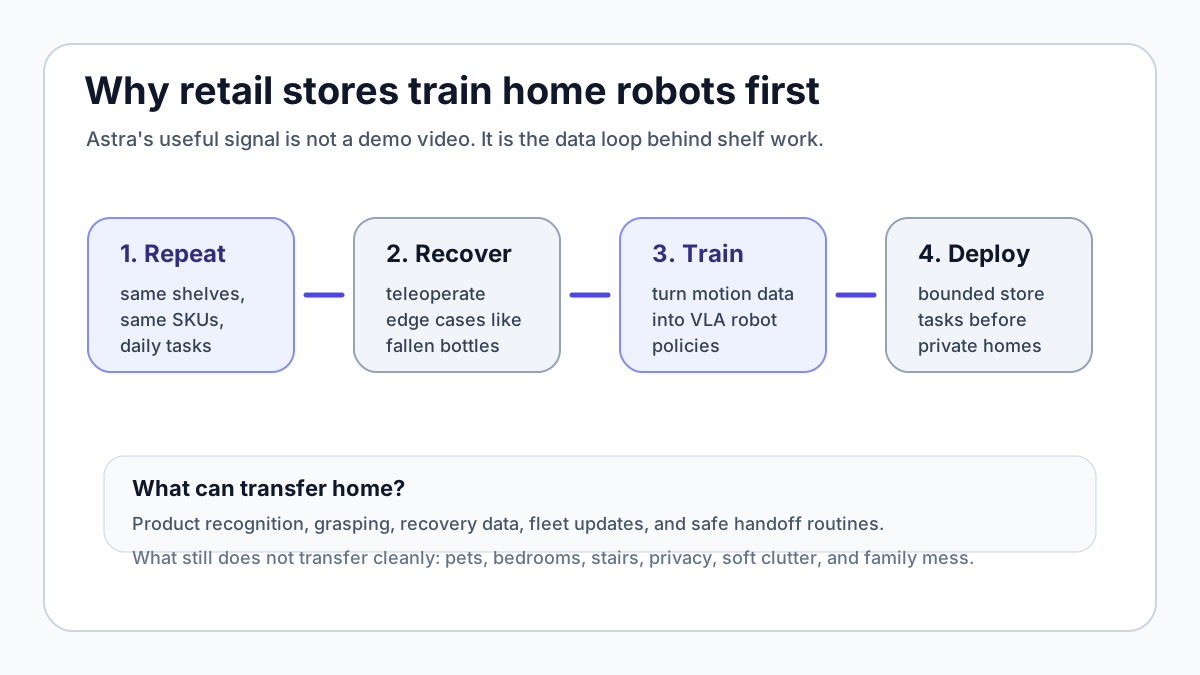
The short version: convenience stores are not homes, but they are much better than a chore demo filmed once in a lab. A store has repeated products, known shelf geometry, staff supervision, real customers, physical edge cases, and a clear business reason to keep improving the robot. That combination is exactly what early home humanoids need more of.
What Seven-Eleven and Telexistence actually announced
The official September 2025 announcement says Telexistence and Seven-Eleven Japan will work on three things: identifying retail operations suitable for automation, developing humanoid hardware for real store challenges, and building large-scale robot operation datasets for VLA training and deployment.
That last phrase matters. A VLA model tries to connect what a robot sees, what a human asks for, and what the robot's body should do next. In a store, the model can be trained against concrete physical tasks: find a product, reach into a shelf, pick it without damaging it, place it correctly, recover from a mistake, and keep doing that day after day.
Seven-Eleven Japan gives Telexistence a potentially huge environment for that loop. The companies point to SEJ's 20,000-plus stores and Telexistence's existing Ghost beverage-restocking platform. The goal is not only one humanoid prototype. It is a data pipeline: real stores create robot operation data, the operation data improves policies, and improved policies go back into deployed robots.
That is much more meaningful than a single living-room clip. A household demo can prove that a robot once moved a towel, a pillow, or a remote control. A retail rollout can prove whether robots keep working when products are crooked, labels are hard to see, shelves are tight, humans interrupt the aisle, and small failures happen all day.
Why might convenience stores train home robots before homes do?
A convenience store is not as chaotic as a home. That is the point. It is a middle layer between a clean robotics lab and a private household.
Homes are brutally open-ended. The same "put this away" instruction can involve a toy, a pet bowl, a towel, a half-open drawer, a sleeping dog, a child walking through the room, a reflective appliance, and a family member who does not want a camera pointed at them. A small error can be annoying, creepy, dangerous, or expensive.
Stores narrow the problem without making it fake. Products repeat. Shelves are standardized. Staff can intervene. Aisles are mapped. The task has a measurable business outcome. If a bottle falls sideways inside a display shelf, that is an annoying robot failure, but it is also a teachable failure.
Telexistence's June 2025 partnership with Physical Intelligence is a good example. Telexistence says its TX Ghost robots already automate most drink restocking work, but still combine teleoperation for unpredictable recovery cases. The company's own example is recovering rolled-over beverages inside shelves, a case that off-the-shelf automation struggled with. The partnership's stated goal is to train VLA policies on that production data and redeploy better models into real operations.
That is exactly the kind of loop home robots need. A home robot will not fail on abstract "AI reasoning" first. It will fail because the object is sideways, the handle is hidden, the towel collapses, the shelf is cramped, the light is bad, or a person changes the scene mid-task.
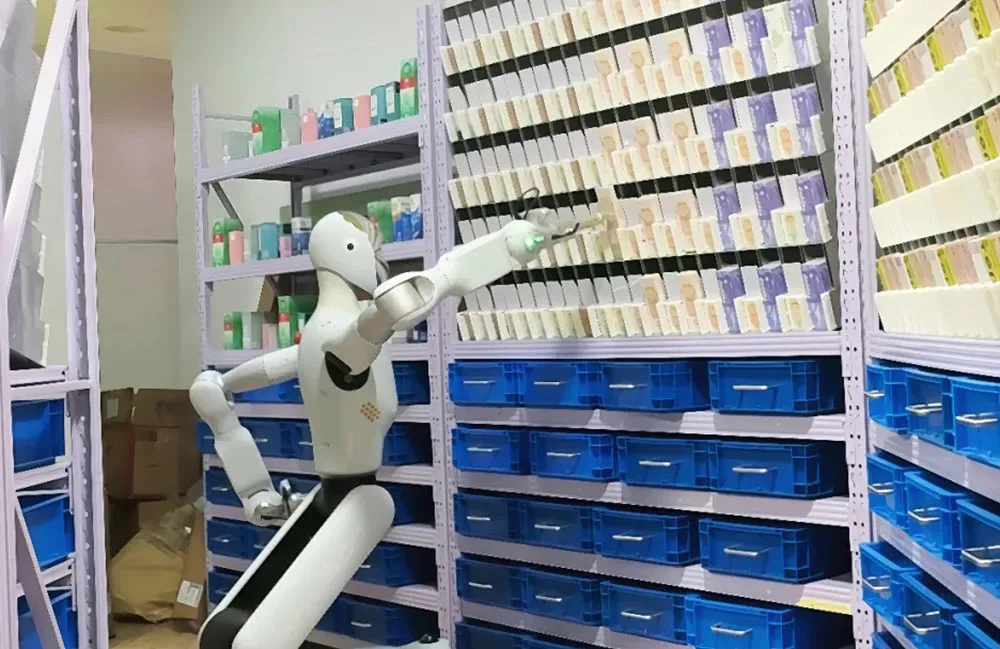
ui44 database context: retail robots are already ahead of home robots in one way
The ui44 database shows why Astra's retail-first path is plausible. The most advanced manipulation stories in 2026 are usually not direct-to-consumer home maids. They are store, factory, lab, or assistive platforms gathering narrower but deeper evidence.
Robot
- What ui44 tracks
- 173 cm, 85 kg, 10-hour battery, wheeled base, dual arms, 5 kg single-arm payload
- Why it matters for Astra
- Built around retail automation, shelf replenishment, inventory, delivery, and VLA models for thousands of product types
Robot
- What ui44 tracks
- 168 cm, 70 kg, industrial-only, 20 kg payload, 16-DoF hands
- Why it matters for Astra
- Shows why factories and warehouses get serious humanoid hours before homes
Robot
- What ui44 tracks
- $29,950, 160 cm, 46 kg, 8-hour light-load runtime, 2.5 kg extended payload
- Why it matters for Astra
- A home-shaped mobile manipulator, but still a research/assistive platform rather than a mass-market appliance
Robot
- What ui44 tracks
- $20,000 early-adopter preorder, 167 cm, 30 kg, about 4-hour battery
- Why it matters for Astra
- One of the clearest home humanoid promises, but buyers still need real task evidence beyond positioning
Robot
- What ui44 tracks
- 190 cm, 90 kg, 50 kg instant lift, industrial deployments first
- Why it matters for Astra
- A reminder that powerful humanoids usually start where the environment and ROI are clearer
| Robot | What ui44 tracks | Why it matters for Astra |
|---|---|---|
| Galbot G1 | 173 cm, 85 kg, 10-hour battery, wheeled base, dual arms, 5 kg single-arm payload | Built around retail automation, shelf replenishment, inventory, delivery, and VLA models for thousands of product types |
| Figure 02 | 168 cm, 70 kg, industrial-only, 20 kg payload, 16-DoF hands | Shows why factories and warehouses get serious humanoid hours before homes |
| Hello Robot Stretch 4 | $29,950, 160 cm, 46 kg, 8-hour light-load runtime, 2.5 kg extended payload | A home-shaped mobile manipulator, but still a research/assistive platform rather than a mass-market appliance |
| 1X NEO | $20,000 early-adopter preorder, 167 cm, 30 kg, about 4-hour battery | One of the clearest home humanoid promises, but buyers still need real task evidence beyond positioning |
| Atlas Electric | 190 cm, 90 kg, 50 kg instant lift, industrial deployments first | A reminder that powerful humanoids usually start where the environment and ROI are clearer |
This is the buyer lesson. A robot company does not need to start in homes to be relevant to home robotics. In fact, the better path may be the opposite: prove repeatable manipulation in a semi-structured environment, then gradually relax the constraints.
Galbot G1 is the closest comparison in ui44's current database because its story is already retail-shaped. It is a wheeled mobile manipulator for shelf replenishment, inventory, product handling, and delivery, with proprietary VLA models such as GraspVLA and GroceryVLA. ui44 tracks it as a commercial robot, not a home robot. But if a future home humanoid needs to recognize thousands of ordinary objects and place them reliably, retail shelves are a better training source than a pristine demo table.
What store training can transfer to homes
The strongest transfer is object handling under repetition. Convenience stores create a huge number of similar but not identical interactions: bottles, cans, cartons, packets, labels, shelves, trays, doors, bins, and crowded backrooms. That helps a robot learn small variations that a scripted lab demo would never cover.
The second transfer is recovery behavior. When a remote operator fixes a mistake, the correction can become training data. Over time, the robot may learn not only the ideal motion, but also what to do after a bad grasp, a sideways object, an occluded label, or a partly blocked shelf. That matters for homes because most chores are really recovery problems. Laundry folding, dish loading, toy pickup, and pantry organization all involve messy intermediate states.
The third transfer is fleet improvement. One robot in one house learns slowly. A fleet of robots in stores can encounter many variants of the same task and push updates across the system. That is how software gets better quickly; robotics has been slower because physical data is expensive. Telexistence's motion-data-factory plan, scheduled to begin service in January 2026, is another signal that the company sees motion data itself as infrastructure.
The fourth transfer is human-in-the-loop operations. A future home robot may not be fully autonomous. It may ask for confirmation, escalate to remote help, or limit itself to approved tasks. Store robots can test that workflow with trained staff before anyone tries it around children, guests, pets, or private bedrooms.
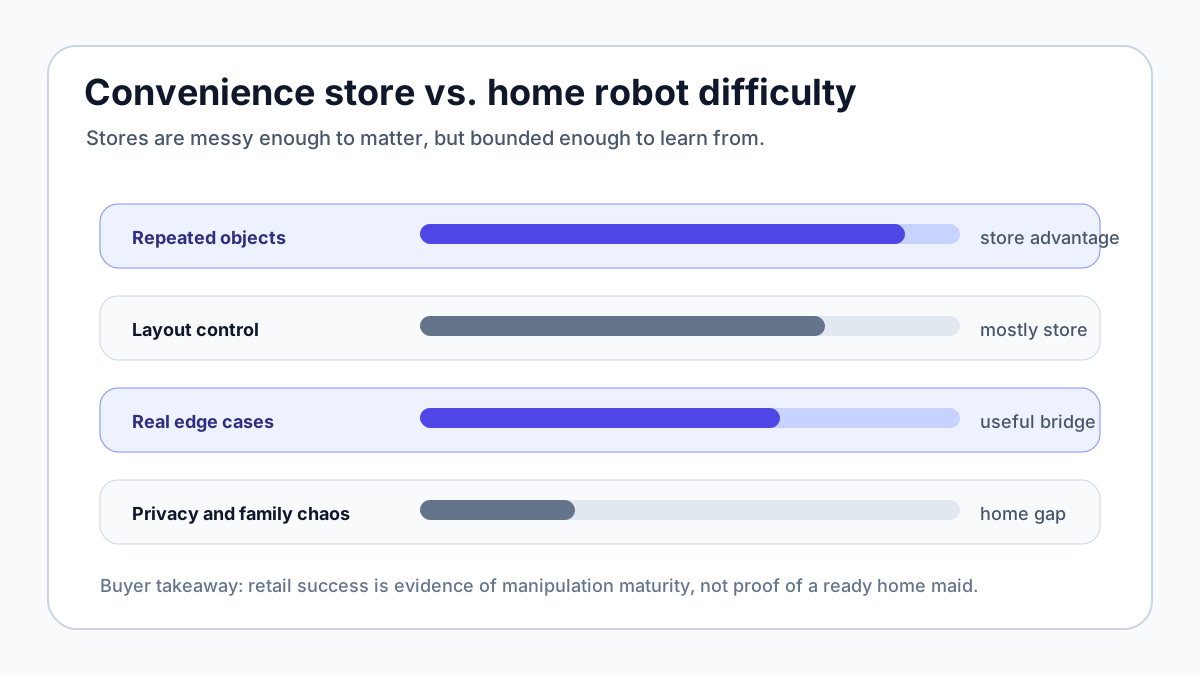
What probably does not transfer cleanly
There are also big limits. A 7-Eleven aisle is not a family home.
First, stores have a business reason to standardize. Homes do not. A store can change packaging orientation, shelf labels, aisle layout, or staff workflow to help the robot. A home buyer will not remodel the living room every time an AI model improves.
Second, homes are privacy-heavy. A store robot can collect operational data in a commercial setting with staff policies and public-space expectations. A home robot records kitchens, bedrooms, faces, voices, children's routines, medicine cabinets, and family arguments. That changes the acceptable data loop. The training mechanism that works in retail may need much stricter controls at home.
Third, home chores include soft and deformable objects. Bottles and packaged food are hard enough, but towels, socks, blankets, pet toys, cables, and half-full trash bags are worse. If a robot cannot explain its success rate on deformable objects, a store-restocking milestone should not be treated as proof of home maid capability.
Fourth, homes have emotional expectations. If a store robot pauses, calls for help, or blocks an aisle, people may tolerate it as a pilot. If a home robot does that while a parent is making dinner, the patience threshold is much lower.
So Astra's 2029 target should be read carefully. It is credible as a commercial retail goal. It is not a consumer availability date for a home humanoid.
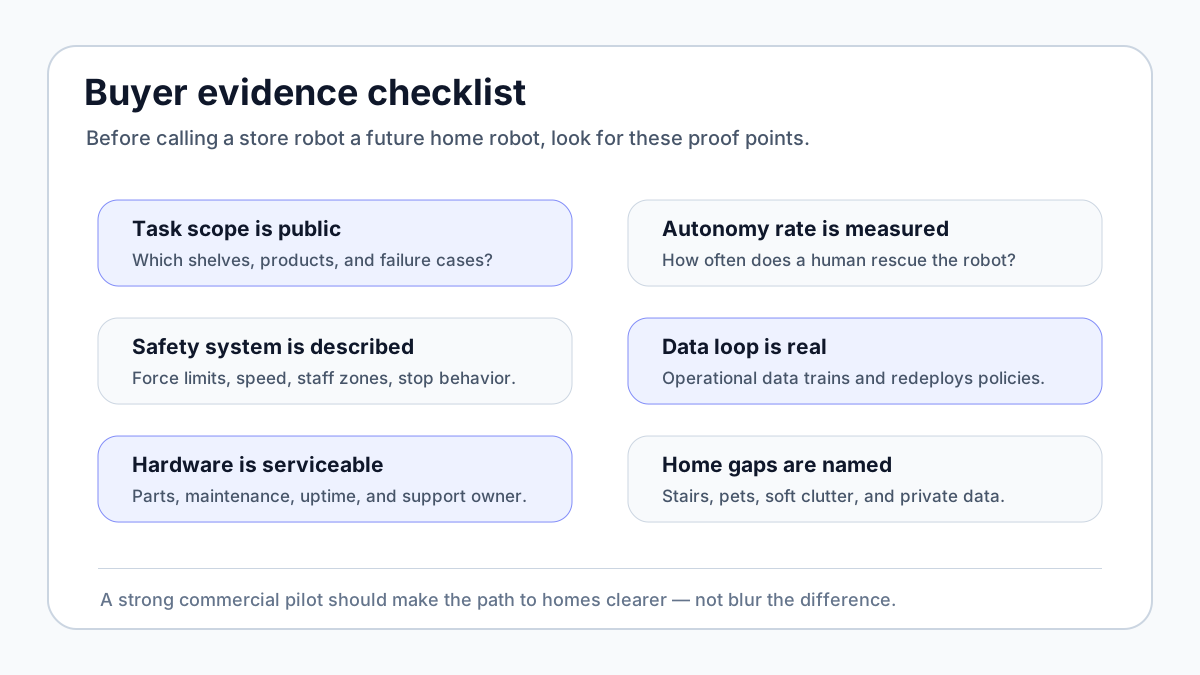
What buyers should watch before believing the hype
The useful question is not "can Astra someday work at home?" It is: what public evidence would make that claim more credible?
Start with autonomy rate. If a robot stocks shelves for hours, how often does it need a human rescue? Is the rescue local staff, a remote operator, or a full engineering intervention? A robot that succeeds 90 percent of the time in a store may still be frustrating at home if the remaining 10 percent happens every few minutes.
Then look for task breadth. Beverage restocking is valuable, but narrow. Does Astra handle only bottles? Does it handle snacks, bent packages, refrigerated doors, baskets, bins, cleaning tasks, checkout-adjacent work, or customer-facing interaction? Each added task is a test of generalization.
Safety is just as important as intelligence. Does the robot publish speed limits, force limits, stop behavior, human-detection rules, and failure modes? For home buyers, a robot with arms is not a smart speaker. It needs physical safety proof, not just a friendly voice.
Finally, check whether the company separates the commercial claim from the home claim. The best robotics companies are honest about the ladder: warehouse, store, hospital, lab, then home. The weakest pitches blur all of that into "humanoid assistant" and let buyers fill in the missing details.
How this changes the home robot timeline
If Astra works in stores, the near-term winner is not necessarily a consumer robot. The first winners may be retailers, robot-data companies, VLA model builders, teleoperation providers, and hardware teams that learn how to keep arms working in public spaces.
For home buyers, that still matters. The home robot market needs more than beautiful product videos. It needs evidence from robots that run long enough to break, recover, update, and run again. Convenience stores are unusually good at creating that evidence because the tasks repeat and the business pain is real.
But the translation will be gradual. A credible path might look like this:
- Robots restock a narrow set of products in backroom or shelf environments.
- They learn recovery from remote-operator interventions.
- They expand to more SKUs, tighter shelves, and customer-adjacent spaces.
- They prove safe operation around untrained people.
- They transfer parts of that manipulation stack to assistive, hospitality, or controlled-home pilots.
- Only then do broad consumer-home claims deserve serious weight.
That is why Astra is worth watching even if you never plan to buy a robot from Telexistence. It is a test of whether humanoid companies can turn real-world commercial work into the manipulation data homes need.
Bottom line
Seven-Eleven's Astra partnership is not a shortcut to a home robot maid. It is a more credible stepping stone: repeated retail tasks, real failure cases, a large store network, and a reason to improve autonomy over time.
If you are comparing future home humanoids, treat retail pilots as evidence, not as proof. The best signal from Astra will be boring: hours worked, tasks covered, rescues needed, objects handled, safety incidents avoided, and policies improved after deployment.
That is the kind of evidence ui44 will keep tracking across commercial robots, home assistants, and direct comparisons in /compare. The home robot that eventually cleans a kitchen may learn some of its first reliable moves under fluorescent lights, in front of a shelf of beverages, long before it enters a private house.
Sources & References
- Telexistence: Seven-Eleven Japan and Telexistence partner on Astra humanoid robots with generative AI, September 2025: https://tx-inc.com/en/blog/2025/09/30/12542/
- Telexistence: TX Ghost beverage shelf-stocking service expands to select Tokyo 7-Eleven stores, September 2025: https://tx-inc.com/en/blog/2025/09/26/12519/
- Telexistence and Physical Intelligence: VLA partnership for retail drink-restocking operations, June 2025: https://tx-inc.com/en/blog/2025/06/25/12307/
- Telexistence: Motion Data Factory service announcement, August 2025: https://tx-inc.com/en/blog/2025/08/27/12361/
- ui44 robot profiles: Galbot G1, Figure 02, Hello Robot Stretch 4, 1X NEO, Atlas Electric
Related in the database
Use this article as a privacy verification workflow
Turn the article into a privacy verification pass grounded in the robots, manufacturers, and components it actually references.
Seven-Eleven Astra: Why Stores Train Home Robots already points you toward 5 linked robots, 5 manufacturers, and 3 countries inside the ui44 database. That matters because strong buyer guidance is easier to apply when you can move immediately from a claim or warning into concrete product pages, manufacturer directories, component explainers, and country-level context instead of treating the article as an isolated opinion piece. The fastest next step is to turn the article into a shortlist workflow: open the linked robot pages, verify which specs are actually published for those models, then compare the surrounding manufacturer and component context before you decide whether the underlying claim changes your buying plan.
For this topic, the useful discipline is to separate the editorial lesson from the catalog evidence. The article gives you the framing, but the robot pages tell you what each product actually ships with today: sensor stack, connectivity methods, listed price, release timing, category, and support-relevant compatibility notes. The manufacturer pages then show whether you are looking at a one-off launch, a broader lineup pattern, or a company that spans multiple categories. That layered workflow reduces the risk of buying on a single marketing phrase or a single support FAQ.
Use the robot pages to confirm which products actually expose cameras, microphones, Wi-Fi, or voice systems, then use the manufacturer pages to decide how much of the privacy question seems product-specific versus brand-wide. On this route cluster, G1, Figure 02, and Stretch 4 form the fastest reality check. If you want a quick working shortlist, open Compare G1, Figure 02, and Stretch 4 next, then keep this article open as the reasoning layer while you compare structured data side by side.
Practical Takeaway
Every robot, manufacturer, category, component, and country reference below resolves to a real ui44 page, keeping the follow-up path grounded in database records rather than generic advice.
Suggested next steps in ui44
- Open G1 and note the listed sensors, connectivity methods, and voice stack before you interpret any policy claim.
- Cross-check the wider brand context on Galbot so you can see whether the privacy question touches one model or a broader lineup.
- Use the linked component pages to confirm how common the relevant sensors and connectivity layers are across the database.
- Keep a short note of which policy layers you checked, which device features are actually present on the robot page, and which items still depend on region- or app-level confirmation.
- Finish with Compare G1, Figure 02, and Stretch 4 so the policy reading sits next to structured product data.
Robot profiles worth opening next
Use the linked product pages as the evidence layer
The linked robot pages are where this article becomes operational. Instead of asking whether the headline is interesting, use the robot entries to inspect the actual mix of sensors, connectivity options, batteries, pricing, release timing, and stated capabilities attached to the products mentioned in the article. That is the easiest way to see whether the warning or opportunity described here affects one product family, a specific design pattern, or an entire buying lane.
G1 is tracked on ui44 as a active commercial robot from Galbot. The database currently records a listed price of Price TBA, a release date of 2025, 10 hours battery life, Not disclosed charging time, and a published stack that includes Binocular camera x1, Wrist depth cameras x2, and 6-axis force sensors x2 plus Wi-Fi (2.4/5 GHz) and Ethernet.
For privacy-focused reading, this page matters because it shows the concrete device surface behind the policy discussion. Use it to verify whether G1 combines sensors and connectivity in a way that could change the in-home data footprint, and compare the listed capabilities such as Autonomous Retail Store Operation, Generalizable Object Grasping (5,000+ product types), and Shelf Replenishment & Inventory Management with any cloud, app, or voice layers, including Natural Language Voice Commands.
Figure 02 is tracked on ui44 as a discontinued humanoid robot from Figure AI. The database currently records a listed price of Price TBA, a release date of 2024-08-06, Not disclosed (50% greater capacity than Figure 01) battery life, Not disclosed charging time, and a published stack that includes 6 RGB Cameras, Onboard Vision Language Model, and Microphones plus Wi-Fi and Bluetooth.
For privacy-focused reading, this page matters because it shows the concrete device surface behind the policy discussion. Use it to verify whether Figure 02 combines sensors and connectivity in a way that could change the in-home data footprint, and compare the listed capabilities such as Autonomous Task Execution, Speech-to-Speech Conversation, and Pick and Place with any cloud, app, or voice layers, including OpenAI Custom Model.
Stretch 4
Hello Robot · Home Assistants · Available
Stretch 4 is tracked on ui44 as a available home assistants robot from Hello Robot. The database currently records a listed price of $29,950, a release date of 2026-05-12, 8 hours (light CPU load) battery life, Not officially disclosed charging time, and a published stack that includes Wide-FOV depth sensing, High-resolution RGB cameras, and Calibrated RGB + depth perception plus its listed connectivity stack.
For privacy-focused reading, this page matters because it shows the concrete device surface behind the policy discussion. Use it to verify whether Stretch 4 combines sensors and connectivity in a way that could change the in-home data footprint, and compare the listed capabilities such as Mobile Manipulation, Omnidirectional Indoor Mobility, and Autonomous Mapping and Navigation with any cloud, app, or voice layers.
NEO
1X Technologies · Humanoid · Pre-order
NEO is tracked on ui44 as a pre-order humanoid robot from 1X Technologies. The database currently records a listed price of $20,000, a release date of 2025-10-28, ~4 hours battery life, Not disclosed charging time, and a published stack that includes RGB Cameras, Depth Sensors, and Tactile Skin plus Wi-Fi and Bluetooth.
For privacy-focused reading, this page matters because it shows the concrete device surface behind the policy discussion. Use it to verify whether NEO combines sensors and connectivity in a way that could change the in-home data footprint, and compare the listed capabilities such as Household Chores, Tidying Up, and Safe Human Interaction with any cloud, app, or voice layers.
Atlas (Electric)
Boston Dynamics · Humanoid · Active
Atlas (Electric) is tracked on ui44 as a active humanoid robot from Boston Dynamics. The database currently records a listed price of Price TBA, a release date of 2026, ~4 hours battery life, Not disclosed charging time, and a published stack that includes 360° camera view and Tactile plus Wi-Fi and Ethernet.
For privacy-focused reading, this page matters because it shows the concrete device surface behind the policy discussion. Use it to verify whether Atlas (Electric) combines sensors and connectivity in a way that could change the in-home data footprint, and compare the listed capabilities such as Heavy Lifting (50kg Instant, 30kg Sustained), Precise Manipulation, and Dynamic Recovery with any cloud, app, or voice layers.
Manufacturer context behind the article
Check whether this is one product story or a broader company pattern
Manufacturer pages add the privacy context that individual product pages cannot show on their own. They help you check whether cameras, microphones, cloud accounts, app controls, and policy assumptions appear across a broader lineup or stay tied to one specific product story.
Galbot
ui44 currently tracks 2 robots from Galbot across 2 categorys. The company is grouped under China, and the current catalog footprint on ui44 includes G1, S1.
That wider brand context matters because privacy questions rarely stop at one FAQ page. A manufacturer route helps you see whether the article is centered on one premium model or on a company that has several relevant products and therefore more than one place where the same policy or app assumptions might matter. The category mix here currently points toward Commercial, Humanoid as the most useful next route if you want to see whether this article reflects a wider pattern inside the brand.
Figure AI
ui44 currently tracks 2 robots from Figure AI across 1 category. The company is grouped under USA, and the current catalog footprint on ui44 includes Figure 03, Figure 02.
That wider brand context matters because privacy questions rarely stop at one FAQ page. A manufacturer route helps you see whether the article is centered on one premium model or on a company that has several relevant products and therefore more than one place where the same policy or app assumptions might matter. The category mix here currently points toward Humanoid as the most useful next route if you want to see whether this article reflects a wider pattern inside the brand.
Hello Robot
ui44 currently tracks 2 robots from Hello Robot across 1 category. The company is grouped under USA, and the current catalog footprint on ui44 includes Stretch 3, Stretch 4.
That wider brand context matters because privacy questions rarely stop at one FAQ page. A manufacturer route helps you see whether the article is centered on one premium model or on a company that has several relevant products and therefore more than one place where the same policy or app assumptions might matter. The category mix here currently points toward Home Assistants as the most useful next route if you want to see whether this article reflects a wider pattern inside the brand.
1X Technologies
ui44 currently tracks 2 robots from 1X Technologies across 1 category. The company is grouped under Norway, and the current catalog footprint on ui44 includes NEO, EVE.
That wider brand context matters because privacy questions rarely stop at one FAQ page. A manufacturer route helps you see whether the article is centered on one premium model or on a company that has several relevant products and therefore more than one place where the same policy or app assumptions might matter. The category mix here currently points toward Humanoid as the most useful next route if you want to see whether this article reflects a wider pattern inside the brand.
Broaden the scan without leaving the database
Categories, components, and countries add the wider context
Category framing
Category pages are useful when the article touches a buying pattern that shows up across brands. A category route helps you confirm whether the linked products sit in a narrow niche or whether the same question should be tested across a larger field of alternatives.
Commercial
The Commercial category page currently groups 44 tracked robots from 38 manufacturers. ui44 describes this lane as: Delivery robots, warehouse automation, and hospitality service bots — robots built for business and commercial operations.
That makes the category route a practical follow-up when you want to check whether the products linked in this article are typical for the lane or whether they sit at one edge of the market. Useful starting examples currently include G2 Air, aeo, Pepper.
Home Assistants
The Home Assistants category page currently groups 16 tracked robots from 14 manufacturers. ui44 describes this lane as: Arm-based household helpers — laundry folders, kitchen robots, and mobile manipulators that take on hands-on physical tasks around the home.
That makes the category route a practical follow-up when you want to check whether the products linked in this article are typical for the lane or whether they sit at one edge of the market. Useful starting examples currently include Robody, Futuring 2 (F2), Stretch 3.
Country and ecosystem context
Country pages give extra context when support practices, launch sequencing, regulatory posture, or manufacturer mix matter. They are not a substitute for model-level verification, but they do help you see which ecosystems cluster together and which manufacturers sit in the same regional field when you broaden the search beyond the article headline.
China
The China route currently groups 189 tracked robots from 87 manufacturers in ui44. That gives you a useful regional lens when the article points toward support practices, launch sequencing, or brand clusters that may share similar ecosystem assumptions.
On the current route, manufacturers like AGIBOT, Dreame, Unitree Robotics make the page a good way to broaden the scan without losing the regional context that often shapes availability, documentation style, and adjacent alternatives.
USA
The USA route currently groups 89 tracked robots from 69 manufacturers in ui44. That gives you a useful regional lens when the article points toward support practices, launch sequencing, or brand clusters that may share similar ecosystem assumptions.
On the current route, manufacturers like Faraday Future, iRobot, Boston Dynamics make the page a good way to broaden the scan without losing the regional context that often shapes availability, documentation style, and adjacent alternatives.
Norway
The Norway route currently groups 2 tracked robots from 1 manufacturers in ui44. That gives you a useful regional lens when the article points toward support practices, launch sequencing, or brand clusters that may share similar ecosystem assumptions.
On the current route, manufacturers like 1X Technologies make the page a good way to broaden the scan without losing the regional context that often shapes availability, documentation style, and adjacent alternatives.
Questions to answer before you move from reading to buying
A follow-up FAQ built from the entities already linked in this article
Frequently Asked Questions
Which page should I open first after reading “Seven-Eleven Astra: Why Stores Train Home Robots”?
Start with G1. That gives you a concrete product anchor for the article’s main claim. From there, branch into the manufacturer and component pages so you can tell whether the article is describing one specific model, a repeated brand pattern, or a wider technology issue that affects multiple shortlist options.
How do the manufacturer pages change the buying decision?
Galbot help you zoom out from one article and one product. On ui44 they show lineup breadth, category spread, and the neighboring robots tied to the same company. That context is useful when you are deciding whether a risk belongs to a single model, whether it shows up across a brand’s portfolio, and whether you should keep looking at alternatives before committing.
When should I switch from reading to side-by-side comparison?
Move into Compare G1, Figure 02, and Stretch 4 as soon as you understand the article’s main warning or promise. The article explains what to watch for, but the compare view is where you can check whether price, status, battery life, connectivity, sensors, and category fit still make the robot a good match for your own home and budget.
Where to go next in ui44
Keep the research chain inside the database
If you want to keep going, these follow-on pages give you the cleanest expansion path from article to research session. Open the comparison route first if you are deciding between products today. Open the manufacturer, category, and component routes if you still need to understand the broader pattern behind the claim.
Written by
ui44 Team
Published May 27, 2026
Share this article
Open a plain share link on X or Bluesky. No embeds, no widgets, no cookie baggage.