That is a more interesting claim than another "AI pet" demo. Familiar says its first product will learn household rhythms, reinforce healthy routines, and interrupt patterns people want to break. That puts it directly in the space between habit apps, companion robots, smart speakers, and the first wave of socially aware physical AI.
The hard question is whether a robot body changes the habit-coaching equation, or whether this is just a reminder app with a face. The honest answer in 2026: the category is plausible, but buyers should separate three things that are often blurred together: conversation, physical presence, and reliable routine execution.
The Habit-Coach Claim, in Plain English
Habit design is not just repetition. Behavioral scientist BJ Fogg's habit model frames behavior as the meeting point of motivation, ability, and a prompt. In a recent NPR Life Kit piece, Fogg's practical advice was to keep the action small, anchor it to an existing routine, and use a prompt that arrives at the right moment.
That framework is useful for evaluating home robots. A robot cannot supply all of your motivation. It cannot make a difficult behavior easy by magic. What it can do, if built well, is improve the prompt.
A phone notification is cheap and easy to ignore. A smart speaker reminder is useful but disembodied. A companion robot can add presence: it can roll over, look toward you, move, gesture, speak, react to your tone, or wait until the room context makes a reminder less annoying. Familiar's pitch is basically that physical, emotionally aware prompting will work better than another rectangle on a screen.
That is credible enough to watch. It is not proven enough to buy blindly.
What Familiar Is Actually Promising
Familiar Machines describes a Familiar as a warm presence that learns goals, supports daily life, and reinforces routines. The company says it is building emotionally intelligent physical AI, with on-device data storage and user control over cloud sharing. Its public examples include screen-free play, listening, facial-expression and tone response, habit nudges, and adapting to household rhythms over time.
There are two details worth taking seriously.
First, the team has real consumer robotics history. Familiar says its founders helped scale iRobot to more than 50 million robots shipped. Consumer robotics is full of beautiful demos that never survive normal homes; experience shipping hardware matters.
Second, the product is being positioned as a relationship device, not a chore machine. That changes the buying standard. The question is not "can it pick up laundry?" It is "does it reliably notice enough, remember enough, and prompt gently enough that people keep using it after the novelty wears off?"
The ui44 Comparison Set
In ui44, Familiar is already listed as a development-stage quadruped from Familiar Machines & Magic, with first availability planned for
- The best way to ground its claim is to compare it with available or
announced companion robots that already show parts of the habit-coach stack.
Robot
- Status in ui44
- Available
- Price in ui44
- $409
- Habit-coach ingredient
- Expressive pet-like presence, face recognition, ChatGPT conversations
- Main limitation
- More companion and play robot than routine system
Robot
- Status in ui44
- Available
- Price in ui44
- Not listed
- Habit-coach ingredient
- Proactive conversation, medication reminders, wellness programs, check-ins
- Main limitation
- Stationary tabletop device, focused on older adults
Robot
- Status in ui44
- Available
- Price in ui44
- $549.99
- Habit-coach ingredient
- Home patrols, person recognition, spatial memory, reminders
- Main limitation
- More monitoring robot than emotionally expressive coach
Robot
- Status in ui44
- Available
- Price in ui44
- €269
- Habit-coach ingredient
- Child-focused learning, games, face and voice recognition
- Main limitation
- Built for kids, not whole-household habit coaching
Robot
- Status in ui44
- Development
- Price in ui44
- Not listed
- Habit-coach ingredient
- Smart home reminders, projection, home navigation, adaptive behavior claims
- Main limitation
- Not shipping as a normal buyer option
| Robot | Status in ui44 | Price in ui44 | Habit-coach ingredient | Main limitation |
|---|---|---|---|---|
| Loona | Available | $409 | Expressive pet-like presence, face recognition, ChatGPT conversations | More companion and play robot than routine system |
| ElliQ 3 | Available | Not listed | Proactive conversation, medication reminders, wellness programs, check-ins | Stationary tabletop device, focused on older adults |
| EBO Max FamilyBot | Available | $549.99 | Home patrols, person recognition, spatial memory, reminders | More monitoring robot than emotionally expressive coach |
| Miko 3 | Available | €269 | Child-focused learning, games, face and voice recognition | Built for kids, not whole-household habit coaching |
| Samsung Ballie | Development | Not listed | Smart home reminders, projection, home navigation, adaptive behavior claims | Not shipping as a normal buyer option |
The pattern is clear. Several robots already contain one or two ingredients: conversation, reminders, emotion, navigation, user memory, or smart-home context. The missing piece is a product that combines them into a durable, trustworthy routine system for the general home.
Loona Shows Why Embodiment Matters
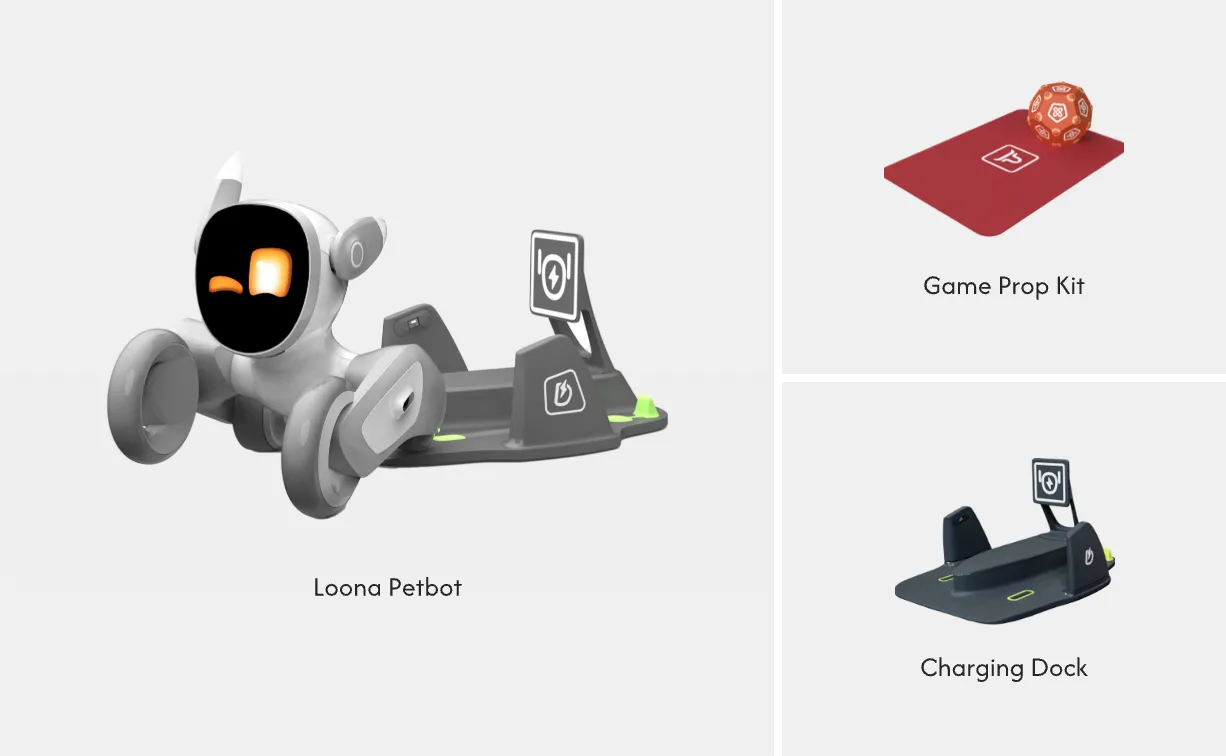
Loona is one of the simplest examples of why a body can matter. In ui44's database, Loona is a $409 companion robot from KEYi Tech with face recognition, voice commands, an LCD emotion face, autonomous navigation, auto-docking, touch interaction, games, and ChatGPT conversations.
None of that makes Loona a clinical-grade habit coach. But it does show why people respond differently to a prompt when it comes from a moving character rather than a phone. A robot pet can make the prompt feel social: a look, sound, movement, or repeated visit can turn "stand up now" into something closer to a small interaction.
That can help with low-stakes routines: a stretch break, a hydration reminder, a child reading session, a bedtime cue, or a short focus block. The limitation is consistency. A habit system needs to know when to prompt, when to stay quiet, and how to avoid becoming background noise. Loona has the expressive layer. It does not yet define the category as a household routine coach.
ElliQ Shows the Other Half: Proactive Care
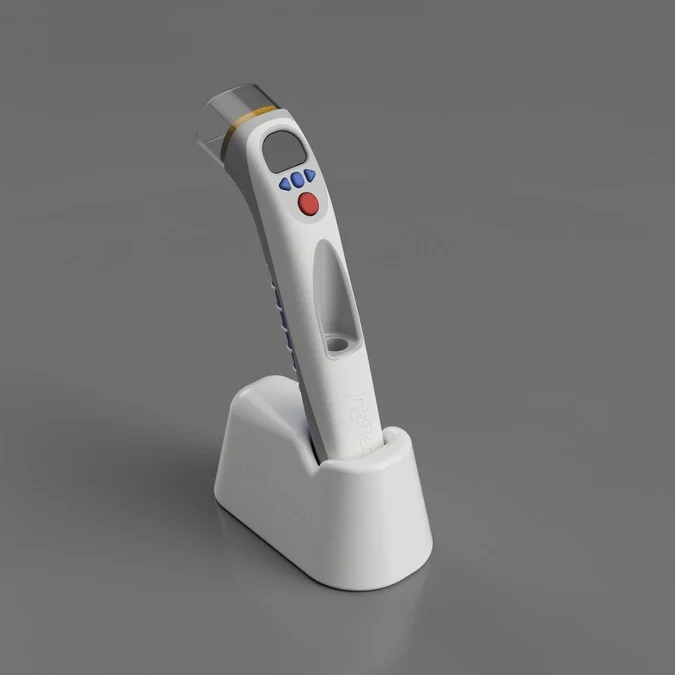
ElliQ 3 is the strongest current example of proactive companion behavior. ui44 lists it as an available companion robot for older adults with proactive conversation, medication reminders, health and pain tracking, wellness programs, video calling, photo sharing, games, memory recording, generative AI conversations, and loneliness-reduction claims.
ElliQ is not trying to be a mobile pet. It mostly sits in place and initiates conversation. That makes it less physically expressive than Familiar's pitch, but more directly aligned with routine support. Medication reminders and wellness check-ins are not novelty features; they are exactly the kind of repeated behaviors where timing, tone, and trust matter.
For buyers, ElliQ is the reminder that "habit coach" should not only mean cute. The serious value comes from sustained engagement. If a robot helps someone take medication, drink water, call family, track pain, or stay socially connected, the presence is not decoration. It becomes part of the care pattern.
EBO Max Pushes Toward Household Context
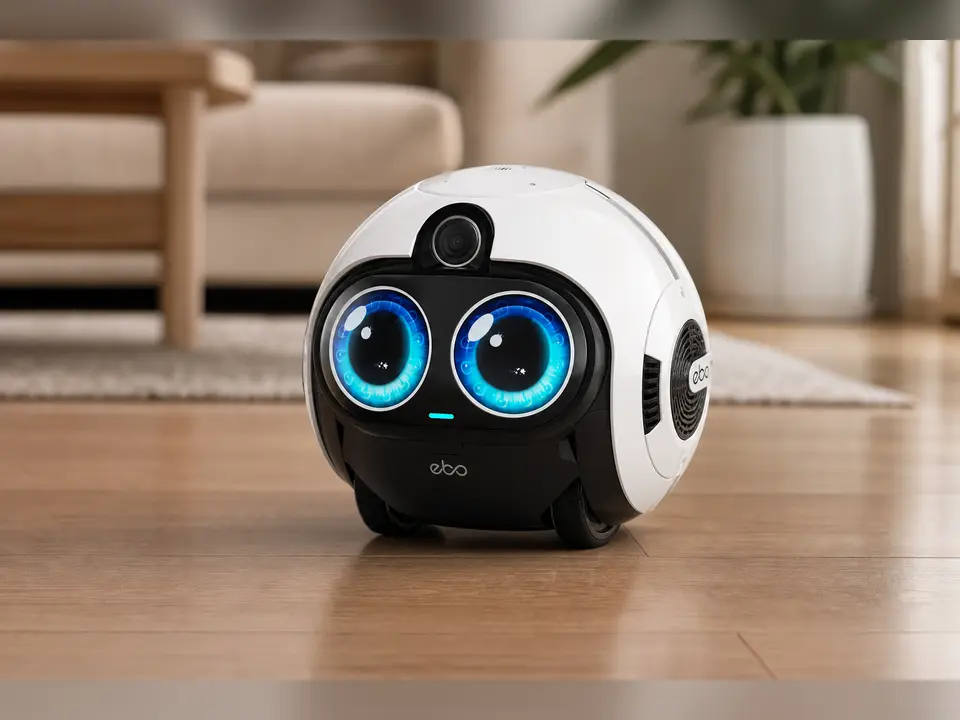
EBO Max FamilyBot takes a different route. ui44 lists it at $549.99 with V-SLAM navigation and mapping, multi-point spatial memory, two-way 4K video, fall detection, person and pet recognition, long-term memory for routine learning, condition-based task execution, personalized reminders, remote tasks, and autonomous recharging.
That is closer to the sensor and context layer a habit coach needs. A phone does not know who is in the kitchen. A stationary speaker does not patrol the hallway. A mobile home robot can, in theory, connect reminders to place: the medication cabinet, the desk, the couch, the pet feeding area, the front door.
The trade-off is emotional subtlety. A monitoring robot can become useful without feeling supportive. Familiar's angle is that the emotional layer matters because people reject systems that feel nagging, creepy, or judgmental. EBO Max is important because it shows the home-context side of the stack; Familiar is interesting because it says the social layer should be designed in from the beginning.
Miko and Ballie Mark the Edges of the Category
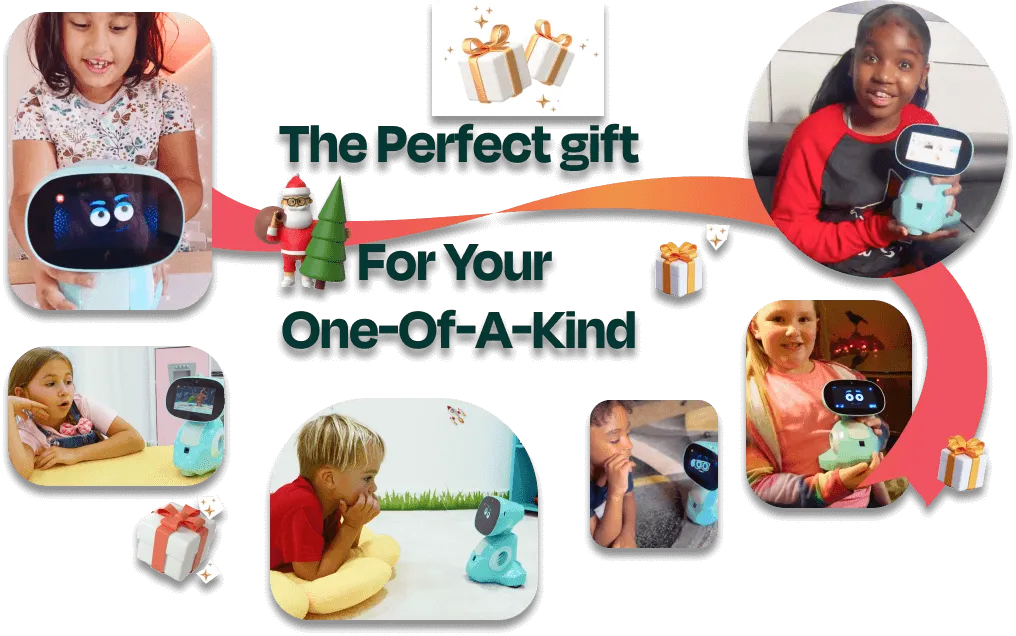
Miko 3, listed in ui44 at €269, is a child-focused companion with conversations, face and voice recognition, educational games, story narration, coding apps, autonomous navigation, parental controls, and a touchscreen face. It is not a whole-home habit coach, but it does show where routine reinforcement already works commercially: learning sessions, play patterns, and parent-approved screen time.
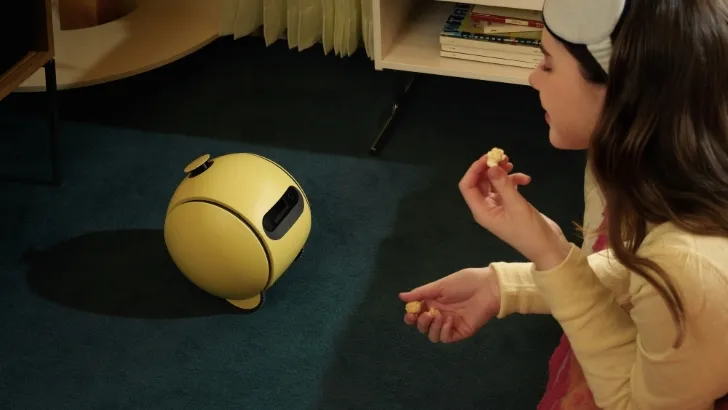
Samsung Ballie is the opposite case: a broad smart home companion idea that remains in development in ui44. Ballie promises home navigation, a built-in projector, SmartThings control, family and pet monitoring, personalized scheduling, voice interaction, workout projection, music, and adaptive behavior. If it ships as promised, it would be one of the clearest habit-coach platforms because it can combine schedule, home context, projection, and mobility.
But Ballie is also a warning. Big-company demos can make routine coaching look inevitable while leaving buyers with no product to evaluate. Until a robot is available, supported, and tested in normal homes, its habit-coach capability is a roadmap claim.
What Buyers Should Verify Before Trusting a Habit Robot
A habit-coach robot should be judged less like a gadget and more like a small domestic system. The buying checklist is practical:
- Can it remember routines across weeks, not just respond in one session?
- Can it prompt at the right time without becoming annoying?
- Can it adapt to different people in the household?
- Can it explain what it knows and what it stores?
- Can users turn off sensitive features without breaking the product?
- Does it work locally when possible, and what requires the cloud?
- Is there a clear fallback if the AI misunderstands a routine?
- Does the company publish enough pricing, availability, and support detail to make the product comparable?
The privacy question deserves special weight. A useful habit coach may need to know when people wake up, when children are home, when medication is due, how often someone moves, and which routines are breaking down. Familiar's statement that data stays on device unless users choose to share it is the right direction. The proof will be in product settings, data export, deletion controls, and whether core features still work without unnecessary cloud sharing.
So, Can a Home Robot Be a Habit Coach?
Yes, but the bar is higher than "it reminds you to drink water."
A credible habit-coach robot needs three layers. It needs a social layer, so prompts feel supportive instead of mechanical. It needs a context layer, so the robot understands time, place, household patterns, and who is present. It needs a routine layer, so it can help users define small behaviors, attach them to existing moments, and adjust when the plan fails.
Today's companion robots already prove pieces of that stack. Loona proves that expressive presence changes the feel of interaction. ElliQ proves proactive companionship can support real routines. EBO Max points toward household context and routine-aware monitoring. Miko shows that repeated learning interactions can work for families. Ballie shows how powerful the idea becomes when smart-home control and mobility are combined, even if availability remains the catch.
Familiar's promise is compelling because it starts from the combined version: emotionally aware, routine-aware, physically present AI. That is exactly where home robotics should move if the category wants to become more than cleaning and telepresence.
The buyer advice is simple: watch Familiar, but evaluate it by evidence. Ask what routines it can support on day one, how memory works, what sensors are active, what data leaves the home, what happens without a subscription, and whether people still use it after month three. Habit coaching is not a feature label. It is a long-term trust test.
Database context
Use this article as a privacy verification workflow
Turn the article into a real verification pass
Can a Home Robot Be a Habit Coach? already points you toward 6 linked robots, 6 manufacturers, and 5 countries inside the ui44 database. That matters because strong buyer guidance is easier to apply when you can move immediately from a claim or warning into concrete product pages, manufacturer directories, component explainers, and country-level context instead of treating the article as an isolated opinion piece. The fastest next step is to turn the article into a shortlist workflow: open the linked robot pages, verify which specs are actually published for those models, then compare the surrounding manufacturer and component context before you decide whether the underlying claim changes your buying plan.
For this topic, the useful discipline is to separate the editorial lesson from the catalog evidence. The article gives you the framing, but the robot pages tell you what each product actually ships with today: sensor stack, connectivity methods, listed price, release timing, category, and support-relevant compatibility notes. The manufacturer pages then show whether you are looking at a one-off launch, a broader lineup pattern, or a company that spans multiple categories. That layered workflow reduces the risk of buying on a single marketing phrase or a single support FAQ.
Use the robot pages to confirm which products actually expose cameras, microphones, Wi-Fi, or voice systems, then use the manufacturer pages to decide how much of the privacy question seems product-specific versus brand-wide. On this route cluster, Familiar, Loona, and ElliQ 3 form the fastest reality check. If you want a quick working shortlist, open Compare Familiar, Loona, and ElliQ 3 next, then keep this article open as the reasoning layer while you compare structured data side by side.
Practical Takeaway
Every robot, manufacturer, category, component, and country reference below resolves to a real ui44 page, keeping the follow-up path grounded in database records rather than generic advice.
Suggested next steps in ui44
- Open Familiar and note the listed sensors, connectivity methods, and voice stack before you interpret any policy claim.
- Cross-check the wider brand context on Familiar Machines & Magic so you can see whether the privacy question touches one model or a broader lineup.
- Use the linked component pages to confirm how common the relevant sensors and connectivity layers are across the database.
- Keep a short note of which policy layers you checked, which device features are actually present on the robot page, and which items still depend on region- or app-level confirmation.
- Finish with Compare Familiar, Loona, and ElliQ 3 so the policy reading sits next to structured product data.
Database context
Robot profiles worth opening next
Use the linked product pages as the evidence layer
The linked robot pages are where this article becomes operational. Instead of asking whether the headline is interesting, use the robot entries to inspect the actual mix of sensors, connectivity options, batteries, pricing, release timing, and stated capabilities attached to the products mentioned in the article. That is the easiest way to see whether the warning or opportunity described here affects one product family, a specific design pattern, or an entire buying lane.
Familiar
Familiar Machines & Magic · Quadruped · Development
Familiar is tracked on ui44 as a development quadruped robot from Familiar Machines & Magic. The database currently records a listed price of Price TBA, a release date of 2027, Not disclosed battery life, Not disclosed charging time, and a published stack that includes Vision (facial expression and gesture recognition), Audio (tone of voice analysis), and Touch-sensitive exterior (3D-knitted fuzzy covering) plus Not disclosed.
For privacy-focused reading, this page matters because it shows the concrete device surface behind the policy discussion. Use it to verify whether Familiar combines sensors and connectivity in a way that could change the in-home data footprint, and compare the listed capabilities such as Quadruped Walking (23 DOF), Autonomous Navigation, and Emotional Intelligence (EQ over IQ) with any cloud, app, or voice layers.
Loona is tracked on ui44 as a available companions robot from KEYi Tech. The database currently records a listed price of $409, a release date of 2023, 2 hours continuous playtime; 1350 mAh, 11.1 V lithium-ion rechargeable battery battery life, Not officially disclosed charging time, and a published stack that includes 3D Time-of-Flight (ToF) Sensor, 720p RGB Camera, and Touch Sensor plus Wi-Fi (Dual-band 2.4G/5.8G, 802.11a/b/g/n) and USB Type-C (charging).
For privacy-focused reading, this page matters because it shows the concrete device surface behind the policy discussion. Use it to verify whether Loona combines sensors and connectivity in a way that could change the in-home data footprint, and compare the listed capabilities such as Face Recognition, Voice Commands, and Emotion Expression (LCD face) with any cloud, app, or voice layers.
ElliQ 3
Intuition Robotics · Companions · Available
ElliQ 3 is tracked on ui44 as a available companions robot from Intuition Robotics. The database currently records a listed price of Price TBA, a release date of 2024-01, Mains powered battery life, N/A (plugged in) charging time, and a published stack that includes 4-mic array, 12 MP camera for images, and 1080p HD video at 30 fps with 120° horizontal FoV plus Wi-Fi 802.11b/g/n/ac (2.4 GHz and 5 GHz) and Bluetooth 5+.
For privacy-focused reading, this page matters because it shows the concrete device surface behind the policy discussion. Use it to verify whether ElliQ 3 combines sensors and connectivity in a way that could change the in-home data footprint, and compare the listed capabilities such as Proactive Conversation, Medication Reminders, and Health & Pain Tracking with any cloud, app, or voice layers, including ElliQ Voice AI.
EBO Max FamilyBot
Enabot · Companions · Available
EBO Max FamilyBot is tracked on ui44 as a available companions robot from Enabot. The database currently records a listed price of $550, a release date of 2026-03, Standby: 6 hours; video recording: 4 hours; continuous movement: 3 hours battery life, 3–4 hours charging time, and a published stack that includes 4K 8MP 131° ultra-wide camera, V-SLAM visual navigation, and 4-mic array with AI noise cancellation / 360° sound localization plus 2.4GHz Wi-Fi and 5GHz Wi-Fi.
For privacy-focused reading, this page matters because it shows the concrete device surface behind the policy discussion. Use it to verify whether EBO Max FamilyBot combines sensors and connectivity in a way that could change the in-home data footprint, and compare the listed capabilities such as V-SLAM autonomous navigation and mapping, Multi-point spatial memory for scheduled patrols, and Two-way 4K video communication with any cloud, app, or voice layers.
Miko 3 is tracked on ui44 as a available companions robot from Miko. The database currently records a listed price of €269, a release date of 2021, 5–7 hours active use, up to 12 hours standby battery life, ~4 hours (15W USB-C adapter) charging time, and a published stack that includes Time-of-Flight Range Sensor, Odometric Sensors, and Dual MEMS Microphones plus Wi-Fi and Bluetooth.
For privacy-focused reading, this page matters because it shows the concrete device surface behind the policy discussion. Use it to verify whether Miko 3 combines sensors and connectivity in a way that could change the in-home data footprint, and compare the listed capabilities such as AI-Powered Conversations, Face Recognition, and Voice Recognition with any cloud, app, or voice layers.
Database context
Manufacturer context behind the article
Check whether this is one product story or a broader company pattern
Manufacturer pages add the privacy context that individual product pages cannot show on their own. They help you check whether cameras, microphones, cloud accounts, app controls, and policy assumptions appear across a broader lineup or stay tied to one specific product story.
Familiar Machines & Magic
ui44 currently tracks 1 robot from Familiar Machines & Magic across 1 category. The company is grouped under USA, and the current catalog footprint on ui44 includes Familiar.
That wider brand context matters because privacy questions rarely stop at one FAQ page. A manufacturer route helps you see whether the article is centered on one premium model or on a company that has several relevant products and therefore more than one place where the same policy or app assumptions might matter. The category mix here currently points toward Quadruped as the most useful next route if you want to see whether this article reflects a wider pattern inside the brand.
KEYi Tech
ui44 currently tracks 2 robots from KEYi Tech across 1 category. The company is grouped under USA, and the current catalog footprint on ui44 includes Loona, Loona DeskMate.
That wider brand context matters because privacy questions rarely stop at one FAQ page. A manufacturer route helps you see whether the article is centered on one premium model or on a company that has several relevant products and therefore more than one place where the same policy or app assumptions might matter. The category mix here currently points toward Companions as the most useful next route if you want to see whether this article reflects a wider pattern inside the brand.
Intuition Robotics
ui44 currently tracks 1 robot from Intuition Robotics across 1 category. The company is grouped under Israel, and the current catalog footprint on ui44 includes ElliQ 3.
That wider brand context matters because privacy questions rarely stop at one FAQ page. A manufacturer route helps you see whether the article is centered on one premium model or on a company that has several relevant products and therefore more than one place where the same policy or app assumptions might matter. The category mix here currently points toward Companions as the most useful next route if you want to see whether this article reflects a wider pattern inside the brand.
Enabot
ui44 currently tracks 3 robots from Enabot across 1 category. The company is grouped under China, and the current catalog footprint on ui44 includes EBO X, EBO Max FamilyBot, EBO Mini Sport FamilyBot.
That wider brand context matters because privacy questions rarely stop at one FAQ page. A manufacturer route helps you see whether the article is centered on one premium model or on a company that has several relevant products and therefore more than one place where the same policy or app assumptions might matter. The category mix here currently points toward Companions as the most useful next route if you want to see whether this article reflects a wider pattern inside the brand.
Database context
Broaden the scan without leaving the database
Categories, components, and countries add the wider context
Category framing
Category pages are useful when the article touches a buying pattern that shows up across brands. A category route helps you confirm whether the linked products sit in a narrow niche or whether the same question should be tested across a larger field of alternatives.
Quadruped
The Quadruped category page currently groups 19 tracked robots from 13 manufacturers. ui44 describes this lane as: Four-legged robot dogs and quadrupeds built for rough terrain, inspection, and exploration where wheels can't go.
That makes the category route a practical follow-up when you want to check whether the products linked in this article are typical for the lane or whether they sit at one edge of the market. Useful starting examples currently include Argos X1, D1 Pro, D2 Max.
Companions
The Companions category page currently groups 50 tracked robots from 45 manufacturers. ui44 describes this lane as: Social robots, robot pets, and elderly care companions designed for emotional connection and daily support.
That makes the category route a practical follow-up when you want to check whether the products linked in this article are typical for the lane or whether they sit at one edge of the market. Useful starting examples currently include PARO, Abi, Next-Generation Companion Robot.
Country and ecosystem context
Country pages give extra context when support practices, launch sequencing, regulatory posture, or manufacturer mix matter. They are not a substitute for model-level verification, but they do help you see which ecosystems cluster together and which manufacturers sit in the same regional field when you broaden the search beyond the article headline.
USA
The USA route currently groups 78 tracked robots from 62 manufacturers in ui44. That gives you a useful regional lens when the article points toward support practices, launch sequencing, or brand clusters that may share similar ecosystem assumptions.
On the current route, manufacturers like iRobot, Boston Dynamics, Faraday Future make the page a good way to broaden the scan without losing the regional context that often shapes availability, documentation style, and adjacent alternatives.
Israel
The Israel route currently groups 5 tracked robots from 5 manufacturers in ui44. That gives you a useful regional lens when the article points toward support practices, launch sequencing, or brand clusters that may share similar ecosystem assumptions.
On the current route, manufacturers like Flytrex, Intuition Robotics, Maytronics make the page a good way to broaden the scan without losing the regional context that often shapes availability, documentation style, and adjacent alternatives.
China
The China route currently groups 172 tracked robots from 80 manufacturers in ui44. That gives you a useful regional lens when the article points toward support practices, launch sequencing, or brand clusters that may share similar ecosystem assumptions.
On the current route, manufacturers like Dreame, AGIBOT, Unitree Robotics make the page a good way to broaden the scan without losing the regional context that often shapes availability, documentation style, and adjacent alternatives.
Database context
Questions to answer before you move from reading to buying
A follow-up FAQ built from the entities already linked in this article
Frequently Asked Questions
Which page should I open first after reading “Can a Home Robot Be a Habit Coach?”?
Start with Familiar. That gives you a concrete product anchor for the article’s main claim. From there, branch into the manufacturer and component pages so you can tell whether the article is describing one specific model, a repeated brand pattern, or a wider technology issue that affects multiple shortlist options.
How do the manufacturer pages change the buying decision?
Familiar Machines & Magic help you zoom out from one article and one product. On ui44 they show lineup breadth, category spread, and the neighboring robots tied to the same company. That context is useful when you are deciding whether a risk belongs to a single model, whether it shows up across a brand’s portfolio, and whether you should keep looking at alternatives before committing.
When should I switch from reading to side-by-side comparison?
Move into Compare Familiar, Loona, and ElliQ 3 as soon as you understand the article’s main warning or promise. The article explains what to watch for, but the compare view is where you can check whether price, status, battery life, connectivity, sensors, and category fit still make the robot a good match for your own home and budget.
Database context
Where to go next in ui44
Keep the research chain inside the database
If you want to keep going, these follow-on pages give you the cleanest expansion path from article to research session. Open the comparison route first if you are deciding between products today. Open the manufacturer, category, and component routes if you still need to understand the broader pattern behind the claim.
Written by
ui44 Team
Published June 8, 2026
Share this article
Open a plain share link on X or Bluesky. No embeds, no widgets, no cookie baggage.