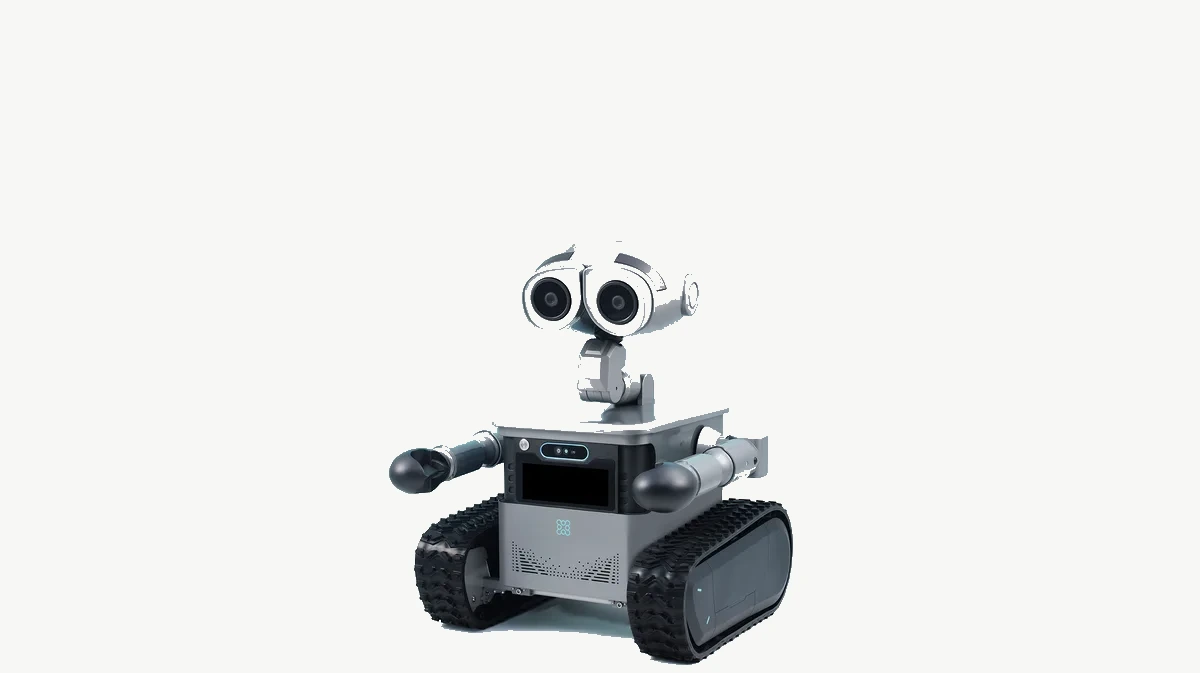
That is why Zeroth Robotics W1 is worth watching. It is not a humanoid, and it is not a robot vacuum. It is closer to a smart tracked utility cart with cameras, sensors, voice interaction, app control, smart-home alerts, and a 20 kg load rating. For some households, that simpler job description is exactly the point.
What is a follow-me utility robot?
A follow-me utility robot is a mobile helper built around movement and presence rather than manipulation. The core promise is not "pick up any object in my kitchen." It is: stay near the user, carry useful weight, move across imperfect surfaces, provide sensing or security, and sometimes provide battery power for phones, lights, laptops, or tools.
That puts it between four familiar categories:
- A robot cart, because payload and traction matter.
- A home security robot, because cameras, patrol routes, alerts, and privacy controls matter.
- A companion robot, because following, voice, gestures, and social behavior affect whether people actually use it.
- A developer robot, because early models often expose APIs or open platforms before the use cases are fully proven.
The distinction matters for buyers. A robot without a documented gripper or published object-handling capability can still be useful if the task is moving groceries from the car, carrying picnic gear across a campsite, patrolling a driveway, or acting as a mobile camera during a pet check. A humanoid is only the better design if the job requires hands, fingers, appliance controls, or human-shaped reach.
Robot type
Follow-me utility robot
- Best first job
- Carry, patrol, outdoor support, power
- What buyers should verify
- Payload under movement, traction, lost-user behavior, privacy controls
Robot type
Home patrol robot
- Best first job
- Indoor monitoring, remote check-ins
- What buyers should verify
- Map zones, subscription dependence, camera/mic kill switch
Robot type
Mobile manipulator
- Best first job
- Fetching and controlled object handling
- What buyers should verify
- Arm payload, gripper reliability, teleop/autonomy split
Robot type
Humanoid
- Best first job
- Human-shaped tools and workspaces
- What buyers should verify
- Safety, hands, service, real task success rates
| Robot type | Best first job | What buyers should verify |
|---|---|---|
| Follow-me utility robot | Carry, patrol, outdoor support, power | Payload under movement, traction, lost-user behavior, privacy controls |
| Home patrol robot | Indoor monitoring, remote check-ins | Map zones, subscription dependence, camera/mic kill switch |
| Mobile manipulator | Fetching and controlled object handling | Arm payload, gripper reliability, teleop/autonomy split |
| Humanoid | Human-shaped tools and workspaces | Safety, hands, service, real task success rates |
Why Zeroth W1 is a useful test case
The W1 is useful because its official specs are concrete enough to compare. ui44 tracks it as a $4,999 available home assistant with a 28 kg body, 20 kg load capacity, 50 kg traction rating, tracked mobility, and official support for autonomous following, item transport, patrol, 360° mobile surveillance, face recognition, gesture recognition, natural-language dialogue, and portable device charging.
The hardware is not small. Zeroth lists dimensions of 578 × 520 × 680 mm, a 360 Wh battery, 140 W DC fast charging, a four-hour full charge time, and USB-C output from 60 W to 120 W plus 18 W USB-A. Zeroth's movement claims include 0.1-1 m/s on flat surfaces, 0.5 m/s on slopes, 5 cm obstacle height, and a 20° climbing angle. Sensing includes a 13 MP RGB camera for shooting, a 2 MP RGB camera for monitoring, an RGB-D depth camera, ultrasonic sensing, human infrared sensing, GPS, and Beidou.
Those numbers do not prove it is a polished everyday product. They do make the buyer question sharper. This is not a mystery "AI companion" with only lifestyle copy. It is a specific bet: people may pay for a mobile utility platform that can carry meaningful weight and watch an area before they pay for an expensive humanoid that can almost manipulate a dishwasher.
Zeroth's Chinese-language Bridge Summit write-up also frames the company around social value, emotional companionship, and life assistance as ways for robots to move from labs into real life. That framing is broader than the W1 itself. For buying decisions, the grounded part is the spec sheet: payload, traction, sensors, battery, app support, and how much of the security or smart-home story works in a normal home.
How it compares with real robots in the ui44 database
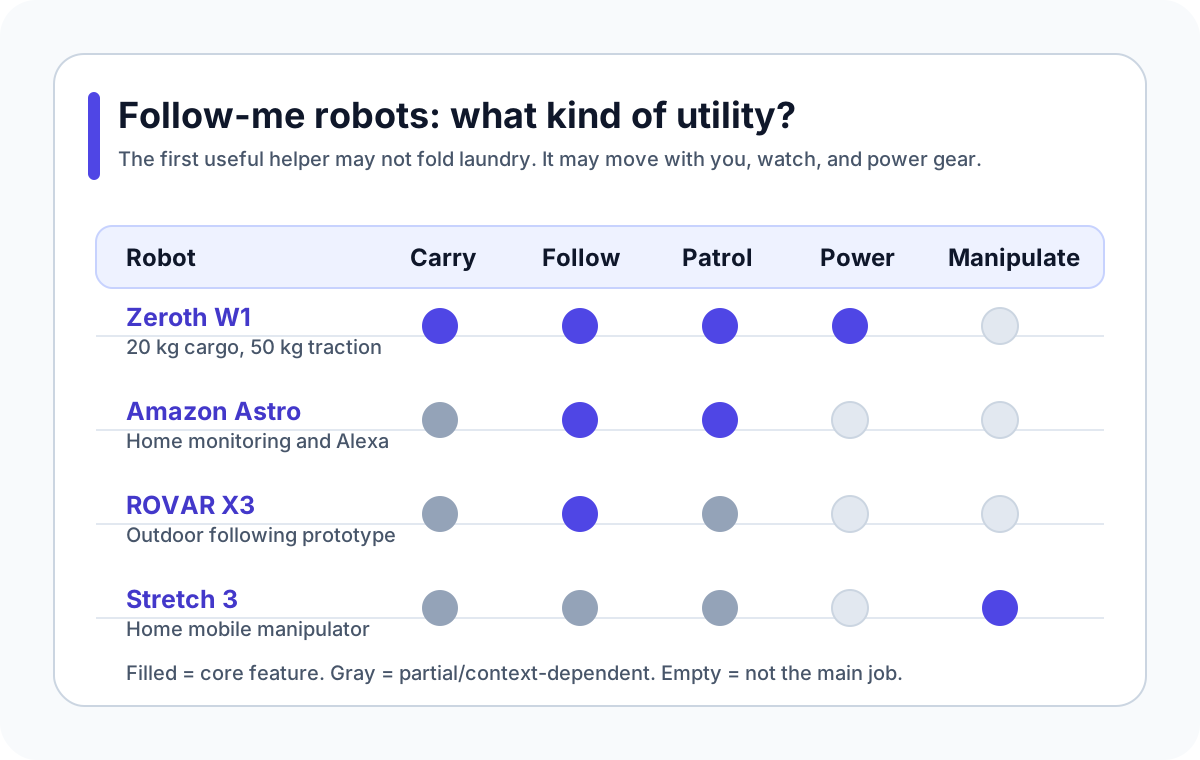
The important comparison is not "W1 versus every humanoid." It is W1 versus other ways to make a robot useful before general-purpose manipulation arrives.
Robot
- Status and price in ui44
- Available, $4,999
- Strongest utility signal
- 20 kg cargo, 50 kg traction, outdoor patrol, portable power
- Main limitation
- No documented manipulator gripper or published object-handling capability; real loaded runtime still needs owner evidence
Robot
- Status and price in ui44
- Active, $1,599.99 invitation pricing
- Strongest utility signal
- Indoor follow-me behavior, Alexa, home monitoring, Ring patrol options
- Main limitation
- Single-floor indoor product; advanced monitoring depends on Ring plan
Robot
- Status and price in ui44
- Prototype, no public price
- Strongest utility signal
- Multimodal adaptive following with face, ReID, and gait recognition
- Main limitation
- Public demo stage; no retail launch or buyer support path yet
Robot
- Status and price in ui44
- Active, $24,950
- Strongest utility signal
- Real home-oriented mobile manipulation, 2 kg payload, ROS 2/Python SDK
- Main limitation
- Research/developer platform, not a consumer cargo robot
Robot
- Status and price in ui44
- Available, $999
- Strongest utility signal
- Mobile family monitoring, V-SLAM, 4K camera, night vision
- Main limitation
- Companion/patrol role only; no outdoor utility or cargo capability
Robot
- Status and price in ui44
- Available, from $2,800
- Strongest utility signal
- Quadruped mobility, 4D LiDAR, intelligent side-follow
- Main limitation
- More robot dog than home utility cart; payload and support vary by edition
| Robot | Status and price in ui44 | Strongest utility signal | Main limitation |
|---|---|---|---|
| Zeroth W1 | Available, $4,999 | 20 kg cargo, 50 kg traction, outdoor patrol, portable power | No documented manipulator gripper or published object-handling capability; real loaded runtime still needs owner evidence |
| Amazon Astro | Active, $1,599.99 invitation pricing | Indoor follow-me behavior, Alexa, home monitoring, Ring patrol options | Single-floor indoor product; advanced monitoring depends on Ring plan |
| Sentigent ROVAR X3 | Prototype, no public price | Multimodal adaptive following with face, ReID, and gait recognition | Public demo stage; no retail launch or buyer support path yet |
| Hello Robot Stretch 3 | Active, $24,950 | Real home-oriented mobile manipulation, 2 kg payload, ROS 2/Python SDK | Research/developer platform, not a consumer cargo robot |
| Enabot EBO X | Available, $999 | Mobile family monitoring, V-SLAM, 4K camera, night vision | Companion/patrol role only; no outdoor utility or cargo capability |
| Unitree Go2 | Available, from $2,800 | Quadruped mobility, 4D LiDAR, intelligent side-follow | More robot dog than home utility cart; payload and support vary by edition |
This table shows why "utility" is not one feature. Astro is better for indoor Alexa-style monitoring. Stretch 3 is far more relevant if your goal is research-grade manipulation. ROVAR X3 is interesting for outdoor following, but it is still a prototype. Unitree Go2 is the more agile terrain platform, but it is not primarily a grocery hauler or home power station.
W1's niche is narrower and more practical: a tracked machine that can move with a person and carry enough weight to change the task. A 20 kg payload is a different promise from a cute companion bot carrying a small tray. It suggests tools, groceries, camera gear, yard supplies, emergency kit, camping equipment, or accessibility support where the user chooses the load and the robot provides mobility.
Where a utility robot can beat a humanoid
A utility robot can beat a humanoid when the job is physically simple but annoying, repetitive, or heavy. Carrying is the obvious example. A humanoid with arms has to grasp, balance, and avoid dropping things. A utility base only needs a stable cargo area and enough traction to move safely. That is less glamorous, but it may be more reliable.
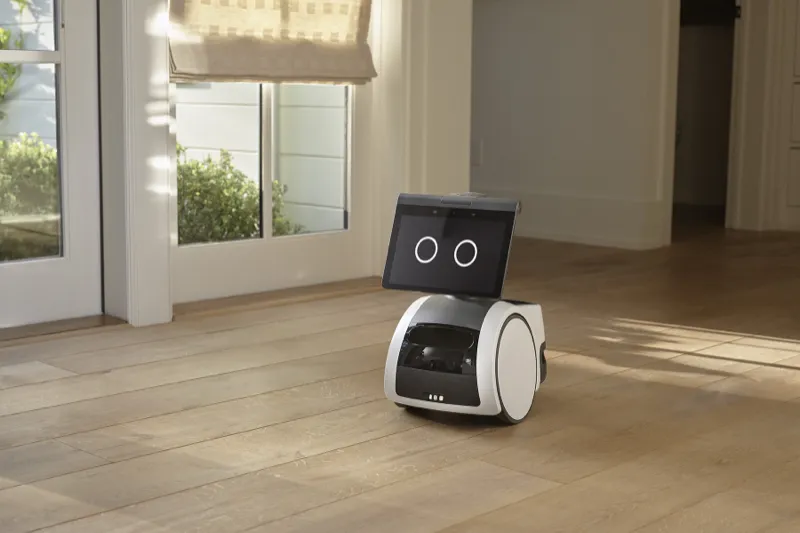
Patrol is another strong fit. A mobile camera with mapping, obstacle avoidance, alerts, and a privacy switch can be valuable without solving dexterous manipulation. Amazon Astro already proved there is a real category here: people may want a robot that can go to a room, raise a camera, detect certain sounds, and let a remote user check in. W1 extends that logic outdoors and into load-carrying, though buyers should treat weather, privacy, and service support as unresolved until verified in their own country.
Portable power is a third angle that humanoids rarely emphasize. Zeroth's 360 Wh battery and 60-120 W USB-C output claim is not just a robot spec; it changes where the robot can be useful. Camping, yard work, outdoor events, emergency lighting, and remote work setups all become more plausible than "please fold this fitted sheet." The robot is not replacing a person. It is moving useful infrastructure with the person.
The trade-off is clear: Zeroth's spec sheet lists left/right arm arcs and wrist motion, but it does not document a manipulator gripper or object-handling capability. W1 should not be treated as a robot that can open a drawer, load a washing machine, or pick up a fallen cup unless a future accessory or verified software update changes the platform. If your target chore involves tools designed for human hands, a wheeled utility base is the wrong shape. If your target chore is "bring these things with me and keep watch," a humanoid may be overkill.
The buyer checklist: specs that matter more than demo videos
Privacy and security are not optional details
A patrol-capable utility robot is a mobile camera platform. That is useful, but it also raises the stakes. Buyers should look for physical controls for cameras, microphones, and motion; app-visible no-go zones; clear cloud-storage terms; and a way to delete maps or recordings. Astro's product page is unusually explicit about privacy controls: it describes a button to turn off mics, cameras, and motion, out-of-bounds zones, and on-device processing for Visual ID. Any new patrol robot should be held to at least that level of disclosure.
Smart-home integration also needs careful reading. A smoke or intrusion alert sounds reassuring, but the details matter: which sensors are supported, whether alerts require a subscription, whether the robot can act locally during an internet outage, and whether it stores footage in the cloud. If the robot is marketed for security, treat privacy, service plans, and false-alarm behavior as core specs, not footnotes.
Outdoor use adds another layer. GPS and Beidou support help with positioning, but they do not guarantee safe behavior near roads, pets, children, pools, stairs, or steep slopes. Zeroth's 5 cm obstacle-height claim is useful for small thresholds; it is not a stair-climbing claim. Zeroth's 20° climbing angle is meaningful, but buyers should still ask whether that number is tested with load, on dry pavement, on grass, or in mixed terrain.
Should you buy one now?
Consider a follow-me utility robot now if your use case is specific: carrying equipment around a property, supporting outdoor hobbies, adding mobile patrol to a smart-home setup, or giving a maker/developer a real mobile platform to build on. W1 is one of the more concrete examples because it has a public price, a published product page, real payload numbers, and a feature set that is not just "AI companion" language.
Wait if you need proven household chore autonomy. A utility robot will not replace an assistive mobile manipulator like Stretch 3, and it will not compete with future humanoids on human-tool tasks. It also needs the same boring buyer checks as any early robot: warranty, spare parts, app longevity, regional support, return policy, and whether the company publishes meaningful updates after launch.
The best short version is this: follow-me utility robots make the most sense when the task is moving weight, watching space, or bringing power. Humanoids make more sense when the task is using hands in a human-designed room. Those are different problems. A buyer who keeps them separate will make a much better decision.
If you are comparing early home helpers, start with the robot's physical job before the AI pitch. Use the ui44 robot database and /compare to check payload, battery, category, status, price, and whether the robot is actually available. The most useful home robot may not be the one that looks most human. It may be the one that quietly carries the heavy stuff.
Related in the database
Use this article as a privacy verification workflow
Turn the article into a privacy verification pass grounded in the robots, manufacturers, and components it actually references.
Follow-Me Utility Robots: Home Helper Guide already points you toward 6 linked robots, 6 manufacturers, and 2 countries inside the ui44 database. That matters because strong buyer guidance is easier to apply when you can move immediately from a claim or warning into concrete product pages, manufacturer directories, component explainers, and country-level context instead of treating the article as an isolated opinion piece. The fastest next step is to turn the article into a shortlist workflow: open the linked robot pages, verify which specs are actually published for those models, then compare the surrounding manufacturer and component context before you decide whether the underlying claim changes your buying plan.
For this topic, the useful discipline is to separate the editorial lesson from the catalog evidence. The article gives you the framing, but the robot pages tell you what each product actually ships with today: sensor stack, connectivity methods, listed price, release timing, category, and support-relevant compatibility notes. The manufacturer pages then show whether you are looking at a one-off launch, a broader lineup pattern, or a company that spans multiple categories. That layered workflow reduces the risk of buying on a single marketing phrase or a single support FAQ.
Use the robot pages to confirm which products actually expose cameras, microphones, Wi-Fi, or voice systems, then use the manufacturer pages to decide how much of the privacy question seems product-specific versus brand-wide. On this route cluster, W1, Astro, and ROVAR X3 form the fastest reality check. If you want a quick working shortlist, open Compare W1, Astro, and ROVAR X3 next, then keep this article open as the reasoning layer while you compare structured data side by side.
Practical Takeaway
Every robot, manufacturer, category, component, and country reference below resolves to a real ui44 page, keeping the follow-up path grounded in database records rather than generic advice.
Suggested next steps in ui44
- Open W1 and note the listed sensors, connectivity methods, and voice stack before you interpret any policy claim.
- Cross-check the wider brand context on Zeroth Robotics so you can see whether the privacy question touches one model or a broader lineup.
- Use the linked component pages to confirm how common the relevant sensors and connectivity layers are across the database.
- Keep a short note of which policy layers you checked, which device features are actually present on the robot page, and which items still depend on region- or app-level confirmation.
- Finish with Compare W1, Astro, and ROVAR X3 so the policy reading sits next to structured product data.
Robot profiles worth opening next
Use the linked product pages as the evidence layer
The linked robot pages are where this article becomes operational. Instead of asking whether the headline is interesting, use the robot entries to inspect the actual mix of sensors, connectivity options, batteries, pricing, release timing, and stated capabilities attached to the products mentioned in the article. That is the easiest way to see whether the warning or opportunity described here affects one product family, a specific design pattern, or an entire buying lane.
W1
Zeroth Robotics · Home Assistants · Available
W1 is tracked on ui44 as a available home assistants robot from Zeroth Robotics. The database currently records a listed price of $7,999, a release date of 2026-01, Up to 25 hours standby battery life, 4 hours charging time, and a published stack that includes LiDAR, 13MP RGB camera (shooting), and 2MP RGB camera (monitoring) plus Dual-band Wi-Fi 6 and Bluetooth 5.2.
For privacy-focused reading, this page matters because it shows the concrete device surface behind the policy discussion. Use it to verify whether W1 combines sensors and connectivity in a way that could change the in-home data footprint, and compare the listed capabilities such as Autonomous following, Item transport, and Outdoor terrain navigation with any cloud, app, or voice layers.
Astro is tracked on ui44 as a active security & patrol robot from Amazon. The database currently records a listed price of $1,599, a release date of 2021, Not officially disclosed battery life, Not officially disclosed charging time, and a published stack that includes 5MP Bezel Camera, 1080p Periscope Camera (132° FOV), and Infrared Vision plus Wi-Fi 802.11ac and Bluetooth.
For privacy-focused reading, this page matters because it shows the concrete device surface behind the policy discussion. Use it to verify whether Astro combines sensors and connectivity in a way that could change the in-home data footprint, and compare the listed capabilities such as Autonomous Home Patrol, Visual ID (face recognition), and Remote Home Monitoring with any cloud, app, or voice layers, including Amazon Alexa.
ROVAR X3
Sentigent Technology · Companions · Prototype
ROVAR X3 is tracked on ui44 as a prototype companions robot from Sentigent Technology. The database currently records a listed price of Price TBA, a release date of 2026-01, 6 hours (reported by The Verge from CES 2026) battery life, Not officially disclosed charging time, and a published stack that includes Visual perception system, Face ID tracking, and ReID tracking plus its listed connectivity stack.
For privacy-focused reading, this page matters because it shows the concrete device surface behind the policy discussion. Use it to verify whether ROVAR X3 combines sensors and connectivity in a way that could change the in-home data footprint, and compare the listed capabilities such as Outdoor human-following, Social navigation, and Terrain handling for steps, gravel paths, lawns, and shallow streams with any cloud, app, or voice layers.
Stretch 3
Hello Robot · Home Assistants · Active
Stretch 3 is tracked on ui44 as a active home assistants robot from Hello Robot. The database currently records a listed price of $24,950, a release date of 2024, 2–5 hours battery life, Not disclosed charging time, and a published stack that includes Intel D405 RGBD Camera (gripper), Intel D435if RGBD Camera (head), and Wide-Angle RGB Camera (head) plus Wi-Fi 6E and Bluetooth.
For privacy-focused reading, this page matters because it shows the concrete device surface behind the policy discussion. Use it to verify whether Stretch 3 combines sensors and connectivity in a way that could change the in-home data footprint, and compare the listed capabilities such as Mobile Manipulation, Autonomous Navigation, and Teleoperation (Web / Gamepad / Dexterous) with any cloud, app, or voice layers.
EBO X is tracked on ui44 as a available companions robot from Enabot. The database currently records a listed price of $999, a release date of 2023-05, 2-3 hours battery life, 2 hours charging time, and a published stack that includes 4K one-axis stabilized camera, 8MP ultra-low-light sensor, and 106° camera FOV plus 2.4GHz Wi-Fi and 5GHz Wi-Fi.
For privacy-focused reading, this page matters because it shows the concrete device surface behind the policy discussion. Use it to verify whether EBO X combines sensors and connectivity in a way that could change the in-home data footprint, and compare the listed capabilities such as Autonomous home patrol, Two-way video communication, and AI voice interactions with any cloud, app, or voice layers, including Amazon Alexa.
Manufacturer context behind the article
Check whether this is one product story or a broader company pattern
Manufacturer pages add the privacy context that individual product pages cannot show on their own. They help you check whether cameras, microphones, cloud accounts, app controls, and policy assumptions appear across a broader lineup or stay tied to one specific product story.
Zeroth Robotics
ui44 currently tracks 3 robots from Zeroth Robotics across 3 categorys. The company is grouped under China, and the current catalog footprint on ui44 includes W1, M1, Jupiter.
That wider brand context matters because privacy questions rarely stop at one FAQ page. A manufacturer route helps you see whether the article is centered on one premium model or on a company that has several relevant products and therefore more than one place where the same policy or app assumptions might matter. The category mix here currently points toward Home Assistants, Companions, Humanoid as the most useful next route if you want to see whether this article reflects a wider pattern inside the brand.
Amazon
ui44 currently tracks 1 robot from Amazon across 1 category. The company is grouped under USA, and the current catalog footprint on ui44 includes Astro.
That wider brand context matters because privacy questions rarely stop at one FAQ page. A manufacturer route helps you see whether the article is centered on one premium model or on a company that has several relevant products and therefore more than one place where the same policy or app assumptions might matter. The category mix here currently points toward Security & Patrol as the most useful next route if you want to see whether this article reflects a wider pattern inside the brand.
Sentigent Technology
ui44 currently tracks 1 robot from Sentigent Technology across 1 category. The company is grouped under China, and the current catalog footprint on ui44 includes ROVAR X3.
That wider brand context matters because privacy questions rarely stop at one FAQ page. A manufacturer route helps you see whether the article is centered on one premium model or on a company that has several relevant products and therefore more than one place where the same policy or app assumptions might matter. The category mix here currently points toward Companions as the most useful next route if you want to see whether this article reflects a wider pattern inside the brand.
Hello Robot
ui44 currently tracks 2 robots from Hello Robot across 1 category. The company is grouped under USA, and the current catalog footprint on ui44 includes Stretch 3, Stretch 4.
That wider brand context matters because privacy questions rarely stop at one FAQ page. A manufacturer route helps you see whether the article is centered on one premium model or on a company that has several relevant products and therefore more than one place where the same policy or app assumptions might matter. The category mix here currently points toward Home Assistants as the most useful next route if you want to see whether this article reflects a wider pattern inside the brand.
Broaden the scan without leaving the database
Categories, components, and countries add the wider context
Category framing
Category pages are useful when the article touches a buying pattern that shows up across brands. A category route helps you confirm whether the linked products sit in a narrow niche or whether the same question should be tested across a larger field of alternatives.
Home Assistants
The Home Assistants category page currently groups 16 tracked robots from 14 manufacturers. ui44 describes this lane as: Arm-based household helpers — laundry folders, kitchen robots, and mobile manipulators that take on hands-on physical tasks around the home.
That makes the category route a practical follow-up when you want to check whether the products linked in this article are typical for the lane or whether they sit at one edge of the market. Useful starting examples currently include Robody, Futuring 2 (F2), Stretch 3.
Security & Patrol
The Security & Patrol category page currently groups 5 tracked robots from 5 manufacturers. ui44 describes this lane as: Autonomous surveillance and patrol robots that monitor homes, businesses, and perimeters — keeping watch without an operator on site.
That makes the category route a practical follow-up when you want to check whether the products linked in this article are typical for the lane or whether they sit at one edge of the market. Useful starting examples currently include Astro, Vision 60, K7 Autonomous Security Robot.
Country and ecosystem context
Country pages give extra context when support practices, launch sequencing, regulatory posture, or manufacturer mix matter. They are not a substitute for model-level verification, but they do help you see which ecosystems cluster together and which manufacturers sit in the same regional field when you broaden the search beyond the article headline.
China
The China route currently groups 189 tracked robots from 87 manufacturers in ui44. That gives you a useful regional lens when the article points toward support practices, launch sequencing, or brand clusters that may share similar ecosystem assumptions.
On the current route, manufacturers like AGIBOT, Dreame, Unitree Robotics make the page a good way to broaden the scan without losing the regional context that often shapes availability, documentation style, and adjacent alternatives.
USA
The USA route currently groups 89 tracked robots from 69 manufacturers in ui44. That gives you a useful regional lens when the article points toward support practices, launch sequencing, or brand clusters that may share similar ecosystem assumptions.
On the current route, manufacturers like Faraday Future, iRobot, Boston Dynamics make the page a good way to broaden the scan without losing the regional context that often shapes availability, documentation style, and adjacent alternatives.
Questions to answer before you move from reading to buying
A follow-up FAQ built from the entities already linked in this article
Frequently Asked Questions
Which page should I open first after reading “Follow-Me Utility Robots: Home Helper Guide”?
Start with W1. That gives you a concrete product anchor for the article’s main claim. From there, branch into the manufacturer and component pages so you can tell whether the article is describing one specific model, a repeated brand pattern, or a wider technology issue that affects multiple shortlist options.
How do the manufacturer pages change the buying decision?
Zeroth Robotics help you zoom out from one article and one product. On ui44 they show lineup breadth, category spread, and the neighboring robots tied to the same company. That context is useful when you are deciding whether a risk belongs to a single model, whether it shows up across a brand’s portfolio, and whether you should keep looking at alternatives before committing.
When should I switch from reading to side-by-side comparison?
Move into Compare W1, Astro, and ROVAR X3 as soon as you understand the article’s main warning or promise. The article explains what to watch for, but the compare view is where you can check whether price, status, battery life, connectivity, sensors, and category fit still make the robot a good match for your own home and budget.
Where to go next in ui44
Keep the research chain inside the database
If you want to keep going, these follow-on pages give you the cleanest expansion path from article to research session. Open the comparison route first if you are deciding between products today. Open the manufacturer, category, and component routes if you still need to understand the broader pattern behind the claim.
Written by
ui44 Team
Published April 30, 2026
Share this article
Open a plain share link on X or Bluesky. No embeds, no widgets, no cookie baggage.