The better conclusion is simpler: the legal clock moved, but the physical risk did not. A robot with cameras, microphones, cloud accounts, remote support, software updates, wheels, arms, or legs still has to be judged on what it can prove today.
This article is not legal advice. It is a buyer checklist for the kind of products ui44 tracks: humanoids, companion robots, mobile manipulators, robot dogs, lawn robots, and smart-home robots that are starting to look less like appliances and more like moving AI systems.
What actually changed in the EU AI Act timeline?
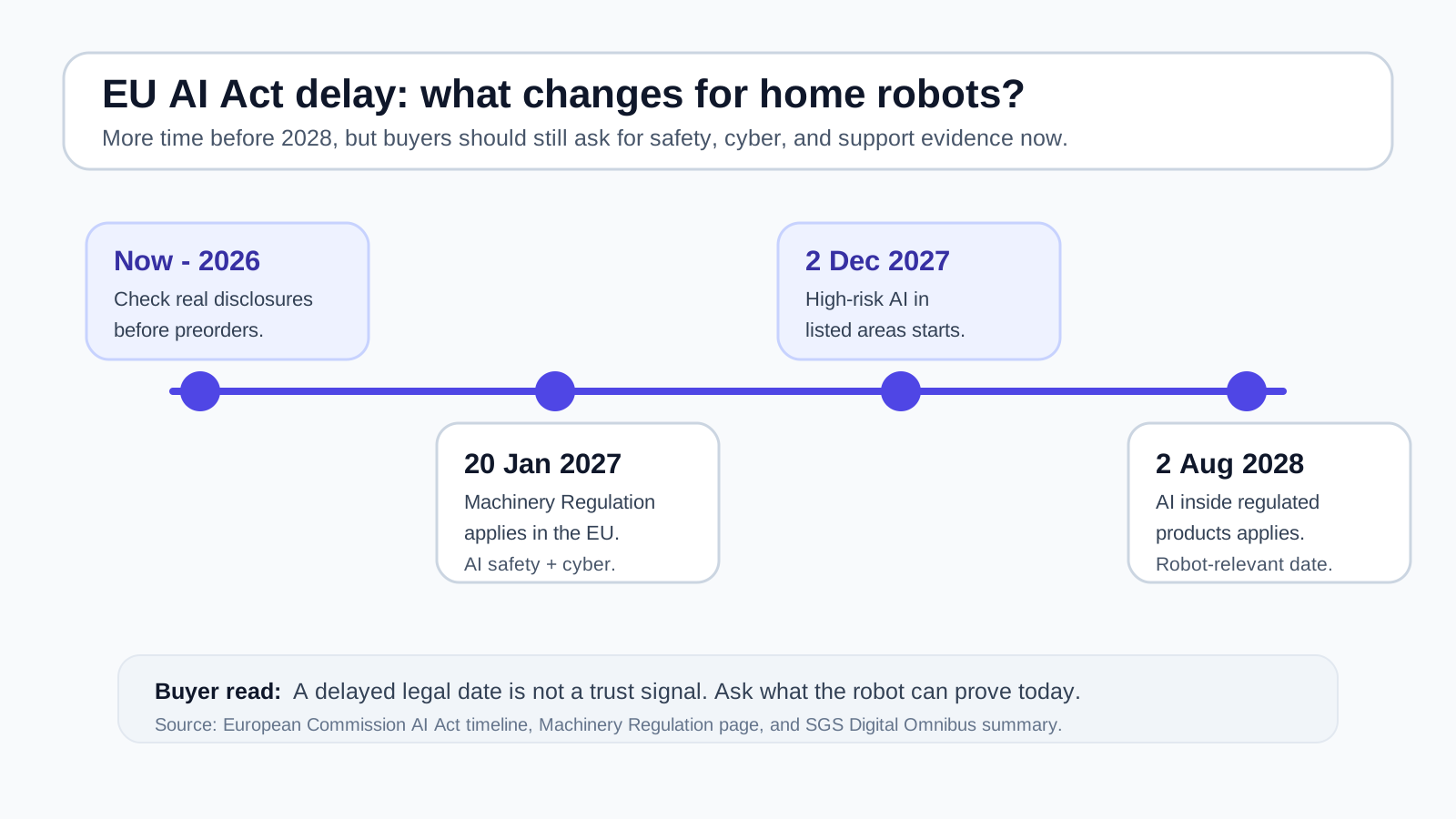
The European Commission's current AI Act implementation page says the regulation entered into force on August 1, 2024, with staggered application dates. Some parts are already live: prohibited AI practices and AI literacy obligations started applying in February 2025, and general-purpose AI model rules started in August 2025.
The 2026 simplification agreement changes the high-risk schedule. The Commission says rules for systems used in certain high-risk areas, such as biometrics, critical infrastructure, education, employment, migration, asylum, and border control, will apply from December 2, 2027. For systems integrated into products such as lifts or toys, the rules will apply from August 2, 2028.
SGS's May 2026 Digital Omnibus summary adds a robot-relevant detail: machinery is being treated through a more sector-specific path. In SGS's reading, the Machinery Regulation is expected to carry much of the overlapping AI-related health and safety work for machinery. Delegated acts and guidance would then align AI requirements into existing product compliance processes.
That matters for robots because many capable home robots are not just apps with AI. They are machinery: powered systems with moving parts, sensors, control software, batteries, and failure modes that can affect human safety.
Does this mean home robots are unregulated until 2028?
No. The delay is about when specific high-risk AI obligations start applying in full. It does not erase existing product-safety, radio, privacy, consumer, cybersecurity, warranty, or market-surveillance rules. It also does not make a robot safe just because the AI Act deadline is later.
The Machinery Regulation is especially important. The European Commission says Regulation (EU) 2023/1230 applies on a mandatory basis from January 20, 2027. The Commission's machinery page says the new regulation integrates provisions for machinery with AI-powered safety functions, integrates cyber-safety for compliance-relevant software data and safety control systems, and addresses conformity assessment for machinery presenting a higher risk factor.
For a buyer, the practical question is not "which article number applies to my robot?" It is: can the manufacturer show a safety case that matches the robot's body, software, sensors, and intended use?
That is why a humanoid, a mobile manipulator, and a rolling smart display should not be judged the same way. The legal categories may still be settling, but the risk profiles are already different.

The buyer rule: ask for evidence, not labels
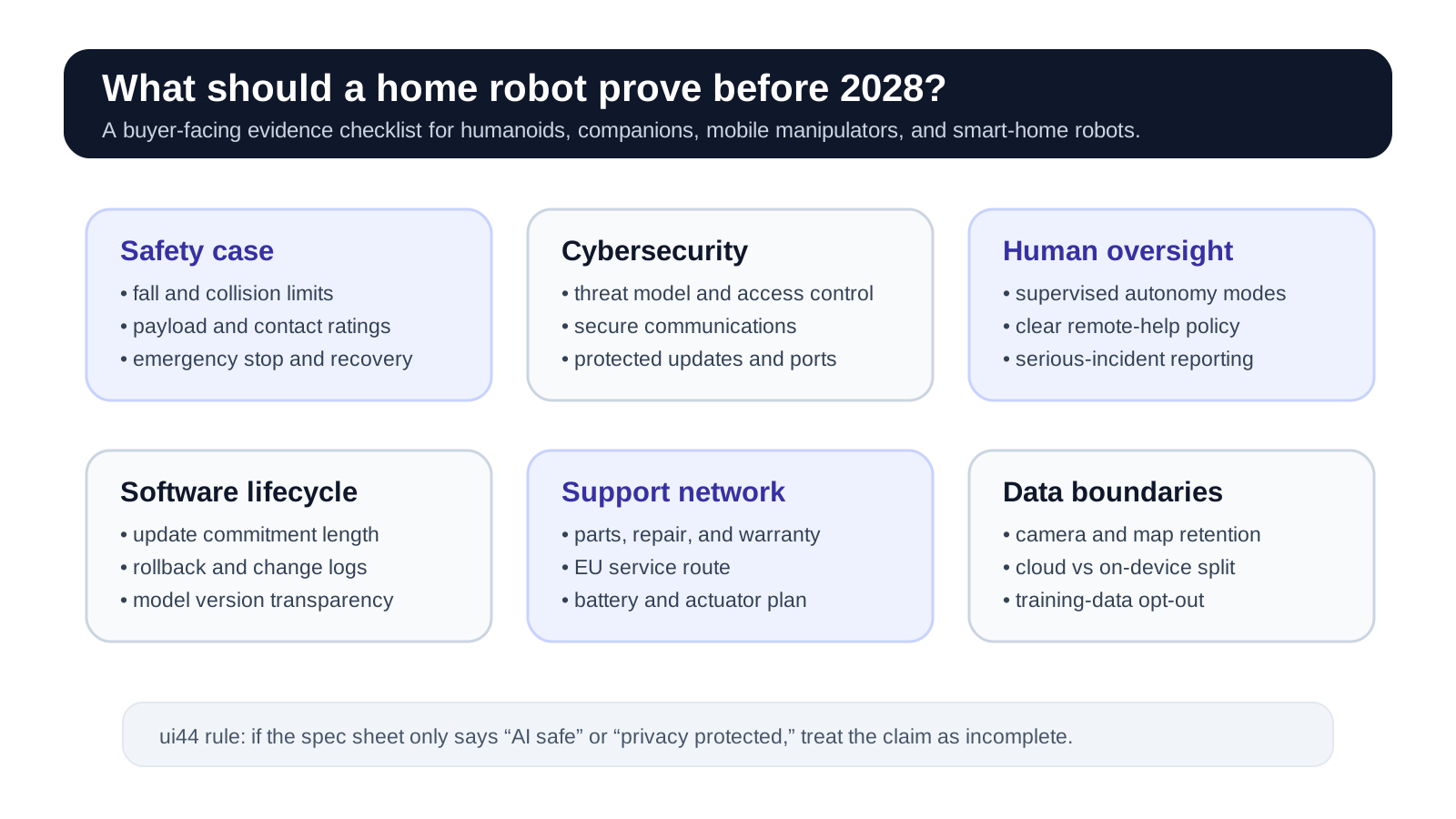
A manufacturer saying "AI safe," "privacy-first," or "EU ready" is not enough. A serious home robot should be able to answer narrower questions.
Start with the body. How heavy is it? How fast can it move? What force can its arms apply? What happens if it falls, loses localization, collides with a pet, or grips the wrong object?
Then look for physical safeguards. Does it have a physical emergency stop? Can it detect a person on the floor? What does it do after a failed task?
Next, ask about the AI boundary. Which functions are autonomous? Which are scripted? Which use cloud models? Which depend on remote human help? Can the robot complete a task locally if the cloud is down?
Data use belongs in the same conversation. Are camera feeds, maps, voice recordings, and manipulation logs used for training? Can the buyer opt out?
Then ask about the software lifecycle. How long will security updates last? Are firmware updates signed? Is there a rollback path? Does the company publish change logs when a behavior model changes?
Accountability matters too. If a robot becomes less safe after an update, who is responsible?
Finally, ask about support. Where is the EU repair route? How are batteries, actuators, wheels, arms, sensors, and covers replaced? Is there a local service partner, a mail-in path, or only remote chat support? A robot that cannot be repaired safely is not ready for homes, no matter how polished the demo looks.
What ui44's database says about the gap
ui44 currently tracks 283 robots. The categories most likely to raise physical-AI compliance questions are already large: 81 humanoids, 36 companion robots, 14 home assistants, and 11 quadrupeds. Those are not all consumer products, but they show where the market is moving.
Connectivity is nearly universal. In the database, 254 robots have explicit connectivity entries, including 167 with Wi-Fi, 85 with Bluetooth, and 43 with Ethernet or LAN. That does not mean every connected robot is risky. It means cybersecurity is no longer optional. A moving robot is a networked computer with a body.
The certification picture is less complete. Only 65 of 283 robots currently list at least one certification or formal rating in ui44's structured data. That number includes everything from CE and FCC marks to IP ratings, medical-device status, privacy certifications, and product-specific awards. The point is not that every robot lacks compliance. The point is that public buyer-facing disclosure is uneven.
That disclosure gap matters more as robots move from novelty to household infrastructure. If a company wants you to trust a robot near children, pets, older adults, medications, stairs, blades, doors, or kitchens, it should publish more than a teaser video.
How this applies to real home robots
The EU AI Act delay looks abstract until you map it onto actual products.
1X NEO is one of the clearest home-branded humanoids in the database. ui44 lists it as a $20,000 preorder, 167 cm tall, 30 kg, with about 4 hours of battery life, Wi-Fi, Bluetooth, RGB cameras, depth sensors, tactile skin, microphones, and household-chore ambitions. That is exactly the kind of robot where buyers should ask for a safety case, remote-help policy, data policy, and support plan before treating the preorder as a normal appliance.
Unitree G1 is different. It is available, starts at $13,500, and is positioned more like an affordable humanoid research and developer platform than a plug-and-play home helper. ui44 lists Wi-Fi 6, Bluetooth 5.2, a depth camera, 3D LiDAR, a microphone array, ROS 2 compatibility, and about 2 hours of battery life. That makes it concrete hardware, but not a shortcut around buyer due diligence. A research humanoid in a home still needs clear limits.
Hello Robot Stretch 4 is a useful contrast. It is not a bipedal humanoid. It is a wheeled mobile manipulator priced at $29,950, available now, with a 160 cm working height, a 45 cm footprint, 8 hours of light-load runtime, and a 2.5 kg extended-arm payload. Its shape narrows the risk: no legs, one arm, a clearer assistive-pilot story, and open ROS 2 / Python software. That does not eliminate compliance questions, but it makes them more specific.
Samsung Ballie sits at the other end of the evidence spectrum. It has a compelling smart-home story: a rolling companion, projector, SmartThings control, cameras, sensors, Gemini, and Bixby. But ui44 still lists no public price, no firm release date, and many undisclosed hardware basics. Under a buyer checklist, Ballie is not "bad"; it is not yet evidenced enough.
Cybersecurity is becoming part of robot safety
The most useful May 2026 signal may not be the deadline delay. It may be an industrial certification story. SGS says DOBOT's CR 30H collaborative-robot series achieved ISO 10218-1:2025 cybersecurity compliance after assessment of threat modeling, access control and identity authentication, secure communication, configuration protection, port and interface management, and secure software updates.
That is not a home robot certification, and it should not be treated as one. But it shows the direction buyers should expect. Cybersecurity is no longer separate from safety when a machine can move, sense, and receive commands. An insecure update channel or remote diagnostic path can become a physical safety problem.
For home robots, the same checklist should be normal:
Question
Are software updates signed and protected?
- Why it matters
- A robot should not accept untrusted control software.
Question
Can remote support move or view through the robot?
- Why it matters
- Buyers need consent, logs, and session limits.
Question
Are ports and developer interfaces locked down?
- Why it matters
- Debug access can become attacker access.
Question
Does the company publish security fixes?
- Why it matters
- Silent updates make risk hard to evaluate.
Question
Can the robot operate safely offline?
- Why it matters
- Cloud outages should not create unsafe behavior.
| Question | Why it matters |
|---|---|
| Are software updates signed and protected? | A robot should not accept untrusted control software. |
| Can remote support move or view through the robot? | Buyers need consent, logs, and session limits. |
| Are ports and developer interfaces locked down? | Debug access can become attacker access. |
| Does the company publish security fixes? | Silent updates make risk hard to evaluate. |
| Can the robot operate safely offline? | Cloud outages should not create unsafe behavior. |
This applies beyond humanoids. Enabot EBO X is a 1.5 kg companion robot with 2.4 GHz and 5 GHz Wi-Fi, a 4K stabilized camera, far-field microphones, Alexa compatibility, and GPT-4o mini integration in ui44's data. Yarbo M is a modular yard robot with RTK, optional LiDAR/camera sensing, Wi-Fi, Bluetooth, HaLow, optional 4G, blades, snow and leaf modules, and a preorder path. Those are very different products, but both show why connected-robot security is a buyer issue, not an enterprise-only issue.
Should EU buyers wait until 2028?
Not automatically. Waiting makes sense if the product is vague, expensive, physically powerful, heavily cloud-dependent, or missing support details. It also makes sense if you are importing a robot whose EU compliance path is unclear.
But the better rule is not "wait for the law." It is buy only when the evidence matches the risk.
A small companion robot with no arms and a clear privacy policy is a different risk than a 35 kg humanoid with dynamic walking. A wheeled manipulator deployed in a supervised assistive pilot is different from a consumer robot sold as an autonomous household worker. A robot mower with blades, RTK, cameras, and remote diagnostics needs a different checklist again.
Use the delay as leverage. If a manufacturer says the rules are not fully in force yet, ask what standards, audits, tests, service plans, and incident processes it is already using. Serious companies should welcome that question.

A practical pre-order checklist
- A product-specific safety document. It should cover collision behavior,
- A conformity path. Ask which EU product frameworks the company believes
- A cybersecurity summary. Look for threat modeling, access control,
- A data boundary. Cameras, maps, microphones, cloud inference, remote
- A software-update commitment. A robot sold in 2026 should not become an
- A repair route. Batteries, actuators, wheels, covers, sensors, and
- An incident process. Buyers should know how crashes, injuries,
- A real refund and warranty policy. Preorders are common in robotics, but
Bottom line
The EU AI Act delay gives robot makers more breathing room. It does not give buyers a reason to lower their standards.
Between now and August 2028, the smart move is to separate robot demos from robot evidence. Ask how the machine handles physical safety, cybersecurity, human oversight, updates, repair, incident reporting, and data use. Compare those answers against concrete specs in the ui44 robot database, then use the compare tool to see which robots disclose enough to trust.
For home robots, the future deadline matters. The robot in your hallway matters more.
Related in the database
Use this article as a privacy verification workflow
Turn the article into a privacy verification pass grounded in the robots, manufacturers, and components it actually references.
EU AI Act Delay: Home Robot Buyer Checklist already points you toward 6 linked robots, 6 manufacturers, and 4 countries inside the ui44 database. That matters because strong buyer guidance is easier to apply when you can move immediately from a claim or warning into concrete product pages, manufacturer directories, component explainers, and country-level context instead of treating the article as an isolated opinion piece. The fastest next step is to turn the article into a shortlist workflow: open the linked robot pages, verify which specs are actually published for those models, then compare the surrounding manufacturer and component context before you decide whether the underlying claim changes your buying plan.
For this topic, the useful discipline is to separate the editorial lesson from the catalog evidence. The article gives you the framing, but the robot pages tell you what each product actually ships with today: sensor stack, connectivity methods, listed price, release timing, category, and support-relevant compatibility notes. The manufacturer pages then show whether you are looking at a one-off launch, a broader lineup pattern, or a company that spans multiple categories. That layered workflow reduces the risk of buying on a single marketing phrase or a single support FAQ.
Use the robot pages to confirm which products actually expose cameras, microphones, Wi-Fi, or voice systems, then use the manufacturer pages to decide how much of the privacy question seems product-specific versus brand-wide. On this route cluster, NEO, G1, and Stretch 4 form the fastest reality check. If you want a quick working shortlist, open Compare NEO, G1, and Stretch 4 next, then keep this article open as the reasoning layer while you compare structured data side by side.
Practical Takeaway
Every robot, manufacturer, category, component, and country reference below resolves to a real ui44 page, keeping the follow-up path grounded in database records rather than generic advice.
Suggested next steps in ui44
- Open NEO and note the listed sensors, connectivity methods, and voice stack before you interpret any policy claim.
- Cross-check the wider brand context on 1X Technologies so you can see whether the privacy question touches one model or a broader lineup.
- Use the linked component pages to confirm how common the relevant sensors and connectivity layers are across the database.
- Keep a short note of which policy layers you checked, which device features are actually present on the robot page, and which items still depend on region- or app-level confirmation.
- Finish with Compare NEO, G1, and Stretch 4 so the policy reading sits next to structured product data.
Robot profiles worth opening next
Use the linked product pages as the evidence layer
The linked robot pages are where this article becomes operational. Instead of asking whether the headline is interesting, use the robot entries to inspect the actual mix of sensors, connectivity options, batteries, pricing, release timing, and stated capabilities attached to the products mentioned in the article. That is the easiest way to see whether the warning or opportunity described here affects one product family, a specific design pattern, or an entire buying lane.
NEO
1X Technologies · Humanoid · Pre-order
NEO is tracked on ui44 as a pre-order humanoid robot from 1X Technologies. The database currently records a listed price of $20,000, a release date of 2025-10-28, ~4 hours battery life, Not disclosed charging time, and a published stack that includes RGB Cameras, Depth Sensors, and Tactile Skin plus Wi-Fi and Bluetooth.
For privacy-focused reading, this page matters because it shows the concrete device surface behind the policy discussion. Use it to verify whether NEO combines sensors and connectivity in a way that could change the in-home data footprint, and compare the listed capabilities such as Household Chores, Tidying Up, and Safe Human Interaction with any cloud, app, or voice layers.
G1 is tracked on ui44 as a available humanoid robot from Unitree. The database currently records a listed price of $13,500, a release date of 2024-05-13, ~2 hours battery life, Not disclosed charging time, and a published stack that includes Depth Camera, 3D LiDAR, and 4 Microphone Array plus Wi-Fi 6 and Bluetooth 5.2.
For privacy-focused reading, this page matters because it shows the concrete device surface behind the policy discussion. Use it to verify whether G1 combines sensors and connectivity in a way that could change the in-home data footprint, and compare the listed capabilities such as Bipedal Walking, Object Manipulation, and Dexterous Hands (optional Dex3-1) with any cloud, app, or voice layers.
Stretch 4
Hello Robot · Home Assistants · Available
Stretch 4 is tracked on ui44 as a available home assistants robot from Hello Robot. The database currently records a listed price of $29,950, a release date of 2026-05-12, 8 hours (light CPU load) battery life, Not officially disclosed charging time, and a published stack that includes Wide-FOV depth sensing, High-resolution RGB cameras, and Calibrated RGB + depth perception plus its listed connectivity stack.
For privacy-focused reading, this page matters because it shows the concrete device surface behind the policy discussion. Use it to verify whether Stretch 4 combines sensors and connectivity in a way that could change the in-home data footprint, and compare the listed capabilities such as Mobile Manipulation, Omnidirectional Indoor Mobility, and Autonomous Mapping and Navigation with any cloud, app, or voice layers.
Ballie is tracked on ui44 as a development companions robot from Samsung. The database currently records a listed price of Price TBA, a release date of TBD, Not officially disclosed battery life, Not officially disclosed charging time, and a published stack that includes Camera, Spatial Sensors, and Environmental Sensors plus Wi-Fi and SmartThings.
For privacy-focused reading, this page matters because it shows the concrete device surface behind the policy discussion. Use it to verify whether Ballie combines sensors and connectivity in a way that could change the in-home data footprint, and compare the listed capabilities such as Autonomous Home Navigation, Built-in Projector (Wall & Floor), and Smart Home Control via SmartThings with any cloud, app, or voice layers, including Bixby.
EBO X is tracked on ui44 as a available companions robot from Enabot. The database currently records a listed price of $999, a release date of 2023-05, 2-3 hours battery life, 2 hours charging time, and a published stack that includes 4K one-axis stabilized camera, 8MP ultra-low-light sensor, and 106° camera FOV plus 2.4GHz Wi-Fi and 5GHz Wi-Fi.
For privacy-focused reading, this page matters because it shows the concrete device surface behind the policy discussion. Use it to verify whether EBO X combines sensors and connectivity in a way that could change the in-home data footprint, and compare the listed capabilities such as Autonomous home patrol, Two-way video communication, and AI voice interactions with any cloud, app, or voice layers, including Amazon Alexa.
Manufacturer context behind the article
Check whether this is one product story or a broader company pattern
Manufacturer pages add the privacy context that individual product pages cannot show on their own. They help you check whether cameras, microphones, cloud accounts, app controls, and policy assumptions appear across a broader lineup or stay tied to one specific product story.
1X Technologies
ui44 currently tracks 2 robots from 1X Technologies across 1 category. The company is grouped under Norway, and the current catalog footprint on ui44 includes NEO, EVE.
That wider brand context matters because privacy questions rarely stop at one FAQ page. A manufacturer route helps you see whether the article is centered on one premium model or on a company that has several relevant products and therefore more than one place where the same policy or app assumptions might matter. The category mix here currently points toward Humanoid as the most useful next route if you want to see whether this article reflects a wider pattern inside the brand.
Unitree
ui44 currently tracks 2 robots from Unitree across 1 category. The company is grouped under China, and the current catalog footprint on ui44 includes H1, G1.
That wider brand context matters because privacy questions rarely stop at one FAQ page. A manufacturer route helps you see whether the article is centered on one premium model or on a company that has several relevant products and therefore more than one place where the same policy or app assumptions might matter. The category mix here currently points toward Humanoid as the most useful next route if you want to see whether this article reflects a wider pattern inside the brand.
Hello Robot
ui44 currently tracks 2 robots from Hello Robot across 1 category. The company is grouped under USA, and the current catalog footprint on ui44 includes Stretch 3, Stretch 4.
That wider brand context matters because privacy questions rarely stop at one FAQ page. A manufacturer route helps you see whether the article is centered on one premium model or on a company that has several relevant products and therefore more than one place where the same policy or app assumptions might matter. The category mix here currently points toward Home Assistants as the most useful next route if you want to see whether this article reflects a wider pattern inside the brand.
Samsung
ui44 currently tracks 2 robots from Samsung across 2 categorys. The company is grouped under South Korea, and the current catalog footprint on ui44 includes Ballie, Bespoke AI Jet Bot Steam Ultra.
That wider brand context matters because privacy questions rarely stop at one FAQ page. A manufacturer route helps you see whether the article is centered on one premium model or on a company that has several relevant products and therefore more than one place where the same policy or app assumptions might matter. The category mix here currently points toward Companions, Cleaning as the most useful next route if you want to see whether this article reflects a wider pattern inside the brand.
Broaden the scan without leaving the database
Categories, components, and countries add the wider context
Category framing
Category pages are useful when the article touches a buying pattern that shows up across brands. A category route helps you confirm whether the linked products sit in a narrow niche or whether the same question should be tested across a larger field of alternatives.
Humanoid
The Humanoid category page currently groups 129 tracked robots from 92 manufacturers. ui44 describes this lane as: Full-size bipedal humanoid robots built to work alongside people — from factory floors to household tasks. Compare the cutting edge of humanoid robotics.
That makes the category route a practical follow-up when you want to check whether the products linked in this article are typical for the lane or whether they sit at one edge of the market. Useful starting examples currently include NEO, EVE, Mornine M1.
Home Assistants
The Home Assistants category page currently groups 16 tracked robots from 14 manufacturers. ui44 describes this lane as: Arm-based household helpers — laundry folders, kitchen robots, and mobile manipulators that take on hands-on physical tasks around the home.
That makes the category route a practical follow-up when you want to check whether the products linked in this article are typical for the lane or whether they sit at one edge of the market. Useful starting examples currently include Robody, Futuring 2 (F2), Stretch 3.
Country and ecosystem context
Country pages give extra context when support practices, launch sequencing, regulatory posture, or manufacturer mix matter. They are not a substitute for model-level verification, but they do help you see which ecosystems cluster together and which manufacturers sit in the same regional field when you broaden the search beyond the article headline.
Norway
The Norway route currently groups 2 tracked robots from 1 manufacturers in ui44. That gives you a useful regional lens when the article points toward support practices, launch sequencing, or brand clusters that may share similar ecosystem assumptions.
On the current route, manufacturers like 1X Technologies make the page a good way to broaden the scan without losing the regional context that often shapes availability, documentation style, and adjacent alternatives.
China
The China route currently groups 189 tracked robots from 87 manufacturers in ui44. That gives you a useful regional lens when the article points toward support practices, launch sequencing, or brand clusters that may share similar ecosystem assumptions.
On the current route, manufacturers like AGIBOT, Dreame, Unitree Robotics make the page a good way to broaden the scan without losing the regional context that often shapes availability, documentation style, and adjacent alternatives.
USA
The USA route currently groups 89 tracked robots from 69 manufacturers in ui44. That gives you a useful regional lens when the article points toward support practices, launch sequencing, or brand clusters that may share similar ecosystem assumptions.
On the current route, manufacturers like Faraday Future, iRobot, Boston Dynamics make the page a good way to broaden the scan without losing the regional context that often shapes availability, documentation style, and adjacent alternatives.
Questions to answer before you move from reading to buying
A follow-up FAQ built from the entities already linked in this article
Frequently Asked Questions
Which page should I open first after reading “EU AI Act Delay: Home Robot Buyer Checklist”?
Start with NEO. That gives you a concrete product anchor for the article’s main claim. From there, branch into the manufacturer and component pages so you can tell whether the article is describing one specific model, a repeated brand pattern, or a wider technology issue that affects multiple shortlist options.
How do the manufacturer pages change the buying decision?
1X Technologies help you zoom out from one article and one product. On ui44 they show lineup breadth, category spread, and the neighboring robots tied to the same company. That context is useful when you are deciding whether a risk belongs to a single model, whether it shows up across a brand’s portfolio, and whether you should keep looking at alternatives before committing.
When should I switch from reading to side-by-side comparison?
Move into Compare NEO, G1, and Stretch 4 as soon as you understand the article’s main warning or promise. The article explains what to watch for, but the compare view is where you can check whether price, status, battery life, connectivity, sensors, and category fit still make the robot a good match for your own home and budget.
Where to go next in ui44
Keep the research chain inside the database
If you want to keep going, these follow-on pages give you the cleanest expansion path from article to research session. Open the comparison route first if you are deciding between products today. Open the manufacturer, category, and component routes if you still need to understand the broader pattern behind the claim.
Written by
ui44 Team
Published May 16, 2026
Share this article
Open a plain share link on X or Bluesky. No embeds, no widgets, no cookie baggage.