That is why hospital and care-facility deployments matter. They do not prove that a robot is ready to replace a caregiver at home. They reveal the minimum standard: reliability, clear workflows, safe navigation, support contracts, and a plan for what happens when the robot gets confused.
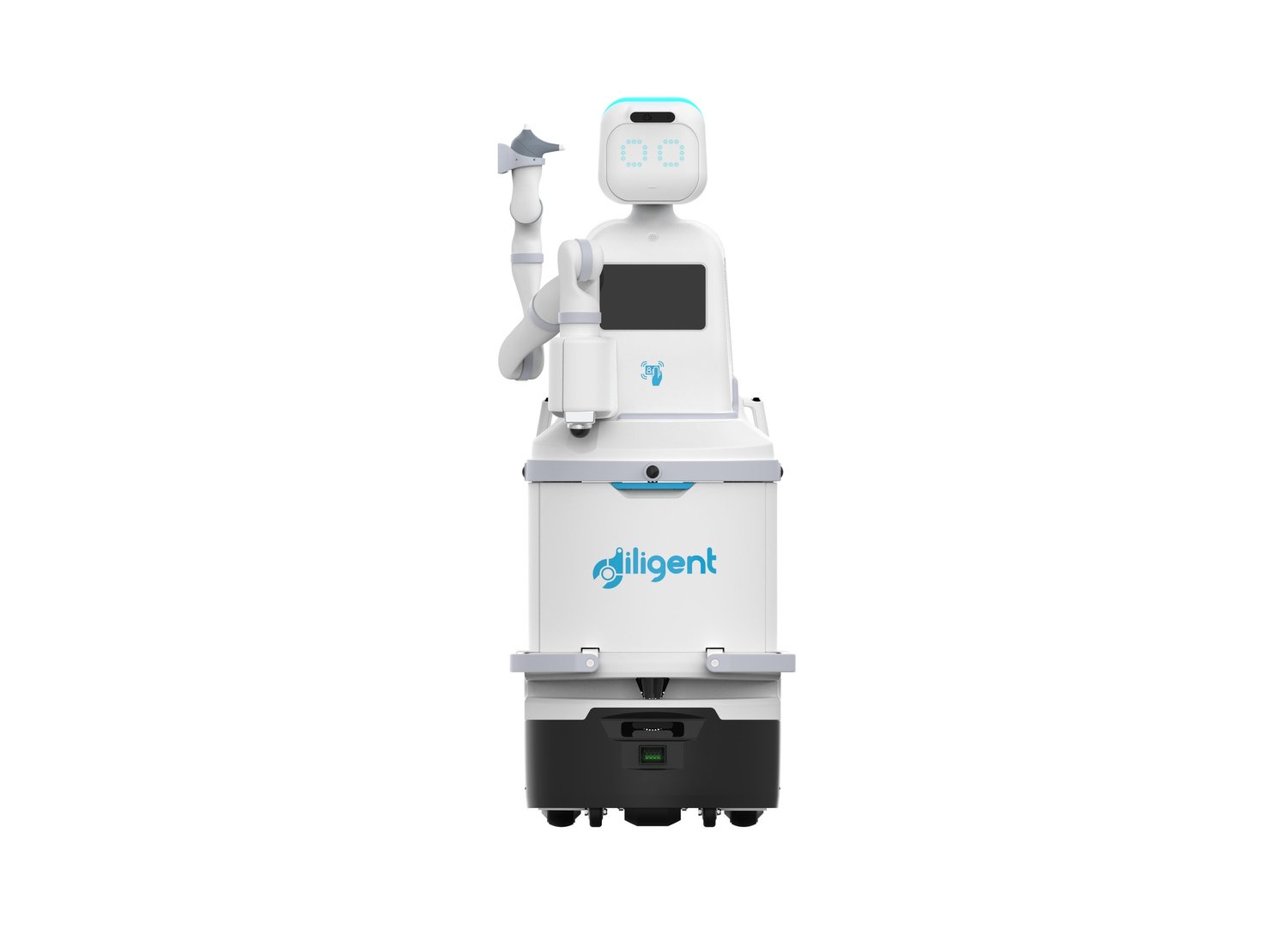
The most useful signal in 2026 is not a humanoid promising to do everything. It is a care robot doing a narrow job often enough that staff stop treating it like a novelty. F&P Robotics' Lio and Diligent Robotics Moxi are good reality checks for anyone evaluating home care robots.
What hospital deployments actually prove
F&P Robotics says its Lio mobile service robot travelled more than 1,000 km in 217 days at University Hospital Basel while maintaining over 99% reliability and reaching an ROI of 0.78. The company also says its HRI 2026 industry white paper covers multi-year service-robot use in a rehabilitation clinic and a university hospital laboratory, focusing on trust, task changes, safety, regulation, and organisational workflow rather than raw robot hardware.
Those details are more meaningful than a single flashy demo because they describe operation over time. A care robot has to find the right room, avoid people in hallways, recharge, recover from blocked paths, fit into staff routines, and be maintained without becoming another burden.
Lio's official product page frames it as a mobile service robot with a collaborative arm, voice interaction, autonomous navigation, an integrated display, and configurable workflows for healthcare, elderly care, laboratories, and education. The older peer-reviewed Lio paper adds useful engineering context: soft body covering, collision detection, limited speed and forces, visual/audio/laser/ultrasound/mechanical sensors, autonomous recharging, up to 8 hours of battery life, and local onboard computing for privacy-sensitive care environments. The paper also says Lio complies with ISO 13482 safety requirements for personal-care robots.
That still does not make Lio a plug-and-play home caregiver. It means Lio has been built around the boring things homes will also need: repeatable tasks, safety constraints, maps, maintenance, and local trust.
Moxi tells a similar story from the hospital logistics side. ui44 tracks Moxi as a hospital-focused mobile manipulator with nearly 100 robots, more than 1.25 million autonomous deliveries, and deployments across 25+ U.S. hospital facilities. Its job is deliberately narrow: supplies, medications, lab samples, PPE, central-supply runs, and other non-patient-facing tasks. Diligent Robotics' public materials emphasize that Moxi can be implemented without major infrastructure rebuilds, over existing Wi-Fi, with workflows customized by an implementation team.
That is the lesson for homes: the robot is not the product by itself. The workflow is the product.
The home lesson: care is a workflow, not a feature list
A private home is less regulated than a hospital, but it is not necessarily easier. Hospitals have trained staff, clear corridors, known rooms, service contracts, and people who are paid to adapt workflows. Homes have stairs, slippers, pets, emotional privacy, family preferences, kitchen clutter, and a person who may not want to troubleshoot a robot after dinner.
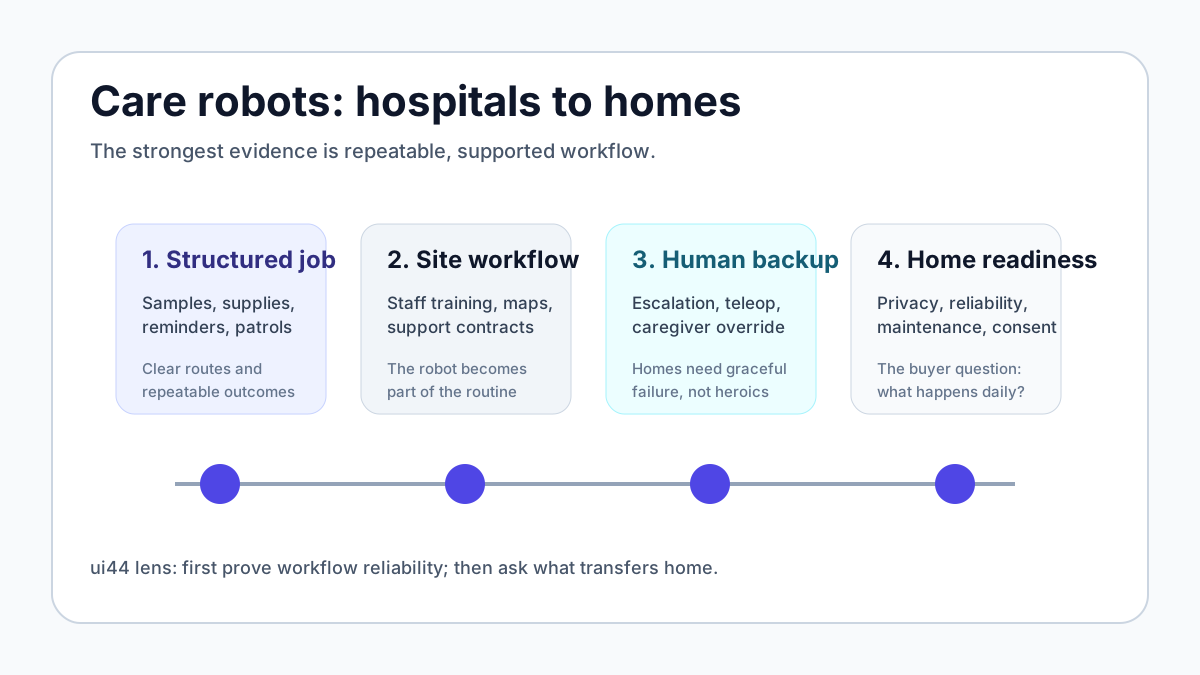
For buyers, the care-robot question should be: which part of the care workflow is this robot actually taking responsibility for?
Care workflow
Reminders and check-ins
- What the robot must prove
- The person accepts proactive prompts; caregivers can see enough context without over-monitoring
- Why hospital/facility evidence matters
- Facilities reveal whether prompts become routine or annoying
Care workflow
Transport and delivery
- What the robot must prove
- Reliable navigation, docking, payload handling, and recovery from blocked routes
- Why hospital/facility evidence matters
- Lio and Moxi show the value of narrow, repeated movement tasks
Care workflow
Physical assistance
- What the robot must prove
- Safe arm motion, payload limits, teleoperation or escalation, and clear exclusions
- Why hospital/facility evidence matters
- A robot that can carry supplies is not automatically safe for hands-on personal care
Care workflow
Companionship
- What the robot must prove
- Long-term acceptance, privacy, and emotional boundaries
- Why hospital/facility evidence matters
- Social robots need consent and repeat engagement, not just cute behavior
Care workflow
Emergency or safety support
- What the robot must prove
- Detection accuracy, escalation paths, fall-alert workflow, and human response
- Why hospital/facility evidence matters
- False positives and missed events matter more than marketing labels
| Care workflow | What the robot must prove | Why hospital/facility evidence matters |
|---|---|---|
| Reminders and check-ins | The person accepts proactive prompts; caregivers can see enough context without over-monitoring | Facilities reveal whether prompts become routine or annoying |
| Transport and delivery | Reliable navigation, docking, payload handling, and recovery from blocked routes | Lio and Moxi show the value of narrow, repeated movement tasks |
| Physical assistance | Safe arm motion, payload limits, teleoperation or escalation, and clear exclusions | A robot that can carry supplies is not automatically safe for hands-on personal care |
| Companionship | Long-term acceptance, privacy, and emotional boundaries | Social robots need consent and repeat engagement, not just cute behavior |
| Emergency or safety support | Detection accuracy, escalation paths, fall-alert workflow, and human response | False positives and missed events matter more than marketing labels |
A home robot does not need to do all five. In fact, the safest early products will usually do one or two jobs well.
Compare care robots by job, not by shape
The ui44 database shows why "elder-care robot" is too broad. Some products are stationary companions. Some are mobile screens. Some have arms. Some are facility robots that may influence home design later. These should not be ranked as if they solve the same problem.
Robot
- ui44 status and price signal
- Available in the U.S.; $249 initiation plus subscription options from $49/month or lower annual equivalents
- What it is best evidence for
- Proactive conversation, reminders, wellness prompts, video calling, caregiver connection
- What it does not prove
- Physical help, mobility, emergency care, or multi-room fetching
Robot
- ui44 status and price signal
- Active enterprise hospital robot; public pricing not listed
- What it is best evidence for
- Repeated hospital logistics with a mobile manipulator
- What it does not prove
- Private-home caregiving or direct patient handling
Robot
Lio
- ui44 status and price signal
- F&P enterprise/pilot deployments; public consumer price not listed
- What it is best evidence for
- Long-term clinical/lab workflow evidence with an arm, navigation, and safety constraints
- What it does not prove
- Retail home availability or independent medical care
Robot
- ui44 status and price signal
- Active; $24,950 list price
- What it is best evidence for
- Research-grade mobile manipulation in real homes, teleoperation, assistive-care experiments
- What it does not prove
- Consumer-ready autonomous caregiving without setup
Robot
- ui44 status and price signal
- Pre-order/waitlist; Robody Cares listed at €690/month
- What it is best evidence for
- Hybrid home-care model with AI plus VR telepresence and human backup
- What it does not prove
- Fully autonomous caregiving or broad availability today
Robot
- ui44 status and price signal
- Active therapeutic companion; institutional pricing not public
- What it is best evidence for
- Calming, tactile social interaction in care settings
- What it does not prove
- Mobility, chores, medication handling, or physical assistance
Robot
- ui44 status and price signal
- Active robot-as-a-service; pricing not public
- What it is best evidence for
- Facility operations with dual arms, delivery, patrol, eldercare support, UV workflows
- What it does not prove
- Near-term consumer home purchase
Robot
- ui44 status and price signal
- Available; contact sales
- What it is best evidence for
- Telepresence, navigation, video calls, touchscreen assistance
- What it does not prove
- Arm-based physical help
| Robot | ui44 status and price signal | What it is best evidence for | What it does not prove |
|---|---|---|---|
| ElliQ 3 | Available in the U.S.; $249 initiation plus subscription options from $49/month or lower annual equivalents | Proactive conversation, reminders, wellness prompts, video calling, caregiver connection | Physical help, mobility, emergency care, or multi-room fetching |
| Moxi | Active enterprise hospital robot; public pricing not listed | Repeated hospital logistics with a mobile manipulator | Private-home caregiving or direct patient handling |
| Lio | F&P enterprise/pilot deployments; public consumer price not listed | Long-term clinical/lab workflow evidence with an arm, navigation, and safety constraints | Retail home availability or independent medical care |
| Stretch 3 | Active; $24,950 list price | Research-grade mobile manipulation in real homes, teleoperation, assistive-care experiments | Consumer-ready autonomous caregiving without setup |
| Robody | Pre-order/waitlist; Robody Cares listed at €690/month | Hybrid home-care model with AI plus VR telepresence and human backup | Fully autonomous caregiving or broad availability today |
| PARO | Active therapeutic companion; institutional pricing not public | Calming, tactile social interaction in care settings | Mobility, chores, medication handling, or physical assistance |
| aeo | Active robot-as-a-service; pricing not public | Facility operations with dual arms, delivery, patrol, eldercare support, UV workflows | Near-term consumer home purchase |
| temi V3 | Available; contact sales | Telepresence, navigation, video calls, touchscreen assistance | Arm-based physical help |
This comparison leads to a less exciting but more useful answer: near-term care robots are not replacing caregivers. They are splitting care into smaller jobs.
Social care is the most home-ready category
ElliQ 3 is one of the clearest home examples because it does not pretend to be a nurse. ui44 records it as a stationary companion robot for older adults, about 14.4 inches tall, 5.3 lb, mains-powered, with a camera, far-field microphones, an 8-inch touchscreen, Wi-Fi, Bluetooth, ElliQ Voice AI, and a caregiver app. Its functions are reminders, conversation, health and pain tracking, video calling, virtual activities, photo sharing, games, music, and wellness programs.
That is a real care workflow, but a limited one. ElliQ can help structure a day, reduce friction in communication, and support routine prompts. It cannot pick up a dropped phone, bring water from the kitchen, check whether someone has fallen behind a closed door, or physically assist with bathing or transfers.
LOVOT and PARO sit in the emotional-support side of the market. LOVOT is a ¥577,500 Japanese companion with full-body touch sensors, room mapping, person recognition, thermal sensing, and a 30-45 minute active battery window before returning to its nest. PARO is a therapeutic seal robot used in hospitals and elder-care facilities, with tactile, light, audio, temperature, posture, and microphone sensing. ui44 records PARO as an FDA Class II medical device in the U.S.

These robots are useful precisely because they do not try to manipulate the world. Their risk is different: emotional dependency, consent, privacy, and whether the person actually wants a robot companion.
Physical help is still the hard part
The moment a care robot has to move objects, the bar rises sharply. Carrying a blanket, opening a drawer, lifting a cup, or finding glasses on a cluttered table requires perception, reach, grasping, force control, safety limits, and recovery when the first attempt fails.
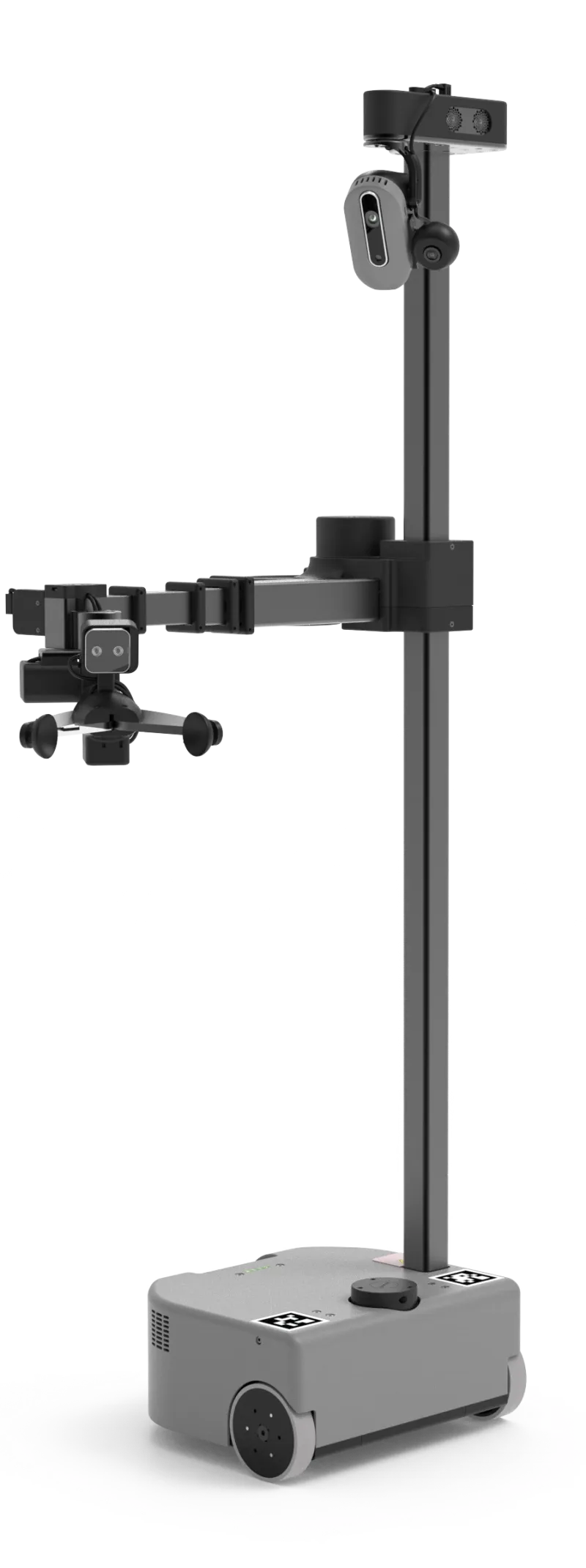
Stretch 3 shows the most honest version of that problem. It costs $24,950, weighs 24.5 kg, has a compact 33 × 34 cm footprint, reaches 141 cm tall, carries a 2 kg payload, runs 2-5 hours, and supports ROS 2, a Python SDK, web teleoperation, and embodied-AI research. It is built for real homes and assistive research, but the buyer should notice the framing: research platform, teleoperation, open-source autonomy, and controlled tasks. That is not the same as a retail robot caregiver.
Robody takes a different route. ui44 records it as a home-care robotic avatar with a €690/month all-inclusive service plan, 1.65 m height, 60 kg weight, 6-hour battery life, 5G/Wi-Fi, mm-wave radar, 4K fisheye cameras, stereo microphones, 1.5 kg per arm payload, self-docking, fall-alert workflows, and human-in-the-loop VR teleoperation for tasks requiring judgment or dexterity. That human backup is not a weakness. For care, it may be the feature that makes the product plausible.
Facility robots like aeo point in the same direction. aeo has dual 7-DOF arms, an 8 lb / 3.6 kg single-arm lift capacity, autonomous elevator and door operation, object pickup, delivery workflows, security patrol, UV disinfection, and app-based scheduling. It is not a consumer home robot, but it shows how manipulation becomes more credible when paired with bounded facility tasks and a service model.
What buyers should ask before trusting a home care robot
A care robot purchase should start with operational questions, not brand demos.
- What exact job will it do every day? A reminder robot, telepresence robot, mobile manipulator, therapeutic pet, and hospital logistics robot solve different problems.
- What happens when it fails? Look for human backup, remote support, caregiver escalation, clear error messages, and a way to pause or override the robot.
- What does the robot do locally? Care environments involve sensitive data. Lio's older technical paper is notable because it emphasizes onboard compute for privacy-sensitive algorithms; home buyers should ask the same cloud/local question.
- Who maintains it? Hospitals buy support. Families often buy devices. A home care robot without a service plan may turn into another object someone has to care for.
- Can the person say no? Consent matters. A robot that prompts, records, follows, or watches someone should be easy to mute, park, or restrict.
- Does it fit the home? Measure doors, thresholds, rugs, furniture gaps, Wi-Fi coverage, charging location, lighting, and caregiver access.
- Is the evidence about care outcomes or task completion? A robot completing deliveries is good evidence for logistics. It is not evidence that the same robot improves dementia care, prevents falls, or replaces a nurse.
The best use of ui44 compare is therefore not to find "the smartest care robot." It is to compare the job boundaries: stationary companion, telepresence, mobile manipulator, facility robot, or therapeutic companion.
So, are care robots ready for homes?
Some are ready for narrow home roles. ElliQ-style companionship, reminders, wellness prompts, video connection, and structured daily engagement are the most realistic. Therapeutic companions such as PARO can be useful in care contexts when the goal is calming interaction rather than independence. Telepresence and monitoring robots can help families check in, if the person being monitored wants that presence.
Physical care is earlier. Stretch 3, Robody, Lio, Moxi, and aeo all show pieces of the puzzle: manipulation, navigation, teleoperation, workflow integration, safety limits, and support models. But the evidence is strongest in labs, hospitals, care facilities, and supervised deployments, not unsupervised private homes.
That is not a pessimistic answer. It is the path to a better one. Care robots will become useful at home when they stop being sold as general caregivers and start being evaluated like service systems: one job, one workflow, one support model, one failure plan, repeated every day.
For now, hospital deployments reveal the right buyer posture: be optimistic about narrow assistance, skeptical about broad caregiving claims, and very interested in any robot company that can show long-term reliability outside a demo room.
Related in the database
Use this article as a privacy verification workflow
Turn the article into a privacy verification pass grounded in the robots, manufacturers, and components it actually references.
Care Robots at Home: Hospital Deployment Lessons already points you toward 8 linked robots, 8 manufacturers, and 4 countries inside the ui44 database. That matters because strong buyer guidance is easier to apply when you can move immediately from a claim or warning into concrete product pages, manufacturer directories, component explainers, and country-level context instead of treating the article as an isolated opinion piece. The fastest next step is to turn the article into a shortlist workflow: open the linked robot pages, verify which specs are actually published for those models, then compare the surrounding manufacturer and component context before you decide whether the underlying claim changes your buying plan.
For this topic, the useful discipline is to separate the editorial lesson from the catalog evidence. The article gives you the framing, but the robot pages tell you what each product actually ships with today: sensor stack, connectivity methods, listed price, release timing, category, and support-relevant compatibility notes. The manufacturer pages then show whether you are looking at a one-off launch, a broader lineup pattern, or a company that spans multiple categories. That layered workflow reduces the risk of buying on a single marketing phrase or a single support FAQ.
Use the robot pages to confirm which products actually expose cameras, microphones, Wi-Fi, or voice systems, then use the manufacturer pages to decide how much of the privacy question seems product-specific versus brand-wide. On this route cluster, Moxi, ElliQ 3, and Stretch 3 form the fastest reality check. If you want a quick working shortlist, open Compare Moxi, ElliQ 3, and Stretch 3 next, then keep this article open as the reasoning layer while you compare structured data side by side.
Practical Takeaway
Every robot, manufacturer, category, component, and country reference below resolves to a real ui44 page, keeping the follow-up path grounded in database records rather than generic advice.
Suggested next steps in ui44
- Open Moxi and note the listed sensors, connectivity methods, and voice stack before you interpret any policy claim.
- Cross-check the wider brand context on Diligent Robotics so you can see whether the privacy question touches one model or a broader lineup.
- Use the linked component pages to confirm how common the relevant sensors and connectivity layers are across the database.
- Keep a short note of which policy layers you checked, which device features are actually present on the robot page, and which items still depend on region- or app-level confirmation.
- Finish with Compare Moxi, ElliQ 3, and Stretch 3 so the policy reading sits next to structured product data.
Robot profiles worth opening next
Use the linked product pages as the evidence layer
The linked robot pages are where this article becomes operational. Instead of asking whether the headline is interesting, use the robot entries to inspect the actual mix of sensors, connectivity options, batteries, pricing, release timing, and stated capabilities attached to the products mentioned in the article. That is the easiest way to see whether the warning or opportunity described here affects one product family, a specific design pattern, or an entire buying lane.
Moxi
Diligent Robotics · Commercial · Active
Moxi is tracked on ui44 as a active commercial robot from Diligent Robotics. The database currently records a listed price of Price TBA, a release date of 2019, Not publicly disclosed battery life, Not publicly disclosed charging time, and a published stack that includes Vision and perception sensor suite (details not publicly disclosed) and Hospital navigation and obstacle-avoidance sensing plus Wi-Fi (hospital network deployment).
For privacy-focused reading, this page matters because it shows the concrete device surface behind the policy discussion. Use it to verify whether Moxi combines sensors and connectivity in a way that could change the in-home data footprint, and compare the listed capabilities such as Autonomous indoor navigation in hospitals, Medication and lab sample delivery, and Patient-supply transport with any cloud, app, or voice layers.
ElliQ 3
Intuition Robotics · Companions · Available
ElliQ 3 is tracked on ui44 as a available companions robot from Intuition Robotics. The database currently records a listed price of Price TBA, a release date of 2024-01, Mains powered battery life, N/A (plugged in) charging time, and a published stack that includes 4-mic array, 12 MP camera for images, and 1080p HD video at 30 fps with 120° horizontal FoV plus Wi-Fi 802.11b/g/n/ac (2.4 GHz and 5 GHz) and Bluetooth 5+.
For privacy-focused reading, this page matters because it shows the concrete device surface behind the policy discussion. Use it to verify whether ElliQ 3 combines sensors and connectivity in a way that could change the in-home data footprint, and compare the listed capabilities such as Proactive Conversation, Medication Reminders, and Health & Pain Tracking with any cloud, app, or voice layers, including ElliQ Voice AI.
Stretch 3
Hello Robot · Home Assistants · Active
Stretch 3 is tracked on ui44 as a active home assistants robot from Hello Robot. The database currently records a listed price of $24,950, a release date of 2024, 2–5 hours battery life, Not disclosed charging time, and a published stack that includes Intel D405 RGBD Camera (gripper), Intel D435if RGBD Camera (head), and Wide-Angle RGB Camera (head) plus Wi-Fi 6E and Bluetooth.
For privacy-focused reading, this page matters because it shows the concrete device surface behind the policy discussion. Use it to verify whether Stretch 3 combines sensors and connectivity in a way that could change the in-home data footprint, and compare the listed capabilities such as Mobile Manipulation, Autonomous Navigation, and Teleoperation (Web / Gamepad / Dexterous) with any cloud, app, or voice layers.
Robody is tracked on ui44 as a pre-order home assistants robot from Devanthro. The database currently records a listed price of Price TBA, a release date of 2024-11, 6 hours battery life, Self-docking; full charge time not officially disclosed charging time, and a published stack that includes 4K fisheye RGB cameras, mm-wave radar, and Stereo microphones plus 5G and Wi-Fi 6.
For privacy-focused reading, this page matters because it shows the concrete device surface behind the policy discussion. Use it to verify whether Robody combines sensors and connectivity in a way that could change the in-home data footprint, and compare the listed capabilities such as VR telepresence for family members and caregivers, Medication reminders, and Meal preparation assistance with any cloud, app, or voice layers.
PARO is tracked on ui44 as a active companions robot from AIST. The database currently records a listed price of Price TBA, a release date of 2003, Not officially disclosed battery life, Not officially disclosed charging time, and a published stack that includes Tactile sensors, Light sensor, and Audition (audio) sensor plus Not publicly detailed.
For privacy-focused reading, this page matters because it shows the concrete device surface behind the policy discussion. Use it to verify whether PARO combines sensors and connectivity in a way that could change the in-home data footprint, and compare the listed capabilities such as Therapeutic companionship, Responds to touch, voice direction, and handling, and Learns preferred user interactions with any cloud, app, or voice layers.
Manufacturer context behind the article
Check whether this is one product story or a broader company pattern
Manufacturer pages add the privacy context that individual product pages cannot show on their own. They help you check whether cameras, microphones, cloud accounts, app controls, and policy assumptions appear across a broader lineup or stay tied to one specific product story.
Diligent Robotics
ui44 currently tracks 1 robot from Diligent Robotics across 1 category. The company is grouped under USA, and the current catalog footprint on ui44 includes Moxi.
That wider brand context matters because privacy questions rarely stop at one FAQ page. A manufacturer route helps you see whether the article is centered on one premium model or on a company that has several relevant products and therefore more than one place where the same policy or app assumptions might matter. The category mix here currently points toward Commercial as the most useful next route if you want to see whether this article reflects a wider pattern inside the brand.
Intuition Robotics
ui44 currently tracks 1 robot from Intuition Robotics across 1 category. The company is grouped under Israel, and the current catalog footprint on ui44 includes ElliQ 3.
That wider brand context matters because privacy questions rarely stop at one FAQ page. A manufacturer route helps you see whether the article is centered on one premium model or on a company that has several relevant products and therefore more than one place where the same policy or app assumptions might matter. The category mix here currently points toward Companions as the most useful next route if you want to see whether this article reflects a wider pattern inside the brand.
Hello Robot
ui44 currently tracks 2 robots from Hello Robot across 1 category. The company is grouped under USA, and the current catalog footprint on ui44 includes Stretch 3, Stretch 4.
That wider brand context matters because privacy questions rarely stop at one FAQ page. A manufacturer route helps you see whether the article is centered on one premium model or on a company that has several relevant products and therefore more than one place where the same policy or app assumptions might matter. The category mix here currently points toward Home Assistants as the most useful next route if you want to see whether this article reflects a wider pattern inside the brand.
Devanthro
ui44 currently tracks 1 robot from Devanthro across 1 category. The company is grouped under Germany, and the current catalog footprint on ui44 includes Robody.
That wider brand context matters because privacy questions rarely stop at one FAQ page. A manufacturer route helps you see whether the article is centered on one premium model or on a company that has several relevant products and therefore more than one place where the same policy or app assumptions might matter. The category mix here currently points toward Home Assistants as the most useful next route if you want to see whether this article reflects a wider pattern inside the brand.
Broaden the scan without leaving the database
Categories, components, and countries add the wider context
Category framing
Category pages are useful when the article touches a buying pattern that shows up across brands. A category route helps you confirm whether the linked products sit in a narrow niche or whether the same question should be tested across a larger field of alternatives.
Commercial
The Commercial category page currently groups 44 tracked robots from 38 manufacturers. ui44 describes this lane as: Delivery robots, warehouse automation, and hospitality service bots — robots built for business and commercial operations.
That makes the category route a practical follow-up when you want to check whether the products linked in this article are typical for the lane or whether they sit at one edge of the market. Useful starting examples currently include G2 Air, aeo, Pepper.
Companions
The Companions category page currently groups 53 tracked robots from 48 manufacturers. ui44 describes this lane as: Social robots, robot pets, and elderly-care companions designed for emotional connection and everyday support at home.
That makes the category route a practical follow-up when you want to check whether the products linked in this article are typical for the lane or whether they sit at one edge of the market. Useful starting examples currently include PARO, Abi, Next-Generation Companion Robot.
Country and ecosystem context
Country pages give extra context when support practices, launch sequencing, regulatory posture, or manufacturer mix matter. They are not a substitute for model-level verification, but they do help you see which ecosystems cluster together and which manufacturers sit in the same regional field when you broaden the search beyond the article headline.
USA
The USA route currently groups 89 tracked robots from 69 manufacturers in ui44. That gives you a useful regional lens when the article points toward support practices, launch sequencing, or brand clusters that may share similar ecosystem assumptions.
On the current route, manufacturers like Faraday Future, iRobot, Boston Dynamics make the page a good way to broaden the scan without losing the regional context that often shapes availability, documentation style, and adjacent alternatives.
Israel
The Israel route currently groups 5 tracked robots from 5 manufacturers in ui44. That gives you a useful regional lens when the article points toward support practices, launch sequencing, or brand clusters that may share similar ecosystem assumptions.
On the current route, manufacturers like Flytrex, Intuition Robotics, Maytronics make the page a good way to broaden the scan without losing the regional context that often shapes availability, documentation style, and adjacent alternatives.
Germany
The Germany route currently groups 13 tracked robots from 9 manufacturers in ui44. That gives you a useful regional lens when the article points toward support practices, launch sequencing, or brand clusters that may share similar ecosystem assumptions.
On the current route, manufacturers like NEURA Robotics, Bosch, Agile Robots make the page a good way to broaden the scan without losing the regional context that often shapes availability, documentation style, and adjacent alternatives.
Questions to answer before you move from reading to buying
A follow-up FAQ built from the entities already linked in this article
Frequently Asked Questions
Which page should I open first after reading “Care Robots at Home: Hospital Deployment Lessons”?
Start with Moxi. That gives you a concrete product anchor for the article’s main claim. From there, branch into the manufacturer and component pages so you can tell whether the article is describing one specific model, a repeated brand pattern, or a wider technology issue that affects multiple shortlist options.
How do the manufacturer pages change the buying decision?
Diligent Robotics help you zoom out from one article and one product. On ui44 they show lineup breadth, category spread, and the neighboring robots tied to the same company. That context is useful when you are deciding whether a risk belongs to a single model, whether it shows up across a brand’s portfolio, and whether you should keep looking at alternatives before committing.
When should I switch from reading to side-by-side comparison?
Move into Compare Moxi, ElliQ 3, and Stretch 3 as soon as you understand the article’s main warning or promise. The article explains what to watch for, but the compare view is where you can check whether price, status, battery life, connectivity, sensors, and category fit still make the robot a good match for your own home and budget.
Where to go next in ui44
Keep the research chain inside the database
If you want to keep going, these follow-on pages give you the cleanest expansion path from article to research session. Open the comparison route first if you are deciding between products today. Open the manufacturer, category, and component routes if you still need to understand the broader pattern behind the claim.
Written by
ui44 Team
Published May 9, 2026
Share this article
Open a plain share link on X or Bluesky. No embeds, no widgets, no cookie baggage.