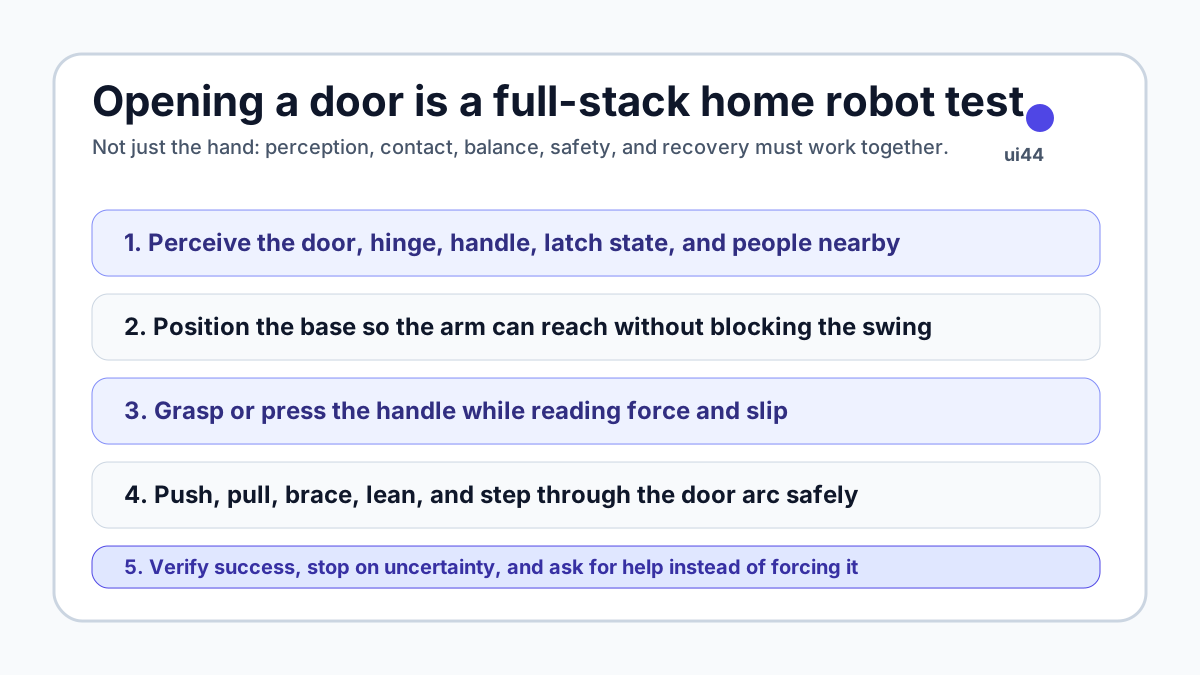
That sounds almost silly because people do it dozens of times a day. For a robot, though, a door is a compact version of the whole home-robot problem. The machine has to see the handle, understand which way the door moves, place its base where the arm can work, apply force without overdoing it, move its body as the door swings, and confirm that the path is safe before walking through.

That is why door opening is a better buyer benchmark than many flashy demos. It is not just a gripper trick. It is a test of whole-body manipulation: arms, legs or wheels, sensors, balance, contact control, and decision-making all working together in a human space.
Why door opening is such a hard home-robot test
A useful home robot does not merely need to touch a handle. It needs to solve a chain of small problems that are easy to hide in a product video:
- Find the actionable part: lever, knob, pull handle, sliding door groove, latch, pet gate, cabinet pull, or screen-door edge.
- Know the door geometry: hinge side, swing direction, whether the robot is on the push side or pull side, and whether furniture blocks the arc.
- Position its body: close enough for the arm, far enough not to be hit by the door, and stable enough to apply force.
- Handle contact: press, rotate, pull, or push while sensing force, slip, friction, and a latch that did not release.
- Move through the action: continue walking or rolling while the arm remains connected to the handle or door surface.
- Stop safely: avoid fingers, pets, people, glass, walls, and a door that is locked, swollen, spring-loaded, or intentionally child-proofed.
This is why a robot can have an impressive arm and still be bad at doors. A stationary arm can open a lab door if the handle and path are prepared for it. A home assistant has to deal with doors that were never designed for robots.
What is whole-body manipulation?
Whole-body manipulation means the robot uses more than its wrist and fingers to complete a physical task. Humans do this constantly. We lean into a heavy door, brace one hand against a wall, twist our torso while pulling a handle, step backward as the door opens, and shift weight without thinking about it.
1X uses door opening as one of the examples for its Redwood AI work. The company says Redwood is a vision-language transformer for NEO that performs end-to-end mobile manipulation tasks such as retrieving objects, opening doors, and navigating around the home. More importantly, 1X says Redwood jointly controls locomotion and manipulation, including pelvis pose, walking commands, arms, and hands. Its own explanation calls out bracing and leaning behaviors, including bracing a hand against a wall when pulling open heavy doors.
That is the right framing. A humanoid arm is not enough if the body cannot move with the door. The same is true for wheeled mobile manipulators: the arm, base, and planner have to act as one system.
In ui44's database, 1X NEO is tracked as a home-focused humanoid in pre-order at $20,000, about 167 cm tall and 30 kg, with roughly 4 hours of battery life, RGB/depth sensing, tactile skin, a microphone array, and gentle-manipulation claims. 1X's order page goes further, listing an arm payload of 18 lb, carry of 55 lb, lift of 154 lb, a soft body, IP44 body splash protection, and scheduled remote Expert Mode for complex tasks.
Those numbers are meaningful, but the door benchmark asks a stricter question: can the robot combine them reliably in an ordinary hallway after the furniture moves and the handle is not where the training clip expected?
Why arms alone are not enough
Door opening is contact-rich. The robot cannot solve it purely by recognizing an object in an image. It has to discover how the object reacts while force is being applied.
A 2023 paper in the Journal of Robotics and Mechatronics is useful here because it separates the door problem into push-opening, pull-opening, push-closing, and pull-closing operations with a mobile manipulator. The authors had to reason about force relaxation, admittance control, and how the mobile base should move while the arm stays in contact. That is a long way from "the robot has a hand".
The broader research picture says the same thing. The HomeRobot open-vocabulary mobile manipulation benchmark defines the home-robot challenge as bringing together perception, language understanding, navigation, and manipulation. Its real-world baselines on Hello Robot Stretch achieved 20% success on pick-and-place style tasks. Doors add harder contact, higher forces, and a moving obstacle attached to the building.
MERL president Anthony Vetro made the reliability point bluntly in an April 2026 interview with Robotics & Automation News: robots are making progress in manipulation and force control, but they are still not at human-level reliability for contact-rich tasks. He tied progress to tighter integration of perception, physics-based reasoning, and real-time response under uncertainty.
That is the core buyer lesson. A robot that opens a door once in a polished demo is interesting. A robot that can decide not to force a jammed door, ask for help, and avoid damaging your home is closer to useful.
Which current robots look closest?
The strongest candidates are not always the tallest humanoids. A door-opening robot needs reach, payload, force sensing or compliance, body mobility, and a software stack that can recover when the action goes wrong.
Robot
- ui44 status and price
- Pre-order, $20,000
- Door-opening relevance
- Home-targeted humanoid; Redwood explicitly discusses door opening, whole-body control, bracing, and onboard mobile manipulation
- Biggest caution
- Early-owner autonomy and Expert Mode need careful privacy, logging, and reliability scrutiny
Robot
- ui44 status and price
- Active, $24,950
- Door-opening relevance
- Purpose-built home mobile manipulator; 24.5 kg body, 2 kg payload, floor-to-cabinet reach, ROS 2/Python SDK, and web/gamepad/dexterous teleoperation
- Biggest caution
- Research/developer platform, not a plug-and-play consumer appliance
Robot
- ui44 status and price
- Active research platform, no retail price
- Door-opening relevance
- Compact home-assistive robot with a folding arm, remote operation support, 1.2 kg object payload, and floor/shelf retrieval goals
- Biggest caution
- Loaned to partner organizations; not a consumer product
Robot
- ui44 status and price
- Available, from $13,500
- Door-opening relevance
- Affordable humanoid research platform with optional dexterous hands, 35 kg body, 23 DOF standard / up to 43 DOF EDU, and about 2 hours runtime
- Biggest caution
- Unitree itself warns individual users to understand humanoid limitations before purchase
Robot
- ui44 status and price
- Active home-positioned Figure 03; Figure 02 retired industrial robot
- Door-opening relevance
- Figure's current messaging emphasizes home help and Helix for unpredictable home environments; Figure 02 proved industrial pick-and-place style manipulation at BMW scale
- Biggest caution
- Figure 03 has no public price and is not a normal home retail product yet
Robot
Spot with arm
- ui44 status and price
- Active enterprise robot, contact-sales pricing
- Door-opening relevance
- Quadruped mobility plus optional arm makes door/handle work plausible in industrial settings; strong navigation and self-righting base
- Biggest caution
- Commercial/industrial product, not designed as a household assistant
| Robot | ui44 status and price | Door-opening relevance | Biggest caution |
|---|---|---|---|
| 1X NEO | Pre-order, $20,000 | Home-targeted humanoid; Redwood explicitly discusses door opening, whole-body control, bracing, and onboard mobile manipulation | Early-owner autonomy and Expert Mode need careful privacy, logging, and reliability scrutiny |
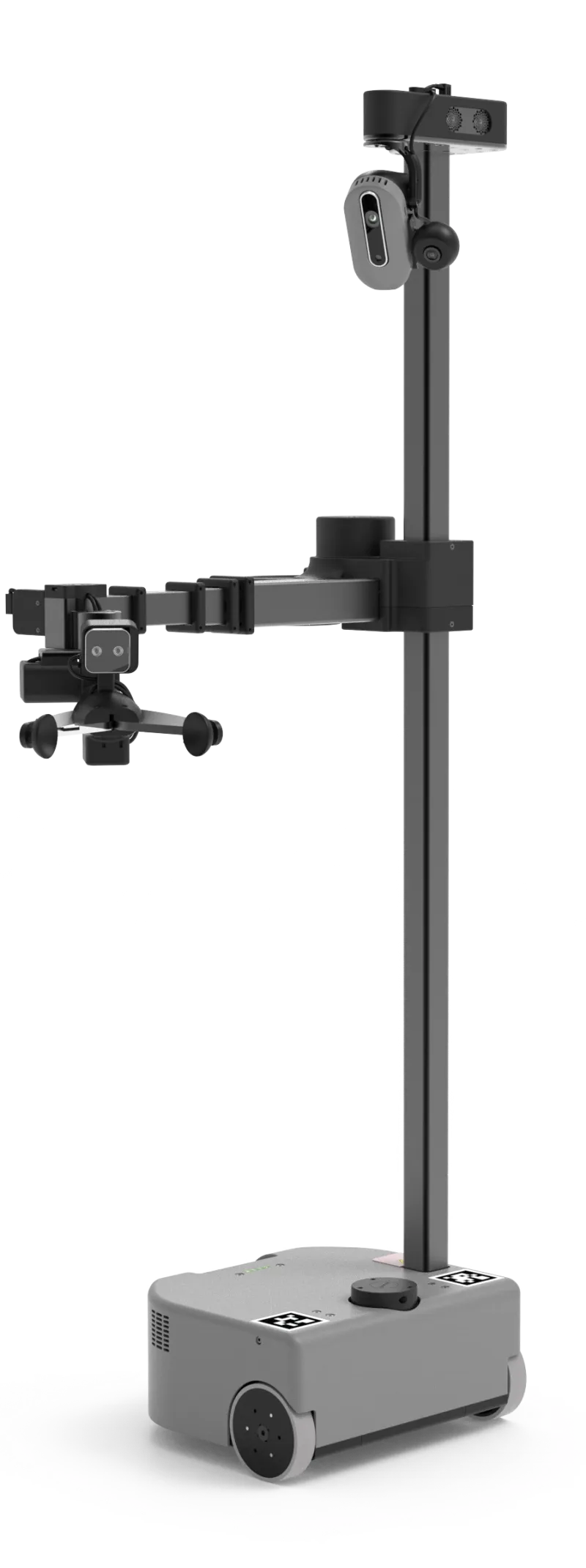
| Hello Robot Stretch 3 | Active, $24,950 | Purpose-built home mobile manipulator; 24.5 kg body, 2 kg payload, floor-to-cabinet reach, ROS 2/Python SDK, and web/gamepad/dexterous teleoperation | Research/developer platform, not a plug-and-play consumer appliance |
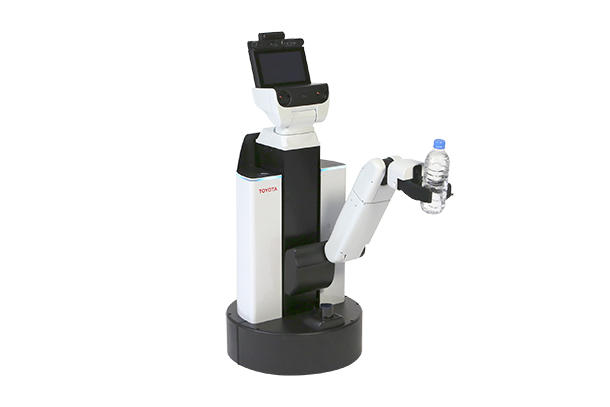
| Toyota HSR | Active research platform, no retail price | Compact home-assistive robot with a folding arm, remote operation support, 1.2 kg object payload, and floor/shelf retrieval goals | Loaned to partner organizations; not a consumer product |
| Unitree G1 | Available, from $13,500 | Affordable humanoid research platform with optional dexterous hands, 35 kg body, 23 DOF standard / up to 43 DOF EDU, and about 2 hours runtime | Unitree itself warns individual users to understand humanoid limitations before purchase |
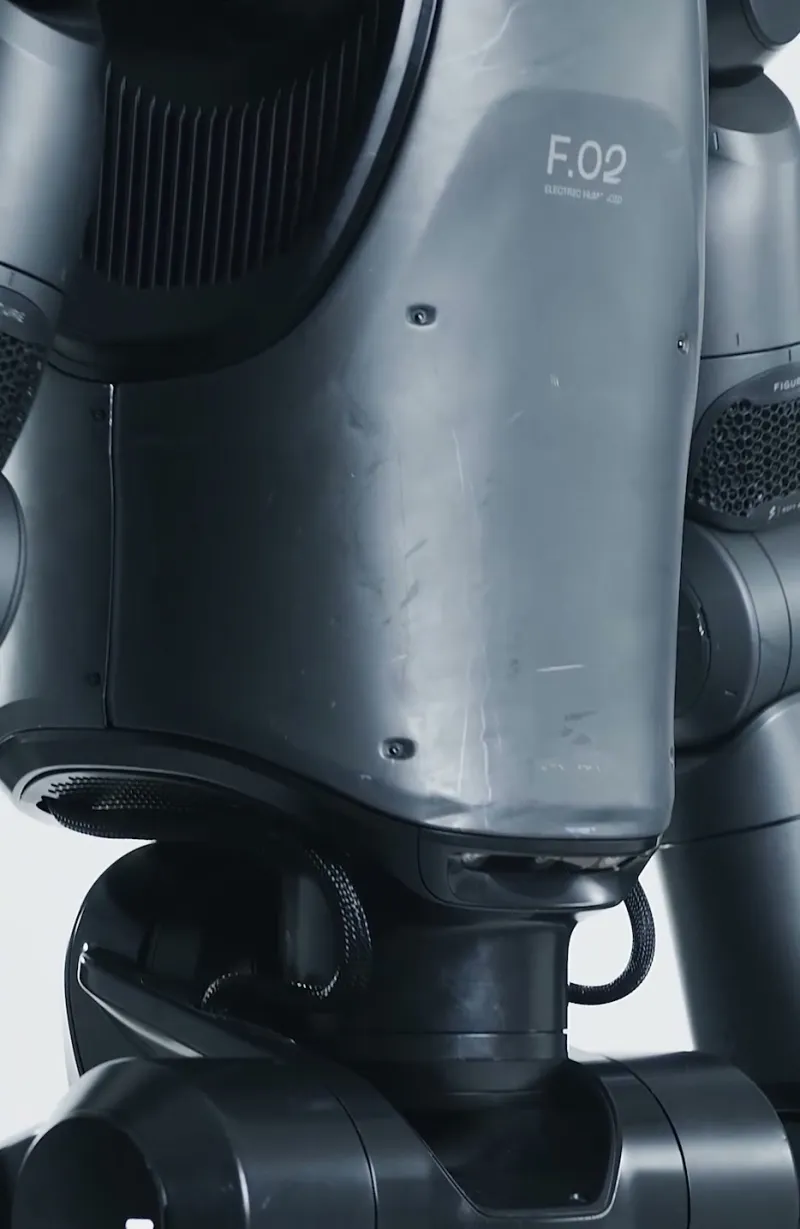
| Figure 03 / Figure 02 | Active home-positioned Figure 03; Figure 02 retired industrial robot | Figure's current messaging emphasizes home help and Helix for unpredictable home environments; Figure 02 proved industrial pick-and-place style manipulation at BMW scale | Figure 03 has no public price and is not a normal home retail product yet |
| Spot with arm | Active enterprise robot, contact-sales pricing | Quadruped mobility plus optional arm makes door/handle work plausible in industrial settings; strong navigation and self-righting base | Commercial/industrial product, not designed as a household assistant |
Stretch 3 deserves special attention because it is honest about what it is. The official product page calls it a fully integrated mobile manipulator, available for $24,950, with a 33 × 34 × 141 cm body, 24.5 kg weight, 2–5 hour runtime, 2 kg payload, ROS 2, Python SDK, autonomy demos, and several teleoperation modes. That does not mean it will casually open every door in your house. It means researchers and developers can actually work on the integrated problem in real rooms.
Toyota HSR is the older but still revealing example. Toyota describes it as a home-living and care robot for helping elderly and disabled users live more independently. The official specs list a 430 mm body diameter, 100.5–135 cm body height, about 37 kg weight, 600 mm arm length, and objects up to 1.2 kg. It can pick objects up from the floor and retrieve items from shelves, and it supports remote operation by family or caregivers. That is not a door-opening consumer product, but it shows how long serious home manipulation has been treated as an assistive, shared-control problem.
How to judge a door-opening demo
The next time a company shows a humanoid opening a door, watch for details that are usually more important than the final moment.
1. Is it a push door, pull door, knob, lever, or sliding door?
A push door with a lever is easier than a pull door with a knob and spring closer. A sliding patio door is different again. Good demos should state the door type instead of implying all doors are equivalent.
2. Does the robot keep contact while the base moves?
If the arm works but the base freezes, the robot may be solving only the first half of the task. Whole-body manipulation means the body moves as part of the action, not after the action is already done.
3. Does it sense force, or is it replaying a path?
A replayed path can look convincing until the latch sticks or the door is already partly open. Useful home robots need compliance, force awareness, or a safe fallback when contact does not match the plan.
4. What happens when the attempt fails?
This is the most important question. The right behavior may be to stop, explain what happened, ask a person, or switch to approved teleoperation. The wrong behavior is to yank harder until something breaks.
5. Can it respect household rules?
Opening a door is not always allowed. Bedrooms, bathrooms, exterior doors, medicine cabinets, garages, and pet gates all have privacy and safety meaning. A home robot needs room-level permissions, guest modes, logs, and clear refusal behavior.
Should buyers care about door opening now?
Yes, but not because everyone needs a robot to open doors on day one. Buyers should care because door opening exposes whether a robot is being built as a real physical assistant or as a moving screen with arms.
For most homes in 2026, the practical answer is still cautious:
- If you want a developer platform for manipulation research, Stretch 3 is the most concrete home-relevant option in ui44's database.
- If you want an early home humanoid, NEO is the most explicit consumer-facing door-opening claim, but it is still a pre-order product and should be judged by real owner evidence, not launch-page language alone.
- If you want an affordable humanoid to experiment with, Unitree G1 is available and comparatively inexpensive, but it is still a serious research machine with safety limits.
- If you want a polished appliance, door-opening humanoids are not there yet.
The near-term milestone is not "a robot opened one door once." It is a robot that can open simple allowed doors repeatedly, explain when it cannot, avoid unsafe rooms, recover from contact errors, and preserve the home around it.
That is why door opening matters. It is a small chore that reveals the big truth: home robots become useful when navigation, manipulation, force control, permissions, and humility all show up in the same machine.
Related in the database
Use this article as a privacy verification workflow
Turn the article into a privacy verification pass grounded in the robots, manufacturers, and components it actually references.
Can Home Robots Open Doors? already points you toward 7 linked robots, 6 manufacturers, and 4 countries inside the ui44 database. That matters because strong buyer guidance is easier to apply when you can move immediately from a claim or warning into concrete product pages, manufacturer directories, component explainers, and country-level context instead of treating the article as an isolated opinion piece. The fastest next step is to turn the article into a shortlist workflow: open the linked robot pages, verify which specs are actually published for those models, then compare the surrounding manufacturer and component context before you decide whether the underlying claim changes your buying plan.
For this topic, the useful discipline is to separate the editorial lesson from the catalog evidence. The article gives you the framing, but the robot pages tell you what each product actually ships with today: sensor stack, connectivity methods, listed price, release timing, category, and support-relevant compatibility notes. The manufacturer pages then show whether you are looking at a one-off launch, a broader lineup pattern, or a company that spans multiple categories. That layered workflow reduces the risk of buying on a single marketing phrase or a single support FAQ.
Use the robot pages to confirm which products actually expose cameras, microphones, Wi-Fi, or voice systems, then use the manufacturer pages to decide how much of the privacy question seems product-specific versus brand-wide. On this route cluster, NEO, Stretch 3, and Human Support Robot (HSR) form the fastest reality check. If you want a quick working shortlist, open Compare NEO, Stretch 3, and Human Support Robot (HSR) next, then keep this article open as the reasoning layer while you compare structured data side by side.
Practical Takeaway
Every robot, manufacturer, category, component, and country reference below resolves to a real ui44 page, keeping the follow-up path grounded in database records rather than generic advice.
Suggested next steps in ui44
- Open NEO and note the listed sensors, connectivity methods, and voice stack before you interpret any policy claim.
- Cross-check the wider brand context on 1X Technologies so you can see whether the privacy question touches one model or a broader lineup.
- Use the linked component pages to confirm how common the relevant sensors and connectivity layers are across the database.
- Keep a short note of which policy layers you checked, which device features are actually present on the robot page, and which items still depend on region- or app-level confirmation.
- Finish with Compare NEO, Stretch 3, and Human Support Robot (HSR) so the policy reading sits next to structured product data.
Robot profiles worth opening next
Use the linked product pages as the evidence layer
The linked robot pages are where this article becomes operational. Instead of asking whether the headline is interesting, use the robot entries to inspect the actual mix of sensors, connectivity options, batteries, pricing, release timing, and stated capabilities attached to the products mentioned in the article. That is the easiest way to see whether the warning or opportunity described here affects one product family, a specific design pattern, or an entire buying lane.
NEO
1X Technologies · Humanoid · Pre-order
NEO is tracked on ui44 as a pre-order humanoid robot from 1X Technologies. The database currently records a listed price of $20,000, a release date of 2025-10-28, ~4 hours battery life, Not disclosed charging time, and a published stack that includes RGB Cameras, Depth Sensors, and Tactile Skin plus Wi-Fi and Bluetooth.
For privacy-focused reading, this page matters because it shows the concrete device surface behind the policy discussion. Use it to verify whether NEO combines sensors and connectivity in a way that could change the in-home data footprint, and compare the listed capabilities such as Household Chores, Tidying Up, and Safe Human Interaction with any cloud, app, or voice layers.
Stretch 3
Hello Robot · Home Assistants · Active
Stretch 3 is tracked on ui44 as a active home assistants robot from Hello Robot. The database currently records a listed price of $24,950, a release date of 2024, 2–5 hours battery life, Not disclosed charging time, and a published stack that includes Intel D405 RGBD Camera (gripper), Intel D435if RGBD Camera (head), and Wide-Angle RGB Camera (head) plus Wi-Fi 6E and Bluetooth.
For privacy-focused reading, this page matters because it shows the concrete device surface behind the policy discussion. Use it to verify whether Stretch 3 combines sensors and connectivity in a way that could change the in-home data footprint, and compare the listed capabilities such as Mobile Manipulation, Autonomous Navigation, and Teleoperation (Web / Gamepad / Dexterous) with any cloud, app, or voice layers.
Human Support Robot (HSR)
Toyota · Home Assistants · Active
Human Support Robot (HSR) is tracked on ui44 as a active home assistants robot from Toyota. The database currently records a listed price of Price TBA, a release date of 2012, Not disclosed battery life, Not disclosed charging time, and a published stack that includes its published sensor stack plus Remote operation support (real-time face/voice relay).
For privacy-focused reading, this page matters because it shows the concrete device surface behind the policy discussion. Use it to verify whether Human Support Robot (HSR) combines sensors and connectivity in a way that could change the in-home data footprint, and compare the listed capabilities such as Pick up objects from floor, Retrieve items from shelves, and Remote teleoperation by family/caregivers with any cloud, app, or voice layers, including Voice-command operation support.
G1 is tracked on ui44 as a available humanoid robot from Unitree. The database currently records a listed price of $13,500, a release date of 2024-05-13, ~2 hours battery life, Not disclosed charging time, and a published stack that includes Depth Camera, 3D LiDAR, and 4 Microphone Array plus Wi-Fi 6 and Bluetooth 5.2.
For privacy-focused reading, this page matters because it shows the concrete device surface behind the policy discussion. Use it to verify whether G1 combines sensors and connectivity in a way that could change the in-home data footprint, and compare the listed capabilities such as Bipedal Walking, Object Manipulation, and Dexterous Hands (optional Dex3-1) with any cloud, app, or voice layers.
Figure 03 is tracked on ui44 as a active humanoid robot from Figure AI. The database currently records a listed price of Price TBA, a release date of 2025-10-09, ~5 hours battery life, Not disclosed charging time, and a published stack that includes Stereo Vision, Depth Cameras, and Force Sensors plus Wi-Fi and Bluetooth.
For privacy-focused reading, this page matters because it shows the concrete device surface behind the policy discussion. Use it to verify whether Figure 03 combines sensors and connectivity in a way that could change the in-home data footprint, and compare the listed capabilities such as Complex Manipulation, Warehouse Work, and Manufacturing Tasks with any cloud, app, or voice layers.
Manufacturer context behind the article
Check whether this is one product story or a broader company pattern
Manufacturer pages add the privacy context that individual product pages cannot show on their own. They help you check whether cameras, microphones, cloud accounts, app controls, and policy assumptions appear across a broader lineup or stay tied to one specific product story.
1X Technologies
ui44 currently tracks 2 robots from 1X Technologies across 1 category. The company is grouped under Norway, and the current catalog footprint on ui44 includes NEO, EVE.
That wider brand context matters because privacy questions rarely stop at one FAQ page. A manufacturer route helps you see whether the article is centered on one premium model or on a company that has several relevant products and therefore more than one place where the same policy or app assumptions might matter. The category mix here currently points toward Humanoid as the most useful next route if you want to see whether this article reflects a wider pattern inside the brand.
Hello Robot
ui44 currently tracks 2 robots from Hello Robot across 1 category. The company is grouped under USA, and the current catalog footprint on ui44 includes Stretch 3, Stretch 4.
That wider brand context matters because privacy questions rarely stop at one FAQ page. A manufacturer route helps you see whether the article is centered on one premium model or on a company that has several relevant products and therefore more than one place where the same policy or app assumptions might matter. The category mix here currently points toward Home Assistants as the most useful next route if you want to see whether this article reflects a wider pattern inside the brand.
Toyota
ui44 currently tracks 3 robots from Toyota across 2 categorys. The company is grouped under Japan, and the current catalog footprint on ui44 includes Human Support Robot (HSR), T-HR3, CUE7.
That wider brand context matters because privacy questions rarely stop at one FAQ page. A manufacturer route helps you see whether the article is centered on one premium model or on a company that has several relevant products and therefore more than one place where the same policy or app assumptions might matter. The category mix here currently points toward Home Assistants, Humanoid as the most useful next route if you want to see whether this article reflects a wider pattern inside the brand.
Unitree
ui44 currently tracks 2 robots from Unitree across 1 category. The company is grouped under China, and the current catalog footprint on ui44 includes H1, G1.
That wider brand context matters because privacy questions rarely stop at one FAQ page. A manufacturer route helps you see whether the article is centered on one premium model or on a company that has several relevant products and therefore more than one place where the same policy or app assumptions might matter. The category mix here currently points toward Humanoid as the most useful next route if you want to see whether this article reflects a wider pattern inside the brand.
Broaden the scan without leaving the database
Categories, components, and countries add the wider context
Category framing
Category pages are useful when the article touches a buying pattern that shows up across brands. A category route helps you confirm whether the linked products sit in a narrow niche or whether the same question should be tested across a larger field of alternatives.
Humanoid
The Humanoid category page currently groups 129 tracked robots from 92 manufacturers. ui44 describes this lane as: Full-size bipedal humanoid robots built to work alongside people — from factory floors to household tasks. Compare the cutting edge of humanoid robotics.
That makes the category route a practical follow-up when you want to check whether the products linked in this article are typical for the lane or whether they sit at one edge of the market. Useful starting examples currently include NEO, EVE, Mornine M1.
Home Assistants
The Home Assistants category page currently groups 16 tracked robots from 14 manufacturers. ui44 describes this lane as: Arm-based household helpers — laundry folders, kitchen robots, and mobile manipulators that take on hands-on physical tasks around the home.
That makes the category route a practical follow-up when you want to check whether the products linked in this article are typical for the lane or whether they sit at one edge of the market. Useful starting examples currently include Robody, Futuring 2 (F2), Stretch 3.
Country and ecosystem context
Country pages give extra context when support practices, launch sequencing, regulatory posture, or manufacturer mix matter. They are not a substitute for model-level verification, but they do help you see which ecosystems cluster together and which manufacturers sit in the same regional field when you broaden the search beyond the article headline.
Norway
The Norway route currently groups 2 tracked robots from 1 manufacturers in ui44. That gives you a useful regional lens when the article points toward support practices, launch sequencing, or brand clusters that may share similar ecosystem assumptions.
On the current route, manufacturers like 1X Technologies make the page a good way to broaden the scan without losing the regional context that often shapes availability, documentation style, and adjacent alternatives.
USA
The USA route currently groups 89 tracked robots from 69 manufacturers in ui44. That gives you a useful regional lens when the article points toward support practices, launch sequencing, or brand clusters that may share similar ecosystem assumptions.
On the current route, manufacturers like Faraday Future, iRobot, Boston Dynamics make the page a good way to broaden the scan without losing the regional context that often shapes availability, documentation style, and adjacent alternatives.
Japan
The Japan route currently groups 26 tracked robots from 17 manufacturers in ui44. That gives you a useful regional lens when the article points toward support practices, launch sequencing, or brand clusters that may share similar ecosystem assumptions.
On the current route, manufacturers like AIST, SoftBank Robotics, Toyota make the page a good way to broaden the scan without losing the regional context that often shapes availability, documentation style, and adjacent alternatives.
Questions to answer before you move from reading to buying
A follow-up FAQ built from the entities already linked in this article
Frequently Asked Questions
Which page should I open first after reading “Can Home Robots Open Doors?”?
Start with NEO. That gives you a concrete product anchor for the article’s main claim. From there, branch into the manufacturer and component pages so you can tell whether the article is describing one specific model, a repeated brand pattern, or a wider technology issue that affects multiple shortlist options.
How do the manufacturer pages change the buying decision?
1X Technologies help you zoom out from one article and one product. On ui44 they show lineup breadth, category spread, and the neighboring robots tied to the same company. That context is useful when you are deciding whether a risk belongs to a single model, whether it shows up across a brand’s portfolio, and whether you should keep looking at alternatives before committing.
When should I switch from reading to side-by-side comparison?
Move into Compare NEO, Stretch 3, and Human Support Robot (HSR) as soon as you understand the article’s main warning or promise. The article explains what to watch for, but the compare view is where you can check whether price, status, battery life, connectivity, sensors, and category fit still make the robot a good match for your own home and budget.
Where to go next in ui44
Keep the research chain inside the database
If you want to keep going, these follow-on pages give you the cleanest expansion path from article to research session. Open the comparison route first if you are deciding between products today. Open the manufacturer, category, and component routes if you still need to understand the broader pattern behind the claim.
Written by
ui44 Team
Published April 30, 2026
Share this article
Open a plain share link on X or Bluesky. No embeds, no widgets, no cookie baggage.