Article 20 min read 4,527 words

ALTER-EGO: Can a Hospital Humanoid Work at Home?

ALTER-EGO is not a consumer robot. That is the important starting point. It is a research and clinical platform from the Istituto Italiano di Tecnologia (IIT) and the University of Pisa that is now being tested with IRCCS Maugeri Milano in care workflows for people with ALS.

ui44 Team All articles

That makes it interesting for home robot buyers anyway. The strongest home-care robots are unlikely to begin as cute gadgets. They are more likely to begin in clinics, assisted-living programs, rehabilitation wards, and remote-care pilots, where the jobs are specific enough to test and the safety bar is high enough to force useful design decisions.
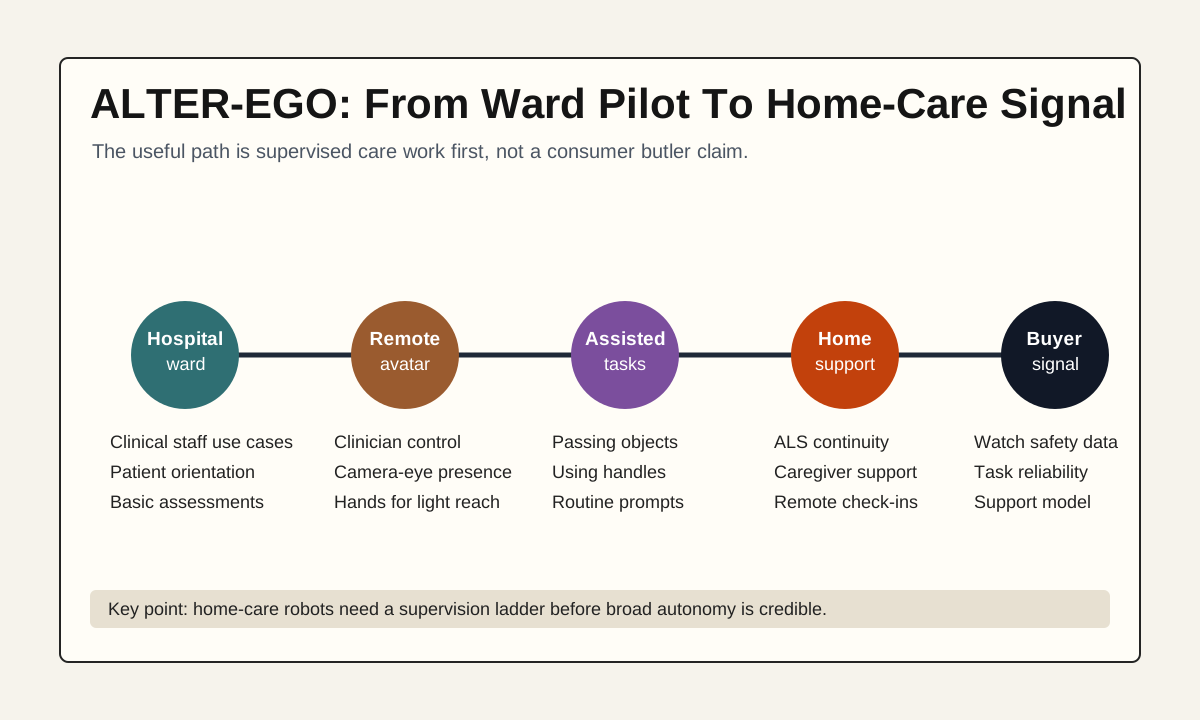
ALTER-EGO home care humanoid robot readiness map from hospital ward tasks to remote ALS support at home
Scroll sideways to inspect the full chart.

The question is not whether ALTER-EGO is ready for a shopping cart. It is whether the pilot reveals the kind of capabilities a future home-care humanoid will need before it earns a place near fragile people, caregivers, and everyday household routines.

What Is ALTER-EGO?

According to IIT's May 2026 announcement, ALTER-EGO is a roughly 120 cm tall humanoid robot that moves on two wheels. It can be driven remotely by an operator, or used in semi-autonomous and autonomous modes. The platform uses two arms built with variable-stiffness actuators and SoftHand multi-jointed robotic hands, so its manipulation work is designed around adaptive, gentle contact rather than industrial rigidity.

That design matters. In a home-care setting, a robot that can move, reach, and grasp is only useful if it can do those things near people who may have limited mobility, fatigue, or higher injury risk. A fast warehouse-style arm is the wrong benchmark. The better benchmark is whether the robot can pass light objects, operate handles, hold a remote-presence session, and fail gracefully when the environment is messy.

IIT and its clinical partners are not presenting ALTER-EGO as a general home butler. The pilot is built around ALS care and continuity between hospital and home. The reported use cases include remote presence, remote support, support in everyday activities, delivery services, monitoring and safety services, reception and orientation, and rehabilitation support. That is a useful list because it is not fantasy. It sounds like the work a real care team might try to delegate without replacing clinical judgement.

Why Is ALS Care A Harder Test Than A Demo Kitchen?

ALS care is a serious proving ground for robotics because the task is not just "pick something up." It includes fatigue, changing mobility, respiratory support, communication challenges, caregiver coordination, and a need for trust. If a robot is annoying, hard to drive, or only useful under perfect lighting, it will not survive contact with that workflow.

ALTER-EGO's near-term value is therefore less about autonomy and more about supervised reach. In remote-presence mode, a clinician can use immersive control devices such as a visor and joystick, see through the robot's cameras, move the hands, and speak through the platform. That turns the robot into a physical avatar for follow-up sessions and support at home, where direct staff visits are harder to schedule.

That is a more believable first step than a fully independent nurse robot. The home already has humans in the loop: patients, caregivers, visiting clinicians, family members, and telehealth teams. A care robot that extends those humans may arrive before one that replaces a full care shift.

The Home-Care Jobs That Make Sense First

The best early jobs are narrow, repeatable, and easy to supervise. ALTER-EGO's reported task areas point to four categories that could matter in homes.

First is remote presence with physical reach. A tablet on wheels can do video calls, but it cannot touch the environment. A dual-arm avatar could eventually let a clinician point, inspect a setup, move a small object, or demonstrate an exercise while a caregiver stays nearby.

Second is light object handling. Passing a bottle, moving a small item from a table, or opening a handle is not glamorous robotics, but it is exactly the kind of small task that can interrupt a caregiver dozens of times per day.

Third is routine prompting and simple assessment. IIT mentions basic assessment systems such as VAS pain measurement. In a home, that translates into scheduled check-ins, reminders, and structured observations that can be shared with a care team.

Fourth is safety monitoring. This does not mean replacing medical devices or emergency services. It means noticing whether the patient is reachable, whether a planned session happened, whether a caregiver needs support, or whether a remote check should be escalated.

How It Compares With Home Robots You Can Track Today

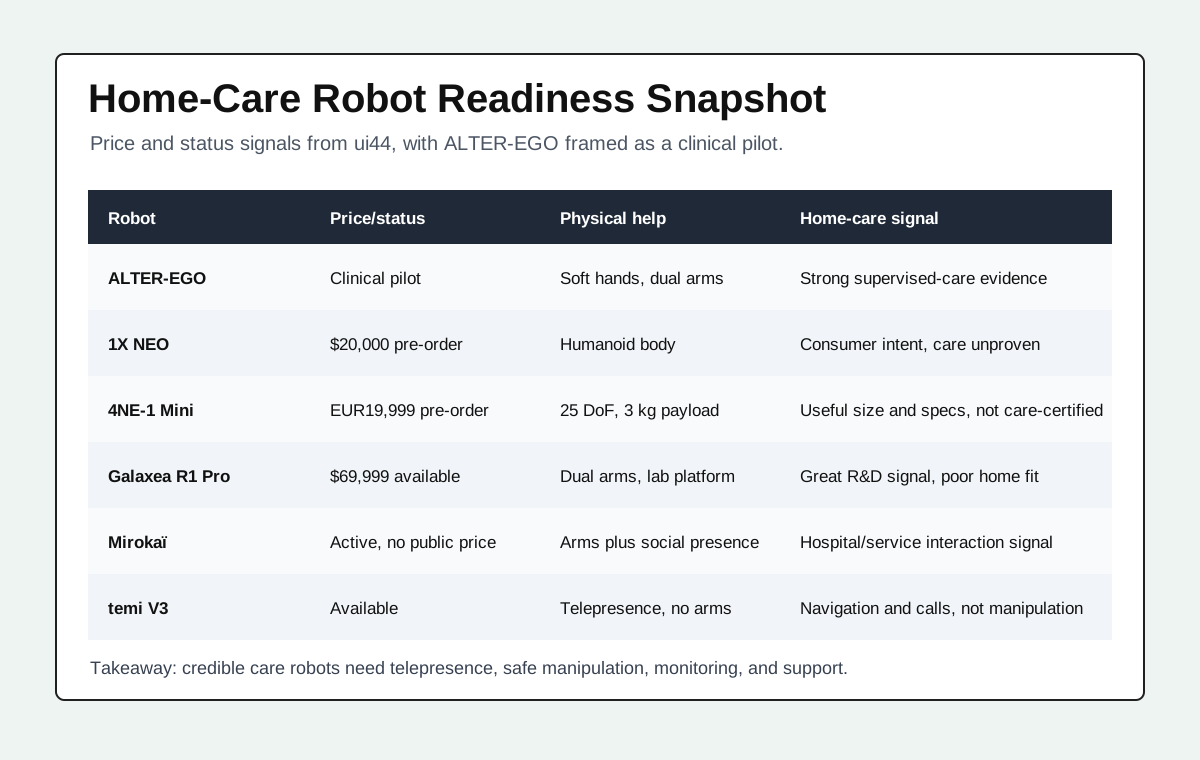
ALTER-EGO is a clinical research platform, so it is not directly comparable with consumer home robots. But ui44's database gives us a useful way to frame the gap between a care pilot and products people can actually follow.

Robot

ALTER-EGO

ui44 category
Research/clinical care platform
Price/status in ui44
Not a consumer listing
What it proves
Remote manipulation, soft hands, clinical workflow testing
What it does not prove
Retail support, pricing, home certification

Robot

1X NEO

ui44 category
Humanoid
Price/status in ui44
$20,000, pre-order
What it proves
A home-focused humanoid can be packaged for buyers
What it does not prove
Broad home-care reliability is still unproven

Robot

NEURA 4NE-1 Mini

ui44 category
Humanoid
Price/status in ui44
EUR19,999, pre-order
What it proves
Smaller humanoid form factor, 25 DoF, 3 kg payload, about 2.5 hours battery
What it does not prove
Not a certified care assistant

Robot

Galaxea R1 Pro

ui44 category
Humanoid
Price/status in ui44
$69,999, available
What it proves
Dual arms, force-controlled grippers, lab-grade embodied-AI development
What it does not prove
Too heavy, expensive, and research-oriented for ordinary homes

Robot

Mirokaï

ui44 category
Commercial
Price/status in ui44
Active, price undisclosed
What it proves
Social interaction and hospital/service deployments
What it does not prove
Not sold as a home-care humanoid

Robot

temi V3

ui44 category
Commercial
Price/status in ui44
Available, price undisclosed
What it proves
Navigation, telepresence, and video calls in a mobile base
What it does not prove
No arms or physical assistance
Home care humanoid robot comparison chart showing ALTER-EGO, 1X NEO, NEURA 4NE-1 Mini, Galaxea R1 Pro, Mirokaï, and temi V3 by price, arms, mobility, and care readiness
Scroll sideways to inspect the full chart.

The comparison is revealing because no single robot owns the whole problem. NEO is the most obvious consumer-facing humanoid reference point, with a $20,000 pre-order price in ui44's database and a home-focused positioning. NEURA's 4NE-1 Mini is similarly priced at EUR19,999 in its standard tier and lists concrete specs such as 132 cm height, 36 kg weight, 25 degrees of freedom, a 3 kg payload, and roughly 2.5 hours of battery life.

Galaxea R1 Pro goes the other direction. It is available at $69,999 and has the kind of dual-arm, sensor-rich mobile manipulation package that researchers want, but its size, weight, and lab orientation make it a poor mental model for a normal living room.

temi and Mirokaï show the service-robot side of the road. They are more credible around navigation, social interaction, and telepresence than around physical assistance. That is why ALTER-EGO is worth watching: it combines the remote-presence idea with arms and hands built for human contact.

The Buying Signal: Look For Supervision Before Autonomy

The home-care market should be skeptical of robots that claim independence too early. For medically sensitive use, the first buyer question is not "Can it think?" It is "Who is supervising it, and what happens when it gets confused?"

ALTER-EGO's pilot is interesting because it starts with a supervised model. In remote mode, a clinician or operator is involved. In semi-autonomous mode, the robot can handle constrained tasks. In autonomous mode, the examples are still limited and practical: welcoming patients, orienting them, providing basic information and services, administering simple assessments, and accompanying patients in daily hospital activities.

That ladder matters for future home robots. A believable care robot should move from remote operation to assisted autonomy to narrow autonomy, not jump straight to "I can take care of your parent."

What Would A Home Version Still Need?

Before an ALTER-EGO-like robot belongs in a home, several pieces need to become boring and repeatable.

It needs a clear safety case. Soft hands and variable-stiffness arms are good signals, but a home version would need documented limits on force, speed, collision behavior, pinch points, fall risk, emergency stop access, and what tasks are explicitly forbidden.

It needs simple setup. Hospitals can train staff. Homes cannot assume that every caregiver will tune maps, calibrate hands, or debug networking. A real home-care robot must tolerate Wi-Fi drops, clutter, pets, narrow doorways, bad lighting, and changed furniture.

It needs a support model. If a care robot fails on Saturday night, the buyer needs to know whether that is a software issue, a medical workflow issue, or a hardware service call. The more medical the use case, the less acceptable it is to sell the robot like a novelty gadget.

It needs privacy boundaries. A robot with cameras, microphones, remote operation, monitoring, and health-adjacent data creates a very different trust problem than a vacuum. Home-care buyers should ask where video is processed, who can connect, how sessions are logged, and what data is shared with clinicians or family members.

Companion Robots Are Not The Same Thing

It is tempting to put every care-adjacent robot in the same bucket, but that blurs the real buying decision. Miko 3, at EUR269 in ui44's database, is a companion and learning robot for children. Tombot Jennie is designed as a lifelike emotional-support companion for homes, hospitals, assisted living, and memory-care settings. Pepper proved how far social robots could go in banks, stores, airports, hospitals, and restaurants before the business case became difficult.

Those products may help with presence, engagement, or emotional support. They do not solve the same problem as a humanoid care assistant with arms. A future home-care category will likely split into several layers:

  • Companion robots for engagement and routine.
  • Telepresence robots for calls and remote visits.
  • Mobile manipulators for light physical assistance.
  • Clinical robots for supervised care workflows.

ALTER-EGO sits closest to the last two layers. That is why it should be judged more like a care workflow platform than like a friendly tabletop robot.
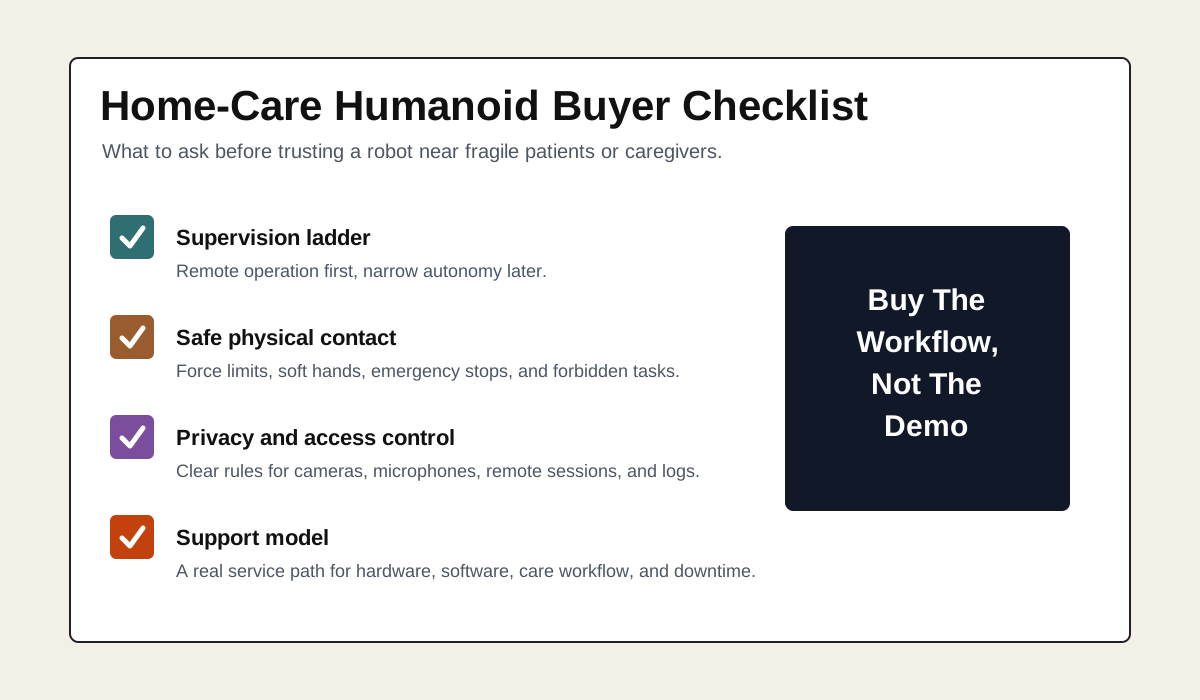
Home care robot buyer checklist for supervised autonomy, safe arms, privacy, support, and narrow care tasks
Scroll sideways to inspect the full chart.

What To Watch Next

The next useful evidence will not be a polished demo video. It will be data from the clinical workflow: which tasks staff actually delegate, how often patients and caregivers accept the robot, how long setup takes, how many interventions are required, and whether remote support genuinely reduces the strain of home-care coordination.

Buyers should also watch whether the control model changes. IIT says future work is exploring ways for patients to control the robot through residual movements, shifting it from an avatar for clinicians toward a more personal aid. That would be a meaningful development, but only if it is paired with strong guardrails and a realistic understanding of patient fatigue.

For now, ALTER-EGO is best understood as a directional signal. It suggests that the path to useful home humanoids may run through hospitals first: constrained tasks, supervised operation, soft manipulation, and careful patient feedback.

That is less exciting than a general-purpose home robot launch. It is also more credible. If a humanoid can earn trust in ALS support workflows, it will teach the rest of the home robot market what "helpful" actually has to mean.

Database context

Use this article as a privacy verification workflow

Turn the article into a real verification pass

ALTER-EGO: Can a Hospital Humanoid Work at Home? already points you toward 8 linked robots, 8 manufacturers, and 7 countries inside the ui44 database. That matters because strong buyer guidance is easier to apply when you can move immediately from a claim or warning into concrete product pages, manufacturer directories, component explainers, and country-level context instead of treating the article as an isolated opinion piece. The fastest next step is to turn the article into a shortlist workflow: open the linked robot pages, verify which specs are actually published for those models, then compare the surrounding manufacturer and component context before you decide whether the underlying claim changes your buying plan.

For this topic, the useful discipline is to separate the editorial lesson from the catalog evidence. The article gives you the framing, but the robot pages tell you what each product actually ships with today: sensor stack, connectivity methods, listed price, release timing, category, and support-relevant compatibility notes. The manufacturer pages then show whether you are looking at a one-off launch, a broader lineup pattern, or a company that spans multiple categories. That layered workflow reduces the risk of buying on a single marketing phrase or a single support FAQ.

Use the robot pages to confirm which products actually expose cameras, microphones, Wi-Fi, or voice systems, then use the manufacturer pages to decide how much of the privacy question seems product-specific versus brand-wide. On this route cluster, NEO, 4NE-1 Mini, and R1 Pro form the fastest reality check. If you want a quick working shortlist, open Compare NEO, 4NE-1 Mini, and R1 Pro next, then keep this article open as the reasoning layer while you compare structured data side by side.

Practical Takeaway

Every robot, manufacturer, category, component, and country reference below resolves to a real ui44 page, keeping the follow-up path grounded in database records rather than generic advice.

Suggested next steps in ui44

  1. Open NEO and note the listed sensors, connectivity methods, and voice stack before you interpret any policy claim.
  2. Cross-check the wider brand context on 1X Technologies so you can see whether the privacy question touches one model or a broader lineup.
  3. Use the linked component pages to confirm how common the relevant sensors and connectivity layers are across the database.
  4. Keep a short note of which policy layers you checked, which device features are actually present on the robot page, and which items still depend on region- or app-level confirmation.
  5. Finish with Compare NEO, 4NE-1 Mini, and R1 Pro so the policy reading sits next to structured product data.

Database context

Robot profiles worth opening next

Use the linked product pages as the evidence layer

The linked robot pages are where this article becomes operational. Instead of asking whether the headline is interesting, use the robot entries to inspect the actual mix of sensors, connectivity options, batteries, pricing, release timing, and stated capabilities attached to the products mentioned in the article. That is the easiest way to see whether the warning or opportunity described here affects one product family, a specific design pattern, or an entire buying lane.

NEO

1X Technologies · Humanoid · Pre-order

$20,000

NEO is tracked on ui44 as a pre-order humanoid robot from 1X Technologies. The database currently records a listed price of $20,000, a release date of 2025-10-28, ~4 hours battery life, Not disclosed charging time, and a published stack that includes RGB Cameras, Depth Sensors, and Tactile Skin plus Wi-Fi and Bluetooth.

For privacy-focused reading, this page matters because it shows the concrete device surface behind the policy discussion. Use it to verify whether NEO combines sensors and connectivity in a way that could change the in-home data footprint, and compare the listed capabilities such as Household Chores, Tidying Up, and Safe Human Interaction with any cloud, app, or voice layers.

4NE-1 Mini

NEURA Robotics · Humanoid · Pre-order

€19.999

4NE-1 Mini is tracked on ui44 as a pre-order humanoid robot from NEURA Robotics. The database currently records a listed price of €19.999, a release date of 2026-01-05, ~2.5 hours battery life, Not disclosed charging time, and a published stack that includes Multi-camera Array, Force/Torque Sensors, and 3D Vision plus Wi-Fi 6 and Gigabit Ethernet.

For privacy-focused reading, this page matters because it shows the concrete device surface behind the policy discussion. Use it to verify whether 4NE-1 Mini combines sensors and connectivity in a way that could change the in-home data footprint, and compare the listed capabilities such as 25 Degrees of Freedom, Autonomous Navigation, and Object Manipulation (Pro tier: 12-DOF dexterous hands) with any cloud, app, or voice layers, including Built-in Multi-language Voice Recognition.

R1 Pro

Galaxea Dynamics · Humanoid · Available

$69,999

R1 Pro is tracked on ui44 as a available humanoid robot from Galaxea Dynamics. The database currently records a listed price of $69,999, a release date of 2026, Not officially disclosed; official docs list a 35Ah / 1680Wh lithium-ion battery battery life, Not officially disclosed charging time, and a published stack that includes Head binocular / stereo-ready camera system, 5 chassis monocular cameras, and Optional wrist depth cameras plus Ethernet and USB 3.0.

For privacy-focused reading, this page matters because it shows the concrete device surface behind the policy discussion. Use it to verify whether R1 Pro combines sensors and connectivity in a way that could change the in-home data footprint, and compare the listed capabilities such as Wheeled Dual-Arm Humanoid Manipulation, 26 Total Degrees of Freedom, and Dual 7-DOF A2 Robotic Arms with any cloud, app, or voice layers.

Mirokaï

Enchanted Tools · Commercial · Active

Price TBA

Mirokaï is tracked on ui44 as a active commercial robot from Enchanted Tools. The database currently records a listed price of Price TBA, a release date of 2025, ~4 hours battery life, Not disclosed charging time, and a published stack that includes 2 RGBD Cameras, 2 Infrared Cameras, and 9 Time-of-Flight Cameras plus Wi-Fi and Bluetooth.

For privacy-focused reading, this page matters because it shows the concrete device surface behind the policy discussion. Use it to verify whether Mirokaï combines sensors and connectivity in a way that could change the in-home data footprint, and compare the listed capabilities such as 26 Degrees of Freedom, Omnidirectional Rolling Globe Locomotion, and Expressive Animated Face (projector-based) with any cloud, app, or voice layers, including Multi-language speech recognition & synthesis with emotional prosody.

temi V3

temi · Commercial · Available

Price TBA

temi V3 is tracked on ui44 as a available commercial robot from temi. The database currently records a listed price of Price TBA, a release date of 2022, Up to 8 hours battery life, Autonomous docking (220V/110V) charging time, and a published stack that includes 360° LIDAR, 2x Depth Cameras, and RGB Camera (13MP, 120° FOV) plus Wi-Fi 5 (802.11 a/b/g/n/ac, 2.4G/5G) and Bluetooth 5.1 BLE.

For privacy-focused reading, this page matters because it shows the concrete device surface behind the policy discussion. Use it to verify whether temi V3 combines sensors and connectivity in a way that could change the in-home data footprint, and compare the listed capabilities such as Autonomous Navigation (5cm accuracy), Human Follow Mode, and Telepresence Video Calling with any cloud, app, or voice layers, including temi AI Assistant.

Database context

Manufacturer context behind the article

Check whether this is one product story or a broader company pattern

Manufacturer pages add the privacy context that individual product pages cannot show on their own. They help you check whether cameras, microphones, cloud accounts, app controls, and policy assumptions appear across a broader lineup or stay tied to one specific product story.

1X Technologies

ui44 currently tracks 2 robots from 1X Technologies across 1 category. The company is grouped under Norway, and the current catalog footprint on ui44 includes NEO, EVE.

That wider brand context matters because privacy questions rarely stop at one FAQ page. A manufacturer route helps you see whether the article is centered on one premium model or on a company that has several relevant products and therefore more than one place where the same policy or app assumptions might matter. The category mix here currently points toward Humanoid as the most useful next route if you want to see whether this article reflects a wider pattern inside the brand.

NEURA Robotics

ui44 currently tracks 4 robots from NEURA Robotics across 3 categorys. The company is grouped under Germany, and the current catalog footprint on ui44 includes 4NE-1, 4NE-1 Mini, MiPA.

That wider brand context matters because privacy questions rarely stop at one FAQ page. A manufacturer route helps you see whether the article is centered on one premium model or on a company that has several relevant products and therefore more than one place where the same policy or app assumptions might matter. The category mix here currently points toward Humanoid, Home Assistants, Quadruped as the most useful next route if you want to see whether this article reflects a wider pattern inside the brand.

Galaxea Dynamics

ui44 currently tracks 2 robots from Galaxea Dynamics across 1 category. The company is grouped under China, and the current catalog footprint on ui44 includes R1 Pro, Kengo.

That wider brand context matters because privacy questions rarely stop at one FAQ page. A manufacturer route helps you see whether the article is centered on one premium model or on a company that has several relevant products and therefore more than one place where the same policy or app assumptions might matter. The category mix here currently points toward Humanoid as the most useful next route if you want to see whether this article reflects a wider pattern inside the brand.

Enchanted Tools

ui44 currently tracks 1 robot from Enchanted Tools across 1 category. The company is grouped under France, and the current catalog footprint on ui44 includes Mirokaï.

That wider brand context matters because privacy questions rarely stop at one FAQ page. A manufacturer route helps you see whether the article is centered on one premium model or on a company that has several relevant products and therefore more than one place where the same policy or app assumptions might matter. The category mix here currently points toward Commercial as the most useful next route if you want to see whether this article reflects a wider pattern inside the brand.

Database context

Broaden the scan without leaving the database

Categories, components, and countries add the wider context

Category framing

Category pages are useful when the article touches a buying pattern that shows up across brands. A category route helps you confirm whether the linked products sit in a narrow niche or whether the same question should be tested across a larger field of alternatives.

Humanoid

The Humanoid category page currently groups 112 tracked robots from 82 manufacturers. ui44 describes this lane as: Full-size bipedal humanoid robots designed to work alongside humans. From factory floors to household tasks, these machines represent the cutting edge of robotics.

That makes the category route a practical follow-up when you want to check whether the products linked in this article are typical for the lane or whether they sit at one edge of the market. Useful starting examples currently include NEO, EVE, Mornine M1.

Commercial

The Commercial category page currently groups 37 tracked robots from 31 manufacturers. ui44 describes this lane as: Delivery robots, warehouse automation, hospitality service bots, and other robots built for business operations.

That makes the category route a practical follow-up when you want to check whether the products linked in this article are typical for the lane or whether they sit at one edge of the market. Useful starting examples currently include G2 Air, aeo, Pepper.

Country and ecosystem context

Country pages give extra context when support practices, launch sequencing, regulatory posture, or manufacturer mix matter. They are not a substitute for model-level verification, but they do help you see which ecosystems cluster together and which manufacturers sit in the same regional field when you broaden the search beyond the article headline.

Norway

The Norway route currently groups 2 tracked robots from 1 manufacturers in ui44. That gives you a useful regional lens when the article points toward support practices, launch sequencing, or brand clusters that may share similar ecosystem assumptions.

On the current route, manufacturers like 1X Technologies make the page a good way to broaden the scan without losing the regional context that often shapes availability, documentation style, and adjacent alternatives.

Germany

The Germany route currently groups 9 tracked robots from 5 manufacturers in ui44. That gives you a useful regional lens when the article points toward support practices, launch sequencing, or brand clusters that may share similar ecosystem assumptions.

On the current route, manufacturers like NEURA Robotics, Bosch, Agile Robots make the page a good way to broaden the scan without losing the regional context that often shapes availability, documentation style, and adjacent alternatives.

China

The China route currently groups 172 tracked robots from 80 manufacturers in ui44. That gives you a useful regional lens when the article points toward support practices, launch sequencing, or brand clusters that may share similar ecosystem assumptions.

On the current route, manufacturers like Dreame, AGIBOT, Unitree Robotics make the page a good way to broaden the scan without losing the regional context that often shapes availability, documentation style, and adjacent alternatives.

Database context

Questions to answer before you move from reading to buying

A follow-up FAQ built from the entities already linked in this article

Frequently Asked Questions

Which page should I open first after reading “ALTER-EGO: Can a Hospital Humanoid Work at Home?”?

Start with NEO. That gives you a concrete product anchor for the article’s main claim. From there, branch into the manufacturer and component pages so you can tell whether the article is describing one specific model, a repeated brand pattern, or a wider technology issue that affects multiple shortlist options.

How do the manufacturer pages change the buying decision?

1X Technologies help you zoom out from one article and one product. On ui44 they show lineup breadth, category spread, and the neighboring robots tied to the same company. That context is useful when you are deciding whether a risk belongs to a single model, whether it shows up across a brand’s portfolio, and whether you should keep looking at alternatives before committing.

When should I switch from reading to side-by-side comparison?

Move into Compare NEO, 4NE-1 Mini, and R1 Pro as soon as you understand the article’s main warning or promise. The article explains what to watch for, but the compare view is where you can check whether price, status, battery life, connectivity, sensors, and category fit still make the robot a good match for your own home and budget.

Database context

Where to go next in ui44

Keep the research chain inside the database

If you want to keep going, these follow-on pages give you the cleanest expansion path from article to research session. Open the comparison route first if you are deciding between products today. Open the manufacturer, category, and component routes if you still need to understand the broader pattern behind the claim.

UT

Written by

ui44 Team

Published June 8, 2026

Share this article

Open a plain share link on X or Bluesky. No embeds, no widgets, no cookie baggage.

Explore the database

Go beyond the headlines

Compare specs, features, and prices across 100+ robots from leading manufacturers worldwide.