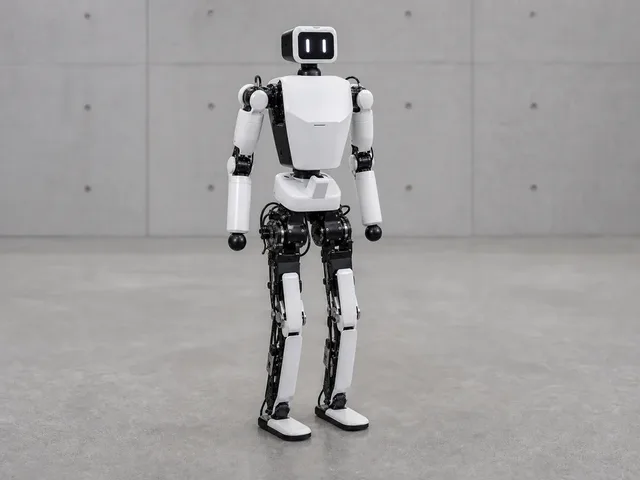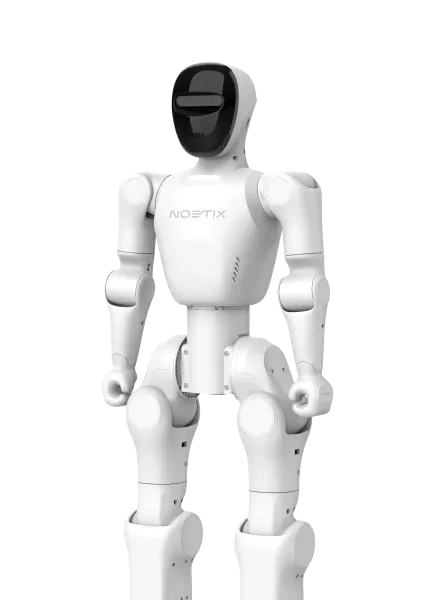
CyberOne
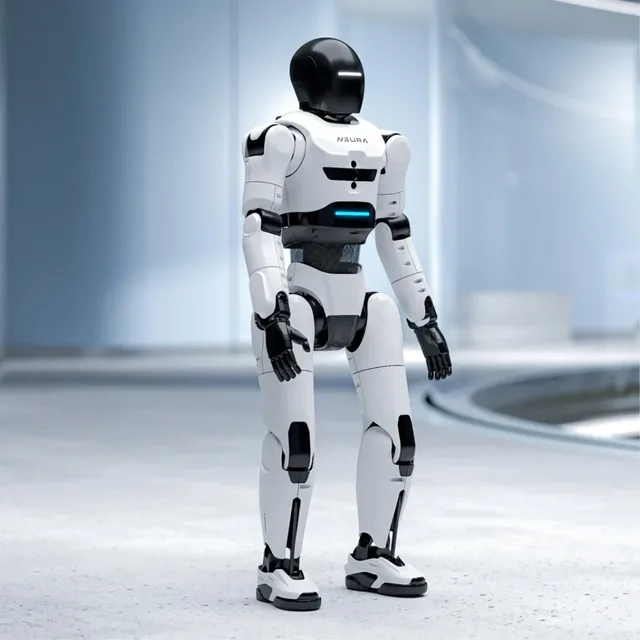
Xiaomi's humanoid robot prototype unveiled in August 2022. Capable of emotion recognition and bipedal locomotion. Currently a research/demo platform, not commercially available.
Price
Not for sale (research prototype)
Search is the fastest route on ui44 for high-volume scanning: robot names, manufacturers, categories, capabilities, sensors, connectivity, and AI stacks all surface in one workspace that stays usable on mobile, laptop, and 4K.
343
robots indexed
9
categories
<1s
live refresh
Type a query to see live matches across the entire index of robots, or clear it to browse by category and find what you need through structured directory navigation.
Live results
Match labels show why each robot surfaced for this query. The result deck stays dense enough to scan fast while keeping individual entries distinct and readable.
Xiaomi's humanoid robot prototype unveiled in August 2022. Capable of emotion recognition and bipedal locomotion. Currently a research/demo platform, not commercially available.
Price
Not for sale (research prototype)
XPENG's humanoid robot, unveiled at the company's AI Day in November 2024 and updated in November 2025. Built by Chinese EV maker XPENG Motors, Iron leverages autonomous driving AI, solid-state batteries, and reinforcement-learning-based locomotion. Features 60 joints with 200 degrees of freedom and a 720-degree AI vision system derived from XPENG's self-driving technology. Targeted for mass production in late 2026, initially for industrial assembly and service applications.
Price
$150,000
HRP-4C, nicknamed Miim, is a feminine-looking humanoid robot created by Japan's National Institute of Advanced Industrial Science and Technology (AIST). Standing 158cm tall and weighing 43kg (including battery), she was designed with the proportions of an average young Japanese female based on national body dimension data. HRP-4C uses 30 body motors, 8 facial expression motors, and 4 eye motors for a total of 42 degrees of freedom. She can walk bipedally, recognize speech and ambient sounds, and even sing using Yamaha's Vocaloid vocal synthesizer. First demonstrated publicly on March 16, 2009, she was later upgraded with more realistic walking and dancing abilities. Part of Japan's long-running Humanoid Robotics Project (HRP) series, she represented a leap toward human-like appearance and motion in research robotics.
Price
Research platform (not commercially sold)
HRP-5P is AIST's large humanoid research platform built for heavy labor in construction-like environments. Announced in 2018, the robot was designed as a practical R&D platform for tasks such as carrying and installing gypsum boards, tool handling, and autonomous operation in spaces made for humans. AIST describes it as targeting assembly work in construction, aircraft facilities, and shipyards where labor shortages and hazardous tasks are common.
Price
Research platform (not commercially sold)
The sixth generation of the iconic NAO humanoid robot, originally developed by Aldebaran Robotics (France) and now supported by Maxtronics, which was established in France on August 28, 2025 after Maxvision Technology Corporation acquired Aldebaran's core assets in July 2025. Standing 58cm tall with 25 degrees of freedom, NAO is one of the most widely deployed humanoid robots in history, with more than 20,000 units deployed worldwide. NAO replaced Sony's AIBO as the RoboCup Standard Platform League robot in 2007 and has been used in education, research, healthcare, and autism therapy. Features multilingual speech, facial recognition, and the Choregraphe graphical programming tool. Development began as 'Project Nao' in 2004.
Price
$16,990
Aldebaran Robotics' semi-humanoid robot designed to read emotions and interact with people. Introduced by SoftBank in Tokyo in June 2014, Pepper became one of the most recognized social robots in the world — approximately 27,000 units were manufactured before production was paused in June 2021 due to weak demand. The first batch of 1,000 units sold out in 60 seconds in June 2015. Pepper was deployed in SoftBank stores, banks, hospitals, airports, and restaurants across Japan, Europe, and North America. Features a 10.1-inch touch display, emotion recognition via facial expression and voice tone analysis, and a wheeled omnidirectional base. In June 2025, Aldebaran Robotics went into receivership. In July 2025, Shenzhen-based Maxvision Technology Corp. acquired Aldebaran's core assets, including the Pepper and NAO intellectual property.
Price
Current official sales are region/partner-based with no public MSRP on official pages; legacy Japan launch pricing was about ¥198,000 (~$1,800).
Abi is a social companion humanoid robot designed specifically for aged care and assisted living environments. Created by Melbourne-based Andromeda Robotics (founded 2022 by Grace Brown and Yan Chen), Abi is deliberately styled as a bright, toy-like figure — about 110 cm tall with a colorful soft-edged body, expressive digital face, and gesture-capable arms — to avoid the uncanny valley and feel approachable to elderly residents. It uses generative AI and emotion recognition to hold personalized conversations in over 90 languages, remember past interactions, and adapt its responses to each individual's mood and cognitive ability. Beyond 1:1 companionship, Abi leads group activities including singing, dancing, games, and storytelling. Deployed across 15 care homes in Melbourne, Australia, with a US waitlist opened in early 2026 following a $23M Series A funding round led by Forerunner.
Price
Not publicly disclosed. Pricing is contract-based and depends on how many Abi robots are needed; Andromeda says contracts are based on standard pricing and asks customers to contact the company for details.
Mirokaï is a social humanoid robot built by Enchanted Tools, a French startup founded in 2021 by Jérôme Monceaux — who previously co-created NAO and Pepper at Aldebaran Robotics. Standing about 1.23m tall and weighing around 26kg, Mirokaï moves on a patented omnidirectional rolling globe instead of legs, letting it glide smoothly through human spaces like hospitals, hotels, and airports. Its animated face is projected onto a 3D head using a built-in projector, giving it expressive real-time facial animations. The latest Explorer Suit version features torque-controlled arms with a 97% grasping success rate, multi-LLM conversational AI, VSLAM autonomous navigation, and GDPR-compliant face tracking. Enchanted Tools delivered its first unit to ISIR (Institut des Systèmes Intelligents et de Robotique) in mid-2024 and has a partnership with the Montpellier Cancer Institute to accompany children to radiation therapy. The company raised €15 million (~$17M USD) in seed funding — the largest early-stage robotics investment in France.
Price
No official public list price published by Enchanted Tools; sold via partnership/inquiry flow
Engineered Arts' humanoid robot platform designed for human-robot interaction research and public engagement. First revealed in December 2021 and debuted at CES 2022, Ameca went viral for its remarkably lifelike facial expressions. Official specs list the current platform as generation 2.6 (2024), and Ameca is deployed at museums and institutions worldwide including the Museum of the Future in Dubai and the National Robotarium in Edinburgh. Features grey rubber skin with a deliberately genderless design.
Price
Qualified businesses/corporations, education departments, government agencies, and non-profits can buy or rent Ameca; Engineered Arts says Robot-as-a-Service (RaaS) leasing is in pilot with a goal of broader availability for qualified prospects.
A semi-humanoid mobile manipulator from Beijing Galaxy General Robot Co. (Galbot), featuring a wheeled base and two dexterous arms. Designed for retail automation — inventory management, shelf replenishment, delivery, and packaging. Galbot opened the world's first humanoid-powered convenience store in Beijing in 2025. By August 2025, G1 robots were also operating in more than 10 smart pharmacies in Beijing, with plans to expand pharmacy deployments to 100 by year-end. A G1 Premium variant unveiled at the World Robotics Conference integrated NVIDIA Jetson AGX Thor; Galbot claimed 7.5× the AI compute of Jetson Orin and 3.5× greater energy efficiency, and the robot won a World Humanoid Robot Games pharmacy-retrieval challenge autonomously in 10 min 22 sec. The G1 is powered by proprietary VLA (vision-language-action) models including GraspVLA and GroceryVLA, enabling it to handle over 5,000 different product types without per-item calibration. Raised $335 million by mid-2025, followed by over $300 million in December 2025 at a valuation exceeding RMB 20 billion, and RMB 2.5 billion (~$350 million) in early 2026 — bringing total funding well above $900 million. Strategic partners include CATL, Bosch Group, Toyota, BAIC Group, and SAIC Motor, with cumulative orders totaling several thousand units.
Price
No public pricing (enterprise/commercial engagement)
The world's most famous social humanoid robot, activated on February 14, 2016 by Hong Kong-based Hanson Robotics. Sophia can mimic facial expressions (60+), hold basic conversations, and recognize faces. In 2017, Sophia became the first robot to receive Saudi Arabian citizenship and was named the UN's first Innovation Champion. Sophia is a technology demonstrator — not a general-purpose robot — with pre-scripted dialogue augmented by a decision-tree chat system.
Price
Not commercially sold
Hisense Savvy (赛维) is a mobile home butler robot unveiled at AWE 2026 in Shanghai. Designed as the central hub of Hisense's "household without housework" concept, Savvy combines a humanoid upper body with a wheeled chassis, allowing it to navigate home environments and physically interact with appliances and objects. It serves as the mobile interface within Hisense's "1+N+X" smart-home architecture, bridging fixed appliances (refrigerators, washing machines, air conditioners, TVs) and the people using them. Powered by Hisense's Xinghai AI model alongside DeepSeek technology, Savvy can coordinate appliance actions — for example, adjusting the air conditioner while fetching a drink from the refrigerator — and perform household tasks such as loading laundry. The robot was demonstrated in a real-scenario exhibit at AWE 2026 alongside two companion robots (Moii and Harley).
Price
Not yet announced
Next step after "humanoid"
Once the deck stops feeling noisy, stop typing and change tools: compare finalists side by side, widen into a category map, or sanity-check the manufacturer context before committing to the shortlist.
Structured browse
See the whole market map when you need breadth, not just one keyword match.
OpenDecision mode
Move from discovery to real tradeoffs once the shortlist is small enough.
OpenCompany context
Portfolio depth, support context, and who is behind the robots.
OpenReading the result deck
141 results is usually enough to expose the right cluster. The next lift should come from structured comparison, not from typing more words into the same field.
1. Trim
Drop the obvious mismatches by maker, price, or category.
2. Open
Open the best 2-4 robots in parallel for deeper spec context.
3. Compare
Use compare once the decision is a tradeoff, not discovery.
Need a broader view?
Search wins when you know the signal. Directory routes win when you need a map of the entire field. Use both deliberately instead of forcing one tool to do both jobs badly.
The search indexes every attribute of 343 robots — names, manufacturers, categories, capabilities, sensors, connectivity, and AI stacks. Here is how to get the best results.
The search indexes every attribute of all 343 robots — names, manufacturers, categories, capabilities, sensors, connectivity, and AI stacks.
| Search for | Example | Finds |
|---|---|---|
| Robot name | Optimus | Tesla Optimus and similar names |
| Manufacturer | Unitree | All Unitree Robotics robots |
| Category | humanoid | Humanoid category robots |
| Capability | voice interaction | Robots with voice interaction |
| Sensor | LiDAR | Robots with LiDAR sensors |
| Protocol | Matter | Robots supporting Matter |
Price Sorting
Name matches rank highest, then manufacturer, then categories, sensors, and capabilities.
Multi-word queries match across fields — "Boston Dynamics quadruped" hits maker + category simultaneously.
Results update as you type with sub-second response — start broad, add specificity, watch the deck narrow.
Search → open 2–4 promising robots → compare finalists → check maker context.
The right search approach depends on your role and what decision you need to make. These strategies cover the most common research patterns.
Whether you are a consumer researching your first robot purchase, a journalist covering the robotics industry, an engineer evaluating competitive products, or an investor assessing market opportunities — the right search strategy depends on what signal you are tracking and what decision you need to make next.
Start broad: try "cleaning robot" or "companion robot" for an overview of what is available. Review prices and features across multiple results, then narrow with specific terms like sensor types or brand names. The categories page has buyer guides with price ranges for each robot type to help set expectations.
Search for features you wish your current robot had — "LiDAR navigation," "auto-empty," "voice control," or "obstacle avoidance." Compare your current model against candidates using the comparison tool to evaluate whether the upgrade justifies the cost. Pay attention to connectivity protocol changes — newer robots may use Matter instead of proprietary apps.
Search cutting-edge terms: "bipedal locomotion," "force torque sensor," "large language model," or "ROS 2." Combine with status filters on the all robots page to distinguish currently available products from development-stage prototypes and pre-order models. The components directory provides deeper technical context on unfamiliar sensors and AI platforms.
Search deployment scenarios: "warehouse automation," "logistics," "reception desk," or "security patrol." Check manufacturer profiles for enterprise support options, fleet management capabilities, and commercial pricing arrangements for bulk deployments. Regional context matters — the countries directory shows production hubs and import considerations.
Search for component names like "LiDAR," "NVIDIA Jetson," "ROS 2," or "Matter" to find robots built on specific platforms. See the components directory for structured technology views and component trends for adoption momentum data over the past 30 days.
Search for the task rather than the product: "mopping," "lawn mowing," "security patrol," or "elderly care" surfaces robots designed for those applications. Cross-category queries like "security" can reveal surprising alternatives — dedicated security robots, companion robots with surveillance features, and quadrupeds with patrol capabilities all appear in one search.
Search "Japan," "Chinese," or "European" to find robots from specific markets. The countries directory offers a structured geographic view with production hubs, manufacturer density, and regional market leaders for deeper comparison.
Explore categories
Understand the robotics landscape and identify which robot type matches your need.
Search candidates
Build a list of 3–5 promising results by name, capability, or sensor type.
Deep-dive profiles
Review full specifications, sensor breakdowns, and capability analysis on each candidate.
Research maker
Evaluate the company track record, portfolio breadth, and support infrastructure.
Check technology
Use the components directory to understand unfamiliar sensors, AI platforms, and connectivity protocols.
| Use search when | Use browse when |
|---|---|
| You know the robot name, maker, or a specific technology keyword | You need to understand the full market landscape first |
| You want fast results across the entire database in one query | You want buyer guides with price ranges and recommendations |
| You are validating whether a specific sensor or protocol exists | You want to compare regional markets or manufacturer portfolios |
| You need shareable, bookmarkable result URLs for later | You want structured side-by-side specification comparison |
One of the most valuable but underused search strategies is cross-category exploration. Searching across categories can reveal surprising alternatives you might not have considered:
Every search generates a permanent URL. Bookmark it, share it with colleagues, or paste it into a team chat — the same URL always shows the latest data for that query.
Start on your laptop, continue on your phone. Search URLs work everywhere. Open candidate detail pages in parallel tabs for efficient comparison across devices.
Once your shortlist is small enough, move directly to the comparison tool for structured spec-by-spec analysis. The compare page also supports shareable URLs for team purchase decisions.
The practical questions people hit most often once they start narrowing the shortlist.
Keep the research moving
Search is the fastest way to surface candidates. Once the problem becomes breadth, tradeoffs, or manufacturer context, switch tools on purpose instead of endlessly refining one query.