Home / Search

Find the right robot without browsing blind.

Search is the fastest route on ui44 for high-volume scanning: robot names, manufacturers, categories, capabilities, sensors, connectivity, and AI stacks all surface in one workspace that stays usable on mobile, laptop, and 4K.

343

robots indexed

9

categories

<1s

live refresh

Clear

Showing matches for humanoid. Edit and the workspace updates in place.

Quick starts for common research modes: shortlist by category, validate a specific technology, or jump straight to a known brand.

Search results

Type a query to see live matches across the entire index of robots, or clear it to browse by category and find what you need through structured directory navigation.

Updating results...

Live results

141 results for "humanoid"

Match labels show why each robot surfaced for this query. The result deck stays dense enough to scan fast while keeping individual entries distinct and readable.

Page 11 of 12
ASIMO
Research | Honda

ASIMO

Honda's iconic humanoid robot, developed over two decades starting from the Honda E series (1986) and P series (1993). ASIMO (Advanced Step in Innovative Mobility) was one of the world's most recognizable humanoid robots, capable of walking, running, climbing stairs, recognizing faces/voices, and interacting with humans. The final 2011 model featured 57 degrees of freedom and could run at 9 km/h. Honda retired ASIMO in March 2022 to focus on avatar-style robotic technology. Inducted into the Carnegie Mellon Robot Hall of Fame in 2004.

Description

Price

Not commercially sold (research/demonstration robot)

View robot
P3
Research | Honda

P3

Honda P3 was unveiled in September 1997 as the first completely independent bipedal humanoid in Honda's P-series, preceding ASIMO. Compared with the larger P2, P3 used miniaturized components and a distributed control system to reduce size and weight while maintaining autonomous walking.

Description

Price

Not commercially sold (prototype humanoid)

View robot
iCub

iCub

iCub is an open-source humanoid robot designed for research into embodied cognition and artificial intelligence. Built by the Italian Institute of Technology (IIT) in Genoa, it's the size of a five-year-old child at 104 cm tall. Over 40 units are in use at research labs across Europe, the US, Korea, Singapore, China, and Japan. The hardware and software are fully open-source under GPL. It has 53 degrees of freedom, stereo vision cameras, microphones, and an optional full-body tactile skin. It can crawl, walk, sit, grasp objects, make facial expressions, and learn from interaction — making it one of the most capable research humanoids in the world.

Description

Price

€250.000

View robot
DRC-HUBO+
Research | KAIST

DRC-HUBO+

The DRC-HUBO+ is the DARPA Robotics Challenge-winning humanoid robot developed by Team KAIST at the Korea Advanced Institute of Science and Technology. It won first place and the $2 million prize at the DRC Finals in Pomona, California on June 6, 2015, completing all eight disaster-response tasks faster than any competitor. Its key innovation is the ability to transform between a walking bipedal posture and a wheeled kneeling posture — it drops to its knees and rolls on built-in knee wheels for fast, stable traversal, then stands up to use its arms and climb stairs. Built on the HUBO 2 (KHR-4) platform originally released in 2005, it represents over 15 years of humanoid research at KAIST led by Professor Jun-Ho Oh.

Description

Price

Research platform (not commercially available)

View robot
QTrobot
Research | LuxAI

QTrobot

QTrobot is a tabletop social humanoid designed for human-robot interaction research, special-needs education, and therapy support. LuxAI positions it as a developer-friendly platform with ROS APIs and visual programming tools, while its current documentation highlights integrated depth sensing, expressive gestures, and programmable behaviors for classroom and lab settings. LuxAI's current shop pricing is tracked in the price fields rather than older third-party cost references.

Description

Price

€10.900

View robot
Hobbs W1
Commercial | Noetix Robotics

Hobbs W1

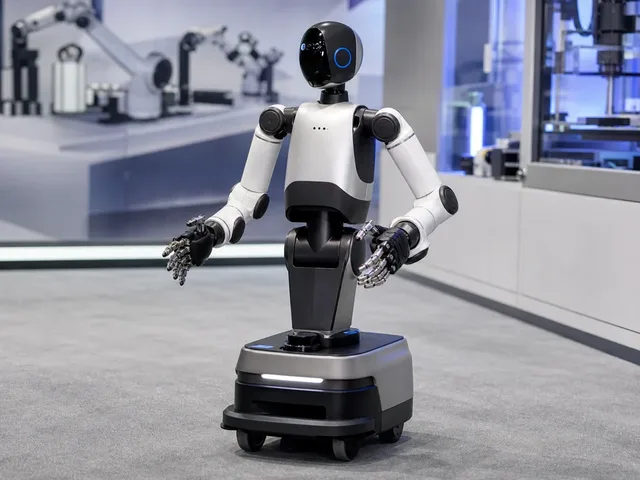
Noetix Robotics' Hobbs W1 is a wheeled bionic humanoid service robot built for customer-facing and guided-service environments rather than home chores. The official product page presents it as the company's first wheeled bionic robot with 54 active degrees of freedom, combining a lifelike silicone head, dual 5-DoF arms with dexterous hands, and a mobile laser-SLAM base. Noetix markets Hobbs W1 for government and enterprise service desks, corporate reception, school research settings, and hospital guidance or consultation. Official specs cite a 170 cm, 75 kg platform with up to 6 hours of full-load operation, while independent coverage in late 2025 highlighted its emotion-aware interaction and receptionist-style demos as part of China's fast-moving humanoid service-robot race.

Description

Price

No public pricing; enterprise/commercial sales inquiry only

View robot
Research | ORBIT Robotics

HELIOS

HELIOS is ORBIT Robotics' four-armed space humanoid research prototype from the ETH Focus Project ORBIT, built for microgravity and orbital operations rather than walking on Earth. ORBIT's official reveal video describes a complete space humanoid with four arms and four hands, while ORBIT's site frames HELIOS as astronaut-assistance hardware for station logistics, cargo handling, maintenance, research, and EVA support. Independent coverage corroborates the legless four-arm architecture, tendon/cable-driven actuation, five-finger hands, roller-contact elbow concept, and current prototype status; public price, retail availability, dimensions, battery details, and operational deployment timing are not disclosed.

Description

Price

Research prototype; pricing and purchase availability have not been announced.

View robot
Robonaut 2

Robonaut 2

The first humanoid robot sent to space. Developed jointly by NASA and General Motors, Robonaut 2 (R2) arrived at the International Space Station aboard STS-133 in February 2011. Designed to work alongside astronauts using the same tools they use, R2 features dexterous five-fingered hands with 12 degrees of freedom each. It operated on the ISS until 2018 when it was returned to Earth for repairs. As of 2024, R2 is on display at the Smithsonian National Air and Space Museum.

Description

Price

Research project (not for sale)

View robot
Valkyrie (R5)
Research | NASA JSC

Valkyrie (R5)

NASA's R5 Valkyrie is an entirely electric humanoid robot designed and built at the Johnson Space Center for the 2013 DARPA Robotics Challenge. Named after a figure from Norse mythology, it was built to operate in degraded or damaged human-engineered environments — with the long-term goal of supporting future space missions, either preparing sites before human arrival or assisting crews on other planets. Valkyrie has 44 degrees of freedom, including a 7-DOF arm on each side and simplified hands with 3 fingers and a thumb. The head sits on a 3-DOF neck with a Carnegie Robotics Multisense SL sensor (stereo, laser, IR structured light) plus fore and aft hazard cameras in the torso. After the DRC Trials, NASA provided units to MIT and Northeastern University with $500,000 each in funding for further research. NASA is also using Valkyrie as a dexterous robotics testbed under its Woodside Energy collaboration in Australia, maturing remote mobile manipulation for hazardous or remote facilities with operational demonstrations planned for 2026–2027 and lessons feeding Artemis/lunar-surface robotics work.

Description

Price

Research platform (not commercially available)

View robot
TALOS
Research | PAL Robotics

TALOS

PAL Robotics' full-size humanoid research platform, built in Barcelona. TALOS stands 1.75m tall and weighs 95kg, with 32 degrees of freedom and full torque sensing in all joints (except head, wrists, and grippers). It can carry 6kg per arm fully extended, making it one of the strongest research humanoids available. Its EtherCAT communication network runs control loops at 2 kHz (up to 5 kHz), enabling highly reactive and dynamic motions. Fully ROS-based and open-source-friendly, with simulation models available. Used in top research labs worldwide for locomotion, whole-body control, and industrial manipulation research. The head and grippers are fully customizable.

Description

Price

Research platform (contact for quote)

View robot
REEM-C
Research | PAL Robotics

REEM-C

REEM-C is a full-size bipedal humanoid research robot built by PAL Robotics in Barcelona, Spain. Standing 165 cm tall with 68 degrees of freedom, it can walk stably, climb stairs, and sit in a chair. It runs on ROS with Ubuntu Linux and is fully open-source in simulation. Designed for AI and robotics research, it supports whole-body control, autonomous navigation, grasping, speech recognition, and teleoperation. Used by universities and research labs worldwide.

Description

Price

No public list price (contact sales)

View robot
KANGAROO
Research | PAL Robotics

KANGAROO

KANGAROO is PAL Robotics' development-ready biped humanoid platform for dynamic locomotion, reinforcement learning, embodied AI, and robotic movement research. The official product page lists a 1.58 m, configuration-dependent 50–65 kg platform with 14–40 total degrees of freedom, optional 4-, 5-, or 7-DoF arms, two 6-DoF legs, a 2-DoF torso, parallel grippers or dexterous hands, and arm payloads that vary by arm configuration. PAL positions the platform around robust walking, running, jumping, stair-climbing, ROS 2 control, a full reinforcement-learning pipeline, and mjlab open-source physics simulation rather than consumer home service. PAL's August 2024 announcement said Kangaroo had moved from prototype to a ready-to-use purchasable product and that the first unit had been delivered to TU Wien, while current public pricing, shipping regions, and finalized customer configurations remain quote-only.

Description

Price

PAL Robotics lists KANGAROO as a request-a-quote research platform; no public list price has been disclosed.

View robot

Next step after "humanoid"

Turn 141 search results into an actual decision.

Once the deck stops feeling noisy, stop typing and change tools: compare finalists side by side, widen into a category map, or sanity-check the manufacturer context before committing to the shortlist.

Open compare

Reading the result deck

Stop searching once the shortlist starts to repeat.

141 results is usually enough to expose the right cluster. The next lift should come from structured comparison, not from typing more words into the same field.

1. Trim

Drop the obvious mismatches by maker, price, or category.

2. Open

Open the best 2-4 robots in parallel for deeper spec context.

3. Compare

Use compare once the decision is a tradeoff, not discovery.

Need a broader view?

Switch tools when the question changes.

Search wins when you know the signal. Directory routes win when you need a map of the entire field. Use both deliberately instead of forcing one tool to do both jobs badly.

Search playbook

The search indexes every attribute of 343 robots — names, manufacturers, categories, capabilities, sensors, connectivity, and AI stacks. Here is how to get the best results.

Query examples

The search indexes every attribute of all 343 robots — names, manufacturers, categories, capabilities, sensors, connectivity, and AI stacks.

Search for Example Finds
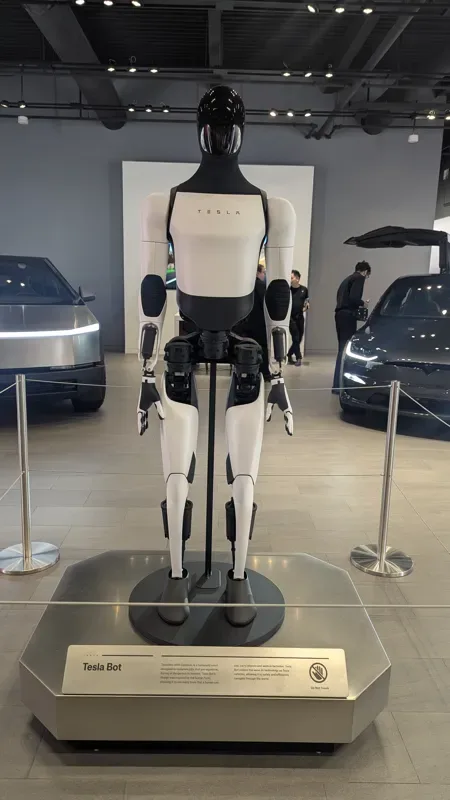
Robot nameOptimusTesla Optimus and similar names
ManufacturerUnitreeAll Unitree Robotics robots
CategoryhumanoidHumanoid category robots
Capabilityvoice interactionRobots with voice interaction
SensorLiDARRobots with LiDAR sensors
ProtocolMatterRobots supporting Matter

Price Sorting

No price filter in search? Sort results on the all robots page by price low-to-high or high-to-low.
1

Priority matching

Name matches rank highest, then manufacturer, then categories, sensors, and capabilities.

2

Cross-field matching

Multi-word queries match across fields — "Boston Dynamics quadruped" hits maker + category simultaneously.

3

Live refresh

Results update as you type with sub-second response — start broad, add specificity, watch the deck narrow.

4

Research workflow

Search → open 2–4 promising robots → compare finalists → check maker context.

Research strategies

The right search approach depends on your role and what decision you need to make. These strategies cover the most common research patterns.

Research strategies by role

Whether you are a consumer researching your first robot purchase, a journalist covering the robotics industry, an engineer evaluating competitive products, or an investor assessing market opportunities — the right search strategy depends on what signal you are tracking and what decision you need to make next.

First-time buyer

Start broad: try "cleaning robot" or "companion robot" for an overview of what is available. Review prices and features across multiple results, then narrow with specific terms like sensor types or brand names. The categories page has buyer guides with price ranges for each robot type to help set expectations.

Upgrading a robot

Search for features you wish your current robot had — "LiDAR navigation," "auto-empty," "voice control," or "obstacle avoidance." Compare your current model against candidates using the comparison tool to evaluate whether the upgrade justifies the cost. Pay attention to connectivity protocol changes — newer robots may use Matter instead of proprietary apps.

Tech enthusiast

Search cutting-edge terms: "bipedal locomotion," "force torque sensor," "large language model," or "ROS 2." Combine with status filters on the all robots page to distinguish currently available products from development-stage prototypes and pre-order models. The components directory provides deeper technical context on unfamiliar sensors and AI platforms.

Commercial buyer

Search deployment scenarios: "warehouse automation," "logistics," "reception desk," or "security patrol." Check manufacturer profiles for enterprise support options, fleet management capabilities, and commercial pricing arrangements for bulk deployments. Regional context matters — the countries directory shows production hubs and import considerations.

Research by technology

Search for component names like "LiDAR," "NVIDIA Jetson," "ROS 2," or "Matter" to find robots built on specific platforms. See the components directory for structured technology views and component trends for adoption momentum data over the past 30 days.

Research by use case

Search for the task rather than the product: "mopping," "lawn mowing," "security patrol," or "elderly care" surfaces robots designed for those applications. Cross-category queries like "security" can reveal surprising alternatives — dedicated security robots, companion robots with surveillance features, and quadrupeds with patrol capabilities all appear in one search.

Research by region

Search "Japan," "Chinese," or "European" to find robots from specific markets. The countries directory offers a structured geographic view with production hubs, manufacturer density, and regional market leaders for deeper comparison.

Complete research workflow

1

Explore categories

Understand the robotics landscape and identify which robot type matches your need.

2

Search candidates

Build a list of 3–5 promising results by name, capability, or sensor type.

3

Deep-dive profiles

Review full specifications, sensor breakdowns, and capability analysis on each candidate.

4

Compare finalists

Put top picks side by side with the comparison tool to highlight tradeoffs.

5

Research maker

Evaluate the company track record, portfolio breadth, and support infrastructure.

6

Check technology

Use the components directory to understand unfamiliar sensors, AI platforms, and connectivity protocols.

When to use search vs other tools

Use search when Use browse when
You know the robot name, maker, or a specific technology keywordYou need to understand the full market landscape first
You want fast results across the entire database in one queryYou want buyer guides with price ranges and recommendations
You are validating whether a specific sensor or protocol existsYou want to compare regional markets or manufacturer portfolios
You need shareable, bookmarkable result URLs for laterYou want structured side-by-side specification comparison

Cross-category discovery

One of the most valuable but underused search strategies is cross-category exploration. Searching across categories can reveal surprising alternatives you might not have considered:

  • Security needs? Searching "security" surfaces dedicated security robots, companion robots with surveillance features, quadrupeds with patrol capabilities, and cleaning robots with built-in cameras.
  • Specific sensor? Searching "camera" shows robots from every category that include cameras — from vacuums to humanoids to security bots — revealing technology adoption patterns across the market.
  • Budget comparison? Searching a price range or budget term can surface robots across categories that compete for the same spending decision, even if they serve different purposes.

Saving and sharing research

Bookmarkable URLs

Every search generates a permanent URL. Bookmark it, share it with colleagues, or paste it into a team chat — the same URL always shows the latest data for that query.

Multi-device research

Start on your laptop, continue on your phone. Search URLs work everywhere. Open candidate detail pages in parallel tabs for efficient comparison across devices.

Compare integration

Once your shortlist is small enough, move directly to the comparison tool for structured spec-by-spec analysis. The compare page also supports shareable URLs for team purchase decisions.

Search help

The practical questions people hit most often once they start narrowing the shortlist.

Frequently Asked Questions

What can I search for on ui44?
You can search across all 343 robots by name, manufacturer, category, capability, sensor type, connectivity option, or any keyword that appears in a robot's profile. The search indexes every attribute in the database for comprehensive results.
Why am I getting no results?
If your search returns no results, try simplifying your query. Use single keywords rather than phrases, check for typos, and try synonyms (e.g., "vacuum" instead of "cleaning robot"). You can also browse by category or manufacturer.
Can I filter search results by price?
The search page does not include a numerical price filter, but you can use the all robots page which offers category, manufacturer, and price sorting together.
Do search results update in real time?
Yes, results update as you type with a short debounce delay to balance responsiveness with efficiency. There is no need to press Enter or click a search button — just start typing and results appear automatically. You can also press Enter or click Search for an immediate update. The result cards are rendered server-side and delivered via HTMX partial updates, meaning only the search results section refreshes without disturbing the rest of the page.
How is search relevance determined?
Results are ranked by match quality across multiple data dimensions. The relevance algorithm prioritizes exact matches in high-importance fields — a robot name match ranks higher than a description mention, which ranks higher than a sensor or capability match. Multi-word queries are evaluated as a combined search, matching across any combination of fields. For example, searching "Boston Dynamics quadruped" surfaces robots from Boston Dynamics in the quadruped category.
Can I search by technical specifications?
Yes — search for specific sensor names, connectivity protocols, AI platforms, or capability keywords. For example, searching for "LiDAR" returns all robots that include LiDAR sensors, while "Matter" surfaces robots supporting the Matter smart home protocol. For structured technical browsing, the components directory provides dedicated pages for each technology with complete robot compatibility lists and detailed technical explanations.
Does search include robots not yet available for purchase?
Yes, the search indexes every robot in the database regardless of availability status. Results include robots that are Available, in Pre-order, in Development, and in Prototype stages. Each result card displays the robot's current status so you can quickly identify which results represent products you can buy today versus those still in development. To limit results to only purchasable robots, use the status filter tabs on the all robots page.
How often is the search data updated?
The search index is rebuilt whenever the database is updated, ensuring that new robots, updated specifications, and changed prices are immediately searchable without delay. Each robot detail page shows a "last verified" date so you can assess data freshness for any specific result. Available products are prioritized for frequent verification, ensuring that purchase-ready robots have the most current information.
Can I share or bookmark my search results?
Yes, every search query generates a shareable URL that preserves your exact search terms and results. You can bookmark searches to revisit later, share specific search results with colleagues evaluating robots together, or save a set of search URLs as a lightweight research project. The URL-based approach ensures your research is reproducible — the same URL always shows the latest data.
What is the best way to narrow down search results?
Start with a broad term and progressively add specificity. For example, typing "robot" shows everything, adding "cleaning" narrows to cleaning robots, and adding a manufacturer name further refines to that company's products. You can also combine search with other tools — identify candidates through search, then use the comparison tool to evaluate your shortlist side by side across all specification dimensions.
Should I use search or browse to find robots?
Use search when you have a specific keyword, name, manufacturer, or technology in mind — it is the fastest way to surface candidates from the entire database in one action. Use browse routes when you need market context: the categories page for understanding robot types and buyer guides, the manufacturers page for company-level research, and the comparison tool for final tradeoff analysis. Most effective research workflows use both: search to discover, browse to contextualize.
Can I search by price range?
Direct price-range filtering is not available in search. However, you can search by category (e.g., "cleaning robot") to see the full price spread, then sort by price on the all robots page for structured price browsing. Many category pages also include price distribution tables showing typical price ranges for budget, mid-range, and premium segments within that robot type.
How do I compare robots after searching?
Once your search results narrow to a manageable shortlist, open the most promising 2–4 robots in separate tabs and review their full detail pages. Then use the comparison tool to place up to 4 robots side by side across every specification dimension — price, sensors, capabilities, connectivity, battery life, dimensions, and AI stack. The comparison view highlights differences that are hard to spot across separate detail pages.
Does search work on mobile?
Yes, search is fully responsive and works on mobile, tablet, and desktop. On smaller screens, the search input is prominently placed at the top of the page, result cards stack vertically for easy scrolling, and all quick-start tags and category chips remain tappable. Every search generates a bookmarkable URL, so you can start research on your phone and continue on your laptop without losing context.
How do I find robots from a specific country?
You can search by country name or nationality — "Japan," "Chinese," "Korean," or "German" will surface robots from manufacturers based in those regions. For a structured geographic view, the countries directory provides dedicated pages for each manufacturing hub, including manufacturer counts, product portfolios, and regional market positioning. Country pages also show production trends and highlight leading manufacturers in each region.
Can I search by robot status (available, pre-order, development)?
The search indexes status labels, so searching for "available," "pre-order," "development," or "prototype" will surface robots matching that status. However, for more structured status filtering, use the status filter tabs on the all robots page, which lets you toggle between Available, Pre-order, Development, and Prototype robots while maintaining category and manufacturer filters. Status information on each robot profile includes a last verified date so you can assess how current the availability data is.
What data does each search result card show?
Each result card displays the robot name, manufacturer (linked to the manufacturer profile), category, a short description, the price (or price note if TBD), and match labels showing which fields matched your query (Name, Maker, Category, Capability, Sensor, or AI). Clicking any result opens the full robot detail page with complete specifications, sensor breakdowns, capability analysis, component details, and manufacturer context.
How do I research a specific technology like LiDAR or Matter?
Search for the technology name directly — "LiDAR," "Matter," "ROS 2," "NVIDIA Jetson," or "Bluetooth 5.0" will return all robots that include that technology. For deeper technical context, the components directory provides dedicated pages for each technology with explanations, adoption statistics, and complete robot compatibility lists. You can also check component trends to see which technologies are gaining or losing adoption across the market over the past 30 days.
What is the difference between search and the all robots page?
The search page is optimized for keyword-based discovery across the entire database — type any term and get instant results from all robots. It indexes every attribute including names, manufacturers, categories, capabilities, sensors, connectivity protocols, and AI platforms. The all robots page is a structured directory with sortable columns, category filters, manufacturer filters, status tabs, and price sorting. Use search when you have a keyword in mind; use the robots page when you want to browse, filter, and sort a structured table view. Both routes link to the same robot detail pages for deep specification analysis.

Keep the research moving

Need a different lens than raw keyword search?

Search is the fastest way to surface candidates. Once the problem becomes breadth, tradeoffs, or manufacturer context, switch tools on purpose instead of endlessly refining one query.