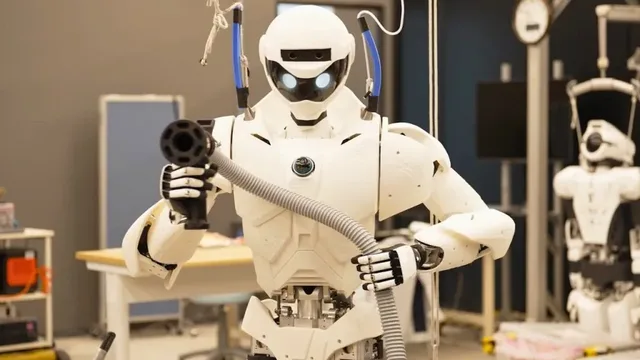
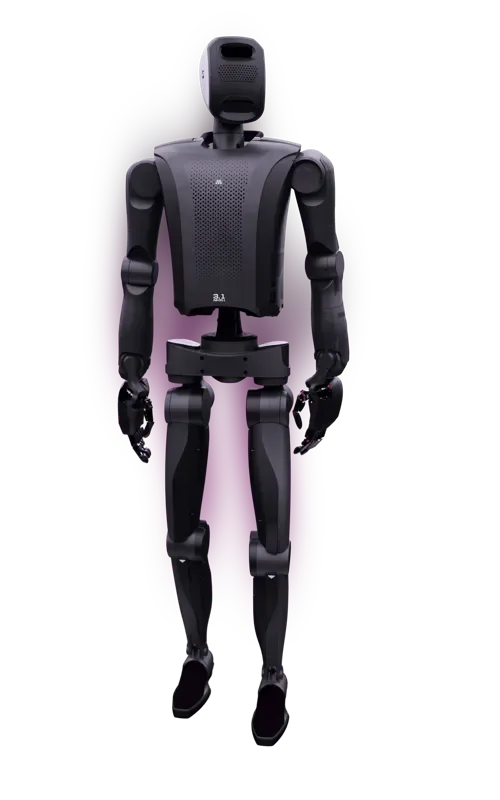
Walker S
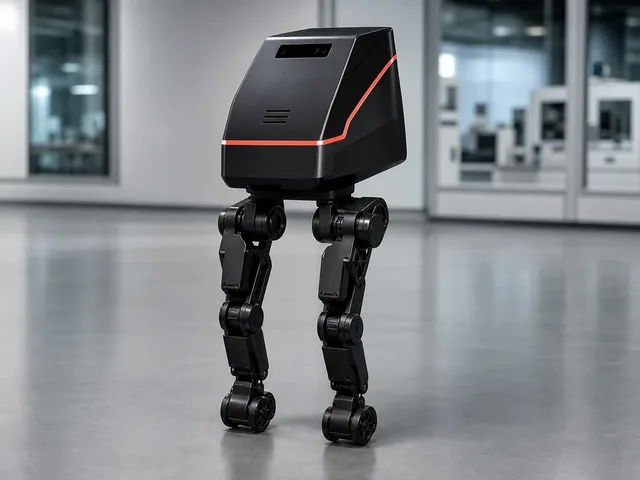
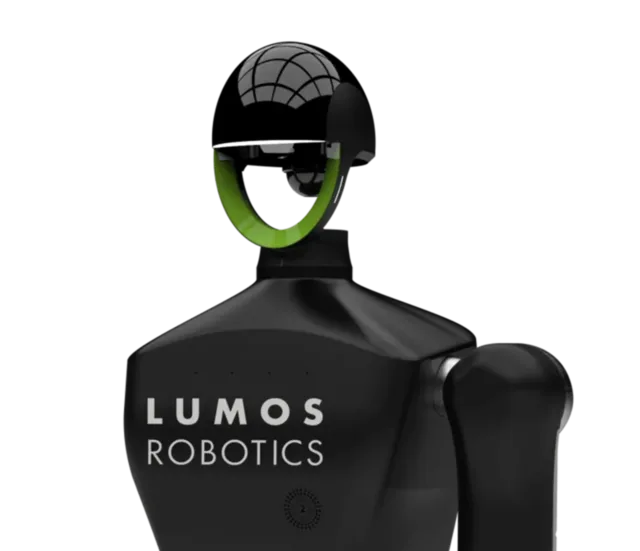
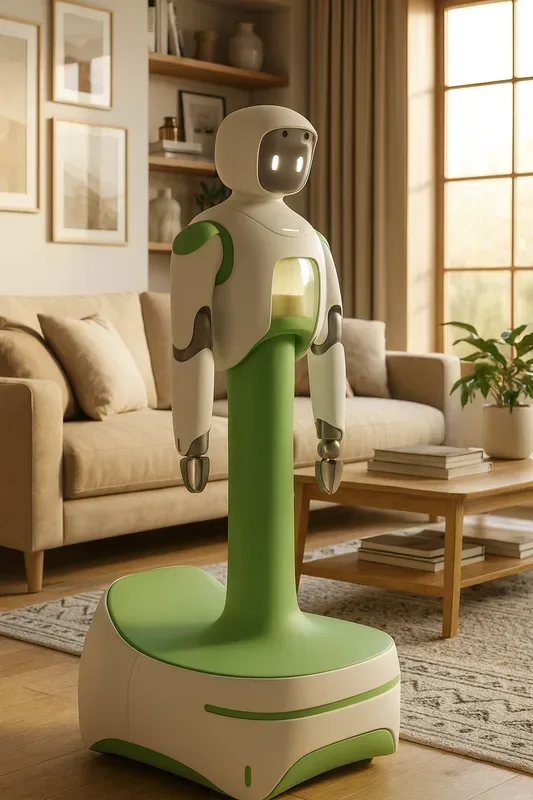
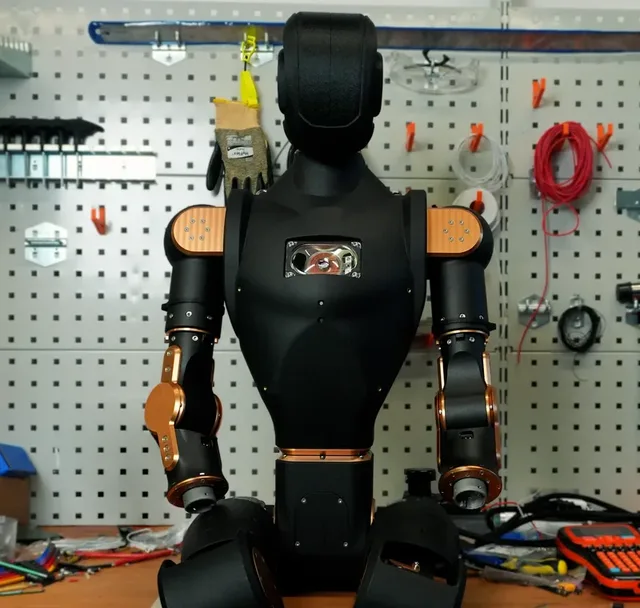
UBTECH's humanoid robot deployed at NIO automobile factories. Designed for industrial and service applications. One of the more mature Chinese humanoid platforms.
Price
No public pricing (enterprise/industrial)
Search is the fastest route on ui44 for high-volume scanning: robot names, manufacturers, categories, capabilities, sensors, connectivity, and AI stacks all surface in one workspace that stays usable on mobile, laptop, and 4K.
343
robots indexed
9
categories
<1s
live refresh
Type a query to see live matches across the entire index of robots, or clear it to browse by category and find what you need through structured directory navigation.
Live results
Match labels show why each robot surfaced for this query. The result deck stays dense enough to scan fast while keeping individual entries distinct and readable.
UBTECH's humanoid robot deployed at NIO automobile factories. Designed for industrial and service applications. One of the more mature Chinese humanoid platforms.
Price
No public pricing (enterprise/industrial)
Walker S2 is UBTECH's full-size industrial humanoid robot for factory and logistics environments. Official materials focus on its autonomous hot-swappable dual-battery system, which lets the robot replace batteries by itself in about three minutes for near-continuous operation, plus 15 kg manipulation capability and RGB binocular stereo vision. UBTECH said mass production and first deliveries began in November 2025, with staged deployments across automotive manufacturing, smart factories, logistics, data collection centers, and later aerospace manufacturing.
Price
No public pricing; enterprise/industrial deployment via commercial agreements
Unitree's full-size humanoid robot with impressive dynamic locomotion and world-record walking speed. Listed on shop.unitree.com with 5,500+ units shipped across research and enterprise customers. Known for fast walking/running and terrain adaptation.
Price
Contact sales (shop page labels H1 as 'Contact us for the real price')
Unitree's compact, affordable humanoid robot designed for research and development. At just 132cm tall and 35kg, the G1 offers 23 degrees of freedom with optional dexterous three-fingered hands (Dex3-1). Available in standard and EDU variants, with the EDU version supporting up to 43 DOF, NVIDIA Jetson Orin computing, and full secondary development capabilities.
Price
$13,500
UniX AI's Wanda 2.0 is a full-size bipedal humanoid robot designed for real-world service deployment across hospitality, household, retail, and property-management settings. Mass-produced at 100 units per month since 2025, Wanda 2.0 was showcased globally at CES 2026 with live demonstrations of cocktail preparation, tea brewing, dishwashing, clothes sorting and folding, bed-making, and waste sorting. It features 23 high-degree-of-freedom joints, the industry's first mass-produced 8-DoF bionic arm with harmonic reducers, and adaptive intelligent grippers supporting up to 12 kg dual-arm payload. The perception suite includes RGB and RGB-D cameras, 360° LiDAR, and a six-microphone array. UniX AI's proprietary AI stack — UniFlex imitation learning, UniTouch tactile perception, and UniCortex long-sequence task planning — enables autonomous multi-step workflow execution without extensive reprogramming. Battery endurance ranges from 8 to 16 hours depending on workload, with autonomous docking for charging.
Price
Not publicly listed; UniX AI operates an enterprise/service-deployment model. Third-party databases list approximately US$59,995 but this is not confirmed by the manufacturer.
UniX AI's Panther is a next-generation full-size wheeled humanoid robot designed for real household deployment. Unveiled in March 2026 and already operating in homes in Suzhou, China, Panther can perform a full range of domestic tasks including waking residents, opening curtains, preparing breakfast, cooking, cleaning, laundry, and tidying. It features 34 high-degree-of-freedom joints powered by a 48 V high-voltage drive platform, the industry's first mass-produced 8-DoF bionic arms with adaptive intelligent grippers (12 kg dual-arm payload), and an omnidirectional four-wheel steering and drive chassis for agile indoor mobility. An 80 cm upper-body lift mechanism enables ground-level reach across the full 1.6–1.75 m height range. Onboard edge computing delivers up to 2070 TOPS for AI perception and real-time control. The perception suite includes cameras, optional 3D LiDAR, and a multi-microphone array for voice interaction. Battery life ranges from 6 to 12 hours depending on workload.
Price
Not publicly listed. UniX AI operates an enterprise/service-deployment model; no retail pricing has been announced.
Unitree's flagship full-size humanoid robot, standing 182 cm tall with 31 degrees of freedom. The H2 features aircraft-grade aluminum and titanium alloy construction, 360 N·m peak leg joint torque, and up to 2070 TOPS of computing power via an optional Jetson AGX Thor module. Priced at $29,900, it is one of the most affordable full-size humanoids on the market. Equipped with binocular cameras, array microphone, and voice interaction, it supports OTA updates for continuous algorithm improvement. An EDU variant is available for research and secondary development.
Price
$29,900
Unitree's most affordable humanoid robot, standing 1.23 meters tall and weighing about 29 kg. The R1 is built around agile bipedal locomotion — it can run, do cartwheels, handstands, and recover from pushes — rather than heavy manipulation. Available in three tiers: the stripped-down R1 Air (20 DOF, ~27 kg, $4,900), the standard R1 (26 DOF, ~29 kg, $5,900), and the R1 EDU with optional dexterous hands, head tracking, and an NVIDIA Jetson Orin module for AI workloads. Runs Unitree's UnifoLM multimodal language model locally for voice and image interaction. Aimed at researchers, educators, hobbyists, and early consumer adopters priced out of the $16,000+ G1.
Price
$4,900
The Unitree R1-A7-D is the mobile-base, 7-DOF-arm configuration in Unitree's official R1-D dual-arm humanoid robot line. Unlike the bipedal R1, this variant uses a wheeled base with chassis LiDAR and a height-adjustable dual-arm torso for manipulation research, lab automation, factory demos, and secondary development. Unitree lists the dual-arm line from $4,290, with fixed or mobile bases, external power or Li-ion battery support across configurations, about 1.5 hours of battery-powered runtime, 2-4 kg maximum arm payload depending on posture, 10 TOPS head-module compute, optional NVIDIA Jetson Orin 40-100 TOPS compute, binocular vision, voice interaction, open interfaces, optional grippers or dexterous hands, and full-stack secondary development support. Exact R1-A7-D configuration pricing and shipping terms remain undisclosed.
Price
Unitree announced the dual-arm R1 series from $4,290; exact R1-A7-D configuration pricing is not officially disclosed and may require sales quotation.
H2 Plus is Unitree Robotics' NVIDIA Isaac GR00T reference humanoid for academic and frontier physical-AI research. It packages the full-size Unitree H2 chassis with dual Sharpa Wave tactile five-finger hands, NVIDIA Jetson AGX Thor T5000 onboard compute, multi-view sensing, Isaac GR00T software workflows, and remote emergency stop into a validated platform for robot bring-up, data capture, simulation, policy evaluation, and real-world skill development. Unitree's product page lists a 182 cm, about 70 kg body with 31 joint-motor degrees of freedom, while the added dexterous hands bring the reference design to 75 total body-and-hand degrees of freedom. Pricing has not been disclosed, and availability is planned for late 2026.
Price
Public price not announced. Unitree and NVIDIA say the H2 Plus reference humanoid will be available from Unitree in late 2026.
The L1 Agile Mobile Manipulator is VLAI Robotics' wheeled dual-arm embodied-AI platform for research, education, manufacturing, logistics, inspection, service, and other structured mobile-manipulation workflows. VLAI's official site lists the L1 as a mobile robot with X1 high-dexterity humanoid dual arms, 8 degrees of freedom per arm, 16 degrees of freedom total, 6 kg per-arm payload, compliant force control, gravity compensation, ROS 2/Isaac Sim/MuJoCo/LeRobot compatibility, VR teleoperation, and data-collection tooling. HouseBots coverage reports an adjustable dual-arm working range of 70-160 cm, a wheeled base, open developer interfaces, and a 28,800 CNY starting price. It is notable as an unusually low-cost wheeled mobile manipulator, but public battery, sensor, navigation, and international availability details remain limited.
Price
¥28,800
SamuRoid is XiaoR GEEK's Raspberry Pi 4B-powered miniature humanoid for robotics education, ROS development, and embodied-AI experiments. The official product page lists a 22-DOF bionic structure with high-voltage bus servos, a 1080p camera on a 2-DOF gimbal, USB microphone, MPU6050 IMU, Ubuntu 18.04 plus ROS Melodic, and Python/C++ programmability. Its AI features center on multimodal interaction: OpenCV vision tasks such as face recognition, color tracking, QR-code scanning, and target localization, plus API support for DeepSeek and Doubao so developers can combine voice, vision, and motion. XiaoR GEEK lists the base package as in stock, while independent coverage in April 2026 described it as a higher-end educational/research humanoid compared with simpler Raspberry Pi and servo-based robots. Buyers should note that it is a developer platform with an older ROS/Ubuntu stack and about one hour of official battery runtime, not a consumer home-helper robot.
Price
$1,073
Next step after "humanoid"
Once the deck stops feeling noisy, stop typing and change tools: compare finalists side by side, widen into a category map, or sanity-check the manufacturer context before committing to the shortlist.
Structured browse
See the whole market map when you need breadth, not just one keyword match.
OpenDecision mode
Move from discovery to real tradeoffs once the shortlist is small enough.
OpenCompany context
Portfolio depth, support context, and who is behind the robots.
OpenReading the result deck
141 results is usually enough to expose the right cluster. The next lift should come from structured comparison, not from typing more words into the same field.
1. Trim
Drop the obvious mismatches by maker, price, or category.
2. Open
Open the best 2-4 robots in parallel for deeper spec context.
3. Compare
Use compare once the decision is a tradeoff, not discovery.
Need a broader view?
Search wins when you know the signal. Directory routes win when you need a map of the entire field. Use both deliberately instead of forcing one tool to do both jobs badly.
The search indexes every attribute of 343 robots — names, manufacturers, categories, capabilities, sensors, connectivity, and AI stacks. Here is how to get the best results.
The search indexes every attribute of all 343 robots — names, manufacturers, categories, capabilities, sensors, connectivity, and AI stacks.
| Search for | Example | Finds |
|---|---|---|
| Robot name | Optimus | Tesla Optimus and similar names |
| Manufacturer | Unitree | All Unitree Robotics robots |
| Category | humanoid | Humanoid category robots |
| Capability | voice interaction | Robots with voice interaction |
| Sensor | LiDAR | Robots with LiDAR sensors |
| Protocol | Matter | Robots supporting Matter |
Price Sorting
Name matches rank highest, then manufacturer, then categories, sensors, and capabilities.
Multi-word queries match across fields — "Boston Dynamics quadruped" hits maker + category simultaneously.
Results update as you type with sub-second response — start broad, add specificity, watch the deck narrow.
Search → open 2–4 promising robots → compare finalists → check maker context.
The right search approach depends on your role and what decision you need to make. These strategies cover the most common research patterns.
Whether you are a consumer researching your first robot purchase, a journalist covering the robotics industry, an engineer evaluating competitive products, or an investor assessing market opportunities — the right search strategy depends on what signal you are tracking and what decision you need to make next.
Start broad: try "cleaning robot" or "companion robot" for an overview of what is available. Review prices and features across multiple results, then narrow with specific terms like sensor types or brand names. The categories page has buyer guides with price ranges for each robot type to help set expectations.
Search for features you wish your current robot had — "LiDAR navigation," "auto-empty," "voice control," or "obstacle avoidance." Compare your current model against candidates using the comparison tool to evaluate whether the upgrade justifies the cost. Pay attention to connectivity protocol changes — newer robots may use Matter instead of proprietary apps.
Search cutting-edge terms: "bipedal locomotion," "force torque sensor," "large language model," or "ROS 2." Combine with status filters on the all robots page to distinguish currently available products from development-stage prototypes and pre-order models. The components directory provides deeper technical context on unfamiliar sensors and AI platforms.
Search deployment scenarios: "warehouse automation," "logistics," "reception desk," or "security patrol." Check manufacturer profiles for enterprise support options, fleet management capabilities, and commercial pricing arrangements for bulk deployments. Regional context matters — the countries directory shows production hubs and import considerations.
Search for component names like "LiDAR," "NVIDIA Jetson," "ROS 2," or "Matter" to find robots built on specific platforms. See the components directory for structured technology views and component trends for adoption momentum data over the past 30 days.
Search for the task rather than the product: "mopping," "lawn mowing," "security patrol," or "elderly care" surfaces robots designed for those applications. Cross-category queries like "security" can reveal surprising alternatives — dedicated security robots, companion robots with surveillance features, and quadrupeds with patrol capabilities all appear in one search.
Search "Japan," "Chinese," or "European" to find robots from specific markets. The countries directory offers a structured geographic view with production hubs, manufacturer density, and regional market leaders for deeper comparison.
Explore categories
Understand the robotics landscape and identify which robot type matches your need.
Search candidates
Build a list of 3–5 promising results by name, capability, or sensor type.
Deep-dive profiles
Review full specifications, sensor breakdowns, and capability analysis on each candidate.
Research maker
Evaluate the company track record, portfolio breadth, and support infrastructure.
Check technology
Use the components directory to understand unfamiliar sensors, AI platforms, and connectivity protocols.
| Use search when | Use browse when |
|---|---|
| You know the robot name, maker, or a specific technology keyword | You need to understand the full market landscape first |
| You want fast results across the entire database in one query | You want buyer guides with price ranges and recommendations |
| You are validating whether a specific sensor or protocol exists | You want to compare regional markets or manufacturer portfolios |
| You need shareable, bookmarkable result URLs for later | You want structured side-by-side specification comparison |
One of the most valuable but underused search strategies is cross-category exploration. Searching across categories can reveal surprising alternatives you might not have considered:
Every search generates a permanent URL. Bookmark it, share it with colleagues, or paste it into a team chat — the same URL always shows the latest data for that query.
Start on your laptop, continue on your phone. Search URLs work everywhere. Open candidate detail pages in parallel tabs for efficient comparison across devices.
Once your shortlist is small enough, move directly to the comparison tool for structured spec-by-spec analysis. The compare page also supports shareable URLs for team purchase decisions.
The practical questions people hit most often once they start narrowing the shortlist.
Keep the research moving
Search is the fastest way to surface candidates. Once the problem becomes breadth, tradeoffs, or manufacturer context, switch tools on purpose instead of endlessly refining one query.