All Robots

407 notable · 251 available · 253 makers

Filters & sort 407

407 robots found · Page 23 of 34

Sorted by name A–Z

Prime T1 by PrimeBot — Companions robot
PrimeBot

Prime T1

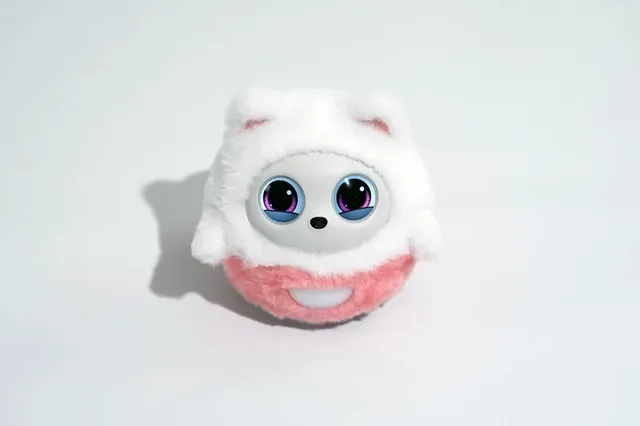
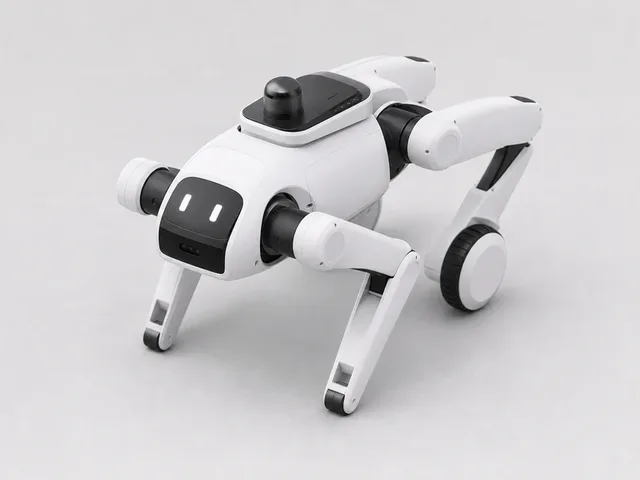
Prime T1 is PrimeBot's consumer-focused personal robot, unveiled at CES 2026 as part of the Prime series. Official launch materials describe it as a transformable robot that shifts between a wheeled humanoid mode for indoor movement and a bionic quadruped mode for stairs, slopes, and other uneven terrain. PrimeBot positions the T1 around everyday household use with cinematic motion control, intelligent visual tracking, multimodal interaction, contextual awareness, and long-term memory. Independent CES coverage also described follow-shot filming, remote control, and family-oriented companion roles such as tutoring and light home monitoring.

Companions
Price TBA Prototype
ProWhite Robot 2.0 by PL-Universe Robotics — Humanoid robot
PL-Universe Robotics

ProWhite Robot 2.0

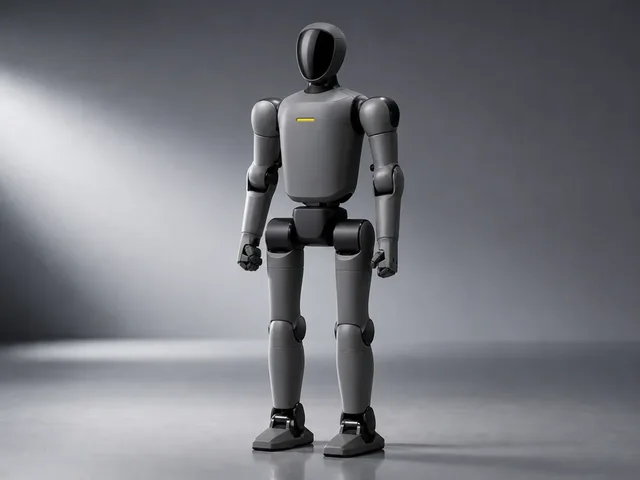
ProWhite Robot 2.0 is PL-Universe Robotics' wheeled humanoid embodied-AI robot for smart-factory and collaborative industrial work. The official product page describes a 400 kg, 203.5 cm-tall platform with a humanoid dual-arm body, modular end effectors, four-wheel omnidirectional mobility, MES task dispatch, and autonomous coordination across workstations for handling, assembly, inspection, and packaging. PL-Universe says the robot uses an industrial VLA model, reusable autonomous decision-making, and clustered planning/control to support flexible production, while its April 2026 Hannover Messe debut release says ProWhite has already been mass-produced and delivered for sectors such as 3C electronics and automotive manufacturing.

400 kg203.5 cm
Price TBA Active
Cobot

Proxie Gen 2

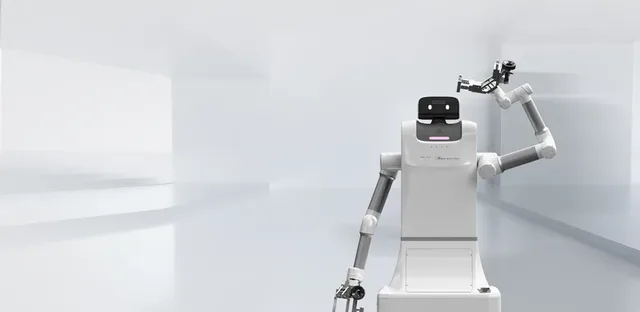
Proxie Gen 2 is Cobot's second-generation mobile collaborative robot for enterprise material-handling work in hospitals, manufacturing floors, logistics facilities, warehouses, and labs. The platform combines an omnidirectional mobile base, bimanual manipulation, human-height ScoutSense perception, local task inference, Vista fleet coordination, and Auto Tasking that lets the robot identify and execute work without a warehouse-management-system integration or human dispatcher. Cobot says the generation builds on 12,627 production operating hours, can move carts up to 1,500 lb, lift up to 200 lb on its vertical spine, and uses lithium iron phosphate batteries with a self-swapping battery station for continuous operation.

Commercial
Price TBA Available
PUDU D5 Series by Pudu Robotics — Quadruped robot
Pudu Robotics

PUDU D5 Series

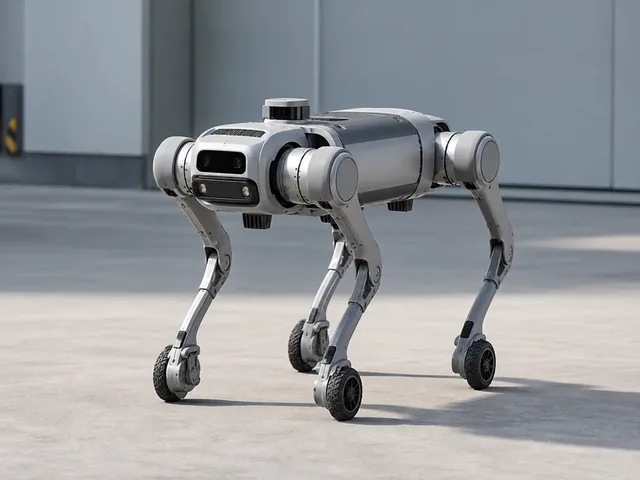
PUDU D5 Series is an industry-grade autonomous quadruped robot family from Pudu Robotics for industrial inspection, logistics support, patrol, research, and outdoor operations in complex environments. The lineup includes the legged PUDU D5 and wheeled PUDU D5-W configurations, with NVIDIA Orin plus RK3588 compute, dual 192-line LiDAR, four fisheye cameras, autonomous navigation and following, voice and gesture interaction, IP67 all-weather operation, and modular delivery or inspection add-ons.

57.2 cm
Price TBA Active
PUDU D7 by Pudu Robotics — Humanoid robot
Pudu Robotics

PUDU D7

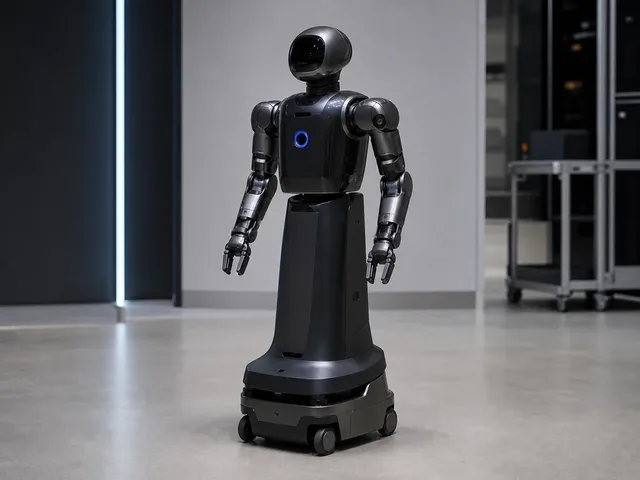
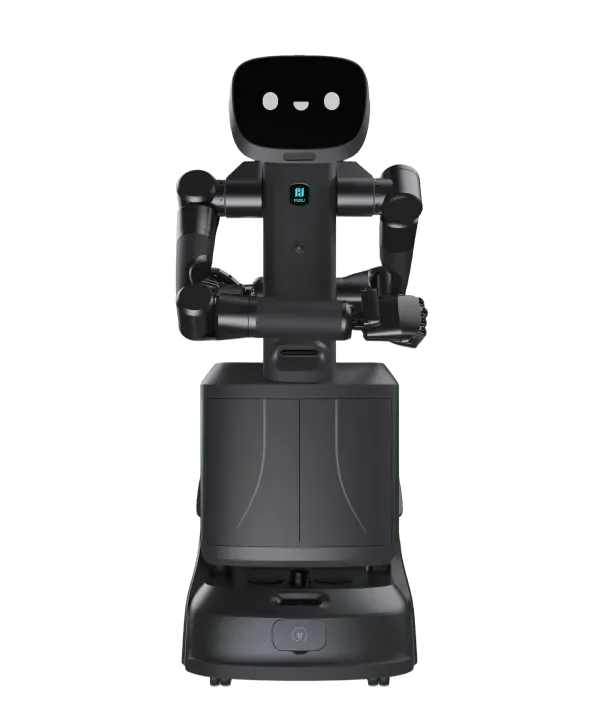
PUDU D7 is Pudu Robotics' first general embodied-intelligence semi-humanoid robot, combining a human-like upper body with robotic arms and an omnidirectional wheeled chassis. Pudu unveiled D7 in September 2024 with full commercialization anticipated in 2025, and the official D7 product page remains live as part of Pudu's humanoid lineup. The robot is aimed at industrial and commercial workflows where mobile manipulation matters, including elevator operation, item transport, sorting, and dual-arm collaborative tasks. Pudu's May 2026 partner-summit update describes the New PUDU D7 2.0 with proprietary joint modules and dexterous three-finger robotic hands, integrated into the company's embodied-AI framework.

45 kg165 cm
Price TBA Active
PUDU D9 by Pudu Robotics — Humanoid robot
Pudu Robotics

PUDU D9

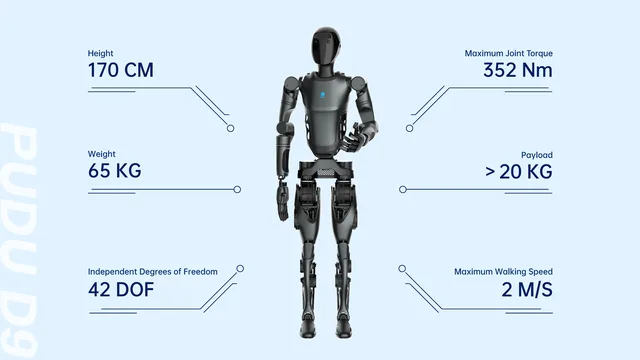
PUDU D9 is Pudu Robotics' first full-sized bipedal humanoid robot. Pudu's official launch page says the D9 is in pre-sale, while current product and 2026 development pages route buyers through contact-sales flows and note that some example features depend on sales-contract terms. The company positions D9 for commercially viable embodied-intelligence use cases such as logistics and operational assistance across service environments. Official Pudu sources currently vary by iteration: the product page lists a 65 kg platform weight, while an April 2026 ongoing-development update lists 58 kg for the latest iteration.

170 cm
Price TBA Pre-order
PUDU FlashBot Arm by Pudu Robotics — Commercial robot
Pudu Robotics

PUDU FlashBot Arm

PUDU FlashBot Arm is a semi-humanoid embodied AI service robot from Pudu X-Lab that combines autonomous delivery with humanoid manipulation. The official product page describes a wheeled service platform with two 7-DOF arms, PUDU DH11 dexterous hands, an enclosed delivery compartment, VSLAM plus LiDAR SLAM mapping, RGBD cameras, LiDAR, panoramic cameras, pressure-sensitive skin, automatic recharging, and multi-robot collaboration for hospitality and service environments.

up to 8 h144 cm
Price TBA Active
PUDU T150 by Pudu Robotics — Commercial robot
Pudu Robotics

PUDU T150

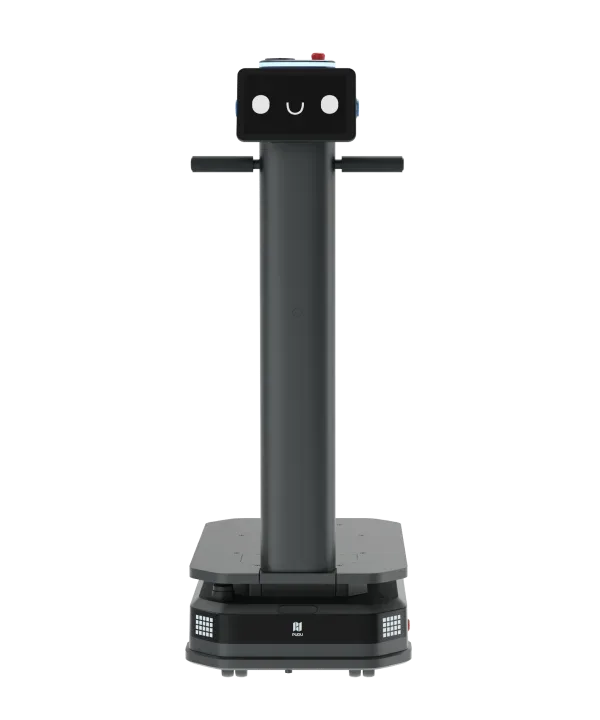
PUDU T150 is a light-payload industrial delivery AMR for internal material transport in manufacturing and warehouse environments. Launched in January 2026 as the 150 kg entry in Pudu Robotics' industrial delivery lineup, it is aimed at light-load, high-frequency transport for sectors such as electronics, plastics, FMCG, beauty, and fast fashion warehousing. The robot uses VSLAM plus LiDAR SLAM localization with dual RGBD cameras and 360-degree dual LiDAR for AI-driven obstacle avoidance, supports onboard mapping in about 10 minutes, and is designed for rapid deployment without site modifications or local fleet servers.

up to 12 h65 kg
Price TBA Active
Qrevo Curv 2 Flow by Roborock — Cleaning robot
Roborock

Qrevo Curv 2 Flow

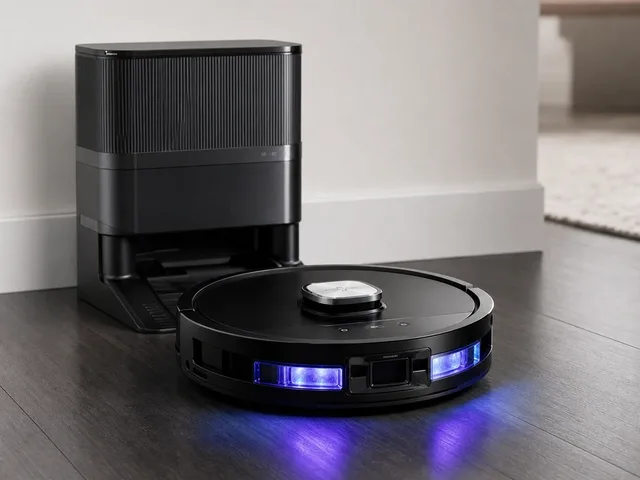
Roborock's first roller-mopping robot vacuum, debuting the SpiraFlow self-cleaning roller mop system. A 270 mm roller spinning at 220 RPM applies 15 N of downward pressure with continuous clean-water delivery via eight nozzles and an internal scraper that extracts dirty water into a separate tank. The roller lifts 15 mm on carpet and an automatic shield covers it for protection. On the vacuum side, the Qrevo Curv 2 Flow delivers 20,000 Pa HyperForce suction through a DuoDivide anti-tangle main brush (0% hair-tangle score in independent testing) and dual Lifting Arc side brushes. Navigation uses PreciSense spinning LiDAR with Reactive AI obstacle avoidance (structured light + camera, 200+ object types). The Multifunctional Dock washes the roller mop with 75 °C (167 °F) hot water, dries with 55 °C (131 °F) warm air, and auto-empties dust into a 2.7 L sealed bag. Onboard "Hello Rocky" voice control works offline; the app offers SmartPlan 3.0 scheduling, multi-floor maps, virtual no-go zones, and pet monitoring with photo capture. Available in white, 119 mm (4.7 in) tall with a 325 ml onboard dustbin and up to 242 minutes of battery life.

up to 242 min11.9 cm
$900 Available
Qrevo Edge 2 Pro by Roborock — Cleaning robot
Roborock

Qrevo Edge 2 Pro

Roborock's 2026 premium robot vacuum and mop featuring a 7.98 cm ultra-slim profile with the RetractSense retractable LiDAR tower, enabling it to clean under low furniture. Delivers 25,000 Pa HyperForce suction through a DuoDivide anti-tangle main brush paired with a FlexiArm Arc side brush that extends automatically into corners and along edges. Dual spinning mop pads scrub at up to 200 RPM with 12 N of downward pressure; the robot can fully detach its mops at the dock before vacuuming carpets to prevent moisture transfer — a step beyond simple mop lifting. The AdaptiLift Chassis handles thresholds up to 4 cm and adapts to carpet height. The included Multifunctional Dock 3.0 Hygiene+ washes mops with 100 °C hot water, dries with 55 °C warm air, auto-empties dust into a 2.7 L sealed bag (up to 65 days), dispenses detergent automatically, and self-cleans its own base with hot water. Reactive AI obstacle recognition covers over 200 object types via structured light and RGB camera. Onboard "Hello Rocky" voice assistant works offline. SmartPlan 3.0 handles AI-driven room-by-room scheduling. Matter protocol support is planned via a future OTA update. Launched globally starting February 2026.

up to 240 min7.98 cm
Price TBA Available
QRIO by Sony — Research robot
Sony

QRIO

QRIO (Quest for cuRIOsity) was Sony's bipedal humanoid entertainment robot, developed as a follow-up to AIBO and announced from the SDR-4X II prototype platform. Standing 58 cm tall and weighing approximately 7 kg, it was the first bipedal robot capable of running — recognized by Guinness World Records in 2005. It could recognize faces and voices, dance, and interact with people. Sony discontinued development in January 2006. Four QRIO units famously appeared dancing in Beck's 'Hell Yes' music video.

~1 h~7 kg
Price TBA Discontinued
QTrobot by LuxAI — Research robot
LuxAI

QTrobot

QTrobot is a tabletop social humanoid designed for human-robot interaction research, special-needs education, and therapy support. LuxAI positions it as a developer-friendly platform with ROS APIs and visual programming tools, while its current documentation highlights integrated depth sensing, expressive gestures, and programmable behaviors for classroom and lab settings. LuxAI's current shop pricing is tracked in the price fields rather than older third-party cost references.

5 kg64 cm
€10,900 Available

ui44's curated robot catalog currently includes 407 home and humanoid robots individually profiled with verified specifications, capabilities, component breakdowns, and pricing sourced from official manufacturer documentation. Right now 251 robots are commercially available for purchase or deployment, with the rest in development, pre-order, or prototype stages across 9 categories from 253 manufacturers worldwide.

How to use this directory

Find the Right Robot

All filters update instantly without page reloads

Search

Type any keyword — robot name, manufacturer, or feature — for instant filtering across all attributes.

Category Filter

Select a robot type to see only cleaning robots, humanoids, quadrupeds, or any other category.

Manufacturer Filter

Narrow results to a specific company to see their full product lineup.

Sort & Status

Order by name or price, and filter by availability status to find robots you can buy today.

Tip

Click on any robot card to view its full detail page with complete specifications, sensor breakdowns, capability analysis, and comparison links.

Robots by Category

The full catalog grouped by primary category

Robots by Category
Category Robots Available
Humanoid 125 72(58%)
Cleaning 62 49(79%)
Companions 53 27(51%)
Research 48 23(48%)
Commercial 44 34(77%)
Lawn & Garden 29 20(69%)
Quadruped 25 17(68%)
Home Assistants 16 6(38%)
Security & Patrol 5 3(60%)

Price Distribution

173 priced of 407 total · 234 pricing TBD

Price Distribution
Band Count Share
Under $500 23 13%
$500–$1,000 26 15%
$1,000–$5,000 71 41%
$5,000–$20,000 20 12%
$20,000+ 33 19%

Home Robot Market Overview

The current state of the home and humanoid robot market in numbers

The home robotics industry is expanding rapidly, with 407 distinct robots tracked across 9 categories from manufacturers in 19 countries. This database captures the full spectrum — from affordable vacuum cleaners under $500 to advanced humanoid platforms costing hundreds of thousands of dollars. Understanding where the market stands today helps buyers, researchers, and industry watchers make informed decisions about which technologies are mature and which remain aspirational.

Market Status Breakdown

Current availability across all tracked robots

Commercially Available

251 robots are shipping today and can be purchased or leased directly from manufacturers or authorized dealers. These range from consumer cleaning robots to commercial-grade inspection and delivery platforms.

Pre-Order and Upcoming

55 robots are accepting pre-orders with confirmed launch timelines. Pre-order robots typically have finalized specifications but may still undergo minor revisions before shipping begins.

In Development

94 robots are in active development or prototype stage. Specifications are preliminary and subject to change. These represent the next wave of home and humanoid robotics technology.

Discontinued Models

7 robots have been discontinued by their manufacturers. These entries are preserved for historical reference, comparison research, and understanding how the market has evolved.

Price Distribution

173 robots with publicly listed prices

Under $5k

121

Consumer — cleaners, mowers, companions

$5k–$25k

23

Prosumer & light commercial

$25k–$100k

21

Commercial & research

Over $100k

8

Advanced humanoid & enterprise

Category Landscape

Top categories by robot count

Humanoid robots are the fastest-growing segment as companies race to bring general-purpose bipedal platforms to market. Cleaning robots remain the most mature category, with established price competition and proven consumer adoption. Research and commercial categories serve specialized use cases with higher price points and more advanced sensor arrays.

Note

Robot specifications in this database are verified against official manufacturer documentation, press releases, and product pages. Where specifications conflict between sources, we prioritize the most recent official documentation. Each robot's detail page includes source attribution and a last-verified date. Visit the categories directory to explore robots organized by function.

AI & Vision

LLMs and vision transformers give robots natural language understanding and real-time obstacle avoidance — mapping complex spaces without explicit programming.

Hardware Advances

Better battery density means longer runtime. Declining actuator costs make force-controlled joints affordable. LiFePO₄ and solid-state batteries are the next leap.

Smart Home Integration

Matter, Thread, and Home Assistant let robots coordinate with smart locks, lights, and other devices. Interoperability is now a key purchase differentiator.

Choosing the Right Robot

The most common mistake? Focusing on headline specs without considering actual use. A humanoid with impressive degrees of freedom may be far less practical than a purpose-built cleaner with reliable navigation.

1

Start with your need

Cleaning, companionship, security, lawn care, research, or commercial? Filter by category first.

2

Set your budget tier

  • Consumer — minimal setupUnder $2k
  • Prosumer — advanced$2k–$25k
  • Enterprise — custom$25k+
3

Compare & decide

Use the comparison tool to evaluate specs side by side. Check sensors, battery, and ecosystem fit.

Understanding Robot Specifications

Every robot in this database includes detailed specifications that help you evaluate its capabilities and fit for your needs. Here is a guide to interpreting the key data points you will find on each robot's detail page.

126

Active

125

Available

55

Pre-order

54

Development

40

Prototype

7

Discontinued

Note

Prices represent the manufacturer's listed retail price in USD at the time of last verification. Prices can change — always confirm with the manufacturer before purchasing.
Capabilities & Technology

3,818 Capabilities

From basic functions like app control and scheduling to advanced abilities like bipedal locomotion, object manipulation, and emotion detection.

Common: household chores, tidying up, safe human interaction, adaptive learning, gentle manipulation, +3813 more

1,180 Sensor Types

Multiple sensor types tracked across the database, from LiDAR and cameras to ultrasonic and infrared sensors.

Top: RGB Cameras, Depth Sensors, Tactile Skin, Microphone Array, High-Resolution HDR Camera (Front x2)

Comparison tool

Compare Robots Side by Side

Focus on specs that matter for your use case — navigation, battery, payload, AI sophistication.

Open Compare

Tip

Combine sorting with category and manufacturer filters for targeted views. For example, select "Cleaning" + sort by price low-to-high to instantly find the most affordable cleaning robots.

Robots by Category

Every category lane in the catalog, ranked by coverage

Humanoid

125 robots

Full-size bipedal humanoid robots built to work alongside people — from factory floors to household tasks. Compare the cutting edge of humanoid robotics.

72 available · 90 makers ·$1.4k–$1M

Cleaning

62 robots

Robot vacuums, mops, pool cleaners, and window cleaners — the workhorses of home automation that keep every surface spotless.

49 available · 27 makers ·$249–$1.9M

Companions

53 robots

Social robots, robot pets, and elderly-care companions designed for emotional connection and everyday support at home.

27 available · 48 makers ·$125–$578k

Research

48 robots

Academic and research robotics platforms pushing the boundaries of what machines can learn and do in the lab and beyond.

23 available · 39 makers ·$190–$250k

Commercial

44 robots

Delivery robots, warehouse automation, and hospitality service bots — robots built for business and commercial operations.

34 available · 38 makers ·$980–$980

Lawn & Garden

29 robots

Autonomous robot lawn mowers and garden robots that maintain your yard and outdoor spaces without supervision.

20 available · 19 makers ·$436–$9k

Quadruped

25 robots

Four-legged robot dogs and quadrupeds built for rough terrain, inspection, and exploration — going where wheels can't.

17 available · 16 makers ·$1.6k–$50k

Home Assistants

16 robots

Arm-based household helpers — laundry folders, kitchen robots, and mobile manipulators that take on hands-on physical tasks around the home.

6 available · 14 makers ·$1.5k–$36k

Security & Patrol

5 robots

Autonomous surveillance and patrol robots that monitor homes, businesses, and perimeters — keeping watch without an operator on site.

3 available · 5 makers ·$1.6k–$1.6k

Leading Manufacturers

The most prolific makers in the directory

Each manufacturer brings a different approach — from consumer-focused companies prioritizing ease of use and affordability to research-driven firms pushing the boundaries of robotics technology. Some specialize in a single category while others build products across multiple segments. Visit the manufacturers directory for complete profiles, product lineups, and company backgrounds.

What the Numbers Mean

A practical guide to interpreting robot specifications

Specifications require context to be meaningful. A robot weighing 80 kg is not inherently better or worse than one weighing 5 kg — it depends on the use case, deployment environment, and operational requirements.

Key Specification Dimensions

Across 407 robots in the database

Dimensions & Weight

407 robots with weight data. Compact cleaning robots fit under furniture; heavier humanoids trade portability for stability and payload capacity.

Battery & Runtime

407 robots with battery specs. Runtime should exceed your task duration. Check charge-to-runtime ratio for commercial deployments.

1180 Sensor Types

Navigation sensors (LiDAR, cameras, ultrasonic), environmental sensors (temperature, air quality), and interaction sensors (microphones, touch, gesture).

424 Connectivity Options

The key question: does the robot integrate with your existing smart home ecosystem? Protocol support matters less than ecosystem compatibility.

3818 Capabilities

Distinguish core capabilities (the primary function you're buying for) from supplementary features. Prioritize core capability quality over feature count.

IP Rating

IP54 = dust + splash resistant (kitchen safe). IP67 = dustproof + waterproof (rain safe). Essential for outdoor robots.

Sensor Quality Matters More Than Marketing

Two robots claiming "smart navigation" might use fundamentally different approaches — one with a single downward camera, another with a LiDAR scanner + SLAM mapping. The result is dramatically different quality. Use the components directory to understand what each sensor does.

Frequently Asked Questions

About the Database
How many robots are in the ui44 database?

ui44 currently tracks 407 robots from 253 manufacturers across 9 categories. This includes 251 commercially available robots and 156 in various stages of development or pre-order. The database is continuously updated as new robots are announced and existing products receive updates.

What is the price range of robots on ui44?

Robots in our database range from $125 (StackChan) to $1.9M (Bespoke AI Jet Bot Steam Ultra). 173 of 407 robots have publicly listed prices. The remaining robots have enterprise-style pricing available on request from the manufacturer.

How can I find robots within my budget?

Use the sort dropdown on this page to order robots by "Price: Low to High" or "Price: High to Low." You can combine the price sort with category and manufacturer filters to narrow results further. Robots without public pricing will appear at the end when sorted by price.

What does each robot status mean?

"Available" and "Active" mean the robot is currently sold commercially. "Pre-order" means you can reserve one but it has not shipped yet. "Development" means it is still being built. "Prototype" means it exists only as an early model. "Discontinued" means it is no longer manufactured. Use the status filter tabs above to show only robots at a specific stage.

Using ui44
How do I compare two robots side by side?

Visit the comparison tool and select up to four robots to compare. The comparison view displays all specifications, capabilities, sensors, connectivity, and pricing in a structured side-by-side format. You can also find comparison links on individual robot pages and manufacturer pages.

How often are robot specifications updated?

We re-verify specifications against official manufacturer sources on a rolling basis. Each robot page shows a 'last verified' date. Available products are prioritized for frequent verification, and we update records whenever manufacturers announce specification changes, firmware updates, or pricing adjustments.

What categories of robots does ui44 track?

The database covers 9 categories spanning the full range of home and personal robotics. These include cleaning robots (vacuums, mops, window cleaners), lawn and garden robots (autonomous mowers), companion and social robots, home assistant robots, security and patrol robots, humanoid robots, quadruped robots, pool cleaning robots, and commercial service robots. Each category has a dedicated page with filtered listings and category-specific buying guidance accessible from the categories directory.

Data & Pricing
Can I suggest a robot that is missing from the database?

Absolutely. If you know of a home or humanoid robot that is not yet listed in our database, we welcome suggestions. Our discovery process monitors manufacturer announcements, trade shows, crowdfunding platforms, and robotics publications, but new products sometimes slip through. We evaluate each suggestion against our inclusion criteria: the robot must be a physical hardware product intended for home, personal, or commercial indoor/outdoor use, with publicly available specifications.

How does ui44 differ from other robot comparison sites?

ui44 focuses exclusively on depth and accuracy of technical specifications rather than affiliate revenue or marketing partnerships. Every robot profile includes verified dimensions, weight, sensor arrays, connectivity protocols, capability breakdowns, component analysis, and pricing from official sources. We maintain 407 robot profiles with structured data that enables meaningful side-by-side comparisons — not just marketing copy rewritten from press releases.

Are all listed prices in the same currency?

Prices are displayed in the manufacturer's primary market currency — most commonly USD, EUR, JPY, or CNY. Where robots are sold in multiple markets at different prices, we list the primary market price and note regional variations on the detail page. Prices reflect the base model configuration without optional accessories or extended warranties unless noted otherwise.

What sensors and components are most common across robots in the database?

The most prevalent sensors across our tracked robots include LiDAR scanners for spatial mapping, RGB cameras for visual recognition, IMU accelerometers for orientation tracking, ultrasonic proximity sensors for obstacle detection, and structured light depth cameras for three-dimensional environment understanding. Connectivity typically includes Wi-Fi for cloud connectivity, Bluetooth for local device pairing, and increasingly Matter and Thread for smart home integration. Visit the components directory for detailed breakdowns of every sensor type, actuator, and communication module used across the database, including which specific robots use each component.

Explore the database

Find the right robot for your needs

Full specs, side-by-side comparisons, and buyer guides for 407 home and humanoid robots.