Humanoids Daily reported Cartwheel’s closure on February 6, 2026. In a public post, founder Scott LaValley said the company had not found the right capital partner. That is a dated account of the shutdown, not a claim about what its former website shows today.
That pattern is the point. Social robots often win the first five minutes and lose the next five years. They can be charming, expressive, and technically clever, but charm alone does not pay for cloud infrastructure, repairs, content, safety updates, customer support, or the long awkward stretch after the launch campaign ends.
The practical lesson for 2026 buyers is not "never buy a companion robot." It is more specific: buy the robot for a real job, not for a personality pitch. The survivors in the current market tend to be care companions, pet-like emotional robots, kid-learning devices, monitoring robots, or premium lifestyle products. The ones that fail usually ask buyers to fund a relationship without proving why that relationship will still be useful, supported, and affordable later.
The failure pattern: charm is necessary, but not sufficient
A social robot has to clear a higher bar than a smart speaker or camera. It does not just answer questions. It occupies space, looks back at people, invites attachment, and asks the household to accept it as a presence. That makes the first demo powerful. It also makes disappointment sharper when the robot becomes slow, repetitive, unsupported, or dependent on a cloud service that no longer has a business behind it.
Jibo and Anki are different stories, but they point at the same four hurdles:
- Charm: does the robot make people want to interact?
- Utility: does it solve a repeatable daily problem?
- Economics: can the company support hardware, cloud, content, and service?
- Continuity: what still works if the roadmap slows or the company changes?
Most failed social robots were strongest at the first hurdle. They were lovable. They had expressive eyes, body language, wake-up rituals, and little moments of surprise. But home buyers do not live in launch videos. They live with calendar reminders, broken Wi-Fi, changing subscriptions, aging batteries, privacy settings, and the question: "What did this robot actually do for me this week?"
That question is brutal. If the answer is "it was cute," the product becomes a novelty. If the answer is "it helped my parent remember medication," "it let me check on my home," "it gave my child learning activities," or "it is the pet-like companion I knowingly chose," the robot has a better chance.
Pepper showed that scale does not solve the problem
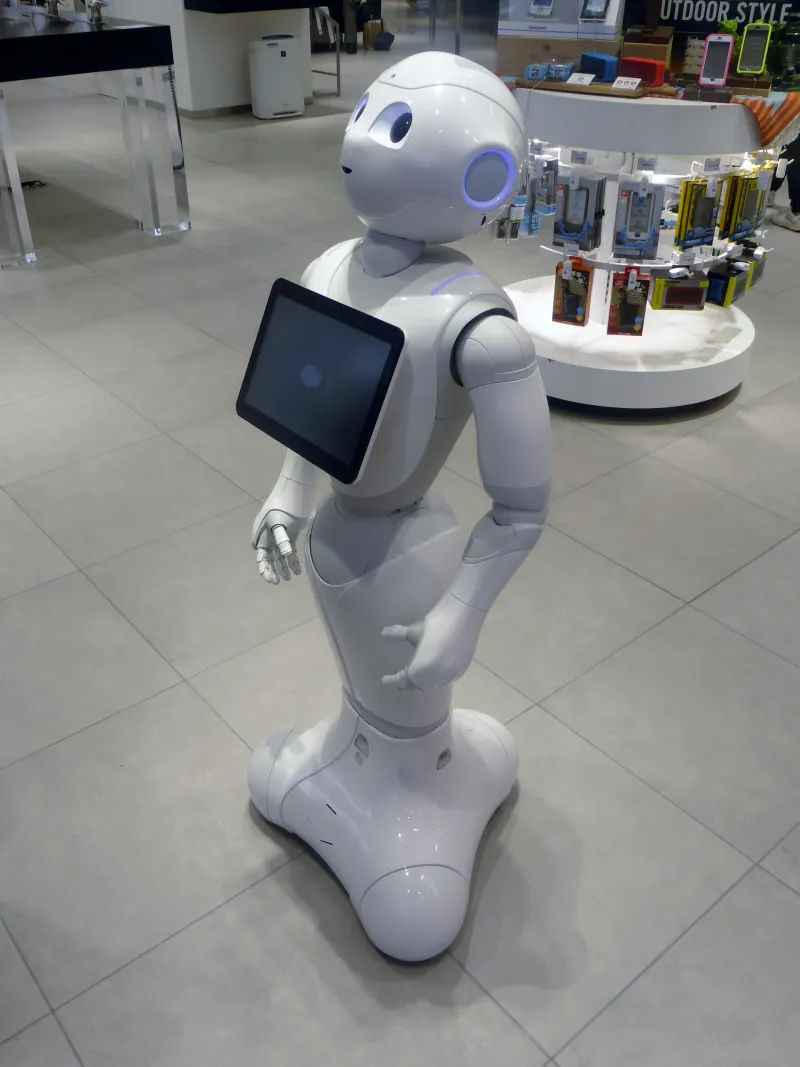
Pepper is useful because it was not a tiny Kickstarter robot. It was a famous social humanoid backed by serious corporate ambition. Pepper’s long public history makes it a useful example of the gap between attention and a durable workflow.
Pepper had visibility and a memorable face. The harder part was finding durable everyday value. SoftBank’s current positioning emphasizes business interaction. That is a clearer frame than treating an expressive body as proof of general usefulness. For homes, the problem was even sharper: a large social humanoid needs to justify its footprint, price, maintenance, and privacy trade-offs every day.
Pepper's broader business arc is a warning. The robot could generate attention, but attention is not the same as recurring utility. Maxvision announced its acquisition of Aldebaran’s core assets and intellectual property in July 2025. A familiar platform name does not remove the need to check who now provides support and what that support covers.
For buyers, Pepper's lesson is simple: do not treat a big brand, a humanoid shape, or media attention as proof that a social robot will be supported for the length of time you expect to own it.
The current market is splitting into narrower jobs
The more interesting 2026 companion robots are not trying to be generic friends. They are narrowing the emotional pitch around a clearer job. That does not make them guaranteed winners, but it makes the value proposition easier to evaluate.
Robot
- Intended role
- Older-adult conversation and routines
- Service question
- Leased with a separate initiation fee and required membership
Robot
- Intended role
- Robot-pet interaction
- Service question
- What needs the cloud plan?
Robot
- Intended role
- Touch-driven companionship
- Service question
- What are the plan and repair obligations?
Robot
- Intended role
- Child-focused learning
- Service question
- What do parental controls and optional content cover?
Robot
- Intended role
- Family robot-pet play
- Service question
- Which features require connected services?
Robot
- Intended role
- Mobile monitoring at launch
- Service question
- Is the device and relevant service currently offered in your region?
| Robot | Intended role | Service question |
|---|---|---|
| ElliQ 3 | Older-adult conversation and routines | Leased with a separate initiation fee and required membership |
| Sony aibo | Robot-pet interaction | What needs the cloud plan? |
| LOVOT | Touch-driven companionship | What are the plan and repair obligations? |
| Miko 3 | Child-focused learning | What do parental controls and optional content cover? |
| Loona | Family robot-pet play | Which features require connected services? |
| Amazon Astro | Mobile monitoring at launch | Is the device and relevant service currently offered in your region? |
These roles are not a current availability or price list. Astro’s linked launch announcement is historical context.
This table is the market's quiet admission that "a robot friend" is too vague. A robot needs a lane. ElliQ is for older-adult support. Aibo and LOVOT are emotional companions. Miko is for children and parents. Astro is closer to a mobile camera/security assistant than a pure social robot. Loona is a small AI pet with a stronger toy-and-companion shape than a household-assistant claim.
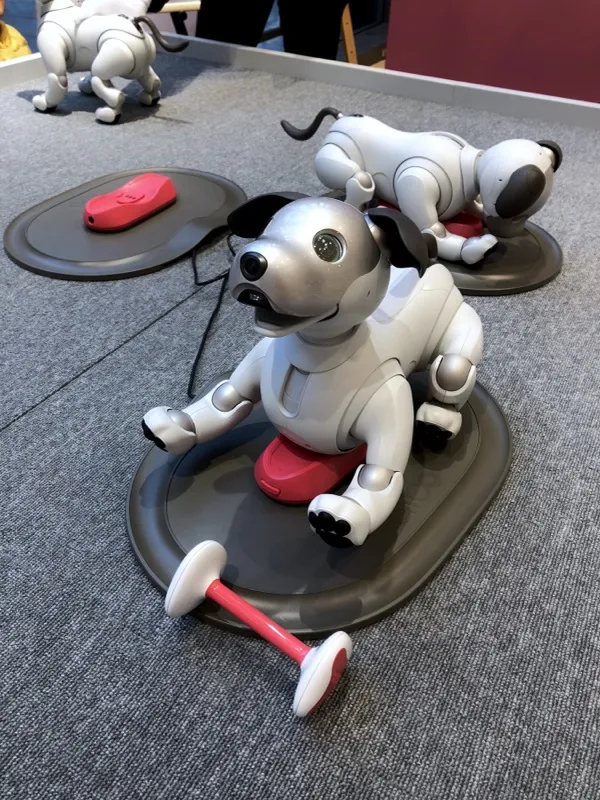
The narrower lane matters because it tells buyers what to verify. For ElliQ, you should evaluate onboarding, caregiver features, medication reminders, privacy, and the actual payment commitment. For aibo, you should evaluate subscription dependency, repair support, and whether you want a robot pet rather than a helper. For Miko, you should evaluate child safety, parental controls, age fit, content quality, and the optional subscription. For Astro, you should evaluate home layout, invitation availability, Ring/Alexa workflows, and what happens on stairs or in multi-floor homes.
That is a healthier buying process than asking whether the robot "has personality." Personality should make the useful thing feel better. It should not be the whole product.
Subscriptions are not automatically bad; they are a reality check
Companion robots often need ongoing services. Speech recognition, generative AI, content libraries, remote care dashboards, video calling, cloud backups, and safety updates all cost money after the box ships. A one-time hardware sale can be a poor fit for a product that keeps talking, learning, and storing state.
That is why subscription pricing is not automatically a red flag. A recurring plan can make charges visible, but does not establish sustainable support. ElliQ 3, for example, is leased with a separate initiation fee and required membership. In exchange, the product is framed around ongoing older-adult engagement: proactive conversation, medication reminders, wellness support, video calling, photos and messages, community activities, bingo, and virtual tours. The NYSOFA August 2023 report described more than 800 participants and a reported reduction in loneliness. That is attributed program evidence, not proof of a guaranteed health benefit or a sustainable business model.
That does not mean ElliQ is the right product for every household. It means the business model is legible. Buyers can ask whether the required membership is worth the care use case. The same logic applies to premium emotional robots.
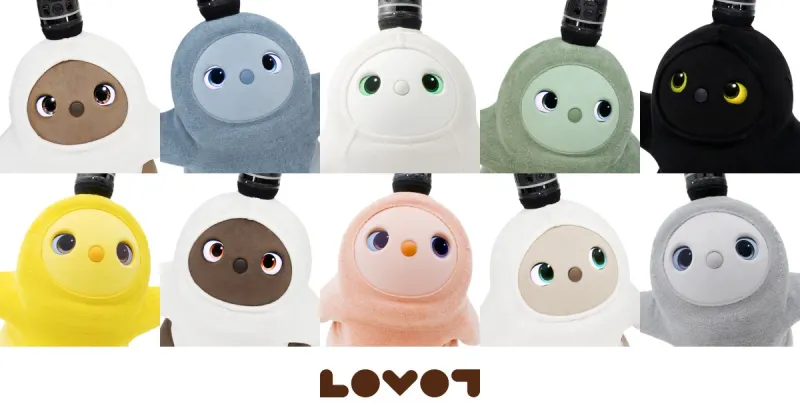
In Japan, LOVOT makes that trade-off concrete. Checked on October 13, 2026, LOVOT's pricing lists LOVOT 3.0 in the basic ちゃ color at ¥577,500, including tax, administration and shipping, for orders through October 25, 2026. The announced price changes raise that example to ¥599,500 from October 26, with ¥649,000 planned around mid-January 2027; the final January price and exact date remain unconfirmed. Other colors cost more.
Minimum Care adds ¥9,900 per month for software use, updates and backups, plus coverage of one third of eligible repair costs. Under that plan, discounted maintenance is charged separately. Buyers are paying for a tactile companion, with recurring service costs and repair bills to budget for. Visible charges help explain the ownership cost; they do not guarantee that support will last.
The dangerous model is different: a robot sold mainly on personality, with cloud-heavy features, unclear long-term service economics, and no buyer-visible answer to what happens when the company has to cut costs.
AI makes the pitch stronger, but the support problem bigger
Generative AI has made companion robots feel more plausible. A robot that can hold varied conversations, recognize context, and remember preferences is more interesting than a scripted novelty. Current products are already leaning into that shift. Loona markets conversational robot-pet interaction, while Miko 3 markets learning activities and parental controls. Those product descriptions do not establish that either platform will remain supported indefinitely.
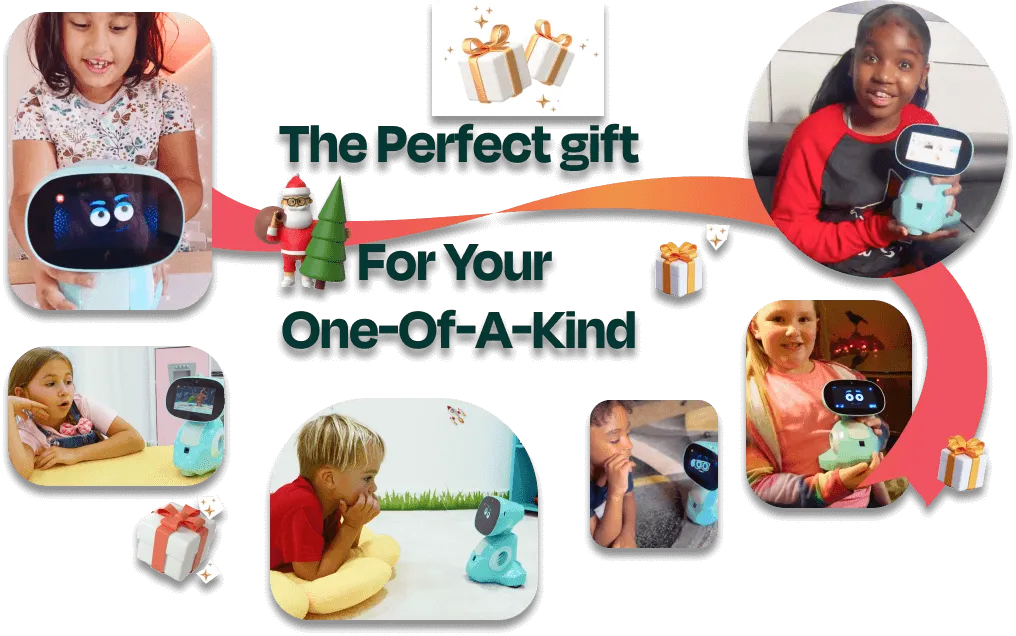
Those features improve the experience, but they also raise the operating bar. If a robot depends on large-model calls, moderation, content filtering, cloud memory, or app-controlled permissions, then support continuity becomes more important, not less. Parents buying a child-facing robot should care about COPPA and kid-safety controls as much as jokes and dances. Older-adult caregivers should care about escalation paths and service reliability as much as friendly conversation. Pet-style robot buyers should care about battery replacement, subscription terms, and repair options before they bond with the device.
AI can make a robot feel alive. It cannot by itself make the business durable.
What should you check before buying a social companion robot?
A good companion robot purchase starts with a colder checklist than the product page wants you to use.
1. What job would you miss if it stopped working? If you cannot answer that, you may be buying a demo, not a product. Strong answers include care reminders, remote check-ins, child learning sessions, pet-like companionship, or home monitoring.
2. What still works without the cloud? Ask what happens if servers are down, if the company changes ownership, or if a subscription lapses. Does the robot still move, recognize people, respond locally, or charge itself?
3. Who pays for ongoing intelligence? Free AI is rarely free forever. Look for clear subscription terms, included service periods, or explicit local-only features.
4. Can the robot be repaired? Batteries, wheels, microphones, cameras, chargers, and displays age. A companion robot that cannot be repaired becomes an emotional e-waste problem.
5. Is the product available in your region? Astro has had invitation and regional limits. Some products ship globally but support only certain languages, warranties, or app stores.
6. Is privacy understandable? A social robot often has cameras and microphones in intimate spaces. You should be able to find camera controls, microphone controls, retention policies, deletion options, and child/caregiver permissions without guessing.
7. Does the product have a narrow enough promise? "A friend for the whole family" is emotionally strong and operationally weak. "Medication reminders and social connection for an older adult" is easier to evaluate.
The robots most likely to last are not always the cutest
The strongest companion products in 2026 are not necessarily the most humanlike. They are the ones with a durable reason to exist after the novelty fades. Sometimes that means a narrow care workflow. Sometimes it means a premium robot pet. Sometimes it means a child-focused learning platform. Sometimes it means a monitoring robot that uses personality to make cameras and check-ins feel less cold.
The appeal remains understandable: people want responsive objects that feel less like appliances. That appeal still needs a support model.
But the category has matured enough that buyers should be stricter. The histories of Jibo, Anki and Pepper suggest that personality is not a moat. The moat is a specific job, clear economics, service continuity, and hardware that remains useful when the hype cycle moves on.
If you are shopping today, start with the lane, not the face:
- For older-adult support, compare ElliQ 3 against your care workflow and budget.
- For emotional robot pets, compare Sony aibo, LOVOT, and Loona by price, repair, and subscription dependency.
- For children, compare Miko 3 by age range, safety controls, content, and parent app quality.
- For home monitoring, verify navigation, camera features, alerts and privacy controls against the current offer and supported services.
- For announced companions, confirm actual availability and support terms before treating a demonstration as a buying option.
The best social robot is not the one that makes the strongest first impression. It is the one you would still choose after reading the warranty, the service plan, the privacy policy, and the shutdown FAQ.
Manufacturer and research links
- Anki Vector 2.0 product page: https://anki.bot/products/vector-robot
- Anki company background and 2019 shutdown summary: https://en.wikipedia.org/wiki/Anki_(American_company)
- Sony official aibo product page: https://us.aibo.com/
- ElliQ official feature overview: https://elliq.com/
- Amazon Astro launch overview: https://www.aboutamazon.com/news/devices/meet-astro-a-home-robot-unlike-any-other
- LOVOT official overview: https://lovot.life/en/
- Miko 3 official product page: https://miko.ai/products/miko-3
- MIT Media Lab Personal Robots group overview: https://www.media.mit.edu/groups/personal-robots/overview/
ElliQ’s feature overview describes its conversation, reminders and contact functions. The ElliQ FAQ describes the active-membership requirement, US-only shipping and support, and device return after cancellation. See the linked subscription guide for billing and conflicting public terms.
October 12, 2026 update: Corrected ElliQ’s lease description, removed stale price snapshots and unsupported quantitative claims, and clarified historical sources and the editorial checklist. Originally published 2026-04-27.
Written by
ui44 Team
Published April 27, 2026
Share this article
Open a plain share link on X or Bluesky. No embeds, no widgets, no cookie baggage.