That matters because home robot subscriptions are no longer only about cloud storage or voice features. WIM Premium sells assistance algorithms for a physical body. The promise is not "more content"; it is "walk differently with the same robot." For buyers, that is both exciting and risky.
What WIM Premium actually sells
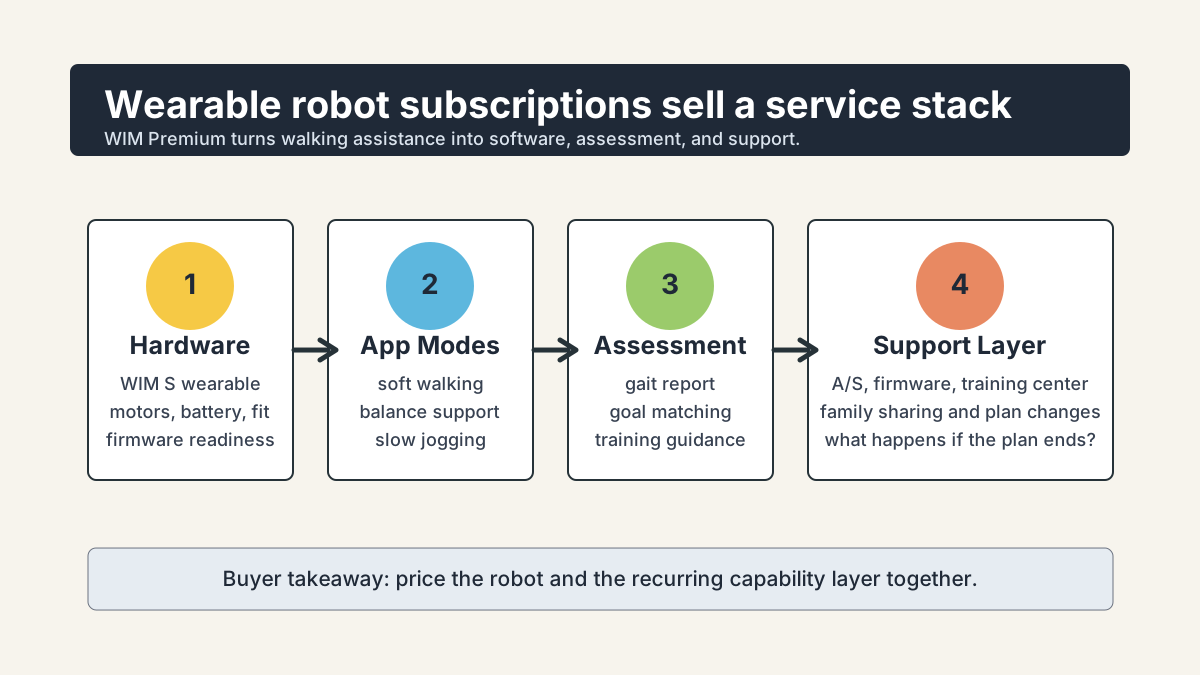
WIM Premium is built around WIM S, WIRobotics' wearable walking-assist robot. According to the official WIM Premium page, the service unlocks three app-based premium modes without replacing the device: Soft mode for smoother walking, Balance mode for asymmetric assistance, and Slow Jogging mode for running-like exercise. WIRobotics says the modes can be tried for 30 minutes before subscribing and then selected in the WIM app.
The interesting part is how specific the feature claims are. WIRobotics says Soft mode is designed to reduce knee shock by 10 to 20 percent, Balance mode expands the support window on one side by 25 percent, and Slow Jogging mode reduces metabolic energy during jogging by 12.3 percent. Those are manufacturer claims, not independent medical advice, but they show the direction: premium robot features are being framed as measurable changes in physical assistance.
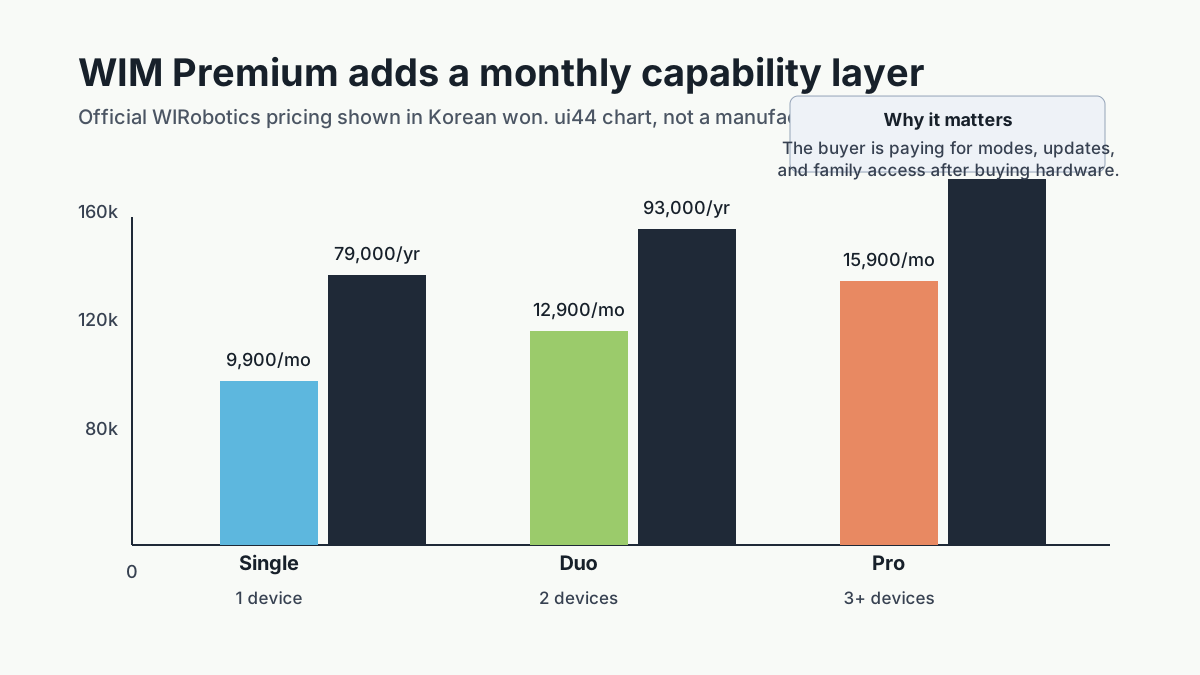
The official plan table lists three tiers:
Plan
Single
- Device count
- 1 WIM S
- Monthly price
- 9,900 won/month
- Annual price
- 79,000 won/year
- What is included
- All three premium modes, app mode switching, 30-minute trial
Plan
Duo
- Device count
- 2 WIM S devices
- Monthly price
- 12,900 won/month
- Annual price
- 93,000 won/year
- What is included
- Same feature set for two devices
Plan
Pro
- Device count
- 3 or more WIM S devices
- Monthly price
- 15,900 won/month
- Annual price
- 107,000 won/year
- What is included
- Same feature set for a larger household or fleet
| Plan | Device count | Monthly price | Annual price | What is included |
|---|---|---|---|---|
| Single | 1 WIM S | 9,900 won/month | 79,000 won/year | All three premium modes, app mode switching, 30-minute trial |
| Duo | 2 WIM S devices | 12,900 won/month | 93,000 won/year | Same feature set for two devices |
| Pro | 3 or more WIM S devices | 15,900 won/month | 107,000 won/year | Same feature set for a larger household or fleet |
WIRobotics also says WIM Premium is for WIM S, not the earlier WIM model, and that some WIM S units may need a firmware update or eligibility check by serial number. That small caveat is a big buyer lesson: with physical robots, a subscription can depend on hardware revision, firmware, app-store billing, and service availability all at once.
The real product is calibration
The strongest clue is not the price. It is WIRobotics' WIM Gait Training Center. The official center page describes a reserved welcome program lasting about 70 minutes, with intake, detailed assessment, robot-assisted exercise, and consulting. It also mentions a gait and exercise report, individual goals, and program guidance.
That is not how people used to buy consumer electronics. It looks more like a hybrid of hardware retail, personal training, assistive technology fitting, and software subscription. A wearable robot sits on the body, changes gait forces, and may be used by older adults or people worried about balance. In that context, "which mode should I choose?" is not a decorative app setting. It is a calibration problem.
This is where WIM Premium becomes useful for understanding future home robots. As robots get more physical, the recurring service layer may cover four things:
- Algorithms: new motion modes, grasping policies, fall-risk handling, or household-task behaviors.
- Assessment: setup sessions, calibration reports, gait reviews, room mapping, or task-specific readiness checks.
- Support: repair centers, replacement parts, firmware updates, app-store billing, and eligibility checks.
- Household access: family sharing, multiple devices, separate user profiles, and plan changes when needs change.
That is a more honest model than pretending one hardware purchase can cover years of robotics support for free. But it also means the sticker price is only part of the cost.
How this compares with robots in the ui44 database
ui44 already tracks several robots where the purchase decision depends on more than the base hardware price.
Robot
- ui44 status and price signal
- Development; no public consumer price
- Subscription or recurring-cost lesson
- WIRobotics' humanoid platform emphasizes force-responsive physical interaction. WIM's service model shows how the same company thinks about physical assistance, support, and commercialization.
Robot
- ui44 status and price signal
- Available; leased with a $249 initiation fee plus membership
- Subscription or recurring-cost lesson
- Companion robots can make the service the product: proactive conversation, wellness workflows, and support require ongoing operations.
Robot
- ui44 status and price signal
- $3,199.99 in the ui44 database, including a 3-year A.I. Cloud Plan
- Subscription or recurring-cost lesson
- Cloud-linked personality and app features can be central to the full experience, not just optional extras.
Robot
- ui44 status and price signal
- $3,999 up front plus a lower monthly plan, or a higher monthly subscription with no up-front cost
- Subscription or recurring-cost lesson
- Physical chore robots may need remote assistance, model updates, and service operations after delivery.
Robot
- ui44 status and price signal
- $20,000 early-adopter price in the ui44 database
- Subscription or recurring-cost lesson
- A home humanoid price can be high even before the market knows what support, supervision, updates, or insurance will cost.
| Robot | ui44 status and price signal | Subscription or recurring-cost lesson |
|---|---|---|
| WIRobotics ALLEX | Development; no public consumer price | WIRobotics' humanoid platform emphasizes force-responsive physical interaction. WIM's service model shows how the same company thinks about physical assistance, support, and commercialization. |
| ElliQ 3 | Available; leased with a $249 initiation fee plus membership | Companion robots can make the service the product: proactive conversation, wellness workflows, and support require ongoing operations. |
| Sony aibo | $3,199.99 in the ui44 database, including a 3-year A.I. Cloud Plan | Cloud-linked personality and app features can be central to the full experience, not just optional extras. |
| Weave Isaac 0 | $3,999 up front plus a lower monthly plan, or a higher monthly subscription with no up-front cost | Physical chore robots may need remote assistance, model updates, and service operations after delivery. |
| 1X NEO | $20,000 early-adopter price in the ui44 database | A home humanoid price can be high even before the market knows what support, supervision, updates, or insurance will cost. |
The WIM Premium lesson is not that every home robot subscription is bad. In some categories, recurring revenue may be the only practical way to keep the robot useful and supported. The buyer problem is opacity. A subscription should make clear what is optional, what is required, what happens when billing stops, and what data the company needs to provide the service.
Optional is different from mandatory
WIM Premium is especially interesting because the service appears to add premium modes to WIM S rather than replace the basic idea of owning the wearable. That is the friendliest version of the subscription model: hardware first, optional capabilities second. A buyer can decide whether the new modes are worth it.
Mandatory subscriptions are a different category. If the robot becomes a decorative shell without the plan, the monthly fee is part of the purchase price. If a robot performs core safety, care, or mobility work, buyers should also ask what happens during payment failure, app-store account changes, server outages, or company shutdowns.
Physical robots raise the stakes because the output is not a playlist or a cloud backup. It is movement in a home, support on a body, or contact with objects. For a wearable robot, the subscription question overlaps with safety, privacy, health data, and service quality.
The buyer questions that matter
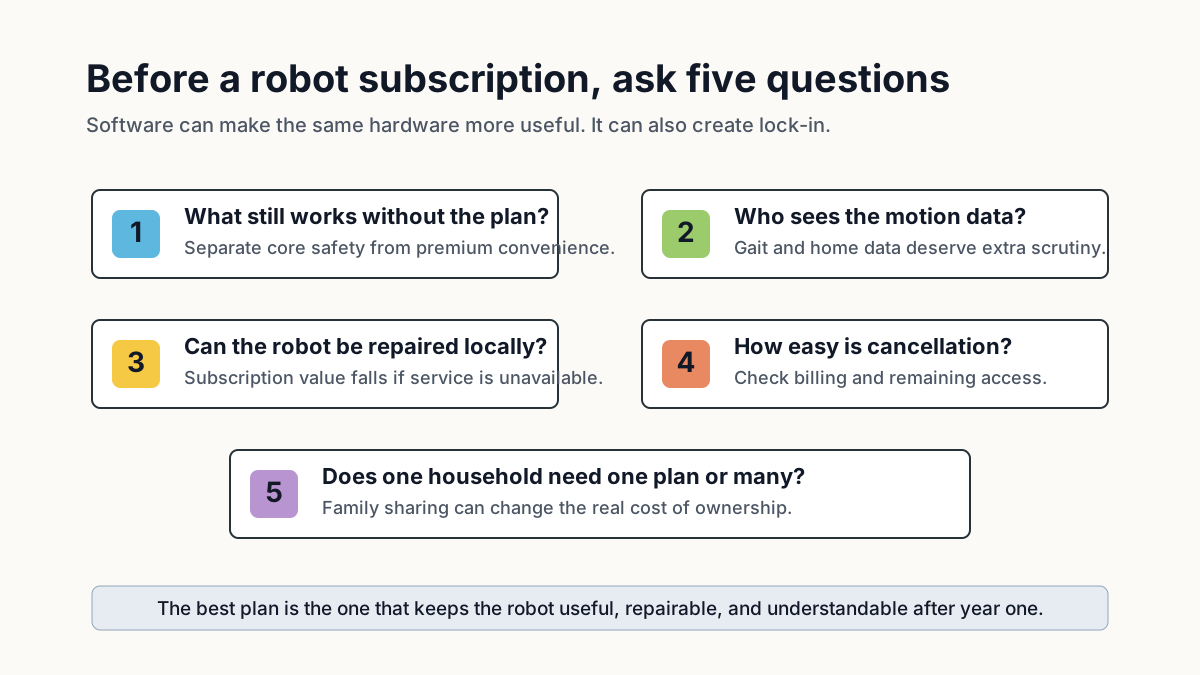
Before paying for a robot subscription, ask the company to answer these in plain language:
- What features remain if I cancel?
- Is the plan tied to the robot, the user, the household, or the app account?
- Does the robot require cloud processing for physical movement, or only for analytics and personalization?
- What motion, video, audio, health, or household data is collected?
- Can I export or delete that data?
- How long will firmware and app updates be supported?
- Is there a local repair path if a sensor, motor, battery, strap, arm, or gripper fails?
- Are there separate fees for remote support, teleoperation, training visits, replacement parts, or expanded family access?
- If a feature depends on an assessment, can that assessment be repeated?
- What is the real two-year cost including hardware, subscription, accessories, and support?
What does WIM Premium predict for home robots?
The most likely future is not one subscription model. It is three different models that buyers need to separate.
Capability subscriptions add new modes, skills, or AI behaviors to hardware that already works. WIM Premium fits here. So would a humanoid laundry skill, better object handling, or a more careful pet-avoidance mode for a mobile home robot.
Operations subscriptions fund remote help, monitoring, model updates, and support teams. Weave Isaac 0 points in this direction because a physical chore robot can get stuck and still need a specialist correction. Many early home humanoids will probably need some version of this, even if companies avoid the word "teleoperation" in consumer marketing.
Access subscriptions make the robot itself available only while membership continues. ElliQ 3 is the cleanest example in the ui44 database because the device is leased for the duration of a valid paid membership. This can reduce up-front cost, but it also makes cancellation a product-ending event.
The best subscription is the one that aligns incentives. If the company earns money by keeping the robot safe, useful, repaired, updated, and understandable, the buyer may be better off. If the company earns money by locking basic functions behind vague monthly language, the buyer is taking on hidden risk.
Bottom line
WIM Premium is worth watching because it takes a specific wearable robot and turns it into a recurring capability platform. The monthly price is not the whole story. The bigger story is the bundle: WIM S hardware, app-based assistance modes, firmware eligibility, a training center, gait reporting, family use, and support.
That is exactly the bundle future home robots will have to make legible. A home humanoid, companion robot, or assistive robot will not be judged only by height, payload, battery life, or a preorder video. It will be judged by the ongoing service that makes those specs useful in a real home.
For buyers, the rule is simple: price the robot and the service together. A subscription can be fair if it keeps a physical robot improving. It is risky when it hides the cost of making the robot work at all.
Sources & References
- WIRobotics WIM Premium official page: https://www.wirobotics.com/wim-premium
- WIRobotics WIM Gait Training Center official page: https://www.wirobotics.com/trainingCenter/main
- ui44 robot database entries checked for WIRobotics ALLEX, ElliQ 3, Sony aibo, Weave Isaac 0, and 1X NEO.
Related in the database
Use this article as a privacy verification workflow
Turn the article into a privacy verification pass grounded in the robots, manufacturers, and components it actually references.
WIM Premium Shows Robot Subscriptions already points you toward 5 linked robots, 5 manufacturers, and 5 countries inside the ui44 database. That matters because strong buyer guidance is easier to apply when you can move immediately from a claim or warning into concrete product pages, manufacturer directories, component explainers, and country-level context instead of treating the article as an isolated opinion piece. The fastest next step is to turn the article into a shortlist workflow: open the linked robot pages, verify which specs are actually published for those models, then compare the surrounding manufacturer and component context before you decide whether the underlying claim changes your buying plan.
For this topic, the useful discipline is to separate the editorial lesson from the catalog evidence. The article gives you the framing, but the robot pages tell you what each product actually ships with today: sensor stack, connectivity methods, listed price, release timing, category, and support-relevant compatibility notes. The manufacturer pages then show whether you are looking at a one-off launch, a broader lineup pattern, or a company that spans multiple categories. That layered workflow reduces the risk of buying on a single marketing phrase or a single support FAQ.
Use the robot pages to confirm which products actually expose cameras, microphones, Wi-Fi, or voice systems, then use the manufacturer pages to decide how much of the privacy question seems product-specific versus brand-wide. On this route cluster, ALLEX, ElliQ 3, and aibo (ERS-1000) form the fastest reality check. If you want a quick working shortlist, open Compare ALLEX, ElliQ 3, and aibo (ERS-1000) next, then keep this article open as the reasoning layer while you compare structured data side by side.
Practical Takeaway
Every robot, manufacturer, category, component, and country reference below resolves to a real ui44 page, keeping the follow-up path grounded in database records rather than generic advice.
Suggested next steps in ui44
- Open ALLEX and note the listed sensors, connectivity methods, and voice stack before you interpret any policy claim.
- Cross-check the wider brand context on WIRobotics so you can see whether the privacy question touches one model or a broader lineup.
- Use the linked component pages to confirm how common the relevant sensors and connectivity layers are across the database.
- Keep a short note of which policy layers you checked, which device features are actually present on the robot page, and which items still depend on region- or app-level confirmation.
- Finish with Compare ALLEX, ElliQ 3, and aibo (ERS-1000) so the policy reading sits next to structured product data.
Robot profiles worth opening next
Use the linked product pages as the evidence layer
The linked robot pages are where this article becomes operational. Instead of asking whether the headline is interesting, use the robot entries to inspect the actual mix of sensors, connectivity options, batteries, pricing, release timing, and stated capabilities attached to the products mentioned in the article. That is the easiest way to see whether the warning or opportunity described here affects one product family, a specific design pattern, or an entire buying lane.
ALLEX
WIRobotics · Humanoid · Development
ALLEX is tracked on ui44 as a development humanoid robot from WIRobotics. The database currently records a listed price of Price TBA, a release date of 2025-08-18, Not officially disclosed battery life, Not officially disclosed charging time, and a published stack that includes Force, contact, and impact response via inherent compliance, Whole-body force response across arms, fingers, and waist without force sensors, and Official visual sensor suite not disclosed plus Not officially disclosed.
For privacy-focused reading, this page matters because it shows the concrete device surface behind the policy discussion. Use it to verify whether ALLEX combines sensors and connectivity in a way that could change the in-home data footprint, and compare the listed capabilities such as Waist-up humanoid manipulation, 15-DOF compliant robotic hands, and Human-like force response without tactile sensors with any cloud, app, or voice layers.
ElliQ 3
Intuition Robotics · Companions · Available
ElliQ 3 is tracked on ui44 as a available companions robot from Intuition Robotics. The database currently records a listed price of Price TBA, a release date of 2024-01, Mains powered battery life, N/A (plugged in) charging time, and a published stack that includes 4-mic array, 12 MP camera for images, and 1080p HD video at 30 fps with 120° horizontal FoV plus Wi-Fi 802.11b/g/n/ac (2.4 GHz and 5 GHz) and Bluetooth 5+.
For privacy-focused reading, this page matters because it shows the concrete device surface behind the policy discussion. Use it to verify whether ElliQ 3 combines sensors and connectivity in a way that could change the in-home data footprint, and compare the listed capabilities such as Proactive Conversation, Medication Reminders, and Health & Pain Tracking with any cloud, app, or voice layers, including ElliQ Voice AI.
aibo (ERS-1000)
Sony · Companions · Available
aibo (ERS-1000) is tracked on ui44 as a available companions robot from Sony. The database currently records a listed price of $3,200, a release date of 2018-01, ~2 hours battery life, ~3 hours charging time, and a published stack that includes Front Camera, SLAM Camera, and Time-of-Flight Sensor plus Wi-Fi 802.11 b/g/n (2.4GHz) and LTE.
For privacy-focused reading, this page matters because it shows the concrete device surface behind the policy discussion. Use it to verify whether aibo (ERS-1000) combines sensors and connectivity in a way that could change the in-home data footprint, and compare the listed capabilities such as Emotion Recognition, Face Recognition (up to 100 faces), and Voice Command Recognition (100+ commands) with any cloud, app, or voice layers.
Isaac 0
Weave Robotics · Home Assistants · Available
Isaac 0 is tracked on ui44 as a available home assistants robot from Weave Robotics. The database currently records a listed price of $3,999, a release date of 2026-02, Mains powered (600W, 120V) battery life, N/A (plugged in) charging time, and a published stack that includes Vision System and Proprioceptive Sensors plus Wi-Fi 2.4GHz/5GHz and Ethernet.
For privacy-focused reading, this page matters because it shows the concrete device surface behind the policy discussion. Use it to verify whether Isaac 0 combines sensors and connectivity in a way that could change the in-home data footprint, and compare the listed capabilities such as Laundry Folding, T-shirts, Long Sleeves, Sweaters, and Pants and Towels with any cloud, app, or voice layers.
NEO
1X Technologies · Humanoid · Pre-order
NEO is tracked on ui44 as a pre-order humanoid robot from 1X Technologies. The database currently records a listed price of $20,000, a release date of 2025-10-28, ~4 hours battery life, Not disclosed charging time, and a published stack that includes RGB Cameras, Depth Sensors, and Tactile Skin plus Wi-Fi and Bluetooth.
For privacy-focused reading, this page matters because it shows the concrete device surface behind the policy discussion. Use it to verify whether NEO combines sensors and connectivity in a way that could change the in-home data footprint, and compare the listed capabilities such as Household Chores, Tidying Up, and Safe Human Interaction with any cloud, app, or voice layers.
Manufacturer context behind the article
Check whether this is one product story or a broader company pattern
Manufacturer pages add the privacy context that individual product pages cannot show on their own. They help you check whether cameras, microphones, cloud accounts, app controls, and policy assumptions appear across a broader lineup or stay tied to one specific product story.
WIRobotics
ui44 currently tracks 1 robot from WIRobotics across 1 category. The company is grouped under South Korea, and the current catalog footprint on ui44 includes ALLEX.
That wider brand context matters because privacy questions rarely stop at one FAQ page. A manufacturer route helps you see whether the article is centered on one premium model or on a company that has several relevant products and therefore more than one place where the same policy or app assumptions might matter. The category mix here currently points toward Humanoid as the most useful next route if you want to see whether this article reflects a wider pattern inside the brand.
Intuition Robotics
ui44 currently tracks 1 robot from Intuition Robotics across 1 category. The company is grouped under Israel, and the current catalog footprint on ui44 includes ElliQ 3.
That wider brand context matters because privacy questions rarely stop at one FAQ page. A manufacturer route helps you see whether the article is centered on one premium model or on a company that has several relevant products and therefore more than one place where the same policy or app assumptions might matter. The category mix here currently points toward Companions as the most useful next route if you want to see whether this article reflects a wider pattern inside the brand.
Sony
ui44 currently tracks 2 robots from Sony across 2 categorys. The company is grouped under Japan, and the current catalog footprint on ui44 includes aibo (ERS-1000), QRIO.
That wider brand context matters because privacy questions rarely stop at one FAQ page. A manufacturer route helps you see whether the article is centered on one premium model or on a company that has several relevant products and therefore more than one place where the same policy or app assumptions might matter. The category mix here currently points toward Companions, Research as the most useful next route if you want to see whether this article reflects a wider pattern inside the brand.
Weave Robotics
ui44 currently tracks 2 robots from Weave Robotics across 1 category. The company is grouped under Denmark, and the current catalog footprint on ui44 includes Isaac 0, Isaac 1.
That wider brand context matters because privacy questions rarely stop at one FAQ page. A manufacturer route helps you see whether the article is centered on one premium model or on a company that has several relevant products and therefore more than one place where the same policy or app assumptions might matter. The category mix here currently points toward Home Assistants as the most useful next route if you want to see whether this article reflects a wider pattern inside the brand.
Broaden the scan without leaving the database
Categories, components, and countries add the wider context
Category framing
Category pages are useful when the article touches a buying pattern that shows up across brands. A category route helps you confirm whether the linked products sit in a narrow niche or whether the same question should be tested across a larger field of alternatives.
Humanoid
The Humanoid category page currently groups 129 tracked robots from 92 manufacturers. ui44 describes this lane as: Full-size bipedal humanoid robots built to work alongside people — from factory floors to household tasks. Compare the cutting edge of humanoid robotics.
That makes the category route a practical follow-up when you want to check whether the products linked in this article are typical for the lane or whether they sit at one edge of the market. Useful starting examples currently include NEO, EVE, Mornine M1.
Companions
The Companions category page currently groups 53 tracked robots from 48 manufacturers. ui44 describes this lane as: Social robots, robot pets, and elderly-care companions designed for emotional connection and everyday support at home.
That makes the category route a practical follow-up when you want to check whether the products linked in this article are typical for the lane or whether they sit at one edge of the market. Useful starting examples currently include PARO, Abi, Next-Generation Companion Robot.
Country and ecosystem context
Country pages give extra context when support practices, launch sequencing, regulatory posture, or manufacturer mix matter. They are not a substitute for model-level verification, but they do help you see which ecosystems cluster together and which manufacturers sit in the same regional field when you broaden the search beyond the article headline.
South Korea
The South Korea route currently groups 9 tracked robots from 7 manufacturers in ui44. That gives you a useful regional lens when the article points toward support practices, launch sequencing, or brand clusters that may share similar ecosystem assumptions.
On the current route, manufacturers like ROBOTIS, Samsung, GenON make the page a good way to broaden the scan without losing the regional context that often shapes availability, documentation style, and adjacent alternatives.
Israel
The Israel route currently groups 5 tracked robots from 5 manufacturers in ui44. That gives you a useful regional lens when the article points toward support practices, launch sequencing, or brand clusters that may share similar ecosystem assumptions.
On the current route, manufacturers like Flytrex, Intuition Robotics, Maytronics make the page a good way to broaden the scan without losing the regional context that often shapes availability, documentation style, and adjacent alternatives.
Japan
The Japan route currently groups 26 tracked robots from 17 manufacturers in ui44. That gives you a useful regional lens when the article points toward support practices, launch sequencing, or brand clusters that may share similar ecosystem assumptions.
On the current route, manufacturers like AIST, SoftBank Robotics, Toyota make the page a good way to broaden the scan without losing the regional context that often shapes availability, documentation style, and adjacent alternatives.
Questions to answer before you move from reading to buying
A follow-up FAQ built from the entities already linked in this article
Frequently Asked Questions
Which page should I open first after reading “WIM Premium Shows Robot Subscriptions”?
Start with ALLEX. That gives you a concrete product anchor for the article’s main claim. From there, branch into the manufacturer and component pages so you can tell whether the article is describing one specific model, a repeated brand pattern, or a wider technology issue that affects multiple shortlist options.
How do the manufacturer pages change the buying decision?
WIRobotics help you zoom out from one article and one product. On ui44 they show lineup breadth, category spread, and the neighboring robots tied to the same company. That context is useful when you are deciding whether a risk belongs to a single model, whether it shows up across a brand’s portfolio, and whether you should keep looking at alternatives before committing.
When should I switch from reading to side-by-side comparison?
Move into Compare ALLEX, ElliQ 3, and aibo (ERS-1000) as soon as you understand the article’s main warning or promise. The article explains what to watch for, but the compare view is where you can check whether price, status, battery life, connectivity, sensors, and category fit still make the robot a good match for your own home and budget.
Where to go next in ui44
Keep the research chain inside the database
If you want to keep going, these follow-on pages give you the cleanest expansion path from article to research session. Open the comparison route first if you are deciding between products today. Open the manufacturer, category, and component routes if you still need to understand the broader pattern behind the claim.
Written by
ui44 Team
Published July 9, 2026
Share this article
Open a plain share link on X or Bluesky. No embeds, no widgets, no cookie baggage.