Article 20 min read 4,588 words

Vietnam's Humanoid Robot Push: Home-Robot Watchlist

Vietnam is not the first country most home-robot buyers think of when they hear "humanoid robot." The current shortlist usually starts with China, the United States, Japan, and South Korea. But Vingroup's recent humanoid push is worth watching because it is not a single lab demo. It is a cluster of companies, public event appearances, factory-adjacent use cases, and deployment infrastructure arriving at roughly the same time.

ui44 Team All articles

That does not make a Vietnamese humanoid a practical home purchase in 2026. It does make Vietnam a credible new entrant in the home-robot watchlist, especially for buyers tracking when general-purpose robots might move from industrial pilots to homes, service venues, and apartment complexes.
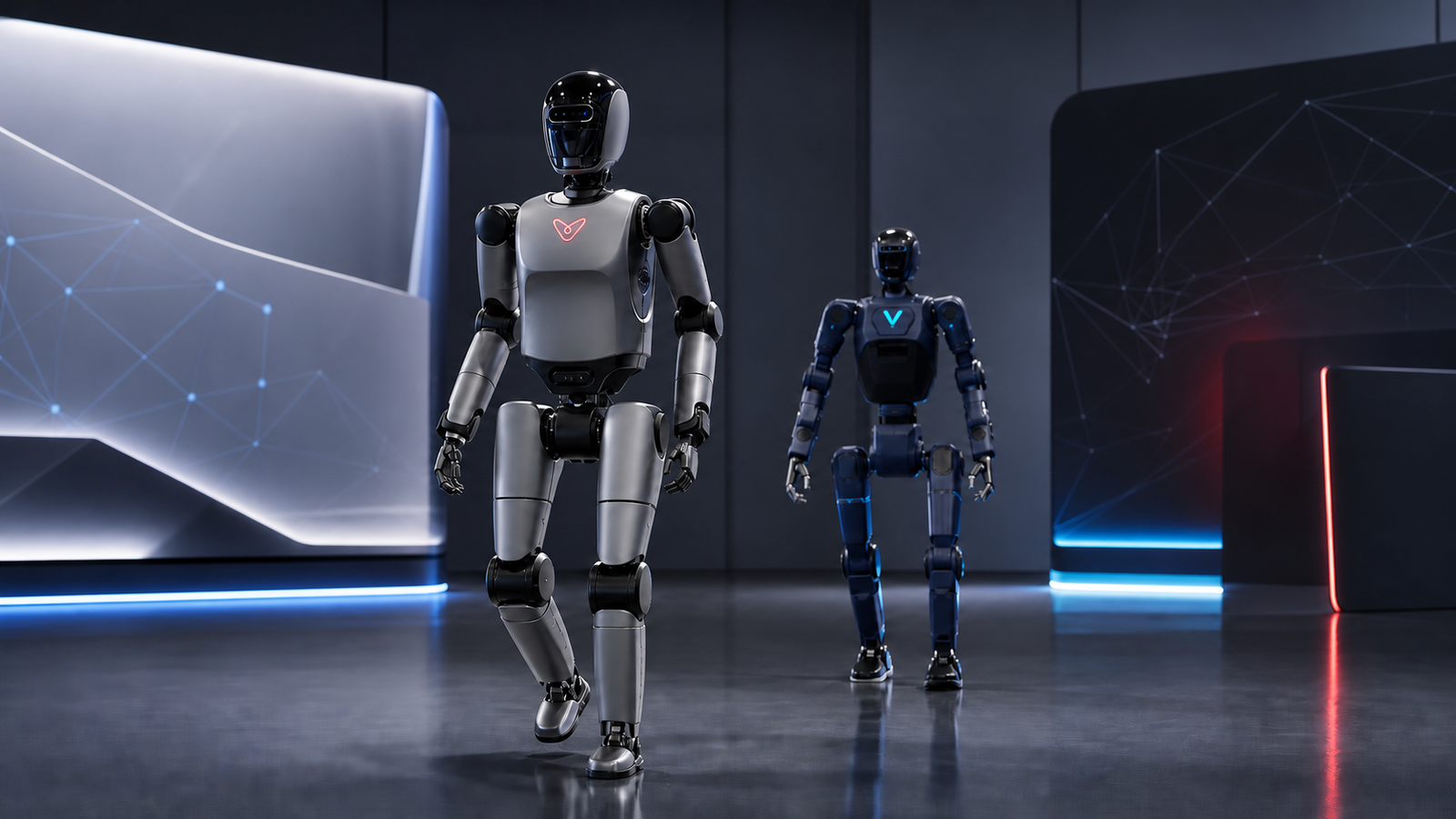
AI-generated editorial illustration of VinRobotics- and VinMotion-style humanoid robots in a neutral lab/expo setting

The short version: VinRobotics says its VR-H3 platform appeared at ICRA 2026, Festival der Roboter, Vietnam Robot Tech Day, and COMPUTEX Taipei 2026. VinMotion describes a separate human-in-the-loop stack for scalable humanoid deployment. TNGlobal reported that Vingroup-linked VinDynamics also showed Dyno, a humanoid positioned for service, security, and eventually household-adjacent assistant roles.

The buyer question is not "Can I order one?" It is: "Does this ecosystem change the timing, pricing, and competitive pressure around home humanoids?"

What Vingroup Is Actually Showing

The clearest product signal is VinRobotics VR-H3. The company calls it a third-generation humanoid robot platform and says it was developed in-house by Vietnamese engineers. Its public spec highlights include more than 31 actuators, two onboard edge computers, full-body AI control, a battery system, and payload handling up to 6-8 kg.

Those numbers are useful, but they should be read as platform signals rather than consumer promises. A 6-8 kg payload suggests the robot can move meaningful household objects, but the official demonstrations still emphasize industrial, event, and controlled-environment tasks: carrying objects, assembly-style operations, remote operation, and crowd-facing demos.

VinRobotics also said it plans to gradually open-source selected foundational robotics technologies. If that happens in a useful form, it could matter more than any single demonstration. Open tooling can attract researchers, integrators, and app developers, which is exactly the kind of ecosystem layer home robots often lack.

The second piece is VinMotion Motion 2. Its official site does not read like a consumer gadget page. It talks about "human-in-the-loop AI integration," real-time human guidance, operator interfaces, and mass deployment infrastructure. That is important because the first useful home humanoids may not be fully autonomous in the way buyers imagine. They may lean on remote assistance, supervised autonomy, and narrow task scripts before they become trustworthy around fragile objects, children, pets, stairs, kitchens, and clutter.
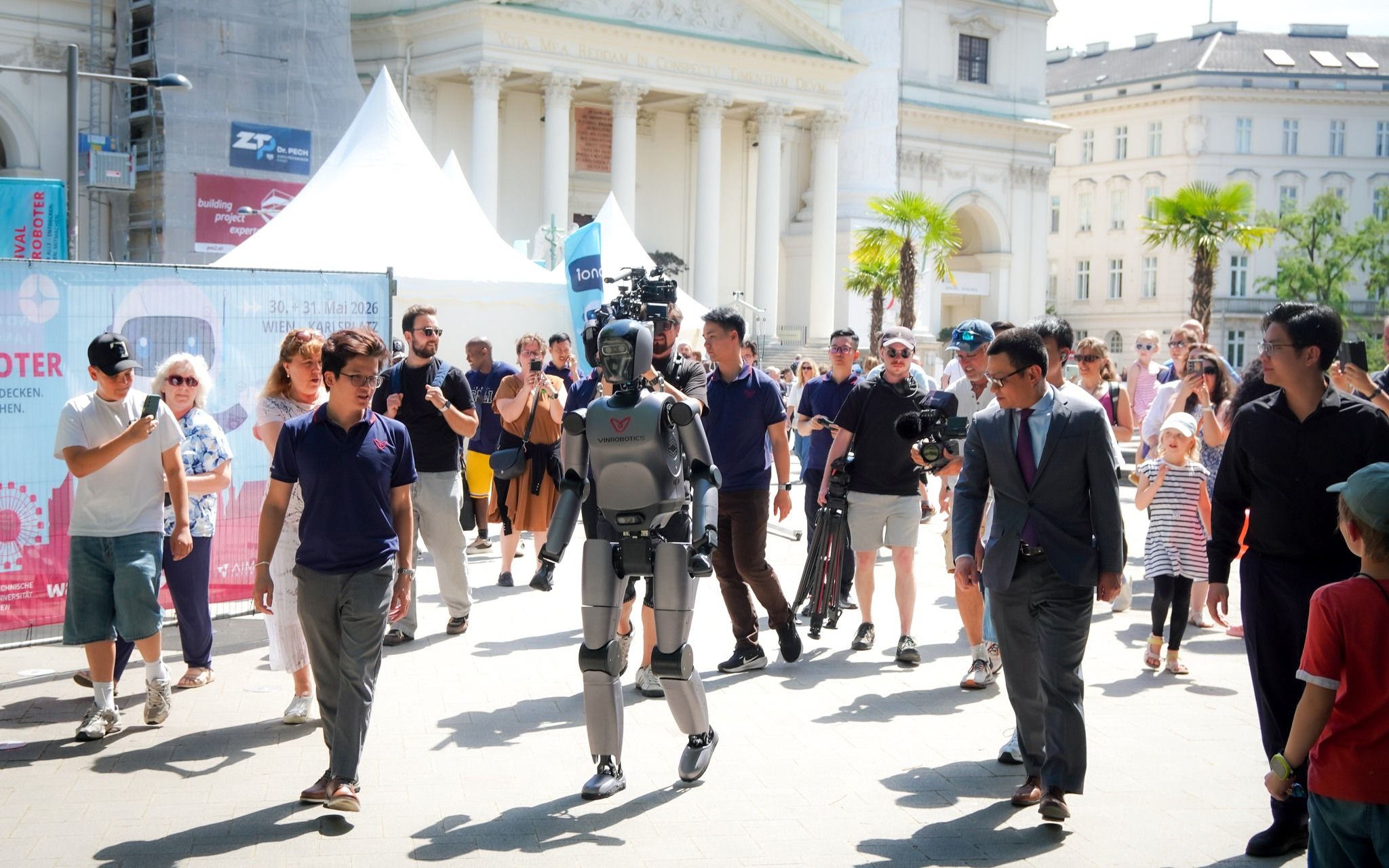
VinRobotics VR-H3 humanoid robot walking at Festival der Roboter 2026

The third piece is Dyno from VinDynamics. Public reporting frames Dyno as a service and living-environment assistant, with security, surveillance, guide, and household-support ambitions. That matters for home robotics because many buyers do not need a humanoid to rebuild the kitchen. They need a robot that can patrol, greet, carry light objects, answer questions, and eventually manipulate ordinary things without becoming a liability.

Why Does Vingroup Matter For Home-Robot Buyers?

The home-robot market already has a split personality. On one side are proven single-purpose machines: robot vacuums, pool cleaners, lawn mowers, and security patrol robots. On the other side are expensive humanoids and mobile manipulators that promise general usefulness but still need better reliability, better safety cases, and lower prices.

Vingroup's push sits in the second camp, but it borrows credibility from the first. A conglomerate with manufacturing, automotive, real estate, hospitality, and smart-city exposure has places to test robots before asking ordinary households to trust them. That is a meaningful advantage. Homes are hard, but semi-public venues, factories, campuses, hotels, and apartment complexes can provide earlier deployment loops.

For a buyer, that suggests three practical watchpoints:

  1. Does the robot graduate from exhibition movement to repeatable deployment?
  2. Does the company publish enough specs, safety limits, and operating constraints to compare it with alternatives?
  3. Does the ecosystem produce a home-adjacent service model, not just a humanoid hardware shell?

The third question is the most important. A home robot is not useful because it has two legs. It is useful when it can perform repeatable jobs in your space, recover from confusion, avoid causing damage, and get support when something goes wrong.

How It Compares With Robots Already In The ui44 Database

Vingroup's humanoids are tracked in ui44 as prototype-stage signals, not ordinary consumer listings, so the honest comparison is against available or tracked alternatives that show where the market stands today.

Robot in ui44

1X NEO

Current ui44 signal
Pre-order humanoid
Listed price
$20,000
Why it matters
Shows the premium early-home humanoid price band.

Robot in ui44

Unitree G1

Current ui44 signal
Available humanoid
Listed price
$13,500
Why it matters
Shows China-led price compression for biped robots.

Robot in ui44

Unitree H2

Current ui44 signal
Available humanoid
Listed price
$29,900
Why it matters
A higher-end humanoid benchmark with public pricing.

Robot in ui44

Unitree R1

Current ui44 signal
Pre-order humanoid
Listed price
$4,900
Why it matters
Indicates how fast headline humanoid pricing is falling.

Robot in ui44

Figure 03

Current ui44 signal
Active humanoid
Listed price
Not listed
Why it matters
A high-profile US industrial-to-home ambition signal.

Robot in ui44

Amazon Astro

Current ui44 signal
Active security/patrol robot
Listed price
$1,599
Why it matters
A reminder that useful home robots do not need legs.

Robot in ui44

temi V3

Current ui44 signal
Available commercial robot
Listed price
Not listed
Why it matters
A service-robot benchmark for navigation and interaction.

This table is the reality check. A Vietnamese humanoid platform does not have to beat every global competitor on day one. It has to answer one of three buyer-relevant questions: can it be cheaper, can it be better supported in real deployments, or can it reach markets that US, Chinese, and Japanese platforms are not serving well?

Right now, Unitree is the clearest price-pressure reference. A Unitree G1 at $13,500 and a Unitree R1 pre-order at $4,900 make it difficult for any new humanoid maker to talk only in research-demo terms. Buyers increasingly expect a path to published price, support, warranty, and task claims.

Vingroup's advantage, if it develops one, may be integration rather than sticker price. If VinRobotics, VinMotion, and VinDynamics can connect hardware, supervision, training data, actuator development, and real deployment sites, that could produce more reliable robots than a spec sheet alone suggests.

The Home Angle Is Real, But Early

It is tempting to call every humanoid a future home robot. That is too loose. Most humanoids are still better understood as physical AI platforms being tested in warehouses, factories, labs, hospitals, campuses, hotels, or brand-controlled venues.

Vingroup's public language follows that pattern. VR-H3 is framed around practical operation in everyday and industrial environments, but its strongest evidence is still event demos and operational tasks. VinMotion emphasizes large-scale deployment infrastructure, not a consumer checkout page. Dyno is closer to a service and public-facing assistant story, with reported security, surveillance, guide, and household-assistant ambitions.
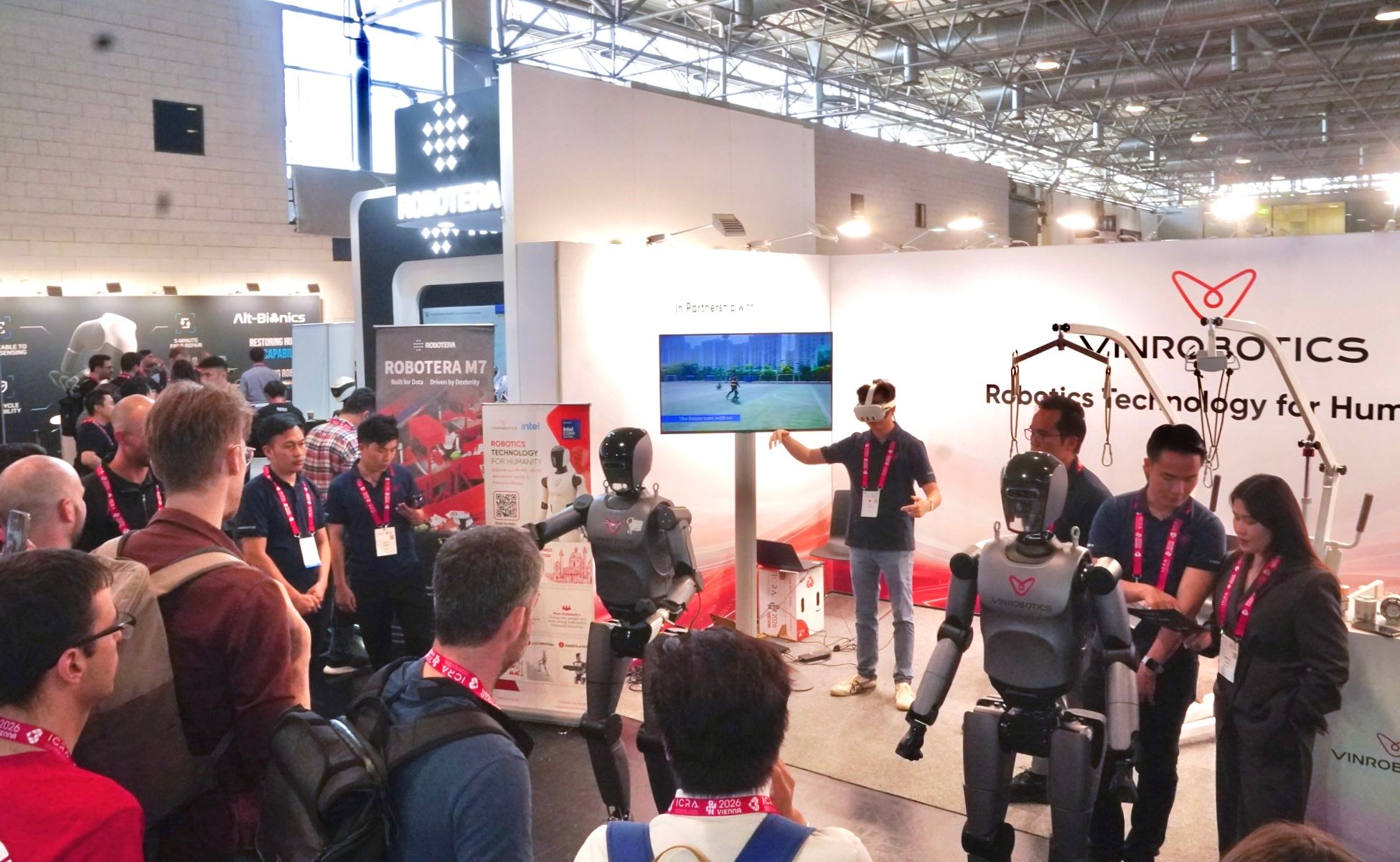
VinRobotics VR-H3 humanoid robot remote operation demo using motion capture for embodied AI control

That is still relevant for home buyers because home robots often arrive through adjacent markets first. Security robots become home patrol devices. Telepresence robots become eldercare assistants. Commercial guide robots become concierge robots in residential buildings. Industrial manipulation becomes laundry, dishwasher loading, or tidying only after the safety and reliability problems are smaller.

The useful question is not whether VR-H3 can clean a kitchen today. It is whether Vietnam is building the supply chain, engineering talent, and deployment practice that could make such robots cheaper and more practical later.

What Buyers Should Watch Next

If you are tracking Vietnam's humanoid robot push from a home-buyer perspective, ignore the stage choreography and watch for hard signals.

First, look for repeat deployments. One conference demo is interesting. A robot operating for weeks in a VinFast plant, Vinpearl property, hospital lobby, apartment complex, or logistics site is much more meaningful. The moment a humanoid has uptime numbers, task counts, intervention rates, and maintenance routines, it becomes easier to compare.

Second, watch for published safety boundaries. Home buyers need to know payload limits, speed limits, fall behavior, emergency stop behavior, child and pet constraints, battery replacement process, and what happens when connectivity drops. "Human-in-the-loop" is not a weakness if the company is transparent about when a person helps and what data is captured.

Third, watch the developer ecosystem. VinRobotics' open-source language could become a real differentiator if it results in useful simulation tools, behavior libraries, actuator documentation, hand-control references, or safety frameworks. If it remains a press-release phrase, it matters less.

Fourth, watch price and service model. A home robot at $4,900 with weak support is not automatically better than a $20,000 robot with remote assistance, parts availability, and a clear task roadmap. The winning model may combine hardware, subscription supervision, maintenance, and local service.

Where Vingroup Could Win

Vietnam's strongest humanoid opportunity may be mid-market deployment. The country is not trying to outspend every US frontier AI lab or outscale every Chinese hardware firm overnight. Its advantage could come from manufacturing discipline, regional cost structure, and Vingroup's ability to test robots across a broad portfolio of controlled environments.

That matters because home robotics is less about a single breakthrough than a thousand boring deployment lessons. Doors vary. Floors vary. Lighting varies. People interrupt. Objects move. Pets behave unpredictably. A company that can cheaply run robots in messy but semi-controlled environments may learn faster than a company that only runs polished demos.

VinMotion Motion 2 humanoid robot launch image for Vietnam physical AI deployment infrastructure

VinMotion's emphasis on operator guidance is also realistic. Full autonomy sells better in headlines, but supervised autonomy may arrive first. A robot that can do 80 percent of a task and ask for help during the remaining 20 percent can still be useful, especially in eldercare, concierge, property management, and security contexts.

For home buyers, that could mean the first "Vietnamese home robot" is not a standalone humanoid sold like a vacuum. It may be a managed service: a robot in a residential building, a care facility, a hotel-style apartment complex, or a high-end home with remote support behind it.

The Reasons To Stay Skeptical

There are also obvious reasons not to overread the news.

No Vingroup humanoid has a consumer price, warranty, home safety certification, or broad independent review base. The best public VR-H3 specs are promising, but they do not answer whether the robot can safely work around furniture, children, pets, cables, stairs, or ordinary household mess. Event demos are designed to show progress, not failure rates.

The market is also moving quickly. By the time a Vingroup robot is ready for home-adjacent deployment, Unitree, 1X, Figure, Tesla, Agility, Apptronik, UBTECH, and other players may have changed buyer expectations again. A new entrant needs more than national pride and a polished show floor.

There is also the issue of trust. Home robots handle cameras, microphones, maps, and sometimes physical access. Any company entering this market needs a privacy story, local support story, data-retention policy, and clear control model. That is true for Vingroup just as it is true for US, Chinese, Japanese, and European robot makers.

Bottom Line

Vingroup's humanoid push is not yet a buying recommendation. It is a market signal.

VinRobotics' VR-H3 gives Vietnam a credible public humanoid platform with meaningful hardware claims. VinMotion points toward the deployment infrastructure that home robots will probably need before they become truly autonomous. VinDynamics' Dyno adds a service-assistant angle that may be closer to early real-world use than a general-purpose household helper.

The honest buyer takeaway is simple: do not wait for a Vietnamese humanoid if you need a robot in your home today. Compare available machines in the ui44 robot database, check price and availability, and be clear about the job you need done. But if you are tracking where the next wave of home humanoids could come from, Vietnam now belongs on the map.

For now, Vingroup is a watchlist name. If its robots move from demos to measured deployments, it could become much more than that.

Related in the database

Use this article as a privacy verification workflow

Turn the article into a privacy verification pass grounded in the robots, manufacturers, and components it actually references.

Vietnam's Humanoid Robot Push: Home-Robot Watchlist already points you toward 11 linked robots, 10 manufacturers, and 6 countries inside the ui44 database. That matters because strong buyer guidance is easier to apply when you can move immediately from a claim or warning into concrete product pages, manufacturer directories, component explainers, and country-level context instead of treating the article as an isolated opinion piece. The fastest next step is to turn the article into a shortlist workflow: open the linked robot pages, verify which specs are actually published for those models, then compare the surrounding manufacturer and component context before you decide whether the underlying claim changes your buying plan.

For this topic, the useful discipline is to separate the editorial lesson from the catalog evidence. The article gives you the framing, but the robot pages tell you what each product actually ships with today: sensor stack, connectivity methods, listed price, release timing, category, and support-relevant compatibility notes. The manufacturer pages then show whether you are looking at a one-off launch, a broader lineup pattern, or a company that spans multiple categories. That layered workflow reduces the risk of buying on a single marketing phrase or a single support FAQ.

Use the robot pages to confirm which products actually expose cameras, microphones, Wi-Fi, or voice systems, then use the manufacturer pages to decide how much of the privacy question seems product-specific versus brand-wide. On this route cluster, VR-H3, Motion 2, and Dyno form the fastest reality check. If you want a quick working shortlist, open Compare VR-H3, Motion 2, and Dyno next, then keep this article open as the reasoning layer while you compare structured data side by side.

Practical Takeaway

Every robot, manufacturer, category, component, and country reference below resolves to a real ui44 page, keeping the follow-up path grounded in database records rather than generic advice.

Suggested next steps in ui44

  1. Open VR-H3 and note the listed sensors, connectivity methods, and voice stack before you interpret any policy claim.
  2. Cross-check the wider brand context on VinRobotics so you can see whether the privacy question touches one model or a broader lineup.
  3. Use the linked component pages to confirm how common the relevant sensors and connectivity layers are across the database.
  4. Keep a short note of which policy layers you checked, which device features are actually present on the robot page, and which items still depend on region- or app-level confirmation.
  5. Finish with Compare VR-H3, Motion 2, and Dyno so the policy reading sits next to structured product data.

Robot profiles worth opening next

Use the linked product pages as the evidence layer

The linked robot pages are where this article becomes operational. Instead of asking whether the headline is interesting, use the robot entries to inspect the actual mix of sensors, connectivity options, batteries, pricing, release timing, and stated capabilities attached to the products mentioned in the article. That is the easiest way to see whether the warning or opportunity described here affects one product family, a specific design pattern, or an entire buying lane.

VR-H3

VinRobotics · Humanoid · Prototype

Price TBA

VR-H3 is tracked on ui44 as a prototype humanoid robot from VinRobotics. The database currently records a listed price of Price TBA, a release date of 2026-06-03, Not officially disclosed battery life, Not officially disclosed charging time, and a published stack that includes Environmental perception system described by VinRobotics; detailed sensor suite not officially disclosed plus VR headset motion-capture teleoperation demonstrated; product connectivity not officially disclosed.

For privacy-focused reading, this page matters because it shows the concrete device surface behind the policy discussion. Use it to verify whether VR-H3 combines sensors and connectivity in a way that could change the in-home data footprint, and compare the listed capabilities such as Bipedal Humanoid Platform, Agile Mobility Demonstrations, and Human Interaction with any cloud, app, or voice layers.

Motion 2

VinMotion · Humanoid · Prototype

Price TBA

Motion 2 is tracked on ui44 as a prototype humanoid robot from VinMotion. The database currently records a listed price of Price TBA, a release date of 2026-01, Not officially disclosed battery life, Not officially disclosed charging time, and a published stack that includes Sensor suite not officially disclosed and Visual perception and obstacle awareness reported by independent sources plus Not officially disclosed.

For privacy-focused reading, this page matters because it shows the concrete device surface behind the policy discussion. Use it to verify whether Motion 2 combines sensors and connectivity in a way that could change the in-home data footprint, and compare the listed capabilities such as Bipedal Humanoid Locomotion, Five-Finger Object Manipulation, and Heavy-Load Lifting Demonstrations with any cloud, app, or voice layers.

Dyno

VinDynamics · Humanoid · Prototype

Price TBA

Dyno is tracked on ui44 as a prototype humanoid robot from VinDynamics. The database currently records a listed price of Price TBA, a release date of 2026-06-01, Not officially disclosed battery life, Not officially disclosed charging time, and a published stack that includes Responsive environmental sensing system described by VinDynamics; detailed sensor suite not officially disclosed plus Not officially disclosed.

For privacy-focused reading, this page matters because it shows the concrete device surface behind the policy discussion. Use it to verify whether Dyno combines sensors and connectivity in a way that could change the in-home data footprint, and compare the listed capabilities such as Bipedal Humanoid Prototype, Robotic Guide Demonstrations, and Multilingual Visitor Interaction with any cloud, app, or voice layers, including Multilingual narration and visitor question responses in guide pilot.

NEO

1X Technologies · Humanoid · Pre-order

$20,000

NEO is tracked on ui44 as a pre-order humanoid robot from 1X Technologies. The database currently records a listed price of $20,000, a release date of 2025-10-28, ~4 hours battery life, Not disclosed charging time, and a published stack that includes RGB Cameras, Depth Sensors, and Tactile Skin plus Wi-Fi and Bluetooth.

For privacy-focused reading, this page matters because it shows the concrete device surface behind the policy discussion. Use it to verify whether NEO combines sensors and connectivity in a way that could change the in-home data footprint, and compare the listed capabilities such as Household Chores, Tidying Up, and Safe Human Interaction with any cloud, app, or voice layers.

G1

Unitree · Humanoid · Available

$13,500

G1 is tracked on ui44 as a available humanoid robot from Unitree. The database currently records a listed price of $13,500, a release date of 2024-05-13, ~2 hours battery life, Not disclosed charging time, and a published stack that includes Depth Camera, 3D LiDAR, and 4 Microphone Array plus Wi-Fi 6 and Bluetooth 5.2.

For privacy-focused reading, this page matters because it shows the concrete device surface behind the policy discussion. Use it to verify whether G1 combines sensors and connectivity in a way that could change the in-home data footprint, and compare the listed capabilities such as Bipedal Walking, Object Manipulation, and Dexterous Hands (optional Dex3-1) with any cloud, app, or voice layers.

Manufacturer context behind the article

Check whether this is one product story or a broader company pattern

Manufacturer pages add the privacy context that individual product pages cannot show on their own. They help you check whether cameras, microphones, cloud accounts, app controls, and policy assumptions appear across a broader lineup or stay tied to one specific product story.

VinRobotics

ui44 currently tracks 1 robot from VinRobotics across 1 category. The company is grouped under Vietnam, and the current catalog footprint on ui44 includes VR-H3.

That wider brand context matters because privacy questions rarely stop at one FAQ page. A manufacturer route helps you see whether the article is centered on one premium model or on a company that has several relevant products and therefore more than one place where the same policy or app assumptions might matter. The category mix here currently points toward Humanoid as the most useful next route if you want to see whether this article reflects a wider pattern inside the brand.

VinMotion

ui44 currently tracks 1 robot from VinMotion across 1 category. The company is grouped under Vietnam, and the current catalog footprint on ui44 includes Motion 2.

That wider brand context matters because privacy questions rarely stop at one FAQ page. A manufacturer route helps you see whether the article is centered on one premium model or on a company that has several relevant products and therefore more than one place where the same policy or app assumptions might matter. The category mix here currently points toward Humanoid as the most useful next route if you want to see whether this article reflects a wider pattern inside the brand.

VinDynamics

ui44 currently tracks 1 robot from VinDynamics across 1 category. The company is grouped under Vietnam, and the current catalog footprint on ui44 includes Dyno.

That wider brand context matters because privacy questions rarely stop at one FAQ page. A manufacturer route helps you see whether the article is centered on one premium model or on a company that has several relevant products and therefore more than one place where the same policy or app assumptions might matter. The category mix here currently points toward Humanoid as the most useful next route if you want to see whether this article reflects a wider pattern inside the brand.

1X Technologies

ui44 currently tracks 2 robots from 1X Technologies across 1 category. The company is grouped under Norway, and the current catalog footprint on ui44 includes NEO, EVE.

That wider brand context matters because privacy questions rarely stop at one FAQ page. A manufacturer route helps you see whether the article is centered on one premium model or on a company that has several relevant products and therefore more than one place where the same policy or app assumptions might matter. The category mix here currently points toward Humanoid as the most useful next route if you want to see whether this article reflects a wider pattern inside the brand.

Broaden the scan without leaving the database

Categories, components, and countries add the wider context

Category framing

Category pages are useful when the article touches a buying pattern that shows up across brands. A category route helps you confirm whether the linked products sit in a narrow niche or whether the same question should be tested across a larger field of alternatives.

Humanoid

The Humanoid category page currently groups 127 tracked robots from 91 manufacturers. ui44 describes this lane as: Full-size bipedal humanoid robots built to work alongside people — from factory floors to household tasks. Compare the cutting edge of humanoid robotics.

That makes the category route a practical follow-up when you want to check whether the products linked in this article are typical for the lane or whether they sit at one edge of the market. Useful starting examples currently include NEO, EVE, Mornine M1.

Security & Patrol

The Security & Patrol category page currently groups 5 tracked robots from 5 manufacturers. ui44 describes this lane as: Autonomous surveillance and patrol robots that monitor homes, businesses, and perimeters — keeping watch without an operator on site.

That makes the category route a practical follow-up when you want to check whether the products linked in this article are typical for the lane or whether they sit at one edge of the market. Useful starting examples currently include Astro, Vision 60, K7 Autonomous Security Robot.

Country and ecosystem context

Country pages give extra context when support practices, launch sequencing, regulatory posture, or manufacturer mix matter. They are not a substitute for model-level verification, but they do help you see which ecosystems cluster together and which manufacturers sit in the same regional field when you broaden the search beyond the article headline.

Vietnam

The Vietnam route currently groups 3 tracked robots from 3 manufacturers in ui44. That gives you a useful regional lens when the article points toward support practices, launch sequencing, or brand clusters that may share similar ecosystem assumptions.

On the current route, manufacturers like VinDynamics, VinMotion, VinRobotics make the page a good way to broaden the scan without losing the regional context that often shapes availability, documentation style, and adjacent alternatives.

Norway

The Norway route currently groups 2 tracked robots from 1 manufacturers in ui44. That gives you a useful regional lens when the article points toward support practices, launch sequencing, or brand clusters that may share similar ecosystem assumptions.

On the current route, manufacturers like 1X Technologies make the page a good way to broaden the scan without losing the regional context that often shapes availability, documentation style, and adjacent alternatives.

China

The China route currently groups 188 tracked robots from 87 manufacturers in ui44. That gives you a useful regional lens when the article points toward support practices, launch sequencing, or brand clusters that may share similar ecosystem assumptions.

On the current route, manufacturers like Dreame, AGIBOT, Unitree Robotics make the page a good way to broaden the scan without losing the regional context that often shapes availability, documentation style, and adjacent alternatives.

Questions to answer before you move from reading to buying

A follow-up FAQ built from the entities already linked in this article

Frequently Asked Questions

Which page should I open first after reading “Vietnam's Humanoid Robot Push: Home-Robot Watchlist”?

Start with VR-H3. That gives you a concrete product anchor for the article’s main claim. From there, branch into the manufacturer and component pages so you can tell whether the article is describing one specific model, a repeated brand pattern, or a wider technology issue that affects multiple shortlist options.

How do the manufacturer pages change the buying decision?

VinRobotics help you zoom out from one article and one product. On ui44 they show lineup breadth, category spread, and the neighboring robots tied to the same company. That context is useful when you are deciding whether a risk belongs to a single model, whether it shows up across a brand’s portfolio, and whether you should keep looking at alternatives before committing.

When should I switch from reading to side-by-side comparison?

Move into Compare VR-H3, Motion 2, and Dyno as soon as you understand the article’s main warning or promise. The article explains what to watch for, but the compare view is where you can check whether price, status, battery life, connectivity, sensors, and category fit still make the robot a good match for your own home and budget.

Where to go next in ui44

Keep the research chain inside the database

If you want to keep going, these follow-on pages give you the cleanest expansion path from article to research session. Open the comparison route first if you are deciding between products today. Open the manufacturer, category, and component routes if you still need to understand the broader pattern behind the claim.

UT

Written by

ui44 Team

Published July 16, 2026

Share this article

Open a plain share link on X or Bluesky. No embeds, no widgets, no cookie baggage.

Explore the database

Go beyond the headlines

Compare specs, features, and prices across 100+ robots from leading manufacturers worldwide.