That may be true eventually. It is not true enough for buyers yet.
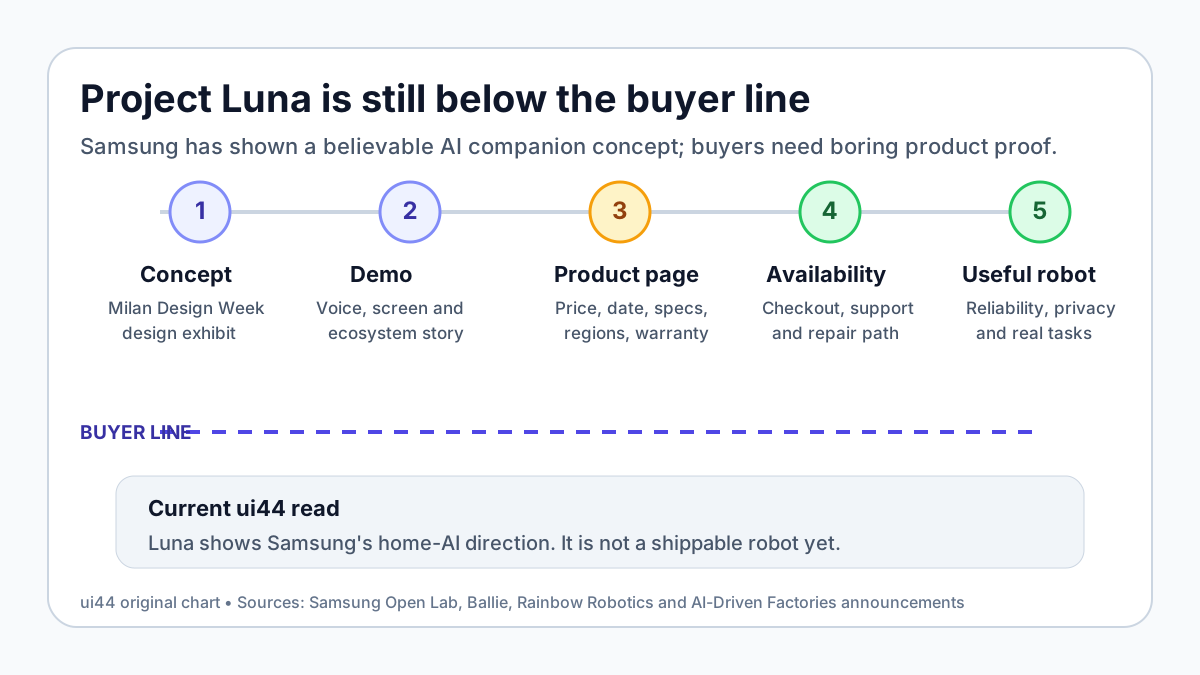
The useful way to read Project Luna is as a design signal, not a product launch. Samsung is showing a softer, more believable shape for home AI: a circular screen, a swiveling head, a friendly persona, and a role as the visible face of Samsung's wider connected-home ecosystem. But Samsung has not published the boring things that turn a concept into a home robot you can judge: price, release date, battery, sensors, privacy controls, repair plan, regions, or a checkout path.
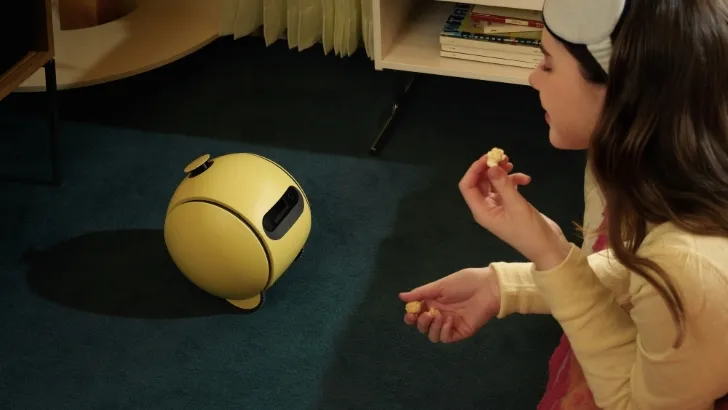
For ui44 readers, the short answer is this: Project Luna is interesting, but it is not yet Samsung's post-Ballie home robot. It is evidence that Samsung is still thinking about embodied AI in the home. It is not evidence that Samsung has solved consumer home robotics.
What is Samsung Project Luna?
Project Luna appeared around Samsung Design's Milan Design Week 2026 Open Lab exhibition. Samsung's official social posts framed the exhibit around "Design is an act of love" and described Project Luna beside the Galaxy Z TriFold as part of a split between Shared AI and Personal AI. In plain buyer language, that means Luna is meant to represent AI that lives in the room, not just in a phone.
Secondary reporting from The Verge and Android Authority describes Project Luna as a round screen with a swiveling head. Android Authority, citing Fast Company's details from the exhibit, says Samsung is presenting Luna as a "believable" concept rather than a promised retail product. The demo idea is not a humanoid helper or a rolling vacuum. It is a small AI companion that can sit on a desk or counter, make expressive sounds, and act as a conductor for nearby Samsung devices.
That last part matters. Luna is less "robot butler" and more "physical smart home interface." The persona can move from Luna to a TV, speaker, or projector, which fits Samsung's broader ecosystem strategy. It also keeps expectations lower than Ballie. A stationary or semi-stationary screen robot does not need to navigate stairs, map every room, dodge pets, recharge itself across the house, or carry a projector around.
It still needs more than charm. A home robot that listens, looks, coordinates appliances, and follows household context needs serious product answers before it earns trust.
Why Ballie changes the standard of proof
Samsung has already shown the world a charming home robot that looked close to shipping. That robot was Samsung Ballie.
Ballie is still one of the most recognizable home robot concepts from a major consumer electronics brand. Samsung's own 2024 materials described it as an AI home companion that could autonomously drive around the home, manage appliances, project workout videos or information onto walls and floors, play music, answer calls, and send video updates of pets or family members.
Then Samsung and Google Cloud raised expectations in April 2025. The official announcement said Gemini would come to Ballie and that Ballie would be "available to consumers this Summer." Samsung described natural conversation, visual understanding, audio and sensor inputs, personalized schedules, reminders, lighting control, greeting people at the door, and wellbeing suggestions.
That was a real launch signal. It was also the problem. In ui44's database, Ballie is still marked Development, with no pricing announced, release date TBD, and no official height, weight, battery life, charging time, or max speed. It has a strong feature story, but not the retail facts a buyer needs.
So Project Luna starts with a credibility discount. Samsung does not need to prove it can make a cute AI object. Samsung already proved that with Ballie. The harder question is whether it can turn the idea into something people can buy, repair, trust, and use after the launch video ends.
That is why Luna should not be treated as a Ballie replacement yet. A replacement needs at least one of these things:
- a product page with model details, regions, price, and launch timing
- a public spec sheet for cameras, microphones, radios, processing, and safety
- a privacy policy specific enough for always-present home AI
- SmartThings permission controls that users can understand
- warranty, repair, subscription, and app support terms
- third-party or real-home demos that show reliability, not just personality
Without those, Luna is a concept with a smart thesis. That is still useful, but it is a different category from a buyable home robot.
Samsung's robotics roadmap is factory-first, not home-first
The bigger Samsung robotics story in 2026 is not Luna. It is Samsung's industrial robotics strategy.
Samsung's official Rainbow Robotics announcement says the company moved to become Rainbow's largest shareholder, increasing its stake to 35% and bringing Rainbow under Samsung's consolidated financial statements. Samsung said the partnership would combine Samsung AI and software with Rainbow's robotics technology to accelerate intelligent advanced humanoids. It also said Samsung planned to use Rainbow's collaborative robots, dual-arm mobile manipulator, and autonomous mobile robots for manufacturing and logistics automation.
That is not a small detail. It says where Samsung expects robots to create value first: factories, logistics, line operations, and places where the work can be measured.
Samsung's own AI-Driven Factories 2030 announcement makes the same point. The company says it wants to transition all manufacturing operations into AI-driven factories by 2030, using digital twins, specialized AI agents, predictive maintenance, quality control, logistics coordination, humanoid robots, and task-specialized robots. The named robot categories are operating robots, logistics robots, assembly robots, and environmental safety robots.
Home and retail are still on the roadmap, but they are downstream. Korea Herald reported Samsung CFO Park Soon-cheol saying the company plans to first develop manufacturing robots and later expand into home and retail sectors. Korea JoongAng Daily reported the same factory-first direction from Samsung's April 30 conference-call roadmap: industrial humanoids and dual-arm robots first, home and retail once the technology matures.
That makes Project Luna easier to understand. Samsung may be exploring what a home AI companion should feel like, while its near-term robotics investment goes where reliability, labor economics, and enterprise deployment are easier to justify.
For buyers, that is not bad news. It is honest news. Many serious home robot companies are taking the same path: prove components, autonomy, safety, and support in constrained environments before claiming a messy living room is ready.
How Project Luna compares with real home robot evidence
A good way to judge Project Luna is to compare it with robots that already have at least some buyer evidence in ui44's database.
Robot
- ui44 status
- Development
- Price signal
- No pricing announced
- What it proves
- Samsung can design a compelling mobile AI companion concept with SmartThings and Gemini
- What it does not prove
- That Samsung can ship and support it as a consumer product
Robot
- ui44 status
- Active
- Price signal
- $1,599.99 by invitation
- What it proves
- A wheeled screen robot can patrol, video call, use Alexa, and integrate with Ring
- What it does not prove
- That general-purpose home robots have mass-market demand
Robot
- ui44 status
- Available
- Price signal
- $999
- What it proves
- A smaller companion robot can ship with Visual SLAM, 4K camera, app control, and AI voice features
- What it does not prove
- That a screen companion can manage a whole smart home safely
Robot
- ui44 status
- Available
- Price signal
- ¥577,500 plus monthly plan from ¥9,900
- What it proves
- People will pay for emotional companionship, sensors, touch response, and personality
- What it does not prove
- That companionship alone fits every household budget
Robot
- ui44 status
- Pre-order
- Price signal
- $20,000
- What it proves
- A home-focused humanoid can be sold with a clear preorder price and task ambition
- What it does not prove
- That humanoid chores are ready for normal buyers today
Robot
- ui44 status
- Development
- Price signal
- No price announced
- What it proves
- A major appliance brand can show a home robot with arms and ThinQ integration
- What it does not prove
- That demo-stage manipulation is retail-ready
| Robot | ui44 status | Price signal | What it proves | What it does not prove |
|---|---|---|---|---|
| Samsung Ballie | Development | No pricing announced | Samsung can design a compelling mobile AI companion concept with SmartThings and Gemini | That Samsung can ship and support it as a consumer product |
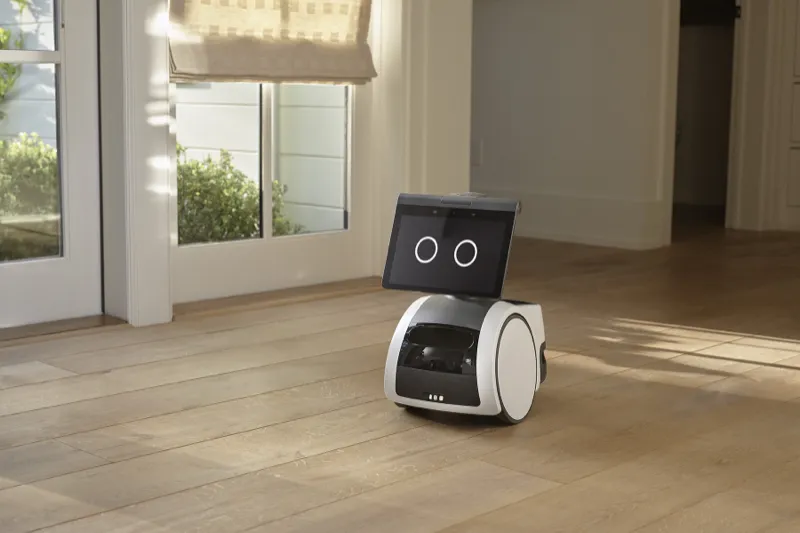
| Amazon Astro | Active | $1,599.99 by invitation | A wheeled screen robot can patrol, video call, use Alexa, and integrate with Ring | That general-purpose home robots have mass-market demand |
| Enabot EBO X | Available | $999 | A smaller companion robot can ship with Visual SLAM, 4K camera, app control, and AI voice features | That a screen companion can manage a whole smart home safely |
| LOVOT | Available | ¥577,500 plus monthly plan from ¥9,900 | People will pay for emotional companionship, sensors, touch response, and personality | That companionship alone fits every household budget |
| 1X NEO | Pre-order | $20,000 | A home-focused humanoid can be sold with a clear preorder price and task ambition | That humanoid chores are ready for normal buyers today |
| LG CLOiD | Development | No price announced | A major appliance brand can show a home robot with arms and ThinQ integration | That demo-stage manipulation is retail-ready |
Project Luna currently sits closest to Ballie and LG CLOiD: conceptually important, strategically revealing, but not yet a normal purchase decision. Amazon Astro, Enabot EBO X, and LOVOT are more useful buyer references because they show what changes when a company crosses into real availability. The claims become narrower. Prices appear. Support expectations appear. Buyers can compare trade-offs.
That is the gap Luna has to close. A polished AI persona is not enough. The moment Samsung says Luna will ship, the questions become concrete: How many microphones? Is there a physical camera shutter? Does it store room context? Can it control locks, ovens, or security modes? Does it need a subscription? What happens if Samsung changes the AI model later?
Those are not cynical questions. They are the questions every serious home robot has to answer.
Is Project Luna more practical than Ballie?
Possibly, yes.
A smaller tabletop companion may be easier to productize than Ballie because it can avoid several expensive robotics problems. If Luna mostly sits on a desk, kitchen counter, nightstand, or media console, Samsung does not need to solve whole-home navigation at Ballie's level. It does not need floor projection. It may not need a large battery. It can be closer to a smart speaker or smart display with expressive robotics layered on top.
That could make Luna more realistic than Ballie. The home already has many screened devices, and Samsung already sells TVs, phones, tablets, speakers, appliances, SmartThings hubs, and Galaxy wearables. A small shared-AI robot could be the friendly control point for that system.
The trade-off is that it becomes less robotically capable. A desk robot cannot check whether the back door is closed unless the smart-home system tells it. It cannot follow a child into another room unless it is mobile. It cannot pick up laundry, carry medicine, or inspect behind a sofa. The more stationary Luna is, the more it competes with smart displays and voice assistants rather than full-home robots.
That may be fine. In fact, it may be the most sensible version of Samsung's home robot strategy: make the first product emotionally approachable, physically simple, and deeply connected to SmartThings. But that would also mean buyers should judge it by smart-home trust and everyday usefulness, not by humanoid robot standards.
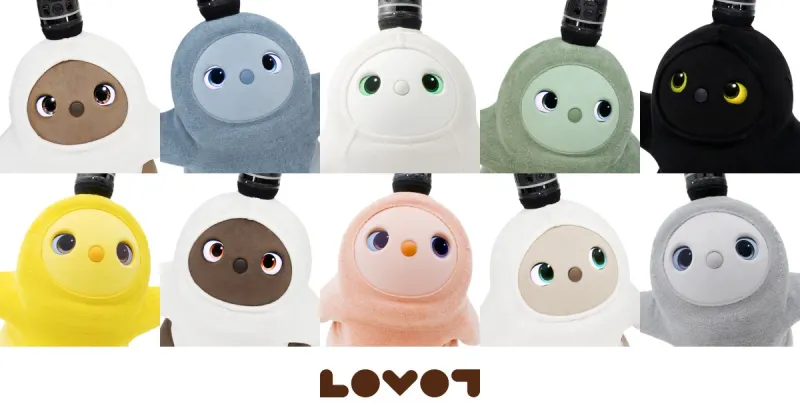
LOVOT is a useful comparison here. It is not trying to clean, cook, or patrol. It is an emotional companion with more than 50 sensors, touch response, person recognition, room mapping, a warm body, and OLED eyes. But LOVOT also makes the ownership model visible: ui44 tracks LOVOT 3.0 at ¥577,500, with a required monthly care plan from ¥9,900 per month in Japan.
That is what a real companion robot eventually has to expose. Not just cuteness. Cost. Service. Repairs. Regional availability. Privacy. Software longevity.
What buyers should watch next
If Samsung wants Project Luna to be taken seriously as a home robot, watch for boring evidence. The boring evidence is where most concept robots fail.
First, look for a public Samsung product page that names Luna directly and lists availability by region. A design exhibit is not enough. A sign-up form is still not enough. A real product page should say what is shipping, where, and when.
Second, look for price. If Luna is priced like a smart speaker, it is a very different product than if it is priced like Amazon Astro or LOVOT. The price will reveal whether Samsung sees it as an accessory, a premium companion, or a new category.
Third, look for sensors and privacy controls. A shared AI device in the home may need microphones, cameras, proximity sensors, face or person recognition, room context, and access to SmartThings routines. Buyers should know what is processed on-device, what goes to the cloud, what is stored, and how to delete it.
Fourth, look for the SmartThings permission model. A robot that can turn on lights is one thing. A robot that can unlock doors, manage security, change oven settings, or act on household routines is another. Useful home robots need permission boundaries that normal people can understand.
Fifth, look for repair and software commitments. Ballie showed why this matters. The pain is not just whether a robot launches. It is whether the company keeps supporting it after the novelty fades.
Finally, look for Samsung's own language. If Luna remains a "concept," treat it as a concept. If Samsung starts giving model numbers, release windows, developer documentation, privacy terms, accessories, and support pages, then the story changes.
Bottom line: Project Luna is a better question, not an answer
Project Luna is worth paying attention to because it shows Samsung learning from Ballie. It is smaller, less mechanically ambitious, more tied to the room, and better aligned with Samsung's strength in screens and connected devices. That could be a smarter route into home robotics than trying to make a rolling projector companion do everything at once.
But the buyer answer is still cautious. Project Luna is not yet a home robot you can compare in the normal way. It has no ui44 robot profile because Samsung has not given it the product evidence a profile needs. Until that changes, the best read is simple: Luna is Samsung's post-Ballie design thesis, while Samsung's real robotics roadmap still starts in factories.
If Samsung turns Luna into a priced, supported, privacy-explained SmartThings companion, it could become one of the most important non-humanoid home robot stories of 2026. Until then, keep it below the buyer line.
Related in the database
Use this article as a setup-friction workflow
Turn the article into a first-day setup pass grounded in the robots, manufacturers, and countries it actually references.
Samsung Project Luna: Home Robot or Concept? already points you toward 6 linked robots, 6 manufacturers, and 5 countries inside the ui44 database. Treat those links as a first-day setup trail: open the robot pages, check what is actually published about charging, battery life, control method, app or OTA support, and recovery, then use the surrounding manufacturer and country context to judge whether the article describes a low-friction product path or a still-specialist deployment.
For setup topics, the useful discipline is to separate a polished demo from the work required after the box arrives. The article gives you the narrative, but the robot pages show the operational clues: dimensions, weight, battery runtime, charging time, controller support, listed availability, and the capabilities that might need supervision. Manufacturer pages then reveal whether the same setup assumptions repeat across a wider lineup.
Use the robot pages to verify what happens between delivery and the first useful task: size, weight, battery, charger or dock path, controller, app, OTA support, and recovery cues. On this route cluster, Ballie, Astro, and EBO X form the fastest setup-friction reality check. If you want a quick working shortlist, open Compare Ballie, Astro, and EBO X next, then keep this article open while you compare first-day setup evidence side by side.
Practical Takeaway
The links below stay tied to the robots, manufacturers, and countries actually referenced by this setup article, so the checklist remains grounded in published ui44 records rather than generic humanoid advice.
Suggested next steps in ui44
- Open Ballie and check the concrete first-day fields: box contents, charger or dock path, battery life, controller, app, OTA support, and recovery options.
- Use Samsung to see whether the company’s broader lineup looks appliance-like, developer-first, or still closer to a pilot deployment.
- Run Compare Ballie, Astro, and EBO X with the article open and compare battery, size, weight, price path, status, and support cues side by side.
- Write down the first realistic task each robot can plausibly attempt on day one, then separate low-friction setup signals from impressive but still lab-style demos.
Robot profiles worth opening next
Use the linked product pages as the evidence layer
The linked robot pages are where this setup article becomes operational. Use the robot entries to inspect the actual mix of size, weight, battery runtime, charging path, control method, pricing, availability, and stated capabilities attached to the products mentioned in the article. That is the easiest way to see whether the first useful task looks appliance-like, developer-led, or still dependent on supervised experimentation.
Ballie is tracked on ui44 as a development companions robot from Samsung. The database currently records a listed price of Price TBA, a release date of TBD, Not officially disclosed battery life, Not officially disclosed charging time, and a published stack that includes Camera, Spatial Sensors, and Environmental Sensors plus Wi-Fi and SmartThings.
For setup-friction reading, this page matters because it shows the physical and support burden behind the demo. Use it to verify whether Ballie has a credible day-one path across charging, control, recovery, battery limits, and listed capabilities such as Autonomous Home Navigation, Built-in Projector (Wall & Floor), and Smart Home Control via SmartThings, with voice support noted as Bixby.
Astro is tracked on ui44 as a active security & patrol robot from Amazon. The database currently records a listed price of $1,599, a release date of 2021, Not officially disclosed battery life, Not officially disclosed charging time, and a published stack that includes 5MP Bezel Camera, 1080p Periscope Camera (132° FOV), and Infrared Vision plus Wi-Fi 802.11ac and Bluetooth.
For setup-friction reading, this page matters because it shows the physical and support burden behind the demo. Use it to verify whether Astro has a credible day-one path across charging, control, recovery, battery limits, and listed capabilities such as Autonomous Home Patrol, Visual ID (face recognition), and Remote Home Monitoring, with voice support noted as Amazon Alexa.
EBO X is tracked on ui44 as a available companions robot from Enabot. The database currently records a listed price of $999, a release date of 2023-05, 2-3 hours battery life, 2 hours charging time, and a published stack that includes 4K one-axis stabilized camera, 8MP ultra-low-light sensor, and 106° camera FOV plus 2.4GHz Wi-Fi and 5GHz Wi-Fi.
For setup-friction reading, this page matters because it shows the physical and support burden behind the demo. Use it to verify whether EBO X has a credible day-one path across charging, control, recovery, battery limits, and listed capabilities such as Autonomous home patrol, Two-way video communication, and AI voice interactions, with voice support noted as Amazon Alexa.
LOVOT is tracked on ui44 as a available companions robot from GROOVE X. The database currently records a listed price of ¥577,500, a release date of 2019, 30-45 minutes active, then returns to nest battery life, 15-30 minutes (on charging nest) charging time, and a published stack that includes Horn Top Camera (half-sphere), Horn Front Camera, and Depth Camera plus Wi-Fi and Bluetooth.
For setup-friction reading, this page matters because it shows the physical and support burden behind the demo. Use it to verify whether LOVOT has a credible day-one path across charging, control, recovery, battery limits, and listed capabilities such as Emotional Companionship, Person Recognition, and Touch Response (full body sensors).
NEO
1X Technologies · Humanoid · Pre-order
NEO is tracked on ui44 as a pre-order humanoid robot from 1X Technologies. The database currently records a listed price of $20,000, a release date of 2025-10-28, ~4 hours battery life, Not disclosed charging time, and a published stack that includes RGB Cameras, Depth Sensors, and Tactile Skin plus Wi-Fi and Bluetooth.
For setup-friction reading, this page matters because it shows the physical and support burden behind the demo. Use it to verify whether NEO has a credible day-one path across charging, control, recovery, battery limits, and listed capabilities such as Household Chores, Tidying Up, and Safe Human Interaction.
Manufacturer context behind the article
Check whether this is one product story or a broader company pattern
Manufacturer pages add the setup context that individual product pages cannot show on their own. They help you check whether a brand repeats the same controller, battery, update, support, and availability patterns across multiple robots, or whether the article is really describing one early product path. That matters for humanoids because first-day friction usually comes from the surrounding ecosystem as much as from the robot itself.
Samsung
ui44 currently tracks 2 robots from Samsung across 2 categorys. The company is grouped under South Korea, and the current catalog footprint on ui44 includes Ballie, Bespoke AI Jet Bot Steam Ultra.
That wider brand context matters because setup friction is rarely just a box problem. A manufacturer route helps you see whether the company has repeated controller, battery, support, and update patterns across its lineup, or whether the article is really about one early product story. The category mix here currently points toward Companions, Cleaning as the most useful next route if you want to see whether this article reflects a wider pattern inside the brand.
Amazon
ui44 currently tracks 1 robot from Amazon across 1 category. The company is grouped under USA, and the current catalog footprint on ui44 includes Astro.
That wider brand context matters because setup friction is rarely just a box problem. A manufacturer route helps you see whether the company has repeated controller, battery, support, and update patterns across its lineup, or whether the article is really about one early product story. The category mix here currently points toward Security & Patrol as the most useful next route if you want to see whether this article reflects a wider pattern inside the brand.
Enabot
ui44 currently tracks 3 robots from Enabot across 1 category. The company is grouped under China, and the current catalog footprint on ui44 includes EBO X, EBO Max FamilyBot, EBO Mini Sport FamilyBot.
That wider brand context matters because setup friction is rarely just a box problem. A manufacturer route helps you see whether the company has repeated controller, battery, support, and update patterns across its lineup, or whether the article is really about one early product story. The category mix here currently points toward Companions as the most useful next route if you want to see whether this article reflects a wider pattern inside the brand.
GROOVE X
ui44 currently tracks 1 robot from GROOVE X across 1 category. The company is grouped under Japan, and the current catalog footprint on ui44 includes LOVOT.
That wider brand context matters because setup friction is rarely just a box problem. A manufacturer route helps you see whether the company has repeated controller, battery, support, and update patterns across its lineup, or whether the article is really about one early product story. The category mix here currently points toward Companions as the most useful next route if you want to see whether this article reflects a wider pattern inside the brand.
Broaden the scan without leaving the database
Categories, components, and countries add the wider context
Category framing
Category pages are useful when the article touches a buying pattern that shows up across brands. A category route helps you confirm whether the linked products sit in a narrow niche or whether the same question should be tested across a larger field of alternatives.
Companions
The Companions category page currently groups 53 tracked robots from 48 manufacturers. ui44 describes this lane as: Social robots, robot pets, and elderly-care companions designed for emotional connection and everyday support at home.
That makes the category route a practical follow-up when you want to check whether the products linked in this article are typical for the lane or whether they sit at one edge of the market. Useful starting examples currently include PARO, Abi, Next-Generation Companion Robot.
Security & Patrol
The Security & Patrol category page currently groups 5 tracked robots from 5 manufacturers. ui44 describes this lane as: Autonomous surveillance and patrol robots that monitor homes, businesses, and perimeters — keeping watch without an operator on site.
That makes the category route a practical follow-up when you want to check whether the products linked in this article are typical for the lane or whether they sit at one edge of the market. Useful starting examples currently include Astro, Vision 60, K7 Autonomous Security Robot.
Country and ecosystem context
Country pages give extra context when support practices, launch sequencing, regulatory posture, or manufacturer mix matter. They are not a substitute for model-level verification, but they do help you see which ecosystems cluster together and which manufacturers sit in the same regional field when you broaden the search beyond the article headline.
South Korea
The South Korea route currently groups 9 tracked robots from 7 manufacturers in ui44. That gives you a useful regional lens when the article points toward support practices, launch sequencing, or brand clusters that may share similar ecosystem assumptions.
On the current route, manufacturers like ROBOTIS, Samsung, GenON make the page a good way to broaden the scan without losing the regional context that often shapes availability, documentation style, and adjacent alternatives.
USA
The USA route currently groups 89 tracked robots from 69 manufacturers in ui44. That gives you a useful regional lens when the article points toward support practices, launch sequencing, or brand clusters that may share similar ecosystem assumptions.
On the current route, manufacturers like Faraday Future, iRobot, Boston Dynamics make the page a good way to broaden the scan without losing the regional context that often shapes availability, documentation style, and adjacent alternatives.
China
The China route currently groups 189 tracked robots from 87 manufacturers in ui44. That gives you a useful regional lens when the article points toward support practices, launch sequencing, or brand clusters that may share similar ecosystem assumptions.
On the current route, manufacturers like AGIBOT, Dreame, Unitree Robotics make the page a good way to broaden the scan without losing the regional context that often shapes availability, documentation style, and adjacent alternatives.
Questions to answer before you move from reading to buying
A follow-up FAQ built from the entities already linked in this article
Frequently Asked Questions
Which page should I open first after reading “Samsung Project Luna: Home Robot or Concept?”?
Start with Ballie. That gives you a concrete product anchor for the article’s main claim. From there, branch into the manufacturer and component pages so you can tell whether the article is describing one specific model, a repeated brand pattern, or a wider technology issue that affects multiple shortlist options.
How do the manufacturer pages change the buying decision?
Samsung help you zoom out from one article and one product. On ui44 they show lineup breadth, category spread, and the neighboring robots tied to the same company. That context is useful when you are deciding whether a risk belongs to a single model, whether it shows up across a brand’s portfolio, and whether you should keep looking at alternatives before committing.
When should I switch from reading to side-by-side comparison?
Move into Compare Ballie, Astro, and EBO X as soon as you understand the article’s main warning or promise. The article explains what to watch for, but the compare view is where you can check whether price, status, battery life, connectivity, sensors, and category fit still make the robot a good match for your own home and budget.
Where to go next in ui44
Keep the research chain inside the database
If you want to keep going, these follow-on pages give you the cleanest expansion path from article to research session. Open the comparison route first if you are deciding between products today. Open the manufacturer, category, and component routes if you still need to understand the broader pattern behind the claim.
Written by
ui44 Team
Published May 16, 2026
Share this article
Open a plain share link on X or Bluesky. No embeds, no widgets, no cookie baggage.