The useful way to read Realbotix is not "cheap versus expensive." It is social realism versus physical usefulness. Realbotix is selling expressive, customizable AI companions and customer-facing characters. It is not yet selling a general-purpose household worker that folds laundry, loads a dishwasher, or carries groceries.

That distinction matters because the starting prices overlap with serious home robot platforms. 1X NEO is listed in the ui44 database at $20,000. Hello Robot Stretch 4 is $29,950. Unitree G1 starts at $13,500. A Realbotix robot may look more human than all of them, but the buyer question is different: do you want a realistic social presence, or a machine that can manipulate the physical world?
What does Realbotix actually sell?
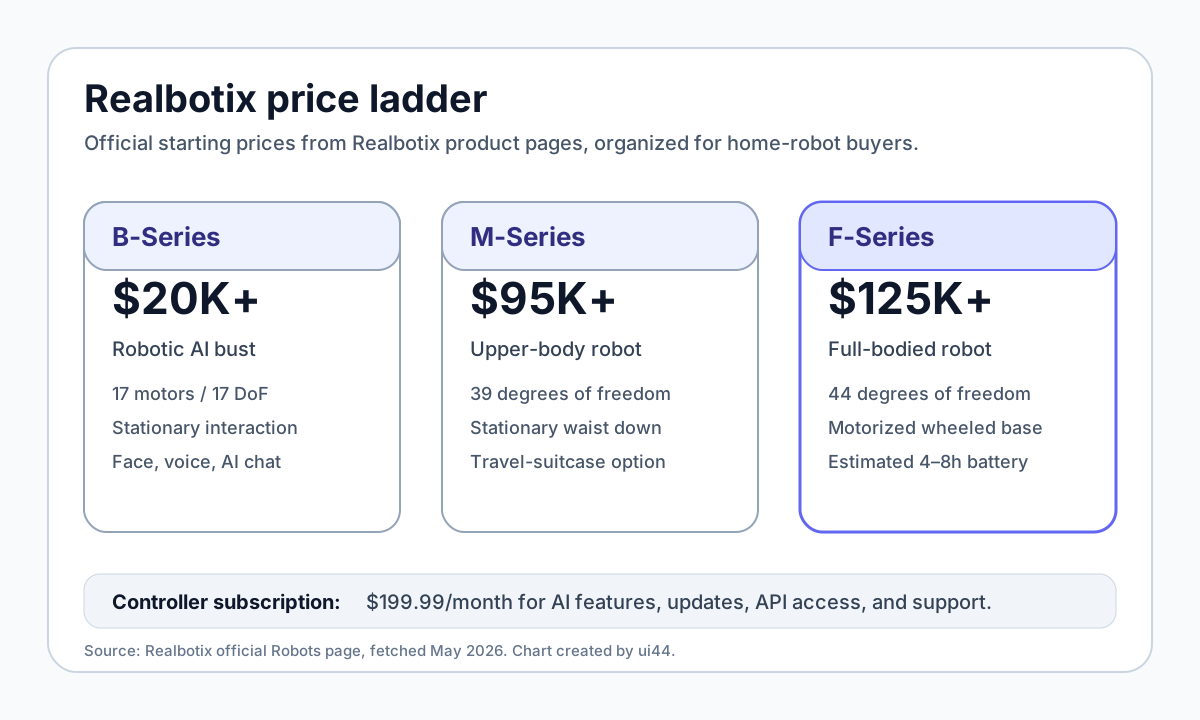
Realbotix's official robot lineup has three public starting tiers.
Realbotix tier
B-Series
- Official starting price
- $20,000+
- What it is
- Robotic AI-enabled bust
- Buyer read
- Face, voice, expression, and AI conversation without a mobile body
Realbotix tier
M-Series
- Official starting price
- $95,000+
- What it is
- Modular upper-body robot
- Buyer read
- Humanlike torso and upper-body movement, stationary from the waist down
Realbotix tier
F-Series
- Official starting price
- $125,000+
- What it is
- Full-bodied robot
- Buyer read
- Full-body presentation with motorized wheeled base and built-in battery
| Realbotix tier | Official starting price | What it is | Buyer read |
|---|---|---|---|
| B-Series | $20,000+ | Robotic AI-enabled bust | Face, voice, expression, and AI conversation without a mobile body |
| M-Series | $95,000+ | Modular upper-body robot | Humanlike torso and upper-body movement, stationary from the waist down |
| F-Series | $125,000+ | Full-bodied robot | Full-body presentation with motorized wheeled base and built-in battery |
The company also lists a Realbotix Robot Controller subscription at $199.99/month. Realbotix describes it as access to AI features, customization, updates, API language-model integration, and ongoing maintenance. That subscription is important because the robot is not just a one-time hardware purchase. It is a software and character platform.
The official product copy emphasizes customizable faces, interchangeable body panels, facial expression, face and voice recognition, AI-agnostic integration, and companionship-focused AI. Realbotix says the robots can connect to various AI platforms, including its proprietary AI model, and its product site says buyers can work with the company to configure a robot for delivery in as soon as 12 weeks. Treat that as a custom-order lead-time claim, not a promise that a mass-market robot ships like a vacuum.
In ui44, the closest indexed product is Realbotix David, listed as an Available companion robot with a $95,000 starting price for the M-Series configuration. The database entry tracks Realbotix's modular platform: swappable face plates, 14+ actuated facial points, eye-tracking vision, face recognition, emotion interpretation, multilingual conversation, and AI integration with models such as Gemini and ChatGPT. It also marks payload as "not applicable" because this is not a manipulation-focused home robot.
That one field explains the whole article. The headline price buys realism, expression, and interaction. It does not buy a two-handed home helper.
What do the $20K, $95K, and $125K tiers include?
The tiers are best understood as increasing embodiment, not increasing chore ability.
B-Series: a $20K AI bust
The B-Series is Realbotix's entry point. It is a robotic bust with 17 motors and 17 degrees of freedom. The value is the head and face: expressions, voice interaction, AI personality, and visual presence. For a home buyer, that means it is closer to a luxury AI character display than a household robot.
That is not an insult. A stationary companion robot can still be useful if the job is conversation, greeting, brand performance, telepresence-like presence, or loneliness reduction. But if your mental model is "humanoid that helps around the house," the B-Series is the wrong shape. It has no mobile base, no arms for chores, and no payload spec.
M-Series: a $95K upper-body humanoid
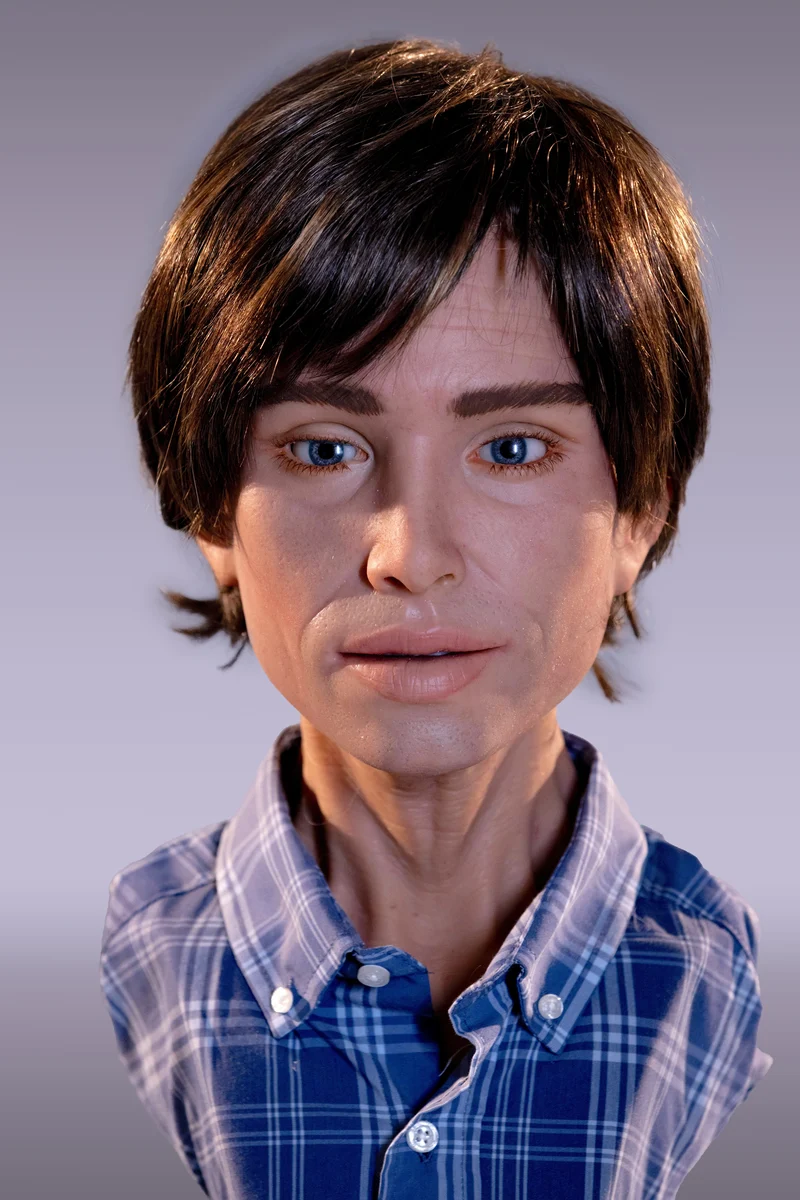
The M-Series is where Realbotix begins to overlap with the ui44 definition of a humanoid companion. The official page describes a modular robot that is stationary from the waist down but has full upper-body robotic capabilities, 39 degrees of freedom, and male, female, or fully customized configurations. Realbotix also says the M-Series can be packaged in a suitcase for travel purposes.
That travel note is interesting for events, hospitality, demos, and brand use. It is less important for normal home ownership. A $95K stationary upper-body robot may be impressive in a lobby or studio, but it still will not roam the house, pick up a dropped towel, or fetch a glass of water by itself.
F-Series: a $125K full-bodied robot
The F-Series is Realbotix's highest tier: a full-bodied humanoid with a motorized wheeled base, 44 degrees of freedom, plug-in operation or built-in battery, and an estimated 4-8 hours of battery life. This is the closest the line gets to the popular idea of a home humanoid.
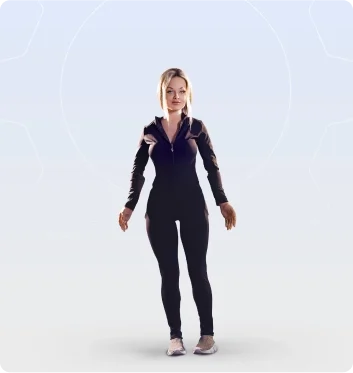
But the word "full-bodied" can be misleading. Realbotix describes a motorized wheeled base, not bipedal walking. The public specs focus on expression, presence, interaction, and customization rather than object manipulation. If a buyer wants a humanlike social robot that can move around a controlled space, the F-Series is the relevant tier. If the buyer wants autonomous home chores, the evidence is not there yet.
How does Realbotix compare with other home robots?
Realbotix competes most directly with companion and social robots, but its price sits near humanoid and mobile-manipulator territory. That creates awkward but useful comparisons.
Robot in ui44
- Price/status
- $95,000+, Available
- Physical role
- Realistic humanoid companion platform
- What the buyer is really paying for
- Humanlike face, expression, personality, customization, social presence
Robot in ui44
- Price/status
- $20,000, Pre-order
- Physical role
- Home-focused humanoid
- What the buyer is really paying for
- Soft body, household chore ambition, 167 cm height, 30 kg weight, ~4h runtime
Robot in ui44
- Price/status
- $13,500+, Available
- Physical role
- Developer humanoid
- What the buyer is really paying for
- Compact bipedal R&D platform, 132 cm, 35 kg, optional hands, ~2h runtime
Robot in ui44
- Price/status
- $29,950, Available
- Physical role
- Wheeled mobile manipulator
- What the buyer is really paying for
- Open ROS 2/Python platform, 8h light-load runtime, 2.5 kg extended arm payload
Robot in ui44
- Price/status
- ¥577,500 plus plan, Available
- Physical role
- Emotional companion
- What the buyer is really paying for
- Warm body, touch response, room/person sensing, personality development
Robot in ui44
- Price/status
- Lease initiation plus subscription, Available
- Physical role
- Older-adult companion
- What the buyer is really paying for
- Proactive conversation, wellness prompts, video calling, caregiver features
Robot in ui44
- Price/status
- $699 plus care plan, Available
- Physical role
- AI pet companion
- What the buyer is really paying for
- Soft character robot, on-device LLM, household recognition, emotional interaction
| Robot in ui44 | Price/status | Physical role | What the buyer is really paying for |
|---|---|---|---|
| Realbotix David | $95,000+, Available | Realistic humanoid companion platform | Humanlike face, expression, personality, customization, social presence |
| 1X NEO | $20,000, Pre-order | Home-focused humanoid | Soft body, household chore ambition, 167 cm height, 30 kg weight, ~4h runtime |
| Unitree G1 | $13,500+, Available | Developer humanoid | Compact bipedal R&D platform, 132 cm, 35 kg, optional hands, ~2h runtime |
| Hello Robot Stretch 4 | $29,950, Available | Wheeled mobile manipulator | Open ROS 2/Python platform, 8h light-load runtime, 2.5 kg extended arm payload |
| LOVOT | ¥577,500 plus plan, Available | Emotional companion | Warm body, touch response, room/person sensing, personality development |
| ElliQ 3 | Lease initiation plus subscription, Available | Older-adult companion | Proactive conversation, wellness prompts, video calling, caregiver features |
| SwitchBot KATA Friends | $699 plus care plan, Available | AI pet companion | Soft character robot, on-device LLM, household recognition, emotional interaction |
The table shows why Realbotix is hard to summarize. It is far more physically humanlike than ElliQ 3, Miko 3, or SwitchBot KATA Friends. It is also far less clearly useful for chores than Hello Robot Stretch 4 or the home-focused promise of 1X NEO.
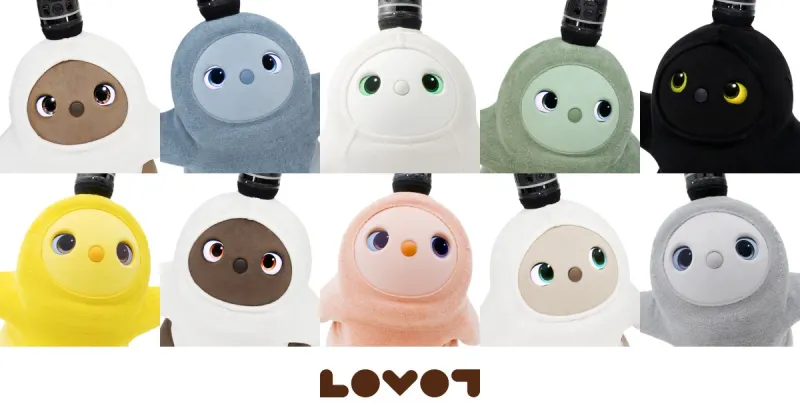
A useful buyer shortcut is this: Realbotix is expensive because it is trying to make an AI character physically believable. Stretch 4 is expensive because it is a mobile manipulation platform. NEO is expensive because it is a home humanoid promise. LOVOT is expensive for a small robot because it is an emotionally tuned consumer companion with more than 50 sensors, auto-charging behavior, and a monthly care plan. Those are different products wearing the same broad label: "home robot."
What can a Realbotix humanoid do at home?
The safest answer is: conversation, presence, recognition, expression, and customized character interaction.
Based on Realbotix's own materials and ui44's database entry, the strengths are:
- Humanlike facial expression. Realbotix highlights 14+ movable facial points, swappable faces, and lifelike skin/appearance work.
- Voice and face recognition. The product site emphasizes microphones, micro-cameras embedded in the eyes, recognition, and memory-like continuity.
- AI personality. The controller plan and product copy point toward custom personalities, language-model integration, and ongoing AI updates.
- Presentation. Hospitality, customer engagement, education, medical assistance, event demos, and brand communication are explicitly named use cases.
- Customization. The company sells custom faces, body panels, voices, and male/female/fully customized configurations.
That is a real capability set. It is just not the same capability set as a robot with a useful arm.
The practical home use cases are narrow but plausible: a premium companion in a large home, a telepresence-like social character, an accessibility/social presence experiment, a luxury entertainment object, or a business-facing robot that also lives in a private residence. For most buyers, though, a Realbotix robot is not a rational first robot. It is a custom humanoid character purchase.
The missing pieces are just as important:
- no published household chore benchmark;
- no public payload spec for home objects;
- no dishwasher, laundry, cooking, or cleaning capability claim;
- no clear consumer safety certification story in the public product page;
- no simple retail checkout flow;
- unclear height and weight in the public ui44 data for David;
- ongoing software/subscription cost after purchase.
That does not mean the product is bad. It means a buyer should not mistake visual realism for home autonomy.
What should buyers ask before spending six figures?
If you are seriously considering Realbotix, ask questions that separate a spectacular demo from a livable robot.
1. Which tier is the quote actually for? A $20K B-Series bust, $95K M-Series upper-body robot, and $125K F-Series mobile robot are different machines. Ask for a written configuration: body type, degrees of freedom, base, battery, transport case, sensors, face, voice, clothing, software, support, and delivery window.
2. What does the $199.99/month controller subscription include? The official page ties the subscription to AI features, updates, API integration, and maintenance. Ask what stops working if the plan is canceled, whether local conversation remains available, and whether API usage has additional costs.
3. Where are face, voice, and conversation data stored? Realbotix's feature set includes face recognition, voice recognition, emotion interpretation, and memory-like continuity. Those are exactly the features that make a robot feel personal. They are also the features that deserve clear privacy answers: storage location, deletion, export, employee access, cloud providers, biometric data handling, and guest controls.
4. Can it do anything physical without remote control? The F-Series has a motorized wheeled base, but buyer value depends on autonomy. Ask what navigation is autonomous, what is remote controlled, what spaces are supported, how it handles stairs or thresholds, and what safety stop behavior exists around pets, children, and glass furniture.
5. What happens when the model or personality changes? A robot sold as a companion is partly a relationship product. Ask whether personality settings are portable, backed up, editable, and recoverable after hardware repair or software updates.
6. Who services it? Custom humanoid robots are not disposable gadgets. Ask about on-site support, shipping crates, parts availability, battery service, skin/face replacement, actuator replacement, and warranty coverage.
Who is a Realbotix robot for?
Realbotix makes the most sense for four groups.
First, businesses and venues that want a memorable humanlike greeter, performer, host, or brand ambassador. In that setting, the robot's visual realism is the point.
Second, researchers and developers interested in human-robot interaction, AI characters, face/voice continuity, and social presence. Realbotix is not an open low-cost platform like Unitree G1, but it is a distinctive embodiment layer for conversational AI.
Third, luxury buyers who specifically want a customized humanoid companion and understand that they are buying social presence, not domestic labor.
Fourth, robotics observers tracking where the market is splitting. One path leads to chore robots with arms, payload specs, safety cases, and service networks. Another path leads to emotionally expressive characters that make AI feel embodied. Realbotix is clearly on the second path today.
For everyone else, the better move is to define the job before looking at the face. If the job is conversation, an ElliQ 3, LOVOT, Miko 3, Sony aibo, or KATA Friends may be more rational. If the job is manipulation, compare Stretch 4, 1X NEO, and Unitree G1 in the ui44 robot database and comparison tool.
The bottom line: Realbotix is not a cheap way into humanoids. It is a premium way into humanlike AI companionship. The $20K-to-$125K range buys embodiment, customization, expression, and presence. It does not yet buy the boring physical competence that will make home robots truly useful.
Related in the database
Use this article as a privacy verification workflow
Turn the article into a privacy verification pass grounded in the robots, manufacturers, and components it actually references.
Realbotix Robot Price Guide: $20K to $125K already points you toward 9 linked robots, 9 manufacturers, and 6 countries inside the ui44 database. That matters because strong buyer guidance is easier to apply when you can move immediately from a claim or warning into concrete product pages, manufacturer directories, component explainers, and country-level context instead of treating the article as an isolated opinion piece. The fastest next step is to turn the article into a shortlist workflow: open the linked robot pages, verify which specs are actually published for those models, then compare the surrounding manufacturer and component context before you decide whether the underlying claim changes your buying plan.
For this topic, the useful discipline is to separate the editorial lesson from the catalog evidence. The article gives you the framing, but the robot pages tell you what each product actually ships with today: sensor stack, connectivity methods, listed price, release timing, category, and support-relevant compatibility notes. The manufacturer pages then show whether you are looking at a one-off launch, a broader lineup pattern, or a company that spans multiple categories. That layered workflow reduces the risk of buying on a single marketing phrase or a single support FAQ.
Use the robot pages to confirm which products actually expose cameras, microphones, Wi-Fi, or voice systems, then use the manufacturer pages to decide how much of the privacy question seems product-specific versus brand-wide. On this route cluster, NEO, Stretch 4, and G1 form the fastest reality check. If you want a quick working shortlist, open Compare NEO, Stretch 4, and G1 next, then keep this article open as the reasoning layer while you compare structured data side by side.
Practical Takeaway
Every robot, manufacturer, category, component, and country reference below resolves to a real ui44 page, keeping the follow-up path grounded in database records rather than generic advice.
Suggested next steps in ui44
- Open NEO and note the listed sensors, connectivity methods, and voice stack before you interpret any policy claim.
- Cross-check the wider brand context on 1X Technologies so you can see whether the privacy question touches one model or a broader lineup.
- Use the linked component pages to confirm how common the relevant sensors and connectivity layers are across the database.
- Keep a short note of which policy layers you checked, which device features are actually present on the robot page, and which items still depend on region- or app-level confirmation.
- Finish with Compare NEO, Stretch 4, and G1 so the policy reading sits next to structured product data.
Robot profiles worth opening next
Use the linked product pages as the evidence layer
The linked robot pages are where this article becomes operational. Instead of asking whether the headline is interesting, use the robot entries to inspect the actual mix of sensors, connectivity options, batteries, pricing, release timing, and stated capabilities attached to the products mentioned in the article. That is the easiest way to see whether the warning or opportunity described here affects one product family, a specific design pattern, or an entire buying lane.
NEO
1X Technologies · Humanoid · Pre-order
NEO is tracked on ui44 as a pre-order humanoid robot from 1X Technologies. The database currently records a listed price of $20,000, a release date of 2025-10-28, ~4 hours battery life, Not disclosed charging time, and a published stack that includes RGB Cameras, Depth Sensors, and Tactile Skin plus Wi-Fi and Bluetooth.
For privacy-focused reading, this page matters because it shows the concrete device surface behind the policy discussion. Use it to verify whether NEO combines sensors and connectivity in a way that could change the in-home data footprint, and compare the listed capabilities such as Household Chores, Tidying Up, and Safe Human Interaction with any cloud, app, or voice layers.
Stretch 4
Hello Robot · Home Assistants · Available
Stretch 4 is tracked on ui44 as a available home assistants robot from Hello Robot. The database currently records a listed price of $29,950, a release date of 2026-05-12, 8 hours (light CPU load) battery life, Not officially disclosed charging time, and a published stack that includes Wide-FOV depth sensing, High-resolution RGB cameras, and Calibrated RGB + depth perception plus its listed connectivity stack.
For privacy-focused reading, this page matters because it shows the concrete device surface behind the policy discussion. Use it to verify whether Stretch 4 combines sensors and connectivity in a way that could change the in-home data footprint, and compare the listed capabilities such as Mobile Manipulation, Omnidirectional Indoor Mobility, and Autonomous Mapping and Navigation with any cloud, app, or voice layers.
G1 is tracked on ui44 as a available humanoid robot from Unitree. The database currently records a listed price of $13,500, a release date of 2024-05-13, ~2 hours battery life, Not disclosed charging time, and a published stack that includes Depth Camera, 3D LiDAR, and 4 Microphone Array plus Wi-Fi 6 and Bluetooth 5.2.
For privacy-focused reading, this page matters because it shows the concrete device surface behind the policy discussion. Use it to verify whether G1 combines sensors and connectivity in a way that could change the in-home data footprint, and compare the listed capabilities such as Bipedal Walking, Object Manipulation, and Dexterous Hands (optional Dex3-1) with any cloud, app, or voice layers.
David is tracked on ui44 as a available companions robot from Realbotix. The database currently records a listed price of $95,000, a release date of 2026-01, F-Series product page lists an estimated 4–8 hours from the built-in battery; Realbotix's April 2026 delivery update separately says robots can have up to 10 hours and can operate continuously when plugged in battery life, Not disclosed charging time, and a published stack that includes Patented Eye-Tracking Vision System, AI Vision for Face Recognition, and Emotion Interpretation Cameras plus Wi-Fi.
For privacy-focused reading, this page matters because it shows the concrete device surface behind the policy discussion. Use it to verify whether David combines sensors and connectivity in a way that could change the in-home data footprint, and compare the listed capabilities such as Autonomous Multilingual Conversation, Facial Expression (14+ actuated points), and Face Recognition & Memory with any cloud, app, or voice layers, including Realbotix Custom AI.
LOVOT is tracked on ui44 as a available companions robot from GROOVE X. The database currently records a listed price of ¥577,500, a release date of 2019, 30-45 minutes active, then returns to nest battery life, 15-30 minutes (on charging nest) charging time, and a published stack that includes Horn Top Camera (half-sphere), Horn Front Camera, and Depth Camera plus Wi-Fi and Bluetooth.
For privacy-focused reading, this page matters because it shows the concrete device surface behind the policy discussion. Use it to verify whether LOVOT combines sensors and connectivity in a way that could change the in-home data footprint, and compare the listed capabilities such as Emotional Companionship, Person Recognition, and Touch Response (full body sensors) with any cloud, app, or voice layers.
Manufacturer context behind the article
Check whether this is one product story or a broader company pattern
Manufacturer pages add the privacy context that individual product pages cannot show on their own. They help you check whether cameras, microphones, cloud accounts, app controls, and policy assumptions appear across a broader lineup or stay tied to one specific product story.
1X Technologies
ui44 currently tracks 2 robots from 1X Technologies across 1 category. The company is grouped under Norway, and the current catalog footprint on ui44 includes NEO, EVE.
That wider brand context matters because privacy questions rarely stop at one FAQ page. A manufacturer route helps you see whether the article is centered on one premium model or on a company that has several relevant products and therefore more than one place where the same policy or app assumptions might matter. The category mix here currently points toward Humanoid as the most useful next route if you want to see whether this article reflects a wider pattern inside the brand.
Hello Robot
ui44 currently tracks 2 robots from Hello Robot across 1 category. The company is grouped under USA, and the current catalog footprint on ui44 includes Stretch 3, Stretch 4.
That wider brand context matters because privacy questions rarely stop at one FAQ page. A manufacturer route helps you see whether the article is centered on one premium model or on a company that has several relevant products and therefore more than one place where the same policy or app assumptions might matter. The category mix here currently points toward Home Assistants as the most useful next route if you want to see whether this article reflects a wider pattern inside the brand.
Unitree
ui44 currently tracks 2 robots from Unitree across 1 category. The company is grouped under China, and the current catalog footprint on ui44 includes H1, G1.
That wider brand context matters because privacy questions rarely stop at one FAQ page. A manufacturer route helps you see whether the article is centered on one premium model or on a company that has several relevant products and therefore more than one place where the same policy or app assumptions might matter. The category mix here currently points toward Humanoid as the most useful next route if you want to see whether this article reflects a wider pattern inside the brand.
Realbotix
ui44 currently tracks 1 robot from Realbotix across 1 category. The company is grouped under USA, and the current catalog footprint on ui44 includes David.
That wider brand context matters because privacy questions rarely stop at one FAQ page. A manufacturer route helps you see whether the article is centered on one premium model or on a company that has several relevant products and therefore more than one place where the same policy or app assumptions might matter. The category mix here currently points toward Companions as the most useful next route if you want to see whether this article reflects a wider pattern inside the brand.
Broaden the scan without leaving the database
Categories, components, and countries add the wider context
Category framing
Category pages are useful when the article touches a buying pattern that shows up across brands. A category route helps you confirm whether the linked products sit in a narrow niche or whether the same question should be tested across a larger field of alternatives.
Humanoid
The Humanoid category page currently groups 129 tracked robots from 92 manufacturers. ui44 describes this lane as: Full-size bipedal humanoid robots built to work alongside people — from factory floors to household tasks. Compare the cutting edge of humanoid robotics.
That makes the category route a practical follow-up when you want to check whether the products linked in this article are typical for the lane or whether they sit at one edge of the market. Useful starting examples currently include NEO, EVE, Mornine M1.
Home Assistants
The Home Assistants category page currently groups 16 tracked robots from 14 manufacturers. ui44 describes this lane as: Arm-based household helpers — laundry folders, kitchen robots, and mobile manipulators that take on hands-on physical tasks around the home.
That makes the category route a practical follow-up when you want to check whether the products linked in this article are typical for the lane or whether they sit at one edge of the market. Useful starting examples currently include Robody, Futuring 2 (F2), Stretch 3.
Country and ecosystem context
Country pages give extra context when support practices, launch sequencing, regulatory posture, or manufacturer mix matter. They are not a substitute for model-level verification, but they do help you see which ecosystems cluster together and which manufacturers sit in the same regional field when you broaden the search beyond the article headline.
Norway
The Norway route currently groups 2 tracked robots from 1 manufacturers in ui44. That gives you a useful regional lens when the article points toward support practices, launch sequencing, or brand clusters that may share similar ecosystem assumptions.
On the current route, manufacturers like 1X Technologies make the page a good way to broaden the scan without losing the regional context that often shapes availability, documentation style, and adjacent alternatives.
USA
The USA route currently groups 89 tracked robots from 69 manufacturers in ui44. That gives you a useful regional lens when the article points toward support practices, launch sequencing, or brand clusters that may share similar ecosystem assumptions.
On the current route, manufacturers like Faraday Future, iRobot, Boston Dynamics make the page a good way to broaden the scan without losing the regional context that often shapes availability, documentation style, and adjacent alternatives.
China
The China route currently groups 189 tracked robots from 87 manufacturers in ui44. That gives you a useful regional lens when the article points toward support practices, launch sequencing, or brand clusters that may share similar ecosystem assumptions.
On the current route, manufacturers like AGIBOT, Dreame, Unitree Robotics make the page a good way to broaden the scan without losing the regional context that often shapes availability, documentation style, and adjacent alternatives.
Questions to answer before you move from reading to buying
A follow-up FAQ built from the entities already linked in this article
Frequently Asked Questions
Which page should I open first after reading “Realbotix Robot Price Guide: $20K to $125K”?
Start with NEO. That gives you a concrete product anchor for the article’s main claim. From there, branch into the manufacturer and component pages so you can tell whether the article is describing one specific model, a repeated brand pattern, or a wider technology issue that affects multiple shortlist options.
How do the manufacturer pages change the buying decision?
1X Technologies help you zoom out from one article and one product. On ui44 they show lineup breadth, category spread, and the neighboring robots tied to the same company. That context is useful when you are deciding whether a risk belongs to a single model, whether it shows up across a brand’s portfolio, and whether you should keep looking at alternatives before committing.
When should I switch from reading to side-by-side comparison?
Move into Compare NEO, Stretch 4, and G1 as soon as you understand the article’s main warning or promise. The article explains what to watch for, but the compare view is where you can check whether price, status, battery life, connectivity, sensors, and category fit still make the robot a good match for your own home and budget.
Where to go next in ui44
Keep the research chain inside the database
If you want to keep going, these follow-on pages give you the cleanest expansion path from article to research session. Open the comparison route first if you are deciding between products today. Open the manufacturer, category, and component routes if you still need to understand the broader pattern behind the claim.
Written by
ui44 Team
Published May 19, 2026
Share this article
Open a plain share link on X or Bluesky. No embeds, no widgets, no cookie baggage.