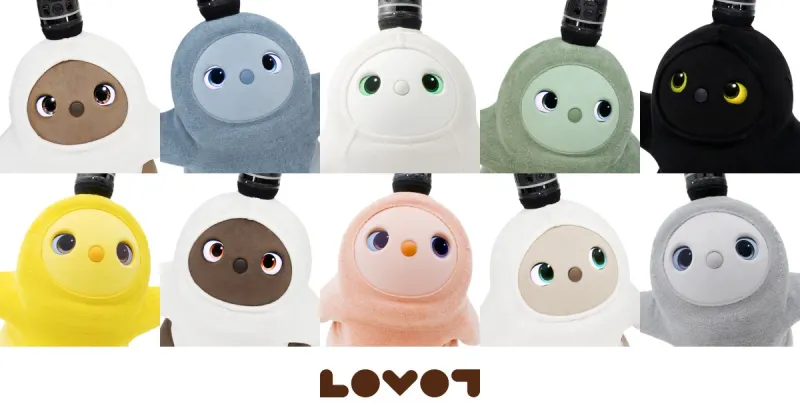
LOVOT is one of the clearest examples because GROOVE X publishes unusually detailed Japanese pricing. The current LOVOT 3.0 body is listed at ¥577,500, but the robot also requires a monthly “living cost” plan that starts at ¥9,900/month. That plan is not just an extended warranty. It covers software use, updates, backup of memory and personality data, and plan-dependent repair coverage.
That makes LOVOT a good test case for every emotional-support robot, AI pet, and social companion robot. A low hardware price can hide paid content. A high hardware price can still leave repair exposure. A subscription can be fair if it funds support, replacement parts, and data backup — but only if buyers understand what is included.
This guide breaks down LOVOT's current cost structure, then compares it with other companion robots in the ui44 database so you can judge the real ownership model before you buy.
How much does LOVOT cost up front?
GROOVE X currently lists two LOVOT body options in Japan:
Model
LOVOT 3.0
- Official body price
- ¥577,500
- Notes
- Current model; base “ちゃ” color included
Model
LOVOT 2.0
- Official body price
- ¥449,900
- Notes
- Older model still listed
| Model | Official body price | Notes |
|---|---|---|
| LOVOT 3.0 | ¥577,500 | Current model; base “ちゃ” color included |
| LOVOT 2.0 | ¥449,900 | Older model still listed |
The pricing page also lists color upcharges for some bodies. For LOVOT 3.0, several non-base colors add ¥22,000, while darker or special colors can add more. The body price shown by GROOVE X includes tax, an administrative fee, and shipping in Japan, but installment-plan totals depend on financing terms.
The simple buyer takeaway: do not compare LOVOT to a $299 desktop robot by body price alone. LOVOT is a 43 cm, 4.6 kg mobile companion with a charging nest, full-body touch response, OLED eyes, a sensor horn, autonomous movement, and a designed long-term service plan. It sits closer to a pet-like appliance with support obligations than to a novelty AI toy.
The harder question is whether you are comfortable with the recurring plan.
What is the LOVOT monthly fee?
LOVOT's monthly plan is called “暮らしの費用,” roughly the cost of living with LOVOT. For LOVOT 3.0, GROOVE X lists three tiers:
LOVOT 3.0 plan
Minimum Care
- Monthly fee
- ¥9,900/month
- Repair coverage
- 1/3 repair coverage
- Scheduled maintenance discount
- Highest out-of-pocket maintenance
LOVOT 3.0 plan
Basic Care
- Monthly fee
- ¥12,980/month
- Repair coverage
- 2/3 repair coverage
- Scheduled maintenance discount
- Mid-tier maintenance pricing
LOVOT 3.0 plan
Full Cover Care
- Monthly fee
- ¥19,800/month
- Repair coverage
- Full repair coverage, subject to limits
- Scheduled maintenance discount
- Scheduled maintenance included
| LOVOT 3.0 plan | Monthly fee | Repair coverage | Scheduled maintenance discount |
|---|---|---|---|
| Minimum Care | ¥9,900/month | 1/3 repair coverage | Highest out-of-pocket maintenance |
| Basic Care | ¥12,980/month | 2/3 repair coverage | Mid-tier maintenance pricing |
| Full Cover Care | ¥19,800/month | Full repair coverage, subject to limits | Scheduled maintenance included |
GROOVE X says the monthly fee includes software use and LOVOT care. The software portion matters because LOVOT's daily activity depends on software use. The same pricing page says software updates and backup of LOVOT's memory and personality are included.
That memory-backup detail is easy to overlook. For a companion robot, “data” is not only settings. It can include the robot's learned personality, interaction history, and the feeling that this is your specific robot rather than a replaceable gadget. If you are buying a companion robot for an older parent, a child, or a lonely household member, ask what happens to that relationship data if hardware is repaired, replaced, transferred, or unsupported later.
What happens to repairs and maintenance?
LOVOT is mechanical. That is obvious, but many companion-robot purchases are driven by emotion, not maintenance math. GROOVE X is unusually direct about this: LOVOT has a technical support team, a specialized “LOVOT hospital,” remote pre-diagnosis, standard inspection steps, shipping rules, and scheduled maintenance menus.
The two big scheduled items on the current LOVOT after-service page are:
Maintenance item
LOVOT Dock
- Recommended timing
- About every 2 years
- Minimum Care
- ¥59,400
- Basic Care
- ¥29,700
- Full Cover Care
- Free
Maintenance item
Servo Motor Exchange Pack
- Recommended timing
- About every 4 years
- Minimum Care
- ¥138,600
- Basic Care
- ¥69,300
- Full Cover Care
- Free
| Maintenance item | Recommended timing | Minimum Care | Basic Care | Full Cover Care |
|---|---|---|---|---|
| LOVOT Dock | About every 2 years | ¥59,400 | ¥29,700 | Free |
| Servo Motor Exchange Pack | About every 4 years | ¥138,600 | ¥69,300 | Free |
The LOVOT Dock menu covers items such as the lithium-ion battery and soft skin. The servo-motor pack is more revealing. GROOVE X says it is recommended about every four years, and that delaying servo maintenance can increase the frequency of later hospital visits. That is the kind of cost a buyer should treat as part of ownership, not as an edge case.
Repair coverage also varies by plan. Minimum Care covers one third of eligible treatment cost. Basic Care covers two thirds. Full Cover Care is listed as full coverage, but GROOVE X notes limits; the repair page says full coverage has a cap and excess cost can fall back to partial coverage. Shipping for hospital admission is separate from repair coverage.
There are smaller costs too. If the original shipping box is used, the after-service page lists round-trip hospital shipping at ¥4,400 per LOVOT or nest box. If the special reusable transport box is needed, it lists ¥6,930 per LOVOT body or nest, including the box-use fee. If a returned robot receives no treatment, the page lists a diagnostic fee of ¥10,780. A written estimate can also require a ¥10,780 fee.
None of this makes LOVOT bad. In fact, publishing this much detail is buyer-friendly. It just means the real question is not “Can I afford the robot?” It is “Can I afford the robot as a serviced relationship product?”
A realistic three-year LOVOT cost estimate
Here is a simple way to think about LOVOT 3.0 ownership before repairs, accessories, optional clothing, color upgrades, or financing interest.
Scenario
Minimum Care
- Body price
- ¥577,500
- 36 months of plan fees
- ¥356,400
- 2-year dock cost
- ¥59,400
- Approx. 3-year total
- ¥993,300
Scenario
Basic Care
- Body price
- ¥577,500
- 36 months of plan fees
- ¥467,280
- 2-year dock cost
- ¥29,700
- Approx. 3-year total
- ¥1,074,480
Scenario
Full Cover Care
- Body price
- ¥577,500
- 36 months of plan fees
- ¥712,800
- 2-year dock cost
- ¥0
- Approx. 3-year total
- ¥1,290,300
| Scenario | Body price | 36 months of plan fees | 2-year dock cost | Approx. 3-year total |
|---|---|---|---|---|
| Minimum Care | ¥577,500 | ¥356,400 | ¥59,400 | ¥993,300 |
| Basic Care | ¥577,500 | ¥467,280 | ¥29,700 | ¥1,074,480 |
| Full Cover Care | ¥577,500 | ¥712,800 | ¥0 | ¥1,290,300 |
The Full Cover number is highest, but it buys more repair protection. The Minimum Care number is lowest, but it leaves more exposure if something mechanical fails. Basic Care is the middle path: more expensive every month, lower out-of-pocket maintenance, and higher repair coverage.
The four-year view changes the math again because the servo-motor pack enters the picture. Using the same body price, 48 months of fees, one two-year dock, and one four-year servo pack, the rough totals become about ¥1.25 million on Minimum Care, ¥1.30 million on Basic Care, and ¥1.53 million on Full Cover Care. Those are not official package quotes; they are buyer math based on the listed plan and maintenance prices.
This is why companion robots should be evaluated like long-term devices, not like impulse gadgets. The emotional attachment is part of the product, and that attachment makes repair, backup, and continuity more important.
How does LOVOT compare with other companion robots?
LOVOT is expensive, but it is not the only companion robot with recurring costs or ownership complexity. ui44 tracks several different models.
Robot
- ui44-tracked price signal
- ¥577,500 for LOVOT 3.0
- Recurring-cost signal
- Required monthly plan from ¥9,900/month
- What changes the buying decision
- Strong service plan, higher lifetime cost
Robot
- ui44-tracked price signal
- $249 lease initiation plus subscription options
- Recurring-cost signal
- $49/month monthly, or lower effective rates on longer plans
- What changes the buying decision
- Stationary senior companion; service model is the product
Robot
- ui44-tracked price signal
- $2,899.99 US MSRP
- Recurring-cost signal
- Subscription plan required
- What changes the buying decision
- Robot dog with 22 axes, app, LTE/Wi-Fi, cloud-plus-edge AI
Robot
- ui44-tracked price signal
- $299, often lower on sale
- Recurring-cost signal
- Optional Miko Max subscription
- What changes the buying decision
- Kid-focused content robot; content library matters
Robot
- ui44-tracked price signal
- $429 US launch price
- Recurring-cost signal
- No required subscription tracked in ui44
- What changes the buying decision
- Small emotional AI pet; far less mechanical complexity
Robot
- ui44-tracked price signal
- Not announced
- Recurring-cost signal
- Not announced
- What changes the buying decision
- 2027 target; price described as comparable to owning a dog
| Robot | ui44-tracked price signal | Recurring-cost signal | What changes the buying decision |
|---|---|---|---|
| LOVOT | ¥577,500 for LOVOT 3.0 | Required monthly plan from ¥9,900/month | Strong service plan, higher lifetime cost |
| ElliQ 3 | $249 lease initiation plus subscription options | $49/month monthly, or lower effective rates on longer plans | Stationary senior companion; service model is the product |
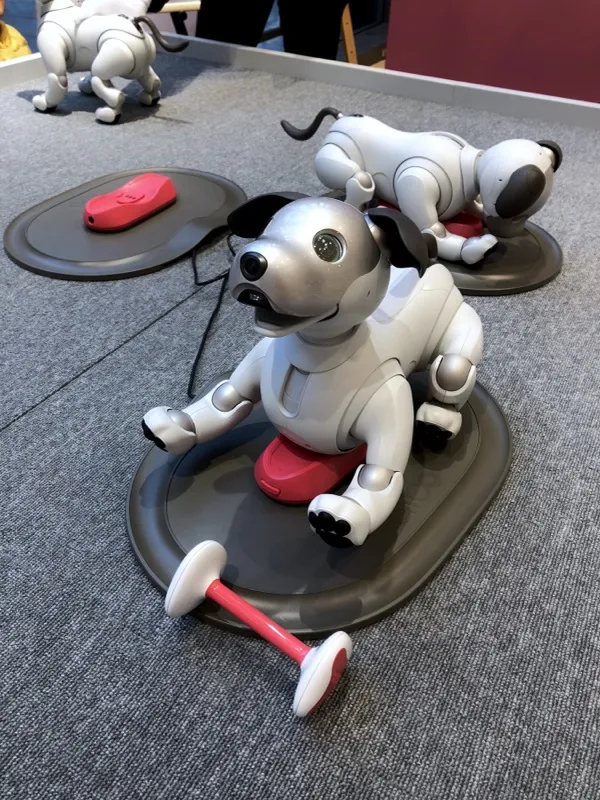
| aibo | $2,899.99 US MSRP | Subscription plan required | Robot dog with 22 axes, app, LTE/Wi-Fi, cloud-plus-edge AI |
| Miko 3 | $299, often lower on sale | Optional Miko Max subscription | Kid-focused content robot; content library matters |
| Moflin | $429 US launch price | No required subscription tracked in ui44 | Small emotional AI pet; far less mechanical complexity |
| Familiar | Not announced | Not announced | 2027 target; price described as comparable to owning a dog |
This table shows why “companion robot” is too broad as a buying category. LOVOT and aibo are pet-like mobile robots. ElliQ is a stationary relationship and wellness service for older adults. Miko 3 is a child-focused educational companion with optional paid content. Moflin is a palm-sized emotional robot pet with simpler mechanics. Familiar is a future quadruped companion built around on-device emotional intelligence, but its price and service terms are not public yet.
The subscription question means something different in each case. With ElliQ, the monthly service is central because the device is essentially a supported care-and-companionship platform. With Miko, the optional subscription affects content depth. With aibo and LOVOT, recurring costs connect to robot identity, app services, connectivity, and support.
Is a subscription a red flag?
Not automatically.
A companion robot is not just a speaker with wheels. It may need cloud services, safety updates, app maintenance, content moderation, spare parts, battery replacement, data backup, and human support. If a company sells emotional attachment but has no visible way to fund long-term care, that can be a bigger red flag than a clearly priced subscription.
The red flag is opacity. Before paying for any companion robot, ask these questions:
- Is the subscription required or optional? A robot that needs a monthly plan to function should be priced as a monthly commitment, not only as hardware.
- What happens if I stop paying? Ask what still works locally, what data is retained, and whether the robot can be reactivated later.
- Is personality or memory backed up? For social robots, continuity can matter more than raw specs.
- What is the repair path? Look for shipping rules, diagnostic fees, battery replacement, and parts availability.
- Can ownership transfer? This matters for gifts, family care, resale, and estate situations.
- What is regional support? LOVOT's pricing is Japan-specific; ElliQ support is U.S.-specific in ui44's current database notes.
For LOVOT specifically, the good news is that GROOVE X publishes a lot of this. The bad news for international buyers is that the clearest current pricing and after-service terms are Japan-market terms, so importing or buying outside supported regions can change the risk profile completely.
What does the monthly fee buy emotionally?
The practical answer is software, care coverage, maintenance pricing, and backup. The emotional answer is continuity.
GROOVE X's official parent-gift article describes LOVOT as a family-style robot that responds to greetings, asks for attention, gets held, wanders freely, and can loosely help distant family members keep an eye on activity through diary and photo features. Whether you find that charming or too intimate, it points to the same ownership truth: a companion robot creates habits around itself.

That is why the service plan matters more here than it would on a robot vacuum. If a vacuum loses a map, it is annoying. If a companion robot loses its learned behavior, owner recognition, diary history, or backed-up personality data, the loss can feel personal.
This is also where on-device AI claims should be read carefully. Familiar, for example, says data is stored on the device and that owners control when it is shared with the cloud. That sounds attractive for privacy, but it still leaves open buyer questions about backup, replacement, repair, and what happens if the company disappears. Privacy and continuity are both important; they are not the same requirement.
Who should consider LOVOT?
LOVOT makes the most sense if you want a premium emotional companion, you live in a supported market, and you are comfortable treating the robot as a serviced household member rather than a one-time purchase.
It is a better fit for someone who values touch, warmth, expressiveness, and routine interaction than for someone who wants chores done. LOVOT does not cook, clean, fold laundry, or pick up the house. Its value is social presence. The hardware supports that with full-body touch sensing, autonomous movement, person recognition, a warm body, and a charging nest, but the product promise is emotional rather than utilitarian.
LOVOT is a weaker fit if you want low ongoing cost, easy international resale, minimal camera/privacy complexity, or a robot that remains fully useful without vendor services. In those cases, a smaller AI pet like Moflin, a kid-focused robot like Miko 3, or a stationary eldercare companion like ElliQ 3 may be a clearer match depending on the household.
The buyer checklist
Bottom line
LOVOT is not cheap, and the monthly fee is not a footnote. For LOVOT 3.0, a realistic three-year ownership estimate can approach or exceed ¥1 million once the body, service plan, and scheduled maintenance are counted.
That does not make LOVOT a bad deal. It makes it an unusually honest example of what premium companion robots may become: part hardware, part software, part repair program, and part emotional continuity service.
If that is what you want, the recurring fee may be acceptable. If you only budgeted for the body price, pause before you buy. The real cost of a companion robot starts after it comes home.
Related in the database
Use this article as a privacy verification workflow
Turn the article into a privacy verification pass grounded in the robots, manufacturers, and components it actually references.
LOVOT Monthly Fees: Companion Robot Cost Guide already points you toward 6 linked robots, 6 manufacturers, and 4 countries inside the ui44 database. That matters because strong buyer guidance is easier to apply when you can move immediately from a claim or warning into concrete product pages, manufacturer directories, component explainers, and country-level context instead of treating the article as an isolated opinion piece. The fastest next step is to turn the article into a shortlist workflow: open the linked robot pages, verify which specs are actually published for those models, then compare the surrounding manufacturer and component context before you decide whether the underlying claim changes your buying plan.
For this topic, the useful discipline is to separate the editorial lesson from the catalog evidence. The article gives you the framing, but the robot pages tell you what each product actually ships with today: sensor stack, connectivity methods, listed price, release timing, category, and support-relevant compatibility notes. The manufacturer pages then show whether you are looking at a one-off launch, a broader lineup pattern, or a company that spans multiple categories. That layered workflow reduces the risk of buying on a single marketing phrase or a single support FAQ.
Use the robot pages to confirm which products actually expose cameras, microphones, Wi-Fi, or voice systems, then use the manufacturer pages to decide how much of the privacy question seems product-specific versus brand-wide. On this route cluster, LOVOT, ElliQ 3, and aibo (ERS-1000) form the fastest reality check. If you want a quick working shortlist, open Compare LOVOT, ElliQ 3, and aibo (ERS-1000) next, then keep this article open as the reasoning layer while you compare structured data side by side.
Practical Takeaway
Every robot, manufacturer, category, component, and country reference below resolves to a real ui44 page, keeping the follow-up path grounded in database records rather than generic advice.
Suggested next steps in ui44
- Open LOVOT and note the listed sensors, connectivity methods, and voice stack before you interpret any policy claim.
- Cross-check the wider brand context on GROOVE X so you can see whether the privacy question touches one model or a broader lineup.
- Use the linked component pages to confirm how common the relevant sensors and connectivity layers are across the database.
- Keep a short note of which policy layers you checked, which device features are actually present on the robot page, and which items still depend on region- or app-level confirmation.
- Finish with Compare LOVOT, ElliQ 3, and aibo (ERS-1000) so the policy reading sits next to structured product data.
Robot profiles worth opening next
Use the linked product pages as the evidence layer
The linked robot pages are where this article becomes operational. Instead of asking whether the headline is interesting, use the robot entries to inspect the actual mix of sensors, connectivity options, batteries, pricing, release timing, and stated capabilities attached to the products mentioned in the article. That is the easiest way to see whether the warning or opportunity described here affects one product family, a specific design pattern, or an entire buying lane.
LOVOT is tracked on ui44 as a available companions robot from GROOVE X. The database currently records a listed price of ¥577,500, a release date of 2019, 30-45 minutes active, then returns to nest battery life, 15-30 minutes (on charging nest) charging time, and a published stack that includes Horn Top Camera (half-sphere), Horn Front Camera, and Depth Camera plus Wi-Fi and Bluetooth.
For privacy-focused reading, this page matters because it shows the concrete device surface behind the policy discussion. Use it to verify whether LOVOT combines sensors and connectivity in a way that could change the in-home data footprint, and compare the listed capabilities such as Emotional Companionship, Person Recognition, and Touch Response (full body sensors) with any cloud, app, or voice layers.
ElliQ 3
Intuition Robotics · Companions · Available
ElliQ 3 is tracked on ui44 as a available companions robot from Intuition Robotics. The database currently records a listed price of Price TBA, a release date of 2024-01, Mains powered battery life, N/A (plugged in) charging time, and a published stack that includes 4-mic array, 12 MP camera for images, and 1080p HD video at 30 fps with 120° horizontal FoV plus Wi-Fi 802.11b/g/n/ac (2.4 GHz and 5 GHz) and Bluetooth 5+.
For privacy-focused reading, this page matters because it shows the concrete device surface behind the policy discussion. Use it to verify whether ElliQ 3 combines sensors and connectivity in a way that could change the in-home data footprint, and compare the listed capabilities such as Proactive Conversation, Medication Reminders, and Health & Pain Tracking with any cloud, app, or voice layers, including ElliQ Voice AI.
aibo (ERS-1000)
Sony · Companions · Available
aibo (ERS-1000) is tracked on ui44 as a available companions robot from Sony. The database currently records a listed price of $3,200, a release date of 2018-01, ~2 hours battery life, ~3 hours charging time, and a published stack that includes Front Camera, SLAM Camera, and Time-of-Flight Sensor plus Wi-Fi 802.11 b/g/n (2.4GHz) and LTE.
For privacy-focused reading, this page matters because it shows the concrete device surface behind the policy discussion. Use it to verify whether aibo (ERS-1000) combines sensors and connectivity in a way that could change the in-home data footprint, and compare the listed capabilities such as Emotion Recognition, Face Recognition (up to 100 faces), and Voice Command Recognition (100+ commands) with any cloud, app, or voice layers.
Miko 3 is tracked on ui44 as a available companions robot from Miko. The database currently records a listed price of €269, a release date of 2021, 5–7 hours active use, up to 12 hours standby battery life, ~4 hours (15W USB-C adapter) charging time, and a published stack that includes Time-of-Flight Range Sensor, Odometric Sensors, and Dual MEMS Microphones plus Wi-Fi and Bluetooth.
For privacy-focused reading, this page matters because it shows the concrete device surface behind the policy discussion. Use it to verify whether Miko 3 combines sensors and connectivity in a way that could change the in-home data footprint, and compare the listed capabilities such as AI-Powered Conversations, Face Recognition, and Voice Recognition with any cloud, app, or voice layers.
Moflin is tracked on ui44 as a available companions robot from Casio. The database currently records a listed price of $429, a release date of 2025-10-01, Up to 5 hours battery life, Approx. 3.5 hours charging time, and a published stack that includes Microphone, Illuminance sensor, and Touch sensors plus its listed connectivity stack.
For privacy-focused reading, this page matters because it shows the concrete device surface behind the policy discussion. Use it to verify whether Moflin combines sensors and connectivity in a way that could change the in-home data footprint, and compare the listed capabilities such as Emotional companionship, Touch response, and Voice recognition with any cloud, app, or voice layers.
Manufacturer context behind the article
Check whether this is one product story or a broader company pattern
Manufacturer pages add the privacy context that individual product pages cannot show on their own. They help you check whether cameras, microphones, cloud accounts, app controls, and policy assumptions appear across a broader lineup or stay tied to one specific product story.
GROOVE X
ui44 currently tracks 1 robot from GROOVE X across 1 category. The company is grouped under Japan, and the current catalog footprint on ui44 includes LOVOT.
That wider brand context matters because privacy questions rarely stop at one FAQ page. A manufacturer route helps you see whether the article is centered on one premium model or on a company that has several relevant products and therefore more than one place where the same policy or app assumptions might matter. The category mix here currently points toward Companions as the most useful next route if you want to see whether this article reflects a wider pattern inside the brand.
Intuition Robotics
ui44 currently tracks 1 robot from Intuition Robotics across 1 category. The company is grouped under Israel, and the current catalog footprint on ui44 includes ElliQ 3.
That wider brand context matters because privacy questions rarely stop at one FAQ page. A manufacturer route helps you see whether the article is centered on one premium model or on a company that has several relevant products and therefore more than one place where the same policy or app assumptions might matter. The category mix here currently points toward Companions as the most useful next route if you want to see whether this article reflects a wider pattern inside the brand.
Sony
ui44 currently tracks 2 robots from Sony across 2 categorys. The company is grouped under Japan, and the current catalog footprint on ui44 includes aibo (ERS-1000), QRIO.
That wider brand context matters because privacy questions rarely stop at one FAQ page. A manufacturer route helps you see whether the article is centered on one premium model or on a company that has several relevant products and therefore more than one place where the same policy or app assumptions might matter. The category mix here currently points toward Companions, Research as the most useful next route if you want to see whether this article reflects a wider pattern inside the brand.
Miko
ui44 currently tracks 2 robots from Miko across 1 category. The company is grouped under India, and the current catalog footprint on ui44 includes Miko 3, Miko Mini.
That wider brand context matters because privacy questions rarely stop at one FAQ page. A manufacturer route helps you see whether the article is centered on one premium model or on a company that has several relevant products and therefore more than one place where the same policy or app assumptions might matter. The category mix here currently points toward Companions as the most useful next route if you want to see whether this article reflects a wider pattern inside the brand.
Broaden the scan without leaving the database
Categories, components, and countries add the wider context
Category framing
Category pages are useful when the article touches a buying pattern that shows up across brands. A category route helps you confirm whether the linked products sit in a narrow niche or whether the same question should be tested across a larger field of alternatives.
Companions
The Companions category page currently groups 53 tracked robots from 48 manufacturers. ui44 describes this lane as: Social robots, robot pets, and elderly-care companions designed for emotional connection and everyday support at home.
That makes the category route a practical follow-up when you want to check whether the products linked in this article are typical for the lane or whether they sit at one edge of the market. Useful starting examples currently include PARO, Abi, Next-Generation Companion Robot.
Quadruped
The Quadruped category page currently groups 25 tracked robots from 16 manufacturers. ui44 describes this lane as: Four-legged robot dogs and quadrupeds built for rough terrain, inspection, and exploration — going where wheels can't.
That makes the category route a practical follow-up when you want to check whether the products linked in this article are typical for the lane or whether they sit at one edge of the market. Useful starting examples currently include Argos X1, D1 Pro, D2 Max.
Country and ecosystem context
Country pages give extra context when support practices, launch sequencing, regulatory posture, or manufacturer mix matter. They are not a substitute for model-level verification, but they do help you see which ecosystems cluster together and which manufacturers sit in the same regional field when you broaden the search beyond the article headline.
Japan
The Japan route currently groups 26 tracked robots from 17 manufacturers in ui44. That gives you a useful regional lens when the article points toward support practices, launch sequencing, or brand clusters that may share similar ecosystem assumptions.
On the current route, manufacturers like AIST, SoftBank Robotics, Toyota make the page a good way to broaden the scan without losing the regional context that often shapes availability, documentation style, and adjacent alternatives.
Israel
The Israel route currently groups 5 tracked robots from 5 manufacturers in ui44. That gives you a useful regional lens when the article points toward support practices, launch sequencing, or brand clusters that may share similar ecosystem assumptions.
On the current route, manufacturers like Flytrex, Intuition Robotics, Maytronics make the page a good way to broaden the scan without losing the regional context that often shapes availability, documentation style, and adjacent alternatives.
India
The India route currently groups 6 tracked robots from 5 manufacturers in ui44. That gives you a useful regional lens when the article points toward support practices, launch sequencing, or brand clusters that may share similar ecosystem assumptions.
On the current route, manufacturers like Miko, Addverb Technologies, iHub Robotics make the page a good way to broaden the scan without losing the regional context that often shapes availability, documentation style, and adjacent alternatives.
Questions to answer before you move from reading to buying
A follow-up FAQ built from the entities already linked in this article
Frequently Asked Questions
Which page should I open first after reading “LOVOT Monthly Fees: Companion Robot Cost Guide”?
Start with LOVOT. That gives you a concrete product anchor for the article’s main claim. From there, branch into the manufacturer and component pages so you can tell whether the article is describing one specific model, a repeated brand pattern, or a wider technology issue that affects multiple shortlist options.
How do the manufacturer pages change the buying decision?
GROOVE X help you zoom out from one article and one product. On ui44 they show lineup breadth, category spread, and the neighboring robots tied to the same company. That context is useful when you are deciding whether a risk belongs to a single model, whether it shows up across a brand’s portfolio, and whether you should keep looking at alternatives before committing.
When should I switch from reading to side-by-side comparison?
Move into Compare LOVOT, ElliQ 3, and aibo (ERS-1000) as soon as you understand the article’s main warning or promise. The article explains what to watch for, but the compare view is where you can check whether price, status, battery life, connectivity, sensors, and category fit still make the robot a good match for your own home and budget.
Where to go next in ui44
Keep the research chain inside the database
If you want to keep going, these follow-on pages give you the cleanest expansion path from article to research session. Open the comparison route first if you are deciding between products today. Open the manufacturer, category, and component routes if you still need to understand the broader pattern behind the claim.
Written by
ui44 Team
Published May 15, 2026
Share this article
Open a plain share link on X or Bluesky. No embeds, no widgets, no cookie baggage.