That is why abc's Japan plan around Galbot G1 is worth watching. The announcement is not a consumer launch, and it does not mean a G1 is about to wheel into ordinary apartments. It is more practical than that: abc says it is creating a dedicated Physical AI Robot Division, working with China's Galbot and Japan implementation partner Big Hands, with business operations planned to begin in September 2026.
The signal for home-robot buyers is indirect but important. Useful household robots will not arrive only through better AI models. They will also need the boring infrastructure that industrial buyers already demand: site surveys, training, uptime guarantees, maintenance contracts, software updates, data ownership rules, insurance, and a local party to call when a robot stops doing what the brochure promised.
abc's Galbot plan is one early example of that wrapper forming around humanoids. For ui44 readers, the question is not "Can I buy this for my kitchen?" It is "Does this show how humanoids move from impressive hardware into repeatable real-world deployments?"
Is Galbot G1 coming to Japan for home buyers?
Not yet. The public materials point to enterprise deployment first.
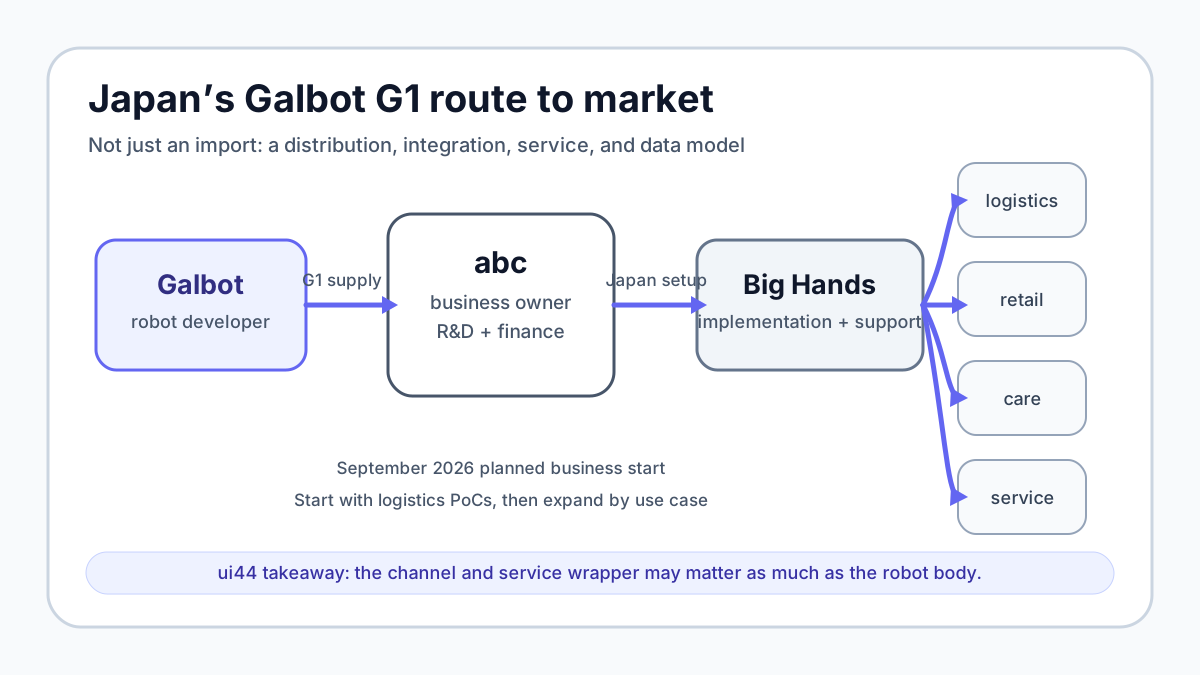
abc's April 2026 release says the company will work with Galbot, the Chinese Physical AI and general robotics company, and Big Hands, a Japan-based implementation and technical-support partner. The first deployment focus is logistics, with real-environment validation around operating stability, productivity impact, operating data, abnormality detection data, and maintenance support. Later expansion areas listed by abc include medical and care settings, retail, service, and entertainment.
That is a familiar pattern across the humanoid market. The robot may eventually be marketed with home or care language, but the first serious deployments tend to happen where the environment is constrained, the task can be measured, and a service contract can absorb the support burden. Warehouses, stores, hospitals, and showrooms are easier places to prove reliability than a home with pets, children, clutter, stairs, soft furniture, and changing routines.
The important detail is that abc is not presenting the project as a simple resale arrangement. Its release describes a combined model: Galbot supplies the robot technology, abc acts as the business and research-development lead, and Big Hands handles implementation, operation, and technical support. RobotStart's Japanese coverage of the follow-up announcement adds that abc's new Physical AI Robot Division is intended to create a working business structure around the robots, not merely list them for sale.
For a future home buyer, that matters because local support is not a nice extra. It is part of the product. A humanoid robot with a weak support channel is not like a smart speaker with a bad app. It is a mobile, sensor-heavy machine that may need calibration, repairs, software updates, safety limits, and task retraining.
What is Galbot G1, exactly?
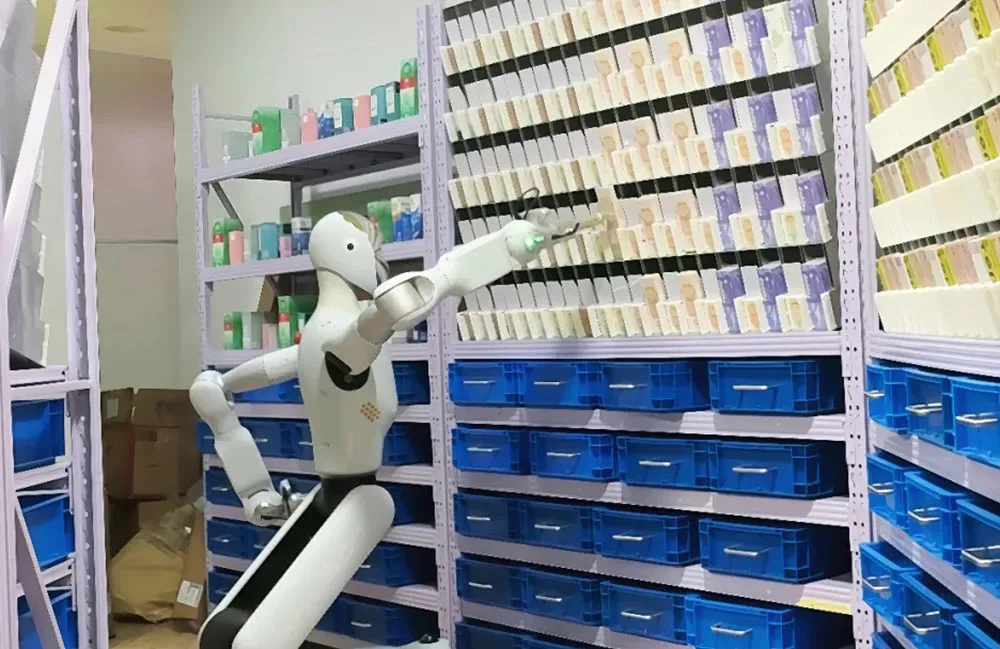
In ui44's database, Galbot G1 is a commercial, semi-humanoid mobile manipulator: a wheeled robot with a tall body, two arms, sensors for indoor navigation and manipulation, and a public pitch centered on retail, logistics, shelf work, inventory, delivery, and packaging.
The current tracked specs are unusually substantial for a non-consumer robot:
Robot
- Current ui44 snapshot
- 173 cm, 85 kg, about 10 hours runtime, no public price
- Why it matters
- Enterprise-sized robot with enough runtime for store or logistics pilots
Robot
Manipulation
- Current ui44 snapshot
- 5 kg single-arm end payload; 10 kg total dual-arm end payload
- Why it matters
- More relevant to shelves, bins, packages, and handoff tasks than demo gestures
Robot
Sensors
- Current ui44 snapshot
- Binocular camera, wrist depth cameras, torso RGB cameras, force sensors, IMUs, chassis 3D LiDAR, ultrasonic sensors
- Why it matters
- A serious sensor stack for navigation, grasping, and close-range operation
Robot
AI stack
- Current ui44 snapshot
- Galbot VLA models such as GraspVLA, GroceryVLA, and TrackVLA in the ui44 record
- Why it matters
- The product pitch is about generalizable manipulation, not just remote control
| Robot | Current ui44 snapshot | Why it matters |
|---|---|---|
| Galbot G1 | 173 cm, 85 kg, about 10 hours runtime, no public price | Enterprise-sized robot with enough runtime for store or logistics pilots |
| Manipulation | 5 kg single-arm end payload; 10 kg total dual-arm end payload | More relevant to shelves, bins, packages, and handoff tasks than demo gestures |
| Sensors | Binocular camera, wrist depth cameras, torso RGB cameras, force sensors, IMUs, chassis 3D LiDAR, ultrasonic sensors | A serious sensor stack for navigation, grasping, and close-range operation |
| AI stack | Galbot VLA models such as GraspVLA, GroceryVLA, and TrackVLA in the ui44 record | The product pitch is about generalizable manipulation, not just remote control |
Galbot's own website copy is broad, saying embodied AGI robots can serve industries and homes. But the G1 details visible through the product page and ui44's database are clearly operational: reach, payload, runtime, store tasks, logistics tasks, and 24-hour unmanned retail scenarios.
That makes the Japan plan more credible as an infrastructure story than as a home-appliance story. A 173 cm, 85 kg mobile manipulator with no public consumer price is not competing with a robot vacuum. It is closer to a rolling labor platform that has to justify itself through hours of work, measurable task completion, and supportable deployment costs.
Why does the business model matter more than the press photo?
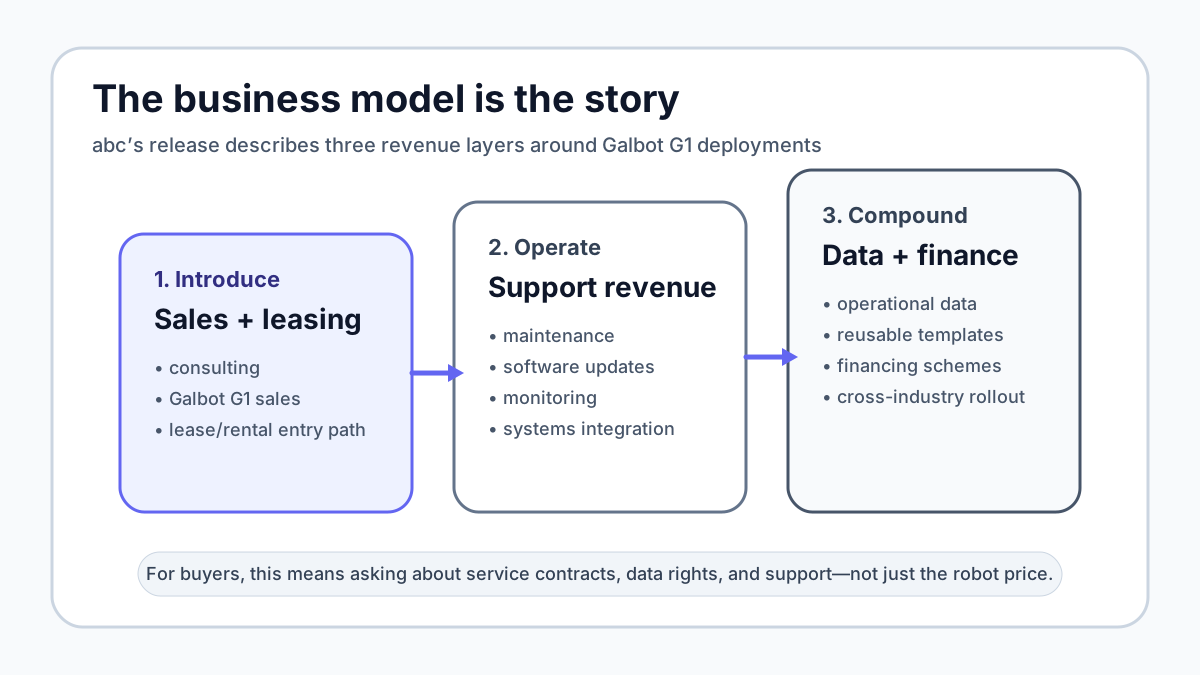
abc describes three revenue layers around Galbot G1:
- Introduction, consulting, sales, and leasing. This is the first-contact layer: helping companies decide whether a robot fits, then selling or leasing the G1.
- Operation, maintenance, support, and software updates. This is the layer that determines whether the robot stays useful after the pilot.
- Data and financial services. abc says accumulated operation data and financing schemes could become higher-margin parts of the business.
That third layer deserves careful reading. Operational data can be valuable: it can show which layouts work, which tasks fail, how often humans intervene, what maintenance issues appear, and which use cases can be copied to another site. It can also become sensitive. A robot working in a store, clinic, care facility, or eventually a home may observe people, objects, routines, exceptions, and failure events.
So the buyer checklist should expand beyond price and payload. If a company is leasing a humanoid or service robot, it should ask:
- Who owns the operational data collected during a pilot?
- Can video, maps, error logs, and task data be deleted or exported?
- What data is used to improve future robots or train models?
- Which updates are included in the maintenance contract?
- What happens if the robot needs remote diagnosis or human teleoperation?
- Who is liable if a task failure causes injury, damaged goods, or downtime?
Those questions are not anti-robot. They are what separate a credible robot program from a shiny demo.
How does Galbot G1 compare with other humanoid paths?
The most useful comparison is not "which robot looks most human." It is which path to market each robot is taking.
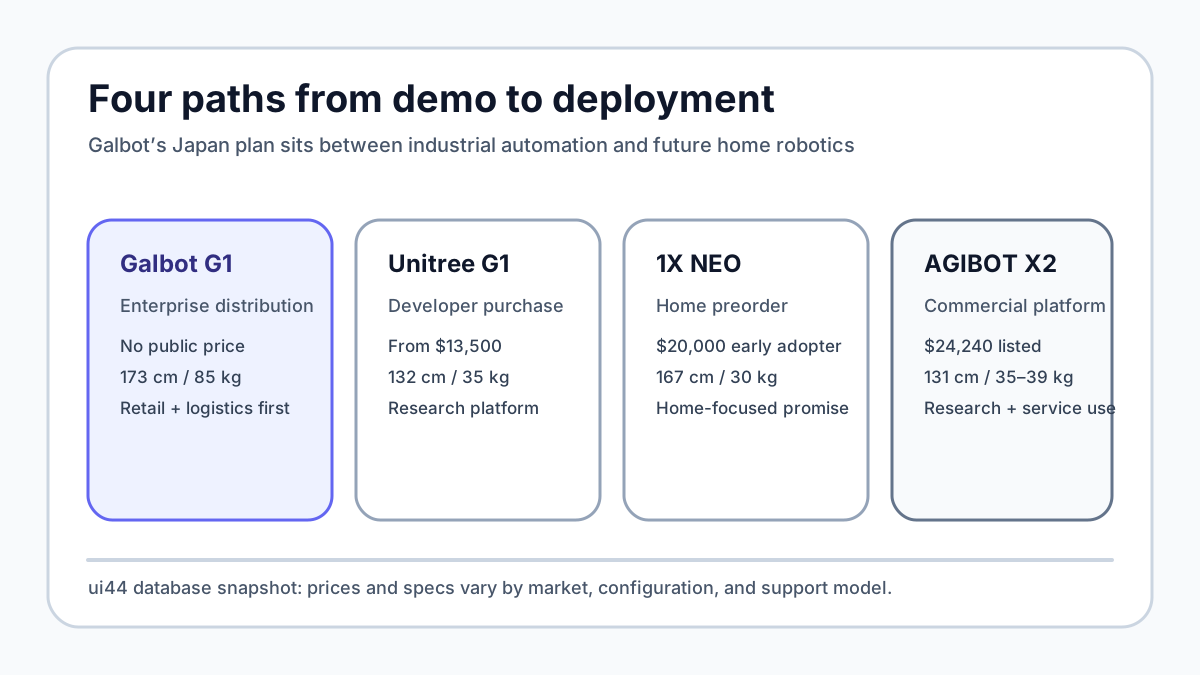
Unitree G1 is the most visible lower-cost purchase path. ui44 tracks it at $13,500 starting price, 132 cm tall, 35 kg, about two hours of battery life, depth camera, 3D LiDAR, Wi-Fi 6, and optional dexterous hands on the EDU version. It is real and available, but it still reads more like a developer or research platform than a turnkey home helper.
AGIBOT X2 is another available compact humanoid. ui44 tracks the official AGIBOT store price at $24,240, with a 131 cm body, 35-39 kg weight depending on version, about two hours of walking runtime, 1.8 m/s top speed, and up to 3 kg payload in specific postures. It has a clearer commercial-platform feel than a consumer-appliance feel.
1X NEO is the more explicit home-robot promise. ui44 tracks it as a $20,000 early-adopter preorder robot, 167 cm tall, 30 kg, with about four hours of battery life, a soft lightweight body, tactile skin, cameras, depth sensors, and a home-focused chore pitch. It is the one in this comparison most directly aimed at the home, but it is still a preorder story with many practical questions outstanding.
Galbot G1 is different. It has no public price, is much heavier, and appears to be entering Japan through enterprise distribution, leasing, support, and integration. That is less exciting for a consumer headline, but it may be closer to how humanoids become economically real.
That gives buyers a more grounded way to read the market:
- Direct purchase works when the buyer is technical enough to handle a platform, not just an appliance.
- Home preorder works only if the company can prove safety, support, privacy, and real chore reliability.
- Enterprise distribution works when the robot can be packaged with local integration, maintenance, and financing.
- RaaS or leasing may be the bridge for expensive robots whose purchase price is hard to justify up front.
What would make this relevant to homes later?
Three things would turn this from an enterprise distribution story into a home robotics signal.
First, Galbot or its Japan partners would need to publish real deployment data: not just videos, but uptime, task success rate, human intervention rate, maintenance frequency, and the types of environments where the robot works without special preparation. Store and logistics data would not automatically translate to homes, but it would tell us whether the underlying robot can run for long periods without constant rescue.
Second, the support model would need to become more transparent. A home robot buyer needs simpler answers than an enterprise buyer: who installs it, who fixes it, what the monthly fee covers, whether local operation works without cloud access, and how private home data is handled. Enterprise buyers can negotiate these terms. Consumers need them built into the product.
Third, the tasks would need to move from structured operations to domestic messiness. A shelf-picking robot can know the product category, expected object height, aisle layout, and task sequence. A home robot has to deal with laundry piles, half-open drawers, fragile objects, sleeping pets, family members walking through the task, and instructions that change mid-action.
That is why the G1's current strengths are impressive but not yet household proof. A 10-hour runtime, 5 kg single-arm payload, 3D LiDAR, depth cameras, force sensors, and VLA models all help. They do not prove the robot can safely tidy a child's room or help an older adult at home without a professional deployment team.
What should buyers watch next?
If you are tracking humanoids seriously, watch the Japan rollout for boring but important details:
- published lease terms or estimated deployment cost;
- named pilot customers, especially outside controlled showrooms;
- support response times and maintenance responsibilities;
- evidence that software updates improve real tasks rather than only demos;
- data-governance language around logs, video, maps, and model training;
- safety certification or third-party assessment for human-shared spaces;
- whether medical, care, or retail pilots are described with measurable tasks.
Those details will tell us more than another stage video.
For now, abc's Galbot G1 plan is best read as a commercialization milestone, not a home-buying recommendation. It shows that humanoid robots are starting to be packaged like infrastructure: leased, maintained, updated, financed, and measured in real operations. That is not as flashy as a running robot or a kitchen demo, but it may be the part of the industry that actually determines when useful robots reach ordinary homes.
If you want to compare the hardware side directly, start with Galbot G1, Unitree G1, AGIBOT X2, and 1X NEO, or use ui44 Compare to line up price, size, battery life, payload, and availability across the humanoid robot category.
Related in the database
Use this article as a privacy verification workflow
Turn the article into a privacy verification pass grounded in the robots, manufacturers, and components it actually references.
Galbot G1 in Japan: Humanoid Distribution Begins already points you toward 4 linked robots, 4 manufacturers, and 2 countries inside the ui44 database. That matters because strong buyer guidance is easier to apply when you can move immediately from a claim or warning into concrete product pages, manufacturer directories, component explainers, and country-level context instead of treating the article as an isolated opinion piece. The fastest next step is to turn the article into a shortlist workflow: open the linked robot pages, verify which specs are actually published for those models, then compare the surrounding manufacturer and component context before you decide whether the underlying claim changes your buying plan.
For this topic, the useful discipline is to separate the editorial lesson from the catalog evidence. The article gives you the framing, but the robot pages tell you what each product actually ships with today: sensor stack, connectivity methods, listed price, release timing, category, and support-relevant compatibility notes. The manufacturer pages then show whether you are looking at a one-off launch, a broader lineup pattern, or a company that spans multiple categories. That layered workflow reduces the risk of buying on a single marketing phrase or a single support FAQ.
Use the robot pages to confirm which products actually expose cameras, microphones, Wi-Fi, or voice systems, then use the manufacturer pages to decide how much of the privacy question seems product-specific versus brand-wide. On this route cluster, G1, G1, and X2 form the fastest reality check. If you want a quick working shortlist, open Compare G1, G1, and X2 next, then keep this article open as the reasoning layer while you compare structured data side by side.
Practical Takeaway
Every robot, manufacturer, category, component, and country reference below resolves to a real ui44 page, keeping the follow-up path grounded in database records rather than generic advice.
Suggested next steps in ui44
- Open G1 and note the listed sensors, connectivity methods, and voice stack before you interpret any policy claim.
- Cross-check the wider brand context on Galbot so you can see whether the privacy question touches one model or a broader lineup.
- Use the linked component pages to confirm how common the relevant sensors and connectivity layers are across the database.
- Keep a short note of which policy layers you checked, which device features are actually present on the robot page, and which items still depend on region- or app-level confirmation.
- Finish with Compare G1, G1, and X2 so the policy reading sits next to structured product data.
Robot profiles worth opening next
Use the linked product pages as the evidence layer
The linked robot pages are where this article becomes operational. Instead of asking whether the headline is interesting, use the robot entries to inspect the actual mix of sensors, connectivity options, batteries, pricing, release timing, and stated capabilities attached to the products mentioned in the article. That is the easiest way to see whether the warning or opportunity described here affects one product family, a specific design pattern, or an entire buying lane.
G1 is tracked on ui44 as a active commercial robot from Galbot. The database currently records a listed price of Price TBA, a release date of 2025, 10 hours battery life, Not disclosed charging time, and a published stack that includes Binocular camera x1, Wrist depth cameras x2, and 6-axis force sensors x2 plus Wi-Fi (2.4/5 GHz) and Ethernet.
For privacy-focused reading, this page matters because it shows the concrete device surface behind the policy discussion. Use it to verify whether G1 combines sensors and connectivity in a way that could change the in-home data footprint, and compare the listed capabilities such as Autonomous Retail Store Operation, Generalizable Object Grasping (5,000+ product types), and Shelf Replenishment & Inventory Management with any cloud, app, or voice layers, including Natural Language Voice Commands.
G1 is tracked on ui44 as a available humanoid robot from Unitree. The database currently records a listed price of $13,500, a release date of 2024-05-13, ~2 hours battery life, Not disclosed charging time, and a published stack that includes Depth Camera, 3D LiDAR, and 4 Microphone Array plus Wi-Fi 6 and Bluetooth 5.2.
For privacy-focused reading, this page matters because it shows the concrete device surface behind the policy discussion. Use it to verify whether G1 combines sensors and connectivity in a way that could change the in-home data footprint, and compare the listed capabilities such as Bipedal Walking, Object Manipulation, and Dexterous Hands (optional Dex3-1) with any cloud, app, or voice layers.
X2 is tracked on ui44 as a available humanoid robot from AGIBOT. The database currently records a listed price of $24,240, a release date of 2025, ~2 hours at 0.5 m/s walking battery life, ~1.5 hours charging time, and a published stack that includes 3D LiDAR (Ultra), RGB-D Camera (Ultra), and RGB Cameras plus Wi-Fi and Bluetooth.
For privacy-focused reading, this page matters because it shows the concrete device surface behind the policy discussion. Use it to verify whether X2 combines sensors and connectivity in a way that could change the in-home data footprint, and compare the listed capabilities such as Bipedal Walking, 25-30 DOF Articulation, and Object Manipulation (with OmniHand accessory) with any cloud, app, or voice layers.
NEO
1X Technologies · Humanoid · Pre-order
NEO is tracked on ui44 as a pre-order humanoid robot from 1X Technologies. The database currently records a listed price of $20,000, a release date of 2025-10-28, ~4 hours battery life, Not disclosed charging time, and a published stack that includes RGB Cameras, Depth Sensors, and Tactile Skin plus Wi-Fi and Bluetooth.
For privacy-focused reading, this page matters because it shows the concrete device surface behind the policy discussion. Use it to verify whether NEO combines sensors and connectivity in a way that could change the in-home data footprint, and compare the listed capabilities such as Household Chores, Tidying Up, and Safe Human Interaction with any cloud, app, or voice layers.
Manufacturer context behind the article
Check whether this is one product story or a broader company pattern
Manufacturer pages add the privacy context that individual product pages cannot show on their own. They help you check whether cameras, microphones, cloud accounts, app controls, and policy assumptions appear across a broader lineup or stay tied to one specific product story.
Galbot
ui44 currently tracks 2 robots from Galbot across 2 categorys. The company is grouped under China, and the current catalog footprint on ui44 includes G1, S1.
That wider brand context matters because privacy questions rarely stop at one FAQ page. A manufacturer route helps you see whether the article is centered on one premium model or on a company that has several relevant products and therefore more than one place where the same policy or app assumptions might matter. The category mix here currently points toward Commercial, Humanoid as the most useful next route if you want to see whether this article reflects a wider pattern inside the brand.
Unitree
ui44 currently tracks 2 robots from Unitree across 1 category. The company is grouped under China, and the current catalog footprint on ui44 includes H1, G1.
That wider brand context matters because privacy questions rarely stop at one FAQ page. A manufacturer route helps you see whether the article is centered on one premium model or on a company that has several relevant products and therefore more than one place where the same policy or app assumptions might matter. The category mix here currently points toward Humanoid as the most useful next route if you want to see whether this article reflects a wider pattern inside the brand.
AGIBOT
ui44 currently tracks 10 robots from AGIBOT across 3 categorys. The company is grouped under China, and the current catalog footprint on ui44 includes A2 Ultra, X2, Expedition A3.
That wider brand context matters because privacy questions rarely stop at one FAQ page. A manufacturer route helps you see whether the article is centered on one premium model or on a company that has several relevant products and therefore more than one place where the same policy or app assumptions might matter. The category mix here currently points toward Humanoid, Quadruped, Commercial as the most useful next route if you want to see whether this article reflects a wider pattern inside the brand.
1X Technologies
ui44 currently tracks 2 robots from 1X Technologies across 1 category. The company is grouped under Norway, and the current catalog footprint on ui44 includes NEO, EVE.
That wider brand context matters because privacy questions rarely stop at one FAQ page. A manufacturer route helps you see whether the article is centered on one premium model or on a company that has several relevant products and therefore more than one place where the same policy or app assumptions might matter. The category mix here currently points toward Humanoid as the most useful next route if you want to see whether this article reflects a wider pattern inside the brand.
Broaden the scan without leaving the database
Categories, components, and countries add the wider context
Category framing
Category pages are useful when the article touches a buying pattern that shows up across brands. A category route helps you confirm whether the linked products sit in a narrow niche or whether the same question should be tested across a larger field of alternatives.
Humanoid
The Humanoid category page currently groups 129 tracked robots from 92 manufacturers. ui44 describes this lane as: Full-size bipedal humanoid robots built to work alongside people — from factory floors to household tasks. Compare the cutting edge of humanoid robotics.
That makes the category route a practical follow-up when you want to check whether the products linked in this article are typical for the lane or whether they sit at one edge of the market. Useful starting examples currently include NEO, EVE, Mornine M1.
Commercial
The Commercial category page currently groups 44 tracked robots from 38 manufacturers. ui44 describes this lane as: Delivery robots, warehouse automation, and hospitality service bots — robots built for business and commercial operations.
That makes the category route a practical follow-up when you want to check whether the products linked in this article are typical for the lane or whether they sit at one edge of the market. Useful starting examples currently include G2 Air, aeo, Pepper.
Country and ecosystem context
Country pages give extra context when support practices, launch sequencing, regulatory posture, or manufacturer mix matter. They are not a substitute for model-level verification, but they do help you see which ecosystems cluster together and which manufacturers sit in the same regional field when you broaden the search beyond the article headline.
China
The China route currently groups 189 tracked robots from 87 manufacturers in ui44. That gives you a useful regional lens when the article points toward support practices, launch sequencing, or brand clusters that may share similar ecosystem assumptions.
On the current route, manufacturers like AGIBOT, Dreame, Unitree Robotics make the page a good way to broaden the scan without losing the regional context that often shapes availability, documentation style, and adjacent alternatives.
Norway
The Norway route currently groups 2 tracked robots from 1 manufacturers in ui44. That gives you a useful regional lens when the article points toward support practices, launch sequencing, or brand clusters that may share similar ecosystem assumptions.
On the current route, manufacturers like 1X Technologies make the page a good way to broaden the scan without losing the regional context that often shapes availability, documentation style, and adjacent alternatives.
Questions to answer before you move from reading to buying
A follow-up FAQ built from the entities already linked in this article
Frequently Asked Questions
Which page should I open first after reading “Galbot G1 in Japan: Humanoid Distribution Begins”?
Start with G1. That gives you a concrete product anchor for the article’s main claim. From there, branch into the manufacturer and component pages so you can tell whether the article is describing one specific model, a repeated brand pattern, or a wider technology issue that affects multiple shortlist options.
How do the manufacturer pages change the buying decision?
Galbot help you zoom out from one article and one product. On ui44 they show lineup breadth, category spread, and the neighboring robots tied to the same company. That context is useful when you are deciding whether a risk belongs to a single model, whether it shows up across a brand’s portfolio, and whether you should keep looking at alternatives before committing.
When should I switch from reading to side-by-side comparison?
Move into Compare G1, G1, and X2 as soon as you understand the article’s main warning or promise. The article explains what to watch for, but the compare view is where you can check whether price, status, battery life, connectivity, sensors, and category fit still make the robot a good match for your own home and budget.
Where to go next in ui44
Keep the research chain inside the database
If you want to keep going, these follow-on pages give you the cleanest expansion path from article to research session. Open the comparison route first if you are deciding between products today. Open the manufacturer, category, and component routes if you still need to understand the broader pattern behind the claim.
Written by
ui44 Team
Published May 9, 2026
Share this article
Open a plain share link on X or Bluesky. No embeds, no widgets, no cookie baggage.