Japan Airlines, JAL Ground Service, and GMO AI & Robotics Trading plan to start a humanoid robot demonstration at Tokyo Haneda in May 2026. The official JAL release frames the goal carefully: visualize airport ground work, identify safe places for humanoid robots, run repeated site verifications, and see where robots can reduce labor strain. That is not a home-butler announcement. It is more interesting than that.
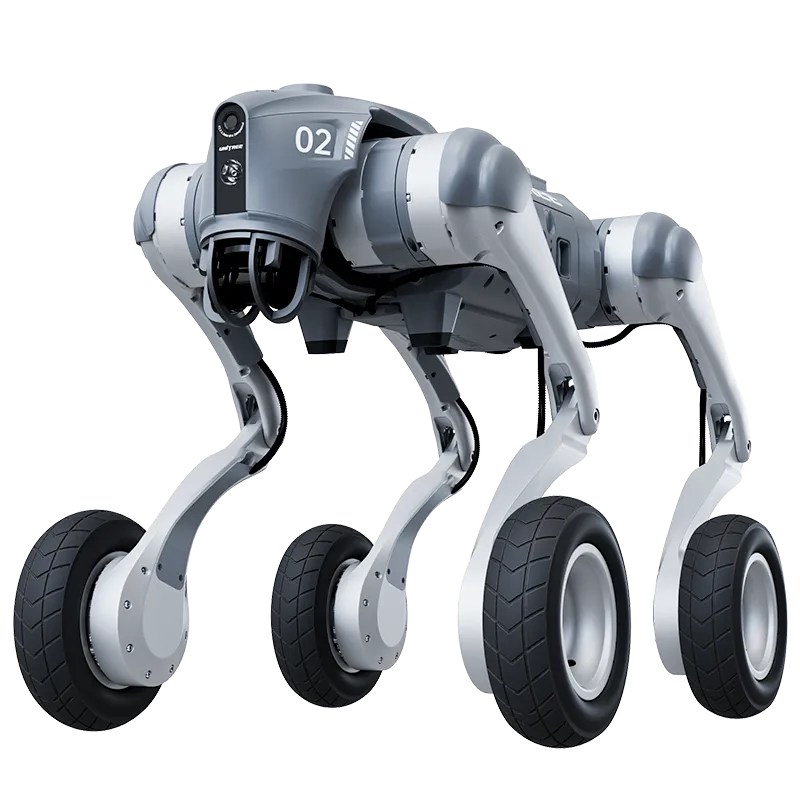
The Haneda trial is a useful reality check for anyone watching home humanoid robots. Airports have hard jobs, strict safety rules, and plenty of chaos, but they also have something homes do not: repeatable workflows, trained staff, controlled zones, scheduled maintenance, and a clear reason to spend money when labor is scarce. That is why commercial sites may absorb the awkward first generation of humanoids before households do.
What is JAL actually testing at Haneda?
JAL's official release says the demonstration is Japan's first airport humanoid robot experiment. The project is led by JAL Ground Service, which handles ground operations such as aircraft towing and baggage/cargo loading and unloading, and GMO AIR, which will provide humanoid robots and optimize motion programs.
The initial target is not "do every airport job." It is to find airport tasks where humanoids can operate safely and complement human workers. The release mentions baggage loading, cabin cleaning, and even operation of ground support equipment as possible future areas. Kyodo reported that the trial is scheduled to run through 2028 and that the China-made humanoids used in the experiment can currently operate continuously for about two to three hours.
That last number matters. A two-hour robot can still be useful if the work is planned around shifts, charging, supervision, and narrow tasks. It is much less convincing if the sales pitch is "leave it alone in your house all afternoon and come back to a perfectly reset home."
The public demo was described by The Guardian as using a roughly 130 cm Unitree robot pushing cargo toward a conveyor. ui44's database lists the Unitree G1 at 132 cm, 35 kg, about two hours of battery life, 23 degrees of freedom in the base model, optional dexterous hands, 3D LiDAR, a depth camera, Wi-Fi 6, and a starting price of $13,500. That makes G1 a credible reference point for this class of compact humanoid hardware, even if an airport pilot should not be confused with a consumer home deployment.
Why airports are friendlier than homes
A baggage area is not easy. It has moving vehicles, time pressure, heavy objects, weather exposure near aircraft, and serious safety consequences. But from a robotics point of view, it is still cleaner than a private home in five ways.
First, the environment can be mapped and constrained. A robot may repeat the same loading lane, cart position, conveyor approach, or cabin aisle many times. A home robot has to deal with chairs moved overnight, toys on the floor, pets, blankets, wet towels, narrow bedrooms, stairs, and family members who do not think like robot operators.
Second, airport objects are more standardized. Bags and cargo containers vary, but the work can often be described as "move this class of object from here to there." Homes contain fragile mugs, tangled charging cables, socks under beds, food waste, medicine, private documents, and things that should not be touched at all.
Third, airports already have trained staff. If the robot pauses, gets confused, or needs a safe reset, there are supervisors who understand the workflow. In a home, the operator may be a tired parent, an older adult, or someone who bought a robot precisely because they do not want to become a robotics technician.
Fourth, an airport can manage fleet operations. Batteries can be swapped or charged between scheduled runs. Software can be updated by an operations team. Incidents can be logged. A home buyer mostly wants the robot to work after Wi-Fi changes, furniture moves, and a dog knocks over the docking station.
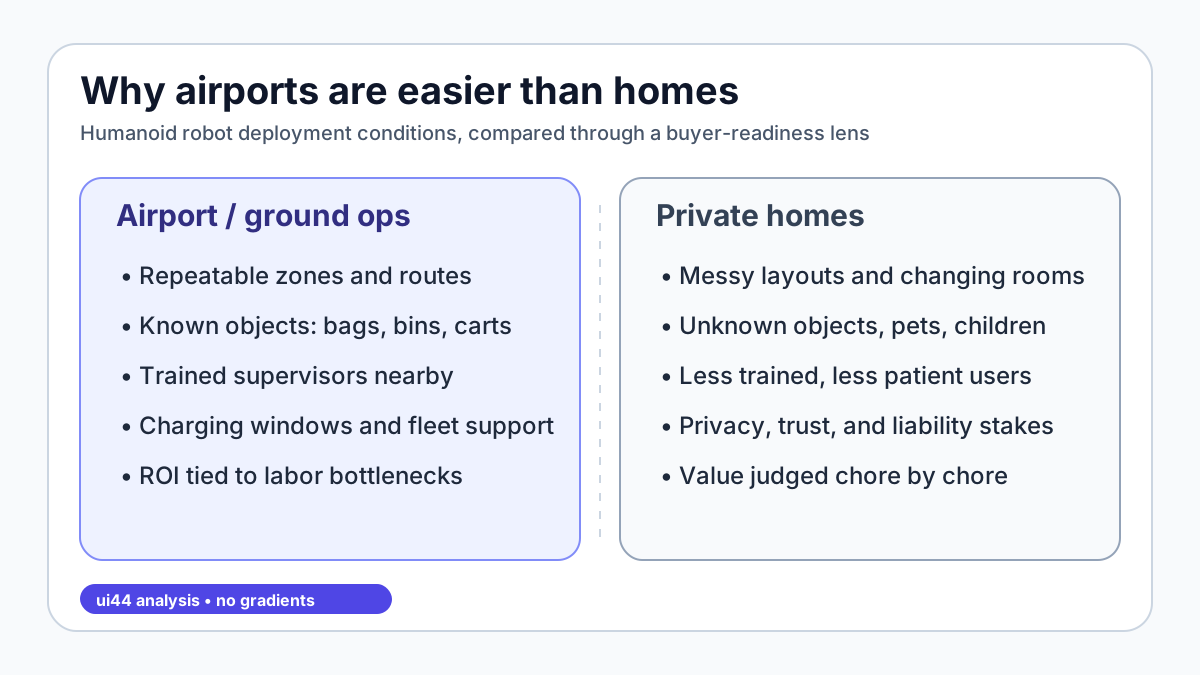
Fifth, the business case is clearer. JAL explicitly points to labor shortages and physically demanding ground work. A household may love the idea of a humanoid, but the value has to beat much cheaper combinations of robot vacuums, smart home routines, delivery services, and human help.
What ui44's robot data says
The ui44 database now tracks more than 240 robots across more than 150 manufacturers. The pattern is hard to miss: robots that do real work today are often narrow, supervised, fleet-managed, or designed for one commercial workflow. The home humanoids are more exciting, but they ask buyers to accept more unknowns.
Robot
- What it proves
- Affordable compact humanoid hardware
- Key ui44 data
- $13,500; 132 cm; 35 kg; ~2h battery; optional hands
- Why it matters
- Great research and pilot platform, not proof of unsupervised home chores
Robot
- What it proves
- Dynamic full-size walking
- Key ui44 data
- 180 cm; 47 kg; ~2h battery; 3.3 m/s listed speed
- Why it matters
- Strong mobility does not automatically solve manipulation or safety
Robot
- What it proves
- Home-first product framing
- Key ui44 data
- $20,000 early-adopter price; 167 cm; 30 kg; ~4h battery
- Why it matters
- The clearest home promise, but still early access/pre-order economics
Robot
- What it proves
- Industrial humanoid deployment proof
- Key ui44 data
- 168 cm; 70 kg; 20 kg payload; BMW plant runtime history in DB
- Why it matters
- Factory evidence is valuable, but not the same as private-home reliability
Robot
- What it proves
- Purpose-built logistics automation
- Key ui44 data
- Up to 800 cases/hour; 23 kg gripper; up to 16h battery
- Why it matters
- Narrow tools often outperform general humanoids in real operations
Robot
- What it proves
- Scaled autonomy through a constrained task
- Key ui44 data
- 25 kg robot; 9 kg payload; ~18h battery; 125,000 daily road crossings in DB
- Why it matters
- Autonomy scales fastest when the task and operating domain are bounded
| Robot | What it proves | Key ui44 data | Why it matters |
|---|---|---|---|
| Unitree G1 | Affordable compact humanoid hardware | $13,500; 132 cm; 35 kg; ~2h battery; optional hands | Great research and pilot platform, not proof of unsupervised home chores |
| Unitree H1 | Dynamic full-size walking | 180 cm; 47 kg; ~2h battery; 3.3 m/s listed speed | Strong mobility does not automatically solve manipulation or safety |
| 1X NEO | Home-first product framing | $20,000 early-adopter price; 167 cm; 30 kg; ~4h battery | The clearest home promise, but still early access/pre-order economics |
| Figure 02 | Industrial humanoid deployment proof | 168 cm; 70 kg; 20 kg payload; BMW plant runtime history in DB | Factory evidence is valuable, but not the same as private-home reliability |
| Boston Dynamics Stretch | Purpose-built logistics automation | Up to 800 cases/hour; 23 kg gripper; up to 16h battery | Narrow tools often outperform general humanoids in real operations |
| Starship Delivery Robot | Scaled autonomy through a constrained task | 25 kg robot; 9 kg payload; ~18h battery; 125,000 daily road crossings in DB | Autonomy scales fastest when the task and operating domain are bounded |
This is the core buyer lesson. A humanoid's shape is valuable when the site is built for humans and cannot easily be rebuilt around fixed automation. That is JAL's stated reason for looking at humanoids: existing aircraft and airport facilities are designed around human range of motion. But homes are also human-designed, and that alone does not make homes easier. Homes are less standardized, less supervised, and more private.
The Unitree angle: affordable hardware is not home autonomy
Unitree is important because it changes the economics of humanoid experimentation. A $13,500 G1 is expensive for a household appliance, but cheap compared with research and enterprise humanoids. ui44 also lists the newer Unitree H2 at $29,900 with about three hours of battery life, a 182 cm body, and higher-payload arms. Those prices make pilots easier to start.
They do not make pilots easy to finish.
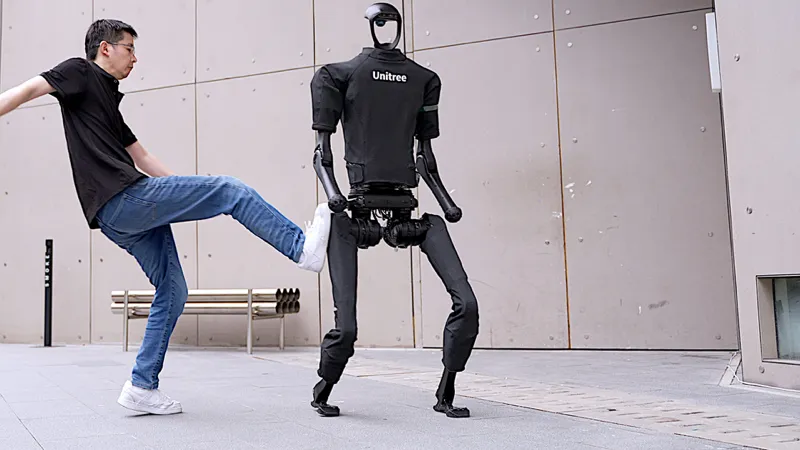
The G1 page itself is full of useful caveats: the industry is still in early exploration, individual users should understand humanoid limitations before purchasing, and some functions remain in development or testing. That is exactly the right framing. A compact humanoid can be a capable development platform and a strong media demo without being ready to carry a household's emotional and practical expectations.
For an airport, early limitations can be absorbed by process design. If the robot can push one cargo cart in a safe lane, that can be measured. If it can unload a specific type of container under supervision, that can be scheduled. If it fails, a trained team can stop the test, change the workflow, and try again.
For a home, the failure case is different. "The robot could not fold this shirt" is annoying. "The robot grabbed the wrong object," "walked into a child," "saw something private," or "needed a remote operator at the wrong time" is much more serious.
Commercial robots show the real deployment pattern
The most useful comparison may not be another humanoid. It may be a robot that looks less magical and works more often because its job is narrower.
Boston Dynamics' Stretch is a good example. It is not a home robot. It is a warehouse robot for case handling, trailer unloading, and case picking. The official Boston Dynamics product page emphasizes existing warehouse infrastructure, real-time decisions without pre-programming, long battery life, and package handling up to 50 pounds. ui44 records up to 800 cases per hour, a 23 kg vacuum gripper, and up to 16 hours of battery life.
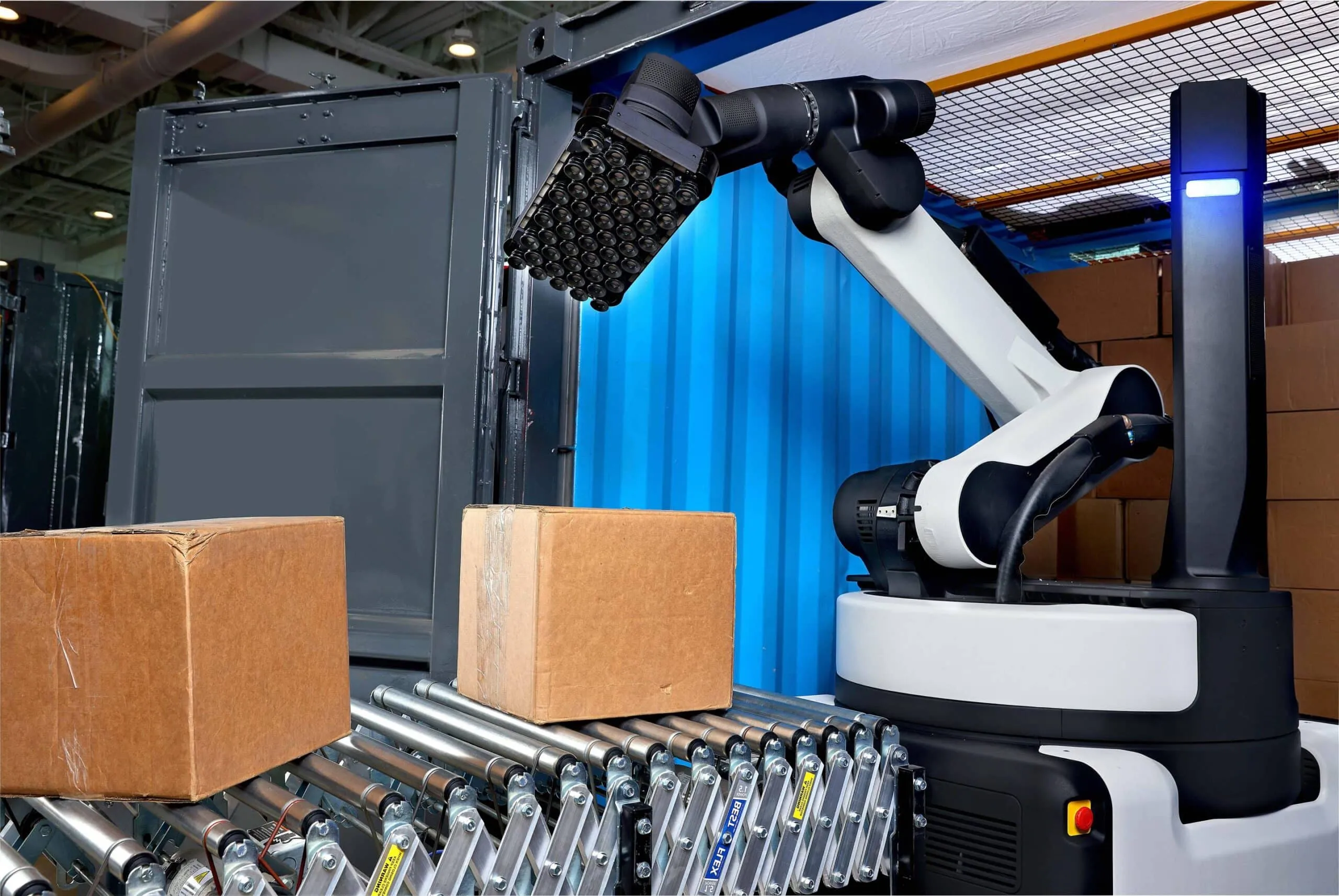
That is the pattern airports are likely to follow: define the workflow, instrument it, measure it, and expand only after the robot proves useful. Agility's Digit and Apptronik's Apollo point in the same direction: humanoids aimed first at logistics, factories, and other labor-constrained sites rather than private kitchens.
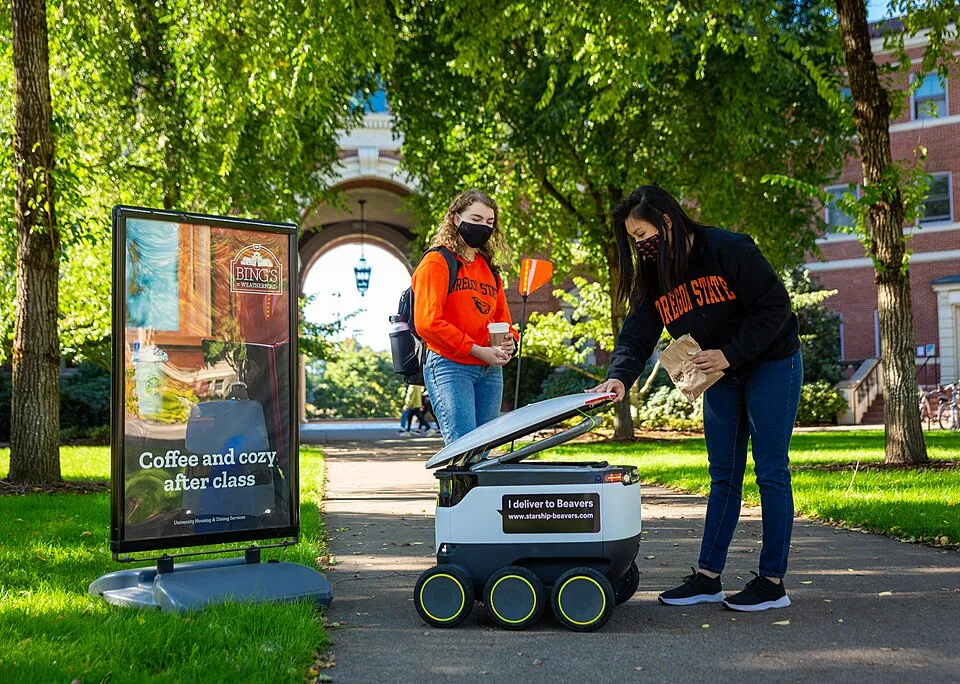
Starship is the autonomy lesson from a different form factor. The company's April 2026 milestone says its delivery robots passed 10 million deliveries, with 3,000+ robots across 300+ locations in eight countries and more than 22 million autonomous kilometers. ui44's database also tracks the 25 kg robot's 9 kg payload and roughly 18-hour battery life. That scale came from a constrained outdoor mission, not from pretending one robot can do every job in a house.
What home buyers should take from the airport trial
If you are waiting for a home humanoid, the Haneda news is encouraging, but not because it means a robot will soon handle every domestic chore. It is encouraging because it shows where the industry can collect real operational data.
Watch for five signals.
- Task scope: Does the robot perform one defined job, or does the company describe vague "general help"?
- Human fallback: Is there a clear supervisor, remote expert mode, or safe stop behavior when autonomy fails?
- Runtime and charging: Can the robot's battery match the actual duty cycle, or does the workflow need constant breaks?
- Payload and grip: Can it move the objects that matter without fragile, demo-only assumptions?
- Privacy and responsibility: Who sees the robot's cameras, who approves risky actions, and who is accountable when it makes a mistake?
Those questions matter more than whether the robot looks humanoid. The 1X NEO is an interesting home-first counterexample because 1X leans into soft materials, a 30 kg body, about four hours of battery life, and an "Expert Mode" where a human can guide chores the robot does not know yet. That is a more honest near-term home model than pretending autonomy will be flawless on day one.

But it also proves the airport point. Once a robot enters a private home, the problem is no longer just mobility and manipulation. It becomes trust, consent, privacy, family routines, clutter, pets, children, and support. A supervised airport pilot can teach the industry a lot, but home robots need a different contract with users.
So will airports get humanoids first?
Probably, yes — at least for useful, repeatable work.
That does not mean airports are easier in an absolute sense. It means airports are more deployable. They can tolerate staged pilots, trained handlers, safety cones, maintenance crews, repeatable routes, and ROI calculations. Homes demand quiet competence with almost no training burden.
The best near-term home robots may therefore borrow from airport and warehouse deployments rather than leapfrog them: narrow tasks, visible limits, human fallback, fleet-style software support, and honest claims about what happens when autonomy fails.
For now, the practical conclusion is simple. If a humanoid can help move bags at Haneda, that is a real milestone. It is not proof that the same robot is ready to reset your living room. It is proof that the road to home robots probably runs through places where the job is narrower, the support is stronger, and failure is easier to study.
That is not a disappointment. It is how useful robots usually arrive: not as magic, but as systems that learn in the places structured enough to teach them.
Related in the database
Use this article as a privacy verification workflow
Turn the article into a privacy verification pass grounded in the robots, manufacturers, and components it actually references.
Why Humanoid Robots Reach Airports Before Homes already points you toward 9 linked robots, 8 manufacturers, and 4 countries inside the ui44 database. That matters because strong buyer guidance is easier to apply when you can move immediately from a claim or warning into concrete product pages, manufacturer directories, component explainers, and country-level context instead of treating the article as an isolated opinion piece. The fastest next step is to turn the article into a shortlist workflow: open the linked robot pages, verify which specs are actually published for those models, then compare the surrounding manufacturer and component context before you decide whether the underlying claim changes your buying plan.
For this topic, the useful discipline is to separate the editorial lesson from the catalog evidence. The article gives you the framing, but the robot pages tell you what each product actually ships with today: sensor stack, connectivity methods, listed price, release timing, category, and support-relevant compatibility notes. The manufacturer pages then show whether you are looking at a one-off launch, a broader lineup pattern, or a company that spans multiple categories. That layered workflow reduces the risk of buying on a single marketing phrase or a single support FAQ.
Use the robot pages to confirm which products actually expose cameras, microphones, Wi-Fi, or voice systems, then use the manufacturer pages to decide how much of the privacy question seems product-specific versus brand-wide. On this route cluster, G1, H1, and NEO form the fastest reality check. If you want a quick working shortlist, open Compare G1, H1, and NEO next, then keep this article open as the reasoning layer while you compare structured data side by side.
Practical Takeaway
Every robot, manufacturer, category, component, and country reference below resolves to a real ui44 page, keeping the follow-up path grounded in database records rather than generic advice.
Suggested next steps in ui44
- Open G1 and note the listed sensors, connectivity methods, and voice stack before you interpret any policy claim.
- Cross-check the wider brand context on Unitree so you can see whether the privacy question touches one model or a broader lineup.
- Use the linked component pages to confirm how common the relevant sensors and connectivity layers are across the database.
- Keep a short note of which policy layers you checked, which device features are actually present on the robot page, and which items still depend on region- or app-level confirmation.
- Finish with Compare G1, H1, and NEO so the policy reading sits next to structured product data.
Robot profiles worth opening next
Use the linked product pages as the evidence layer
The linked robot pages are where this article becomes operational. Instead of asking whether the headline is interesting, use the robot entries to inspect the actual mix of sensors, connectivity options, batteries, pricing, release timing, and stated capabilities attached to the products mentioned in the article. That is the easiest way to see whether the warning or opportunity described here affects one product family, a specific design pattern, or an entire buying lane.
G1 is tracked on ui44 as a available humanoid robot from Unitree. The database currently records a listed price of $13,500, a release date of 2024-05-13, ~2 hours battery life, Not disclosed charging time, and a published stack that includes Depth Camera, 3D LiDAR, and 4 Microphone Array plus Wi-Fi 6 and Bluetooth 5.2.
For privacy-focused reading, this page matters because it shows the concrete device surface behind the policy discussion. Use it to verify whether G1 combines sensors and connectivity in a way that could change the in-home data footprint, and compare the listed capabilities such as Bipedal Walking, Object Manipulation, and Dexterous Hands (optional Dex3-1) with any cloud, app, or voice layers.
H1 is tracked on ui44 as a active humanoid robot from Unitree. The database currently records a listed price of Price TBA, a release date of 2023-08-15, ~2 hours battery life, ~2 hours charging time, and a published stack that includes 3D LiDAR, Depth Camera, and IMU plus Wi-Fi 6 and Bluetooth 5.2.
For privacy-focused reading, this page matters because it shows the concrete device surface behind the policy discussion. Use it to verify whether H1 combines sensors and connectivity in a way that could change the in-home data footprint, and compare the listed capabilities such as Dynamic Walking, Running, and Stair Climbing with any cloud, app, or voice layers.
NEO
1X Technologies · Humanoid · Pre-order
NEO is tracked on ui44 as a pre-order humanoid robot from 1X Technologies. The database currently records a listed price of $20,000, a release date of 2025-10-28, ~4 hours battery life, Not disclosed charging time, and a published stack that includes RGB Cameras, Depth Sensors, and Tactile Skin plus Wi-Fi and Bluetooth.
For privacy-focused reading, this page matters because it shows the concrete device surface behind the policy discussion. Use it to verify whether NEO combines sensors and connectivity in a way that could change the in-home data footprint, and compare the listed capabilities such as Household Chores, Tidying Up, and Safe Human Interaction with any cloud, app, or voice layers.
Figure 02 is tracked on ui44 as a discontinued humanoid robot from Figure AI. The database currently records a listed price of Price TBA, a release date of 2024-08-06, Not disclosed (50% greater capacity than Figure 01) battery life, Not disclosed charging time, and a published stack that includes 6 RGB Cameras, Onboard Vision Language Model, and Microphones plus Wi-Fi and Bluetooth.
For privacy-focused reading, this page matters because it shows the concrete device surface behind the policy discussion. Use it to verify whether Figure 02 combines sensors and connectivity in a way that could change the in-home data footprint, and compare the listed capabilities such as Autonomous Task Execution, Speech-to-Speech Conversation, and Pick and Place with any cloud, app, or voice layers, including OpenAI Custom Model.
Stretch
Boston Dynamics · Commercial · Active
Stretch is tracked on ui44 as a active commercial robot from Boston Dynamics. The database currently records a listed price of Price TBA, a release date of 2022, Up to 16 hours (two full shifts) battery life, Under 2 hours with Fast Charger charging time, and a published stack that includes Computer Vision Cameras, Time-of-Flight Sensors, and LiDAR plus Wi-Fi and Ethernet.
For privacy-focused reading, this page matters because it shows the concrete device surface behind the policy discussion. Use it to verify whether Stretch combines sensors and connectivity in a way that could change the in-home data footprint, and compare the listed capabilities such as Autonomous Truck/Container Unloading, Up to 800 Cases Per Hour, and Vacuum Gripper (up to 23kg / 50 lbs) with any cloud, app, or voice layers.
Manufacturer context behind the article
Check whether this is one product story or a broader company pattern
Manufacturer pages add the privacy context that individual product pages cannot show on their own. They help you check whether cameras, microphones, cloud accounts, app controls, and policy assumptions appear across a broader lineup or stay tied to one specific product story.
Unitree
ui44 currently tracks 2 robots from Unitree across 1 category. The company is grouped under China, and the current catalog footprint on ui44 includes H1, G1.
That wider brand context matters because privacy questions rarely stop at one FAQ page. A manufacturer route helps you see whether the article is centered on one premium model or on a company that has several relevant products and therefore more than one place where the same policy or app assumptions might matter. The category mix here currently points toward Humanoid as the most useful next route if you want to see whether this article reflects a wider pattern inside the brand.
1X Technologies
ui44 currently tracks 2 robots from 1X Technologies across 1 category. The company is grouped under Norway, and the current catalog footprint on ui44 includes NEO, EVE.
That wider brand context matters because privacy questions rarely stop at one FAQ page. A manufacturer route helps you see whether the article is centered on one premium model or on a company that has several relevant products and therefore more than one place where the same policy or app assumptions might matter. The category mix here currently points toward Humanoid as the most useful next route if you want to see whether this article reflects a wider pattern inside the brand.
Figure AI
ui44 currently tracks 2 robots from Figure AI across 1 category. The company is grouped under USA, and the current catalog footprint on ui44 includes Figure 03, Figure 02.
That wider brand context matters because privacy questions rarely stop at one FAQ page. A manufacturer route helps you see whether the article is centered on one premium model or on a company that has several relevant products and therefore more than one place where the same policy or app assumptions might matter. The category mix here currently points toward Humanoid as the most useful next route if you want to see whether this article reflects a wider pattern inside the brand.
Boston Dynamics
ui44 currently tracks 3 robots from Boston Dynamics across 2 categorys. The company is grouped under USA, and the current catalog footprint on ui44 includes Atlas (Electric), Spot, Stretch.
That wider brand context matters because privacy questions rarely stop at one FAQ page. A manufacturer route helps you see whether the article is centered on one premium model or on a company that has several relevant products and therefore more than one place where the same policy or app assumptions might matter. The category mix here currently points toward Humanoid, Commercial as the most useful next route if you want to see whether this article reflects a wider pattern inside the brand.
Broaden the scan without leaving the database
Categories, components, and countries add the wider context
Category framing
Category pages are useful when the article touches a buying pattern that shows up across brands. A category route helps you confirm whether the linked products sit in a narrow niche or whether the same question should be tested across a larger field of alternatives.
Humanoid
The Humanoid category page currently groups 129 tracked robots from 92 manufacturers. ui44 describes this lane as: Full-size bipedal humanoid robots built to work alongside people — from factory floors to household tasks. Compare the cutting edge of humanoid robotics.
That makes the category route a practical follow-up when you want to check whether the products linked in this article are typical for the lane or whether they sit at one edge of the market. Useful starting examples currently include NEO, EVE, Mornine M1.
Commercial
The Commercial category page currently groups 44 tracked robots from 38 manufacturers. ui44 describes this lane as: Delivery robots, warehouse automation, and hospitality service bots — robots built for business and commercial operations.
That makes the category route a practical follow-up when you want to check whether the products linked in this article are typical for the lane or whether they sit at one edge of the market. Useful starting examples currently include G2 Air, aeo, Pepper.
Country and ecosystem context
Country pages give extra context when support practices, launch sequencing, regulatory posture, or manufacturer mix matter. They are not a substitute for model-level verification, but they do help you see which ecosystems cluster together and which manufacturers sit in the same regional field when you broaden the search beyond the article headline.
China
The China route currently groups 189 tracked robots from 87 manufacturers in ui44. That gives you a useful regional lens when the article points toward support practices, launch sequencing, or brand clusters that may share similar ecosystem assumptions.
On the current route, manufacturers like AGIBOT, Dreame, Unitree Robotics make the page a good way to broaden the scan without losing the regional context that often shapes availability, documentation style, and adjacent alternatives.
Norway
The Norway route currently groups 2 tracked robots from 1 manufacturers in ui44. That gives you a useful regional lens when the article points toward support practices, launch sequencing, or brand clusters that may share similar ecosystem assumptions.
On the current route, manufacturers like 1X Technologies make the page a good way to broaden the scan without losing the regional context that often shapes availability, documentation style, and adjacent alternatives.
USA
The USA route currently groups 89 tracked robots from 69 manufacturers in ui44. That gives you a useful regional lens when the article points toward support practices, launch sequencing, or brand clusters that may share similar ecosystem assumptions.
On the current route, manufacturers like Faraday Future, iRobot, Boston Dynamics make the page a good way to broaden the scan without losing the regional context that often shapes availability, documentation style, and adjacent alternatives.
Questions to answer before you move from reading to buying
A follow-up FAQ built from the entities already linked in this article
Frequently Asked Questions
Which page should I open first after reading “Why Humanoid Robots Reach Airports Before Homes”?
Start with G1. That gives you a concrete product anchor for the article’s main claim. From there, branch into the manufacturer and component pages so you can tell whether the article is describing one specific model, a repeated brand pattern, or a wider technology issue that affects multiple shortlist options.
How do the manufacturer pages change the buying decision?
Unitree help you zoom out from one article and one product. On ui44 they show lineup breadth, category spread, and the neighboring robots tied to the same company. That context is useful when you are deciding whether a risk belongs to a single model, whether it shows up across a brand’s portfolio, and whether you should keep looking at alternatives before committing.
When should I switch from reading to side-by-side comparison?
Move into Compare G1, H1, and NEO as soon as you understand the article’s main warning or promise. The article explains what to watch for, but the compare view is where you can check whether price, status, battery life, connectivity, sensors, and category fit still make the robot a good match for your own home and budget.
Where to go next in ui44
Keep the research chain inside the database
If you want to keep going, these follow-on pages give you the cleanest expansion path from article to research session. Open the comparison route first if you are deciding between products today. Open the manufacturer, category, and component routes if you still need to understand the broader pattern behind the claim.
Written by
ui44 Team
Published April 30, 2026
Share this article
Open a plain share link on X or Bluesky. No embeds, no widgets, no cookie baggage.