That sounds mundane. It is also the gap between impressive robotics videos and a robot that can be trusted in a kitchen, laundry room, or cluttered hallway. Homes are full of non-ideal contact: towels sag, mugs slip, cabinet doors rebound, kids leave toys in walkways, and a person may interrupt the task halfway through. If the robot has only learned from clean demonstrations, it has little reason to know what to do after the world stops matching the script.
AGIBOT's 2026 dataset push is a useful marker because it treats failure as training material instead of noise. The company's AGIBOT WORLD 2026 Theme 2 release focuses on rich physical interaction, including missed grasps, collisions, unstable contact, object drops, and liquid splashes. The public Hugging Face dataset page lists the dataset at 9.36 TB. The scale matters less than the philosophy: home robots need data about what goes wrong before they can become good at recovery.
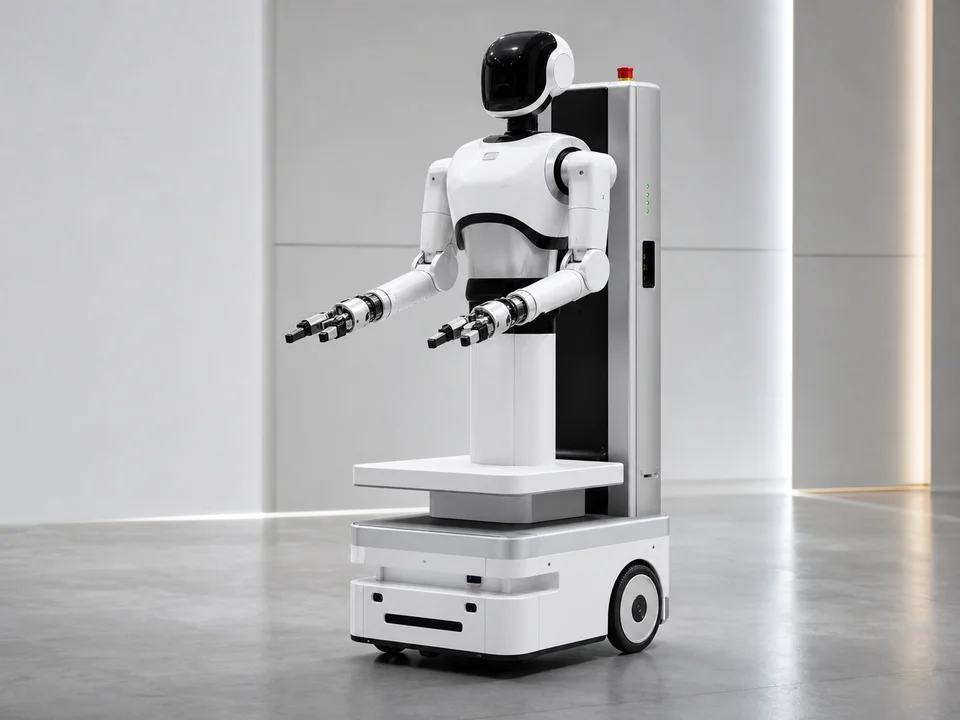
Why Perfect Demos Are Not Enough
Most robot learning pipelines still reward tidy demonstrations. A human teleoperator shows the robot how to pick up an object, open a drawer, or place an item in a bin. The model learns a path from instruction to success. That is useful, but it skips the most common part of household work: the correction loop.
In a real home, a robot does not merely need "pick up the cup." It needs to know that the cup tilted, that the gripper is touching the rim instead of the body, that the liquid inside changes the risk, that the countertop is wet, and that a failed first attempt should change the second attempt. A system trained mostly on clean success trajectories can look competent until the first small surprise.
Failure data fills in three missing layers:
Layer
Detection
- What the robot must learn
- Something did not go as planned
- Home example
- The towel slipped out of the gripper
Layer
Diagnosis
- What the robot must learn
- Why the action failed
- Home example
- The grasp was on a loose corner, not a stable fold
Layer
Recovery
- What the robot must learn
- What to try next
- Home example
- Regrasp closer to the center, slow down, or ask for help
| Layer | What the robot must learn | Home example |
|---|---|---|
| Detection | Something did not go as planned | The towel slipped out of the gripper |
| Diagnosis | Why the action failed | The grasp was on a loose corner, not a stable fold |
| Recovery | What to try next | Regrasp closer to the center, slow down, or ask for help |
That is why dropped objects and bad grasps are not just bloopers. They are labels for the robot's future judgment. A home robot that can detect failure but cannot diagnose it will stop too often. A robot that diagnoses failure but cannot recover will need constant remote assistance. The valuable product is the full loop.
AGIBOT's Signal: Train on the Mess
AGIBOT says Theme 2 of AGIBOT WORLD 2026 was built from real-world robot interaction data rather than simulation alone. The release describes operators intentionally pushing robots through contact-rich physical interactions across different objects, materials, structures, and outcomes. The point is not to make the robot look graceful. The point is to capture the ugly middle of manipulation: slippage, deformation, rebound, splashing, missed contact, and partial success.
The follow-on AGIBOT WORLD CHALLENGE 2026 shows the same direction in evaluation. AGIBOT reported 526 teams from 27 countries and moved part of the competition from simulation-style scoring toward real-robot testing. Its World Model track included non-ideal interactions such as dropped objects and grasp failures. That matters because benchmarks shape what developers optimize for. If a leaderboard only scores final success, teams optimize for clean completion. If it scores prediction, adaptation, and recovery after disruption, teams have to model the physical world more honestly.
For buyers, the takeaway is simple: ask less about whether a robot has seen one perfect demo of your task, and more about whether it has been trained and tested on the common ways that task fails.
The ui44 Robot View: Which Platforms Can Even Collect This Data?
Failure recovery is not only a software feature. It depends on the robot's body, sensors, hands, and deployment model. A cheap robot with weak sensing can gather some useful logs, but it may not observe the cause of a failure. A richer humanoid or mobile manipulator can record joint states, force signals, cameras, and recovery attempts.
Here is how several robots in the ui44 database fit the failure-data question:
Robot
- Relevant data angle
- Data-collection platform for industrial, commercial, and domestic scenarios
- What ui44 tracks
- 26 DOF, one-arm 3 kg handling, force sensors, high-resolution cameras, RGB-D cameras, LiDAR, VR and motion-capture teleoperation
Robot
- Relevant data angle
- Wheeled humanoid for repeatable deployed tasks
- What ui44 tracks
- Force-controlled dual-arm manipulation, autonomous navigation, hot-swappable batteries, voice interaction
Robot
- Relevant data angle
- Compact bipedal research and commercial platform
- What ui44 tracks
- $24,240 listed price, up to 30 DOF, 3D LiDAR, NVIDIA Orin NX, swappable battery, up to 3 kg carry
Robot
- Relevant data angle
- Home-first humanoid with a soft body
- What ui44 tracks
- $20,000 preorder price in ui44 data, household chores, tidying, gentle manipulation, safe human interaction
Robot
- Relevant data angle
- Lower-cost humanoid research platform
- What ui44 tracks
- $13,500 listed price, 23 DOF standard, optional dexterous hands, EDU variant for secondary development
Robot
- Relevant data angle
- Industrial humanoid learning before any consumer deployment
- What ui44 tracks
- Helix VLA system, manufacturing tasks, learning from demonstration, multi-step planning
| Robot | Relevant data angle | What ui44 tracks |
|---|---|---|
| AGIBOT G1 | Data-collection platform for industrial, commercial, and domestic scenarios | 26 DOF, one-arm 3 kg handling, force sensors, high-resolution cameras, RGB-D cameras, LiDAR, VR and motion-capture teleoperation |
| AGIBOT G2 | Wheeled humanoid for repeatable deployed tasks | Force-controlled dual-arm manipulation, autonomous navigation, hot-swappable batteries, voice interaction |
| AGIBOT X2 | Compact bipedal research and commercial platform | $24,240 listed price, up to 30 DOF, 3D LiDAR, NVIDIA Orin NX, swappable battery, up to 3 kg carry |
| 1X NEO | Home-first humanoid with a soft body | $20,000 preorder price in ui44 data, household chores, tidying, gentle manipulation, safe human interaction |
| Unitree G1 | Lower-cost humanoid research platform | $13,500 listed price, 23 DOF standard, optional dexterous hands, EDU variant for secondary development |
| Figure 03 | Industrial humanoid learning before any consumer deployment | Helix VLA system, manufacturing tasks, learning from demonstration, multi-step planning |
This spread is important. A home robot company can talk about "AI" in the abstract, but recovery quality will be limited by what the robot can perceive and record. Force sensors help it know whether it touched the object or crushed it. Multiple cameras help it see occlusion and slippage. Teleoperation logs help capture what a human did after failure. Hot-swappable batteries and deployed fleets help collect enough examples for rare edge cases.

What Failure Recovery Looks Like at Home
A home robot does not need perfect general intelligence to become useful. It needs competence on the recovery paths that happen every day.
For laundry, recovery means recognizing when a shirt sleeve is tangled, when a towel corner slipped, or when a basket is too full to place another item cleanly. For dishes, it means detecting a tilted glass, wet contact, blocked sink space, or a spoon that slid under a plate. For tidying, it means knowing when an object is soft, fragile, too heavy, or partly hidden under another object.
The key is that each task has a different failure grammar:
Task
Pick up clothing
- Common failure
- Fabric deforms or slips
- Better recovery behavior
- Regrasp at a thicker fold, slow lift, ask for help if tangled
Task
Put away dishes
- Common failure
- Object tilts or collides
- Better recovery behavior
- Lower speed, adjust wrist angle, choose a safer placement
Task
Open a drawer
- Common failure
- Handle grip is off-center
- Better recovery behavior
- Reposition gripper, increase pull gradually, stop if resistance spikes
Task
Clear a counter
- Common failure
- Object identity is uncertain
- Better recovery behavior
- Pause, classify again, avoid liquids or fragile items
Task
Carry items
- Common failure
- Payload shifts
- Better recovery behavior
- Stabilize, reduce speed, place item down before retrying
| Task | Common failure | Better recovery behavior |
|---|---|---|
| Pick up clothing | Fabric deforms or slips | Regrasp at a thicker fold, slow lift, ask for help if tangled |
| Put away dishes | Object tilts or collides | Lower speed, adjust wrist angle, choose a safer placement |
| Open a drawer | Handle grip is off-center | Reposition gripper, increase pull gradually, stop if resistance spikes |
| Clear a counter | Object identity is uncertain | Pause, classify again, avoid liquids or fragile items |
| Carry items | Payload shifts | Stabilize, reduce speed, place item down before retrying |
This is where AGIBOT's messy-data framing connects to actual buyers. A robot that has only learned "success" may fail silently, repeat the same bad action, or call a remote operator too quickly. A robot trained on failure and recovery should be able to try a safer second action, explain what happened, or escalate only when the problem is genuinely outside its ability.
What Buyers Should Ask Before Trusting a Home Humanoid
When home humanoids become easier to order, the spec sheet will still matter: height, payload, runtime, hand design, sensors, price, and service plan. But the more useful questions will be about learning and recovery.
Ask vendors these five questions:
- Does the robot detect failed grasps, drops, collisions, and blocked motion locally?
- Does it learn from failed attempts, or only from successful demonstrations?
- Are recovery attempts tested on physical robots, not only in simulation?
- Can the robot explain why it stopped or asked for help?
- How much human teleoperation is expected after a household task fails?
The last question is especially practical. Remote assistance can be a good bridge for early home robots, but it should not hide weak autonomy. A company that uses teleoperation to collect recovery data may improve over time. A company that uses teleoperation as invisible labor without showing progress may leave the buyer with a fragile product.
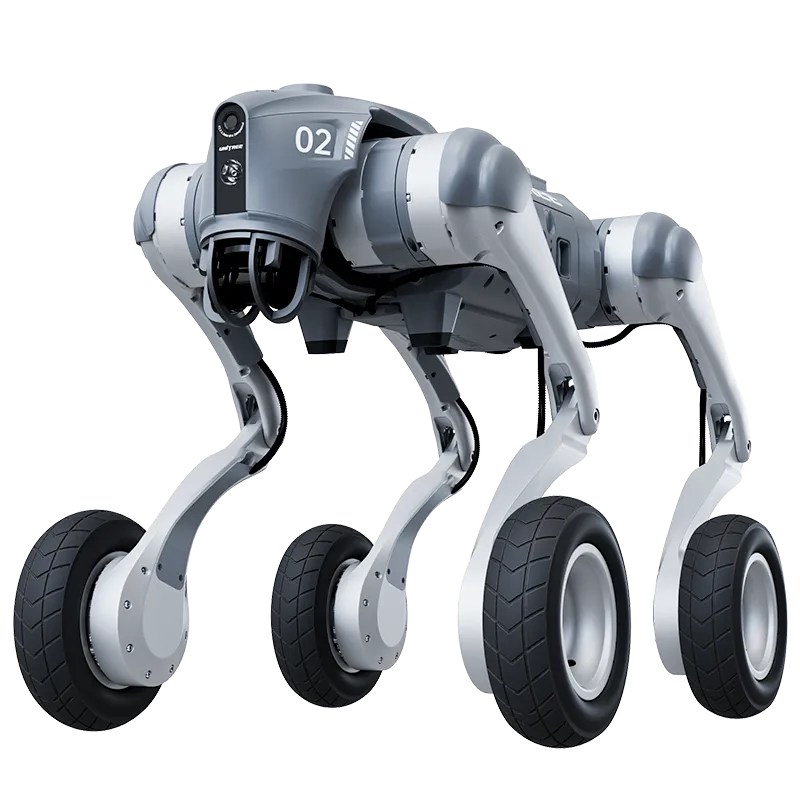
Why the Best Home Robot May Be a Careful One
Failure recovery also changes how we judge speed. Fast demos look exciting, but a household robot should often choose slower, more conservative actions. A careful robot that notices a bad grip and retries may be more valuable than a faster robot that drops the object and keeps going.
That is why the Unitree G1 is interesting as a research platform, why AGIBOT X2 matters as a relatively compact humanoid with development features, and why 1X NEO will face a harder bar as a home-first product. The home setting is less structured than a factory cell. It is not enough to execute a chore once on video. The robot has to be boringly reliable on the third, fourth, and fifth attempt after small things go wrong.
Figure 03 points to the same lesson from the industrial side. Figure is still focused on manufacturing deployments rather than consumer sales, but factory learning can expose humanoids to repeated manipulation, human workflows, and measurable failure modes. That does not automatically translate into home autonomy, but it can produce stronger models than isolated one-off demos.
The Honest Limitation
Failure-rich datasets are necessary, not sufficient. A 9.36 TB dataset does not guarantee that a home robot can clean your kitchen. Licensing, task coverage, sensor differences, robot embodiment, safety constraints, and distribution shift all matter. Data collected on one robot body may not transfer cleanly to another. A model that recovers from a dropped object in a lab may still struggle with a cluttered apartment, poor lighting, pets, or an impatient human.
There is also a privacy trade-off. Home robots can only learn from household failures if they observe enough of the household. Buyers should expect serious vendors to explain what is recorded, what stays local, what is uploaded, how faces and voices are handled, and whether users can opt out of training.
Still, the direction is right. Home robots will not become useful by pretending the world is clean. They will improve when the industry treats failure as first-class data.
Bottom Line
The next meaningful leap in home robotics will not be a single viral demo. It will be a robot that can make a small mistake, understand it, and recover without turning the home into a support ticket.
AGIBOT's 2026 dataset work is one of the clearest signals that the field is moving in that direction. For ui44 readers comparing robots, the practical filter is straightforward: prefer platforms and vendors that disclose sensing, teleoperation, real-world testing, and recovery behavior. A home robot does not need to be flawless. It needs to know what to do after it is not.
Related in the database
Use this article as a privacy verification workflow
Turn the article into a privacy verification pass grounded in the robots, manufacturers, and components it actually references.
Home Robots Need Failure Data to Recover already points you toward 6 linked robots, 4 manufacturers, and 3 countries inside the ui44 database. That matters because strong buyer guidance is easier to apply when you can move immediately from a claim or warning into concrete product pages, manufacturer directories, component explainers, and country-level context instead of treating the article as an isolated opinion piece. The fastest next step is to turn the article into a shortlist workflow: open the linked robot pages, verify which specs are actually published for those models, then compare the surrounding manufacturer and component context before you decide whether the underlying claim changes your buying plan.
For this topic, the useful discipline is to separate the editorial lesson from the catalog evidence. The article gives you the framing, but the robot pages tell you what each product actually ships with today: sensor stack, connectivity methods, listed price, release timing, category, and support-relevant compatibility notes. The manufacturer pages then show whether you are looking at a one-off launch, a broader lineup pattern, or a company that spans multiple categories. That layered workflow reduces the risk of buying on a single marketing phrase or a single support FAQ.
Use the robot pages to confirm which products actually expose cameras, microphones, Wi-Fi, or voice systems, then use the manufacturer pages to decide how much of the privacy question seems product-specific versus brand-wide. On this route cluster, G1, G2, and X2 form the fastest reality check. If you want a quick working shortlist, open Compare G1, G2, and X2 next, then keep this article open as the reasoning layer while you compare structured data side by side.
Practical Takeaway
Every robot, manufacturer, category, component, and country reference below resolves to a real ui44 page, keeping the follow-up path grounded in database records rather than generic advice.
Suggested next steps in ui44
- Open G1 and note the listed sensors, connectivity methods, and voice stack before you interpret any policy claim.
- Cross-check the wider brand context on AGIBOT so you can see whether the privacy question touches one model or a broader lineup.
- Use the linked component pages to confirm how common the relevant sensors and connectivity layers are across the database.
- Keep a short note of which policy layers you checked, which device features are actually present on the robot page, and which items still depend on region- or app-level confirmation.
- Finish with Compare G1, G2, and X2 so the policy reading sits next to structured product data.
Robot profiles worth opening next
Use the linked product pages as the evidence layer
The linked robot pages are where this article becomes operational. Instead of asking whether the headline is interesting, use the robot entries to inspect the actual mix of sensors, connectivity options, batteries, pricing, release timing, and stated capabilities attached to the products mentioned in the article. That is the easiest way to see whether the warning or opportunity described here affects one product family, a specific design pattern, or an entire buying lane.
G1 is tracked on ui44 as a available humanoid robot from AGIBOT. The database currently records a listed price of Price TBA, a release date of TBD, 4h+ runtime battery life, Not officially disclosed charging time, and a published stack that includes Six-axis force sensors on both arms, Eight high-resolution upper-body cameras, and Front and rear RGB-D cameras plus Wired data connection and Cloud data transmission.
For privacy-focused reading, this page matters because it shows the concrete device surface behind the policy discussion. Use it to verify whether G1 combines sensors and connectivity in a way that could change the in-home data footprint, and compare the listed capabilities such as 26-DOF Wheeled Manipulation, One-Arm 3 kg Continuous Handling, and Working Height over 2 m with any cloud, app, or voice layers.
G2 is tracked on ui44 as a active humanoid robot from AGIBOT. The database currently records a listed price of Price TBA, a release date of 2025-10, 24/7 operation via dual hot-swappable batteries battery life, Autonomous charging supported charging time, and a published stack that includes Multimodal spatial perception system, 360° surround-view sensing, and Collision detection sensors plus its listed connectivity stack.
For privacy-focused reading, this page matters because it shows the concrete device surface behind the policy discussion. Use it to verify whether G2 combines sensors and connectivity in a way that could change the in-home data footprint, and compare the listed capabilities such as Omnidirectional wheeled mobility, Force-controlled dual-arm manipulation, and Submillimeter-precision task execution with any cloud, app, or voice layers.
X2 is tracked on ui44 as a available humanoid robot from AGIBOT. The database currently records a listed price of $24,240, a release date of 2025, ~2 hours at 0.5 m/s walking battery life, ~1.5 hours charging time, and a published stack that includes 3D LiDAR (Ultra), RGB-D Camera (Ultra), and RGB Cameras plus Wi-Fi and Bluetooth.
For privacy-focused reading, this page matters because it shows the concrete device surface behind the policy discussion. Use it to verify whether X2 combines sensors and connectivity in a way that could change the in-home data footprint, and compare the listed capabilities such as Bipedal Walking, 25-30 DOF Articulation, and Object Manipulation (with OmniHand accessory) with any cloud, app, or voice layers.
NEO
1X Technologies · Humanoid · Pre-order
NEO is tracked on ui44 as a pre-order humanoid robot from 1X Technologies. The database currently records a listed price of $20,000, a release date of 2025-10-28, ~4 hours battery life, Not disclosed charging time, and a published stack that includes RGB Cameras, Depth Sensors, and Tactile Skin plus Wi-Fi and Bluetooth.
For privacy-focused reading, this page matters because it shows the concrete device surface behind the policy discussion. Use it to verify whether NEO combines sensors and connectivity in a way that could change the in-home data footprint, and compare the listed capabilities such as Household Chores, Tidying Up, and Safe Human Interaction with any cloud, app, or voice layers.
Figure 03 is tracked on ui44 as a active humanoid robot from Figure AI. The database currently records a listed price of Price TBA, a release date of 2025-10-09, ~5 hours battery life, Not disclosed charging time, and a published stack that includes Stereo Vision, Depth Cameras, and Force Sensors plus Wi-Fi and Bluetooth.
For privacy-focused reading, this page matters because it shows the concrete device surface behind the policy discussion. Use it to verify whether Figure 03 combines sensors and connectivity in a way that could change the in-home data footprint, and compare the listed capabilities such as Complex Manipulation, Warehouse Work, and Manufacturing Tasks with any cloud, app, or voice layers.
Manufacturer context behind the article
Check whether this is one product story or a broader company pattern
Manufacturer pages add the privacy context that individual product pages cannot show on their own. They help you check whether cameras, microphones, cloud accounts, app controls, and policy assumptions appear across a broader lineup or stay tied to one specific product story.
AGIBOT
ui44 currently tracks 10 robots from AGIBOT across 3 categorys. The company is grouped under China, and the current catalog footprint on ui44 includes A2 Ultra, X2, Expedition A3.
That wider brand context matters because privacy questions rarely stop at one FAQ page. A manufacturer route helps you see whether the article is centered on one premium model or on a company that has several relevant products and therefore more than one place where the same policy or app assumptions might matter. The category mix here currently points toward Humanoid, Quadruped, Commercial as the most useful next route if you want to see whether this article reflects a wider pattern inside the brand.
1X Technologies
ui44 currently tracks 2 robots from 1X Technologies across 1 category. The company is grouped under Norway, and the current catalog footprint on ui44 includes NEO, EVE.
That wider brand context matters because privacy questions rarely stop at one FAQ page. A manufacturer route helps you see whether the article is centered on one premium model or on a company that has several relevant products and therefore more than one place where the same policy or app assumptions might matter. The category mix here currently points toward Humanoid as the most useful next route if you want to see whether this article reflects a wider pattern inside the brand.
Figure AI
ui44 currently tracks 2 robots from Figure AI across 1 category. The company is grouped under USA, and the current catalog footprint on ui44 includes Figure 03, Figure 02.
That wider brand context matters because privacy questions rarely stop at one FAQ page. A manufacturer route helps you see whether the article is centered on one premium model or on a company that has several relevant products and therefore more than one place where the same policy or app assumptions might matter. The category mix here currently points toward Humanoid as the most useful next route if you want to see whether this article reflects a wider pattern inside the brand.
Unitree
ui44 currently tracks 2 robots from Unitree across 1 category. The company is grouped under China, and the current catalog footprint on ui44 includes H1, G1.
That wider brand context matters because privacy questions rarely stop at one FAQ page. A manufacturer route helps you see whether the article is centered on one premium model or on a company that has several relevant products and therefore more than one place where the same policy or app assumptions might matter. The category mix here currently points toward Humanoid as the most useful next route if you want to see whether this article reflects a wider pattern inside the brand.
Broaden the scan without leaving the database
Categories, components, and countries add the wider context
Category framing
Category pages are useful when the article touches a buying pattern that shows up across brands. A category route helps you confirm whether the linked products sit in a narrow niche or whether the same question should be tested across a larger field of alternatives.
Humanoid
The Humanoid category page currently groups 129 tracked robots from 92 manufacturers. ui44 describes this lane as: Full-size bipedal humanoid robots built to work alongside people — from factory floors to household tasks. Compare the cutting edge of humanoid robotics.
That makes the category route a practical follow-up when you want to check whether the products linked in this article are typical for the lane or whether they sit at one edge of the market. Useful starting examples currently include NEO, EVE, Mornine M1.
Country and ecosystem context
Country pages give extra context when support practices, launch sequencing, regulatory posture, or manufacturer mix matter. They are not a substitute for model-level verification, but they do help you see which ecosystems cluster together and which manufacturers sit in the same regional field when you broaden the search beyond the article headline.
China
The China route currently groups 189 tracked robots from 87 manufacturers in ui44. That gives you a useful regional lens when the article points toward support practices, launch sequencing, or brand clusters that may share similar ecosystem assumptions.
On the current route, manufacturers like AGIBOT, Dreame, Unitree Robotics make the page a good way to broaden the scan without losing the regional context that often shapes availability, documentation style, and adjacent alternatives.
Norway
The Norway route currently groups 2 tracked robots from 1 manufacturers in ui44. That gives you a useful regional lens when the article points toward support practices, launch sequencing, or brand clusters that may share similar ecosystem assumptions.
On the current route, manufacturers like 1X Technologies make the page a good way to broaden the scan without losing the regional context that often shapes availability, documentation style, and adjacent alternatives.
USA
The USA route currently groups 89 tracked robots from 69 manufacturers in ui44. That gives you a useful regional lens when the article points toward support practices, launch sequencing, or brand clusters that may share similar ecosystem assumptions.
On the current route, manufacturers like Faraday Future, iRobot, Boston Dynamics make the page a good way to broaden the scan without losing the regional context that often shapes availability, documentation style, and adjacent alternatives.
Questions to answer before you move from reading to buying
A follow-up FAQ built from the entities already linked in this article
Frequently Asked Questions
Which page should I open first after reading “Home Robots Need Failure Data to Recover”?
Start with G1. That gives you a concrete product anchor for the article’s main claim. From there, branch into the manufacturer and component pages so you can tell whether the article is describing one specific model, a repeated brand pattern, or a wider technology issue that affects multiple shortlist options.
How do the manufacturer pages change the buying decision?
AGIBOT help you zoom out from one article and one product. On ui44 they show lineup breadth, category spread, and the neighboring robots tied to the same company. That context is useful when you are deciding whether a risk belongs to a single model, whether it shows up across a brand’s portfolio, and whether you should keep looking at alternatives before committing.
When should I switch from reading to side-by-side comparison?
Move into Compare G1, G2, and X2 as soon as you understand the article’s main warning or promise. The article explains what to watch for, but the compare view is where you can check whether price, status, battery life, connectivity, sensors, and category fit still make the robot a good match for your own home and budget.
Where to go next in ui44
Keep the research chain inside the database
If you want to keep going, these follow-on pages give you the cleanest expansion path from article to research session. Open the comparison route first if you are deciding between products today. Open the manufacturer, category, and component routes if you still need to understand the broader pattern behind the claim.
Written by
ui44 Team
Published July 10, 2026
Share this article
Open a plain share link on X or Bluesky. No embeds, no widgets, no cookie baggage.